
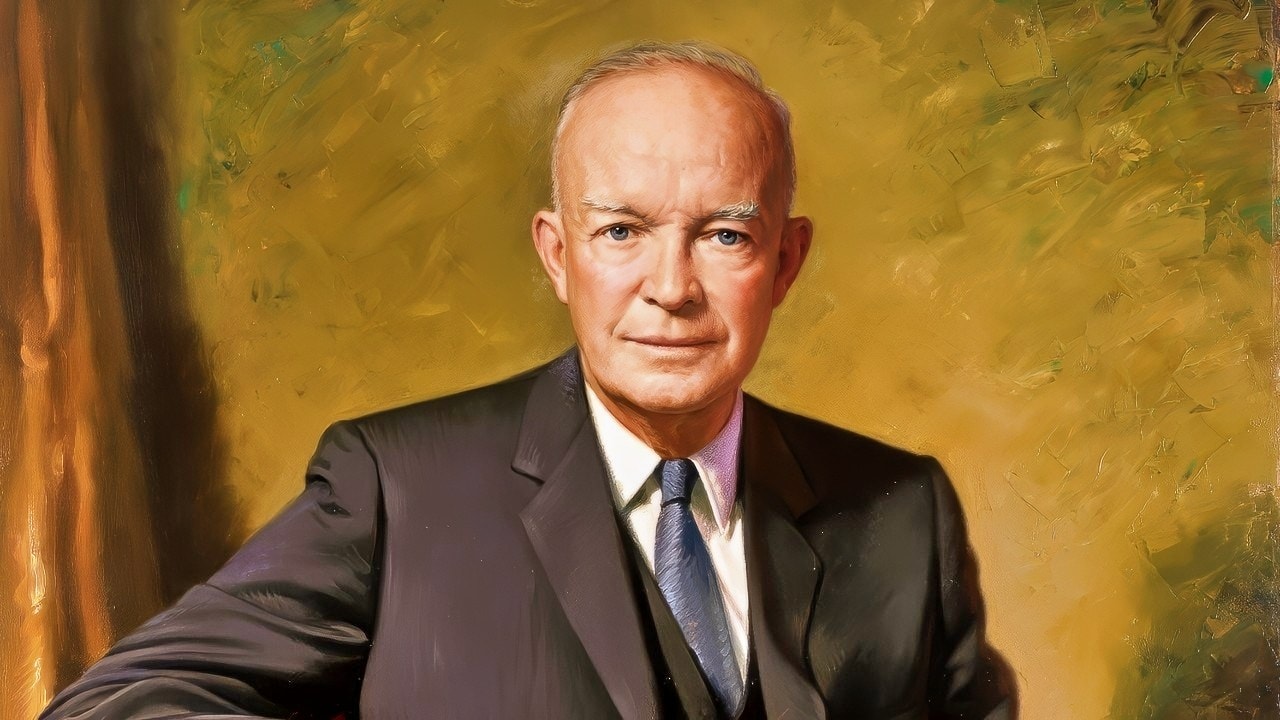
Key Points and Summary – In a 1947 commencement speech at West Point, General Dwight D. Eisenhower famously declared, “War is mankind’s most tragic and stupid folly,” warning future officers against the “black crime” of seeking conflict.
-Delivered at the dawn of the Cold War, the speech reflected Eisenhower’s deep fear that rising tensions with the Soviet Union could spark another devastating global war.
-The article traces Eisenhower’s journey from a farm boy in Kansas and a disappointment at missing WWI combat to a disciplined leader molded by General Fox Conner, ultimately shaping him into a consensus builder who viewed war as a last resort.
Eisenhower’s Warning: The 1947 West Point Speech and Quote That Defined His Anti-War Stance in the Cold War
“War is mankind’s most tragic and stupid folly; to seek or advise its deliberate provocation is a black crime against all men.” -Dwight D. Eisenhower
After the horrors of World War Two, General Dwight D. Eisenhower was decidedly anti-war. He made this comment during a commencement speech at West Point in 1947.
He was worried that the Cold War could lead to a ground attack by the Soviet Union. The Soviets did not have the atomic bomb yet, but they were to test their first nuclear device in 1949, leading to an all-out arms race.
The quote came during the first year of what would become a decades-long struggle with the Russians.
The Beginning of the Cold War
An Iron Curtain had fallen over Eastern Europe. The United States had entered into the Truman Doctrine, which was supposed to stop the spread of communism and support countries such as Greece and Turkey in their quest for freedom and democracy.
The grand strategy of Containment was becoming more entrenched in U.S. foreign policy-making.
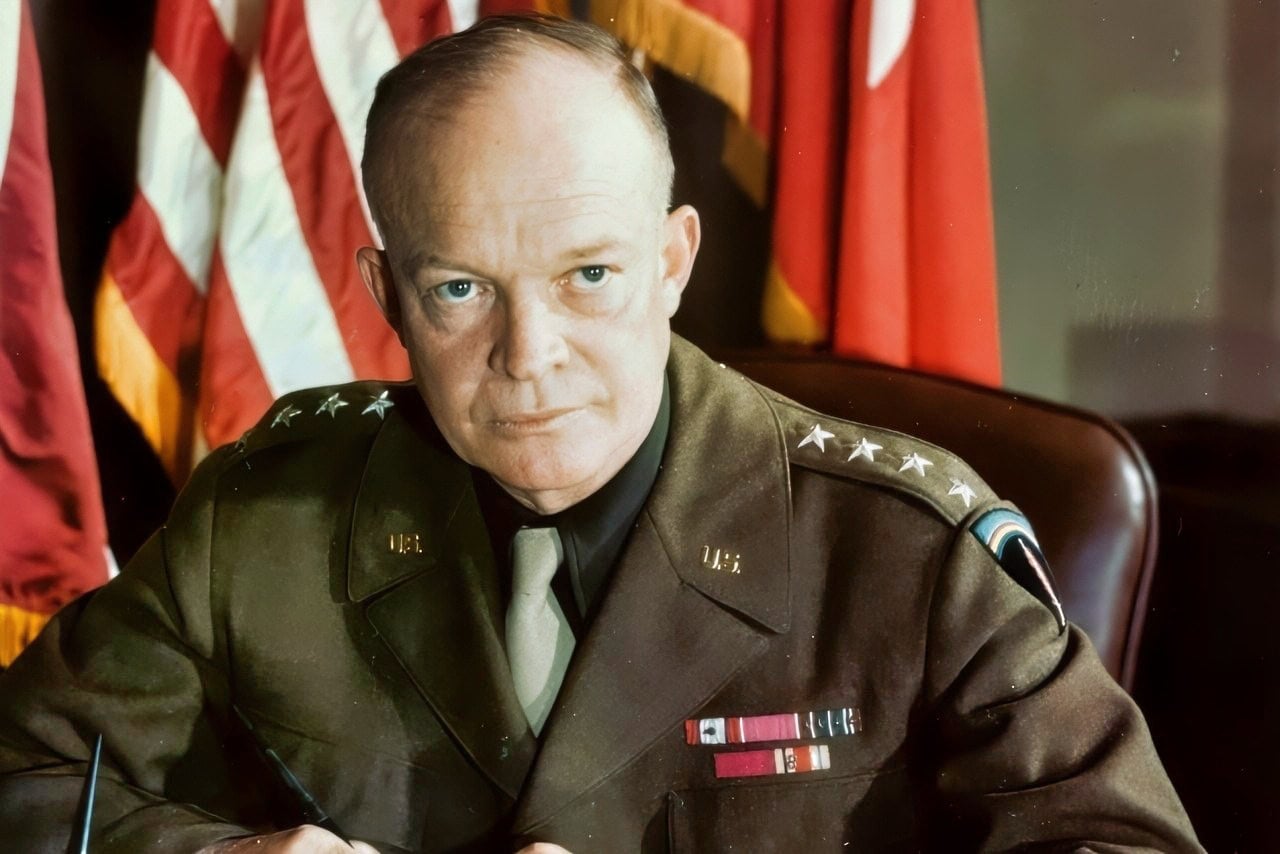
Dwight D. Eisenhower. Image Credit: Creative Commons.
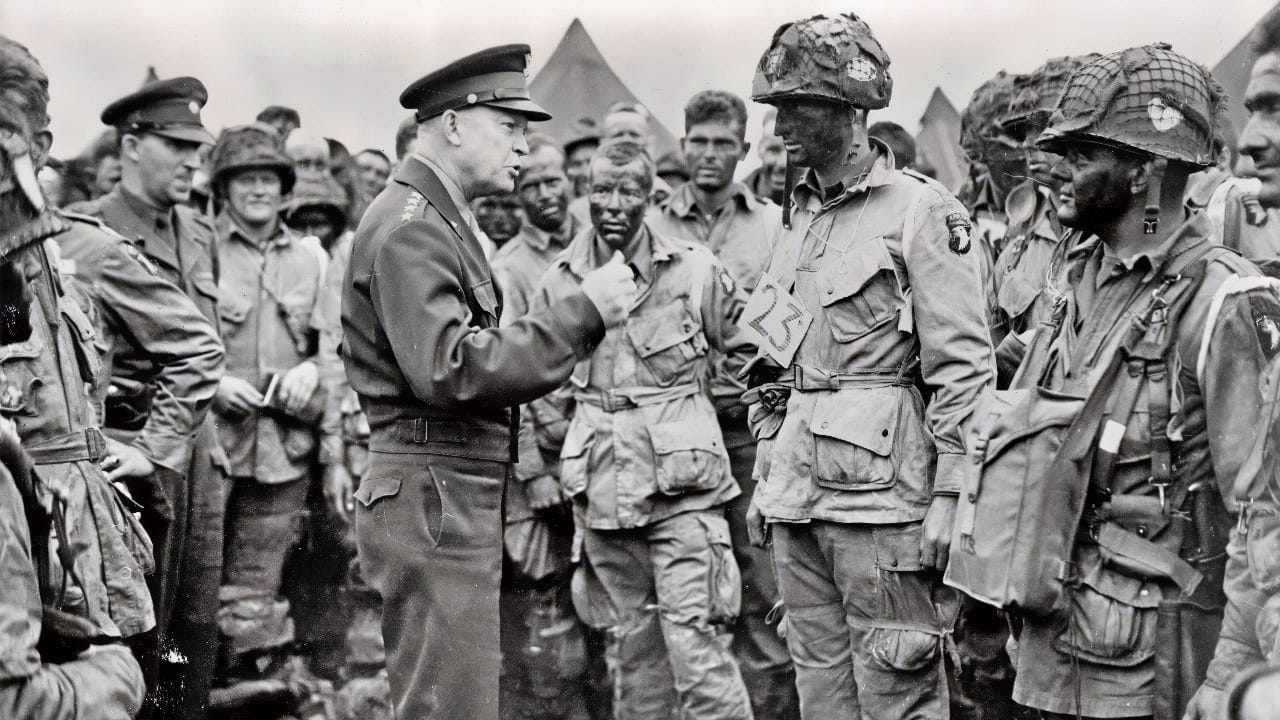
Dwight D. Eisenhower D-Day 1944. Image Credit: Creative Commons.
Secretary of State George C. Marshall also devised the Marshall Plan, which would grant an exorbitant amount of aid to help war-torn Europe rebuild.
The idea was to help the countries with economic development so they could resist the rise of communism.
War Might Spark With the Soviets
Eisenhower knew that these policies could prod the Soviets to attack one of the European countries aligned with the United States.
War was possible again due to the rising power imbalance between the United States and the Soviet Union.
Eisenhower knew this potential shooting war could result in a huge number of casualties. The Soviet Union still kept hundreds of thousands of soldiers intact to bolster the Red Army.
The Americans were demobilizing, and the Soviets could have attacked at any moment, and the United States would not have been ready.
Send a Message to Young People
Eisenhower predicted that the West Point cadets would perhaps have to fight another war, and they would when North Korea attacked South Korea in 1950.
Young people in the military academies are often glory seekers and do not know the realities of war. Eisenhower wanted to educate them about the dangers.
This speech was also a message to ordinary citizens in the United States who were worried that another conflict could break out.
They wanted to know that elites like Eisenhower were anti-war and casualty-averse.
Seeking or Advising War Was Not a Good Practice
The former Supreme Allied Commander realized that if he instilled a belief in peace-making, the Cold War would not turn hot. Soldiers, even at the highest level of command, should not “seek or advise” war.
This was an important lesson for West Point officer cadets who often rise to higher command. Leaders should also not conduct “deliberate provocation.”
Eisenhower wanted no adventurous wars that were started hastily and unjustly.
His imagery of a “black crime” also denoted that the United States should seek peace at all times unless attacked first.
The Beginning of a General and President
Eisenhower was born in Texas, but was raised in Abilene, Kansas. He became a popular student and athlete. He worked hard when not in school and helped his family run their farm.
This aptitude for long periods of work and stoic solitude would forge the experience that would help him in his military career.
Looking to serve his country, see the world beyond Kansas, and pursue a free education, he applied to West Point and was accepted into the academy in 1911.
Future General Omar Bradley was a classmate. Ike played football at West Point, and this forged his beliefs in teamwork and leadership that were to serve him well in the future.
Eisenhower was popular with his peers, and they looked up to him for a calm, diplomatic demeanor and optimistic personality. Not especially a great student at that point, he graduated in the middle of his class.
From Infantry to Tanks
Eisenhower was commissioned as an infantry officer in 1915 and served at Fort Sam Houston in Texas. He later became interested in tanks and mechanized warfare, and Ike trained soldiers in the art of armored attacks. However, the future general did not serve in World War I.
This devastated the young officer, and he wondered if that lack of combat experience would affect his career negatively.
Tutelage Under a Foxy General
Eisenhower did learn organizational skills and the importance of logistics in the interwar period. He was a solid if not spectacular staff officer and was promoted to major. Then he received an assignment that would change his life. Sent to the Panama Canal Zone, he served under the esteemed General Fox Conner. Conner knew he would have a star pupil in Eisenhower and predicted that the young officer would have the potential to achieve higher command.
A Star Is Born
After studying military history and strategy under Conner, the general arranged for Eisenhower to enroll in the Command and General Staff College at Fort Leavenworth, Kansas. Eisenhower graduated first in his class of 245 officers. His chain of command thought that Ike had the right stuff to take on more difficult and challenging assignments. Conner had made Eisenhower into a future general, and the boy from Kansas would be one of the best military leaders the United States ever produced.
Consensus Building and Teamwork
Eisenhower, in his 1947 speech, was a changed man. He knew that war would arise again, if not against the Soviet Union, then against another communist country.
The horrors of war would instill in him a sense of moderation and the ability to see the future. His early life shaped him into a leader who would serve as a role model and a unique diplomatic consensus builder, emphasizing teamwork and high morale among his troops.
By 1947, the man hated war and wanted to teach future leaders that it should be avoided at all costs unless the country was attacked without provocation.
About the Author: Brent M. Eastwood
Author of now over 3,000 articles on defense issues, Brent M. Eastwood, PhD is the author of Don’t Turn Your Back On the World: a Conservative Foreign Policy and Humans, Machines, and Data: Future Trends in Warfare plus two other books. Brent was the founder and CEO of a tech firm that predicted world events using artificial intelligence. He served as a legislative fellow for US Senator Tim Scott and advised the senator on defense and foreign policy issues. He has taught at American University, George Washington University, and George Mason University. Brent is a former US Army Infantry officer. He can be followed on X @BMEastwood.