
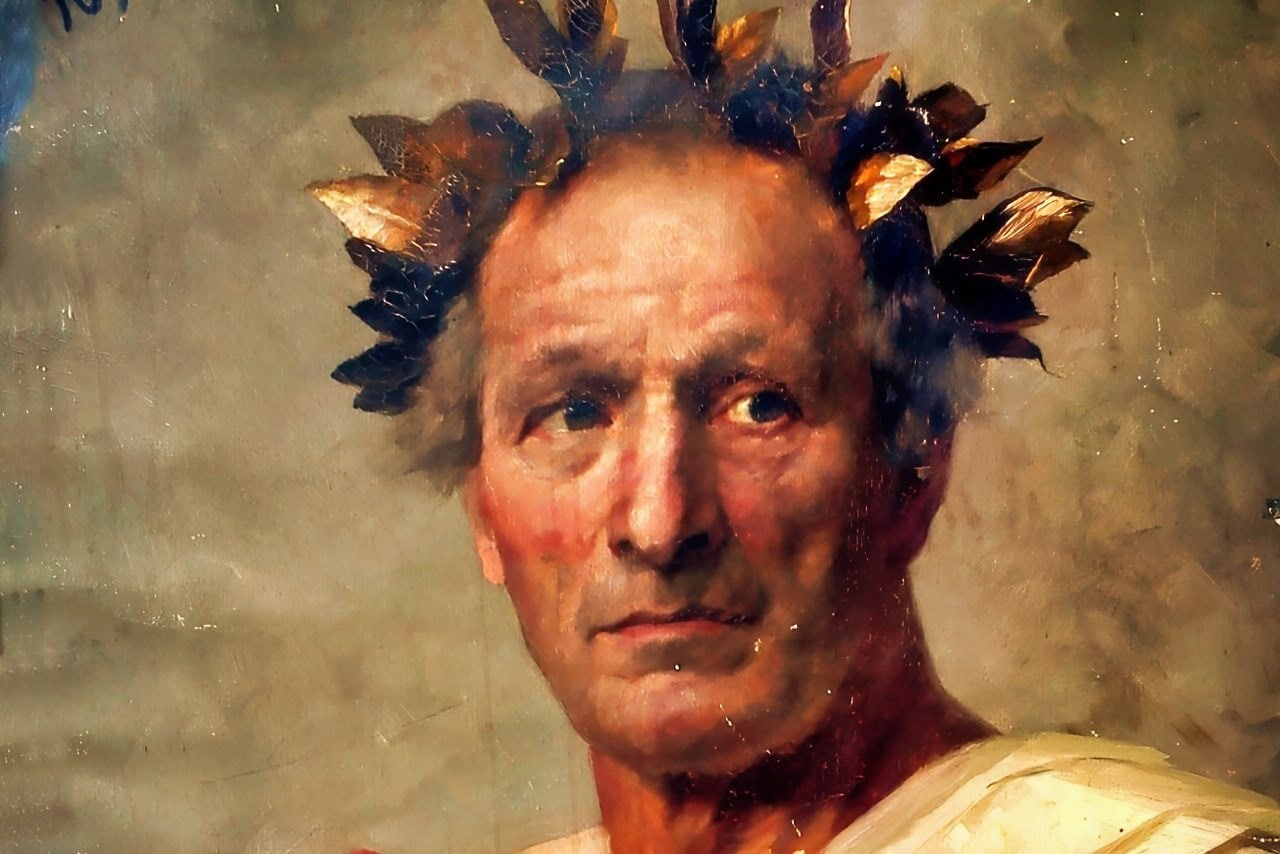
Summary and Key Points: Julius Caesar’s claim that “experience is the teacher of all things” becomes a meditation on how combat, risk, and reflection shape leaders.
-Caesar is portrayed as a commander who prized hard-earned confidence, tactical intuition, and the battlefield flash of insight later described as coup d’œil.
-Those lessons, the argument goes, forged a figure revered by troops yet feared by elites. The story culminates in the Ides of March: senators led by Gaius Cassius Longinus and Marcus Junius Brutus surround Caesar and stab him repeatedly, triggering political upheaval and civil war.
-The takeaway is stark—experience builds greatness, but power also breeds betrayal.
Quote of the Day: Julius Caesar’s 6-Word Lesson on Power
Quote of the Day – “Experience is the teacher of all things.” – Julius Caesar
Julius Caesar offered this short, pithy quote in his work De Bello Civili.
He was trying to convey the essence of life, remark on his legacy after so many years of military victories as a famous general, and reflect on his failures and triumphs as a political leader.
All humans can relate to this remark as an instance of looking back on life, while leading one to focus on success, victory, and catastrophe. It was the means for Caesar to pontificate on the meaning of life.
His Life as a Soldier and Leader of Men
Caesar was early on interested in what made for a successful soldier. This had to do with prior knowledge and battlefield confidence gained through realistic training. Life was about constant learning for Caesar, and that ethos was instilled in his warriors.
What Did Experience Mean to Caesar?
Everyone can recognize how prior experience can shape an adult’s success in many endeavors, whether in professional or family life. Experience also leads to periods of reflection for older adults. There are high and low points of life, and introspection is necessary to lead a career of jubilation and fulfillment.
A Battlefield God In Reflection
Experience can also build confidence. Caesar learned this as a leader of warriors, but it also applies to civilian and political life. What can forge a human being? Is success in the genes or a matter of living a life to its fullest? Caesar would have said that both are important in forging a successful life. His soldiers considered him a god on the battlefield. This gave Caesar confidence that he could adapt and overcome even the most dangerous times.
A Leader That Clausewitz Would Have Been Proud Of
Caesar was famous for taking on the most difficult challenges. He was responsible for winning the Gallic Wars and conquering Gaul.
This was no easy feat and required what Carl von Clausewitz called “Coup d’œil,” meaning a flash of genius and insight on the battlefield.
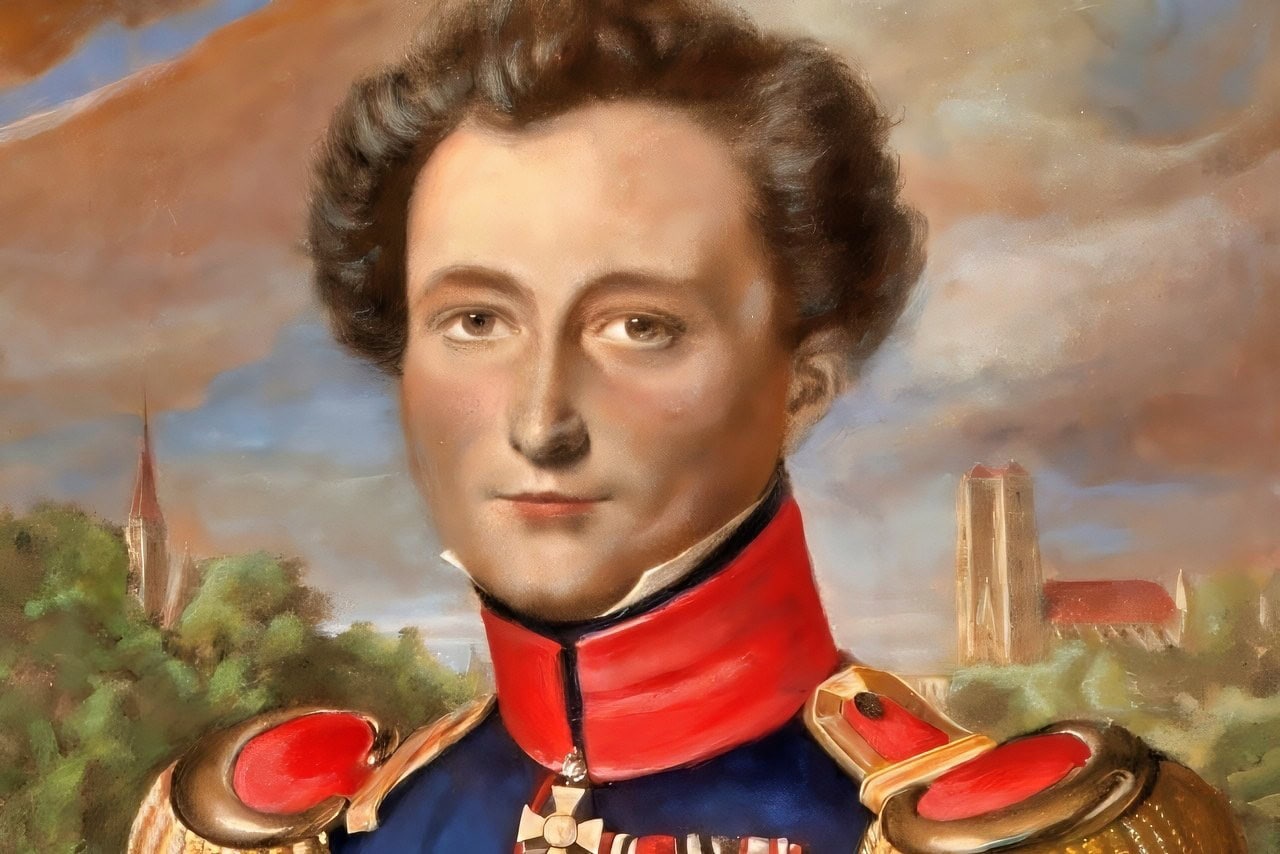
Carl von Clausewitz. Image Credit: Creative Commons.
This is a rare attribute that only certain generals can ever learn or execute. George Patton had it – so did Ulysses S. Grant. Coup d’œil gives a military leader confidence that he or she can see the outcome of a tactic or operation that leads to successful grand strategies.
A Flash of Brilliance
A soldier can never experience Coup d’œil without taking chances and living life to its fullest. Great experience from seeing the outcome of tactics in combat can change the way one looks at life. Having reflected long on the past, Caesar learned what made him tick and what enabled him to achieve great things in life.
Learning, Caesar knew, can be brutal. Some experiences are terrifying and can result in nightmares. Caesar likely had battle fatigue and shocking mental health lapses that we could now call PTSD. His experiences were terrifying and harrowing. He must have been depressed at times during peace after feeling the elation of combat.
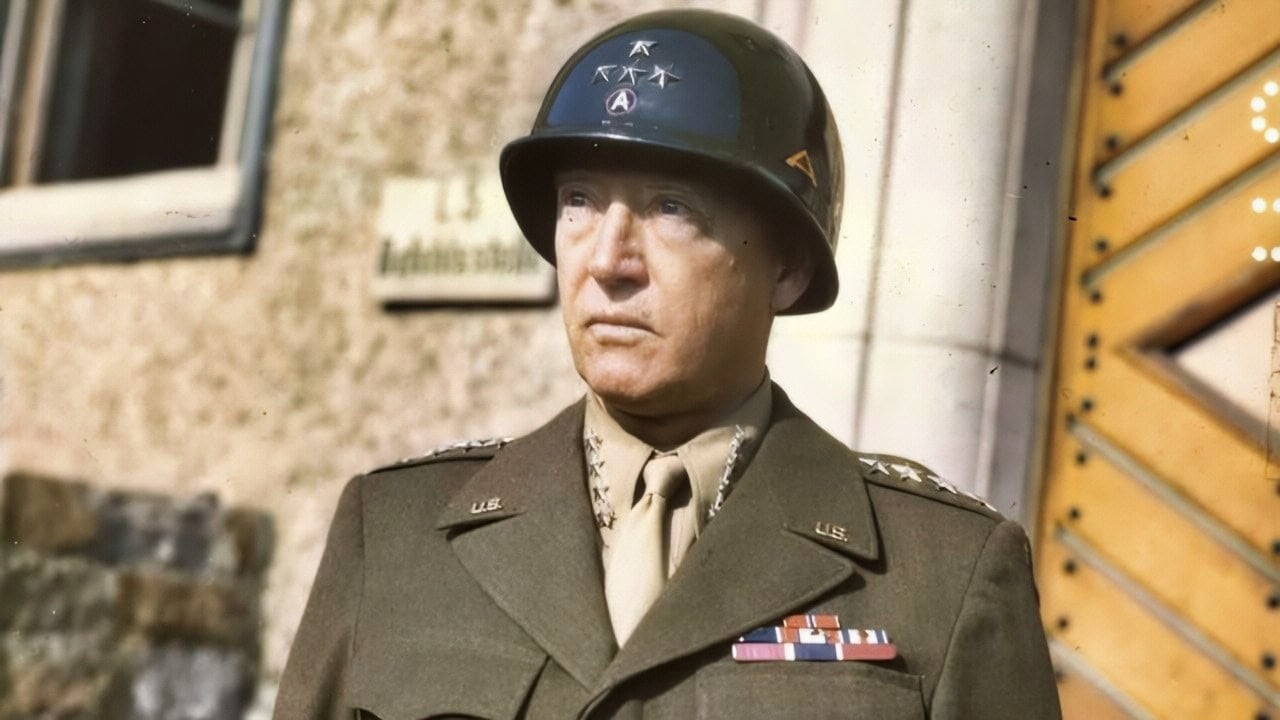
General George Patton U.S. Army Photo
He could not have known that he would be betrayed so violently after achieving so much as a military and political leader.
Caesar was assassinated around March 44 BC at the hands of desperate and evil senators. Marcus Brutus and his brethren feared that Caesar was becoming too powerful. They were worried the great man could end their reign. They were jealous of his charisma and wanted to punish him for his success.
Cassius and Brutus thought that Caesar was becoming too king-like and wanted to end his rise. The murderous scheme was historic for its violence and betrayal. This was one of the first targeted assassinations of a political leader, and it would go on to influence other acts of terror throughout history.
What Happened on That Fateful Day?
Caesar had attended a meeting with senators during the Ides of March at the Curia Pompeia. The senators asked him to read a document and then stabbed him around 23 times as they formed a scrum around him. The most violent and passionate strike came from Brutus, and Caesar mumbled in shock, “Et tu Brute?” (You too, Brutus?).
This ended the Roman Republic, and the empire entered into civil war, leading to much death and destruction.
Caesar’s Legacy
What is the legacy of Caesar? He was a brilliant military commander and perhaps a naïve civilian leader. His death showed that political conspiracies could lead to violence and an overthrow that created strife, terror, and even more death.
His experience likely inspired modern terrorists to target political leaders for death. This showed that even the most confident politicians could face a rebellion that could lead to a violent overthrow.
The political Left and Right learned that a successful conspiracy can change a country’s destiny. Violence is thus a part of a political movement and is sometimes warranted under this construct.
A targeted assassination is always possible in the 21st century, especially when militants are armed with modern weapons. The death of Caesar thus had historical consequences. Caesar was made up of a different mold.
He was intelligent and reflective about his destiny and was surprised at the end of his life that former allies could be motivated by so much jealousy and hatred.
About the Author: Brent M. Eastwood
Author of now over 3,000 articles on defense issues, Brent M. Eastwood, PhD is the author of Don’t Turn Your Back On the World: a Conservative Foreign Policy and Humans, Machines, and Data: Future Trends in Warfare plus two other books. Brent was the founder and CEO of a tech firm that predicted world events using artificial intelligence. He served as a legislative fellow for US Senator Tim Scott and advised the senator on defense and foreign policy issues. He has taught at American University, George Washington University, and George Mason University. Brent is a former US Army Infantry officer. He can be followed on X @BMEastwood.