
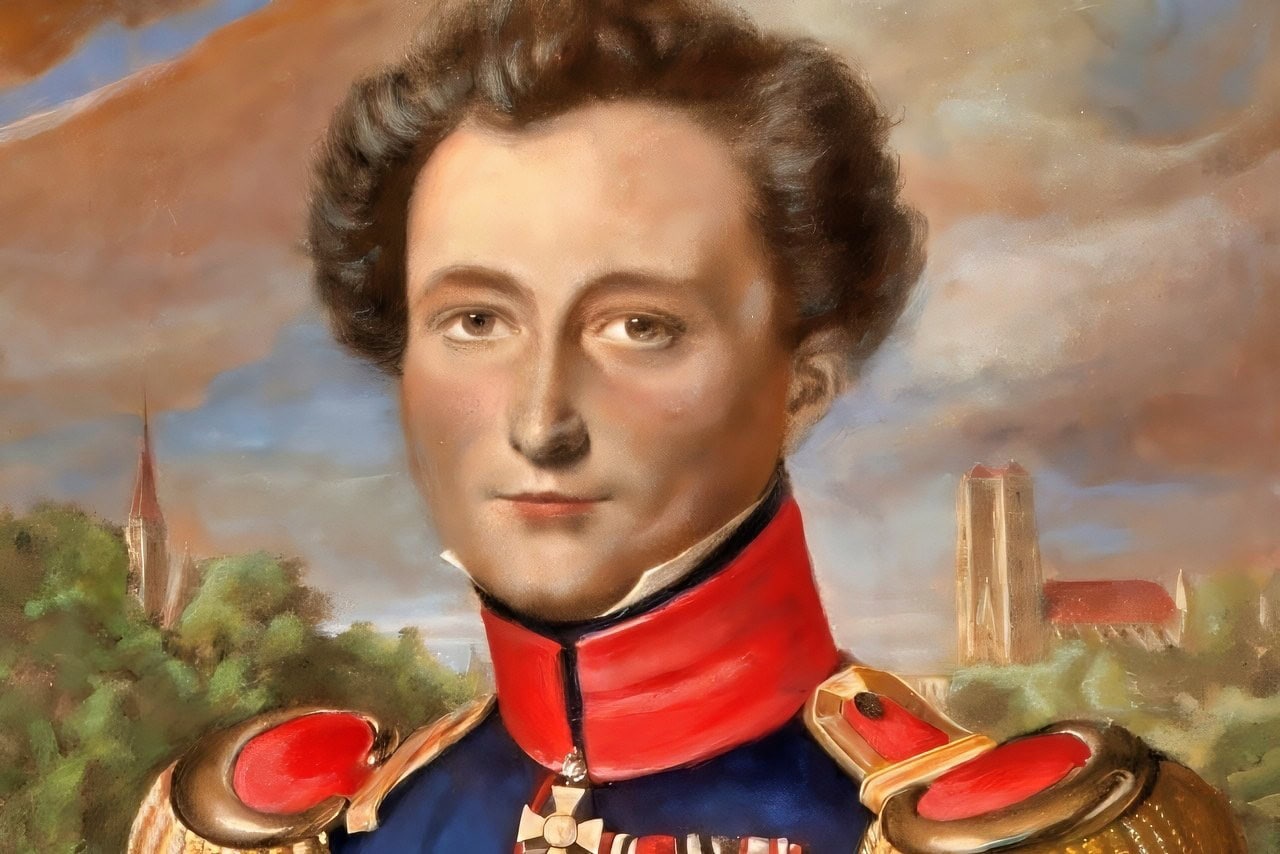
Key Points and Summary – Carl von Clausewitz rose from a young Prussian cadet to a battlefield-tested officer shaped by the Napoleonic age.
-Mentored by reformers like Scharnhorst, he watched Prussia collapse at Jena and Auerstedt—an experience that pushed him to rethink how states fight and why they win.
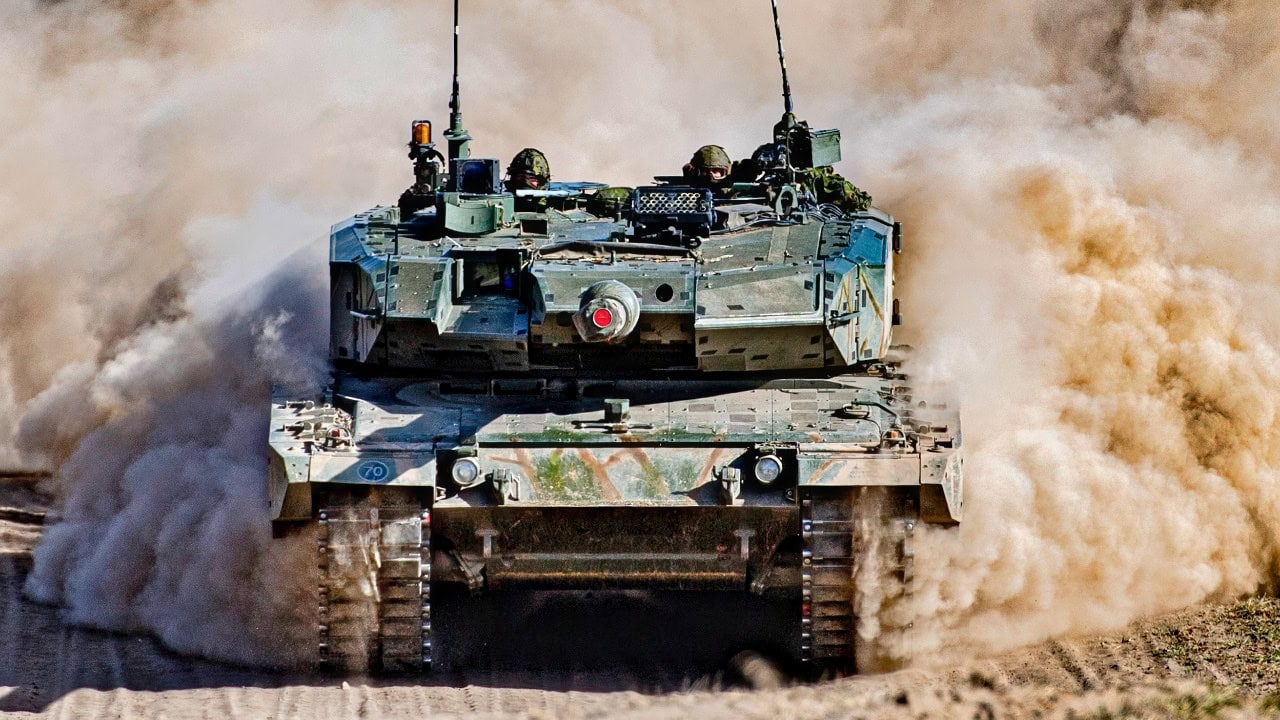
A Leopard 2A4 tank from Lord Strathcona’s Horse (Royal Canadians) drives on the Black Route of the 3rd Canadian Division Support Base Garrison Wainwright Training Area in preparation for Exercise MAPLE RESOLVE 21 on April 28, 2021. Photo By: Sailor First Class Camden Scott, Directorate of Army Public Affairs
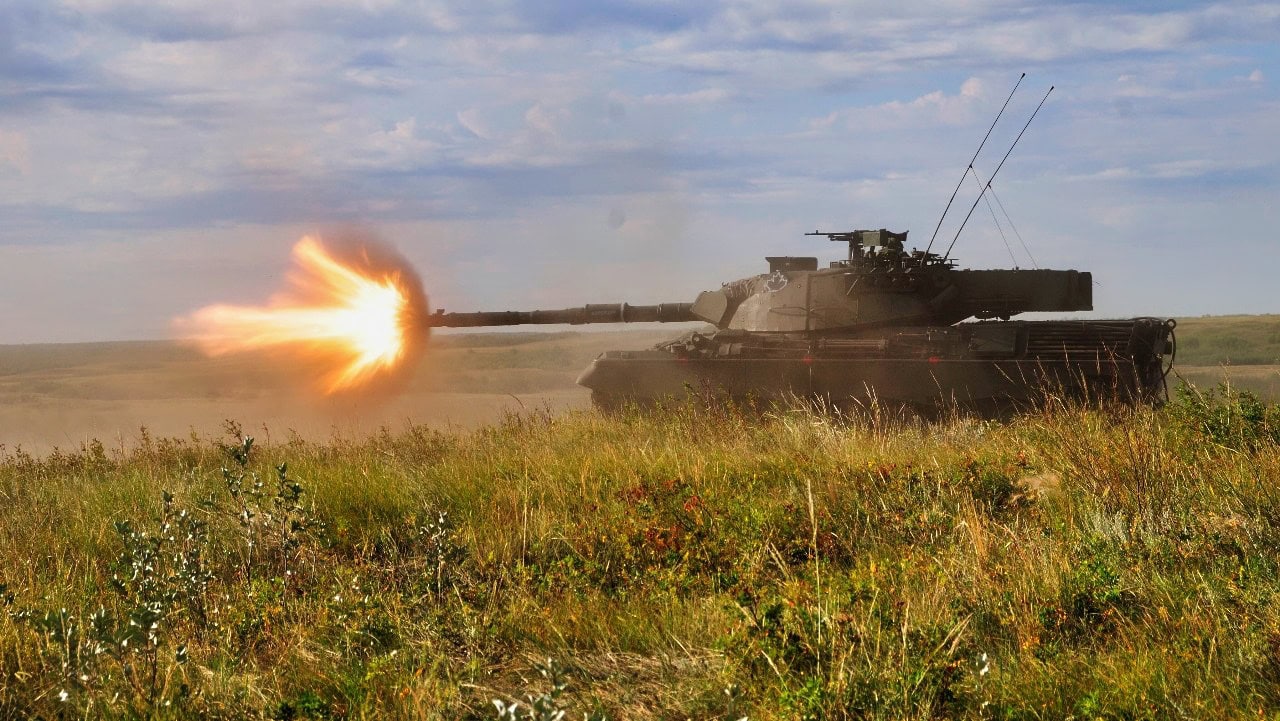
A Lord Strathcona’s Horse (Royal Canadian’s) Leopard tank fires at the top of a hill during a live fire demonstration held in Wainwright, AB.
-In 1812 he resigned rather than support Napoleon’s invasion of Russia, then served with the Russians and helped pull Prussia into the anti-Napoleon coalition.
-Along the way he wrote “Principles of War,” stressing decisiveness and audacity.
-His unfinished masterwork, On War, published after his death, framed war as a political instrument, not an isolated military event.
Clausewitz Explained Beyond A Quote: The Prussian Thinker Who Said War Is Politics by Other Means
Carl Philipp Gottlieb von Clausewitz was a Prussian general and military theorist who lived in the 18th and 19th centuries. He was born in 1780 and died in 1831, both in what was then the kingdom of Prussia. His birthplace, Burg bei Magdeburg, is part of modern-day Germany.
According to the Clausewitzstudies.org website, scholars differ on whether Clausewitz was truly of noble descent.
“Despite their claims to nobility, however, the Clausewitzs (who were certainly members of the local elite in Burg) were probably of middle-class origins, though Carl did not know that,” that article said. Clausewitz’s father held a commission in the army of Frederick the Great, but “was retired during Frederick’s purge of non-noble officers after the Seven Years War (1756-63).”
Military Service
Carl entered the Army as a cadet at age 12 and saw his first combat a year later.
“After Prussia withdrew from the wars of the French Revolution in 1795, he spent five years in boring garrison duties. There, he applied himself to his own education,” the biography says.
“Beyond strictly military subjects, Clausewitz would develop a wide-ranging set of interests in art, science, and education (especially later, under the influence of Marie). All of these interests would have an impact on his military-philosophical work.”
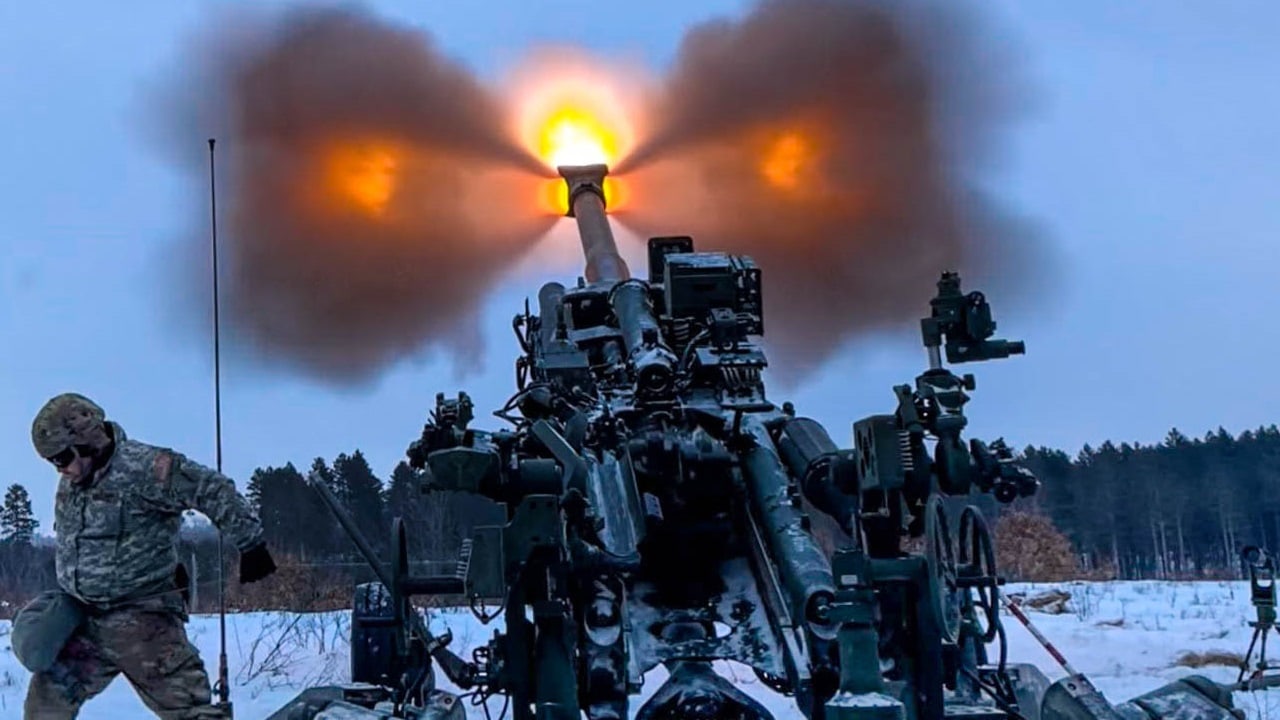
Spc. Cole Anderson, Charlie Battery, 120th Field Artillery Regiment, 32nd Infantry Brigade Combat Team, Wisconsin National Guard, fires away during cold weather field artillery training at Camp Grayling, Mich. Jan. 24, 2022. The event took place during Northern Strike 22-1 (”Winter Strike”), a National Guard Bureau-sponsored exercise held Jan. 21-30 with participants from several U.S. states and partner forces at Camp Grayling Joint Maneuver Training Center and Alpena Combat Readiness Training Center, Michigan, which together comprise the National All-Domain Warfighting Center (NADWC) (U.S. Army National Guard photo by Sgt. Jacob Tannis)
In 1801, when he was approximately 31 years old, Clausewitz gained admission to the Institute for Young Officers in Berlin, where Gerhard von Scharnhorst mentored him. After graduating at the top of his class in 1803, Clausewitz was named military adjutant to the young Prince August.
What He Learned
According to the Clausewitz Studies biography, the philosopher’s “basic historical, political, and military views derived from the influence of Scharnhorst and other Prussian military reformers.”
“In broad terms, they argued that the French Revolution had achieved its astounding successes because it had tapped the energies of the French people. If the Prussian state was to survive, much less prosper, it had to do the same,” the biography said. This would require sweeping reforms to Prussia’s government and military, but not a full-on revolution.
His views, as noted by the Clausewitz Studies website, don’t precisely map onto modern political categories.
“Many subsequent writers have tried to cast Clausewitz as a political hero or villain to serve their own political agendas, but trying to place Clausewitz and his theories somewhere on an anachronistic left-right political spectrum is a futile exercise,” the Clausewitz Studies biography says. “His politics can only be understood with reference to the specific situation of Prussia in the Revolutionary and Napoleonic periods and in the post-war era of conservative reaction.”
Time For War
Soon after that, in 1806, Prussia suffered a military disaster as Napoleon’s forces routed them.
“Confident in the legacy of Frederick the Great, Captain Clausewitz and most other Prussian officers looked forward to a struggle with France. The timing and implementation of Prussian mobilization were poor, however, and the nation was psychologically unprepared. The Prussian forces were shattered in humiliating defeats in battles at Jena and Auerstedt,” the biography said, adding that both Clausewitz and the prince were captured on the battlefield, and France occupied Prussia.
It was that defeat, though, that helped put Clausewitz’s philosophy in motion. In 1812, he resigned from the Prussian service rather than provide an army corps for Napoleon’s invasion of Russia. He even went to Russia to take a military commission to fight Napoleon’s forces there.
The Principles of War
It was around this time that Clausewitz authored his famous essay.
Officially titled “The most important principles of the art of war to complete my course of instruction for his Royal Highness the Crown Prince,” it was left behind, before his sojourn to Russia, for the Prussian Crown Prince Friedrich Wilhelm, then just 16 years old. The essay, though, is usually referred to as “Principles of War.” It is not to be confused with “On War,” a different work that was published 20 years later.
“Principles of War,” per the Clausewitz Homepage, is “based almost entirely on the experience of Frederick the Great and the wars with revolutionary France and Napoleon before 1812.”
Clausewitz’s famous quote about audacity comes from this essay.
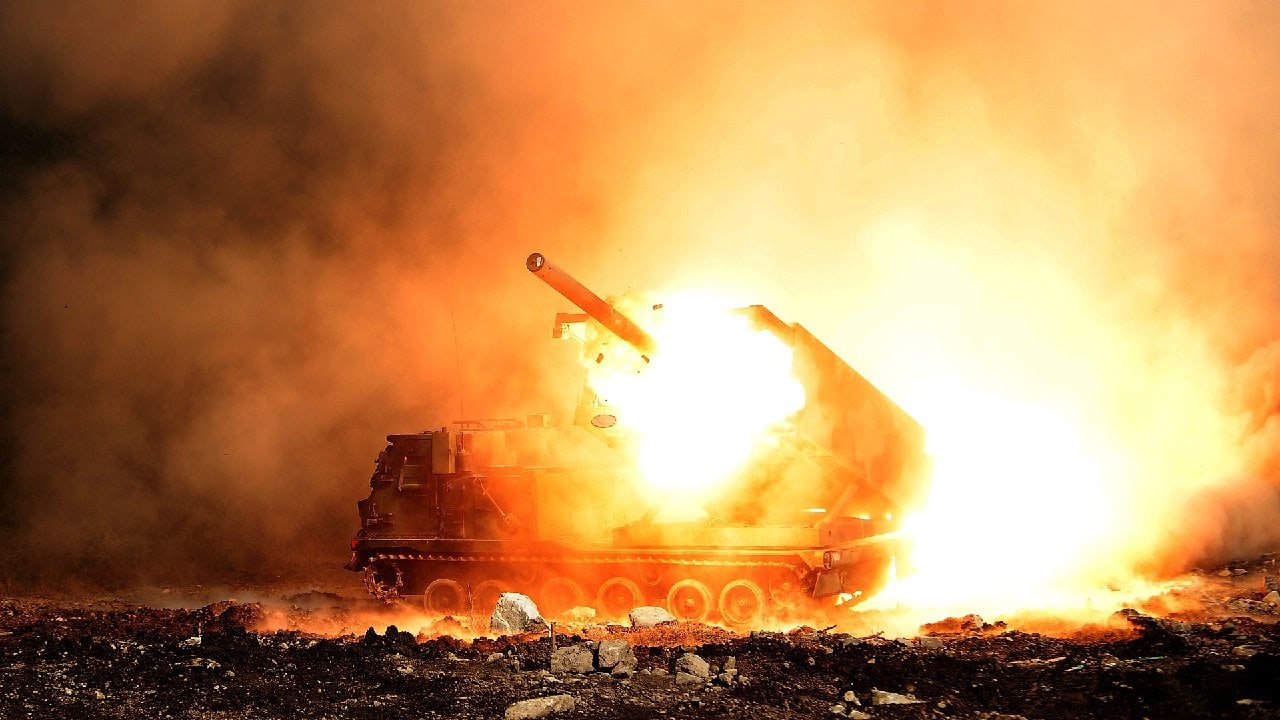
MLRS combat firing practice, Republic of Korea Army The 5th Artillery Brigade.
“In any specific action, in any measure we may undertake, we always have the choice between the most audacious and the most careful solution. Some people think that the theory of war always advises the latter,” Clausewitz wrote in ‘On War.”
“That assumption is false. If the theory does advise anything, it is the nature of war to advise the most decisive, that is, the most audacious. Theory leaves it to the military leader, however, to act according to his own courage, according to his spirit of enterprise, and his self-confidence. Make your choice, therefore, according to this inner force; but never forget that no military leader has ever become great without audacity.
Clausewitz’s Last Years
During his service in Russia, Clausewitz negotiated the “Convention of Tauroggen,” which led Prussia into the anti-Napoleon coalition. This led, in 1814, to Napoleon’s abdication. The following year, as the Napoleonic Wars drew to a close, Clausewitz was chief of staff of Prussia’s 3rd Corps.
After the wars ended, Clausewitz was named Major-General and administrative head of the General War College in Berlin. He went on to die of cholera in 1831, at the age of 51.
On War
“On War,” considered his magnum opus, was published posthumously between 1832 and 1834.
“With the aid of her brother and others, Clausewitz’s wife Marie edited his unfinished manuscripts and published them as his collected works in ten volumes, the biography says. Clauswitz’s other most famous coinage—”War is not merely a political act, but a real political instrument, a continuation of the political process, an application by other means”—was published as part of “On War.”
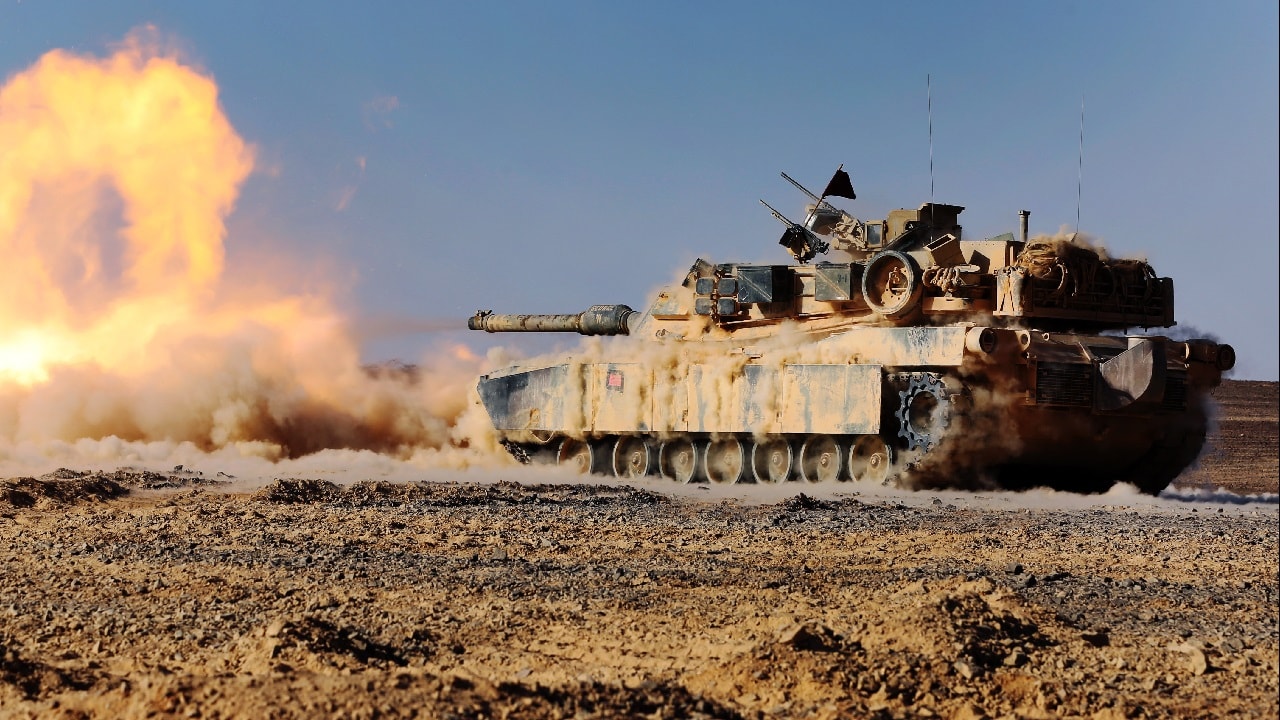
(U.S. Marine Corps photo by Sgt. Devin Nichols/Released)
Historians and translators have often fought over that work over the years.
About the Author: Stephen Silver
Stephen Silver is an award-winning journalist, essayist, and film critic, and contributor to the Philadelphia Inquirer, the Jewish Telegraphic Agency, Broad Street Review, and Splice Today. The co-founder of the Philadelphia Film Critics Circle, Stephen lives in suburban Philadelphia with his wife and two sons. For over a decade, Stephen has authored thousands of articles that focus on politics, national security, technology, and the economy. Follow him on X (formerly Twitter) at @StephenSilver, and subscribe to his Substack newsletter.