
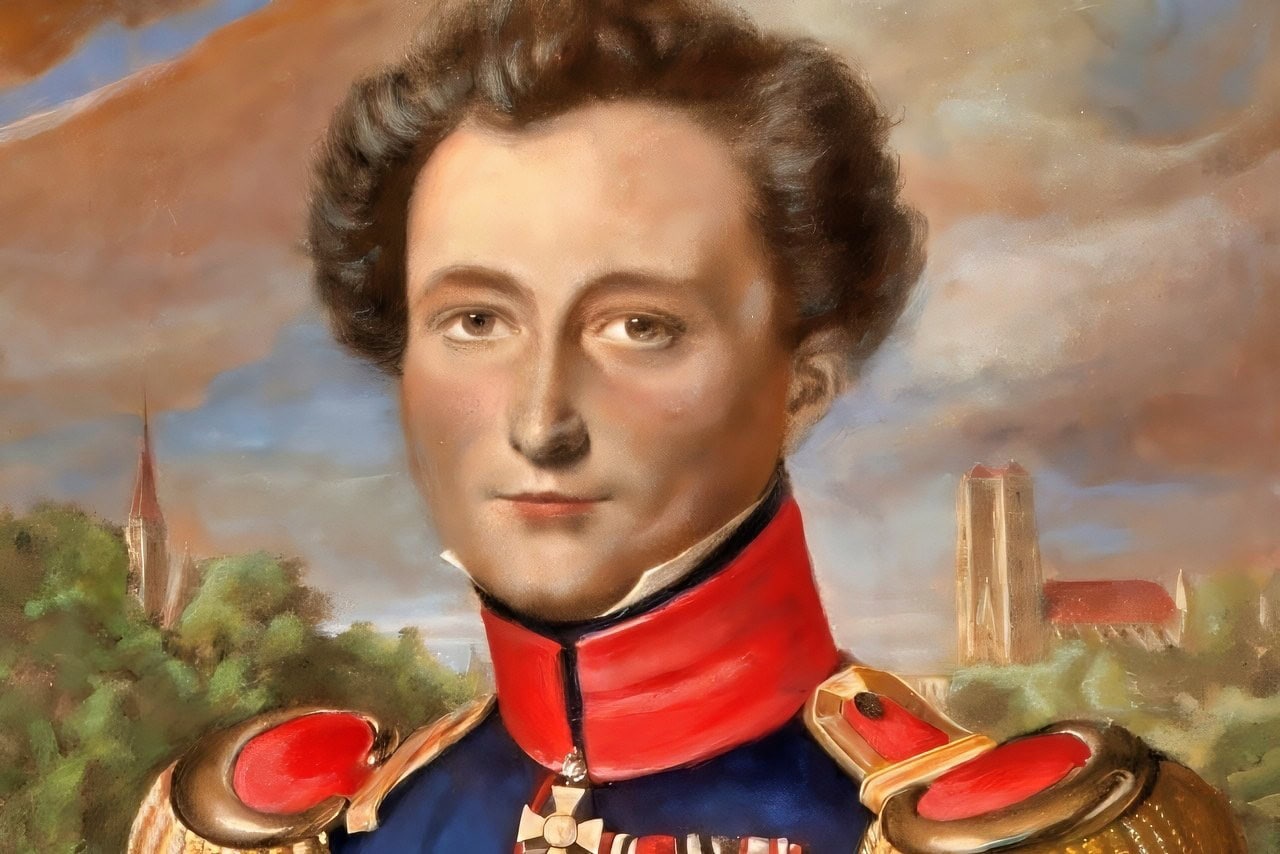
Synopsis: Carl von Clausewitz’s line “war is an act of violence pushed to its utmost limits” comes from On War, published in 1832 after his death.
-The book surged in U.S. professional military education after Vietnam, becoming a key text at the Naval War College (1976), Air War College (1978), Army War College (1981), and SAMS at Leavenworth.
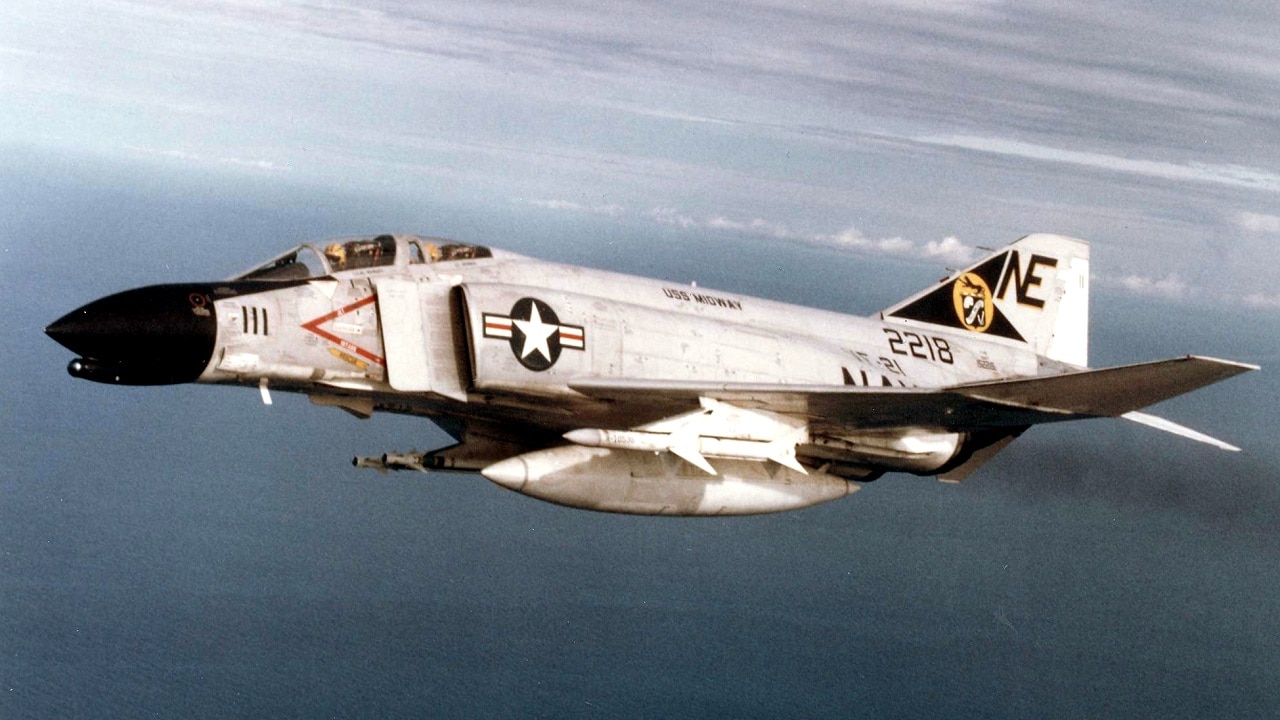
Vietnam War F-4 Phantom. Image Credit: Creative Commons.
-The piece argues Clausewitz resonated because he confronted “political war” and civil-military tension over blame.
-It also recalls admirers from Moltke to Patton and Eisenhower, and uses Crimson Tide’s submarine showdown to show his ideas still spark argument today.
“War Is an Act of Violence”: The Clausewitz Quote That Still Shapes Strategy
The Prussian military philosopher Carl von Clausewitz’s most famous work, “On War,” was published posthumously in 1832, the year after Clausewitz’s death.
According to the official Clausewitz Studies website, “On War” became a popular text in American military circles following the Vietnam War.
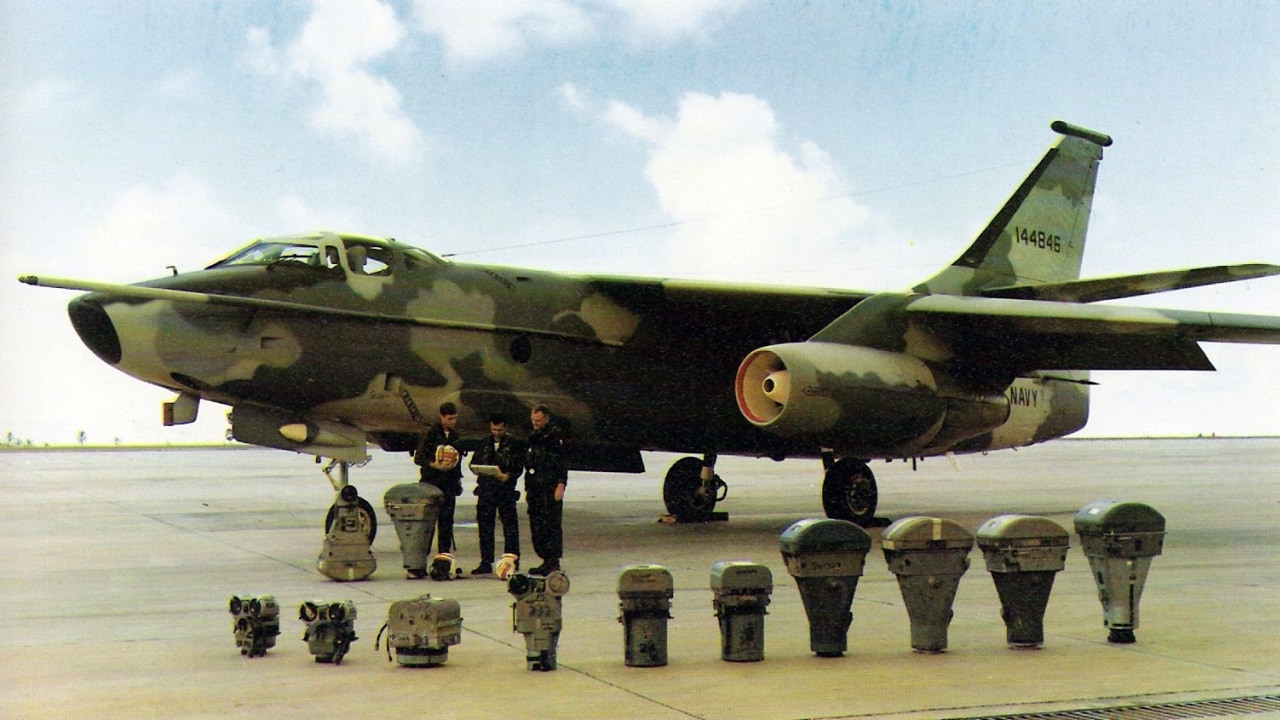
A camouflaged U.S. Navy Douglas RA-3B Skywarrior aircraft of reconnaissance squadron VAP-61 World Recorders (BuNo 144846) at Naval Air Station (NAS) Agana, Guam. Standing beside it are PH1c R. Laurie, LTJG D. Schwikert and LCDR Chas. D. Litford. On the ground in front of them are twelve cameras. VAP-61 was performed reconnaissance missions over Vietnam until it was disestablished on 1 July 1971. 144846 became an ERA-3B in 1982. It was later sold to Hughes Aircraft, inherited by Raytheon, (civil registration N547HA) and finally srcapped in 1999.
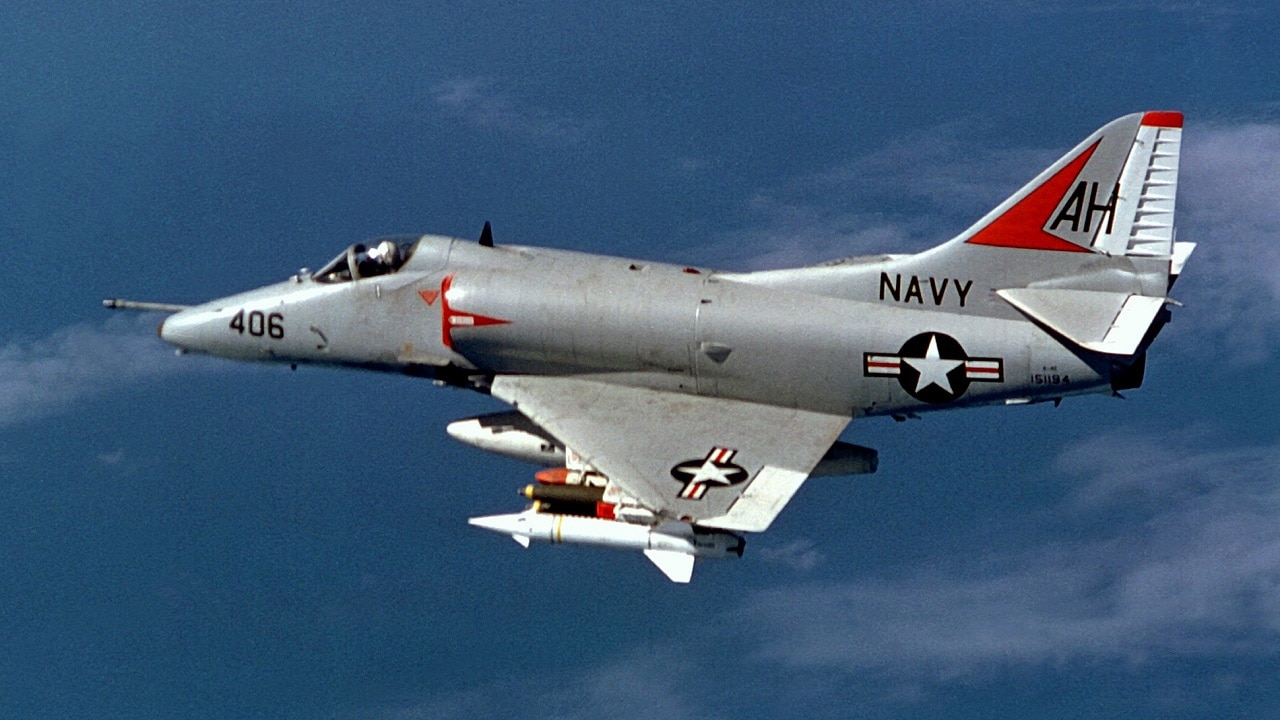
A U.S. Navy Douglas A-4E Skyhawk (BuNo 151194) from Attack Squadron 164 (VA-164) “Ghost Riders” en route to a target in North Vietnam on 21 November 1967. VA-164 was assigned Attack Carrier Air Wing 16 (CVW-16) aboard the aircraft carrier USS Oriskany (CVA-34) for a deployment to Vietnam from 16 June 1967 to 31 January 1968. The aircraft was piloted by Cmdr. William F. Span, executive officer of VA-164 and was armed with six Mk 82 500 lb (227 kg) bombs and two AGM-12 Bullpup missiles. The A-4E 151194 is today on display at Pacific Coast Air Museum, California (USA), painted in the colours of Marine Attack Squadron 131 (VMA-131) “Diamondbacks”.
The text, per the site, “was adopted as a key text at the Naval War College in 1976, the Air War College in 1978, and the Army War College in 1981. It has always been central at the U.S. Army’s School for Advanced Military Studies at Leavenworth (founded in 1983).”
The book, though, has had other periods where its influence was strong.
Clausewitz, post-Vietnam
“The late 1970s to the end of the First Gulf War were not the first time Clausewitz has been in fashion. Indeed, On War has been the bible of many thoughtful soldiers ever since Field Marshal Helmuth von Moltke [allegedly] attributed to its guidance his stunning victories in the wars of German unification (1864, 1866, 1870-71),” the Clausewitz site said. “Nor is it the first time that individual American soldiers and military thinkers have been attracted by his ideas: George Patton, Albert Wedemeyer, and—especially—Dwight Eisenhower were intensely interested in what he had to say.”
“It was, however, the first time that the American armed forces as institutions had turned to Clausewitz,” the homepage says.
It’s not difficult to see why the aftermath of the Vietnam War sparked such an interest in that particular philosopher among American military leaders.
“The sudden acceptability of Clausewitz in the wake of Vietnam is not difficult to account for, since among the major military theorists only Clausewitz seriously struggled with the sort of dilemma that American military leaders faced in the aftermath of their defeat there,” the Clausewitz homepage says.
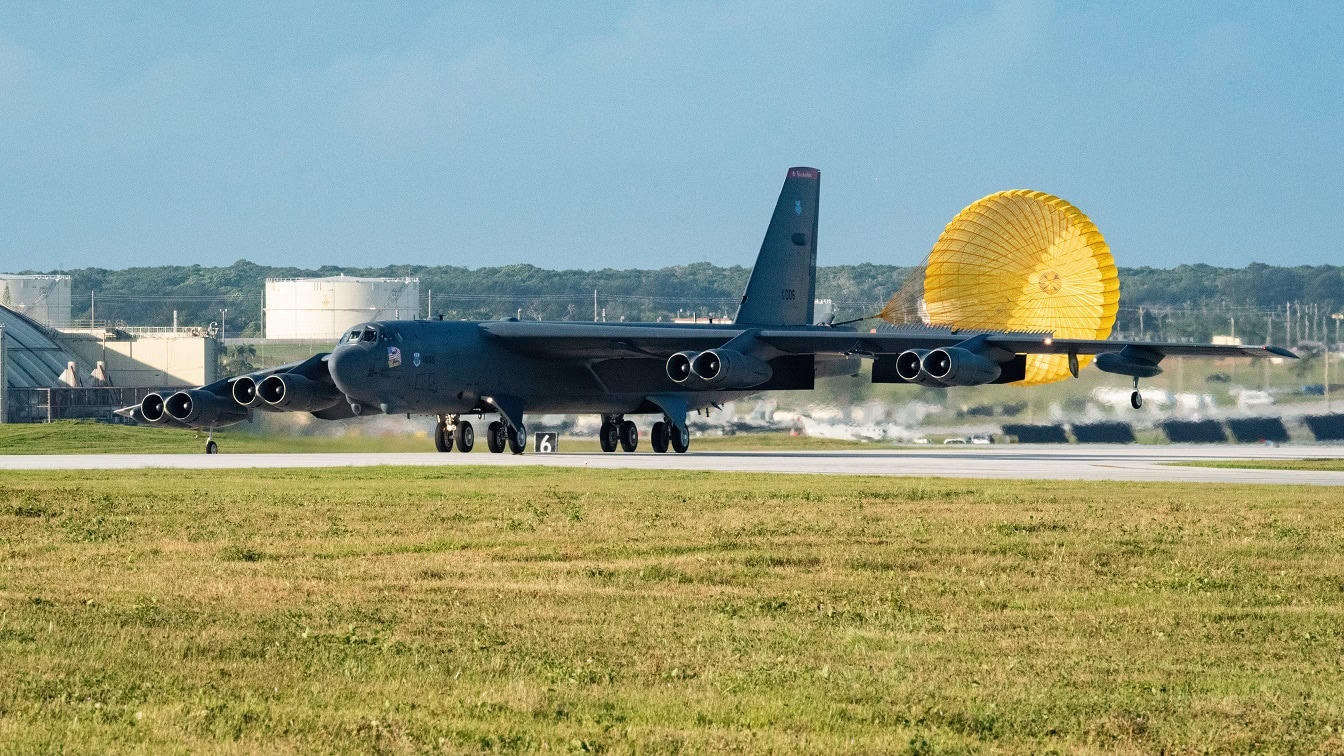
A B-52 Stratofortress from Barksdale Air Force Base, prepares to land on a flightline in support of a Bomber Task Force mission at Andersen Air Force Base, Guam, Feb. 9th, 2022. BTF missions demonstrate lethality and interoperability in support of a free and open Indo-Pacific. (U.S. Air Force photo by Senior Airman Jonathan E. Ramos)
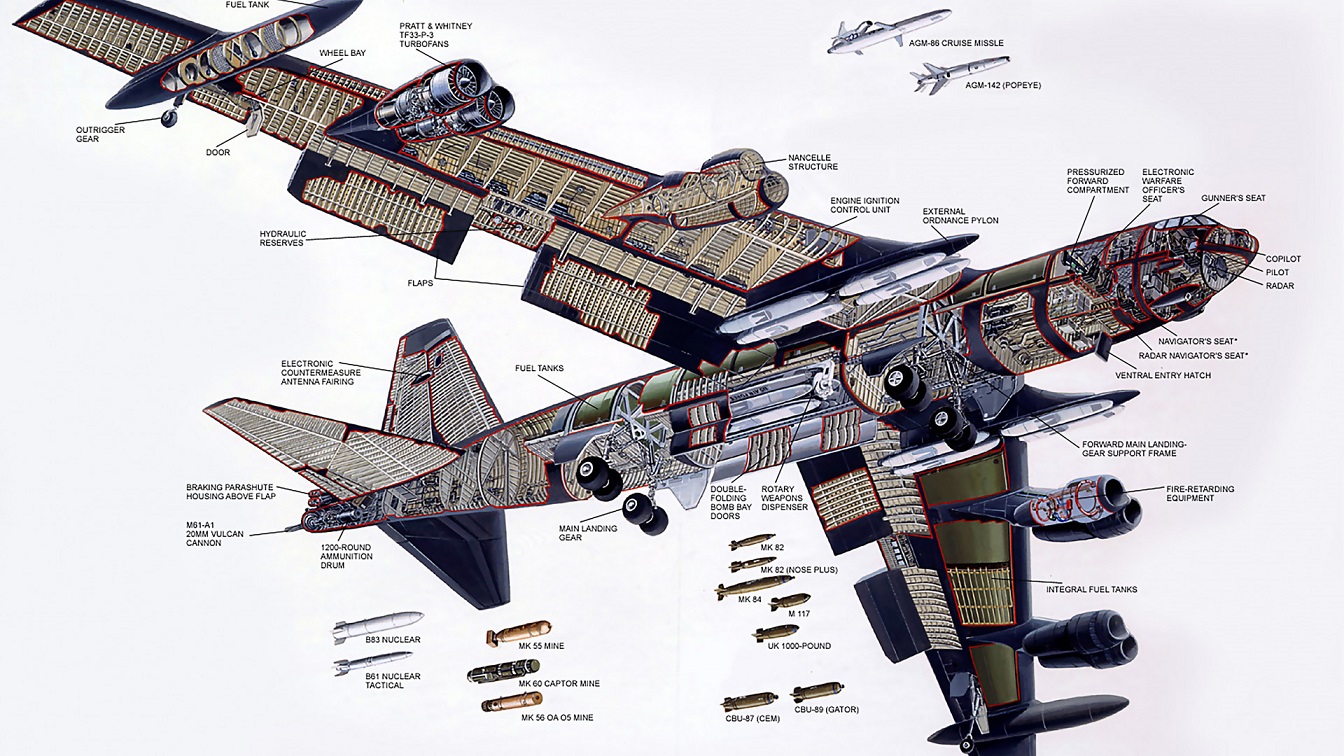
B-52 bomber. Image Credit: Creative Commons.
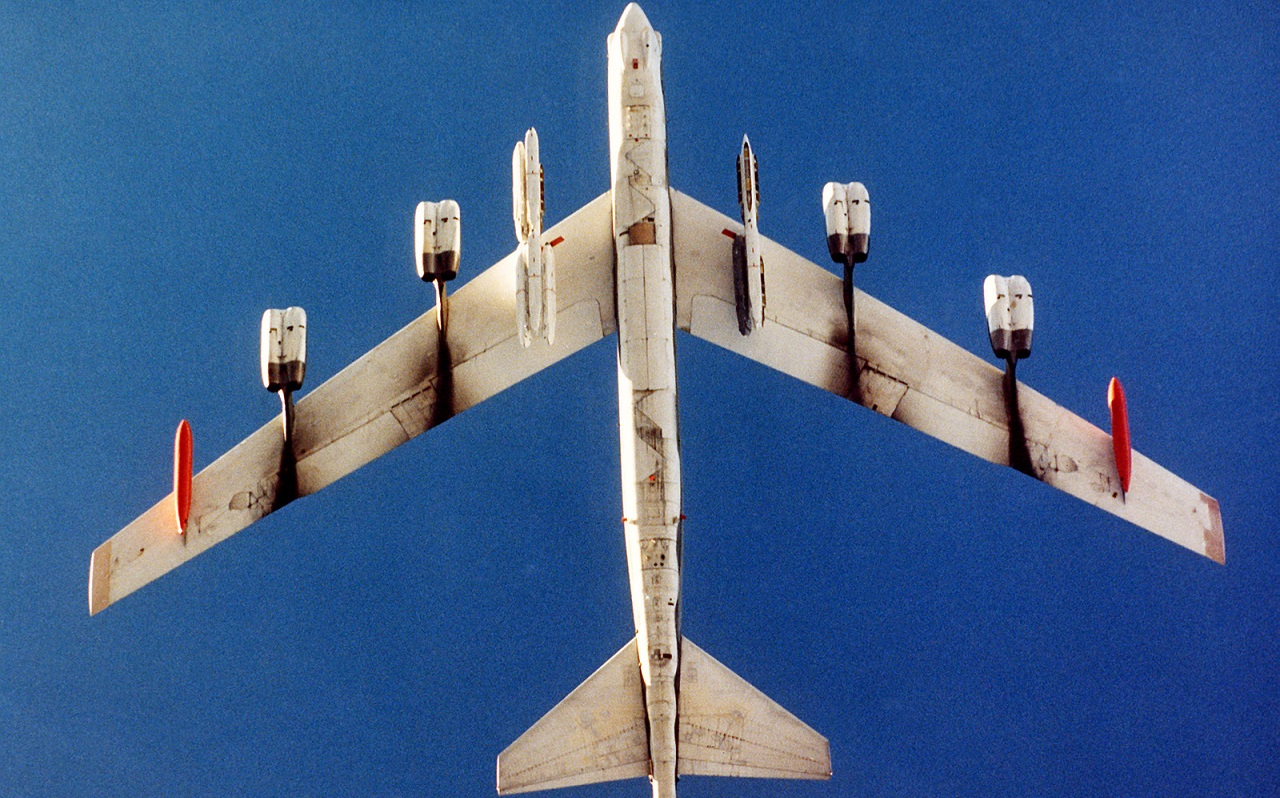
A B-52 Stratofortress aircraft flies overhead near the Air Force Flight Test Center. The Stratofortress is carrying AGM-86 air-launched cruise missiles.
“Clearly, in what had come to be scathingly called a “political war,” the political and military components of the American war effort had come unstuck. It ran against the grain of America’s military men to publicly criticize elected civilian leaders, but it was just as difficult to take the blame upon themselves.”
The homepage notes that the Clausewitz influence waned a bit after the Cold War, and especially after the quick win in the 1991 Persian Gulf War. As a result of this, per the homepage, “some of the steam went out of the American military reform movement. There was a natural tendency for soldiers not only to suggest that these victories showed that the problems had been fixed but to imply that there really hadn’t been much of a problem in the first place.”
The Crimson Tide Debate
By the mid-1990s, Clausewitz’s ideas were being debated in an unlikely place: In a Hollywood blockbuster movie.
The film was 1995’s Crimson Tide, in which Gene Hackman and Denzel Washington played rival Naval officers aboard a nuclear submarine.
The movie came out almost exactly 20 years after the end of the Vietnam War, at a time when both officers would have been active during that period of Clausewitz’s strong influence.
Per the American Rhetoric website, Captain Ramsey (Hackman) and Commander Hunter (Washington) are debating military philosophy. It’s established that Ramsey has been in combat before, likely in the Vietnam War, while Hunter has studied extensively but not served in combat previously.
Clausewitz, of course, lived at a time before nuclear war, but Crimson Tide hinges on the possibility of it.
The exchange goes like this:
Captain Ramsey: “At the Naval War College, it was metallurgy and nuclear reactors, not 19th-century philosophy. “War is a continuation of politics by other means.” Von Clausewitz.”
Commander Hunter: I think, sir, that what he was actually trying to say was a little more —
Captain Ramsey: Complicated?
Commander Hunter: Yes, the purpose of war is — is to serve a political end, but the true nature of war is to serve itself.
Captain Ramsey: Ha! I’m very impressed. In other words, the sailor most likely to win the war is the one most willing to part company with the politicians and ignore everything except the destruction of the enemy. You’d agree with that.
Commander Hunter: I’d agree that that’s what Clausewitz was trying to say.
Captain Ramsey: But you wouldn’t agree with it?
Commander Hunter: No, sir, I do not. No, I — I just think that in the nuclear world, the true enemy can’t be destroyed.
Captain Ramsey: Attention on deck. Von Clausewitz will now tell us exactly who the real enemy is.
Commander Hunter: In my humble opinion, in the nuclear world, the true enemy is war itself.
The words proved prescient, as by the end of the movie, the two officers are on a collision course, with a possible accidental nuclear launch putting the end of the world on the table.
The Clausewitz homepage actually contains an analysis of the Crimson Tide scene, noting that “the content is a little bit debatable (but we’ve never seen anything on Clausewitz that wasn’t debatable).” It does not address, however, that Clausewitz’s first name was not “Von,” and experienced officers like those would be unlikely to refer to him as “Von Clausewitz” and not “Clausewitz.”
“When used it at the National War College as a prelude to a seminar, it always sparked things off. You have to watch it closely—we think it’s a valid analysis, but there are some tricks in it,” the page says. “For instance, Clausewitz does not argue that the commander who ignores the political issues is the one most likely to win. But he does make an argument in very similar language that the opponent who considers his objectives to be worth a higher price has an advantage, which was obviously the case in, say, Vietnam.
The Quote:
Included in “On War” is the line “war is an act of violence pushed to its utmost limits.” The line was once cited in a book review of an autobiography about the brutality of the Vietnam War, described as “not only a tale of war but also of surviving and finding something worth fighting for.”
About the Author: Stephen Silver
Stephen Silver is an award-winning journalist, essayist, and film critic, and contributor to the Philadelphia Inquirer, the Jewish Telegraphic Agency, Broad Street Review, and Splice Today. The co-founder of the Philadelphia Film Critics Circle, Stephen lives in suburban Philadelphia with his wife and two sons. For over a decade, Stephen has authored thousands of articles that focus on politics, national security, technology, and the economy. Follow him on X (formerly Twitter) at @StephenSilver, and subscribe to his Substack newsletter.