
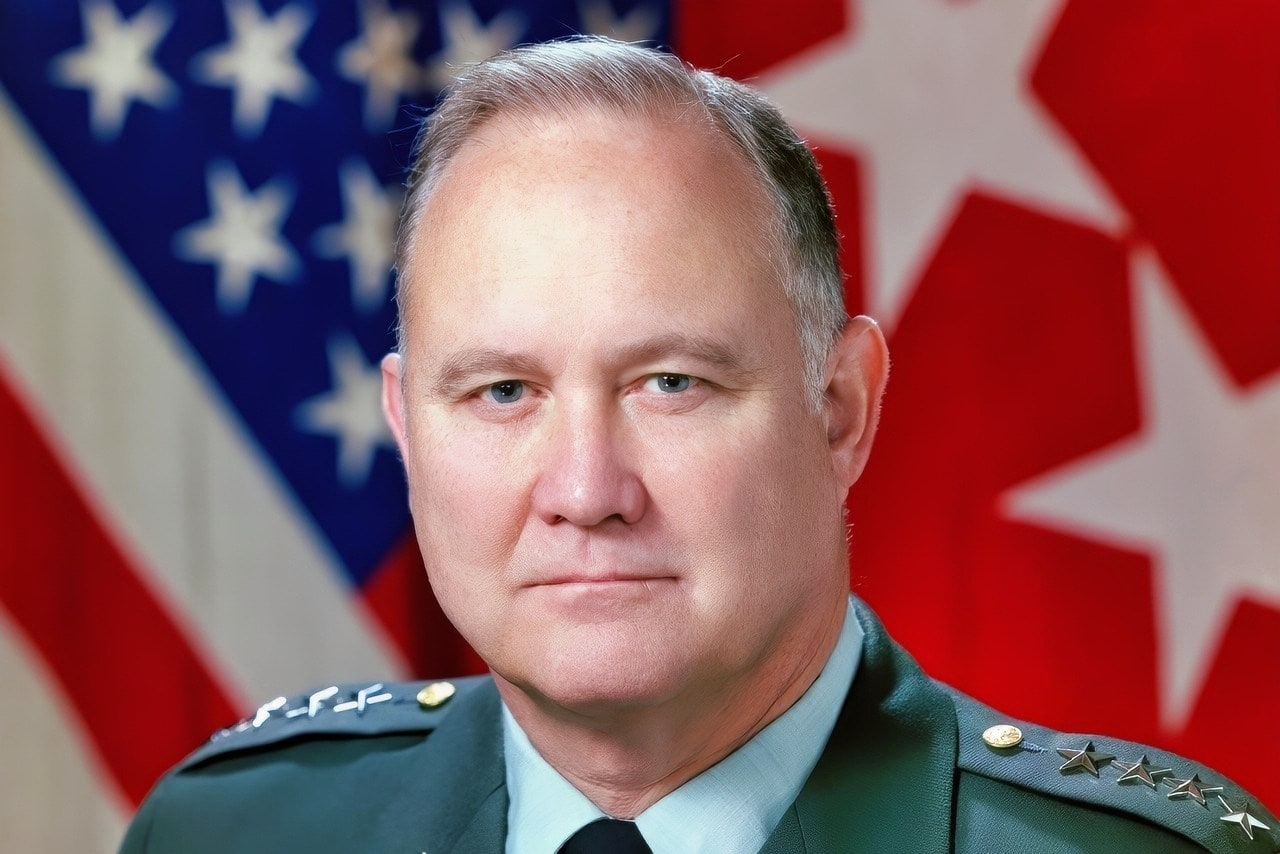
Key Points and Summary – H. Norman Schwarzkopf, the son of a U.S. major general and New Jersey state police founder, was steeped in military tradition from childhood.
-Educated at Valley Forge and West Point, he built a reputation as a tough, exacting infantry officer and combat leader in Vietnam, earning multiple Silver Stars, Bronze Stars, and Purple Hearts.
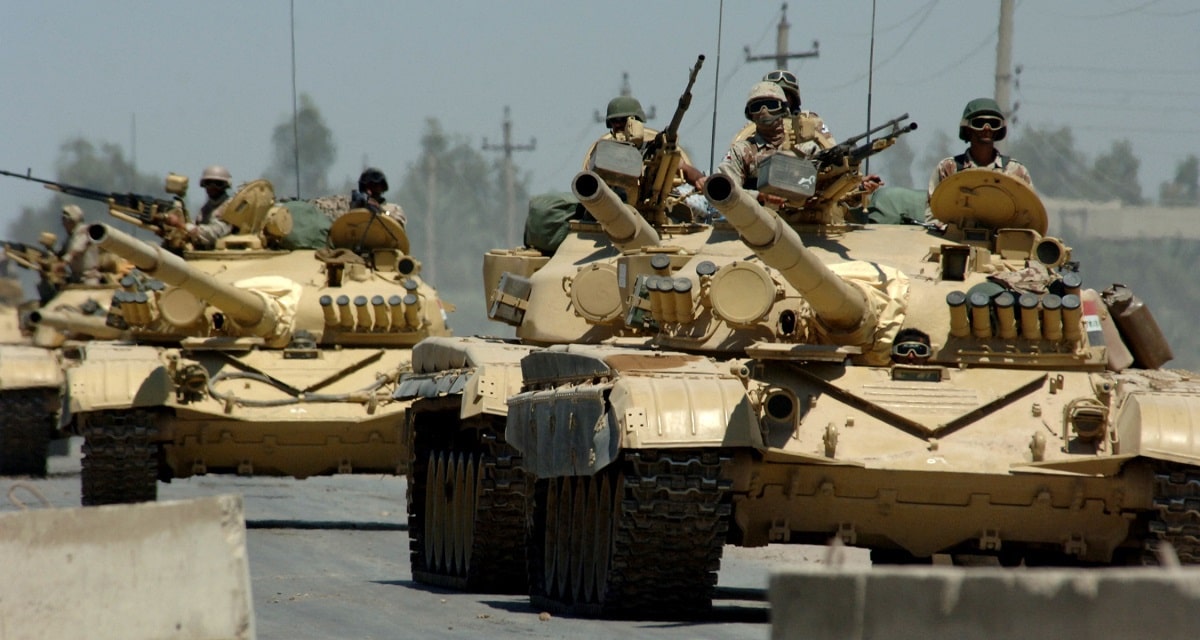
Iraqi Army T-72M main battle tanks. The T-72M tank was a common Iraqi battle tank used in the Gulf War.
-Rising through key command and staff posts in the 1970s and 1980s, he helped lead the invasion of Grenada before taking over U.S. Central Command.
-Schwarzkopf became a household name in 1991, orchestrating Operation Desert Storm’s swift victory over Iraq and cementing his legacy as “Stormin’ Norman.”
How ‘Stormin’ Norman’ Schwarzkopf Became America’s Reluctant War Hero
“The more you sweat in peace, the less you bleed in war.” That quote belongs to US Army General H. Norman Schwarzkopf (AKA “The Bear,” “Stormin’ Norman”).
Though it wasn’t exactly an original saying of his (both Gen. George S. Patton and SEAL Team 6 founding commander “Demo Dick” Marcinko said essentially the same thing) nor as memorable as his quips from his press conferences during the 1991 Persian Gulf War (Operation Desert Storm) that made him famous, that doesn’t make it any less accurate.
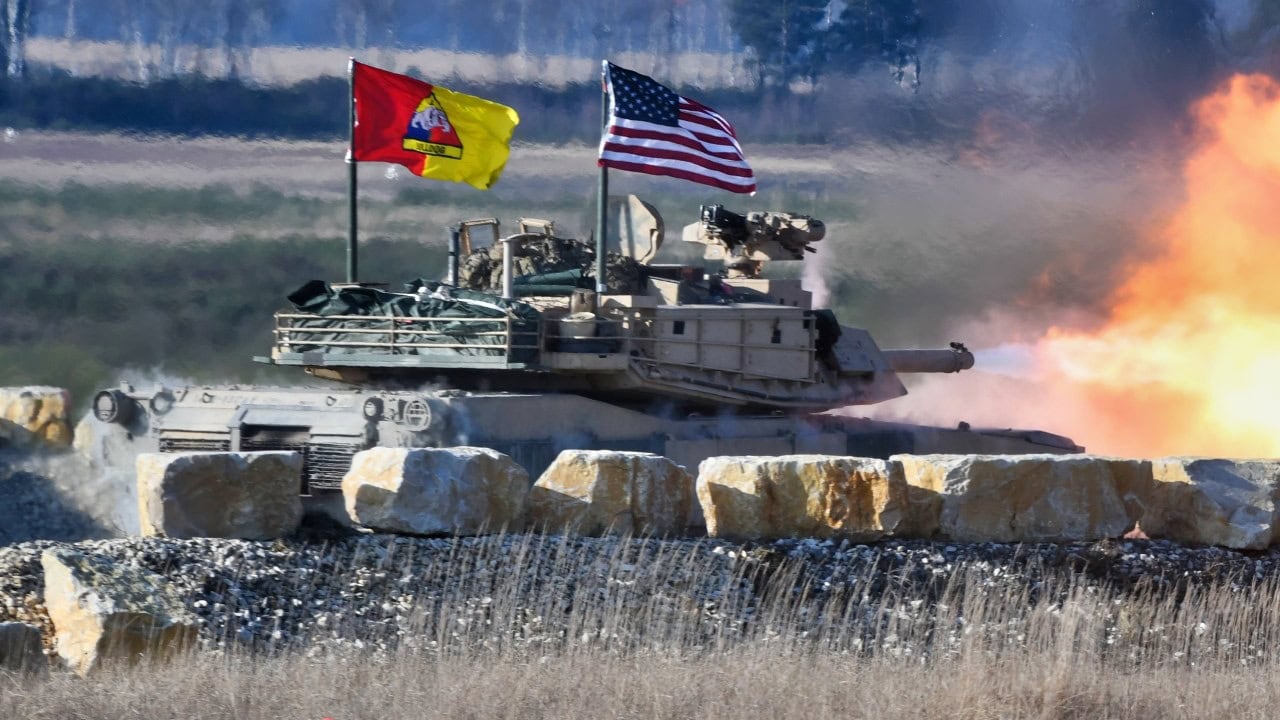
A U.S. M1 Abrams engages a target during the final event on Feb. 17, 2025 as part of the U.S. Army Europe and Africa International Tank Challenge at 7th Army Training Command’s Grafenwoehr Training Area, Germany. The USAREUR- AF International Tank Challenge builds tactical skills and enhances esprit de corps across the 11 teams from five participating allied and partner for peace nations. (U.S. Army photo by Sgt. Collin Mackall)
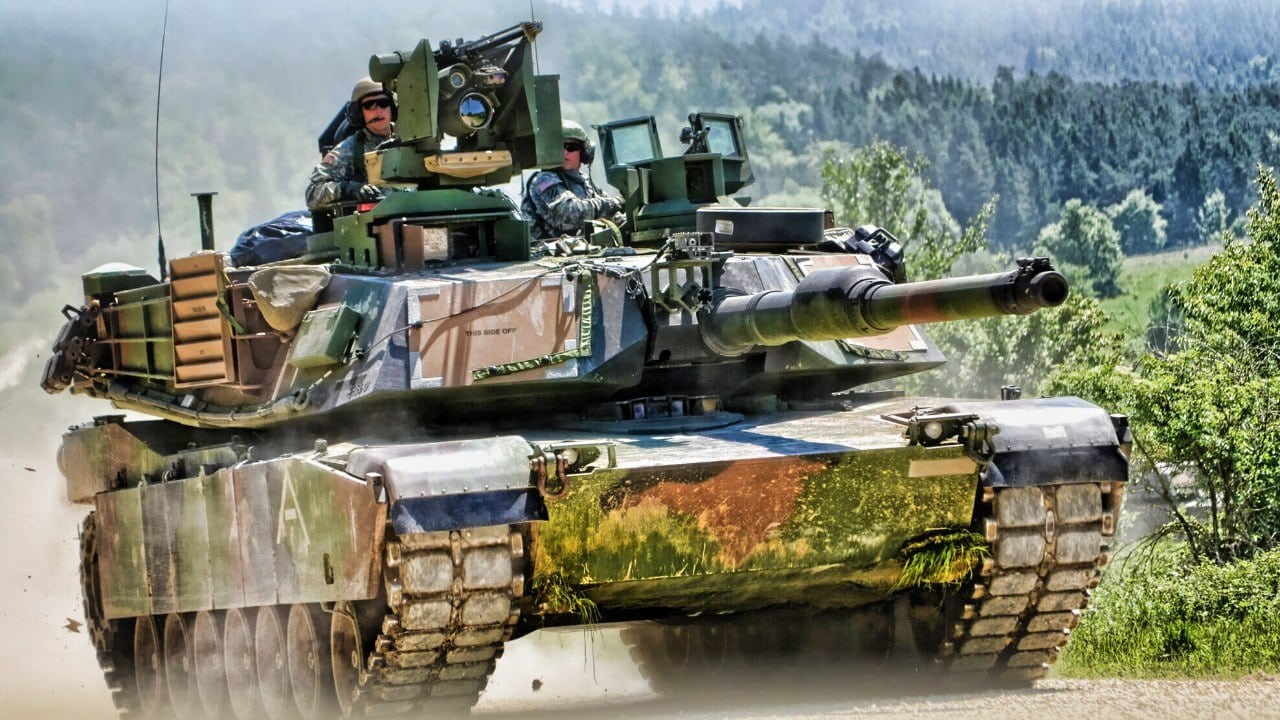
Poland M1 Abrams Tank. Image Credit: General Dynamics.
We now take a brief look at the remarkable career of this American soldier and folk hero.
Early Life
Herbert Norman Schwarzkopf Jr. was born on August 22, 1934, in Trenton, New Jersey, to Maj. Gen. Herbert Norman Schwarzkopf Sr. and Ruth Alice (née Bowman).
Herbert Sr. was a 1917 graduate of the United States Military Academy at West Point, a veteran of both World Wars, and the founding Superintendent of the New Jersey State Police.
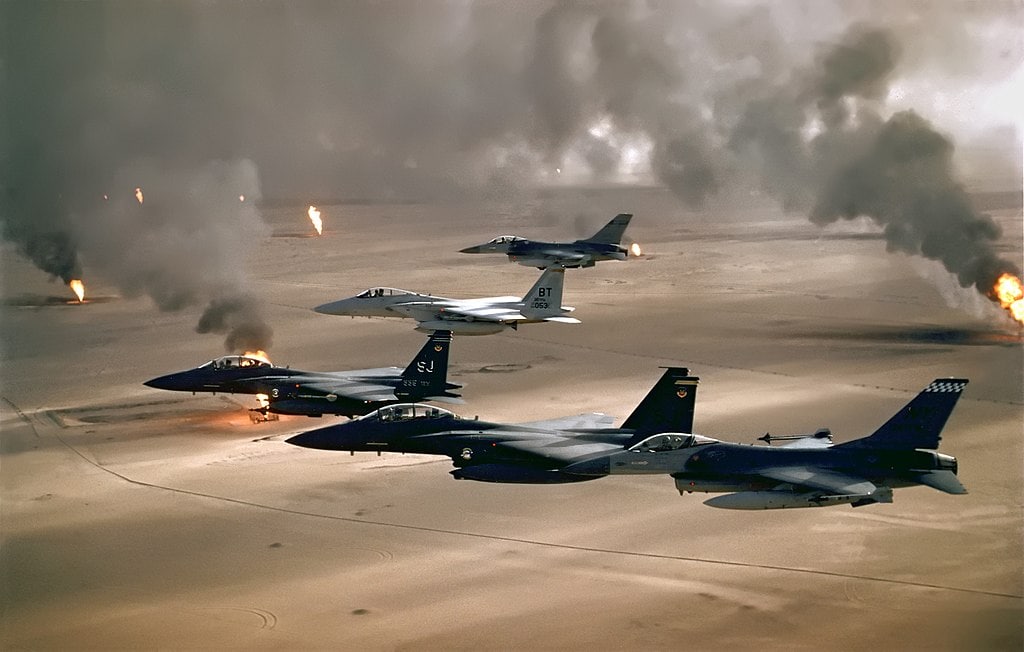
USAF aircraft fly over retreating Iraqi forces in Kuwait during Operation Desert Storm.
Clearly, young Norman Jr. had a strong martial tradition in his family.
At the age of 10, he was a cadet at the Bordertown Military Institute, and at age 12, he moved with his father to Tehran, Iran, whereupon he learned shooting, horseback riding, and hunting; he also developed a lifelong interest in Middle Eastern culture (which would serve him well as an adult, to say the least). He graduated from Valley Forge Military Academy in 1952, where he was a member of Mensa and valedictorian of his class of 150.
Following in his father’s steps at West Point was a logical next step.
West Point
During his plebe (freshman) year, Cadet Schwarzkopf was given the nickname “Schwarzie” just like his dad, and older cadets often pushed him to imitate his father’s radio show as a traditional act of hazing.
Taking that hazing in stride, he took to the West Point student life like a fish to water, where he played football, wrestled, sang, and conducted the West Point Chapel choir. He graduated 43rd of 480 in the class of 1956 and was commissioned as a second lieutenant in the infantry.
Company Grade Officer (Junior Officer) Years
2LT Schwarzkopf attended the Infantry Officer Basic Course (OBC) and earned his Parachutist Badge from October 1956 to March 1957. His first operational posting was as a platoon leader and later executive officer of E Company, 2nd Airborne Battle Group, 187th Airborne Infantry Regiment, 101st Airborne Division (the “Screaming Eagles“), at Fort Campbell, Kentucky. During that assignment, he met all too many officers and NCOs alike who “had no sense of duty or honor, and who saw the world through an alcoholic haze.”

Secretary of Defense Richard Cheney; Gen. Colin Powell, Chairman Joint Chiefs of Staff; and Gen. Norman Schwarzkopf, Commander, U.S. Central Command, during an award ceremony prior to the Welcome Home parade honoring the coalition forces of Desert Storm.
In July 1959, now-1LT Schwarzkopf was given his OCONUS (Outside the Continental United States) assignment, with the 6th Infantry Regiment (“Regulars, By God!“) in West Germany. A year later, he was assigned as aide-de-camp to Brigadier General Charles Johnson, who commanded the Berlin Brigade.
1LT Schwarzkopf was promoted to captain in July 1961. In May 1964, CPT Schwarzkopf earned a Master of Science degree in mechanical and aerospace engineering from the University of Southern California (USC), which just so happens to be this writer’s undergraduate alma mater.
The Vietnam War
After spending a year teaching at West Point, he volunteered to serve in the Vietnam War, arriving there in early 1965 and being promoted to major shortly thereafter.
On August 3, 1966, MAJ Schwarzkopf was first “blooded” in combat during the Battle of Đức Cơ AKA the Battle of Landing Zone 27V (in turn part of Operation Paul Revere II); he was awarded the Silver Star for his courageous battlefield leadership therein.
After completing that first tour of duty in Nam (he earned a second Silver Star and a Purple Heart along the way), he returned Stateside to fulfill the remaining two years of his teaching obligation at West Point. 1968 was a double celebration year for him, as that was the year he (1) got promoted to lieutenant colonel and (2) married his beloved wife Brenda Holsinger, with whom he had three children (Cynthia, Jessica, and Christian).
LTC Schwarzkopf returned to Vietnam for a second tour in June 1969; there, he earned a third Silver Star—as well as a second Purple Heart, the Legion of Merit, and three Bronze Stars—for risking his life for the soldiers under his command, particularly during a minefield medevac incident in March 1970.
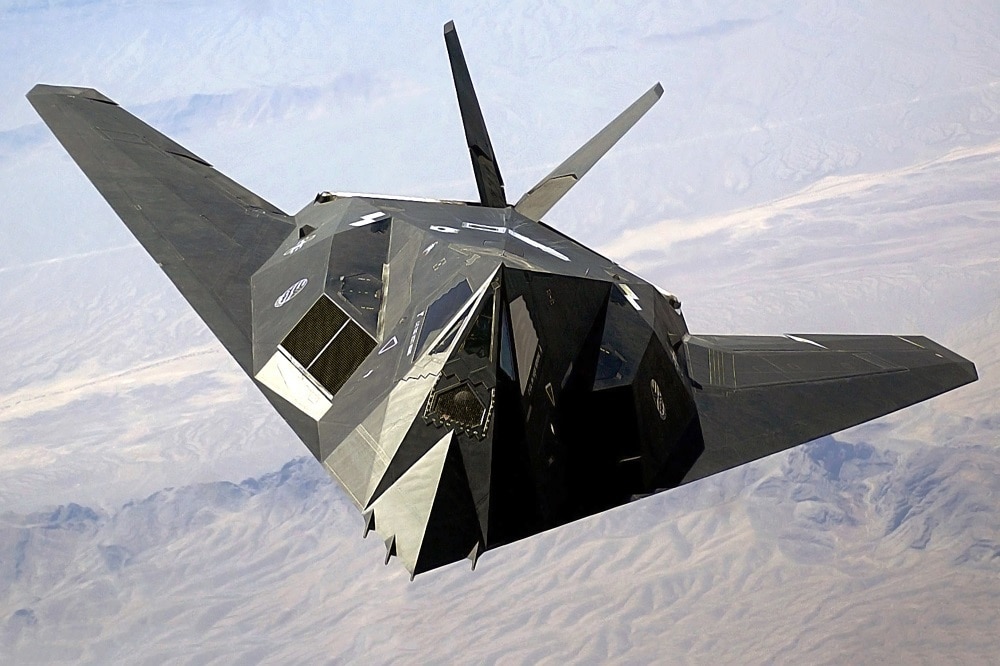
The USAF F-117 Nighthawk, one of the key aircraft used in Operation Desert Storm.
The 1970s and 1980s
Between 1970 and 1983, Schwarzkopf held a number of assignments, earning promotions to full colonel, brigadier general, and major general.
In October 1983, he was back in battle, tabbed as deputy commander of the invasion of Grenada (Operation Urgent Fury). Though he considered the mission a success, he also saw the need to develop greater co-operation between the services for future joint operations.
He was promoted to lieutenant general on July 1, 1986, and in 1988, he received his fourth star and was appointed Commander-in-Chief of US Central Command (CENTCOM), thus setting the stage for his greatest moment of triumph.
Becoming a Legend: Operation Desert Storm and Beyond
In response to then-Iraqi dictator Saddam Hussein invaded Kuwait in 1990, GEN Schwarzkopf masterminded Operation Desert Storm, showcasing both his abilities in leading a multinational military coalition leader—exemplified by the legendary “Left Hook” maneuver that totally took Saddam’s forces by surprise and ended the ground campaign phase in just four days—as well as his aforementioned witty repartee with the press.
Schwarzkopf was offered the position of Army Chief of Staff by Secretary of the Army Michael P.W. Stone, but he declined and instead retired from active service in August 1991. The following year, he published his bestselling memoir, “It Doesn’t Take a Hero.” In 2002, then-President George W. Bush awarded him the Presidential Medal of Freedom.

President George H.W. Bush at his Oval Office desk
Norman Schwarzkopf died of pneumonia at the age of 78 on December 27, 2012. He was cremated, and his ashes were buried near those of his father at West Point Cemetery.
About the Author: Christian D. Orr, Defense Expert
Christian D. Orr is a Senior Defense Editor. He is a former Air Force Security Forces officer, Federal law enforcement officer, and private military contractor (with assignments worked in Iraq, the United Arab Emirates, Kosovo, Japan, Germany, and the Pentagon). Chris holds a B.A. in International Relations from the University of Southern California (USC) and an M.A. in Intelligence Studies (concentration in Terrorism Studies) from American Military University (AMU). He is also the author of the newly published book “Five Decades of a Fabulous Firearm: Celebrating the 50th Anniversary of the Beretta 92 Pistol Series.”