
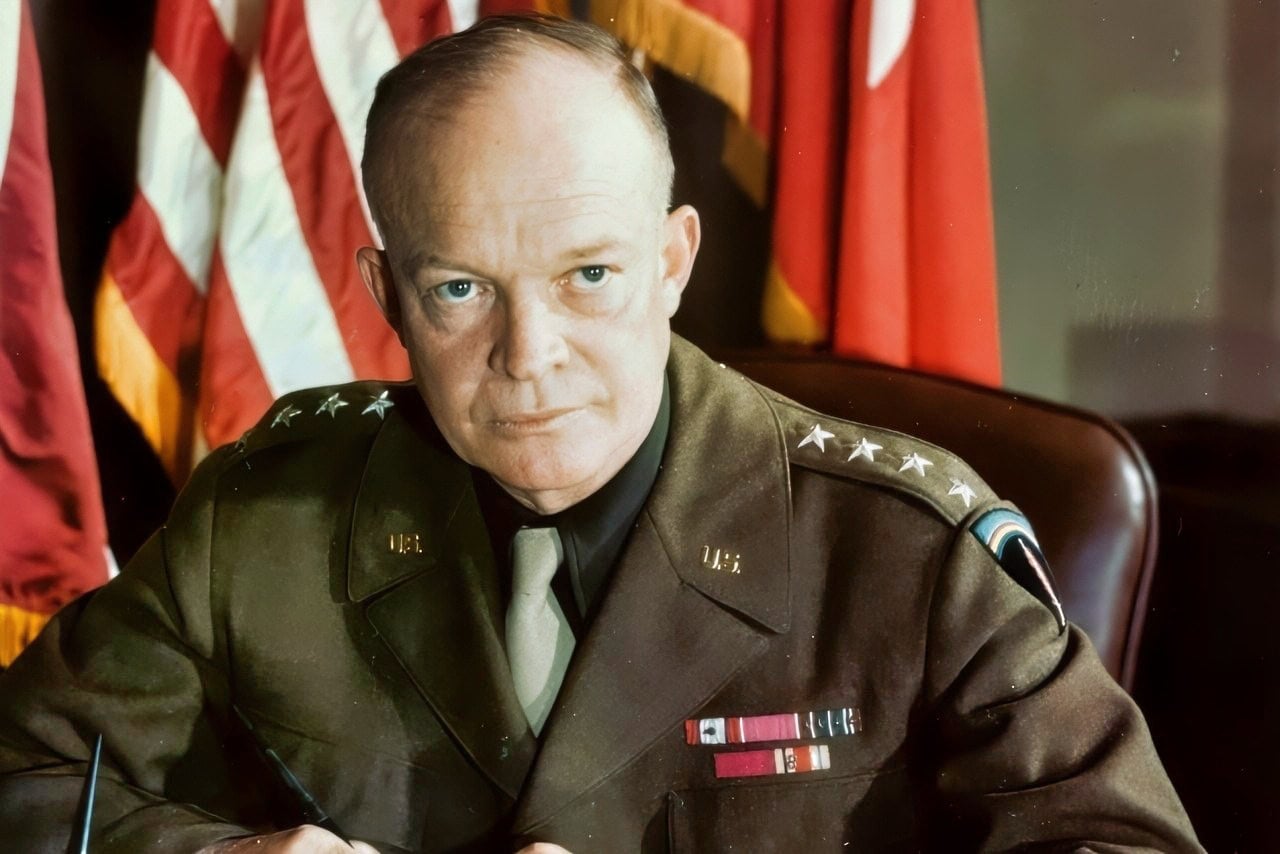
Synopsis: General Dwight D. Eisenhower famously called leading a platoon as a second lieutenant “the most terrible job in warfare,” yet he never experienced frontline combat himself.
-Despite missing action in World War I due to the Armistice, Eisenhower rose through the ranks to become the Supreme Commander of Operation Overlord.
-His lack of “trench warfare” trauma may have actually aided his strategic vision for D-Day.
-Known for his immense responsibility, Eisenhower even penned a secret letter accepting full blame in case the invasion failed—a testament to the leadership that eventually defeated Nazi Germany and immortalized him in history.
Zero Combat Experience: How Eisenhower Led D-Day Without Ever Fighting on the Frontline
“The most terrible job in warfare is to be a second lieutenant leading a platoon when you are on the battlefield.” -Dwight D. Eisenhower
That quote is attributed to Dwight David “Ike” Eisenhower. U.S. Army five-star General of the Army and later President of the United States (1953-1961).
As profound as that statement was, Ike wasn’t speaking from firsthand experience, as he never fought in frontline combat, whether as a second lieutenant or any other rank for that matter.
But this lack of experience didn’t prevent him from eventually immortalizing himself as the overall commander of the single most important Allied military operation of the Western European Theatre of World War II, that being Operation Overlord, the Allied invasion of Nazi-occupied Western Europe, better known as simply “D-Day.”
Lack of Combat Experience: Overcoming a Career Obstacle
Regarding Eisenhower never seeing combat action, it certainly wasn’t for lack of trying.
When the United States first entered World War I, he was initially ordered to the Tank Corp at Fort Meade, Maryland. Ike did finally receive orders to France, but the Armistice of November 11, 1918 was signed the week before he was set to deploy.
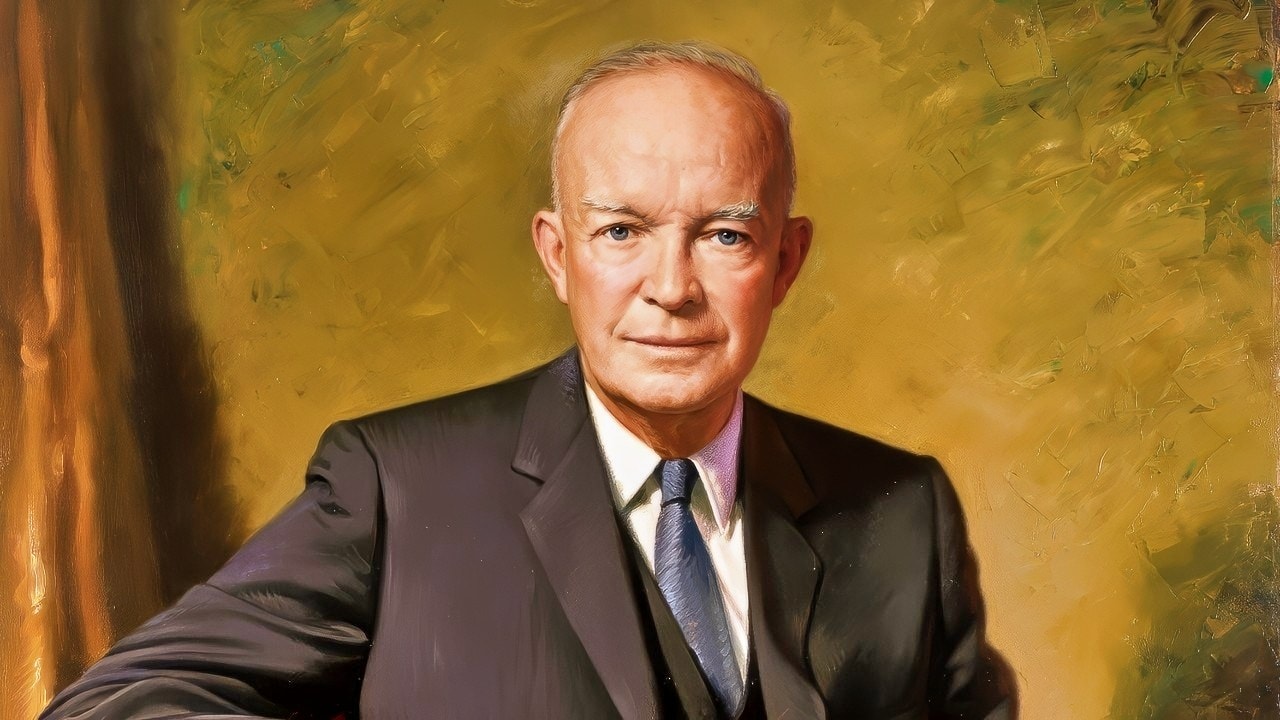
Former General Dwight D. Eisenhower. Image Credit: Creative Commons.
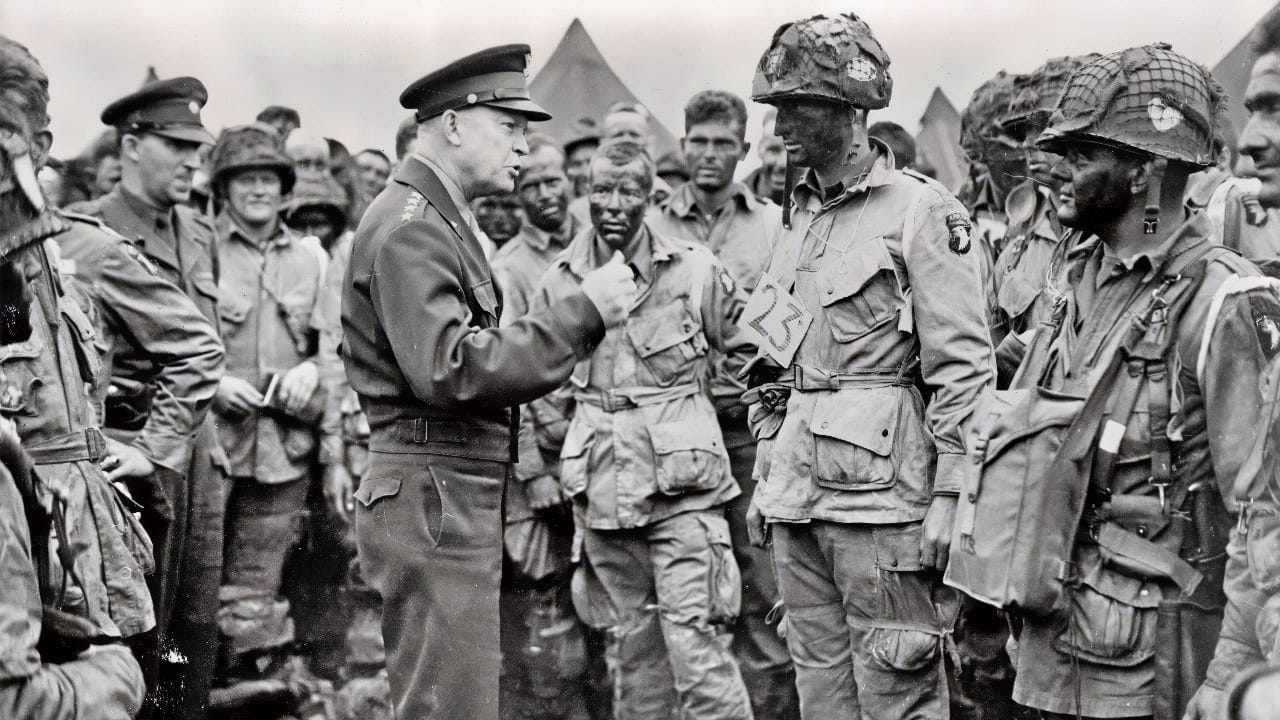
Dwight D. Eisenhower D-Day 1944. Image Credit: Creative Commons.
According to the National Park Service (NPS), “To many historians, this lack of combat experience during World War I was an advantage to General Eisenhower [during World War II] because his strategic and tactical mindset was not trapped in the horrors of trench warfare.”
Be that as it may, Ike was a Brigadier General on the General Staff in Washington, DC, when World War II began, and that lack of combat experience made Army Chief of Staff Gen. George C, Marshall reluctant to give Eisenhower a combat command, as depicted in the opening scene of the 1979 TV miniseries “Ike: The War Years” (starring Academy Award winner Robert Duvall in the titular role and Dana Andrews as Gen. Marshall).
Nonetheless, Marshall showed his confidence in Eisenhower by making him the War Planner for the Philippines and the Far East, which commenced Eisenhower’s meteoric rise in World War II.
Supreme Commander and D-Day Immortality
It was in December 1943 that President Franklin Delano Roosevelt appointed Ike as Supreme Commander of the Allied Expeditionary Force and tasked him with executing Operation Overlord.
The buildup to D-Day involved much training, trials, and tribulations, particularly repeated delays due to nasty weather. (There was also the smaller matter of fooling Adolf Hitler into thinking that the invasion would commence at the Pas-de-Calais rather than Normandy.)
It is succinctly summed up in the 1985 book “Victory in Europe: D-Day to VE Day In Full Color” by Max Hastings (with incredible color photographs by famed filmmaker George Stevens): “As it was, Eisenhower assumed the vast responsibility first, for postponing the invasion on the 5th and committing his vast force to another day of confinement on their ships; and second, for setting the invasion in motion, gambling hugely on the accuracy of Group-Captain [James Martin] Stagg’s prediction of a weather ‘window’ on the 6th. ‘I’m quite positive we must give the order,’ he said at the meeting at 9.45 om on 4 June. ‘I don’t like it, but there it is…I don’t see how we can possibly do anything else.’”
Immortalization in Pop Culture
Gen Eisenhower’s famous meeting with the paratroopers of the 101st Airborne Division (the “Screaming Eagles”) in Newbury, England on the eve of the D-Day invasion—wherein he eschewed pomp & circumstance and instead literally joked & smoked with the troops—is movingly depicted in the 2004 made-for-television movie “Ike: Countdown to D-Day,” starring Tom Selleck in the titular role (fans of Tom’s curly-haired, mustachioed Thomas Magnum character in the classic 1980s TV series “Magnum, P.I.” will have a hard time recognizing him as the bald-domed, clean-shaven Gen. Eisenhower).
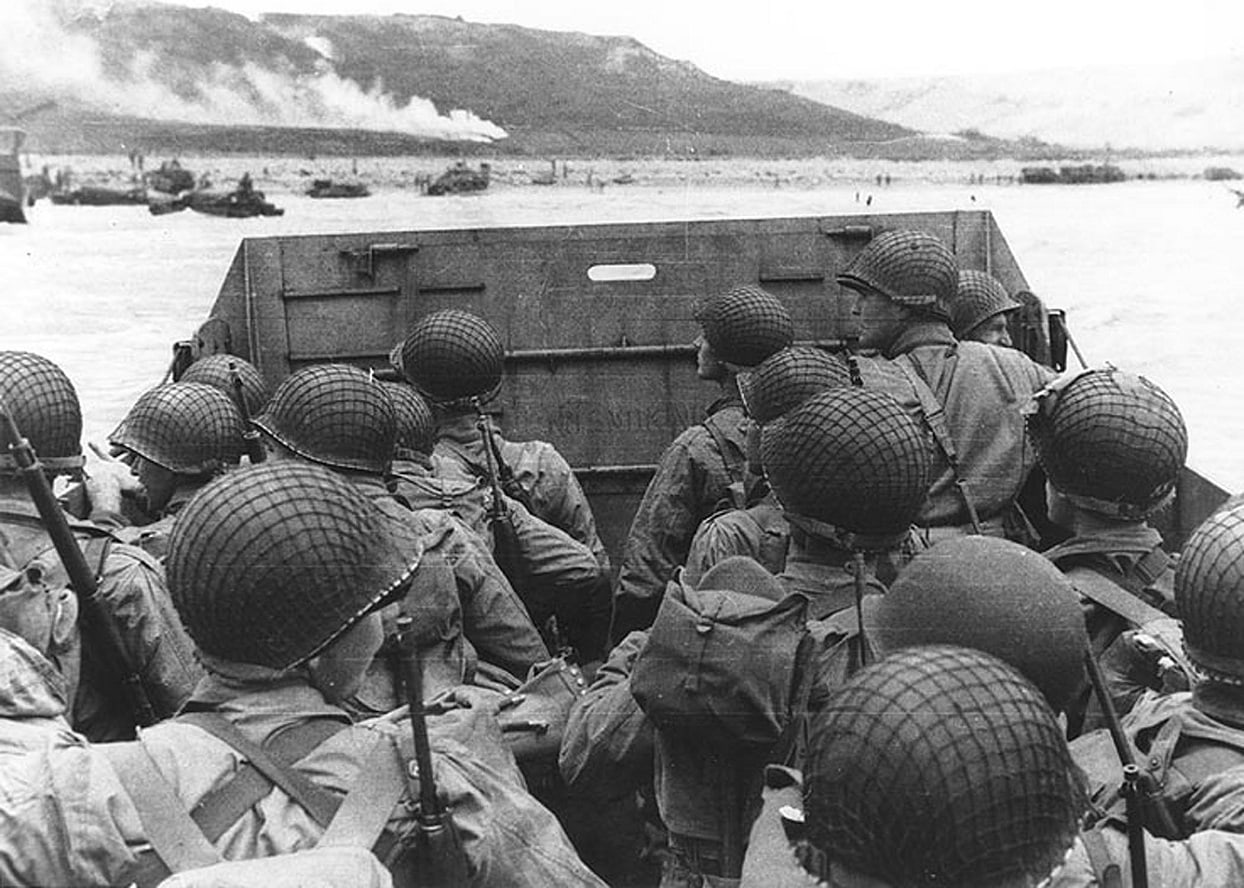
Troops in an LCVP landing craft approach Omaha Beach on D-Day, June 6, 1944. Note the helmet netting, faint “No Smoking” sign on the LCVP’s ramp, the M1903 rifles and M1 carbines carried by some of these men.
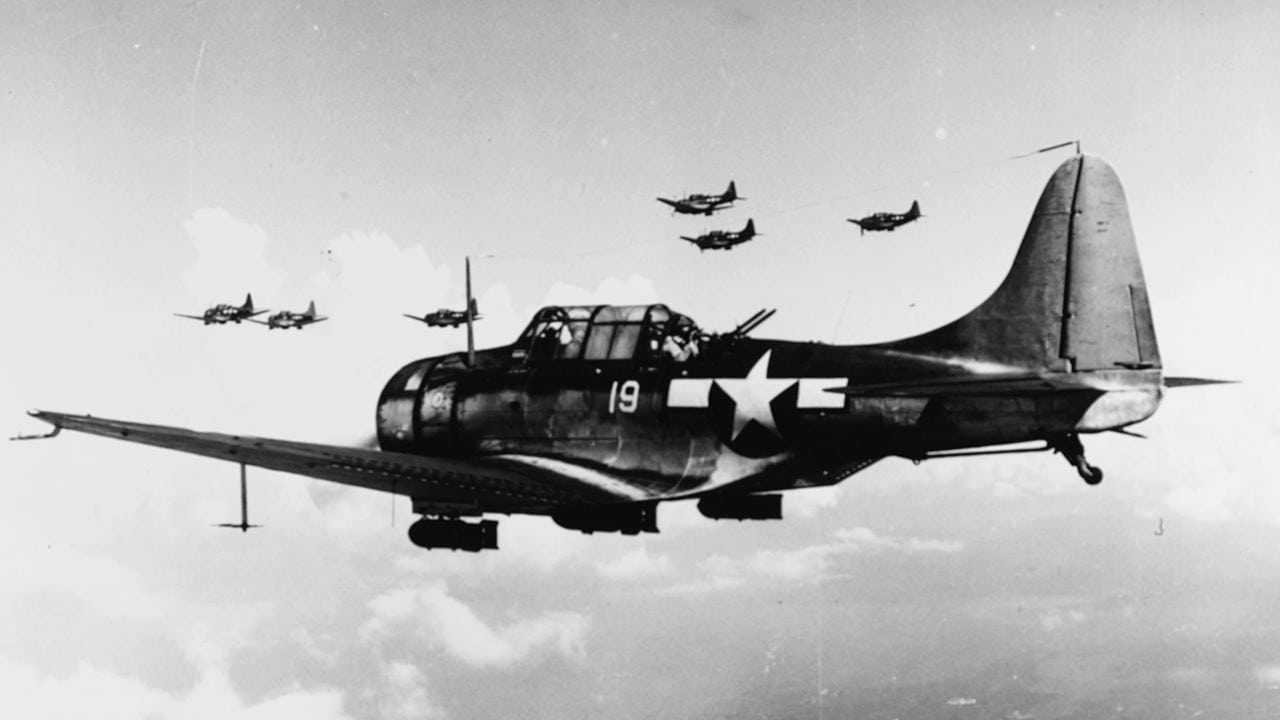
U.S. Navy Douglas SBD-5 Dauntless dive bombers of Bombing Squadron 16 (VB-16), Carrier Air Group 16, from the aircraft carrier USS Lexington (CV-16), fly over the invasion fleet off Saipan, on “D-Day”, 15 June 1944.
After his meeting with the troops ends, we see and hear Selleck as Ike sitting in his staff car, preparing a sobering letter to give to the press in preparation for a worst-case scenario, in which he accepts full responsibility for the hypothetical failure.
Fortunately, as we know in the benefit of 20/20 hindsight, that letter proved unnecessary. As noted by the onscreen narrative just before the final credits start rolling, “The Allied assault on the beaches of Normandy was a success. Although casualties were great [especially at Omaha Beach]…they were far less than original estimates.”
About the Author: Christian D. Orr, Defense Expert
Christian D. Orr is a Senior Defense Editor. He is a former Air Force Security Forces officer, Federal law enforcement officer, and private military contractor (with assignments worked in Iraq, the United Arab Emirates, Kosovo, Japan, Germany, and the Pentagon). Chris holds a B.A. in International Relations from the University of Southern California (USC) and an M.A. in Intelligence Studies (concentration in Terrorism Studies) from American Military University (AMU). He is also the author of the newly published book “Five Decades of a Fabulous Firearm: Celebrating the 50th Anniversary of the Beretta 92 Pistol Series.”