
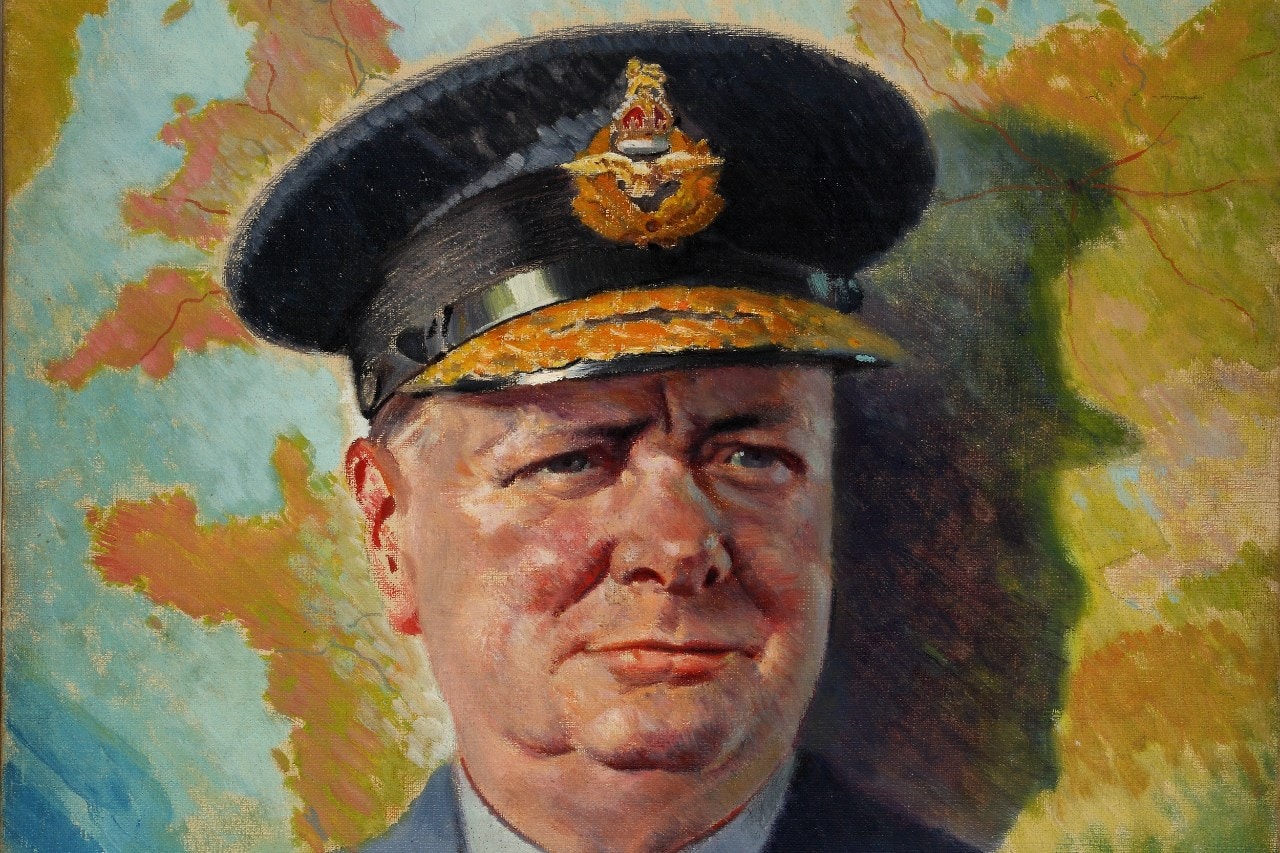
Synopsis: Winston Churchill’s line—“The story of the human race is war”—captures his bleak view that conflict is not an exception but a recurring feature of history.
-Written in the shadow of World War I, the quote reflects Churchill’s belief that “peace” is often a short, fragile pause between outbreaks of violence.
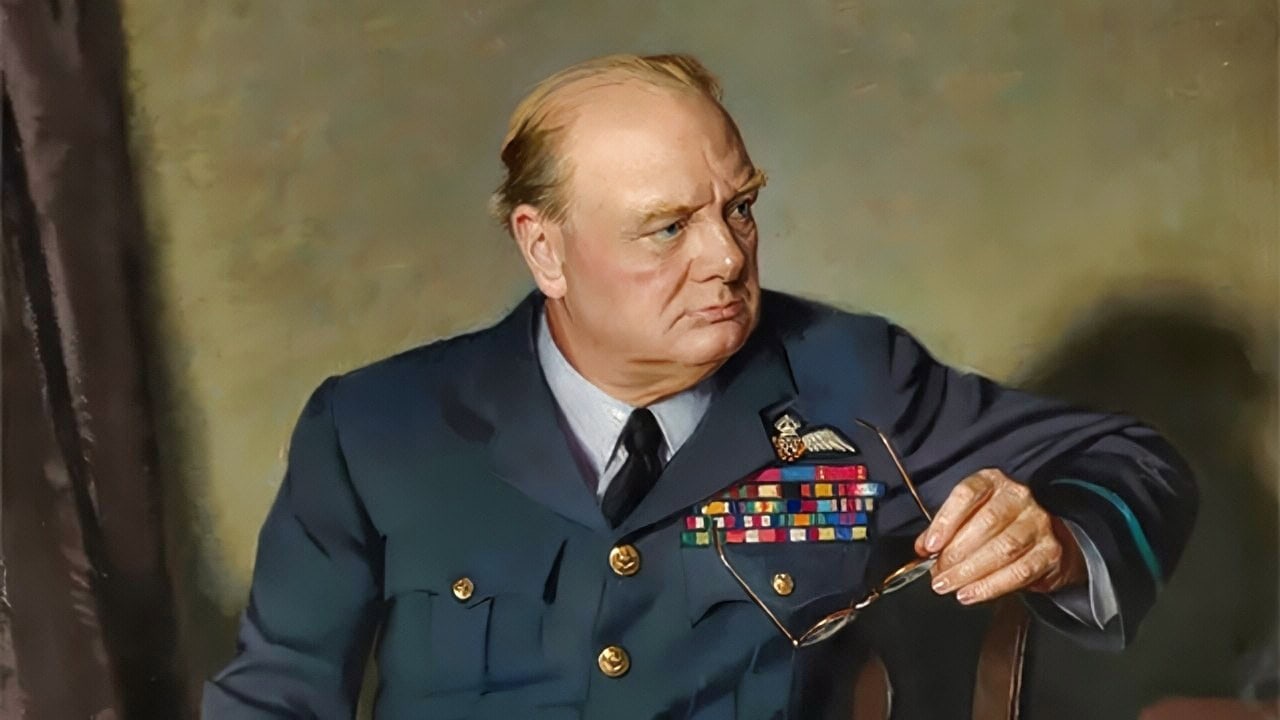
Winston Churchill Portrait. Image Credit: Creative Commons.
-The larger point isn’t mere cynicism; it’s warning. Churchill feared that scientific progress was accelerating faster than moral restraint, creating the conditions for wars of unprecedented scale.
-His message: civilization survives only if it treats peace as something that must be defended, not assumed.
Winston Churchill’s Most Uncomfortable Quote About Human Nature
Winston Churchill was a famous English politician, soldier, writer, and orator.
He served as Conservative Prime Minister twice – from 1940 to 1945 during World War II (before being defeated in the 1945 general election by the Labour leader Clement Attlee) and from 1951 to 1955. He was awarded the Nobel Prize in Literature in 1953 for his many published works.
As First Lord of the Admiralty in 1911, Churchill presided over significant advances in warship armament, speed, and endurance, which he himself describes in a very technical chapter of The World Crisis, ironically titled “The Romance of Design.”
He led Britain through the dark days of World War II and through to the final victory over Nazi Germany.
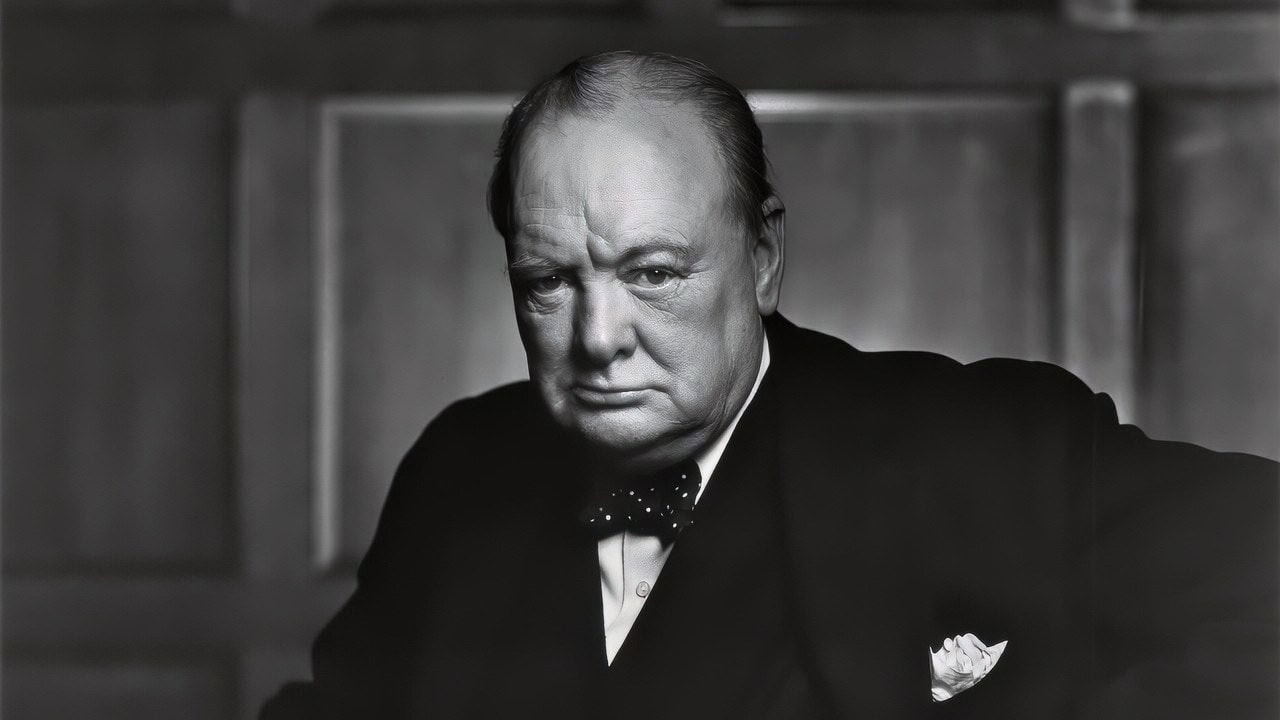
Sir Winston Churchill. Image Credit: Creative Commons.
Churchill’s Famous Quote
One of his most famous quotes was about war.
“The story of the human race is war. Except for brief and precarious interludes, there has never been peace in the world; and long before history began, murderous strife was universal and unending.”
Churchill’s quote, “The story of the human race is war,” is significant because it implies that warfare isn’t just political but deeply embedded in human nature, a recurring theme of conflict and struggle.
However, it wasn’t written after World War II, but after the First World War. Written in his 1924 essay Shall We All Commit Suicide?, it precedes WWII and foreshadows how scientific advancement, without moral advancement, creates tools for total destruction, a peril he saw escalating.
Churchill highlights the exhaustion after WWI and the looming threat of future wars, emphasizing the need for vigilance, as humanity possessed the power to destroy itself, a reality brought home by the atomic age after his lifetime.
In his powerful essay, Churchill challenged humanity to overcome this destructive cycle, even as he notes our failure to do so, urging a consideration of “the general situation” for survival.
The quote is significant for its unflinching portrayal of human history as defined by conflict and its prophetic warning about the existential danger posed by unchecked technological might, a warning that resonates today.
Winston Churchill Biography
Winston Churchill was born on November 30, 1874, at Blenheim Palace in Oxfordshire, and was of wealthy, aristocratic ancestry. His father, Lord Randolph Churchill, was a British statesman from an established English family, and his mother was Jeanette “Jennie” Jerome, an independent-minded New York socialite.
He had an early fascination with the military, which led him to join the Royal Cavalry in 1895. As a soldier and part-time journalist, Churchill travelled widely, including trips to Cuba, Afghanistan, Egypt, and South Africa.
Churchill was elected as a Conservative MP in 1900, before defecting to the Liberal Party in 1904 and spending the next decade climbing the ranks of the Liberal government. He was First Lord of the Admiralty during the disastrous Gallipoli campaign. Heavily criticised for this error, he resigned from this position and travelled to the Western Front to fight.
Churchill returned to the Conservative Party. He served as Chancellor of the Exchequer from 1924, when he controversially opted for Britain to rejoin the Gold Standard. Following the Tory electoral defeat in 1929, Churchill lost his seat and spent much of the next 11 years out of office, mainly writing and making speeches. His warnings against the Appeasement of Nazi Germany were proven correct when the Second World War broke out in 1939.
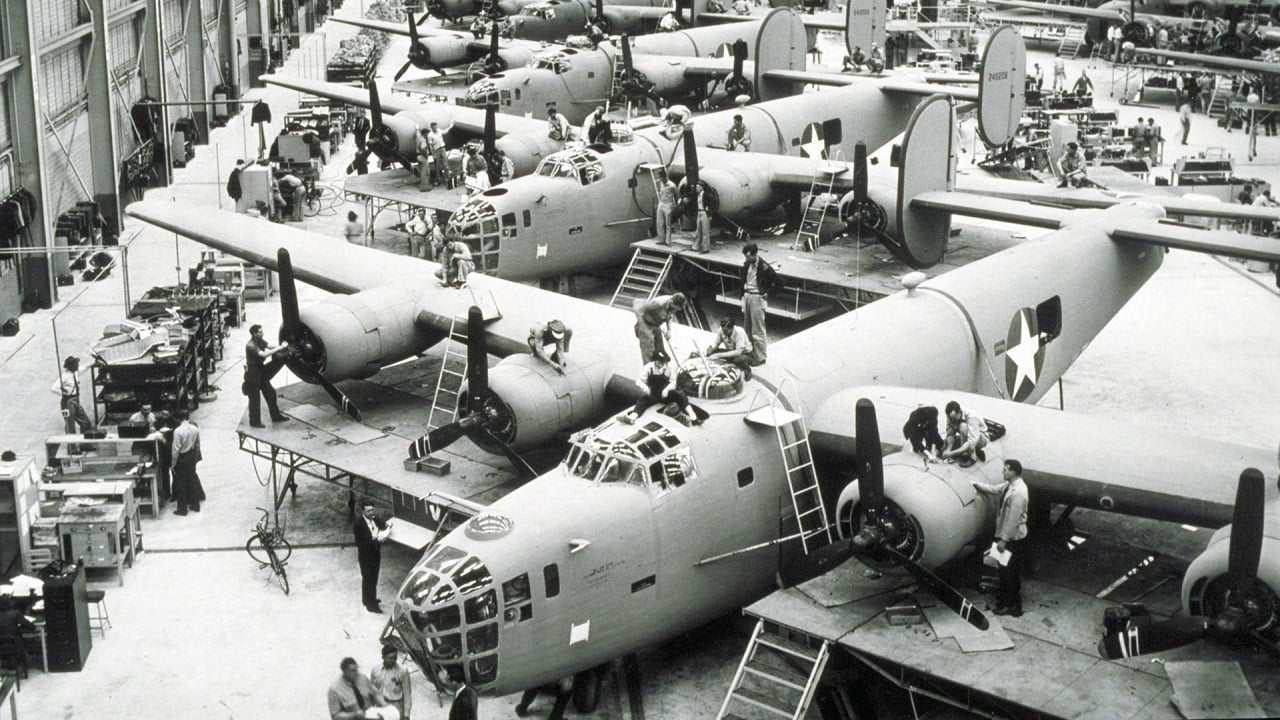
Conceived in 1938 by Consolidated Aircraft, a Lockheed Martin legacy company, the original B-24 prototype was designed to fly faster and carry a larger payload than the US Army Air Corps’s B-17 Flying Fortress. I
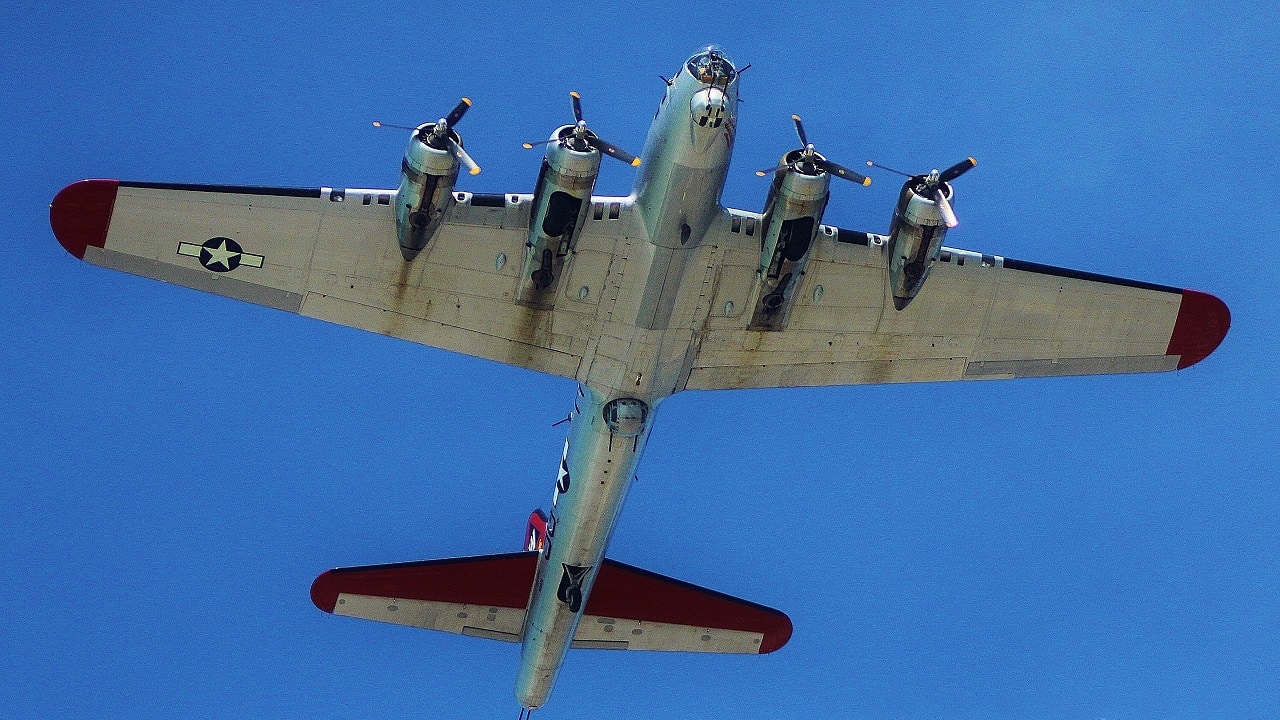
Boeing B-17. Image Credit: Creative Commons.
An appeaser feeds a crocodile, hoping it will eat him last.” However, the exact wording varies slightly across sources.
Following Neville Chamberlain’s resignation in 1940, Churchill was chosen to succeed him as Prime Minister of an all-party coalition government.
Some of his most memorable speeches were given during the war years and are credited with stimulating British morale during periods of great hardship.
However, Labour leader Clement Attlee’s surprising election win over Churchill in 1945, at the war’s end, relegated him to private life. In his 1946 speech in the USA, the instinctive pro-American famously declared that “an iron curtain has descended across the Continent“, and warned of the continued danger from an assertive Soviet Russia.
Churchill was re-elected in 1951; however, due to health issues, he often conducted business from his bedside.
His attempts to ease Cold War tensions through personal diplomacy failed to yield significant results, and his poor health forced him to resign in 1955.
Churchill was made an Honorary Citizen of the United States by President John F. Kennedy in 1963, a rare honor bestowed by an Act of Congress, recognizing his profound connection to America through his American mother (Jennie Jerome) and his lifelong friendship and wartime leadership with the U.S. He died in 1965.
About the Author: Steve Balestrieri
Steve Balestrieri is a National Security Columnist. He served as a US Army Special Forces NCO and Warrant Officer. In addition to writing on defense, he covers the NFL for PatsFans.com and is a member of the Pro Football Writers of America (PFWA). His work was regularly featured in many military publications.