
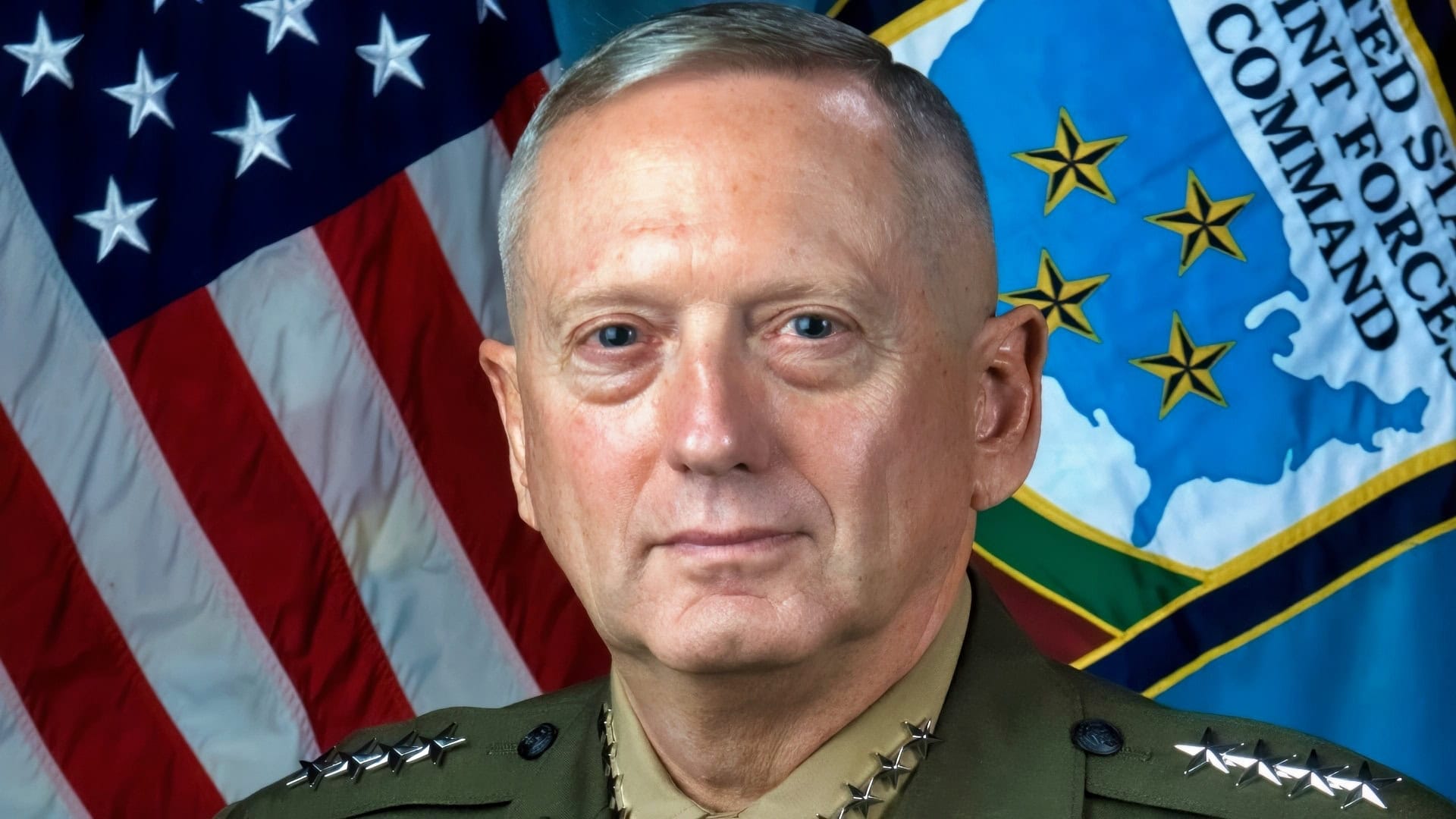
In the days before the 1st Marine Division crossed into Iraq in March 2003, its commanding general divided the human race into seven words and handed twenty thousand Marines the choice. “There are hunters, and there are victims,” Major General James Mattis told his men. “By your discipline, cunning, obedience and alertness, you will decide if you are a hunter or a victim.”
The line survives on two tracks. It circulates as the most distilled of the sayings his Marines called Mattisisms, and it was preserved in print by a lieutenant who heard the general up close, Nathaniel Fick, whose memoir One Bullet Away carried the creed to a generation of readers who never wore the uniform.
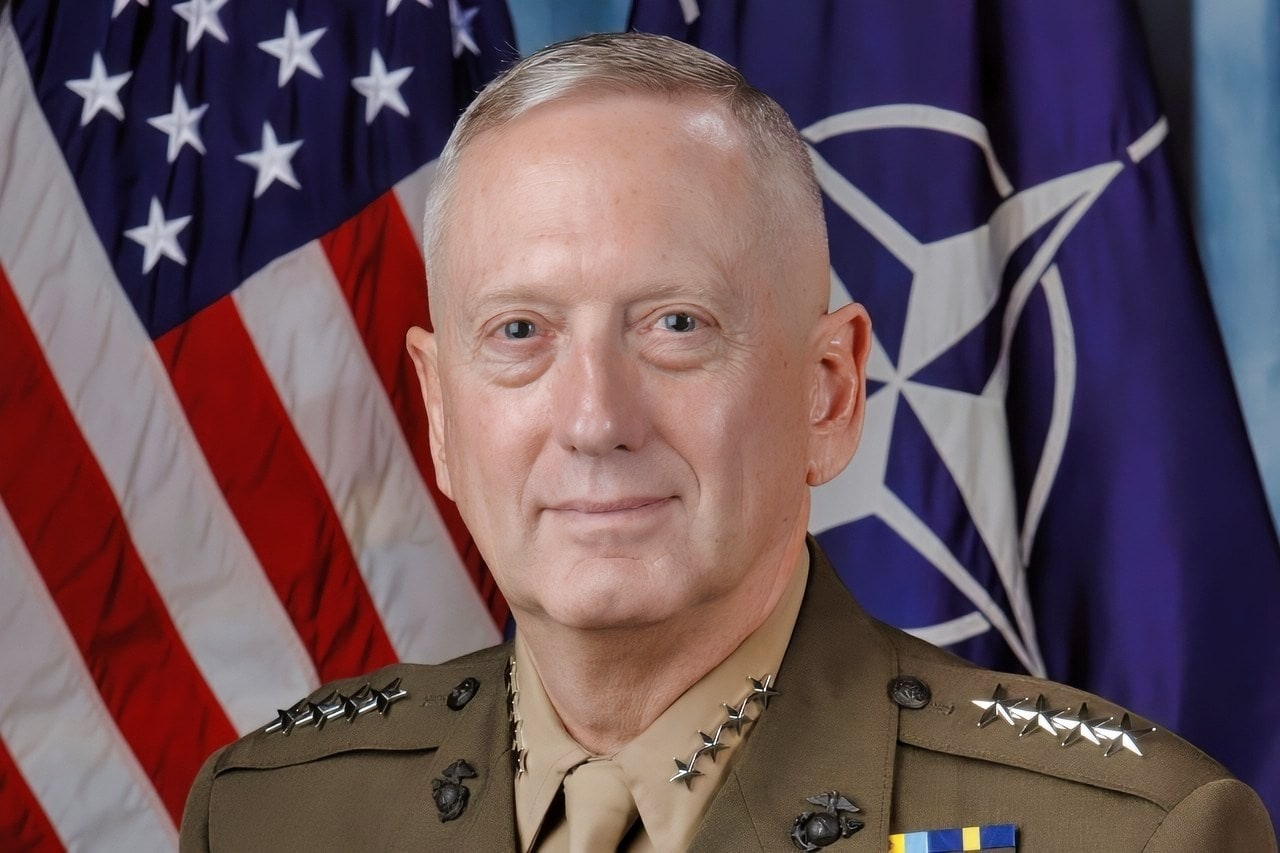
Jim Mattis. Image Credit: Creative Commons.
It traveled beside a written companion: the one-page Message to All Hands that Mattis issued to the division on the eve of the invasion, published within days in March 2003, which ordered his Marines to engage their brains before their weapons, to be the hunter and never the hunted, and to keep their honor clean.
Twenty-three years later, the seven words remain the sharpest sentence of the Iraq War, and the war they opened is the best commentary on them, because for the next two years Mattis ran the 1st Marine Division as a seminar on the difference.
The March Up
The division Mattis took across the line of departure was built for hunting.
His callsign was CHAOS, his doctrine was speed, and his preparation was characteristically bookish: before the invasion, he assigned his officers Russell Braddon’s The Siege, the history of a British-Indian division that pushed up these same rivers in the First World War, was cut off at Kut, and surrendered, so that every commander would carry a map of what failure in Mesopotamia looked like.
What followed was the longest sustained overland movement in Marine Corps history, roughly five hundred miles from the Kuwaiti border through Baghdad and on to Tikrit, executed at a tempo meant to keep the Iraqi army permanently off balance.
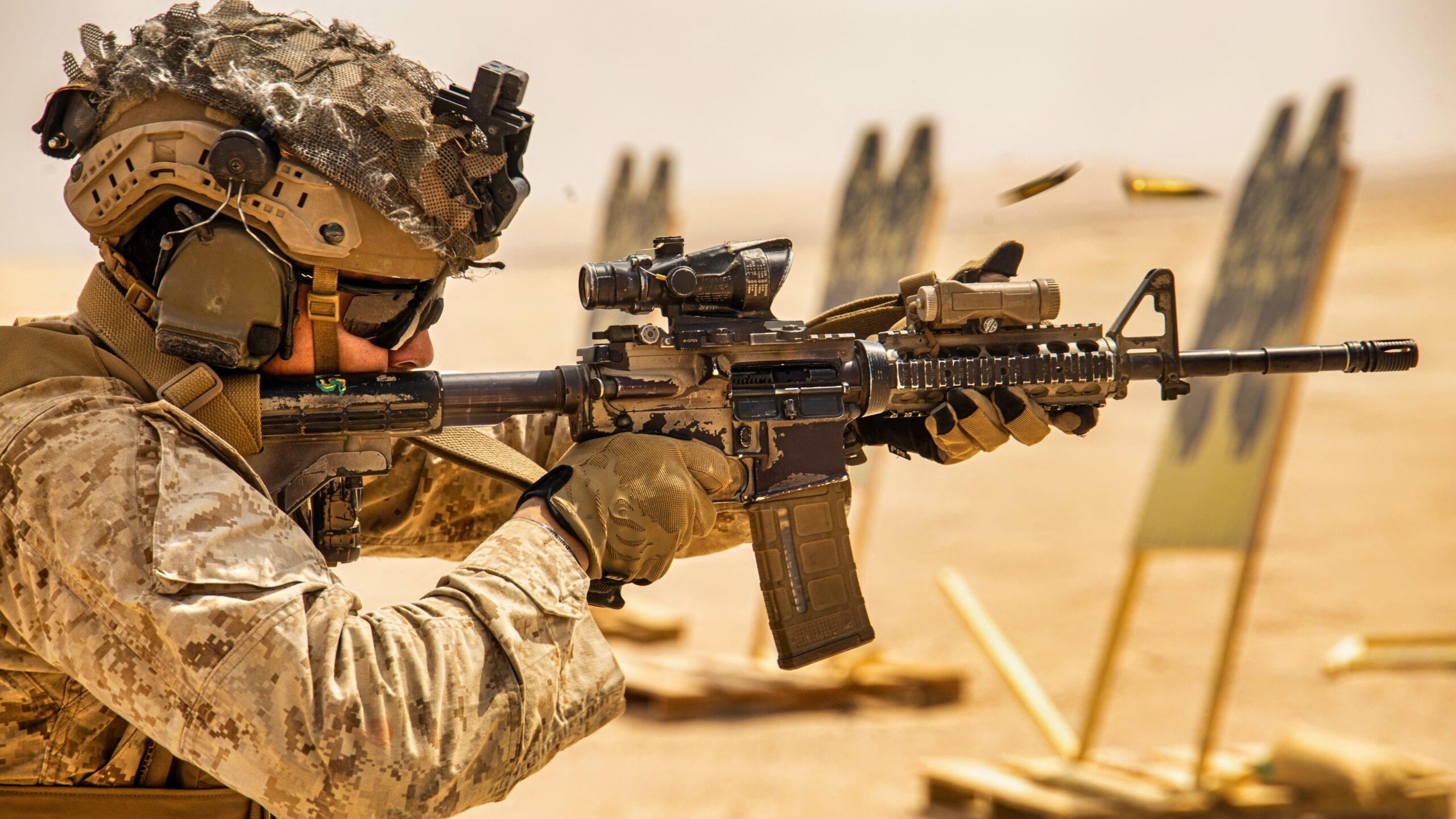
US Marines. Image Credit: Creative Commons.
The tempo had a price, and, to be frank, it was rough.
At Nasiriyah, with one of his three prongs slowed, Mattis relieved Colonel Joe Dowdy of Regimental Combat Team 1, the first Marine regimental commander relieved in combat in roughly four decades.
The fuller record, reported by the Wall Street Journal the following year, is harder than the legend: Dowdy had driven his six thousand Marines through an eighteen-hour fight and race toward Baghdad, hesitating at cities out of concern for his men, and the relief in Mattis’s tent on April 4, 2003, ended a 24-year career, with the general asking the shattered colonel to hand over his sidearm ammunition.
The episode divides Marines to this day, and it defined the standard: in Mattis’s division, the operating tempo was the mission, and no rank was exempt from the hunter’s arithmetic.
Baghdad fell in the first days of April; Task Force Tripoli took Tikrit; the division had done what it was built to do.
Fallujah
The second Iraq tour tested the other half of the creed.
The division returned in early 2004 to Anbar Province with a stability plan built on restraint, patrols on foot, engagement with local leaders, force held in reserve, first do no harm, and Mattis toured the province telling sheiks he came in peace and had deliberately left his artillery behind, a courtesy famously paired with a promise of annihilation for anyone who mistook it for weakness.
The plan died on March 31, 2004, when four American contractors were murdered and mutilated in Fallujah. Ordered to assault the city immediately, Mattis argued against it, preferring precise retribution to a frontal battle in a city of three hundred thousand; he was overruled, and Operation Vigilant Resolve began within days. Then, with his Marines fighting block by block and the political costs mounting, the halt came, and the division was ordered to stand down short of the objective, negotiating with the insurgent command inside the city as the fight was handed to a Fallujah Brigade that promptly dissolved.
Mattis’s fury at being ordered in and then ordered out belongs to the record, and so does the sequel: the second battle that November, the war’s bloodiest, fought on the plans his division had helped prepare after his time in command ended that summer.
The whole Fallujah year reads as the hunters-and-victims lesson applied to policy itself. Half measures, in his telling, created victims; commitment, or restraint, but never the oscillation between them.
The Standard
What gave the seven words their durability was that the man who said them ran his division by their logic in both directions.
The discipline he demanded of lance corporals he enforced upward, and the engage-your-brain letter he issued before the invasion balanced ferocious aggression against those who resisted with explicit chivalry toward the Iraqi people, an equation he policed with career-ending seriousness on his own side of the line.
Fick, the lieutenant who preserved the creed, also preserved the reason the division believed it: the general slept where his Marines slept, ate what they ate, and appeared in fighting holes at three in the morning, and as Fick wrote, no one would have questioned Mattis if he had chosen the comforts of his rank instead.
The rest of the arc, this publication has traced at length: the Afghanistan command of Task Force 58 that made him the first Marine to lead a naval task force in combat, I Marine Expeditionary Force, the four stars, Central Command from 2010, the retirement in 2013, the 98-to-1 confirmation as Secretary of Defense, and the resignation on principle in December 2018.
The nickname the press loved, Mad Dog, he never used; the Marines’ own name for him, the Warrior Monk, fit the man who carried Marcus Aurelius on deployment and a 7,000-book library through a 44-year career.
The seven words from March 2003 outlasted every command that followed them.
About the Author: Harry J. Kazianis
Harry J. Kazianis (@Grecianformula) was the former Senior Director of National Security Affairs at the Center for the National Interest (CFTNI), a foreign policy think tank founded by Richard Nixon based in Washington, DC. Harry has over a decade of experience in think tanks and national security publishing. His ideas have been published in the NY Times, The Washington Post, The Wall Street Journal, CNN, and many other outlets. He has held positions at CSIS, the Heritage Foundation, the University of Nottingham, and several other institutions related to national security research and studies. He is the former Executive Editor of the National Interest and the Diplomat. He holds a Master’s degree focusing on international affairs from Harvard University.