Known as the “Black Hole,” Russia’s Project 636.3 Varshavyanka-class (NATO reporting name: “Improved Kilo II”) may be one of the world’s most iconic diesel-electric attack submarines. It was originally meant to bridge the gap between Russia’s previous submarine designs and the next-generation Lada-class. Unexpectedly, however, the “Black Hole” became the critical element of Russia’s submarine force.
The Kilo-Class Black Hole Submarine Explained:
NATO naval analysts and submariners nicknamed this submarine the “Black Hole” because of its incredible underwater stealth. Russia’s Improved Kilo II features a wide array of advances that make it an impressive system.
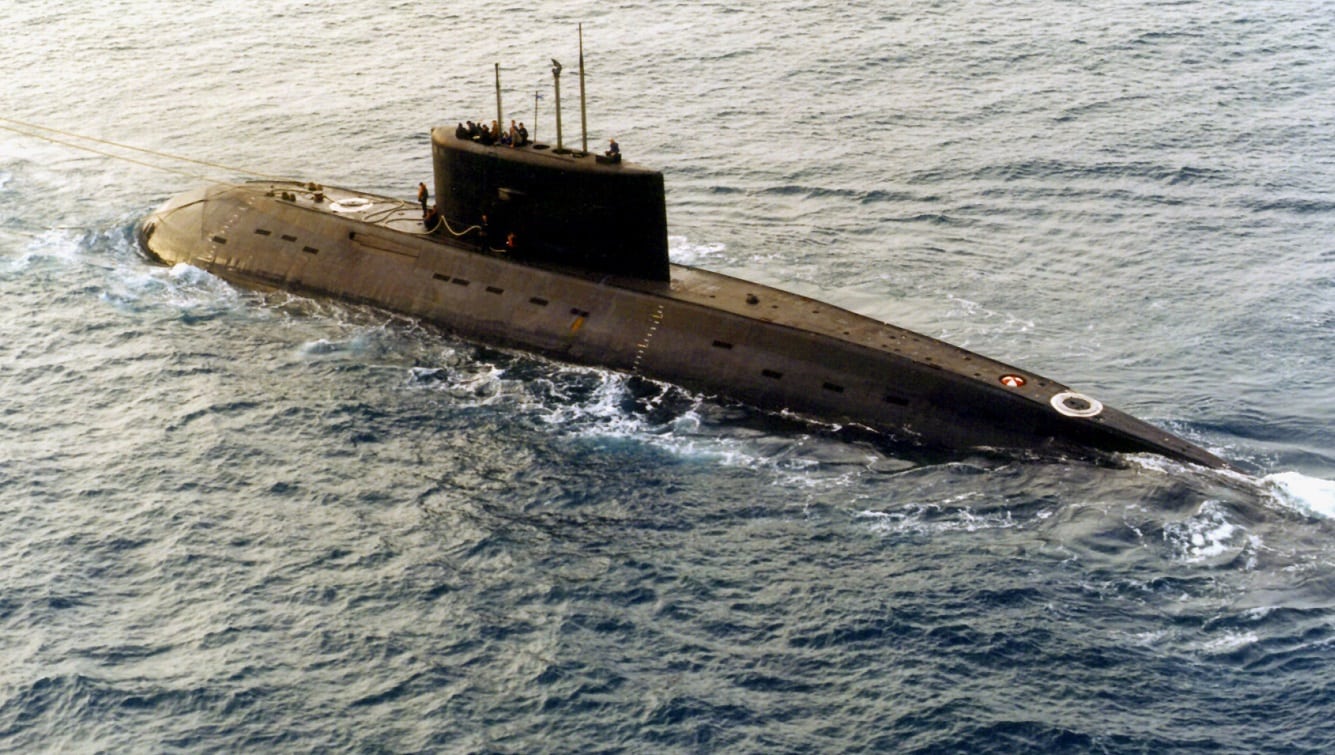
A Russian-built, Kilo-class diesel submarine purchased by Iran, is towed by a support vessel in this photograph taken in the central Mediterranean Sea during the week of December 23. The submarine and the support ship arrived at Port Said, Egypt, on Tuesday and were expected to begin transiting the Suez Canal today, Jan. 2, 1996. Ships and aircraft from the U.S. NavyÕs Sixth Fleet are tracking the submarine, which has been making the transit on the surface. This is the third Kilo-class submarine the Iranians have purchased from Moscow. DoD photo
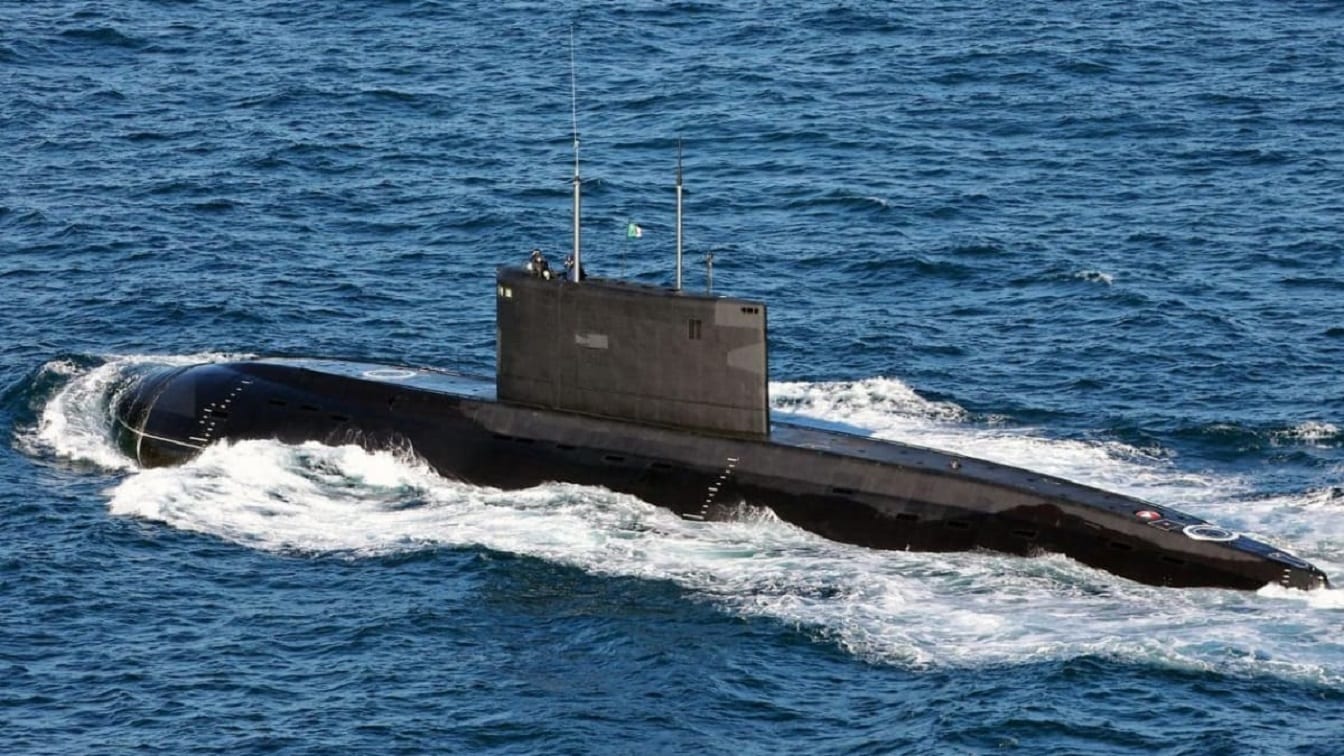
Iran’s Navy Has Kilo-Class Submarines. Image Credit: Creative Commons.
For example, the propulsion system and other associated internal mechanisms are not connected to the outer hull.
Thanks to this innovative design, the Kilo II reduces the noise submarines normally make underwater (noise that enemy submarines and anti-submarine forces can detect).
Essentially, the machinery sits on shock-absorbing rubber platforms so no vibrations reach the hull and make the submarine a target for savvy NATO sonar operators.
Then there’s the anechoic hull coating that the Russians invested in.
The submarine’s hull is essentially wrapped in a unique rubber-based acoustic concealment tile.
That coating absorbs active sonar pings from enemy ships rather than bouncing them back, while also reducing the submarine’s internal noise.
Improving the Flow of Water
Russian designers also reshaped the Kilo II’s hydrodynamics.
Among the changes from its predecessor, the Russians reduced hydrodynamic drag so passive sonar scans couldn’t detect the submarine.
What’s more, diesel-electric submarines, though less sophisticated than their nuclear-powered counterparts, have a demonstrated advantage in running silently beneath the waves.
Nuclear-powered submarines rely on loud coolant pumps to cool their reactors. Diesel-electric submarines don’t need such systems.
As such, they are both cheaper and quieter when underway.
The Project 636.3 submarine, the Kilo II, can shut down its diesel engines when submerged.
Rather than run the diesel engines (which can be loud), the Kilo II relies upon massive batteries and has a single, optimized seven-bladed fixed-pitch propeller.
The battery pack, combined with that propeller’s unique design, lets the Kilo II pass through shallow littoral waters easily (and stealthily), almost completely undetected.
Weapons Galore
Of course, that diesel-electric capability has its drawbacks.
For instance, the Kilo II must still periodically resurface to recharge its batteries.
But the lethal combination of modern electronics, affordable manufacturing cost, and a heavy cruise-missile capability has made this submarine one of Russia’s best weapons.
Speaking of its weapons, the Kilo II can easily switch from a defensive coastal platform to a long-range strike platform.
The submarine has six 533mm torpedo tubes that can launch Kalibr-PL cruise missiles (including the land-attack 3M-14 variant and the anti-ship 3M-54).
The Russian Navy has deployed the Kilo II across its fleets.
The Black Sea Fleet and the Pacific Fleet have especially relied upon these submarines to launch long-range standoff cruise missile strikes against Ukraine and even Syria during the Russian military intervention against ISIS there during that country’s bloody civil war.
But the key element that makes the Kilo II such a major player for the Russians is its silence. It truly is a rare submarine.
It is one of the quietest submarines in the world.
Understanding the “Black Hole”
That silence has earned it the nickname “Black Hole” because enemy sonar operators find this class of Russian submarine so difficult to detect, even with NATO’s advanced capabilities.
What was supposed to be a simple bridge to keep Russia’s navy afloat until the new Lada-class submarines came online has become more successful than Moscow anticipated.
Because of that unexpected success, the Kilo II, the Black Hole, remains one of Russia’s most important submarines of the twenty-first century.
About the Author: Brandon J. Weichert
Brandon J. Weichert is the Senior National Security Editor at 19FortyFive.com. He also manages The Weichert Brief on Substack. Weichert also hosts “National Security Talk” on Rumble. He is the author of four bestselling national security books, most recently A Disaster of Our Own Making: How the West Lost Ukraine (Encounter Books). Follow him via Twitter/X @WeTheBrandon.