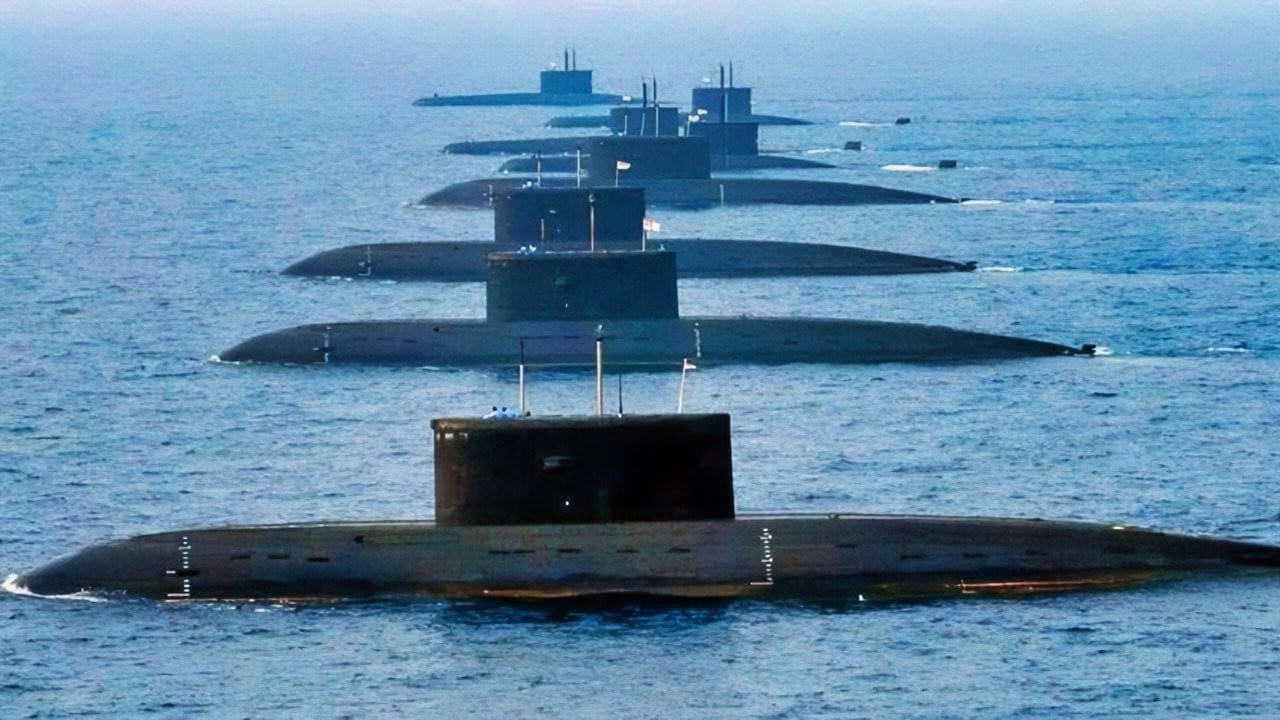
Summary and Key Points: The Kilo-class submarine has been called the “black hole” for forty years, and the nickname has done more for its export sales than any specification sheet. Naval analyst H I Sutton’s view is that the label needs unpacking. The Kilo was quiet compared with what came before it, and what came before it was extraordinarily noisy. Compared with modern Western conventional submarines, the picture is different, and the Kilo’s lack of air-independent propulsion puts a hard limit on how long it can remain submerged and undetected. Russia builds excellent anechoic tiles. It does not build a black hole.
The Kilo-Class Black Hole Submarine Myth
The Kilo-class submarines were among the Soviet Navy’s more successful exports, a trend that continues today.
Though originally designed during the Cold War, the Kilo-class’s relatively small size, its optimization for operations in shallower coastal waters, and its conventional propulsion made it an attractive platform for countries that wanted a submarine force to augment their surface ships but lacked the industrial and technical know-how to build one themselves.
Envisioned as an anti-submarine warfare ship, the Kilo-class was also intended to locate and sink enemy warships.
Thanks to its low acoustic signature, the design also lent itself to clandestine missions: intelligence-gathering, surveillance, and the tracking of NATO warships and U.S. Navy carrier strike groups.
Multiple Variants, Many Built
Though the overarching class of submarines is termed the Kilo-class, there are several variants within it of increasing complexity.
Called Project 877 by the Soviets, the first Kilo-class design was intended, at least initially, exclusively for the Soviet Navy rather than for the export market.
The follow-on, called Project 636, incorporates some broad improvements and optimizations focused on further acoustic minimization; a higher degree of automation; and improved propulsion. These boats are often labeled Improved Kilo or Kilo II-class.
The final iteration of the family, called Project 363.3, incorporated further incremental improvements. It enjoyed a greater role in the Russian Navy after cost overruns and development issues with the subsequent Lada-class, intended as the successor to the Kilos.
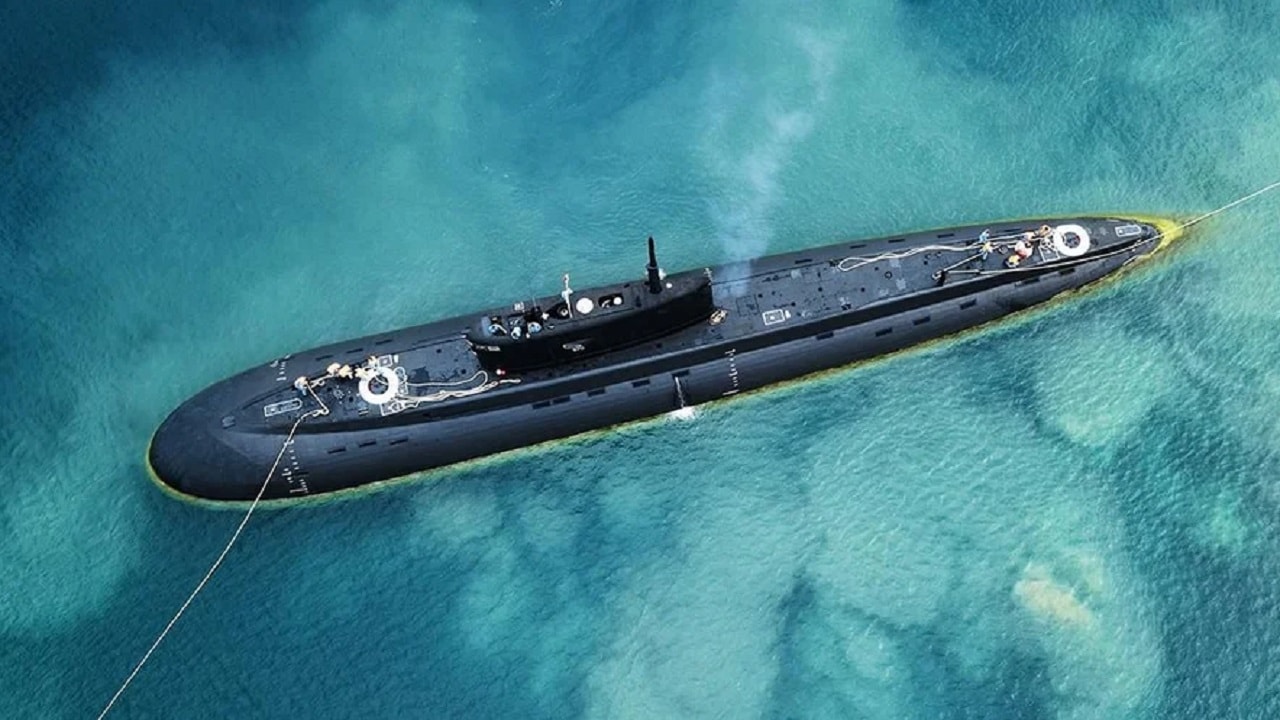
Kilo-Class Submarine. Image Credit: Creative Commons.
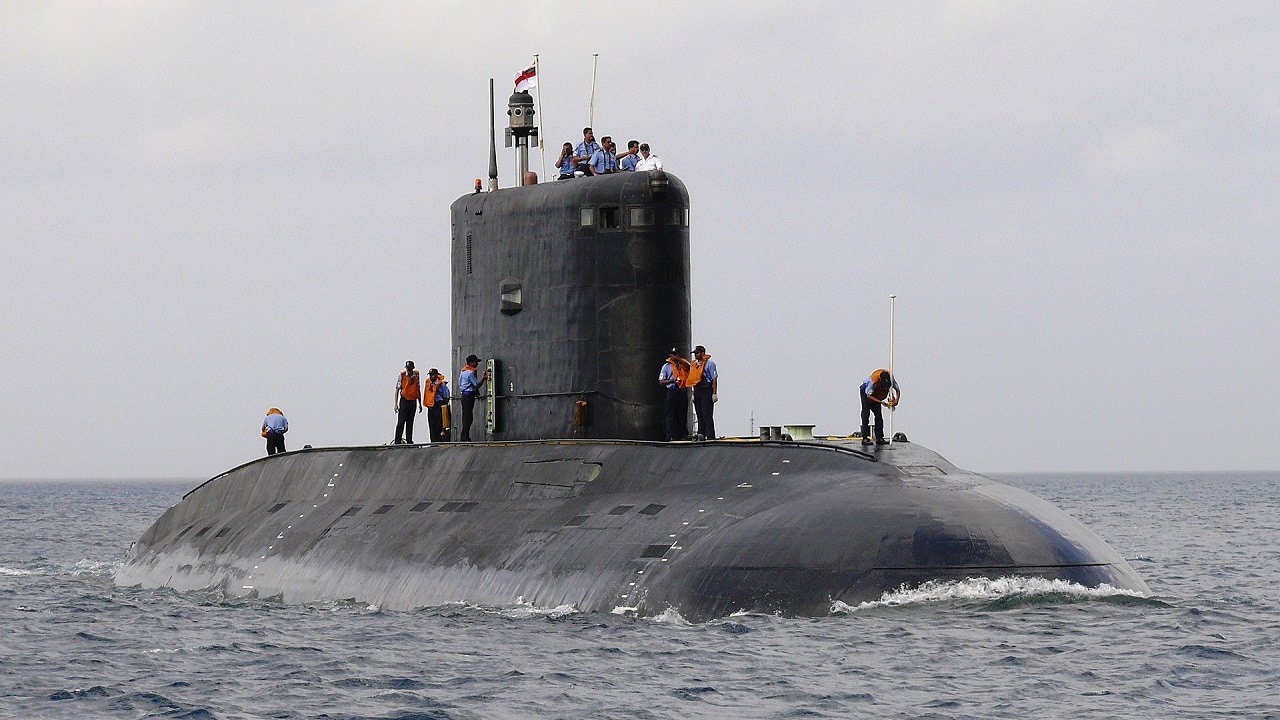
Kilo-Class Submarine.
One Kilo-class submarine, the B-871, was a single-build experimental submarine named Alrosa. That submarine served as a testbed for pump-jet propulsion. “This is unusual for a non-nuclear submarine since pump-jet propulsion is generally optimal for higher underwater speeds,” HI Sutton, a naval affairs expert and analyst, wrote. “Possibly it was for testing since similar pump jets are fitted to some Russian ballistic missile submarines. Although its use aboard Alrosa is questionable, it remains fitted after the submarine’s recent (and protracted) refit. It remains the only diesel-electric submarine with a pump jet.”
What’s in a Name?
The Kilo-class’s reputation for extremely silent operations has been the source of legend—but also of mythical exaggeration, according to naval experts.
“During the Cold War the then-new submarine [the Kilo-class] gained a reputation for stealth, sometimes with the nickname ‘black hole’. The term is still used and much is made of its stealth even today,” HI Sutton explained.
“But that was relative. Older Russian submarines, still widespread when the KILO was introduced, were incredibly noisy. Although exact details are naturally not available, there os [sic] no reason to suppose that the KILO family is any quieter than the latest western non-nuclear submarines. In fact, the lack of AIP (air independent power) will limit overall stealth. That’s not to say it’s noisy, Russia is experienced at noise reduction and has excellent anechoic tiles. But the ‘black hole’ label has become a bit of a myth.”
Though far from a so-called black hole, the class did indeed offer expanded capabilities compared to its predecessors.
More sophisticated sonar arrays and improved anechoic tiling—the rubberized panels that adhere to the outside of submarine hulls—reduced sonar ping bounce-back and made Kilos more difficult to spot on enemy sonar arrays.
Onboard crew living quarters were also optimized for crew comfort, an important factor during particularly long, grueling voyages.
Imports and Exports
While the Kilo-class began life in Soviet dockyards, the class has since become an important part of Russian arms sales abroad, with submarines sold to Algeria, India, Vietnam, Iran, Myanmar, Poland, and China.
Central to the class’s success in the export market has been the Kilo’s relative affordability, operational simplicity, and small, straightforward design.
Though the People’s Liberation Army Navy still operates some Kilo-class submarines, those hulls are increasingly aging and outclassed by modern domestic submarine designs.
They will likely be supplanted by China’s own, much more capable diesel-electric submarines, particularly the Yuan-class, which boasts air-independent propulsion.
India, too, is phasing out its Kilo-class submarines as part of a broader naval modernization.
By late last year, the Indian Navy had decommissioned the INS Sindhughosh, its lead submarine, after four decades of service. Other Kilos in the Indian Navy are rapidly approaching obsolescence.
About the Author: Caleb Larson
Caleb Larson is an American multiformat journalist based in Berlin, Germany. His work covers the intersection of conflict and society, focusing on American foreign policy and European security. He has reported from Germany, Russia, and the United States. Most recently, he covered the war in Ukraine, reporting extensively on the war’s shifting battle lines from Donbas and writing on the war’s civilian and humanitarian toll. Previously, he worked as a Defense Reporter for POLITICO Europe. You can follow his latest work on X.