
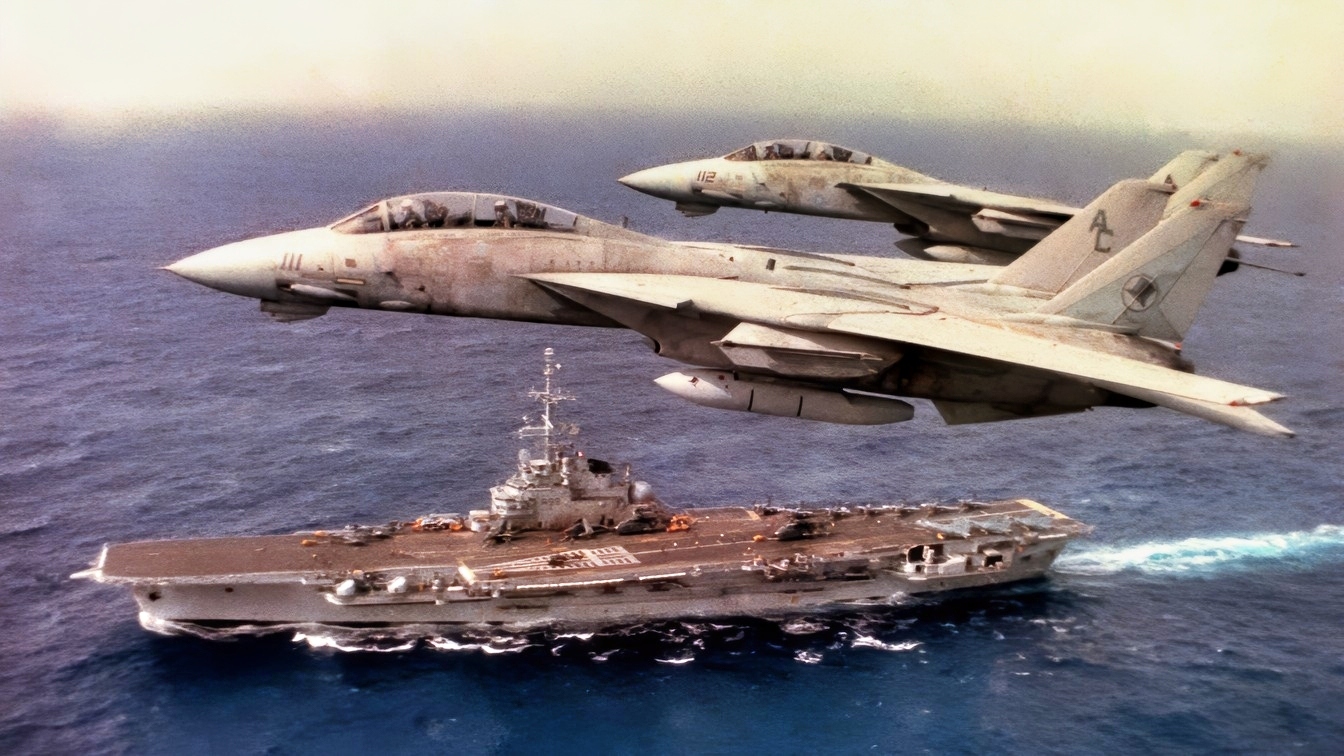
The Navy’s Flying Aircraft Carriers Worked. The Airships Didn’t – The USS Akron (ZRS-4) was the first U.S. Navy aircraft carrier to fly. Her sister carrier was the USS Macon (ZRS-5). The Goodyear-Zeppelin Corporation designed them for the Navy in the early 1930s as rigid, helium-filled airships to serve as mobile scouting bases over the vast Pacific Ocean.
In the early 1930s, the two massive rigid airships cruised over the Atlantic and Pacific with small biplane fighters tucked inside their hulls. The Naval History and Heritage Command calls them the Navy’s first and last flying carriers. Nobody has seriously challenged that distinction in the 90-plus years since.
The concept was bold. The execution was impressive. However, within four years, both ships were on the ocean floor.
Bigger Than Anything Else In The Sky
The Akron was a joint venture between the US-based Goodyear and the German-based Luftschiffbau Zeppelin. Goodyear is still known today for their Goodyear blimps, often seen floating overhead during major sporting events. Zeppelin, of course, became synonymous with rigid airship design, best remembered for building the most famous, and ill-fated, airship ever: the Hindenburg.
Construction of the Akron began in November 1929 at the Goodyear-Zeppelin Airdock in Akron, Ohio, built to a design by engineer Karl Arnstein that broke sharply from earlier rigid airships.
It was a massive airship. She was 785 feet long and 133 feet in diameter, with a top speed of about 78 miles per hour. That’s more than two and a half football fields of aluminum girders and fabric. The Macon came in a foot shorter at 784 feet. It was only about 100 feet shorter than the Essex-class WWII carriers.
Both were filled with helium, which set them apart from Germany’s dangerously hydrogen-filled Zeppelins. They still hold the record as the largest helium-filled rigid airships ever built.
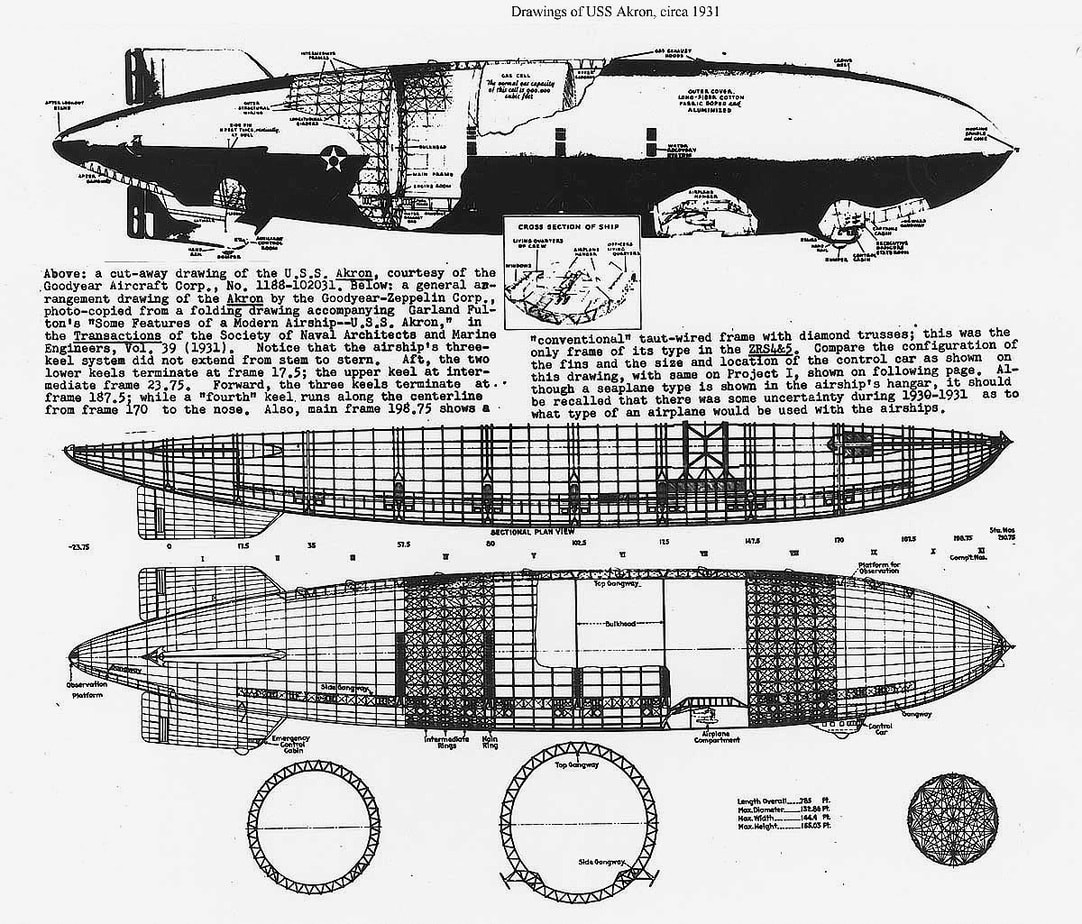
USS Akron, real flying aircraft carrier. Image Credit: Creative Commons.
However, they weren’t meant to look good over a football stadium. It was naval reconnaissance. Before radar, a fleet commander could see only as far as his ships and floatplanes could.
An airship that could loiter for days, with its own scout planes fanning out ahead of it, could cover thousands of square miles of ocean. That was the pitch made to the Navy.
The Men On The Flying Trapeze, Flying The Sparrowhawk
The airplane that made it work was the Curtiss F9C-2 Sparrowhawk, a stubby single-seat biplane armed with two .30-caliber Browning machine guns. Each airship carried up to five of them in an internal hangar.
Launching one was simple, at least on paper. A steel trapeze lowered the Sparrowhawk, engine running, through a hatch in the airship’s belly and into the slipstream. The pilot released his hook and dropped away.
Recovery was the tricky part, and it wasn’t for the faint of heart. The pilot had to fly up underneath the mothership, match its speed of roughly 70 knots, and snag the trapeze bar with a hook mounted above his upper wing. It was the opposite of the tail hook used on carriers today.
Then the crew hoisted him back inside. Those pilots earned the nickname “Men on the Flying Trapeze.”
Perhaps the most remarkable part was the Navy’s success in launching and recovering the Sparrowhawks. According to the Smithsonian’s National Air and Space Museum, the Navy lost not a single Sparrowhawk in trapeze operations.
Having a ton of experience jumping out of aircraft in flight, I have a healthy respect for anyone who intentionally climbed back aboard one.
The Akron Disaster Was The Beginning Of The End
The flying carriers had an Achilles heel… the weather.
On the evening of April 3, 1933, the Akron departed NAS Lakehurst to calibrate radio direction-finding stations along the Northeast coast. She ran into a line of violent thunderstorms over New Jersey, and shortly after midnight on April 4, she crashed tail-first into the Atlantic.
Of the 76 men aboard, 73 died. The Navy had not issued life jackets, and most of the crew drowned or died of exposure in the frigid water. Among the dead was Rear Admiral William Moffett, chief of the Navy’s Bureau of Aeronautics and the biggest champion of the rigid airship program.
Some historians believe the ship’s commander, Frank McCord, may have inadvertently flown her tail into the sea while fighting the storm.
Further disaster struck when the blimp J-3, sent out to search for survivors, also went down, killing two more men. It remains the deadliest airship crash in history. That’s more than double the death toll of the Hindenburg that exploded above Lakehurst just four years later.
The Macon’s Career Was Also A Short, Disastrous One
The USS Macon first flew on April 21, 1933, just weeks after the Akron was lost. She spent most of her short career on the West Coast, flying out of Sunnyvale, California, at the field later named for the late Admiral Moffett.
On an earlier transcontinental flight, she took a beating in severe turbulence over the mountains of Arizona. Engineers identified a weakness in the structure supporting her upper fin, and repairs were scheduled. They were never finished.
On February 12, 1935, a storm caught the Macon off Point Sur, and the upper fin failed. Debris punctured the aft gas cells, causing her to lose 20 percent of her lift. However, she stayed aloft for another 34 minutes. The crew frantically dumped ballast in a vain attempt to remain aloft; the ship climbed past her pressure height, and automatic valves vented even more helium until she settled into the sea.
This time the Navy had learned its lesson. Life jackets were aboard. Of the 83 crewmen, only two died. One sailor died when he leaped from a height that was too high to survive. The other went back inside to retrieve personal belongings and went down with the ship.
Her commanding officer, Lt. Cmdr. Herbert Wiley, had been the Akron’s executive officer and one of her three survivors. He survived both. The Macon settled in 1,500 feet of water.
The Trade-Off With A Rigid Airship
Say what you will about the 1930s airship enthusiasts. That’s beside the point. The trapeze system worked. The Naval aviators were superb.
The problem was the platform. A 785-foot hull of girders and rubberized cotton gas cells was always at the mercy of the weather, and the Navy lost two in less than two years.
The concept was sound, but the timing was terrible. Within a decade, radar and long-range patrol aircraft made the scouting mission obsolete anyway. The Navy never built another rigid airship.
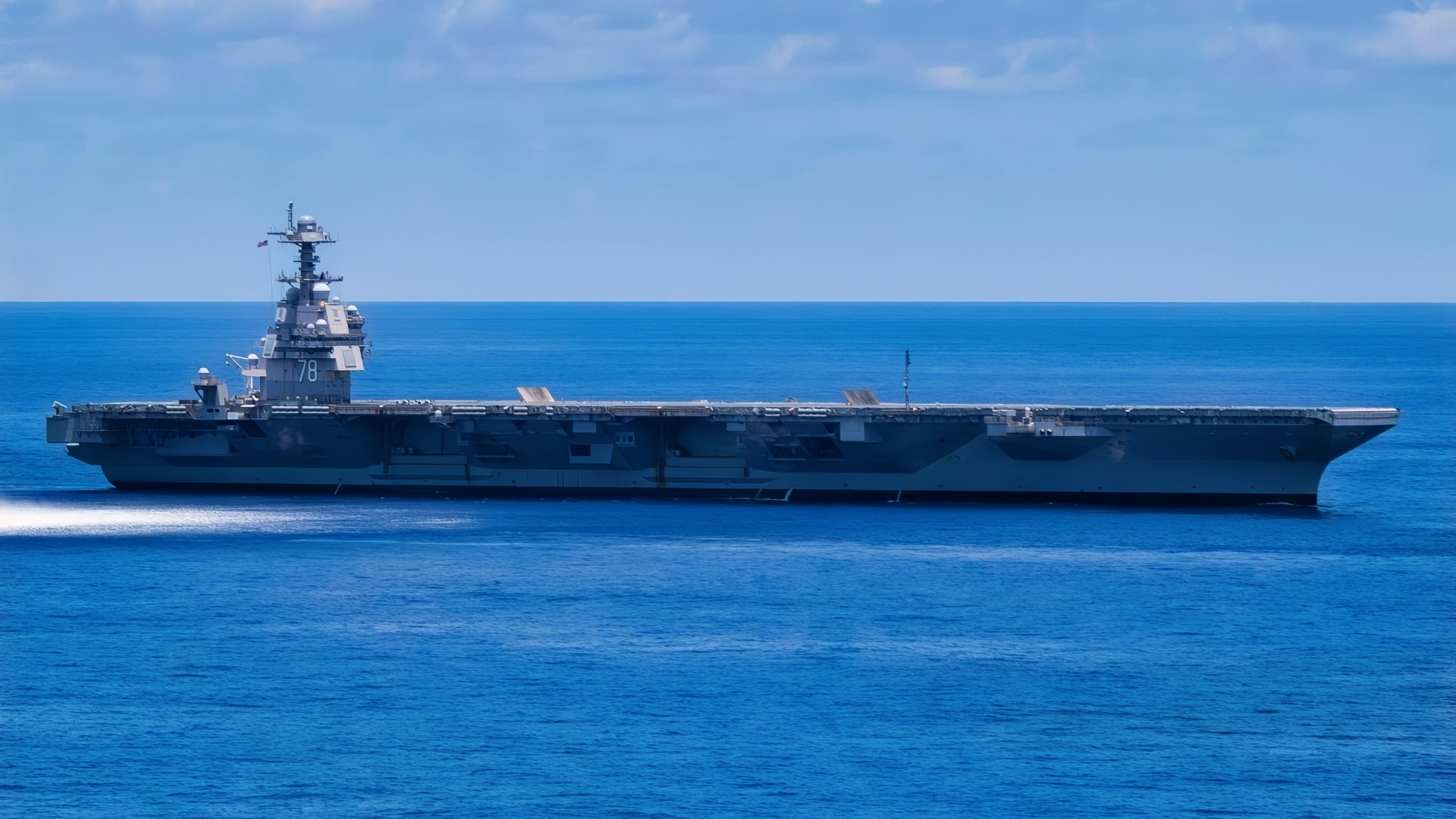
USS Gerald R. Ford (CVN 78) successfully completed the second of three scheduled explosive events for Full Ship Shock Trials (FSST), July 16, 2021. The shock trials are designed to demonstrate the ship’s ability to withstand the effects of nearby underwater explosion and retain required capability. Ford is underway in the Atlantic Ocean for required inspections and preparation for the third FSST explosive event, scheduled for later this month. (U.S. Navy Photo by Mass Communications Specialist Seaman Jackson Adkins)
The idea itself never fully died. DARPA’s Gremlins program tested launching and recovering small drones from a C-130. A mothership in the sky, launching and catching smaller aircraft. Same idea, 90 years later.
Where They Rest Today
The Monterey Bay Aquarium Research Institute and the Navy’s deep-submergence vehicle Sea Cliff found the Macon’s wreck in 1990, roughly 1,500 feet down. In 2010, the site was added to the National Register of Historic Places, including the hangar bay that still holds four Sparrowhawks.
Only one intact Sparrowhawk survives, BuNo 9056, on display at the Smithsonian’s Udvar-Hazy Center in Chantilly, Virginia. If you’re ever in the area, go see it. It’s smaller than you’d expect.
Believe it or not, the Navy once had flying aircraft carriers. For about four years, anyway.
About the Author: Steve Balestrieri
Steve Balestrieri is a National Security Columnist. He served as a US Army Special Forces NCO and Warrant Officer. In addition to writing on defense, he covers the NFL for PatsFans.com and is a member of the Pro Football Writers of America (PFWA). His work was regularly featured in many military publications.