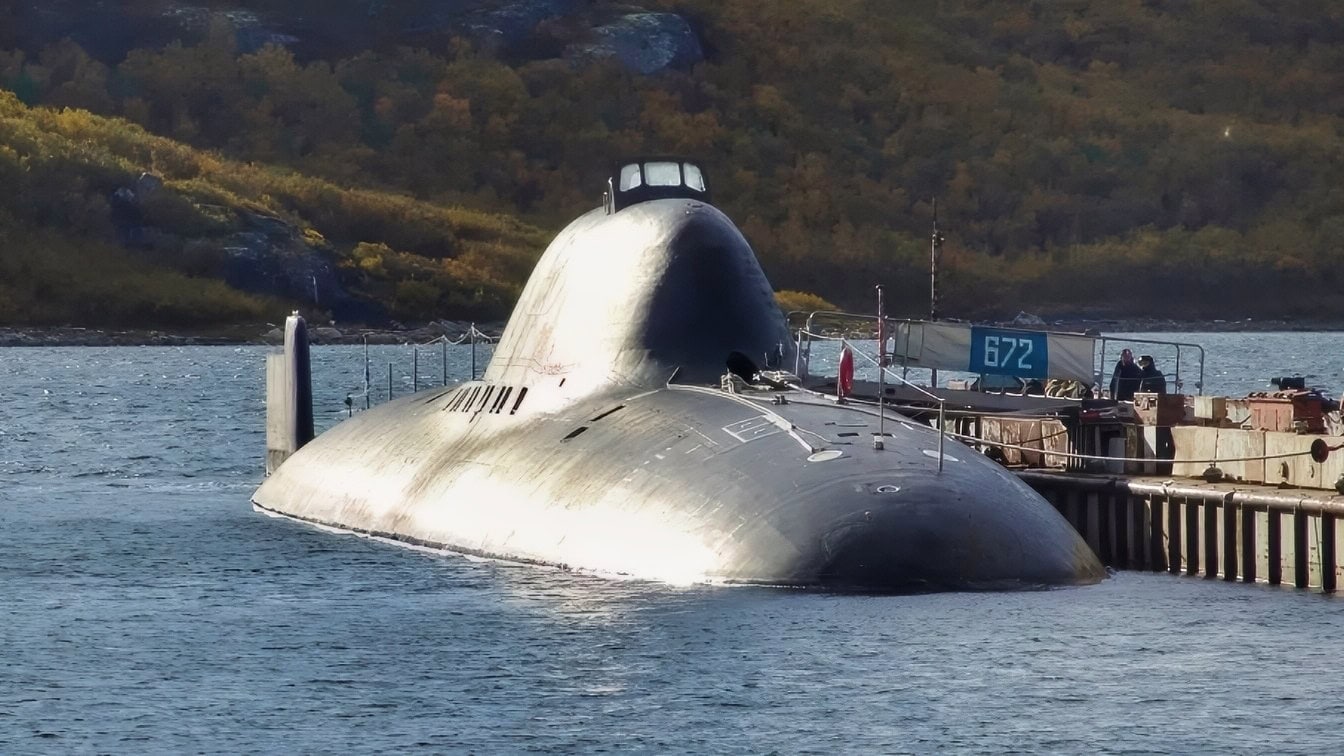
Summary and Key Points: Brandon J. Weichert profiles K-222, the sole Project 661 Anchar submarine NATO called the Papa class: a titanium-hulled, 7,000-ton boat from Malakhit (TsKB-16) and Sevmash, launched in December 1968, with two VM-5 reactors producing 177 megawatts and 80,000 horsepower. It hit a record 44.7 knots in 1970 and carried ten P-70 Ametist (SS-N-7 Starbright) missiles, but noise, hull cracking, and “Golden Fish” costs ended patrols in 1981, service in 1988, and the hull in 2010.
The Papa-Class Is Soviet Naval History and Important Military History
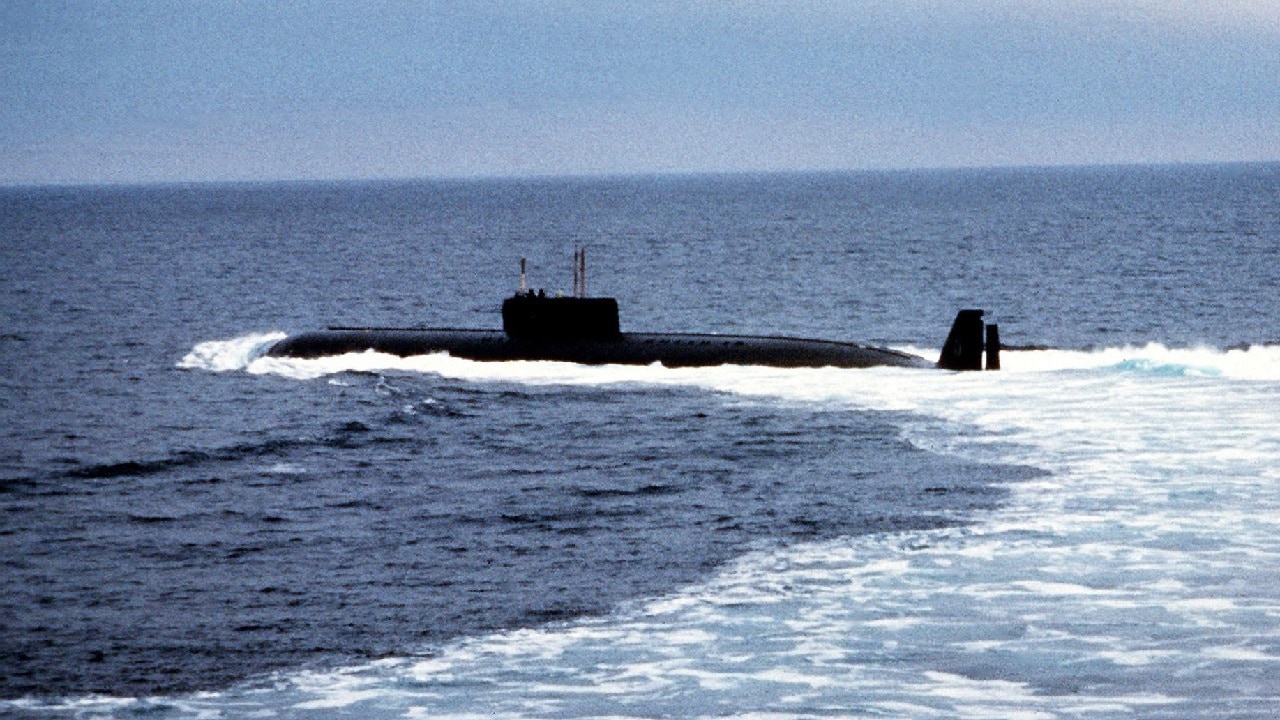
Papa-class Submarine.
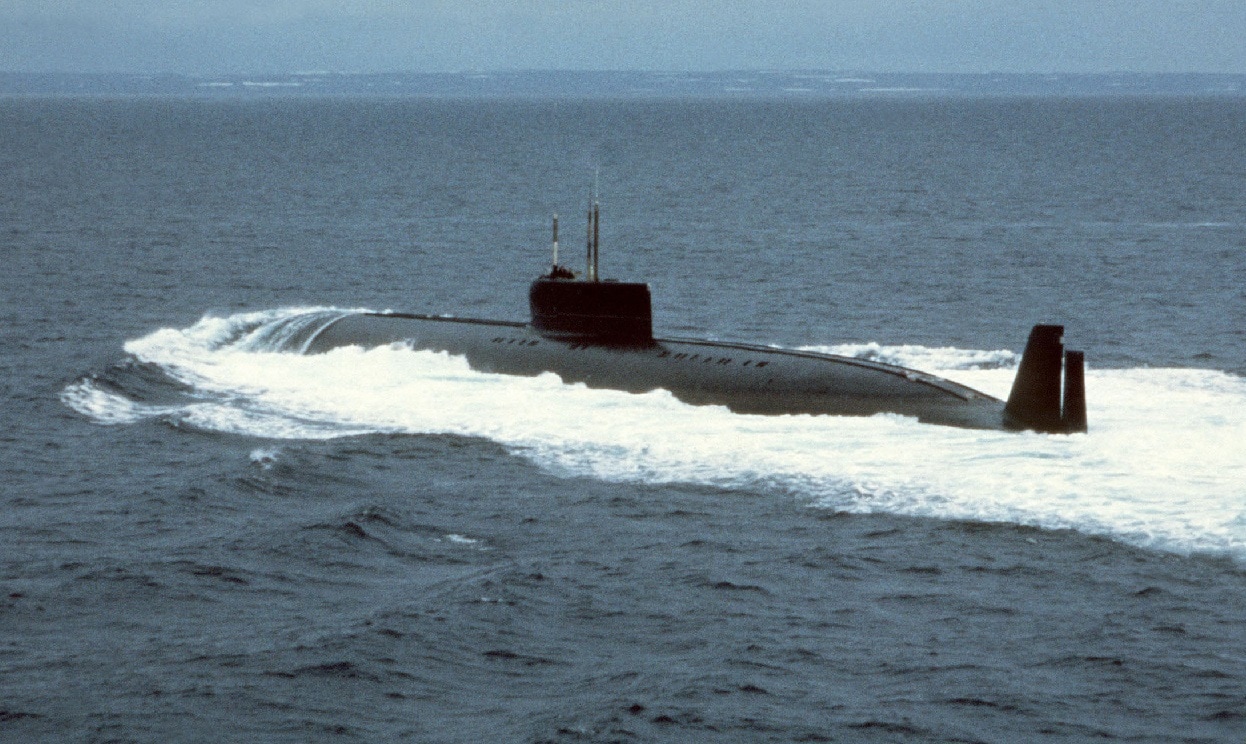
A port quarter view of a Soviet Papa class nuclear-powered cruise missile submarine (SSGN) underway.
The Soviet Union built some truly unique submarines to fight the Cold War.
One such system was Project 661 Anchar, known throughout NATO as the Papa-class submarine, in 1959. It was another of several examples of the Soviets experimenting with titanium submarine hulls.
Two nuclear reactors powered the Papa-class.
These subs were specifically designed to outrun US naval forces. In fact, the Papa-class became the fastest manned submarine ever constructed.
Only one of these submarines was ever built.
Papa-Class: Demonstration of Technological Achievement
The Soviets originally designated the submarine K-162.
They then renamed it K-222.
The Soviet Navy wanted to demonstrate that they could develop an undersea warship capable of combining extreme speeds with a potent anti-ship missile capacity.
As noted above, the submarine set a world speed record.
But the technological achievement came at great financial cost, and major operational complications ultimately kept the Soviets from embracing the design for full serial production.
When they first developed the Papa-class, the Soviets knew the American conventional surface-warfare fleet was too strong to challenge in a direct fight.
US carriers have massive striking power, while accompanying warships and submarines provided significant defense.
The USSR pursued submarines capable of launching cruise missiles against American surface formations.
Project 661, the Papa-class, as NATO called it, had two requirements: speed and the ability to attack enemy warships with large missile loads.
The Malakhit design group (then known as TsKB-16) made the Papa-class.
The Sevmash Shipyard in Severodvinsk built it.
Construction began in earnest there in December 1963, and the submarine was launched in December 1968.
It officially entered Soviet naval service a year later.
Project 661 used titanium hulls, giving the Papa-class an impressive strength-to-weight ratio and excellent protection against seawater corrosion.
The Soviets wanted to build this expensive submarine. So the Reds pressed ahead, regardless of cost or complexity.
The Capabilities of the Soviet Navy’s Papa-Class
The Papa-class submarine displaced 7,000 tons submerged.
An 82-person crew manned this submarine.
Two VM-5 pressurized-water nuclear reactors supplied steam to two propeller shafts.
These reactors produced 177 megawatts of thermal power.
Relevant propulsion machinery delivered 80,000 metric horsepower.
But its greatest contribution to submarine warfare was its insane underwater speed.
In 1970, the Papa-class reached an astonishing 44.7 knots (51.4 miles per hour).
That’s unheard of for a submarine.
The US Navy’s Los Angeles-class nuclear attack submarine has a publicly reported submerged speed of more than 25 knots.
The Soviet Papa-class could therefore travel much faster than its American counterparts.
As for its second requirement, striking American surface warships, the primary onboard weapons were ten P-70 Ametist anti-ship cruise missiles, designated SS-N-7 Starbright by NATO.
These missiles could be launched while submerged, allowing the submarine to attack surface vessels without first exposing itself above the water.
The P-70 carried a conventional or nuclear warhead and had an approximate range of around 40 miles.
This submarine also had four 533-millimeter torpedo tubes and a total inventory of around 12 torpedoes. Their mission was simple.
These subs would come up on a US carrier formation quickly, launch a missile salvo at it, and withdraw before the US forces could respond.
But the submarine’s extreme speeds created a significant disadvantage.
When a submarine travels at high speeds, as the Papa-class did, it generates massive amounts of underwater noise.
It’s deafening.
Water rushes around the hull, creating turbulence; the propeller cavitates; and machinery vibration makes the submarine easy to detect.
Modern anti-submarine warfare depends heavily on acoustic detection.
A submarine traveling at exceptionally high speed easily gives itself to the enemy.
Those high speeds also placed severe mechanical stress on the submarine. Hull cracking and related structural problems became the norm, leading to lengthy (costly) repairs throughout the 1970s.
A Golden Fish
Some Soviets nicknamed the Papa-class the “Golden Fish” due to its exorbitant construction and maintenance costs. Titanium fabrication was costly and laborious.
The submarine’s nuclear reactors also gave the engineers fits at times. Its last operational patrol occurred in 1981.
The Navy ultimately removed it from frontline service in 1988.
Russia began scrapping this record-making submarine in 2010.
The Papa-class never entered mass production.
Yet its technological legacy continued, as subsequent Soviet titanium-hulled submarines benefited from the hard lessons the Papa-class learned.
Despite its record-setting speeds, the submarine was first and foremost a stealth platform.
Going too fast made it easy to detect.
Therefore, for Russian designers, the Papa-class submarine’s unique speeds mattered less than maintaining underwater stealth.
About the Author: Brandon J. Weichert
Brandon J. Weichert is the Senior National Security Editor at 19FortyFive.com. He also manages The Weichert Brief on Substack. Weichert also hosts “National Security Talk” on Rumble. He is the author of four bestselling national security books, most recently A Disaster of Our Own Making: How the West Lost Ukraine (Encounter Books). Follow him via Twitter/X @WeTheBrandon.