
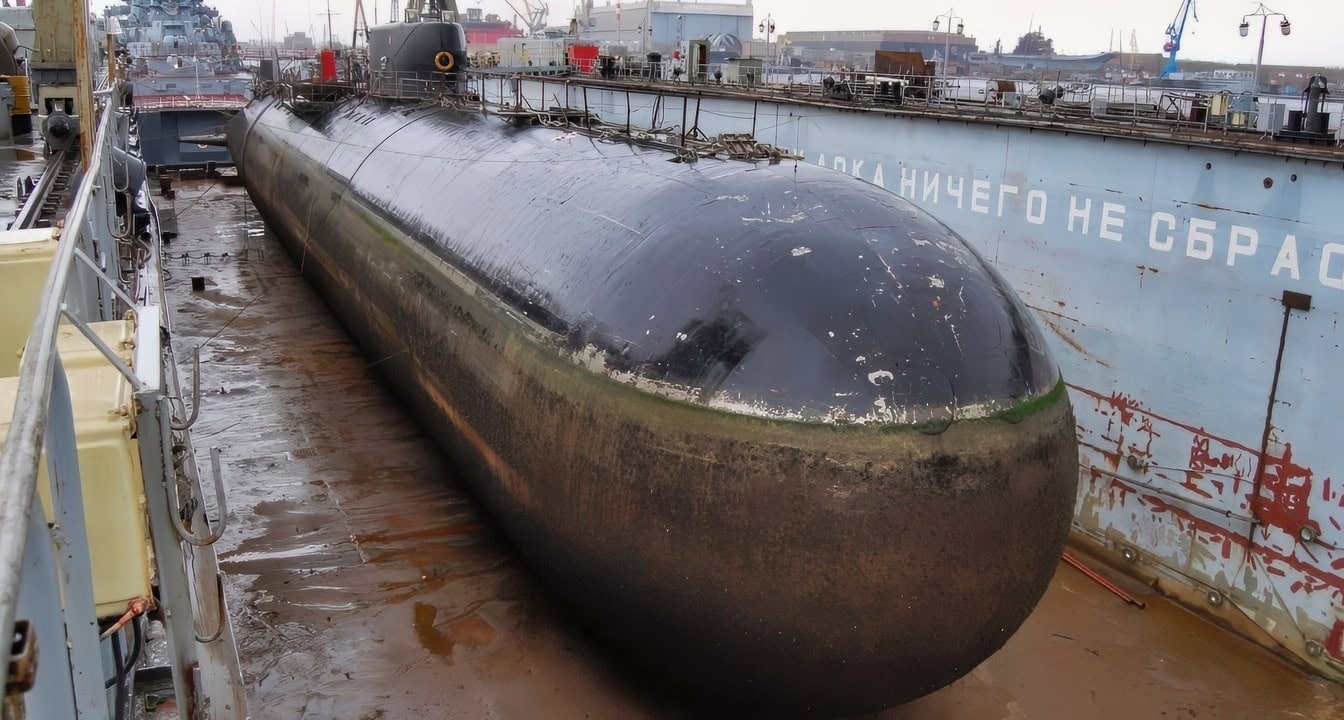
K-222 by the Numbers: 44.7 Knots, 80,000 Horsepower, and 10 Anti-Ship Missiles – The Soviet submarine later known as K-222 reached 44.7 knots beneath the surface, about 51 miles per hour. No crewed submarine has publicly surpassed that speed. The one-boat Project 661 program combined two nuclear reactors, 80,000 shaft horsepower, 10 submerged-launch anti-ship missiles, and the world’s first titanium submarine pressure hull. And the US Navy had nothing like it, well, at least in terms of speed and titanium.
K-222: The History of This Submarine
The Soviet government approved the project in 1958 because its existing cruise-missile submarines had a dangerous weakness: they had to surface before firing. Project 661 was intended to catch a U.S. carrier group, launch missiles while submerged, and use extraordinary speed to escape the escorts and aircraft searching for it.
Sevmash laid down K-162 at Severodvinsk on December 28, 1963, launched it in December 1968 and transferred it to the Soviet Navy on December 31, 1969. The submarine was renamed K-222 in 1978. More than 400 organizations contributed to a program that forced the Soviet shipbuilding industry to develop new methods for fabricating and welding titanium at submarine scale.
The result was impressive but difficult to reproduce. K-222 displaced about 5,197 metric tons surfaced and 6,750 tons submerged, measured 106.9 meters long, and carried a crew of about 80. Its high cost, construction time, acoustic noise, and structural problems kept the NATO-designated Papa class from growing beyond one submarine.
Project 661 Was Built to Catch U.S. Aircraft Carriers
Earlier Soviet Echo-class nuclear submarines carried large anti-ship missiles, but the launch procedure exposed the boat on the surface. It also forced the submarine to remain involved in missile guidance while NATO ships and aircraft closed on its position. Project 661 paired a new missile with a clean-sheet hull designed around underwater attack.
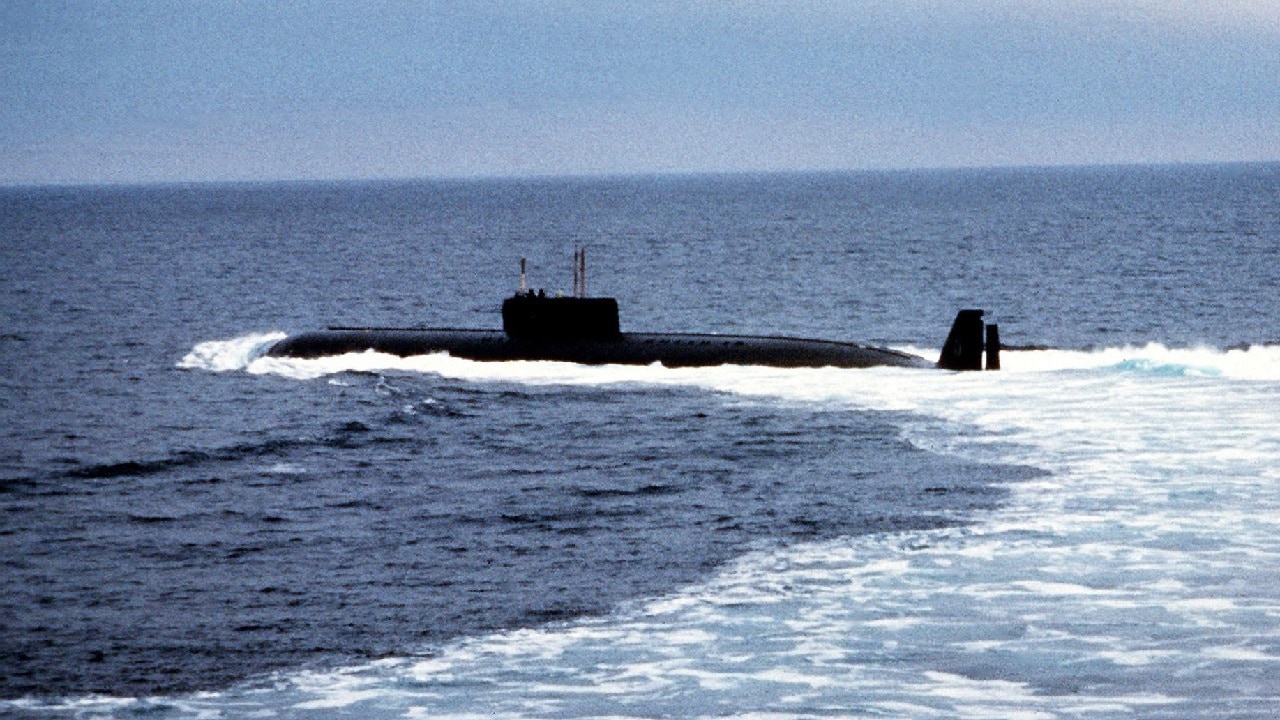
Papa-class Submarine or K-222 Creative Commons Image.
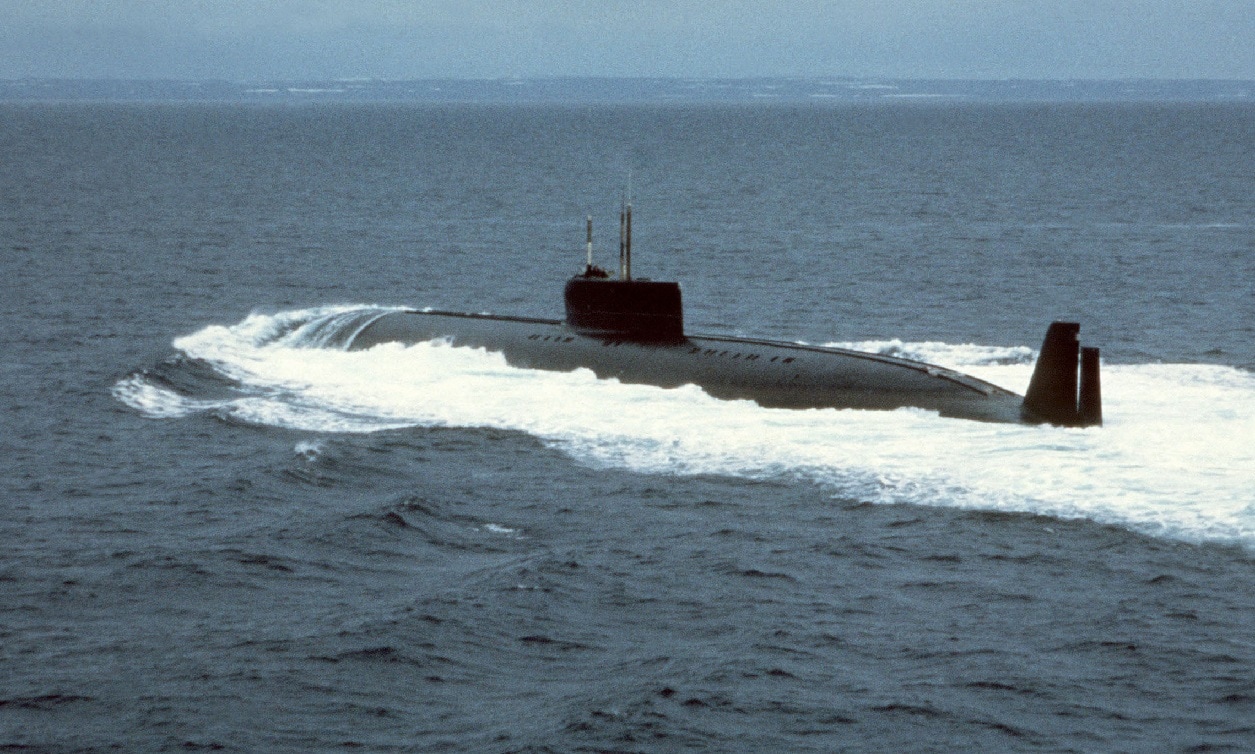
Papa-class Submarine or K-222 Creative Commons Image.
The Soviet requirement was direct: build a submarine capable of overtaking any surface ship and destroying it quickly. The Malakhit design bureau pursued that objective through a narrow high-speed hull, twin shafts, and an immense power plant. The approach made K-222 a purpose-built carrier hunter rather than a general-purpose attack submarine.
Two VM-5M pressurized-water reactors, each rated at roughly 177 megawatts of thermal power, supplied steam to two 40,000-horsepower turbines. One turbine drove each shaft. The combined 80,000 shaft horsepower was extraordinary for a submarine of K-222’s displacement and more than the machinery could use quietly.
Its published maximum depth was about 400 meters. A later U.S. Naval Institute assessment concluded that the lighter pressure hull chiefly helped control weight around the reactors, turbines, and missile battery.
Titanium Made the Speed Possible and Made the Boat Expensive
Titanium offered a high strength-to-weight ratio, corrosion resistance, and a low magnetic signature. Sevmash also noted that the metal did not require the same protective painting as steel. Those advantages allow designers to build a strong pressure hull without incurring the full weight penalty imposed by conventional materials.
The industrial bill was severe. Titanium has to be protected from oxygen and other contaminants during welding. Sevmash needed specialized tooling, carefully controlled work areas, and workers trained in fabrication practices that did not exist at the required scale. Test sections exposed cracked welds and manufacturing errors before the full hull was completed.
No publicly audited program cost exists. Its Soviet nickname, “Golden Fish,” reflected the accepted reality that the titanium prototype was extraordinarily expensive.
Nearly six years separated keel-laying from Navy acceptance. The work helped create the industrial base behind the later Alfa class, but it did not produce an affordable Papa-class line.
Ten P-70 Ametist Missiles Defined the Carrier-Killing Mission
K-222 carried 10 P-70 Ametist anti-ship cruise missiles in angled tubes between the pressure hull and the outer hydrodynamic hull. Five launchers sat along each side forward of the sail. The weapon, known to NATO as the SS-N-7 Starbright, could be fired while the submarine remained submerged.
The missiles had a range of roughly 65 kilometers, or about 40 miles, and could carry conventional or nuclear warheads. K-222 could fire five, then launch the remaining five three minutes later. Four 533-millimeter bow tubes and 12 torpedoes supplied a second weapons system.
The design depended on outside targeting. Finding a moving carrier across the ocean required aircraft, satellites, surface ships or other submarines to locate the group and pass usable data. Once K-222 accelerated, its own sonar performance deteriorated. That tension between missile range, targeting and noise helped push the Soviet Navy toward the larger Oscar-class carrier killers with 24 longer-range missiles.
44.7 Knots Impressed the U.S. Navy and Punished the Submarine
K-162 exceeded its 38-knot design goal, reaching 42 knots at reduced reactor power and 44.7 knots during a later full-power run. Water flow, propeller cavitation, and machinery vibration generated tremendous noise. One high-speed test damaged external fittings and protective grilles, while crew accounts placed the control-room sound above 100 decibels.
Western analysts had limited operational evidence because the boat was deployed infrequently and was seldom observed far from Northern Fleet waters. A 1994 U.S. Naval Institute review treated Project 661 as an anomaly while identifying two clear priorities: very high speed and a large cruise-missile armament. It also judged that excessive noise, missile limitations, construction delays, and short service life prevented series production.
The U.S. Navy did not build its own titanium sprinter. It pursued quieter steel boats, better anti-submarine sensors, and weapons for faster, deeper targets. The Mk 48 Advanced Capability torpedo program began in 1975 to counter faster, deeper-diving, and quieter submarines, according to the Government Accountability Office.
One Operational Patrol Showed the Strength and the Limitation
K-162 began its first North Atlantic patrol in September 1971. Russian accounts say it shadowed a U.S. carrier group centered on USS Saratoga as the ships returned from the Mediterranean. The submarine’s speed allowed it to maintain a formation at over 30 knots without using its full power.
No public American record provides a complete tracking timeline, and K-222 never fired in combat. A refit from October 1972 to January 1975 uncovered numerous hull cracks, and the submarine never achieved the patrol tempo expected of an operational class.
A critical accident during overhaul in Severodvinsk in autumn 1980 damaged a reactor core. Accounts differ on the exact date, but no casualties or off-site release were reported. The accident added another specialized repair problem.
The Soviet Navy Kept the Technology and Rejected the Formula
Project 661’s titanium work, high-output machinery, automation, and missile arrangement influenced later Soviet submarines. The fast titanium K-222 became a one-boat laboratory.
The Navy did not repeat the complete package. The Charlie class delivered submerged-launch anti-ship missiles in a cheaper steel hull. The Alfa class retained titanium and extreme speed for a different attack-submarine mission. The Sierra class used titanium for strength and depth without attempting to equal K-222’s record. The much larger Oscar II class carried the anti-carrier concept toward heavier missile salvos and greater range.
U.S. designers accepted the weight of high-strength steel and concentrated on quieting, sensors, weapons, and maintainability. Avoiding an American titanium submarine also avoided a specialized repair system. Russia later produced capable Sierra-class attack submarines, but only four of each of the two main variants.
K-222’s Sail Survived the Golden Fish
K-222’s active career ended in 1988. The submarine remained at Severodvinsk for years while officials worked through the difficult disposal of its reactors, fuel, and titanium hull. Zvezdochka was dismantled in 2010, four decades after its record-setting trials.
The sail was saved. In July 2021, Zvezdochka transferred it by water to Sevmash for inspection and restoration near Workshop 42, where K-162 had been assembled. The structure was designated for installation as a memorial in Severodvinsk’s Primorsky Park.
About the Author: Harry J. Kazianis
Harry J. Kazianis (@Grecianformula) is the former Senior Director of National Security Affairs at the Center for the National Interest (CFTNI), a foreign policy think tank founded by Richard Nixon based in Washington, DC. Harry has over a decade of experience in think tanks and national security publishing. His ideas have been published in the NY Times, The Washington Post, The Wall Street Journal, CNN, and many other outlets worldwide. He has held positions at CSIS, the Heritage Foundation, the University of Nottingham, and several other institutions related to national security research and studies. He is the former Executive Editor of the National Interest and the Diplomat. He holds a Master’s degree focusing on international affairs from Harvard University.

