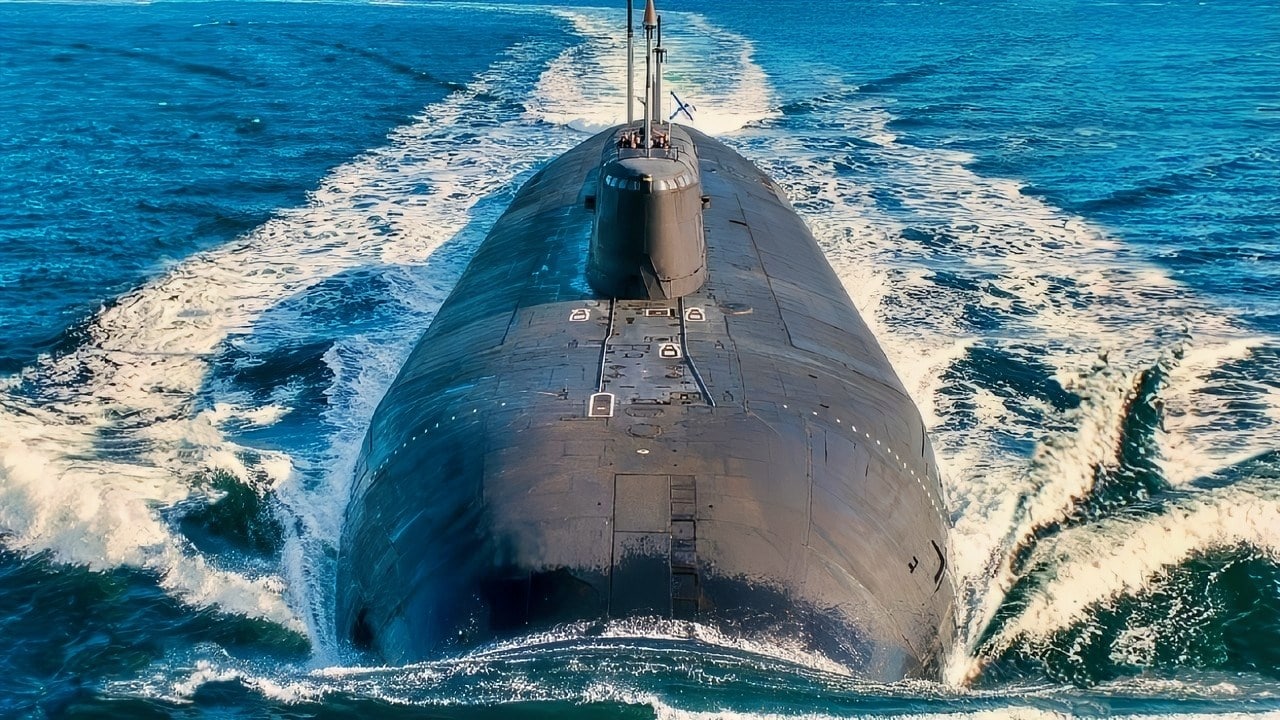
Summary and Key Points: National security analyst Kris Osborn evaluates the Oscar II-class (Project 949A Antey), the Russian Navy’s massive, double-hulled “carrier killers.”
-The fleet’s status remains in flux following the reported scrapping of the K-132 Irkutsk and the likely curtailment of the 949AM modernization effort.
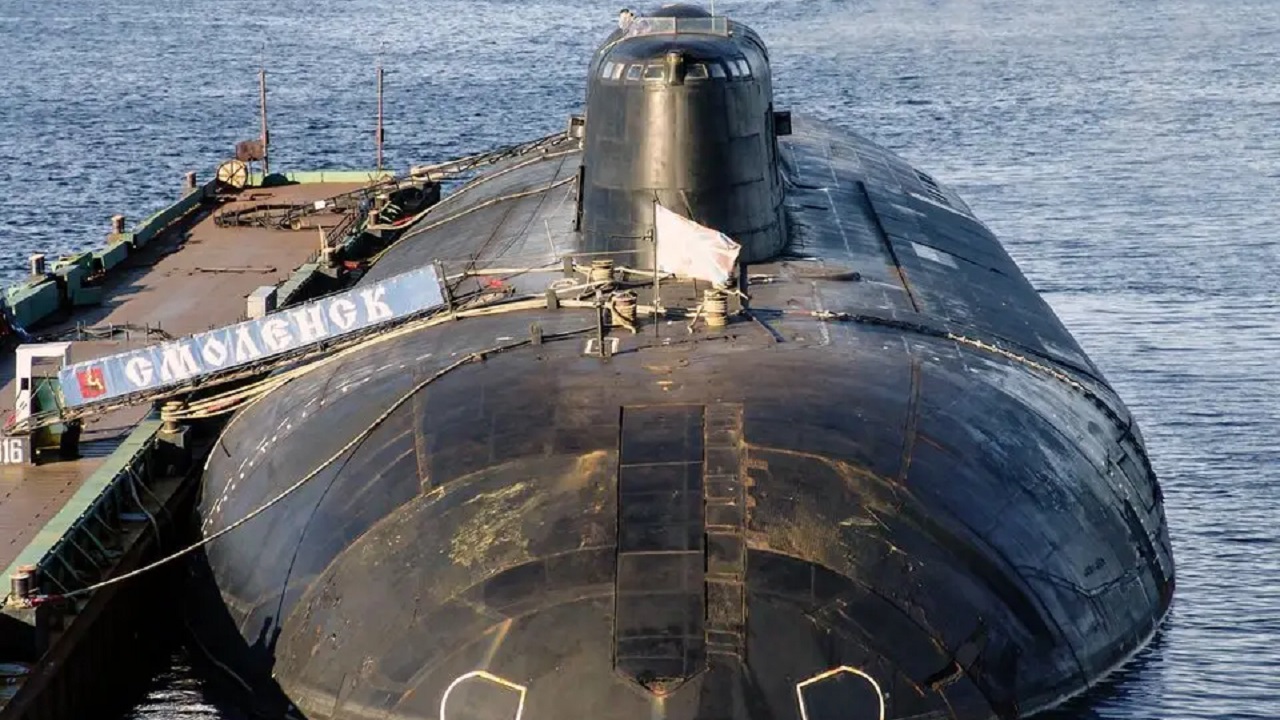
Oscar II Class Submarine. Image Credit: Creative Commons.
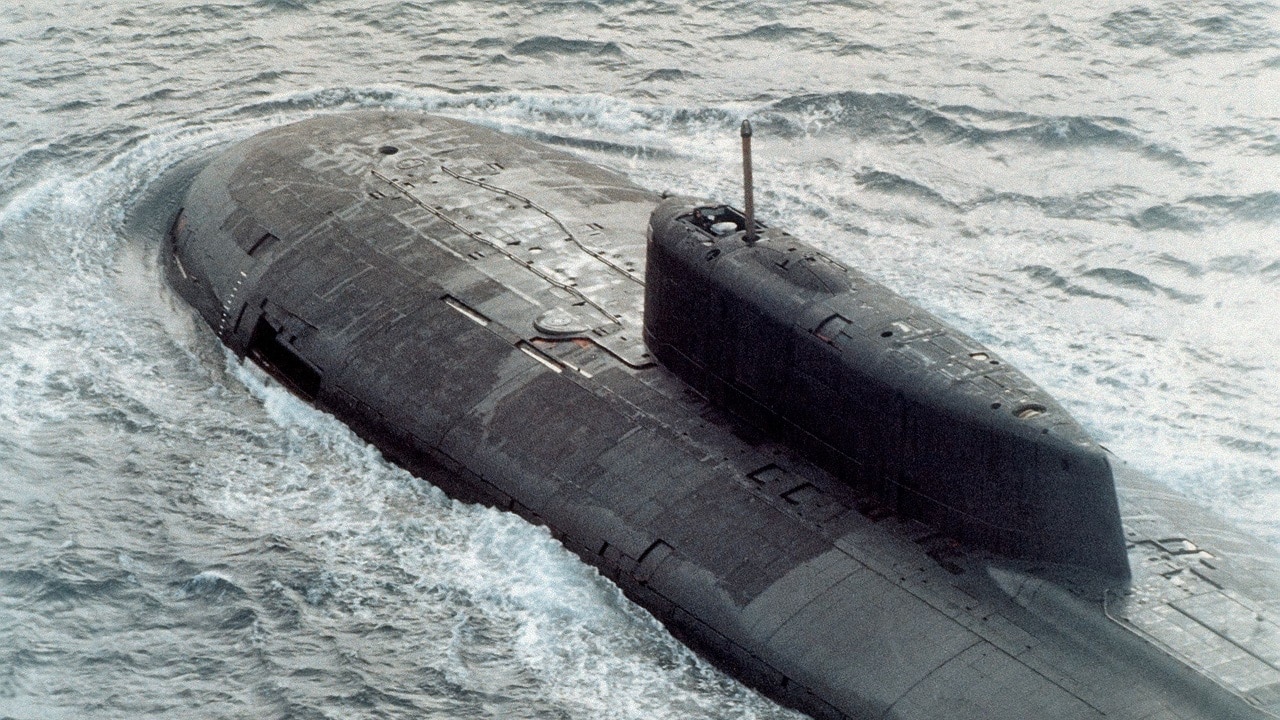
Oscar-class Submarine from Russia.
-This report analyzes the class’s unique ability to ripple-fire 24 P-700 Granit missiles—or up to 72 Oniks and Kalibr rounds in upgraded variants—guided by the Liana satellite network.
-Osborn explores the transition toward the record-breaking Belgorod, concluding that while the Oscar II lacks the stealth of the Yasen-class, its sheer magazine depth remains a formidable deterrent.
Why Russia’s Oscar II-Class Submarines Still Haunt NATO Aircraft Carriers
Russia’s Oscar II–class submarines are among the largest and most heavily armed cruise-missile submarines ever built.
Designed during the Cold War to counter Western naval power, the submarines were created to destroy aircraft carriers and other large warships.
By combining missile systems, nuclear propulsion, advanced sonar, and robust hull construction, the Oscar II-class was designed to deliver firepower and lethality in maritime warfare as the Soviet Union sought to rival the U.S.
Aircraft Carrier Killer
The Oscar II-class, officially known as Project 949A Antey-class submarine, was developed by the Rubin Design Bureau and is operated by the Russian Navy.
It evolved from the earlier Project 949 Granit-class submarine, with improvements in internal layout, electronics, and survivability, according to an interesting essay in The National Interest.
The main purpose of the design was to provide the Soviet Union—and later Russia—with a submarine capable of launching large numbers of anti-ship missiles at enemy aircraft carrier strike groups.
Because aircraft carriers represent the centerpiece of many Western naval forces, the Oscar II-class was built specifically to threaten these powerful fleets from long distances.
One of the most important technologies used in the Oscar II-class is its nuclear propulsion system.

Oscar II-class Submarine. Image: Creative Commons.
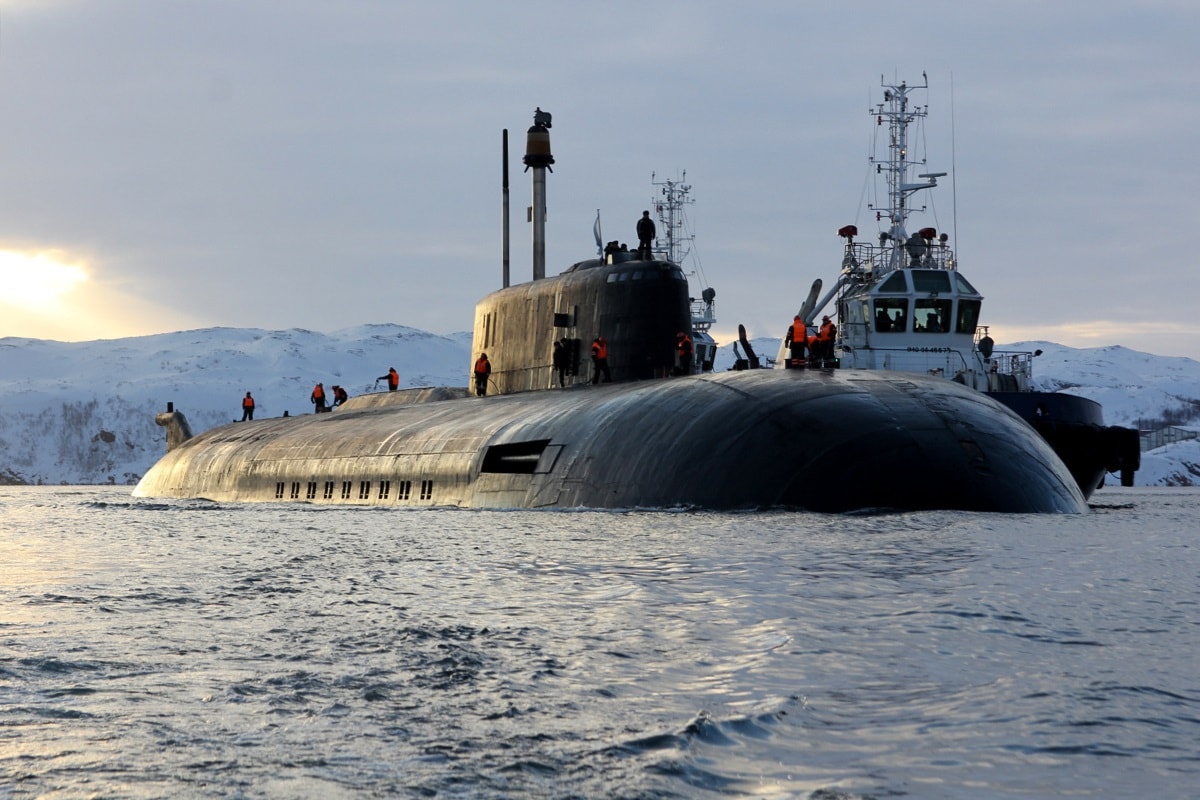
Oscar-class. Image: Creative Commons.
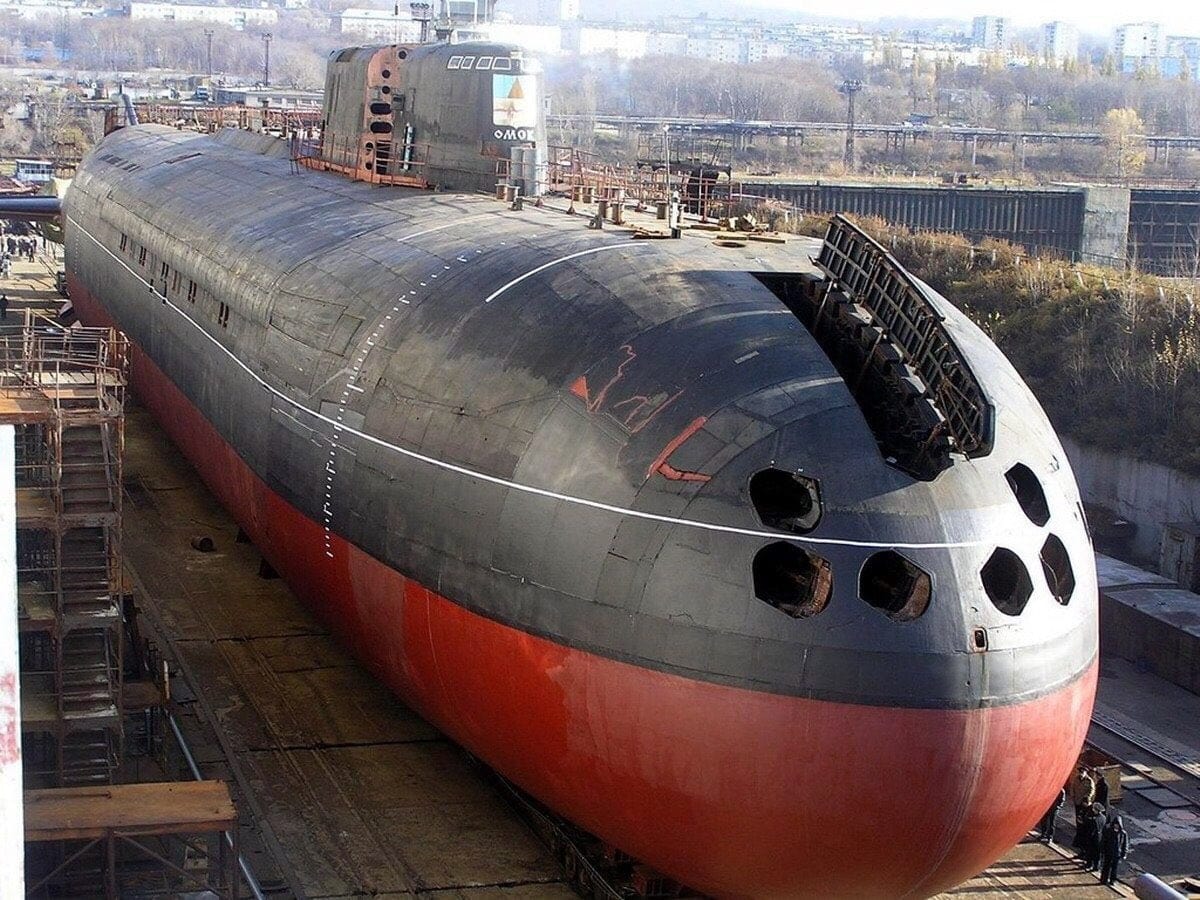
Oscar II-Class Belgorod Submarine. Image: Creative Commons.
Unlike diesel-electric submarines, nuclear submarines can remain underwater for extremely long periods without surfacing.
The Oscar II class uses two nuclear reactors to generate heat, which produces steam that drives turbines connected to the submarine’s propellers.
This propulsion system gives the submarine virtually unlimited range and enables it to travel at high underwater speeds.
Nuclear propulsion also enables sustained patrols far from Russian shores, allowing the submarine to operate in the Atlantic, Pacific, and Arctic Oceans.
Double-Hull Configuration
The submarine’s double-hull construction is another key technological feature.
Russian submarine designers have traditionally favored double-hull designs in which an outer hydrodynamic hull surrounds an inner pressure hull.
This arrangement increases survivability by providing additional structural protection and internal buoyancy.
The outer hull also improves hydrodynamic performance, allowing the submarine to move more efficiently through the water.
In the Oscar II class, this structure supports the vessel’s large size—over 150 meters long—and provides space for its extensive missile armament.
Stealth is essential for any submarine, and the Oscar II class incorporates several technologies to reduce detectability.
The submarine’s hull is coated with anechoic tiles designed to absorb sonar waves and reduce acoustic reflections.
Machinery inside the submarine is mounted on vibration-damping supports to reduce noise transmitted through the hull into the surrounding water.
Bow-Mounted Sonar
The Oscar II-class carries a large sonar suite that includes a bow-mounted spherical sonar array and additional flank arrays along the sides of the hull.
These sensors allow the submarine to detect and track enemy ships and submarines at long distances. Passive sonar enables the crew to listen for noise produced by other vessels without emitting signals that might reveal their position.
The most distinctive technological feature of the Oscar II-class is its powerful cruise-missile armament.
Each submarine carries 24 large anti-ship cruise missiles housed in launch tubes located outside the pressure hull along the sides of the vessel.
These missiles were originally the P-700 Granit cruise missile, a supersonic weapon specifically designed to destroy large surface ships such as aircraft carriers.
The Granit missile can travel hundreds of kilometers at high speed and carries a large warhead capable of causing severe damage to naval vessels.
Torpedo-Armed Oscar II-Class Submarine
In addition to cruise missiles, the Oscar II-class also carries torpedo armament.
The submarines are equipped with multiple torpedo tubes capable of launching heavyweight torpedoes against enemy ships and submarines.
Another mission is long-range strike operations.
With modern missile upgrades, the submarines can attack not only ships but also land targets such as military bases, ports, and infrastructure.
This capability allows the submarine to contribute to broader military operations by striking targets far from the battlefield.
Overall, the Oscar II–class submarine represents a powerful combination of nuclear propulsion, advanced sonar systems, heavy cruise-missile armament, and durable double-hull construction.
Originally designed to destroy aircraft carrier battle groups, it remains a formidable platform capable of conducting anti-ship warfare, long-range strike missions, intelligence gathering, and strategic deterrence.
About the Author: Kris Osborn
Kris Osborn is the President of Warrior Maven – Center for Military Modernization. Osborn previously served at the Pentagon as a highly qualified expert in the Office of the Assistant Secretary of the Army—Acquisition, Logistics & Technology. Osborn has also worked as an anchor and on-air military specialist at national TV networks. He has appeared as a guest military expert on Fox News, MSNBC, The Military Channel, and The History Channel. He also has a Masters Degree in Comparative Literature from Columbia University.