
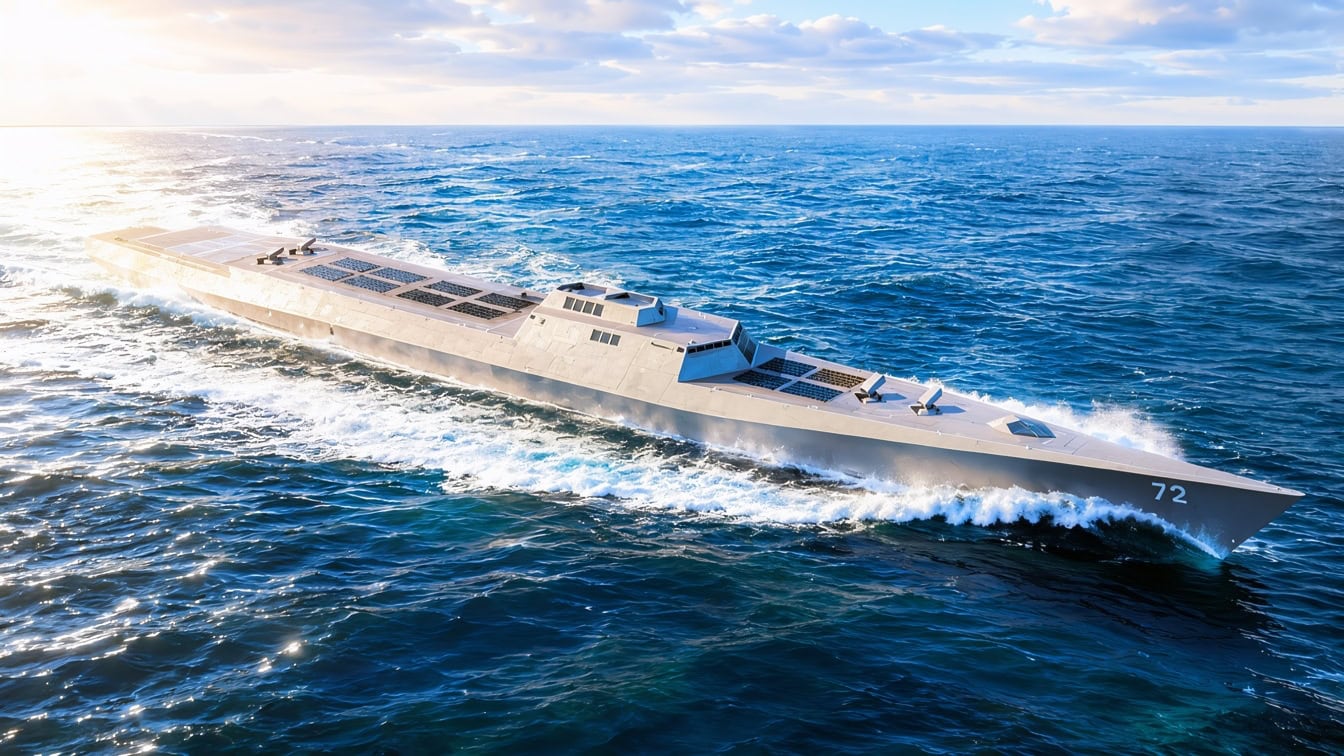
In March 1996, the Chief of Naval Operations and the director of DARPA signed a memorandum creating the most radical American warship concept since the nuclear submarine: a stealthy, nearly crewless hull carrying roughly 500 cruise missiles, priced like a frigate, designed to put battleship-scale firepower back at sea. Within two years, the Arsenal Ship was dead — its champion gone, its program renamed, downsized, and finally abandoned by the Navy itself. The effort ran nineteen months and produced nothing but paper. The reason it deserves a full accounting in 2026 is that the United States Navy has spent the three decades since rebuilding the Arsenal Ship’s function in pieces, at vastly greater cost, is fighting a war off Iran right now that demonstrates nightly exactly the problem Admiral Mike Boorda designed it to solve — and, as of this year, is being asked to consider building it for a third time.
Admiral Boorda’s 21st Century Battleship
The concept answered a real hole in the fleet. The Iowa-class battleships retired in the early 1990s, taking with them the Navy’s heavy fire support for land battles, and the Tomahawk-armed cruisers and destroyers that inherited the strike mission carried their missiles in dozens, not hundreds. Boorda’s answer, developed jointly with DARPA’s Larry Lynn, was a ship that did one thing at an enormous scale.
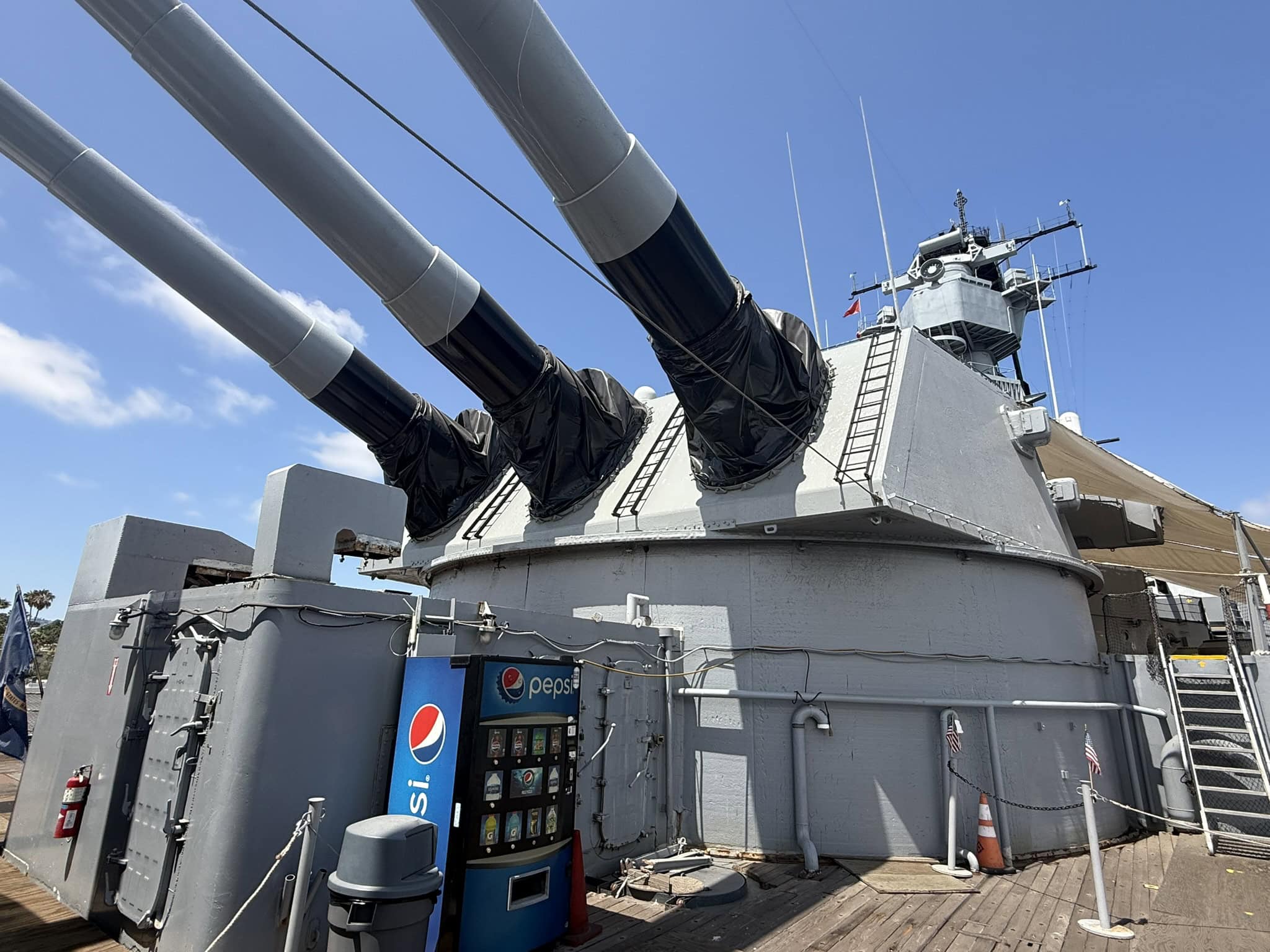
USS Iowa Visit by Harry Kazianis of 19FortyFive.com
The Arsenal Ship would carry four times the vertical-launch cells of a Ticonderoga-class cruiser, at a fixed sailaway price of $450 million and lifecycle costs 50 percent below a conventional combatant, with a demonstrator targeted for initial operational capability by 2000 and a follow-on force of four to six ships.
The acquisition plan was as radical as the hull, compressing the design-to-fabrication timeline to half that of comparable warships. By July 1996, DARPA had five industry teams under Phase I contracts, and in January 1997, it advanced three of them — teams led by General Dynamics, Lockheed Martin, and Northrop Grumman interests — into funded functional design.
The genuinely revolutionary part was what the ship would not have. No major radar suite, no large combat information center, minimal defenses, and a crew the program’s own leadership capped at no more than 50 sailors, operating the ship from a single central command space.
Contemporary analysis described a prototype carrying a single 64-cell launcher block, scalable to a full battery of 480 to 512 missiles, with the first ship built as a technology demonstrator funded in the fiscal 1998 budget.
The Arsenal Ship was a remote magazine: other platforms — Aegis ships, aircraft, eventually satellites — would find targets and direct fire, and the big hull would simply shoot on command, with the planned demonstrations including Tomahawk salvos and air-defense missile launches controlled entirely from offboard. In 1996, that networked concept was a decade ahead of the fleet’s doctrine.
Today, it has a name the Navy uses constantly: distributed maritime operations.
May 1996: The Champion Dies, Then The Program
Admiral Boorda died by suicide on May 16, 1996, two months after signing the program into existence, amid a controversy over his decorations that had nothing to do with the ship.
The Arsenal Ship lost its only powerful friend, and the record of the following eighteen months reads as a slow institutional disowning. By early 1997, the Navy had renamed the program the Maritime Fire Support Demonstrator, cut it to a single ship, and recast it as a technology testbed for the SC-21 destroyer program — the surface community’s preferred future, where a gunless, sensor-less, nearly crewless capital ship had threatened both the funding and the culture.
The House National Security Committee concluded in the spring that the Arsenal Ship and SC-21 were two separate major warship programs that the budget could not carry together. The end came on October 24, 1997, when the House-Senate conference on the defense bills provided just $35 million against an administration request of roughly $103 million; needing $115 million more to sustain the effort, the Secretary of the Navy announced that same day that the program would not be pursued.
The criticisms behind the kill had merit on the day they were raised: the concentration risk of 500 missiles on one thinly defended hull, the question of whether a stretched destroyer could do the job, and the unaffordability of parallel programs.
Yet the verdict was contested immediately. Five weeks later, the congressionally chartered National Defense Panel criticized the cancellation in its December 1997 report, observing that the ship could have reduced the need for aircraft carriers. The test of the decision is what the Navy did across the following thirty years, and what it did was rebuild the Arsenal Ship’s function, piece by piece, while insisting the original idea had been wrong.
The Critics Were Right About The Hull And Wrong About The Idea
The survivability critique deserves to be stated at full strength, because the years since have made it stronger. A single hull carrying 500 missiles is the densest, most valuable surface target imaginable — the loss of one Arsenal Ship would erase half a billion dollars and a meaningful fraction of the national Tomahawk inventory in a single hit. The sinking of the Moskva, the sea-drone campaign that drove Russia’s Black Sea Fleet from Sevastopol, and the proliferation of cheap precision weapons have settled the argument: in 2026, concentration at sea is a liability, and the critics of 1997 look prophetic about the hull.
However, they were wrong about the function, and the Navy’s own behavior proves it. The fleet’s binding constraint in every strike campaign since has been magazine depth — the number of launch cells within range — and the answer the critics implied — distributing the arsenal across many platforms rather than canceling it — is precisely the path the Navy eventually took.
The mistake of 1997 was killing the answer instead of fixing its geometry, and the bill for that mistake arrived in installments.
The SSGNs: The Arsenal Ships That Swam
The first installment came from the submarine community, which built the Arsenal Ship underwater while the surface fleet was still congratulating itself. Between 2002 and 2008, the Navy converted its four oldest Ohio-class ballistic-missile submarines — Ohio, Michigan, Florida, and Georgia — into guided-missile boats, each carrying up to 154 Tomahawks in converted launch tubes and special-operations capacity.
The SSGNs were arsenal ships in everything but name and buoyancy: enormous magazines, minimal escorts required, opening-night firepower that proved itself from Libya in 2011 onward. They became the most valuable conventional strike platforms in the fleet precisely because they delivered Boorda’s concept in a survivable form.
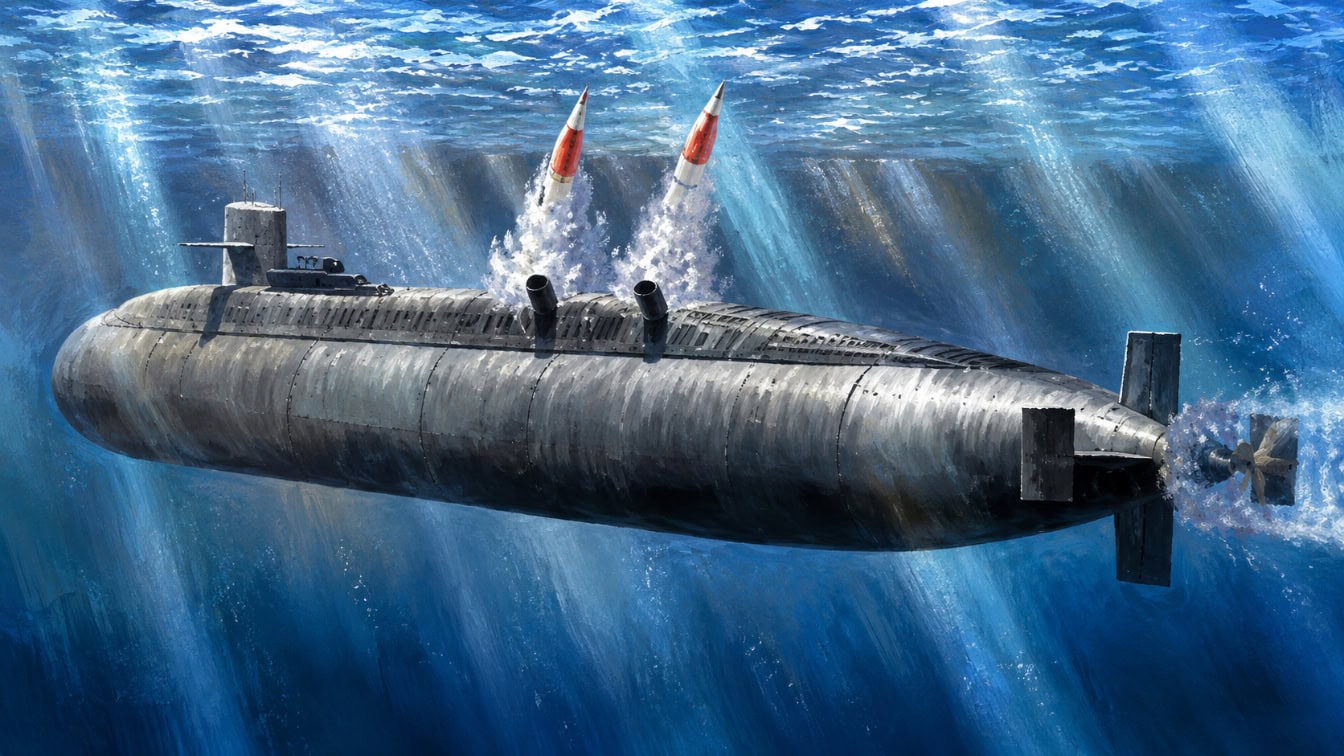
Ohio-Class SSGN Submarine Firing. U.S. Navy Image Enhanced with Banana Nano.
The second installment is the one that should now alarm Congress: all four SSGNs are scheduled to retire over the next two years, with no replacement planned, removing more than 600 vertical-launch cells — the better part of two Arsenal Ships — from a fleet that is currently expending Tomahawks at war rates. The Navy built the swimming arsenal ship, came to depend on it, and is about to lose it.
MASC And BBG(X): The Arsenal Ships The Navy Is Building And Being Offered Now
The third installment closes the circle completely. For several years, the Navy pursued the Large Unmanned Surface Vessel — a pier-deployed, optionally crewless hull designed to carry weapons and operate in conjunction with crewed warships as an adjunct missile magazine.
In 2025, the Navy merged that effort into the Modular Attack Surface Craft program, now in its industry prototyping phase, with force-structure plans suggesting a fleet of several dozen. Read the MASC’s description against the 1996 memorandum, and the inheritance is unmistakable: minimal or no crew, missile payloads, remote direction by the networked fleet, and low cost per hull. It is the Arsenal Ship, shrunken and multiplied — the same function the Navy killed, returning in the distributed form the original critics should have demanded instead of demanding nothing.
Furthermore, the concept’s third life has now arrived at full scale. The Congressional Research Service is currently briefing Congress on the administration’s proposal for a Navy Guided Missile Battleship, designated BBG(X) — and the CRS analysis opens its historical background with the Arsenal Ship, the 20,000-to-40,000-ton, 500-missile program the Navy terminated in October 1997. Twenty-nine years after the Secretary of the Navy declined to pursue Boorda’s ship, the Pentagon is asking Congress to consider building it under a battleship designation. The wheel has come fully around.
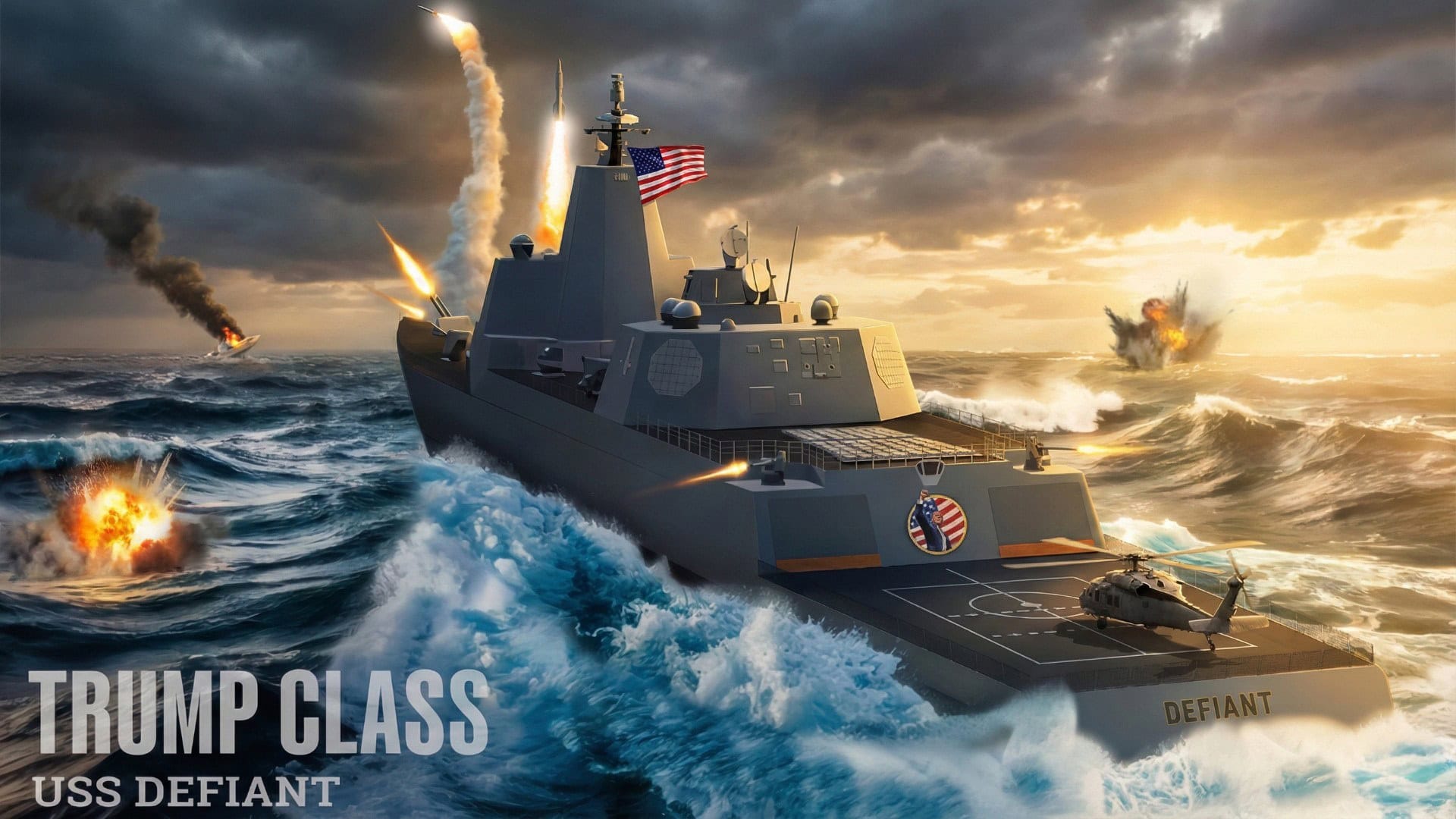
Trump-Class Battleship Mockup Created with Nano Banana.
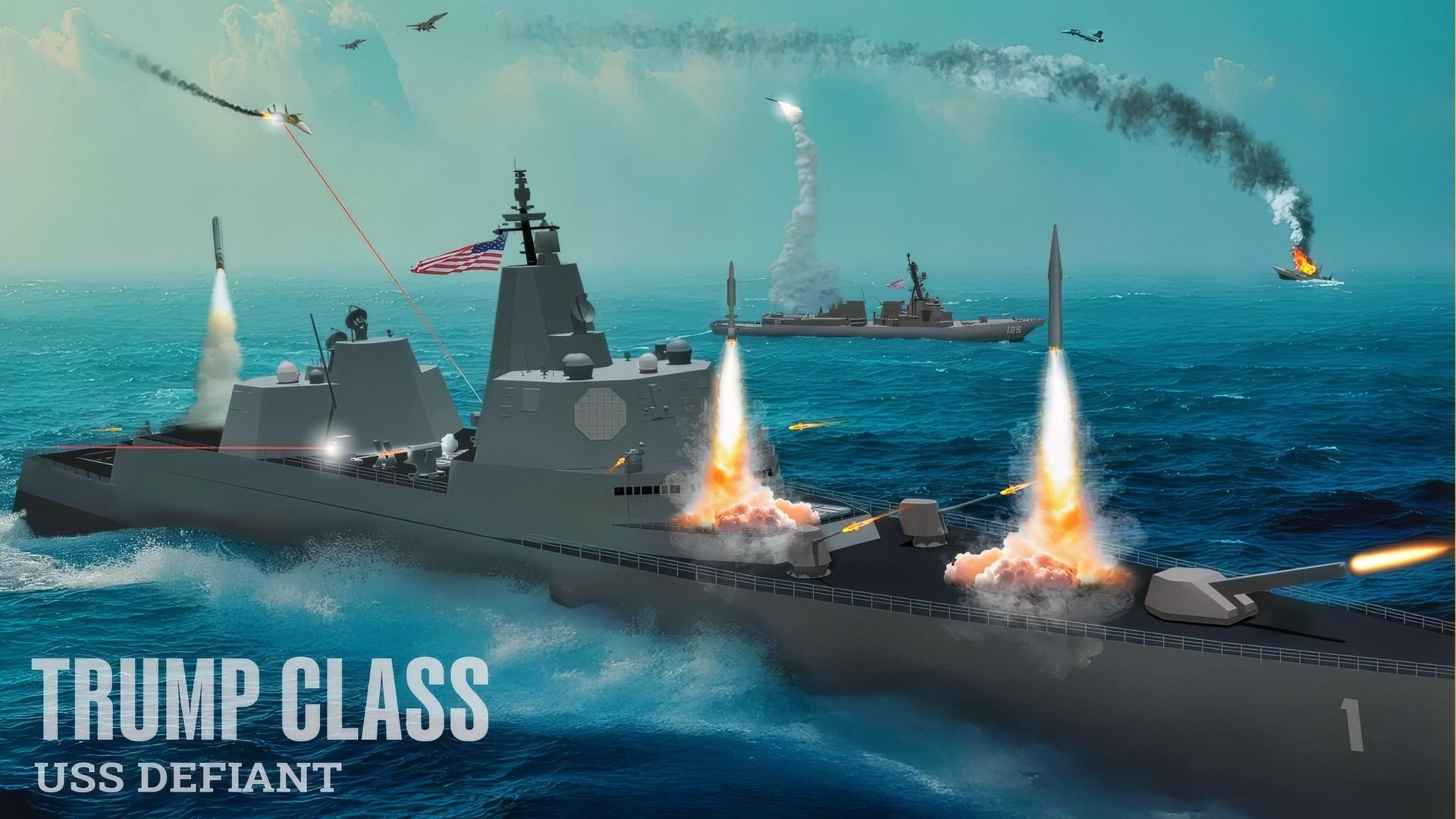
Trump-Class Battleship USS Defiant. Image Credit: Creative Commons.
Off Iran Tonight: The Magazine Problem Boorda Saw Coming
The Iran war is a live demonstration of the Arsenal Ship’s reason for existing. The United States fired more than 850 Tomahawks in the war’s first four weeks, has continued firing through this week’s nightly strikes, and is drawing against a total inventory estimated at around 3,100 missiles.
Behind those numbers sits the operational grind the public never sees: vertical-launch cells cannot be reloaded at sea, so every destroyer that empties its tubes must leave station and sail to a friendly port to rearm, subtracting itself from the war for days at a time. Magazine depth — cells in range, missiles aboard — is the binding constraint of the entire campaign, exactly as it would be in the opening weeks of a Pacific war, where the arithmetic gets worse, and the friendly ports get farther away.
That constraint is the problem Boorda put his name to in March 1996. A handful of Arsenal Ships, or their distributed descendants, holding thousands of additional cells in theater would change the arithmetic of this war and the next one, and the Navy knew it well enough to build the function twice — once in submarines it is now retiring, once in unmanned hulls it has not yet fielded — and to entertain it a third time under a battleship’s name.
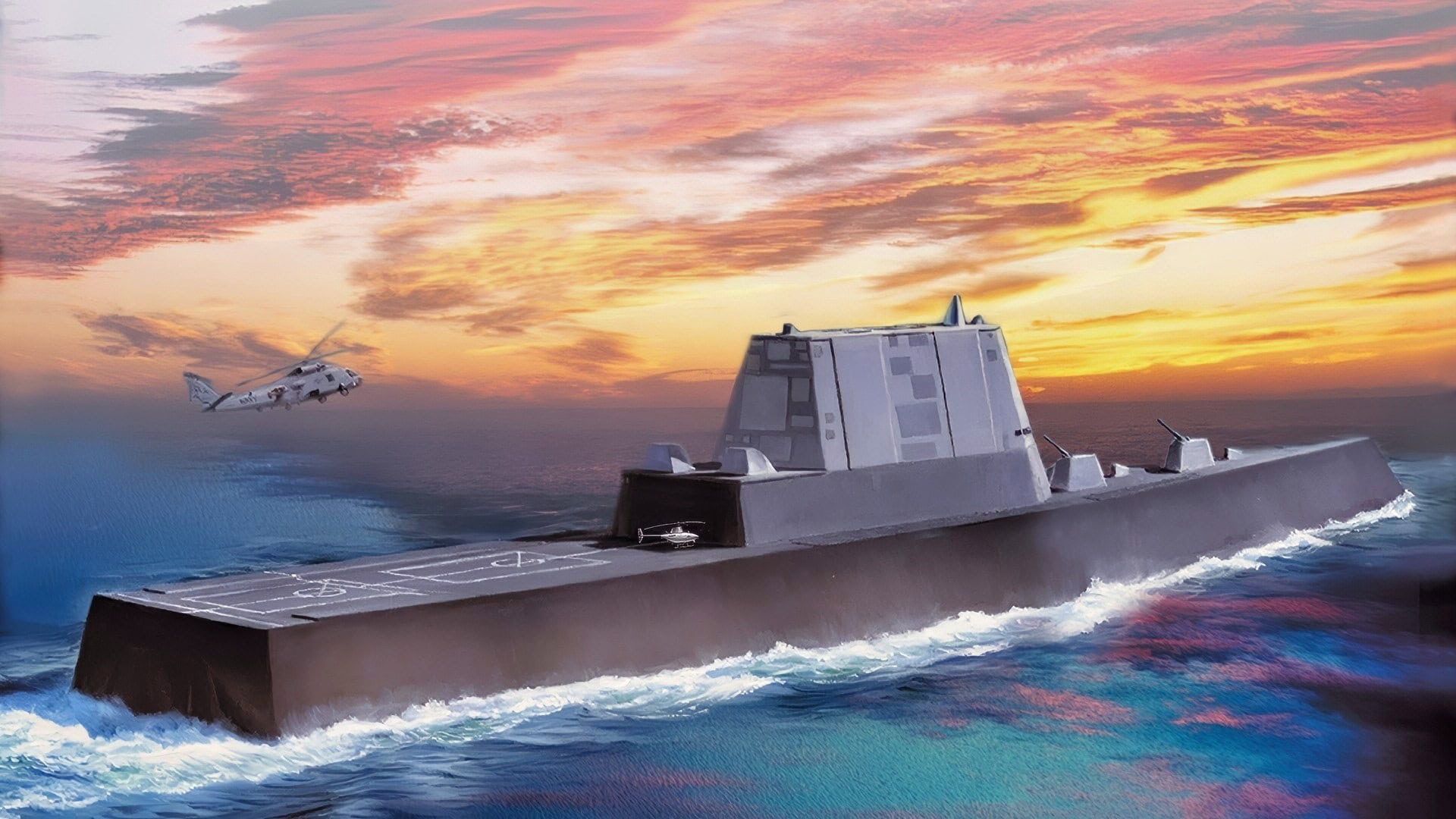
Zumwalt-Class Artist Rendering. Image Credit: Creative Commons.
The original program cost almost nothing and died of politics, a lost patron, and a fair critique aimed at the wrong target.
The concept it carried has outlived the ship, the critics, and three decades of fleet doctrine, and somewhere off the Iranian coast tonight, a destroyer captain counting his remaining cells is living in the gap between the two.
About the Author: Harry J. Kazianis
Harry J. Kazianis (@Grecianformula) was the former Senior Director of National Security Affairs at the Center for the National Interest (CFTNI), a foreign policy think tank founded by Richard Nixon based in Washington, DC. Harry has over a decade of experience in think tanks and national security publishing. His ideas have been published in the NY Times, The Washington Post, The Wall Street Journal, CNN, and many other outlets worldwide. He has held positions at CSIS, the Heritage Foundation, the University of Nottingham, and several other institutions related to national security research and studies. He is the former Executive Editor of the National Interest and the Diplomat. He holds a Master’s degree focusing on international affairs from Harvard University.