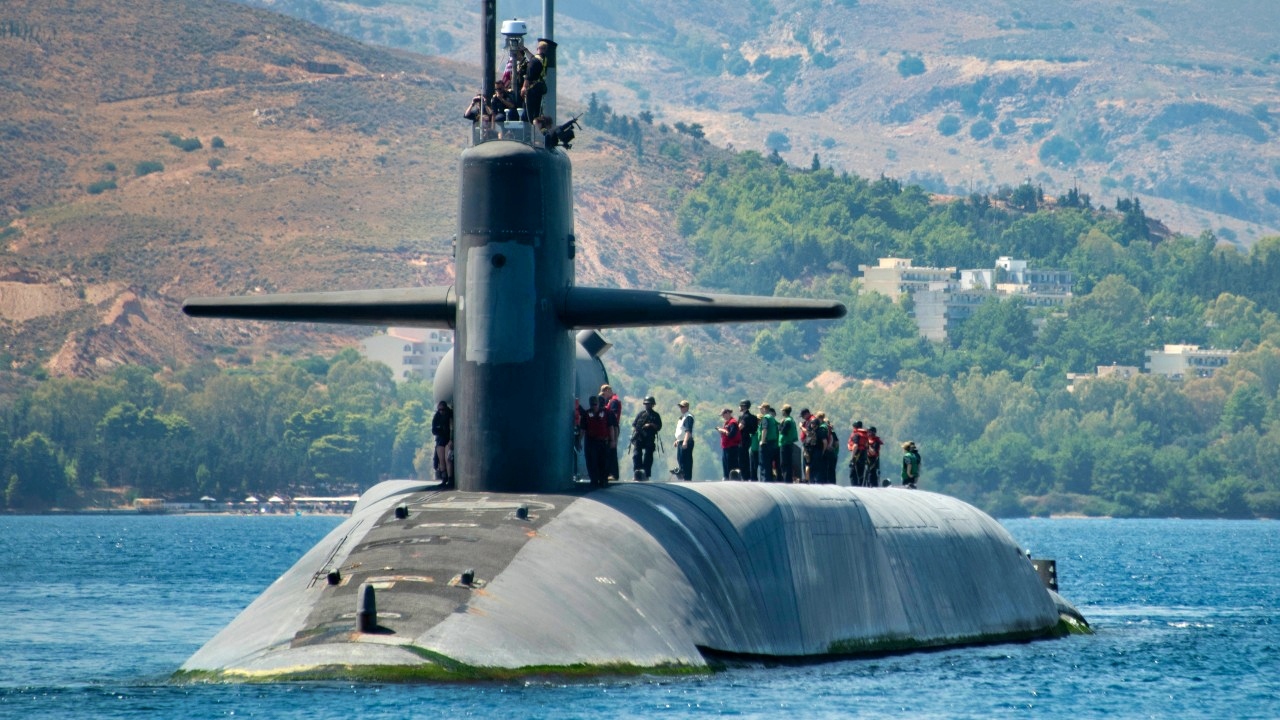
The United States Navy called it an accomplishment when the USS Florida (SSGN-728) returned from a 727-day submarine patrol covering 70,000 miles — the longest undersea deployment in American naval history. It was actually a confession that the U.S. Navy is running out of submarines at the exact moment Chinese People’s Liberation Army Navy submarine forces are expanding rapidly.
The Ohio-Class SSGN Submarines Keep Proving Their Worth
A recent seven-minute-long propaganda video celebrating the birthday of China’s People’s Liberation Army Navy (PLAN) prominently featured the PLAN’s growing submarine force. Clearly, Beijing wants the world to understand that it is no longer just a continental power.
Indeed, China’s elite want people everywhere–especially in Washington, D.C.–to know that the PLAN is a major submarine force. Meanwhile, the United States is enduring a systemic naval shipyard crisis that is deeply harming its submarine force, both in terms of readiness and size.
And America’s submarines have never been more in demand than they have been in the last few years, especially with the Ukraine War and the Iran War raging.
US submarines are so important for deterrence and strike missions that the Pentagon sent the Ohio-class guided missile submarine (SSGN) USS Florida (SSGN-728) on a whirlwind 727-day patrol around the world a few years back.
This patrol broke records and got the gallant crew of the Florida many accolades. But this mission highlighted how desperate the situation is for America’s submarine force. After all, without the Navy pushing the Florida to its operational limits on this historic extended worldwide deterrence patrol, the Navy would have been unable to conduct any deterrent patrol at all due to the submarine shortage the fleet is undergoing.
Typically, American submarine crews deploy on three- to six-month missions undersea. Even when the Pentagon extends those typical missions, they rarely last a year. In the case of the USS Florida, however, there was an effective presence of this submarine at sea for two years,
The tour covered roughly 70,000 miles and involved two sets of forward-deployed crews (designated “Blue” and “Gold”). This personnel decision allowed Florida to remain operational without ever having to return home.
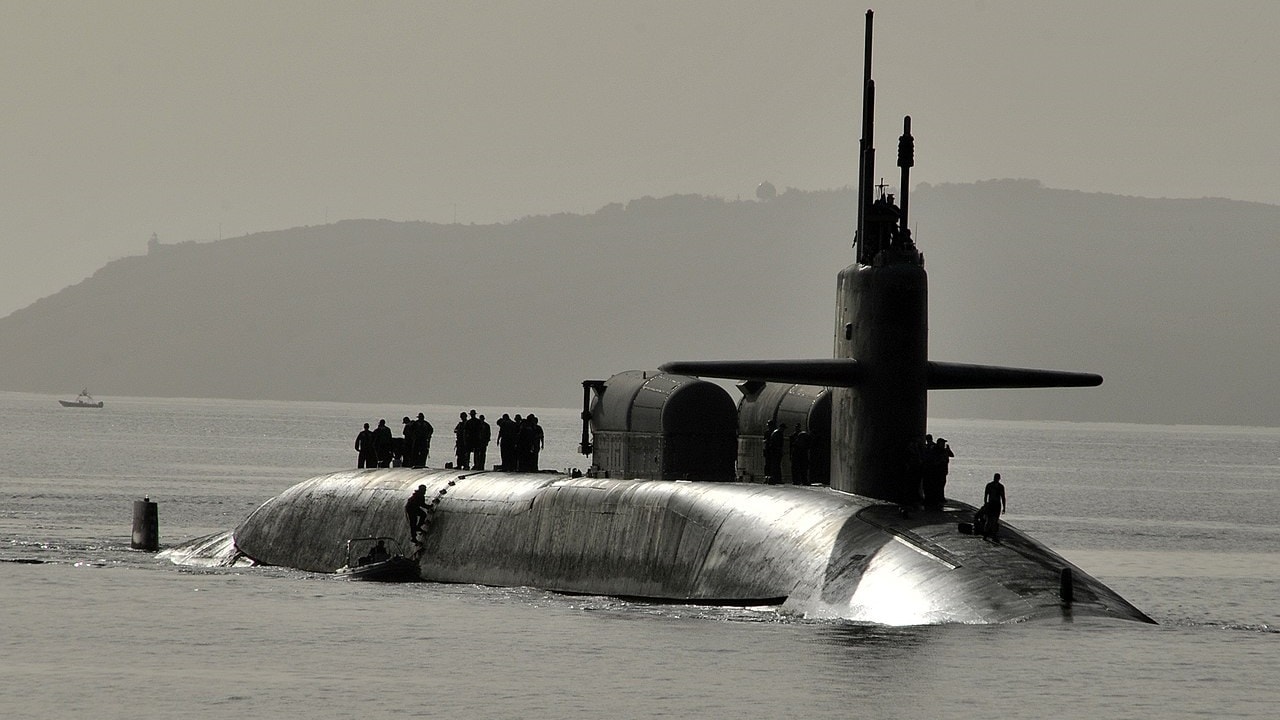
SOUDA BAY, Greece (May 21, 2013) The Ohio-class guided-missile submarine USS Florida (SSGN 728), gold crew, arrives in Souda harbor. Florida is homeported in Kings Bay, Ga., and is deployed conducting maritime security operations and theater security cooperation efforts in the U.S. 6th Fleet area of responsibility. (U.S. Navy photo by Paul Farley/Released) 130521-N-MO201-047
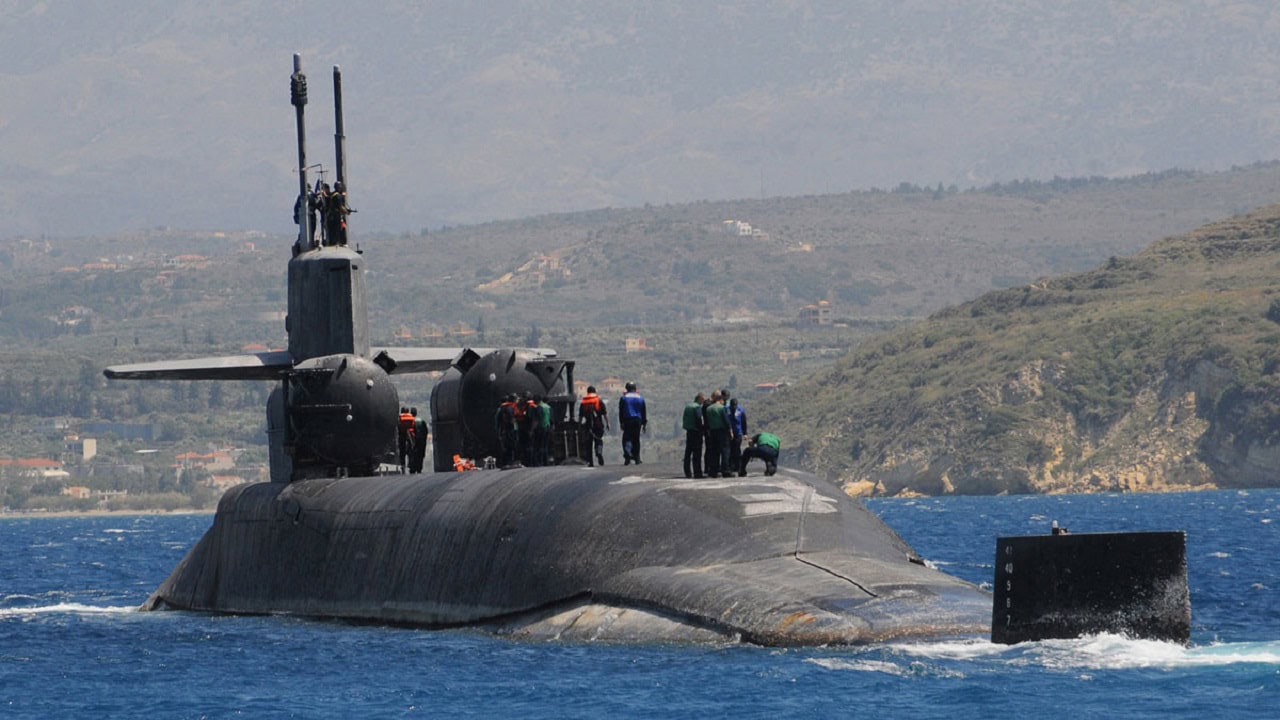
Ohio-Class SSGN. Image Credit: U.S. Navy.
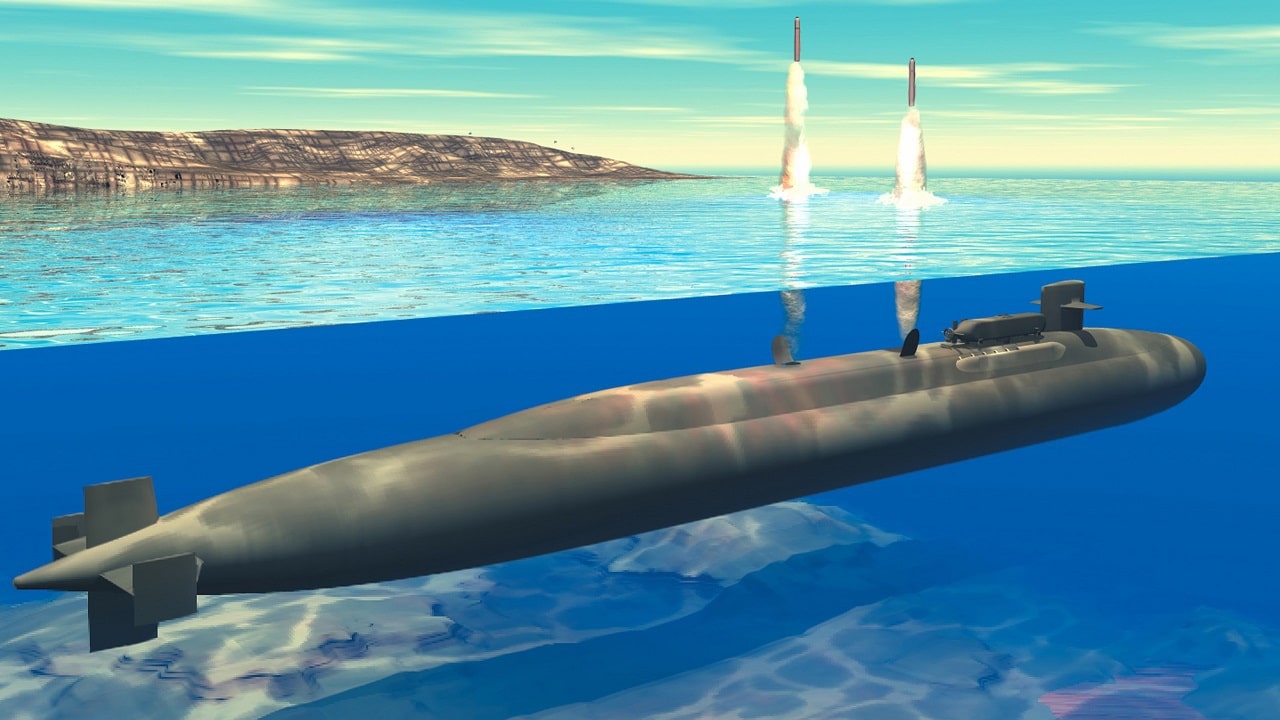
Artist’s concept of an Ohio-class SSGN launching Tomahawk Land Attack Missiles.
America’s Ohio-class SSGNs are converted ballistic missile submarines (SSBNs). At the end of the Cold War, Washington wanted to downsize its nuclear weapons force in keeping with the notion that, with the collapse of the Soviet Union, the threat of nuclear world war had drastically diminished.
According to these Washington leaders, there was no longer any justification for maintaining such a bloated force. Besides, the threats of the post-Cold War era were weaker than those of the Soviets; they included transnational terrorist networks and rogue states. So, the US would need a long-range strike capability.
Hence, Congress converted a handful of SSBNs into SSGNs.
A Submarine That Became a Floating Cruise Missile Base
Commissioned in 1983, the USS Florida is homeported in Kings Bay, Georgia. General Dynamics Electric Boat built this incredible submarine. This submarine carries around 150 (or slightly more) crew, depending on the mission set.
When she swapped out her ICBMs for guided-missile submarines, the Florida came equipped with 154 Tomahawk cruise missiles, along with her typical complement of torpedoes. This iconic submarine conducts more than extended deterrence patrols and long-range strike missions with her Tomahawks. Florida can deploy Special Forces units covertly, too.
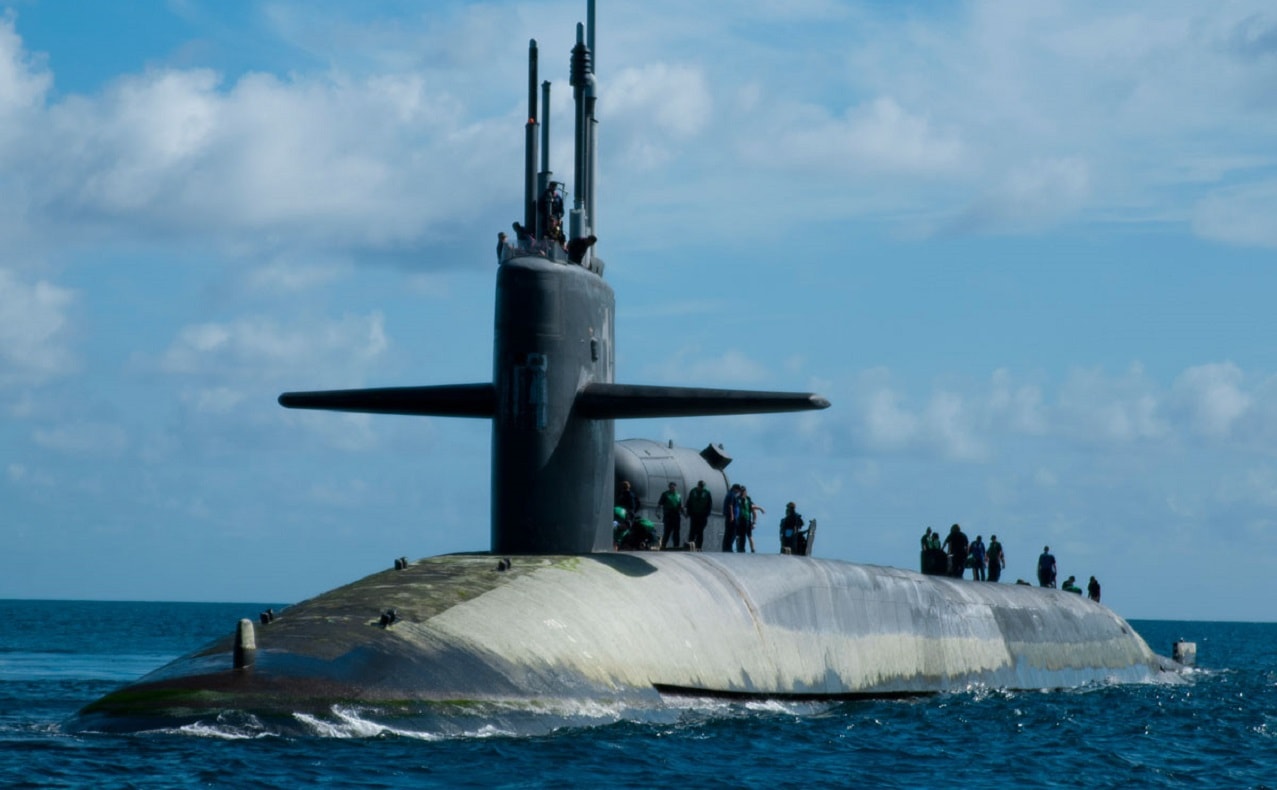
Ohio-class SSGN Submarine. Image Credit: US Navy.
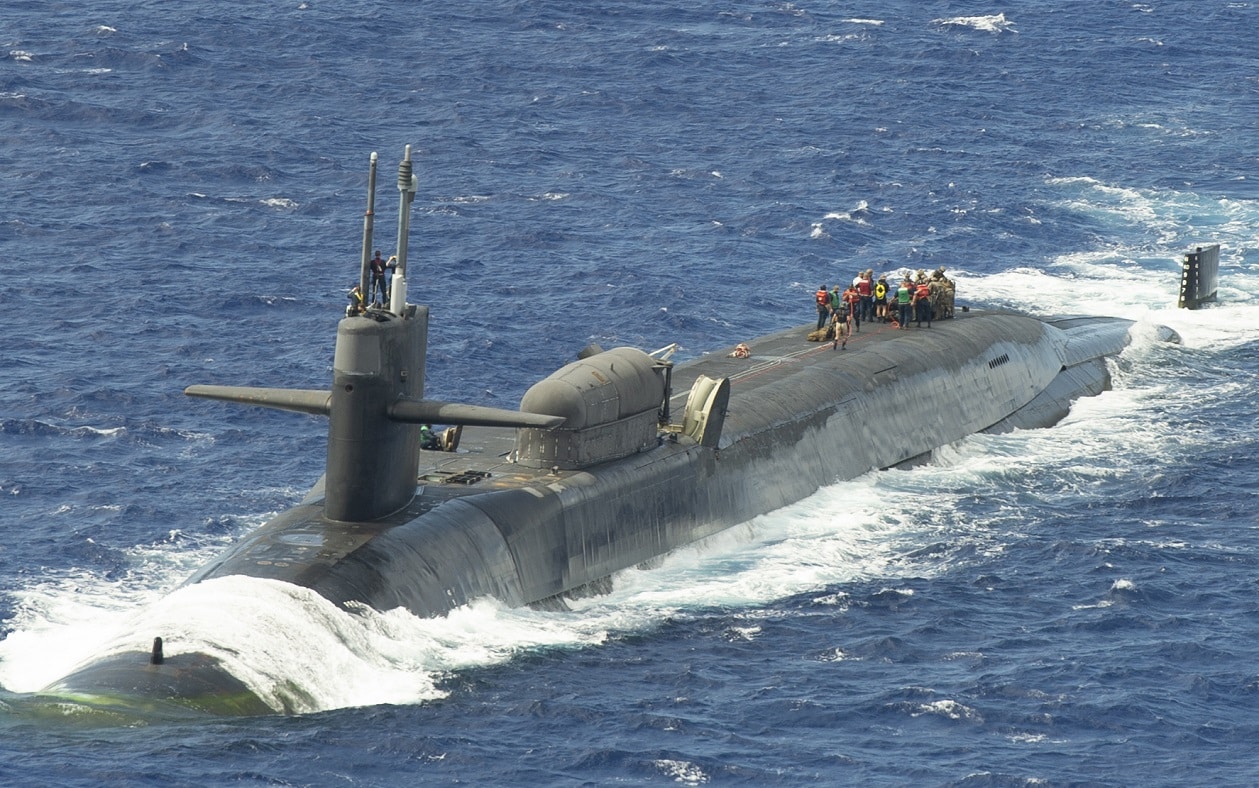
PACIFIC OCEAN (Feb. 9, 2021) Marines assigned to the 1st Force Reconnaissance Company, III Marine Expeditionary Force, assemble a combat rubber raiding craft during a scheduled exercise aboard the guided-missile submarine USS Ohio (SSGN 726). The exercise is part of ongoing III MEF and U.S. 7th Fleet efforts to provide flexible, forward-postured and quick-response options to regional commanders. (U.S. Navy photo by Mass Communication Specialist 1st Class Juan Antoine King) 210209-N-LD174-1006
During the Obama administration’s air war against Muammar Gaddafi’s Libya, USS Florida fired around 93 Tomahawks.
In fact, the Ohio-class SSGNs are cruise missile trucks at sea. As you can see above, the Florida and its sister subs carry massive payloads, have long endurance, and possess a unique stealthy strike capability.
The fact that Florida conducted the historic 727-day extended patrol around the world without so much as breaking a proverbial sweat showcased the utility of these submarines.
These are mobile, persistent strike bases that can reduce the need for surface warships, which are increasingly vulnerable to anti-access/area-denial (A2/AD) attacks.
Why the Navy Pushed the Submarine This Far
Here’s where we link back to that Chinese PLAN propaganda video that prominently featured their submarine force.
Clearly, the future of naval warfare is not aircraft carriers or any other manned surface warship. America’s rivals are telegraphing their priorities: undersea warfare. Submarines. And Florida’s amazing patrol proved (or should have) the importance for America to maintain such a capability–and to build upon that capability.
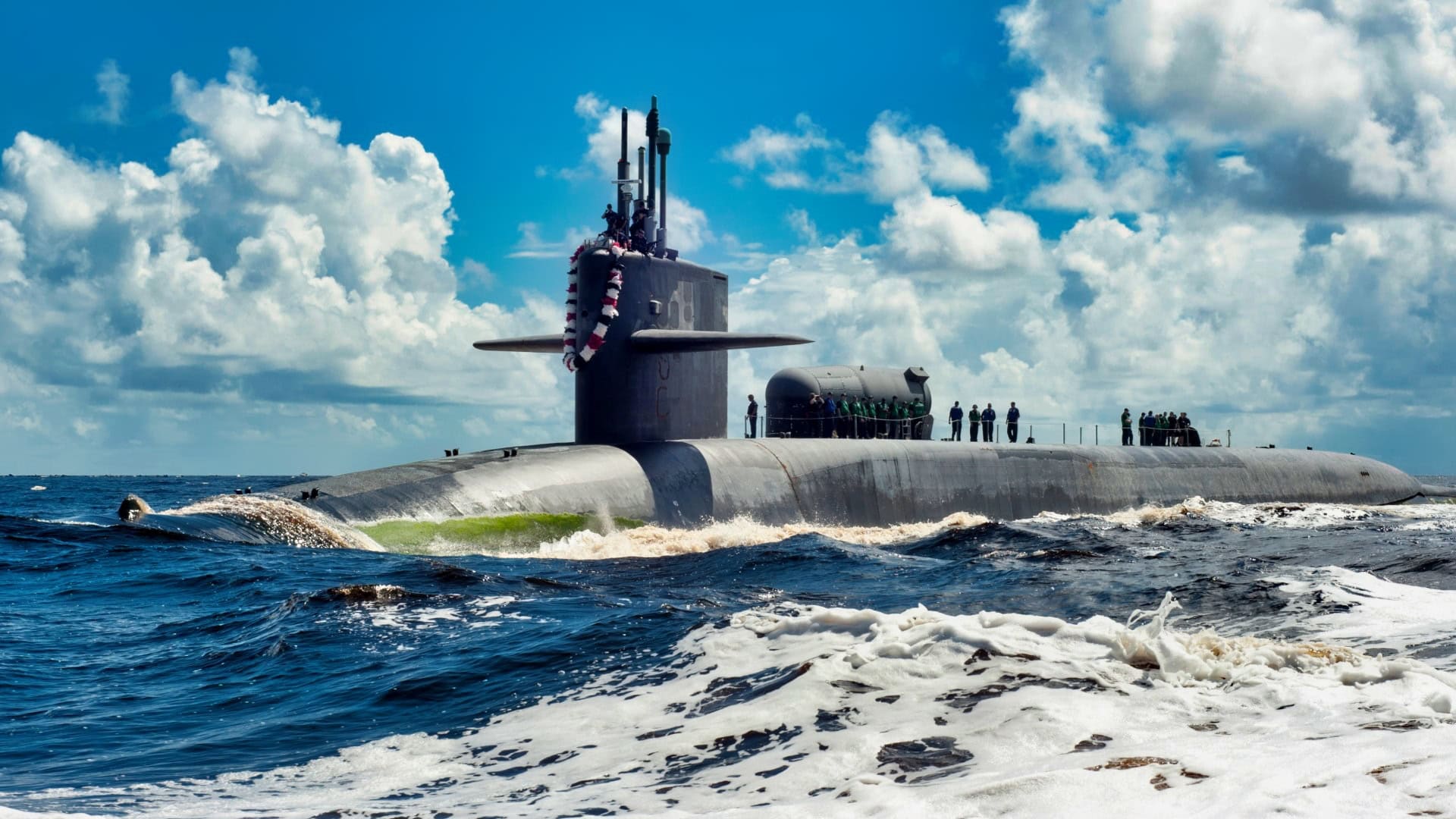
FERNANDINA BEACH, Fla. – The Ohio-class guided missile submarine USS Georgia (SSGN 729) transits the Saint Marys River July 15. Georgia returned to Kings Bay after spending more than a year forward deployed. (U.S. Navy photo by Mass Communication Specialist 1st Class(SW) James Kimber)
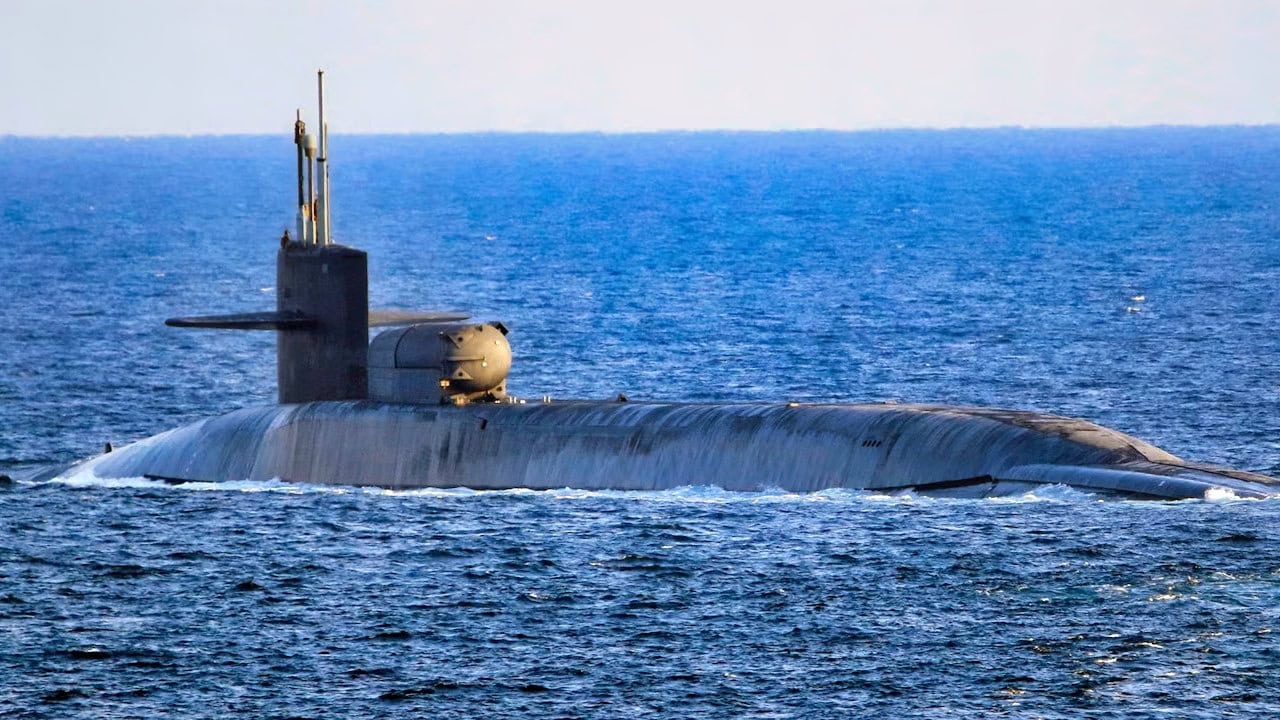
Ohio-Class SSGN Submarine U.S. Navy.
Yet the US government has failed to enhance the operational capacity of America’s ailing naval shipyards or to clear the backlogs.
The Shakeup at the Department of the Navy
Sadly, the one man who was working within the Trump administration to clear those backlogs and restore America’s naval shipyards, the now former Secretary of the Navy, John Phelan, was unceremoniously fired for clashing with the increasingly mercurial Secretary of Defense Pete Hegseth.
Phelan’s deputy, a former Navy captain, has assumed the job. Still, the shakeup showcases how far behind the Americans are in addressing the collapse of our major shipyards (that’s contributing to the submarine shortage).
The Navy Ends Its Ohio-class SSGN Program (with No Replacement)
And there’s another wrinkle in this story: the Navy has only had four Ohio-class SSGNs (the Ohio, Michigan, Florida, and Georgia). Between this year and 2028, sadly, the Navy intends to retire each of these submarines as they have reached the end of their structural lifespans.
Most naval experts in the United States believe this will create a critical shortfall in US cruise missile launch capacity, as there are no plans to immediately replace these submarines.
Florida is supposed to be in the first round of retirements this year.
What the 727-Day Patrol Really Means
With this extended deterrence mission lasting an astonishing 727 days, the Navy quietly admitted that it lacks persistent, forward-deployed strike platforms. That’s why they needed to break all the records in this case.
This mission wasn’t the boon the Pentagon spun it as being. Instead, it was a terrifying reminder that the Navy is stretching its legacy systems, bending deployment norms, all to buy more time before a real capability gap hits the force–at a time when China’s undersea capabilities are radically expanding.
We saw this play out, too, with the recent extended mission of America’s newest aircraft carrier, the USS Gerald R. Ford.
The Navy is constantly running its most potent undersea strike assets because the Pentagon knows what is coming next: a major war where missile volume, endurance, and survivability will decide everything.
And the US Navy is not going to have enough depth to survive–and win–such a fight, especially if that fight is against the PLAN in regions that are closer to Chinese territory than they are to America’s.
About the Author: Brandon J. Weichert
Brandon J. Weichert is the Senior National Security Editor at 19FortyFive.com. Recently, Weichert became the editor of the “NatSec Guy” section at Emerald. TV. He was previously the senior national security editor at The National Interest. Weichert hosts The National Security Hour on iHeartRadio, where he discusses national security policy every Wednesday at 8 pm Eastern. He hosts a companion show on Rumble entitled “National Security Talk.” Weichert consults regularly with various government institutions and private organizations on geopolitical issues. His writings have appeared in numerous publications, among them Popular Mechanics, National Review, MSN, and The American Spectator. And his books include Winning Space: How America Remains a Superpower, Biohacked: China’s Race to Control Life, and The Shadow War: Iran’s Quest for Supremacy. Weichert’s newest book, A Disaster of Our Own Making: How the West Lost Ukraine, is available for purchase at any bookstore. Follow him via Twitter/X @WeTheBrandon.