
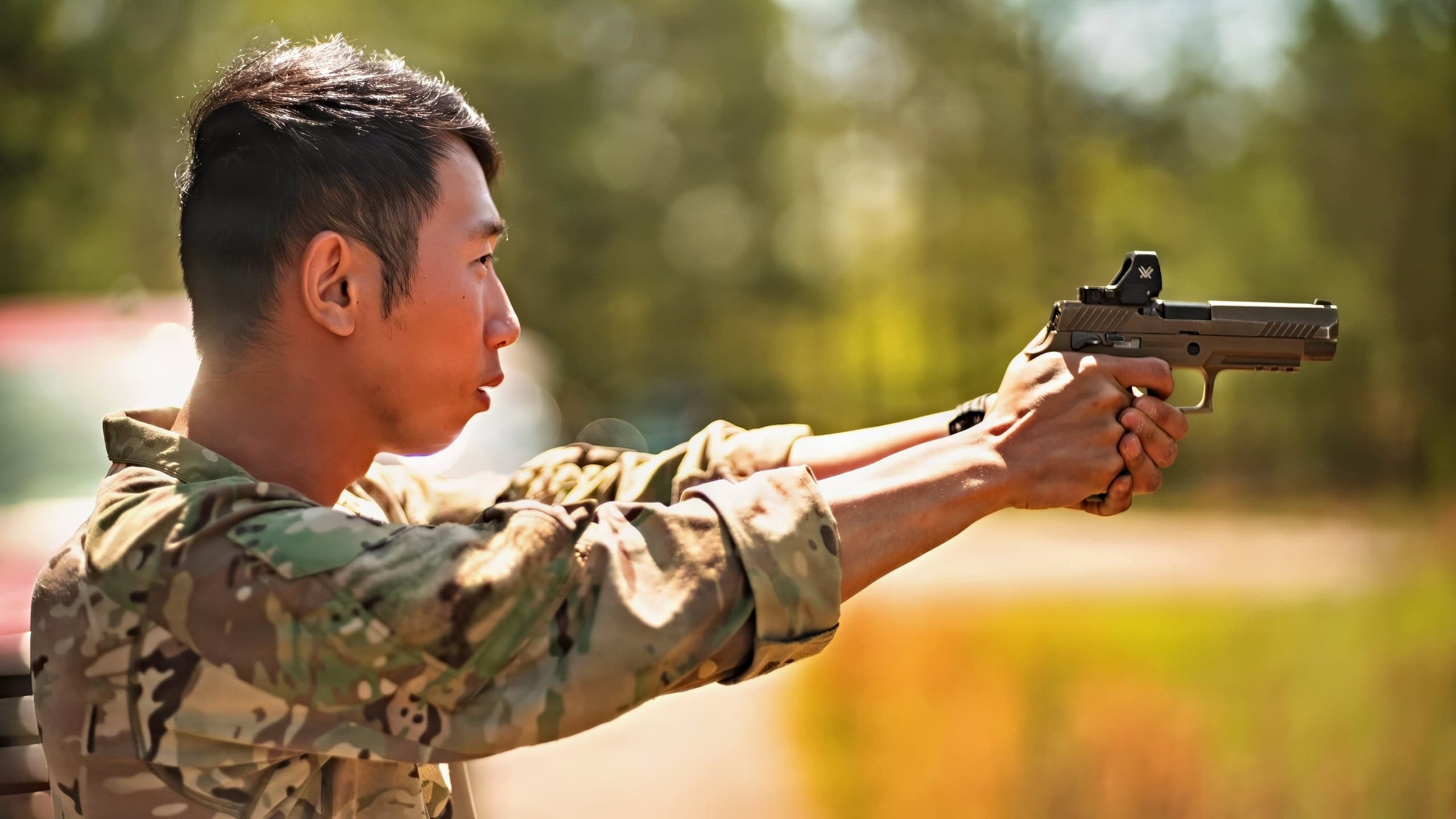
Much of the U.S. Army‘s combat training is focused on physical skills. Soldiers learn to shoot, move, and communicate. They are trained to find cover and concealment when attacked. The early iterations of training focus on speed, strength, and agility. This stems from increased combat readiness, driven by improvements in physical endurance and resilience.
The Physical Fitness Test
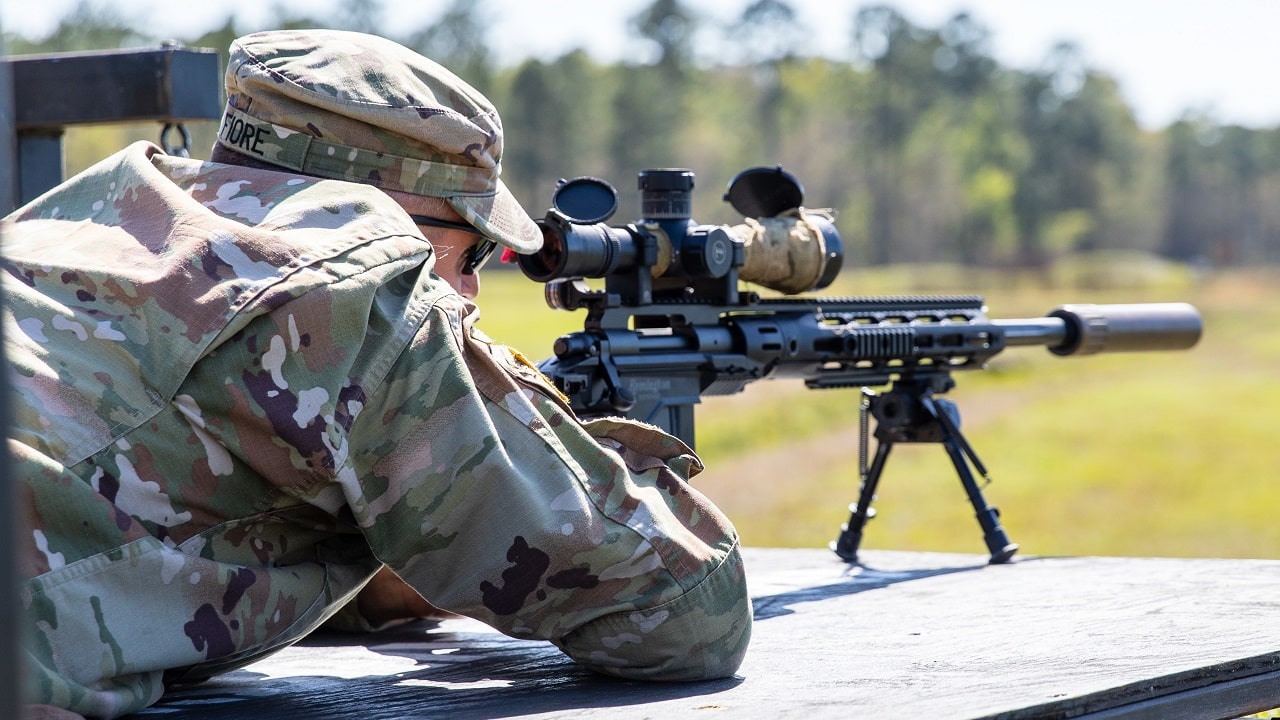
U.S Army Sgt. Matthew Fiore, a UH-60 Black Hawk crew chief representing the Marietta-based 78th Aviation Troop Command, Georgia National Guard, engages targets with the M2010 Enhanced Sniper Rifle at the sniper event during the 2022 Georgia National Guard Best Warrior Competition at Fort Stewart, Ga., March 21, 2022. The Best Warrior Competition tests the readiness and adaptiveness of our forces, preparing our Georgia Guardsmen to meet today’s unpredictable challenges. (U.S. Army photo by Sgt. 1st Class R.J. Lannom Jr.)
The current Army physical fitness test consists of a 3-Repetition Maximum Deadlift, Hand-Release Push-Up, Sprint-Drag-Carry, Plank, Standing Power Throw, and a 2-Mile Run. This activity improves the soldier’s ability to meet the physical requirements of combat.
Prior Physical Fitness Test Did Not Evaluate Diverse Skills
In my day, the Army physical fitness test was focused on just two minutes of sit-ups, two minutes of pushups, and a two-mile run. Now, the events are much more diverse and hit different body parts.
Conducting Battle Drills Continuously
Then soldiers are schooled in infantry tactics and battle drills. Soldiers learn to react to direct contact, deal with an ambush, enter and clear a room, knock out a bunker, and conduct other contingencies. The idea is to run these drills so many times that they become second nature. There is muscle memory, and soldiers know exactly what to do in the situations they will face on the battlefield.
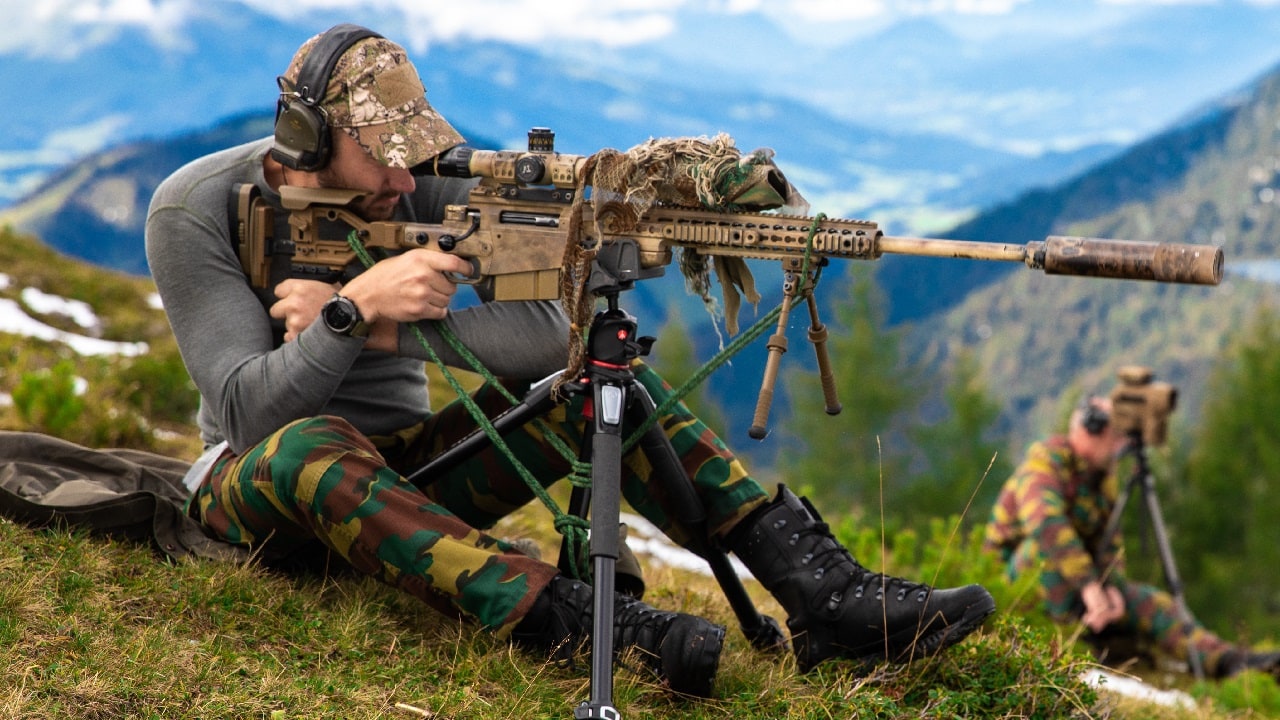
Belgian Special Forces sniper teams fire upon long-range targets from an elevated shooting range at the High Angle Sniper Course, in Hochfilzen training area, Austria, September 30th, 2020. The high angle sniper course lasts two weeks and is designed to teach and train sniper teams the necessary skills to operate in mountainous terrain. (U.S. Army photo by Sgt. Patrik Orcutt)
Addressing the Emotional and Mental Side of Service
These are all physical reactions to combat. But what about the mental and emotional side of training?
The Army has a program called Master Resilience Training (MRT) for this. This trains the mental and emotional domains of a combat deployment.
MRT helps strengthen mental health and improve emotional cohesion among individuals and in units. Psychology is the name of the game in MRT, helping improve performance in high-stress environments.
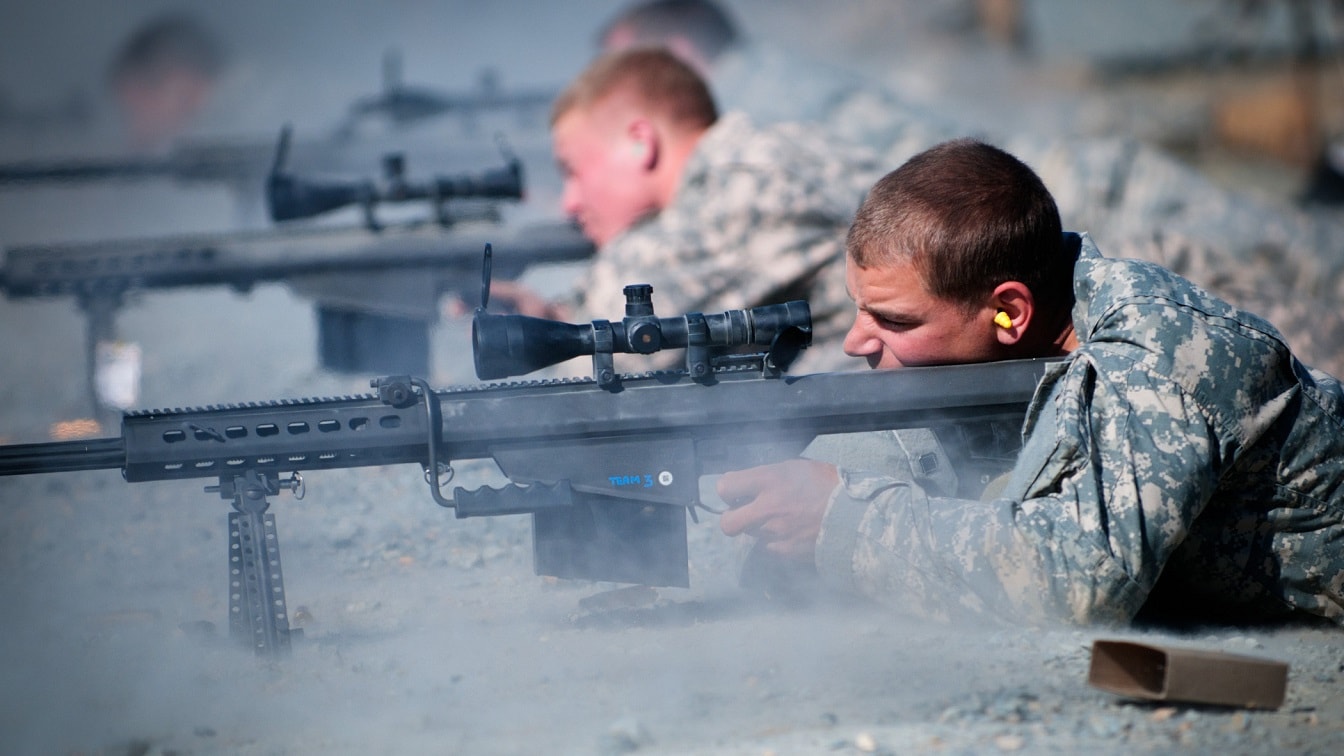
Spc. Alexander Day, a scout sniper with Headquarters and Headquarters Company, 1st Battalion, 504th Parachute Infantry Regiment, 1st Brigade Combat Team, 82nd Airborne Division, fires a Barrett M82 .50-caliber sniper rifle during a basic sniper course being taught by a mobile training team Nov. 9, at Fort Bragg, N.C. The MTT is part of the Army’s Sniper School based at Fort Benning, Ga.
“MRT is a proactive educational initiative that prepares soldiers to manage adversity before it arises by providing practical, skills-based instruction. It is not a therapeutic intervention or psychotherapeutic practice; rather, MRT focuses on identifying cognitive distortions, building mental toughness, and regulating emotions in high-stress situations. Through the program, soldiers develop competencies in advanced communication strategies, growth mindset principles, and goal-setting techniques,” according to Staff Sergeant Jacob P. Hogencamp, writing for the official U.S. Army website.
MRT Can Help Reduce Mental Strain and Stress
The idea is for each soldier to learn to cope with stress and the demands of a combat deployment. There are long periods when Army personnel are away from their families, and they miss critical life events such as birthdays, childbirth, and anniversaries.
There Are Also Stressors During Peacetime
There is also a need for a better work-life balance in the Army.
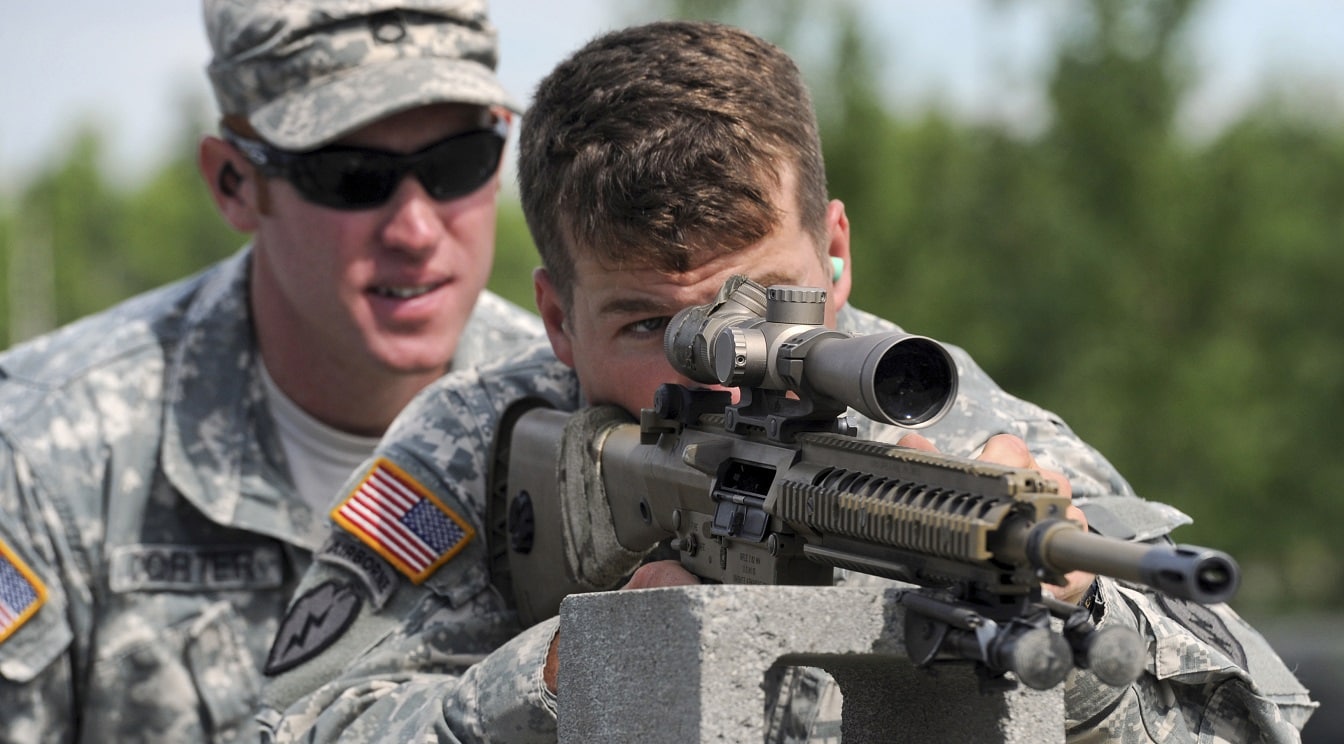
Spc. Anthony Tramonte, assigned to Headquarters and Headquarters Company, 3rd Battalion (Airborne), 509th Infantry Regiment of the 4th Brigade Combat Team (Airborne), 25th Infantry Division, a native of Peachtree City, Ga., lines up a target as Army Staff Sgt. Kevin Corter, an instructor with the U.S. Army Sniper School and a native of Casa Grande, Ariz., coaches him during the final day of M110 Semi-Automatic Sniper System (SASS) qualifications at Joint Base Elmendorf-Richardson’s Grezelka Range, July 10, 2013. The brigade’s soldiers are attending the U.S. Army Mobile Sniper School, a five-week course with graded marksmanship on the M24 Sniper System, M110 SASS, and the M107 .50-Caliber Long Range Sniper Rifle. Students are also trained and graded in range estimation, target detection, stalking techniques, and written exams. Upon successful completion, all students will receive a diploma and those soldiers holding an infantry and/or special forces military occupational specialty will receive a B4 additional skill identifier. (U.S. Air Force photo/Justin Connaher)
When not deployed, soldiers in garrison should have a high quality of life with recreational activities and ways to blow off steam that are healthy and do not include alcohol or other substances. No soldier wants to burn out from constant stress and emotional upheaval.
The Army has high levels of mental health disorder diagnoses, and the statistics do not bode well for the future. There are many cases of Post-Traumatic Stress Disorder that have been well documented due to long combat deployments and the demands of live fire fighting.
MRT helps soldiers prepare for these stressful environments by giving individuals the preparatory coping mechanisms to reduce the incidence of mental health problems.
Unit and Team Cohesiveness
One way soldiers can improve their mental resilience is to be part of healthy, cohesive teams. There are “battle buddy” training sessions with friends who are in combat units. This improves common emotional communication. Conflict resolution is also important.
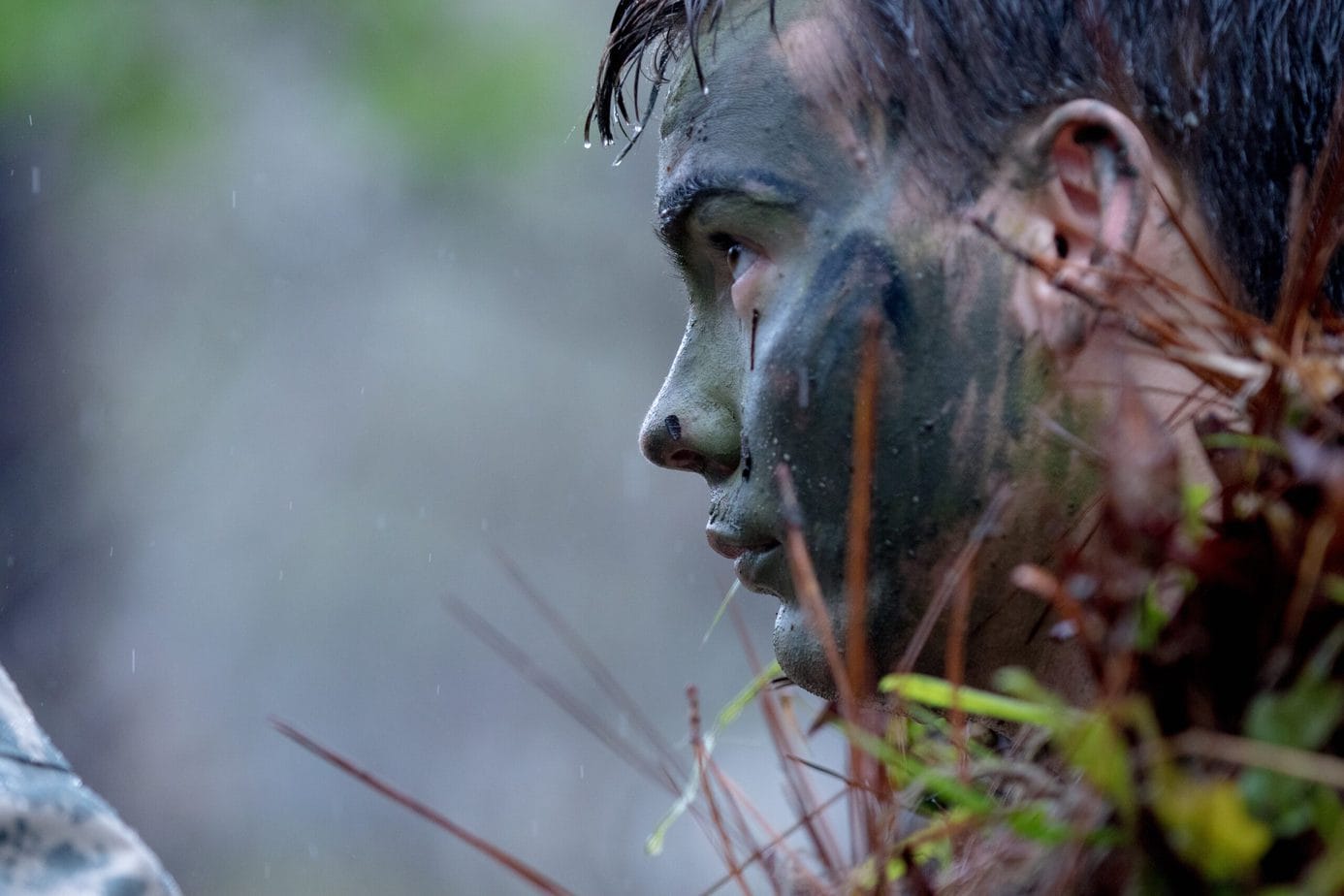
Pfc. William Snyder, 1-173rd Infantry, practices sniper camouflage technics at Eglin Airforce Base, Florida, Aprile 7, 2018. (Photo by Army Staff Sgt. William Frye.)
“This capability is especially critical for junior leaders who must resolve conflicts quickly, de-escalate tense situations, and train others under high-pressure conditions. By reinforcing these competencies, MRT enhances both unit and mission effectiveness and instills confidence in a team’s ability to perform under stress,” according to Hogencamp.
Suicide Prevention
This also helps reduce stress, anxiety, and depression that can lead to suicide attempts and situations where the soldier feels that he or she has no hope and no one to turn to after combat deployments. Substance abuse disorders can also be reduced.
Seeking Mental Health Treatment
Another development is the use of support mechanisms from the MRT program. When soldiers are stressed, they need to be taught that this should not be a stigma and that they can pursue mental health assistance as needed. Noncommissioned officers are trained to identify situations in which the soldier may need professional help, and this should be communicated to commanding officers as well.
Improvements to MRT
The Army has considered improvements to the MRT program. Using a mobile phone app for individual communication with mental health providers would be desirable for soldiers who would not otherwise seek out communication with doctors. This application could be integrated with existing digital efforts such as the Army Learning Management System.
More Can Be Done to Enhance Physical Training
It is clear that the mental and emotional domains of Army training should be emphasized along with physical training and preparation for battle. Soldiers are always entering a high-stress environment during service. MRT should remain in the curriculum as a primary resource for training noncommissioned officers to communicate with their subordinates and superiors.
Keep This MRT Well-funded and Active
The MRT program should be funded and used across the Army. This is an integral part of being a soldier and of serving effectively and with resilience. The stigma around emotional and mental health will be reduced, unit cohesion and communication will improve, and stronger teams will be built. Lives are on the line, and MRT is one way to help soldiers be mentally healthy and emotionally equipped to thrive in war and during peacetime.
About the Author: Dr. Brent M. Eastwood
Author of now over 3,500 articles on defense issues, Brent M. Eastwood, PhD, is the author of Don’t Turn Your Back On the World: A Conservative Foreign Policy and Humans, Machines, and Data: Future Trends in Warfare, plus two other books. Brent was the founder and CEO of a tech firm that predicted world events using artificial intelligence. He served as a legislative fellow for US Senator Tim Scott and advised the senator on defense and foreign policy issues. He has taught at American University, George Washington University, and George Mason University. Brent is a former US Army Infantry officer. He can be followed on X @BMEastwood.