

Combat stress is a persistent reality of warfare that becomes especially relevant when violence spikes. For the US, during the Global War on Terror era, the military community suffered a crisis of PTSD and suicide to the point where it finally earned an appropriate amount of public attention. Public attention bred scrutiny, which in turn bred reform. Military mental health care has evolved significantly since GWOT. And now, with Operation Epic Fury creating similar stressors on members of the Armed Forces, the new mental health infrastructure is being tested.
Fortunately, the modern system is faster, more accessible, and less stigmatized. But challenges remain.

U.S. Air Force Tactical Air Control Party (TACP) Airman with Detachment 2, 6th Combat Training Squadron, practice safety measures for the M4 during small arms training at Joint San Antonio–Camp Bullis, Texas, April 8, 2026. TACP small arms training is a critical component of the 12-week course, focusing on weapon proficiency in close-quarters battle, shoot-house exercises, and combat scenarios. Training emphasizes weapon retention, transition, and marksmanship under high-stress conditions to prepare for integrating air power with ground maneuver units. (U.S. Air Force photo by Melissa Hydrick)
What Soldiers Are Dealing With
The most common diagnoses in the military community are adjustment disorders, which are especially prevalent in young soldiers.
Anxiety disorders have been rising over the past five years. Depression is often diagnosed, too, often tied to deployment cycles and family stress. PTSD, for which the military is commonly associated, increases with length of service and combat exposure.
For all of the above, substance abuse is a common coping mechanism, with alcohol the most commonly abused substance. The scale is significant; in the first few years of the 2020s, over 560,000 service members were diagnosed with a mental health condition.
Stressors of the New Era
Warfare has changed, and so have the stressors. The rise of drone warfare has put soldiers in a position of constant surveillance, where many have developed “anticipatory anxiety.”

A U.S. Air Force Tactical Air Control Party (TACP) Airman with Detachment 2, 6th Combat Training Squadron, practice safety measures for the M4 during small arms training at Joint San Antonio–Camp Bullis, Texas, April 8, 2026. TACP small arms training is a critical component of the 12-week course, focusing on weapon proficiency in close-quarters battle, shoot-house exercises, and combat scenarios. Training emphasizes weapon retention, transition, and marksmanship under high-stress conditions to prepare for integrating air power with ground maneuver units. (U.S. Air Force photo by Melissa Hydrick)
Moral injuries are common, where soldiers commit actions that conflict with their values, often from beyond the battlefield itself.
Remote warfare is bizarre, too, in that the shift from combat to normal life is basically insight, with no buffer or decompression period.
And vice versa. So, whereas past conflicts were defined by traumatic instances, modern warfare is often defined by a more chronic psychological strain.
How Care is Delivered
The military has done an admirable job of improving access to mental health care for service members. Embedded Behavioral Health (EBH), as the name suggests, is a mental health provider embedded in units. Located near barracks or work area, EBH offers immediate access and normal care.
This shift from hospitals to unit-level integration has obviously eased the logistics of seeking treatment but has also broken down some of the social barriers; it’s emotionally and socially easier to lean on a service that’s already embedded in your unit than to go out of your way to a hospital.
Though hospitals do still exist as an option, Military Treatment Facilities (MTFs) are on-base hospitals that offer same-day crisis appointments. TRICARE, the military’s healthcare program, covers civilian and military providers and all medically necessary mental health care.

U.S. Army soldiers from the 1st Armored Brigade Combat Team, 1st Infantry Division, redeploy to Fort Riley, Kansas, on April 9, 2026. The unit’s return marks the end of a nine‑month deployment supporting U.S. operations overseas. (U.S. Army photos by Spc. Malik Waddy-Fiffee)
The military has also moved to a “Targeted Care” model with the goal of getting service members the right level of care immediately. This reduces wait times and bottlenecks, the lag time where an individual might get cold feet and decide they don’t want or need treatment. The new system is designed for speed and accessibility.
Non-Clinical and Confidential Support
Other programs exist to give service members a more comprehensive mental health treatment experience. Military OneSource offers 24/7 access; services include short-term counseling for stress and relationships. The services are confidential and do not show up in a service member’s medical record.
Bases also feature Military & Family Life Counselors (MFLC), offering a walk-in style counseling with no documentation.
The inTransition Program focuses on life transitions, covering post-deployment, relocation, and separation—routine circumstances that can be quite stressful.
The point of the program is that not all help is “medical” in nature, and even routine events, like returning from a deployment or moving, can cause emotional wear and tear. The program is also designed to capture those avoiding formal treatment.
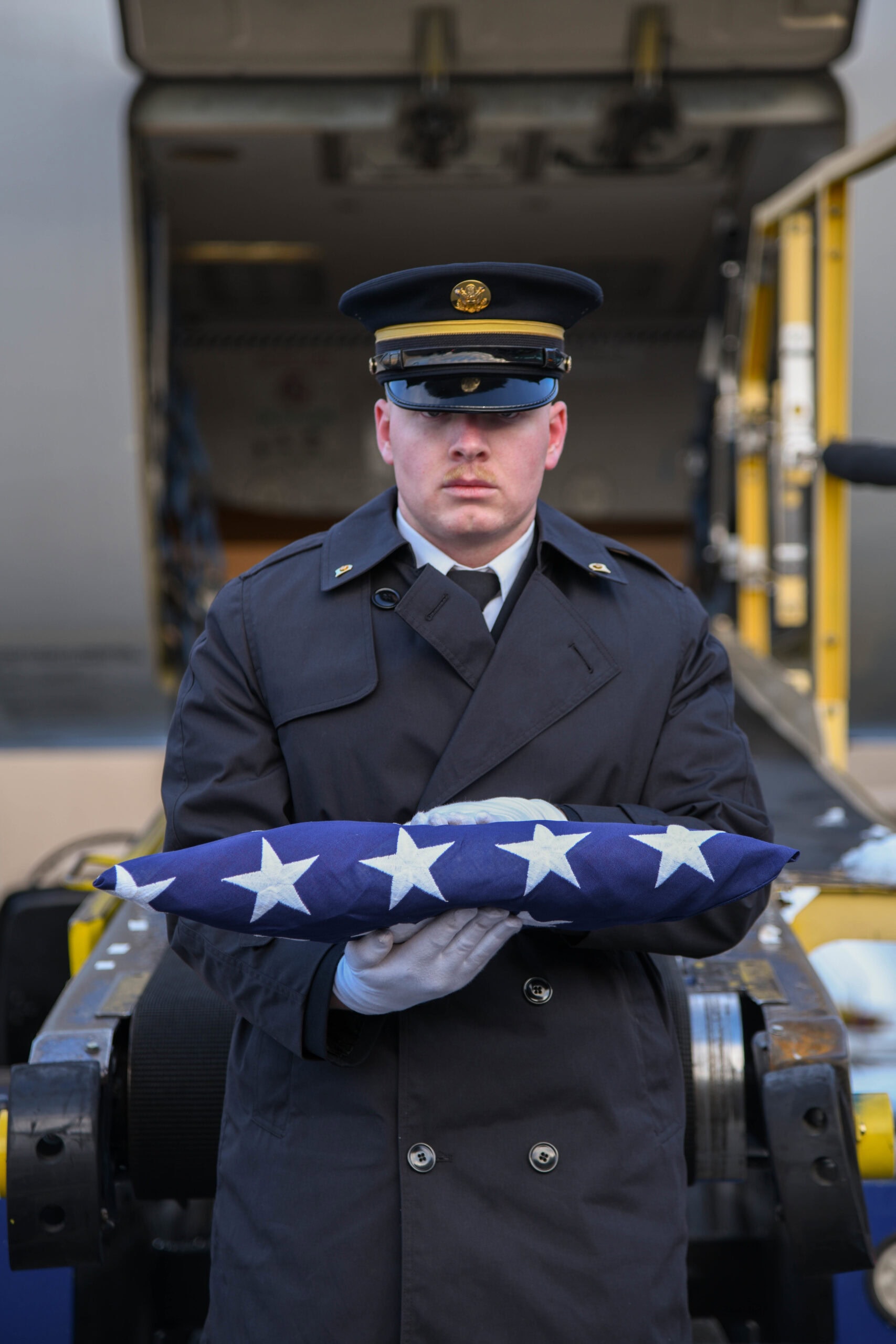
The Utah National Guard Honor Guard conducts an Honorable Carry on Dec. 15, 2022, for the surviving family of U.S. Army Air Forces Cpl. Merle L. Pickup, a Soldier who died in India, 78 years ago, following a plane crash during World War II. Reported MIA in 1944, Pickup’s remains were recently identified and now repatriated to his home in Utah nearly 80 years later. Family coming from several states, even as far as Europe, gathered to render respect during the carry at Salt Lake City International Airport. (U.S. Army National Guard photo by Staff Sgt. Jordan Hack)
Suicide Prevention
Of course, the military has begun to take its suicide crisis more seriously. The 988 Crisis Line, available to both active-duty service members and veterans, offers immediate access to crisis counseling.
ACE-SI training is now mandatory for all soldiers. Standing for “Ask Care Escort,” the training is meant to facilitate peer intervention. The Lethal Means Safety program, meanwhile, focuses on safe storage of firearms and medications, with the goal of reducing impulsive suicides. In sum, suicide prevention is decentralized and peer-driven.
Post-Combat & Reintegration Support
The military has also started focusing specifically on post-combat support services.
The Warrior Care Network is a two-week intensive program, focusing on PTSD and traumatic brain injury (TBI). Veteran centers are community-based, providing combat veterans with access to counseling and readjustment support. The Wounded Warrior Project focuses on “invisible wounds,” with programs for peer support and workshops, all tailored to the understanding that reintegration is a distinct phase requiring targeted support.

Cpl. Marisol Vargas, administrative clerk, Headquarters Detachment, Combat Logistics Battalion 11, Combat Logistics Regiment 17, 1st Marine Logistics Group, performs Marine Corps Martial Arts Program techniques after being sprayed with Oleoresin Capsicum during a training session at Camp Pendleton, Calif., April 15. The OC spray, commonly referred to as pepper spray, is considered a non-lethal weapon used by military policemen to restrain aggressive individuals refusing to cooperate.
How This Is Different
This might all sound routine and standard—but it differs significantly from the military mental health landscape of the Cold War era, and even the GWOT-era. In the Cold War, military services were reactive, while care was centralized in hospitals.
The terminology for mental health conditions was “battle fatigue,” and the stigma attached to these conditions was extremely high, even career-ending. Obviously, service members were deterred from seeking help. The GWOT era marked a transition phase. EBH was introduced; suicide awareness rose, but 60 percent of service members still avoided treatment. The stigma for seeking treatment had subsided relative to the Cold War era, but it was still moderately prevalent.
Today’s military features a proactive public health approach.
The care is embedded and normalized while access is self-initiated.
Thanks to the Brandon Act, soldiers can request mental health care directly, while commanders are required to comply. This reduces the risk of retaliation and has helped shift the culture from punishment to support.
Stigma Shift
During the Cold War, mental health issues were seen as a weakness or a lack of discipline.
The career risk for coming forward with such a condition was high. Now, however, the framing has shifted. Mental health conditions are readiness issues.
The messaging that encourages service members to seek help is a form of strength.
Younger soldiers, especially, are more open to seeking treatment. Mental health is viewed more like physical training; a part of your wellbeing that requires attention and upkeep. But some pockets of stigmatization persist; elite units are still hesitant to seek mental health treatment for fear they will be perceived as weak. So while stigma has been reduced, it has not been fully eliminated.
When and How Issues Arise
During combat, naturally, the risk or occurrence of violence, threat, and loss can spike mental health incidents.
Post-deployment is stressful too; service members must reintegrate with their families and a more routine lifestyle, while losing the structure and camaraderie that defined their existence while deployed.
Repeated deployments, of course, can exacerbate mental health issues, as can high operational tempos. The home front is less dangerous but still offers its own set of stressors, such as family strain or relocation. Indeed, many issues emerge after combat, not during combat, which is counterintuitive but clear.
Modernizing the System
The modern system is more accessible and more human, with a focus on prevention and early intervention.
The philosophical shift from an individual problem to a force-readiness issue has encouraged wider participation in treatment services. I
n sum, mental health is now treated as an operational necessity. The progress being made is real and measurable.
The culture is shifting toward openness. The message—that seeking help is not failure but necessary, routine upkeep—is starting to stick.
About the Author: Harrison Kass
Harrison Kass is a writer and attorney focused on national security, technology, and political culture. His work has appeared in City Journal, The Hill, Quillette, The Spectator, and The Cipher Brief. He holds a JD from the University of Oregon and a master’s in Global & Joint Program Studies from NYU. More at harrisonkass.com.