
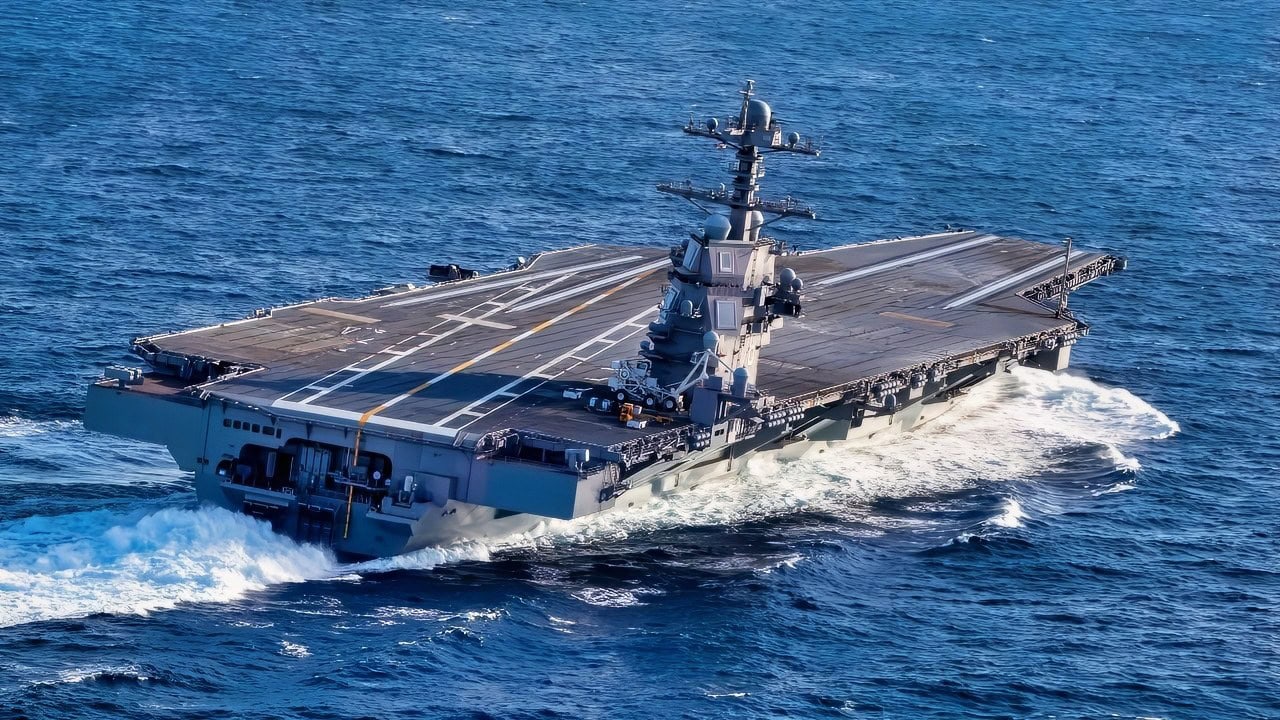
The USS Gerald R. Ford’s Biggest Problem Near Iran Isn’t Airpower – It Might Be A Crew That Is Working At Its Limits
Synopsis of this Article –The U.S. Navy aircraft carrier USS Gerald R. Ford’s move through the Strait of Gibraltar toward the Middle East signals a major escalation in U.S. pressure on Iran as nuclear diplomacy stalls.
-Joining the USS Abraham Lincoln, the Ford helps create a rare dual-carrier presence that expands U.S. options from deterrence to sustained strike operations.
-The carrier’s advanced air wing adds significant combat power, including stealth, electronic warfare, and airborne command-and-control capabilities.
-But the deployment comes with a growing cost. A second extension could push Ford past 300 days at sea, raising concerns about crew fatigue, morale, maintenance delays, and long-term fleet readiness.
Why a 300-Day USS Gerald R. Ford Deployment Could Hurt U.S. Navy Readiness
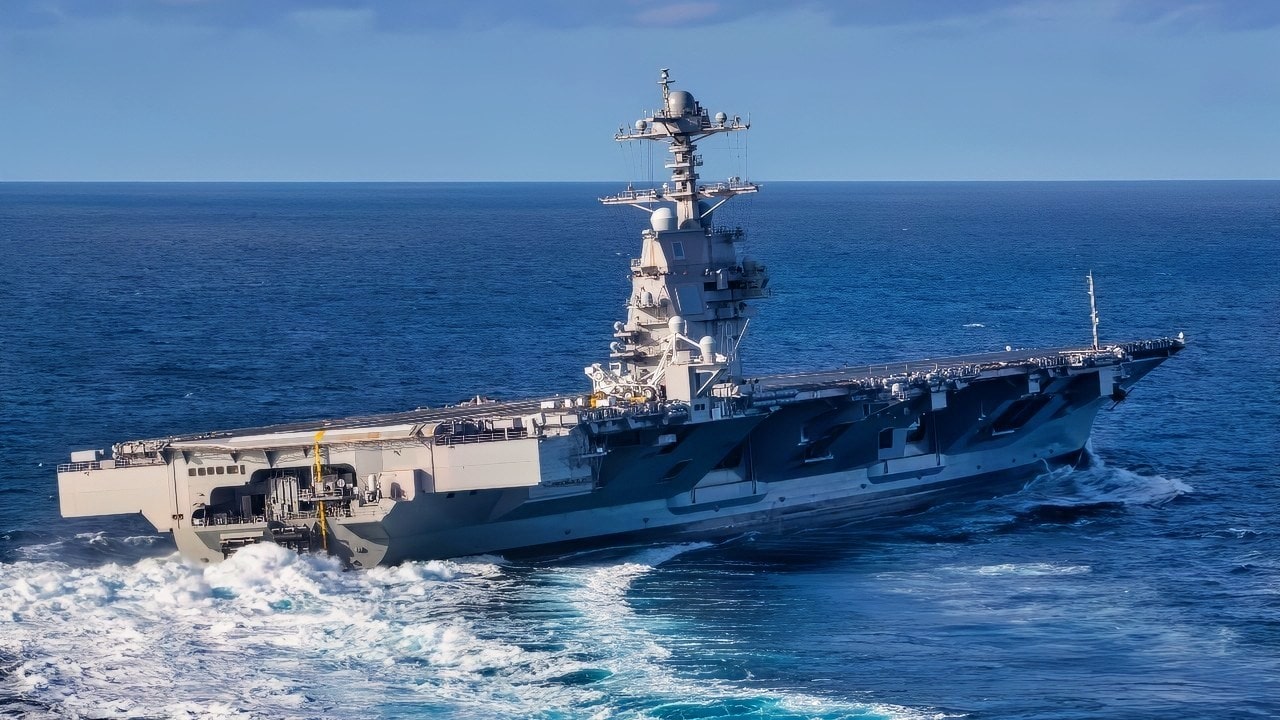
ATLANTIC OCEAN (Oct. 29, 2019) USS Gerald R. Ford (CVN 78) conducts high-speed turns in the Atlantic Ocean. Ford is at sea conducting sea trials following the in port portion of its 15 month post-shakedown availability. (U.S. Navy photo by Mass Communication Specialist 3rd Class Connor Loessin)
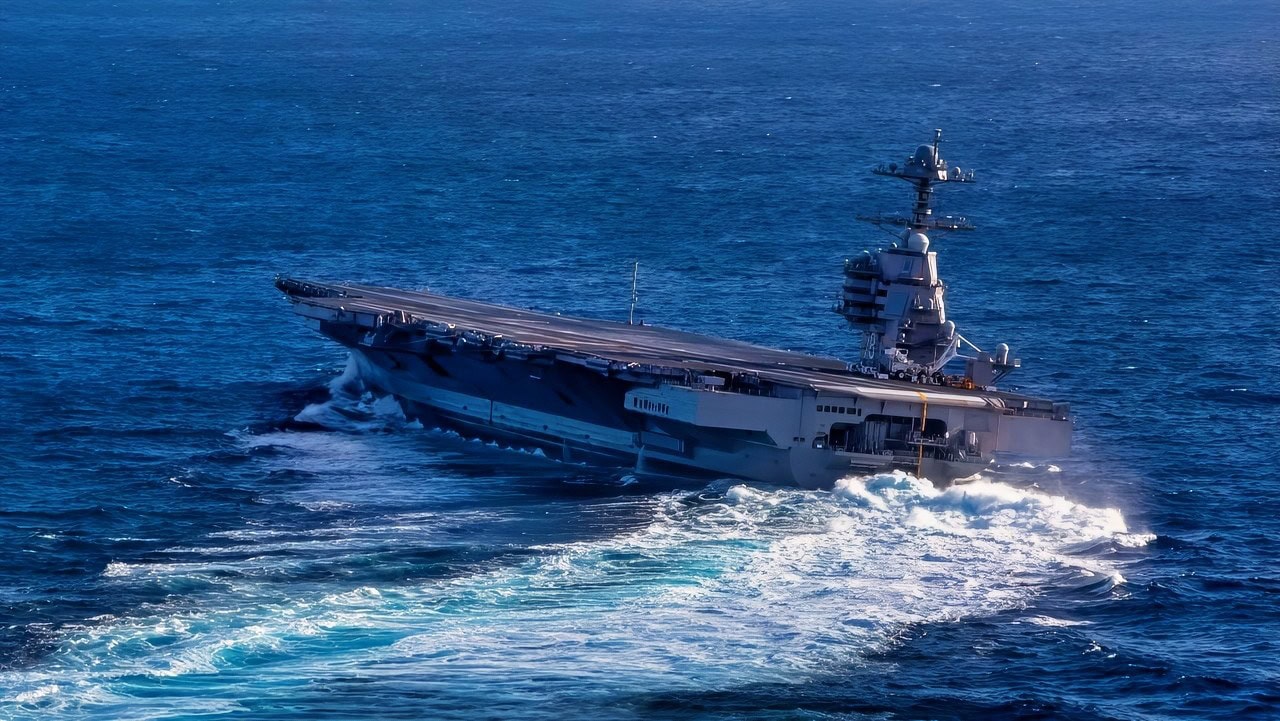
ATLANTIC OCEAN (Oct. 29, 2019) USS Gerald R. Ford (CVN 78) conducts high-speed turns in the Atlantic Ocean. Ford is at sea conducting sea trials following the in port portion of its 15 month post-shakedown availability. (U.S. Navy photo by Mass Communication Specialist 3rd Class Connor Loessin)
A few days ago, the aircraft carrier USS Gerald R. Ford (CVN-78) was spotted near the Strait of Gibraltar as it made its way to the Middle East.
The Ford’s arrival is part of a broader military buildup in the region as tensions with Iran turn critical. The Ford is slated to join the USS Abraham Lincoln (CVN-72) and her strike group.
This is the second time that the Ford’s deployment has been extended, and her deployment could last longer than 300 days. This is concerning, as it could significantly reduce crew morale and lead to maintenance issues down the line.
War With Iran on the Horizon
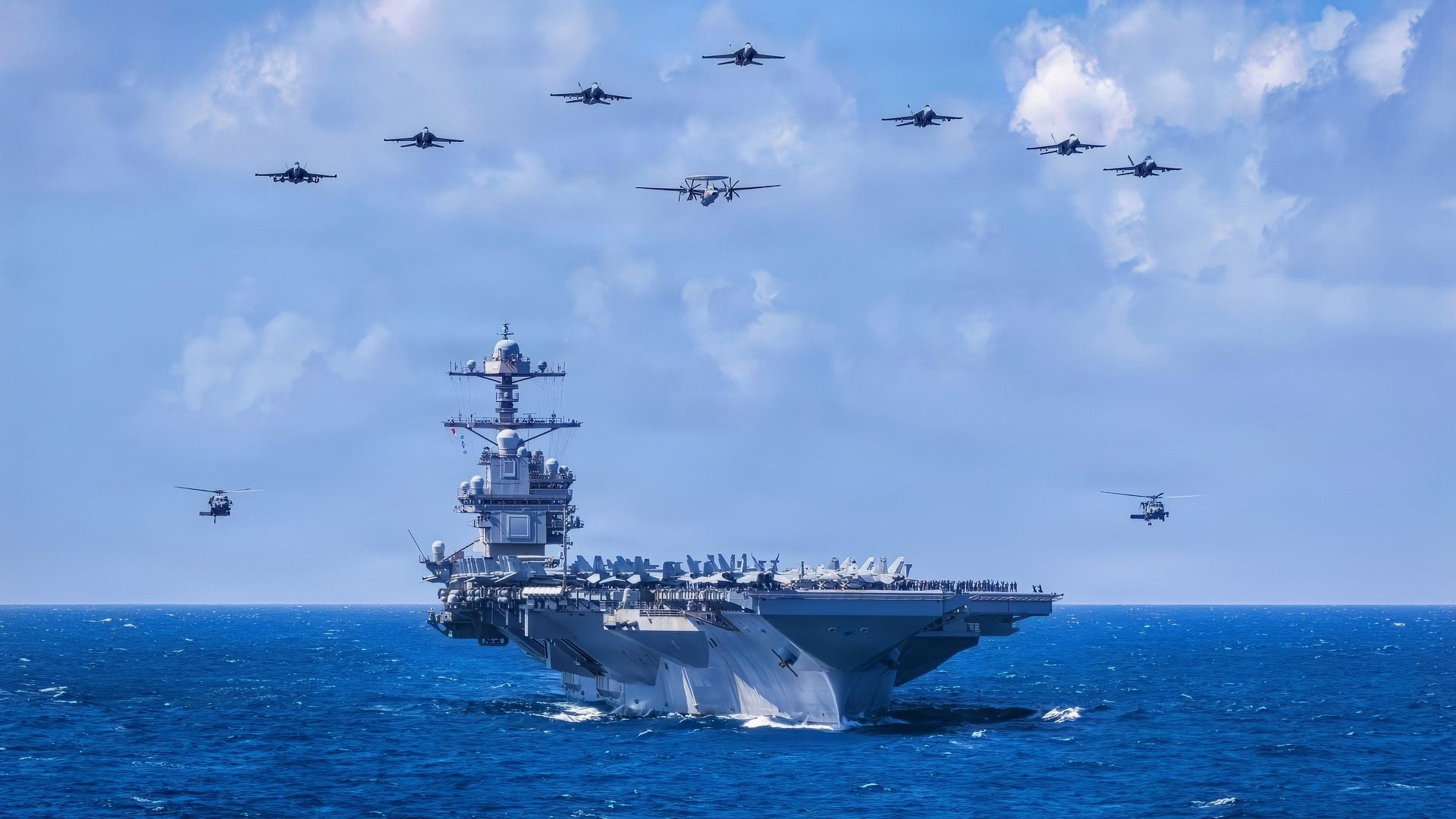
USS Ford Supercarrier U.S. Navy. Image Credit: U.S. Navy.
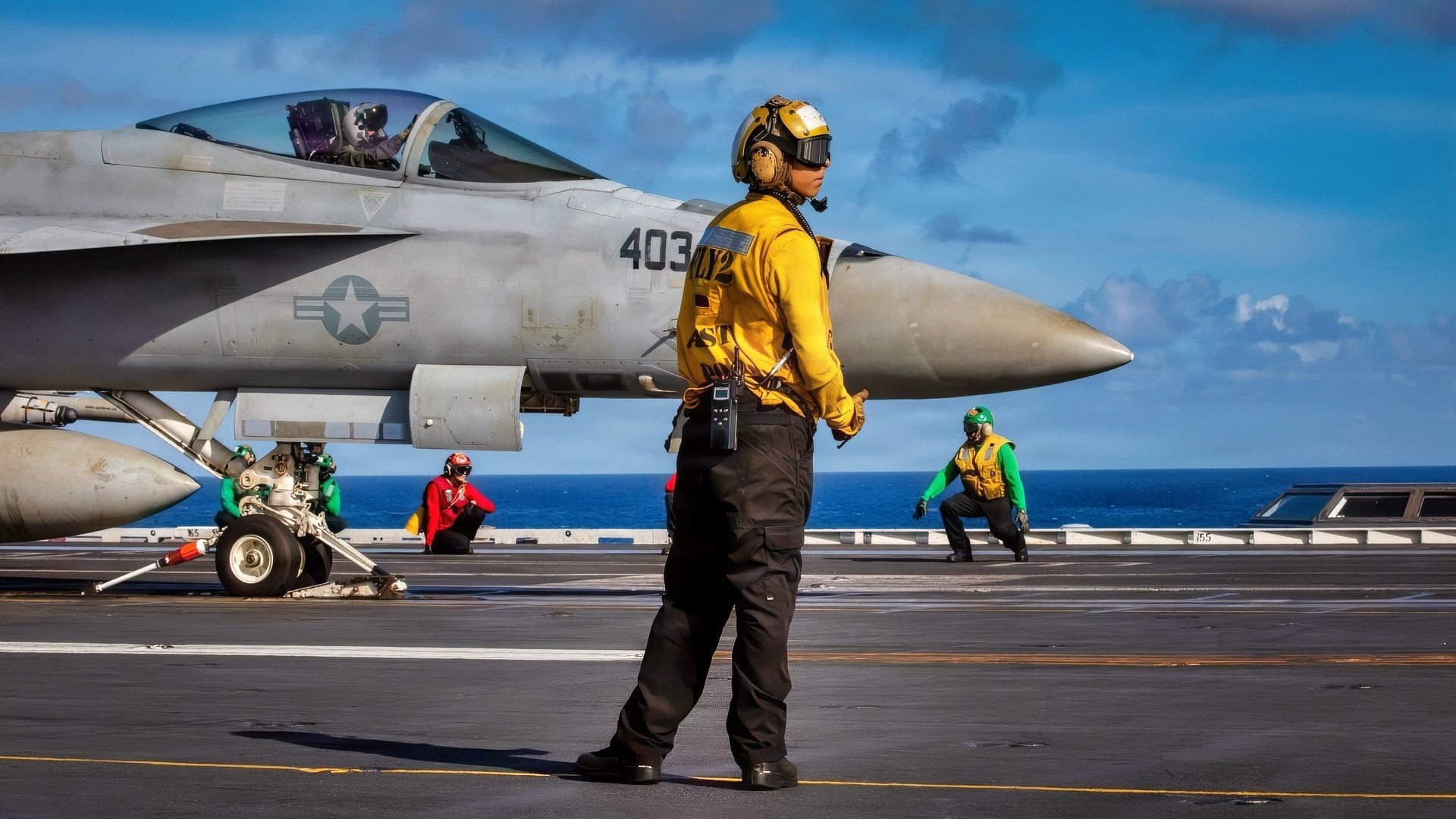
A U.S. Sailor signals to an F/A-18E Super Hornet aircraft, attached to Strike Fighter Squadron 87, during flight deck operations on the flight deck of the world’s largest aircraft carrier, Ford-class aircraft carrier USS Gerald R. Ford (CVN 78), while underway in the Caribbean Sea, Jan. 3, 2026. U.S. military forces are deployed to the Caribbean in support of the U.S. Southern Command mission, Department of War-directed operations, and the president’s priorities to disrupt illicit drug trafficking and protect the homeland. (U.S. Navy photo)
The shift to the Middle East comes as tensions between the United States and Iran intensify sharply. Nuclear negotiations stalled, Iran grappled with large-scale domestic unrest and government crackdowns, and regional anxiety increased as Gulf nations warned of the possibility that any military confrontation could escalate rapidly.
Against this backdrop, the Pentagon ordered the redeployment of the Ford to the U.S. Central Command (CENTCOM) region and created a rare dual-carrier presence. The move significantly expands U.S. airpower in the theater at a time of growing uncertainty and provides U.S. leaders with far greater flexibility, allowing options ranging from heightened deterrence to sustained strike operations should diplomacy fail.
Following orders to reposition, the Ford transited from the Caribbean back across the Atlantic. By February 20, the carrier had passed through the Strait of Gibraltar and entered the Mediterranean Sea en route to CENTCOM waters, accompanied by the destroyer USS Mahan (DDG-72).
This movement was part of a broader naval buildup that included additional guided-missile destroyers positioned in the Red Sea, the Eastern Mediterranean, and the Strait of Hormuz. Analysts observed that with the Ford’s addition, the U.S. presence in the region exceeded even the naval concentration assembled during the period leading up to the Maduro capture. The deployment was highly visible and interpreted as deliberate signaling to Iran as part of ongoing diplomatic pressure.
Why Trump Wants Ford Supercarrier Near Iran
The Gerald R. Ford brings formidable capabilities to the region. Indeed, it is the largest and most advanced aircraft carrier ever constructed. The ship hosts a sophisticated air wing that typically includes approximately 75 aircraft, although the composition varies based on mission requirements.
These platforms range from F/A-18E/F Super Hornets and F-35C Joint Strike Fighters, to EA-18G Growler electronic warfare aircraft, E-2D Hawkeye early warning planes, and MH-60 helicopters.
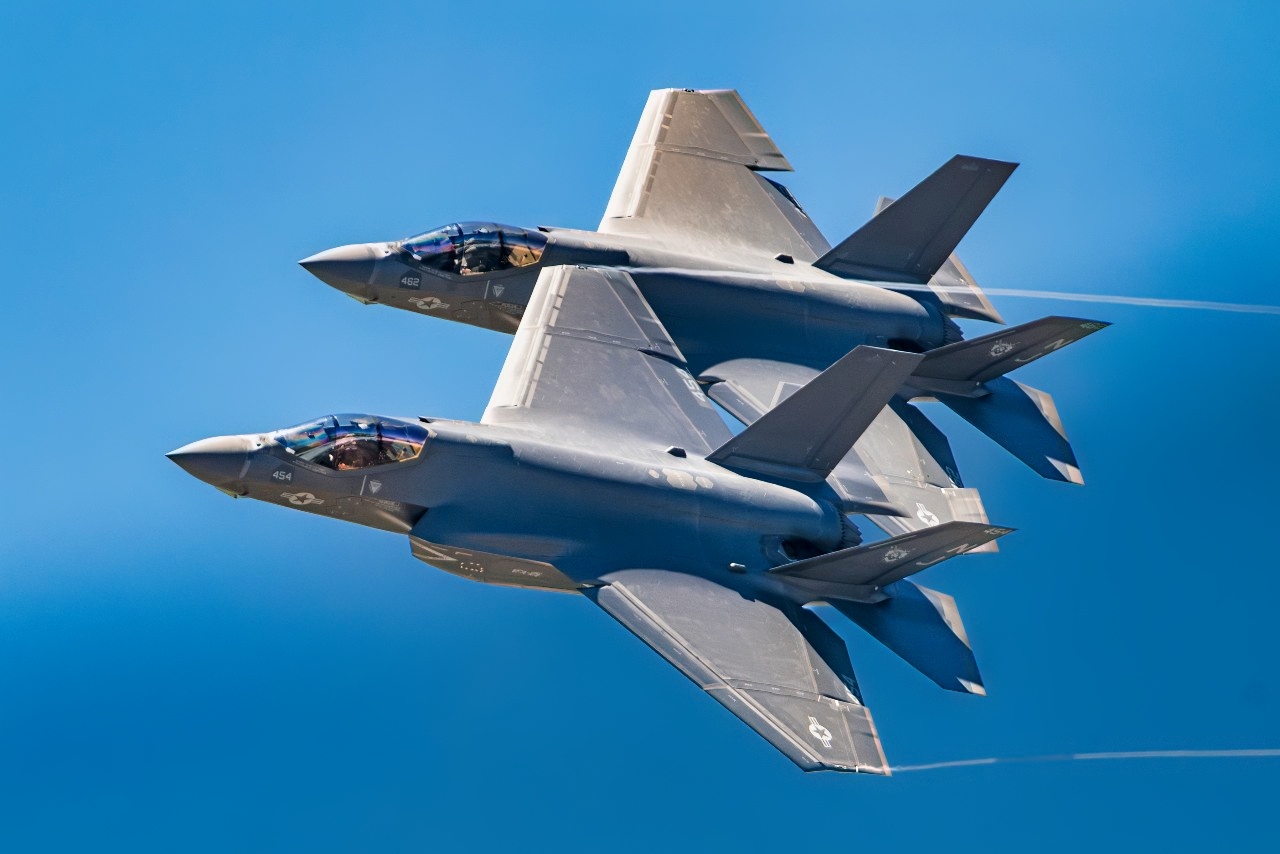
The U.S. Navy F-35C Lighting II Demo Team performs a flight demonstration at the Wings Over South Texas Air Show. This year’s air show marks Wings Over South Texas’s first return to Naval Air Station Corpus Christi since 2019.
In a potential conflict with Iran, this mix of aircraft is especially important. The F-35C provides the ability to penetrate contested airspace and deliver precision strikes on defended infrastructure; the Growler offers electronic suppression against Iran’s layered radar networks; and the E-2D extends sensor and command-and-control functions for air and missile defense over vast distances. Combined with an identical air wing aboard the Abraham Lincoln, these assets give the United States a dramatic escalation in operational capacity that supports everything from deterrent patrols to multi-day strike campaigns.
U.S. President Donald Trump already indicated earlier in the week that a second carrier might be sent to increase pressure on Tehran, and soon thereafter the Navy confirmed that the Ford would replace the USS George H. W. Bush (CVN-77) as the second deployed carrier in the region.
Reports from The Week similarly noted that the carrier was rerouted directly after Trump warned that Iran faced a “very traumatic” outcome if no agreement was reached within a month. The Ford’s presence alongside the Lincoln in the Arabian Sea was widely interpreted as both a show of force and preparation for potential sustained air operations targeting Iran should negotiations collapse entirely.
Why Sending Ford to Iran Might Not Be the Best Idea
However, the Ford’s long deployment has already been extended once during its patrol. The carrier was originally expected to return home sometime in early March. With a conflict with Iran almost certain, there is a possibility that her deployment will be extended once more, and that eventually should worry senior Navy officials. Depending on how long the Ford remains, she could be at sea for a 300+ days, which would be the longest deployment since the Vietnam War.
There are a couple of reasons why this is less than ideal. First, the longer the Ford is deployed, the more fatigued her crew will be. Morale is essential to any military operation, and sailors who are deprived from their family and loved ones for almost a year understandably face issues with mental health.
During the Abraham Lincoln’s 290-day deployment in 2002, the crew faced a similar problem with fatigue. How did the command respond? By telling them to “get over it,” a harsh but ultimately necessary response during a time of crisis.
The second concern with the Ford’s extended deployment is the possibility of maintenance issues. Aircraft carriers are built to be hardy and resilient, but one large malfunction, or a number of smaller issues, can render a carrier combat-ineffective. According to some reports, the Ford has been suffering a number of issues related to plumbing and clogged pipes. These may seem like small issues but can have snowball effects on crew morale and readiness. Other issues, such as runway asphalt cracking, are also possible with high sortie rates. Furthermore, Navy officials are concerned that the Ford’s extended deployment will lead to a prolonged dry dock schedule. Typically, carriers are put into dry dock with the expectation of completing a regular seven-month deployment. When deployments are extended, more maintenance issues pop up, leading to longer downtimes and overall decreased fleet readiness—even if the carrier takes no combat damage.
About the Author: Isaac Seitz
Isaac Seitz, a Defense Columnist, graduated from Patrick Henry College’s Strategic Intelligence and National Security program. He has also studied Russian at Middlebury Language Schools and has worked as an intelligence Analyst in the private sector.