
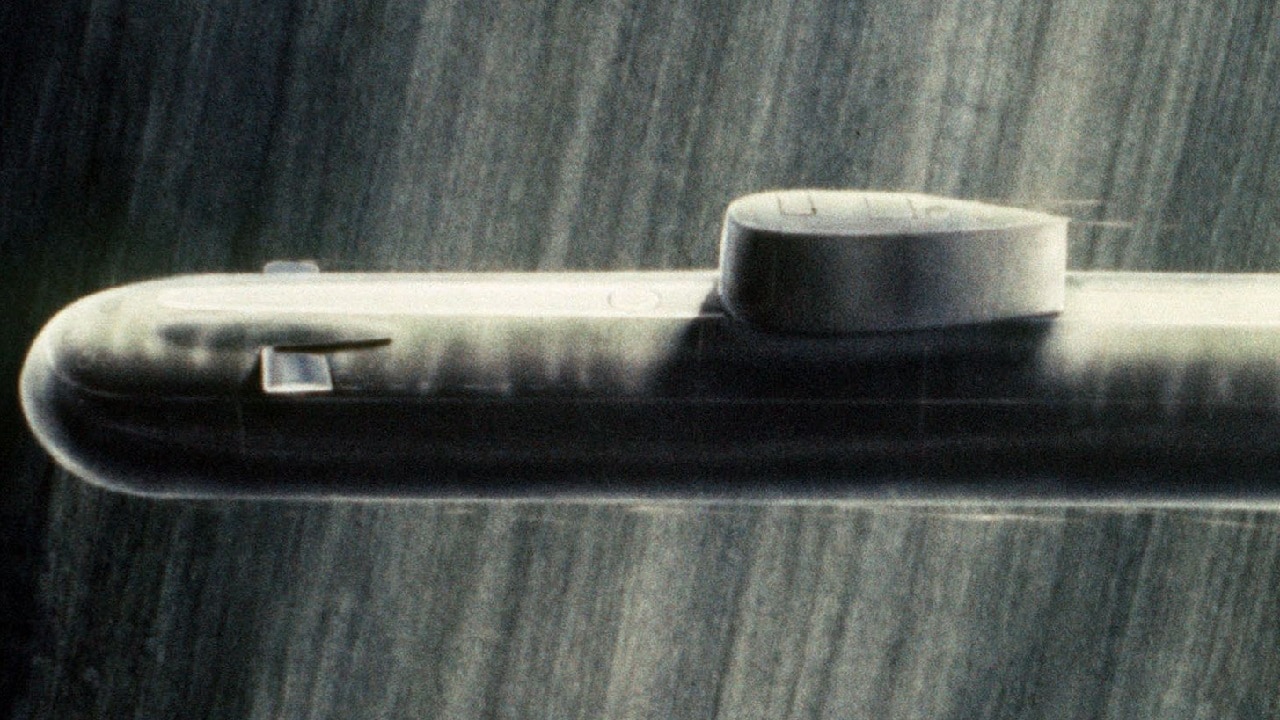
Summary and Key Points: Most submarines prioritize stealth, not speed—but the Soviet Union built one boat to do the opposite. Project 661 produced the K-222 Papa-class, a titanium-hulled, nuclear-powered cruise-missile submarine designed to sprint away from U.S. anti-submarine forces after launching a salvo.
-It ultimately reached about 44.7 knots, far beyond the 25–35 knots common for most submarines.
-The catch was noise: high-speed cavitation and structural stress made the boat loud and difficult to operate, while titanium fabrication proved complex and expensive.
-The result was a record-setting undersea “sprinter” that taught a hard lesson—speed without quiet can be a liability.
Russia’s K-222: The Fastest Submarine Ever Hit 44.7 Knots—and It Was “Noisy as a Disco”
We usually do not highlight the speed of a nuclear-powered submarine. We are more concerned with stealth, range, and firepower, particularly when considering conventionally armed fast-attack or SSBNs equipped with nuclear-tipped missiles. However, the naval designers and engineers in the Soviet era thought differently.
The Russians once produced a nuclear submarine that could push out 44.7 knots. This was a blistering pace. Most subs can sail along at 25 to 35 knots. The world’s fastest submarine, capable of approaching 45 knots, was the K-222 Papa-class submarine, which emphasized speed over stealth.
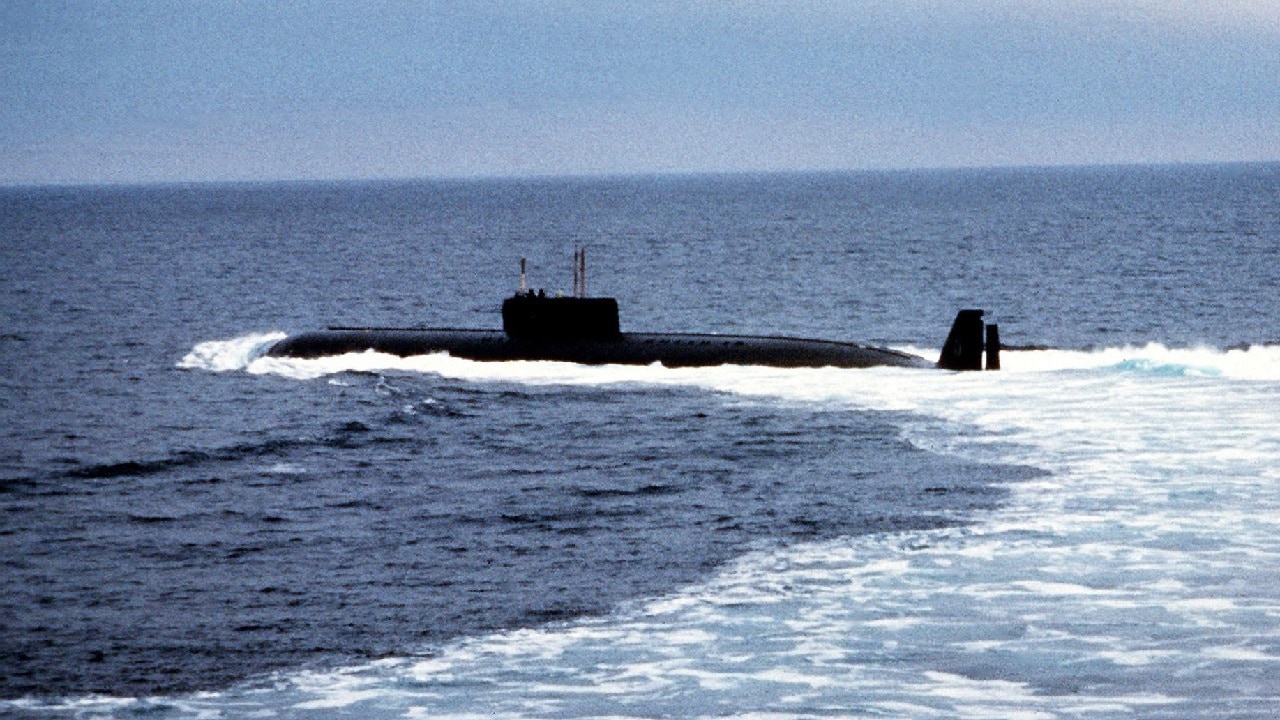
Papa-class Submarine.
Soviet Overlords Wanted a Speedy Undersea Platform
However, the military overseers in the Communist Party in 1958 sought a submarine capable of outrunning American anti-submarine efforts from ships and aircraft during the Cold War. The rapid K-222 was considered a more survivable combat platform.
This effort, known as Project 661, produced only one boat. It was built in the northern port city of Severodvinsk throughout the 1960s.
K-222 Papa-Class: This Was a Fast Attack Sub Extraordinaire from Russia
The K-222 was nuclear-powered and was also equipped with submarine-launched Starbright cruise missiles. The idea was for it to sneak close to American shores, fire a salvo, and escape untouched, outrunning enemy defenses.
The First Use of Titanium for a Sub
The sub was 347 feet long and had a titanium hull, which was new at the time. Titanium is lighter than steel and resists compositional changes under the high stresses of deep water. But the Soviets aimed for higher speed rather than simply running silent and deep during undersea warfare.
Faster Than the Echo-class
Russian engineers and designers aimed to develop a boat capable of achieving a top speed of 38 knots. The existing Echo-class was seen as slow and noisy. When the K-222 was tested, it reached 42 knots. Not bad, but the Soviets were still dissatisfied and believed that the engines could deliver more power.
They had certainly outclassed the Americans’ fastest boat produced in the 1990s. The Seawolf-class can only hit 35 knots, still a respectable speed, but nothing like the Papa-class.
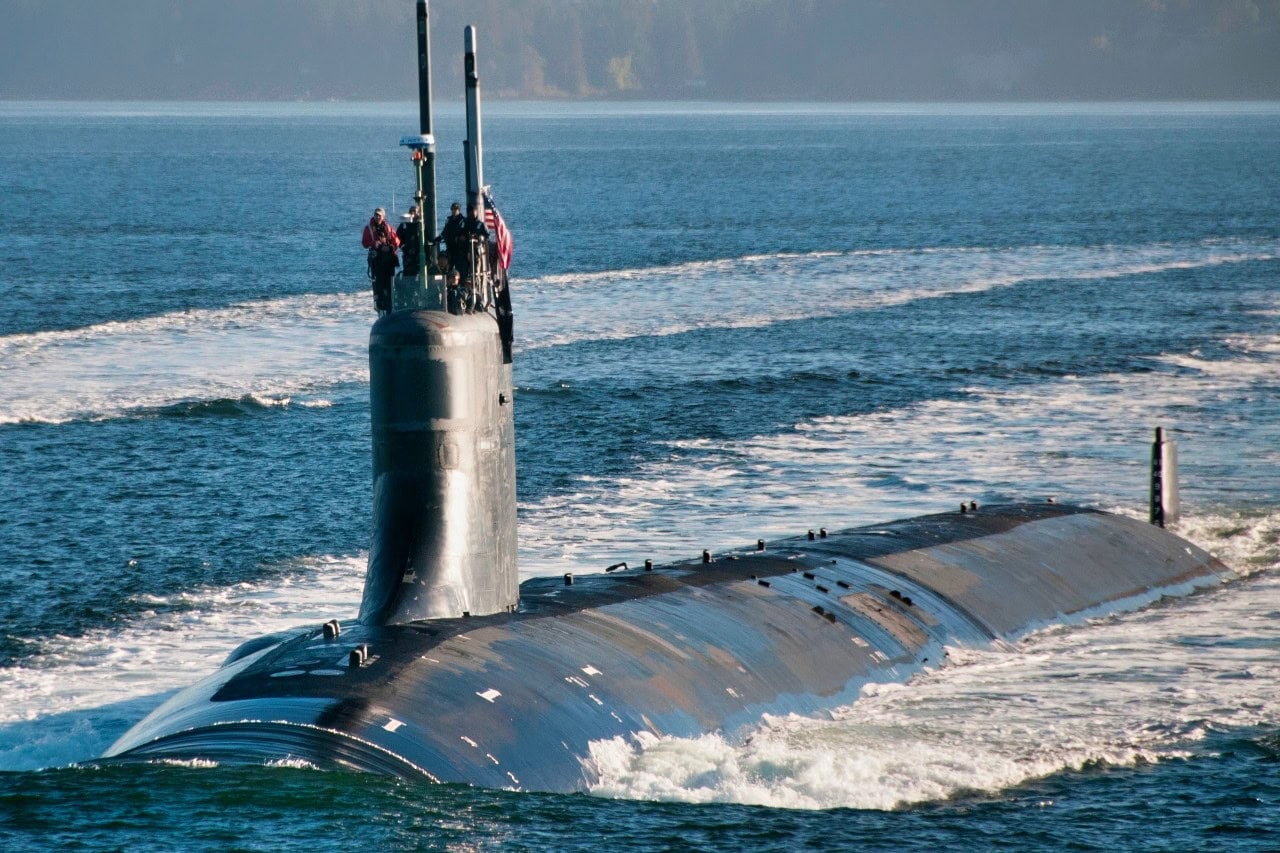
PUGET SOUND, Wash. (Sept. 11, 2017) The Seawolf-class fast-attack submarine USS Jimmy Carter (SSN 23) transits the Hood Canal as the boat returns home to Naval Base Kitsap-Bangor. Jimmy Carter is the last and most advanced of the Seawolf-class attack submarines, which are all homeported at Naval Base Kitsap. (U.S. Navy photo by Lt. Cmdr. Michael Smith/Released)
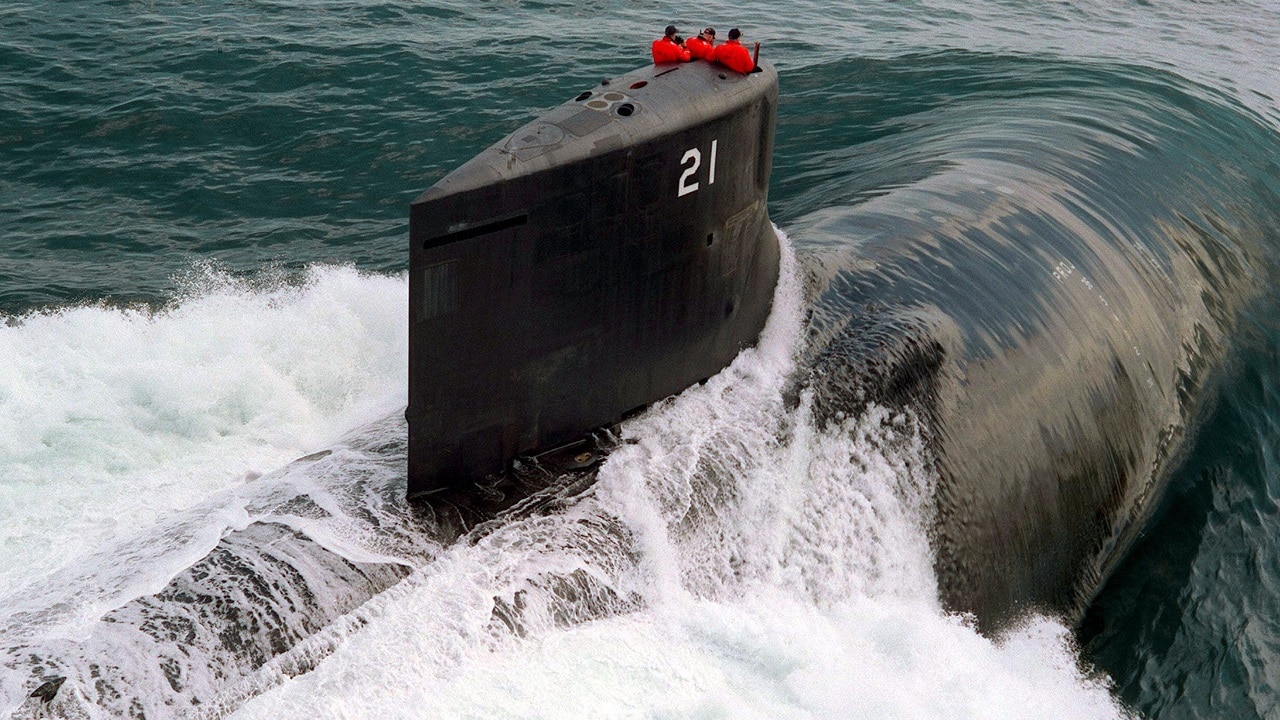
The U.S. Navy’s newest attack submarine, USS Seawolf (SSN 21), conducts Bravo sea trials off the coast of Connecticut in preparation for its scheduled commissioning in July 1997.
This Thing Was as Noisy as a Disco
The Soviet technicians had a problem, though. The K-222, running at over 40 knots, gave off a whirring sound. The titanium hull was also problematic. This was the death knell for submarines, and it would allow the Papa-class to be easily discovered and tracked.
“Its whizzing power made it a difficult beast to tame. The high speeds caused structural stress, and the system proved to be very complex and expensive to operate. Inside the submarine’s control room, the noise could reach levels of 100 decibels, almost as loud as a bustling nightclub,” according to IFL Science.
This was going to be a disaster, and the Soviets panicked. In their rush to improve speed, they forgot a cardinal rule of submarine design: run smarter and quieter.
Titanium Had Its Challenges for Submarines
The Russians also found out that titanium is not the best material for submarines. It is highly expensive, costing way more than steel. Welding in open air is difficult, and the raw material is difficult to work with, resulting in poor-quality joints and seams.
“In order to properly weld titanium, the Soviet Union had to build airtight warehouses that could be turned into a vacuum by pumping all the air out, then filled with argon—an inert gas that isn’t absorbed by hot titanium. Welders had to wear special space suit-like protective gear that had oxygen lines attached to allow them to breathe. It was an expensive process, but the results were interesting,” according to the National Interest.
The Nuclear Reactors Drove a Propeller That Made a Racket
The Soviets also began to rethink the propulsion system. The K-222 had two nuclear reactors. The propeller was the problem, as it vibrated at high speed due to cavitation caused by bubbles forming in the rotor.
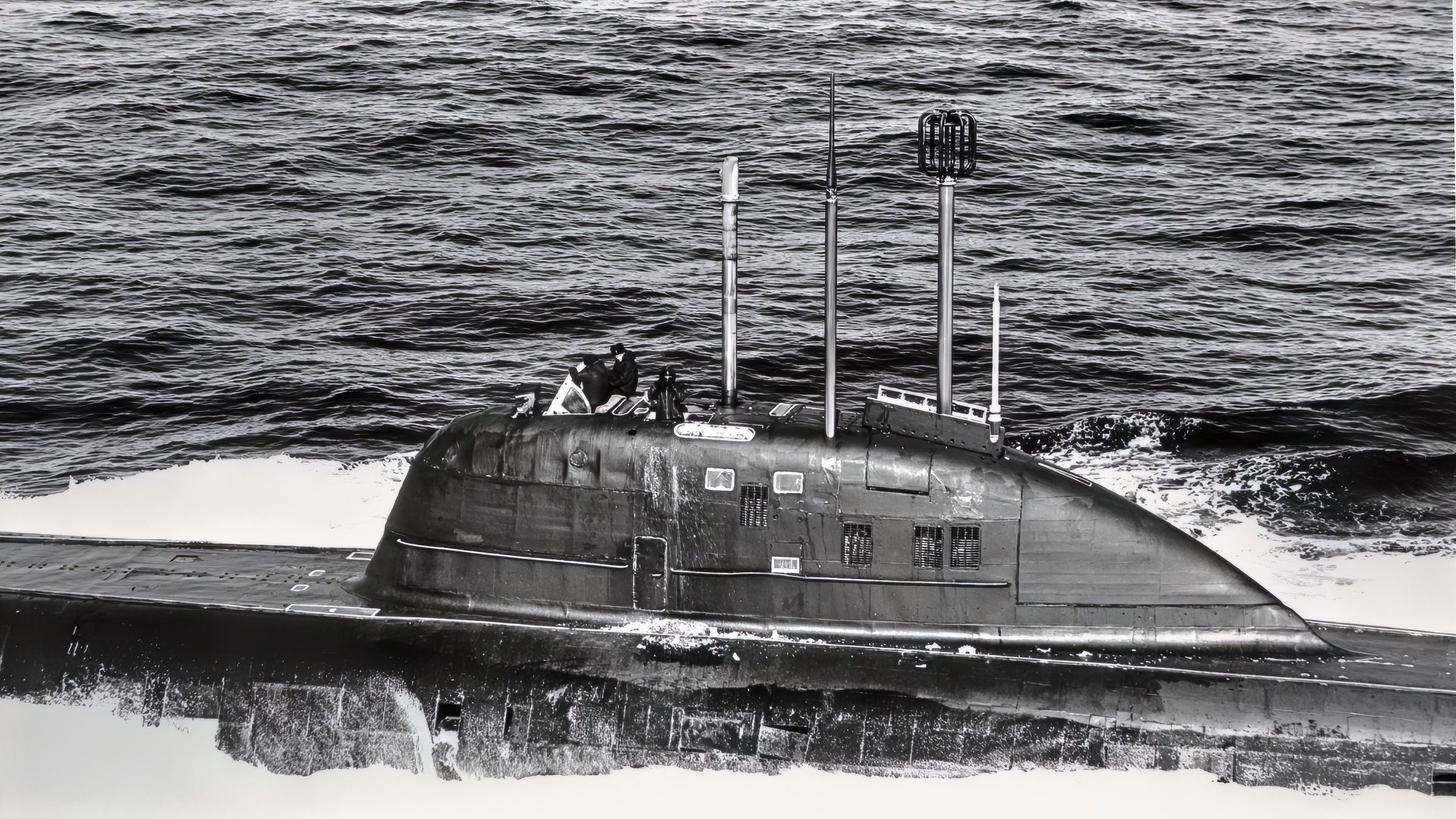
A port view of the sail of a Soviet Victor-II class nuclear-powered attack submarine underway.
The K-222 was still on duty in 1980 when one of its nuclear reactors experienced problems during maintenance downtime. By 1988, the Soviets had abandoned the K-222 and retired it before scrapping the fast cruise-missile boat in 2010.
Lessons Learned During the Development of the K-222
The Soviets did not follow the usual submarine development of the K-222.
They often emphasized incremental advances rather than large-scale revolutionary designs. They had to learn a difficult lesson in underwater warfare. Propulsion systems can be noisy even when they operate at long range and high speed. Titanium also has its drawbacks. But give the Soviet engineers and designers credit. They achieved record-breaking speeds on a large nuclear-powered cruise-missile boat. No submarine is likely to eclipse that speed again.
Submarine designs are now less risky, and nuclear reactors are better engineered. Twenty-five to thirty-five knots as a top speed is considered sufficient. SSBNs are so quiet these days that they often do not have to outrun ships, airplanes, or other subs. But the Soviets were ahead of their time and produced a one-of-a-kind submarine whose speed will stand the test of time.
About the Author: Dr. Brent M. Eastwood
Author of now over 3,000 articles on defense issues, Brent M. Eastwood, PhD is the author of Don’t Turn Your Back On the World: a Conservative Foreign Policy and Humans, Machines, and Data: Future Trends in Warfare plus two other books. Brent was the founder and CEO of a tech firm that predicted world events using artificial intelligence. He served as a legislative fellow for US Senator Tim Scott and advised the senator on defense and foreign policy issues. He has taught at American University, George Washington University, and George Mason University. Brent is a former US Army Infantry officer. He can be followed on X @BMEastwood.