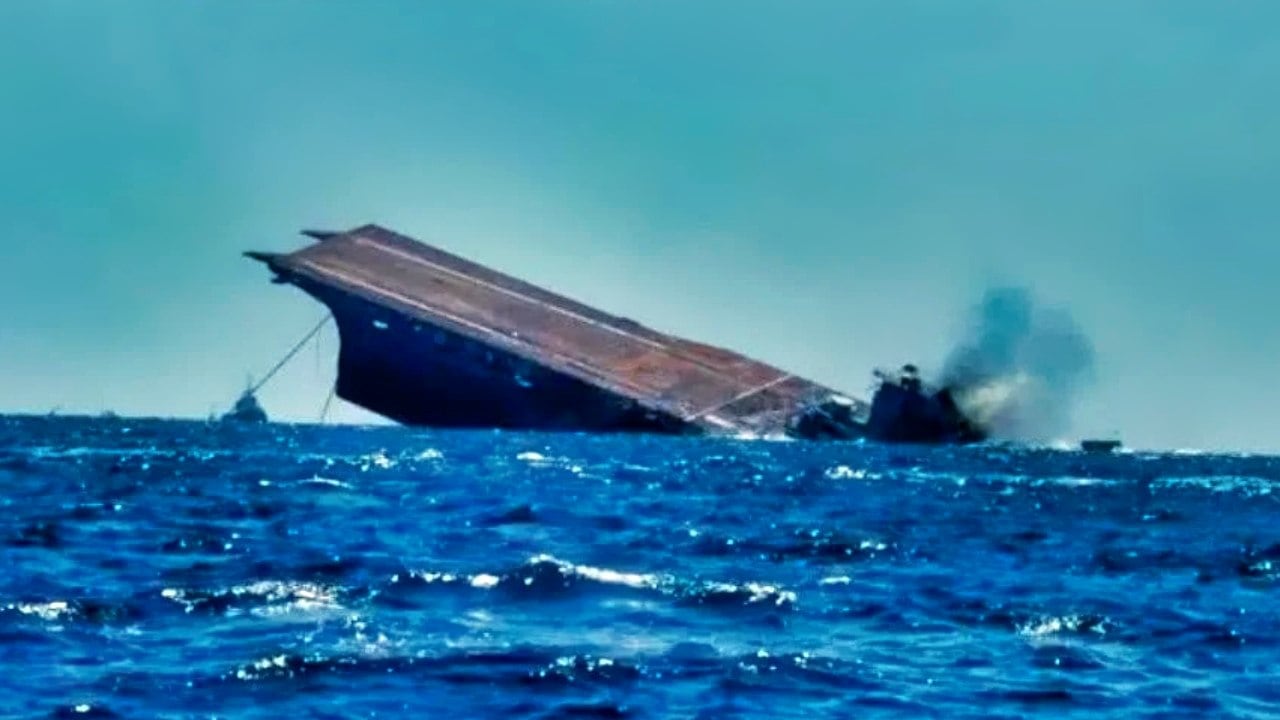
Key Points and Summary – Long before the Hindenburg burned into history, the U.S. Navy’s USS Akron, the flying aircraft carriers, as some called them, proved how fragile giant airships really were.
-A helium-filled “flying aircraft carrier,” Akron was built to launch and recover Sparrowhawk fighters and scout vast ocean areas for the fleet.
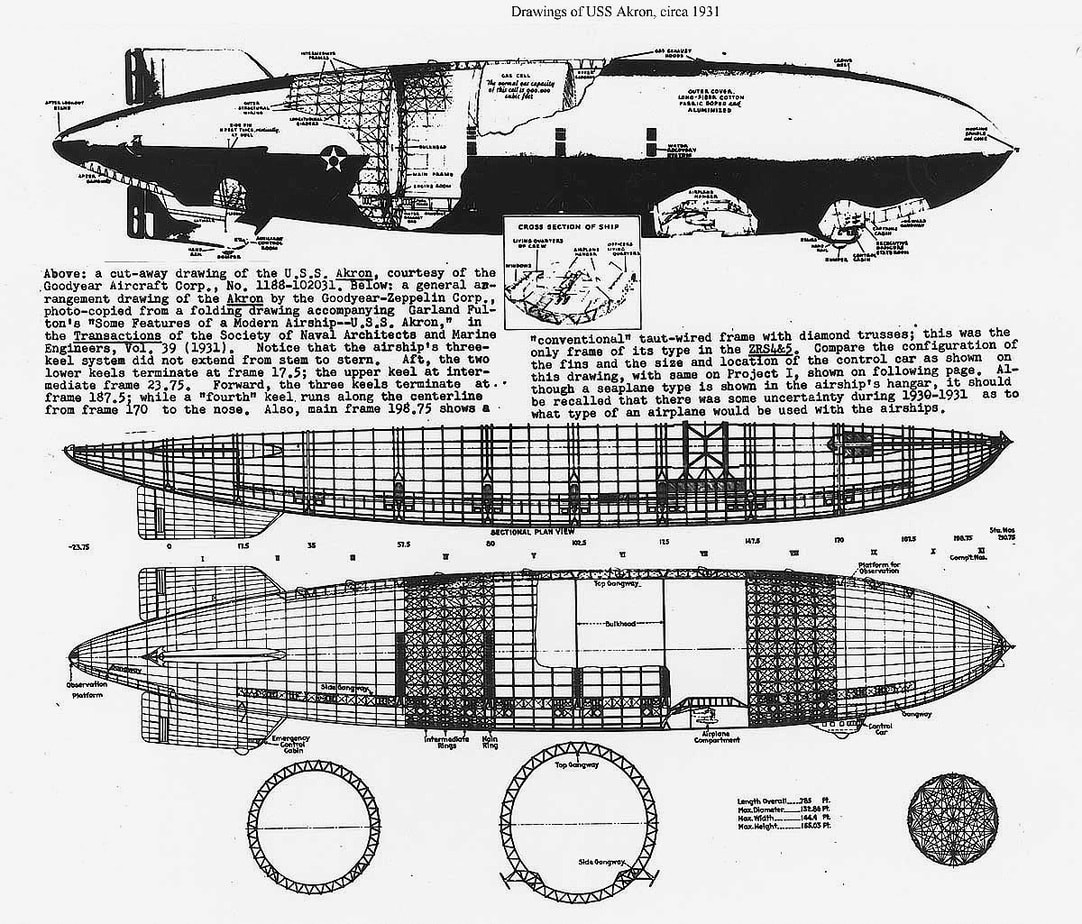
USS Akron, real flying aircraft carrier. Image Credit: Creative Commons.
-In reality, she was slow, weather-sensitive, and demanded enormous ground infrastructure.
-Caught in a violent storm off New Jersey, Akron struck the sea and broke apart, with only three survivors out of 76 aboard.
The Navy’s Flying Aircraft Carrier: Why USS Akron Was Doomed
Her loss—and the later sinking of sister ship USS Macon—ended the Navy’s rigid airship experiment and pushed long-range reconnaissance toward fixed-wing aircraft instead.
Bring up airships today, and most people would likely think of the airship disasters of the interwar years, when pioneering lighter-than-air ships filled with flammable hydrogen gas caught fire, crashed to the ground, and burned to ash.
Perhaps the most well-known of these is the 1937 Hindenburg disaster, which saw Germany’s Hindenburg airship burst into flames, likely because of a spark caused by static electricity—or perhaps a lightning strike.
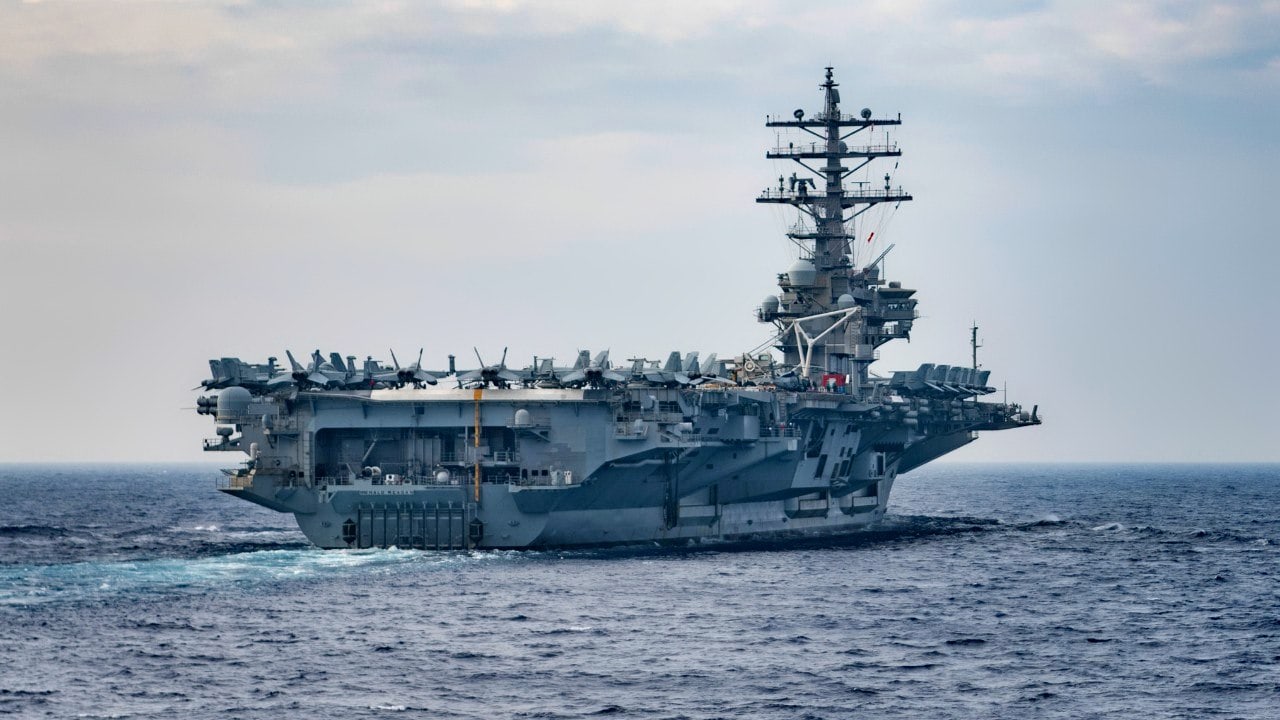
(May 30, 2020) The Nimitz class aircraft carrier USS Ronald Reagan (CVN 76) conducts routine operations in the Philippine Sea. Ronald Reagan is forward-deployed to the U.S. 7th Fleet area of operations in support of security and stability in the Indo-Pacific region. (U.S. Navy photo by Ltjg. Samuel Hardgrove)
However, a disaster involving the U.S. Navy’s USS Akron airship predated the Hindenburg by several years. During that accident, the world’s largest helium-filled airship ran into a violent storm off the coast of New Jersey, struck the sea, and sank, leaving only three survivors.
The USS Akron – what many call the flying aircraft carrier, in many respects – was one of the most ambitious experiments in American naval aviation history.
A massive, helium-filled, rigid airship, the Akron was to serve in the Navy as an airborne scout aircraft.
Built in Akron, Ohio, the airship’s engineers built an aircraft hangar and launch-and-recovery system for a small Sparrowhawk fighter to hook onto the airship while in flight, be cranked aboard, refueled and rearmed, then launched into the air.
If it succeeded, airships equipped with just a handful of airplanes could survey hundreds of square miles of open ocean at any given time.
Though innovative, the system proved cantankerous. It performed poorly in bad weather, especially in turbulent coastal areas where the Akron should have excelled.
Though the airship did complete a series of flights that showed recovering and launching aircraft was technically feasible, it would prove impractical, disastrous in adverse weather conditions, and ultimately fatal.
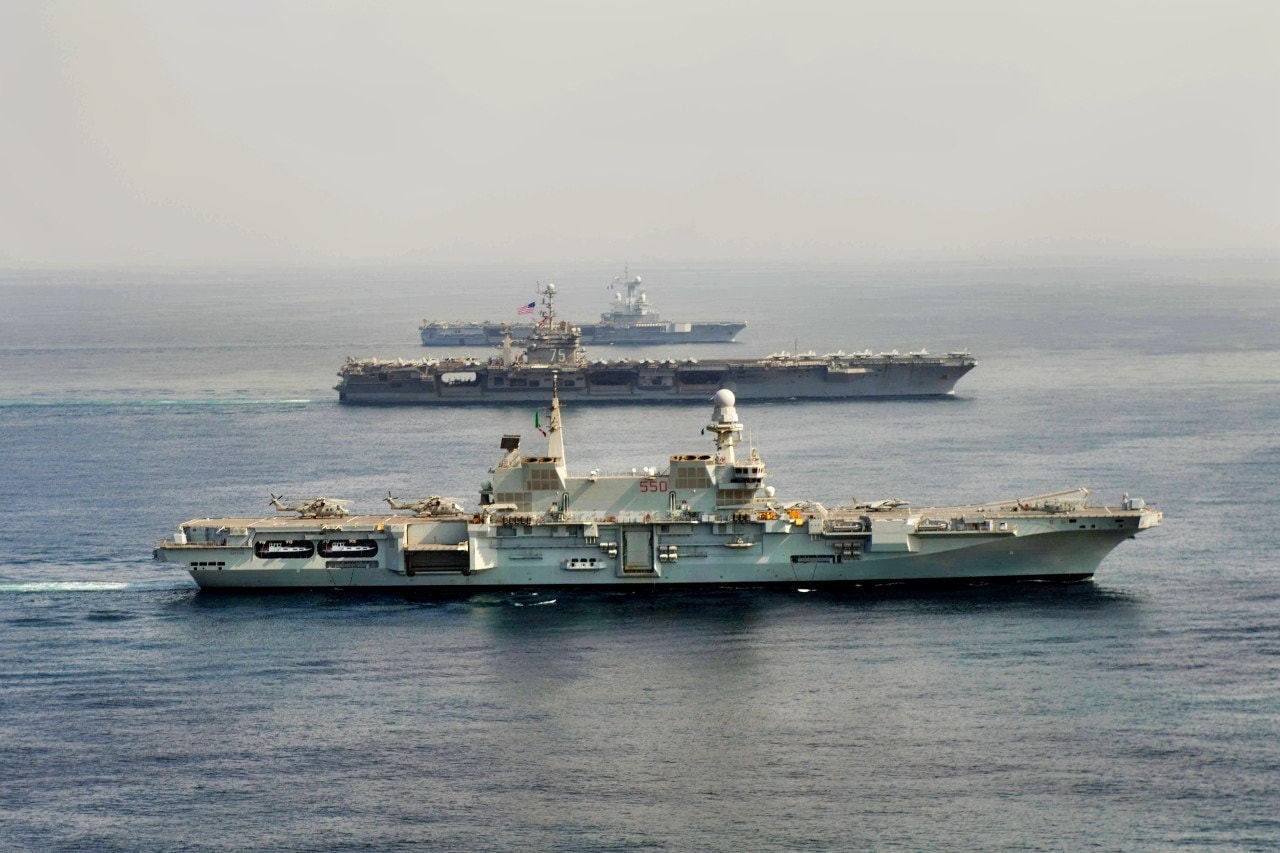
(Jan. 3, 2014) The Italian navy aircraft carrier ITS Cavour (CVH 550), front, the aircraft carrier USS Harry S. Truman (CVN 75) and the French navy aircraft carrier Charles de Gaulle (R 91), conduct operations in the Gulf of Oman. Harry S. Truman, flagship for the Harry S. Truman Carrier Strike Group, is conducting operations with Task Force 473 to enhance levels of cooperation and interoperability, enhance mutual maritime capabilities and promote long-term regional stability in the U.S. 5th Fleet area of responsibility. (U.S. Navy photo by Mass Communication Specialist 3rd Class Ethan M. Schumacher/Released)
Airships and the Interwar Years
The late 1920s and 1930s were a time of significant innovation in military thinking.
Following the end of the Great War, countries around the globe sought to harness new technologies that would speed up travel, make life easier, and provide a qualitative edge over adversaries in the next war.
The airship was seen as providing a solution for difficult problems of the day: long-range patrol, reconnaissance, and bombing.
Before the advent of long-range, land-based patrol aircraft and naval radar, tracking enemy fleets, finding convoys, and patrolling beyond visual range were significant challenges. Enormous airships were explored by the United States, Italy, the United Kingdom, and Germany.
They were meant to be used as strategic reconnaissance platforms. Hence, why the term flying aircraft carrier stuck
Planners saw significant advantages to airships.
They could remain aloft for vastly greater lengths of time than the biplanes and monoplanes of the era.
They could cruise for days at a time and provide coverage of vast distances with a light crew. American naval planners hoped that airships like the USS Akron could sweep far ahead of battle groups, relay enemy ship positions, and provide targeting adjustments to battleships and other warships.
But despite the apparent advantages of airships, there were several significant drawbacks as well.
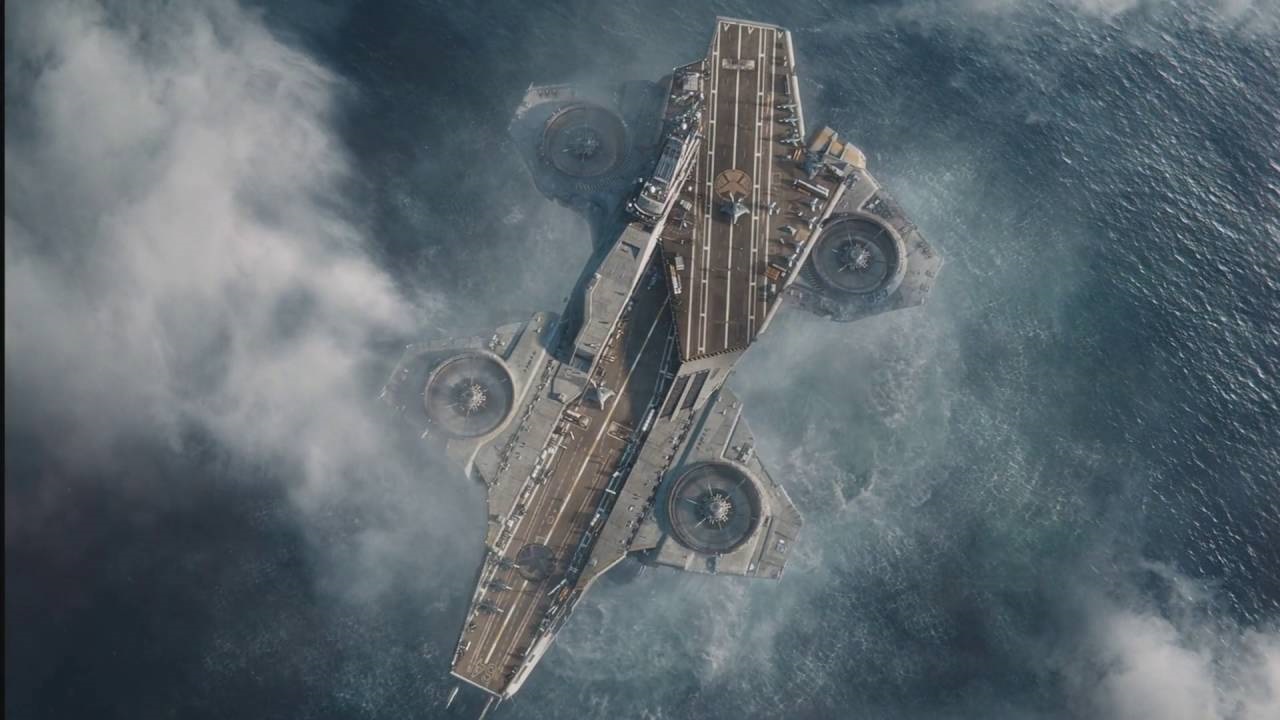
Cutscene from The Avengers of the Shield Helicarrier taking off. Copyright reserved to Marvel and Paramount. Image Credit: YouTube Screenshot. An imagined flying aircraft carrier.
Airships were very vulnerable to weather. Their large size made them difficult to maneuver, and they required extensive support infrastructure—enormous hangars, gigantic mooring masts, and highly trained ground crews—making airships both expensive and logistically complex.
Compared to early aircraft of the era, they were much slower and more vulnerable to adversary fire. And while the Hindenburg was filled with flammable hydrogen gas, the USS Akron was filled with another lighter-than-air gas: helium.
Consequently, the USS Akron and its sister ship, the USS Macon, were the largest helium-filled airships ever built.
No More Flying Aircraft Carriers
The USS Akron airship tragedy remains the deadliest airship disaster in aviation history, and the airship’s loss stoked intense debate in the U.S. Navy.
The scale of the disaster is what put the kibosh on future airship operations—only three of the USS Akron’s 76 crewmen and passengers survived the crash at sea.
Though the airship was considered a state-of-the-art aircraft at the time, its loss during a storm exposed the airship’s striking vulnerability to adverse weather conditions and its seeming inability to stay aloft and stave off disaster. Following the Akron’s loss, support for airships declined.
Following the loss of the USS Macon in 1935, the U.S. Navy abandoned the airship concept. And the flying aicraft carriers were no more.
Meanwhile, advances in long-range fixed-wing aircraft made them a viable alternative for long-range reconnaissance.
They offered speed and maneuverability that airships could never match.
The Akron disaster marked the beginning of the end of airships as a serious military capability in the United States, and a dead end for naval airship aviation.
However, we can still dream about flying aircraft carriers for sure.
About the Author: Caleb Larson
Caleb Larson is an American multiformat journalist based in Berlin, Germany. His work covers the intersection of conflict and society, focusing on American foreign policy and European security. He has reported from Germany, Russia, and the United States. Most recently, he covered the war in Ukraine, reporting extensively on the war’s shifting battle lines from Donbas and writing on the war’s civilian and humanitarian toll. Previously, he worked as a Defense Reporter for POLITICO Europe. You can follow his latest work on X.