
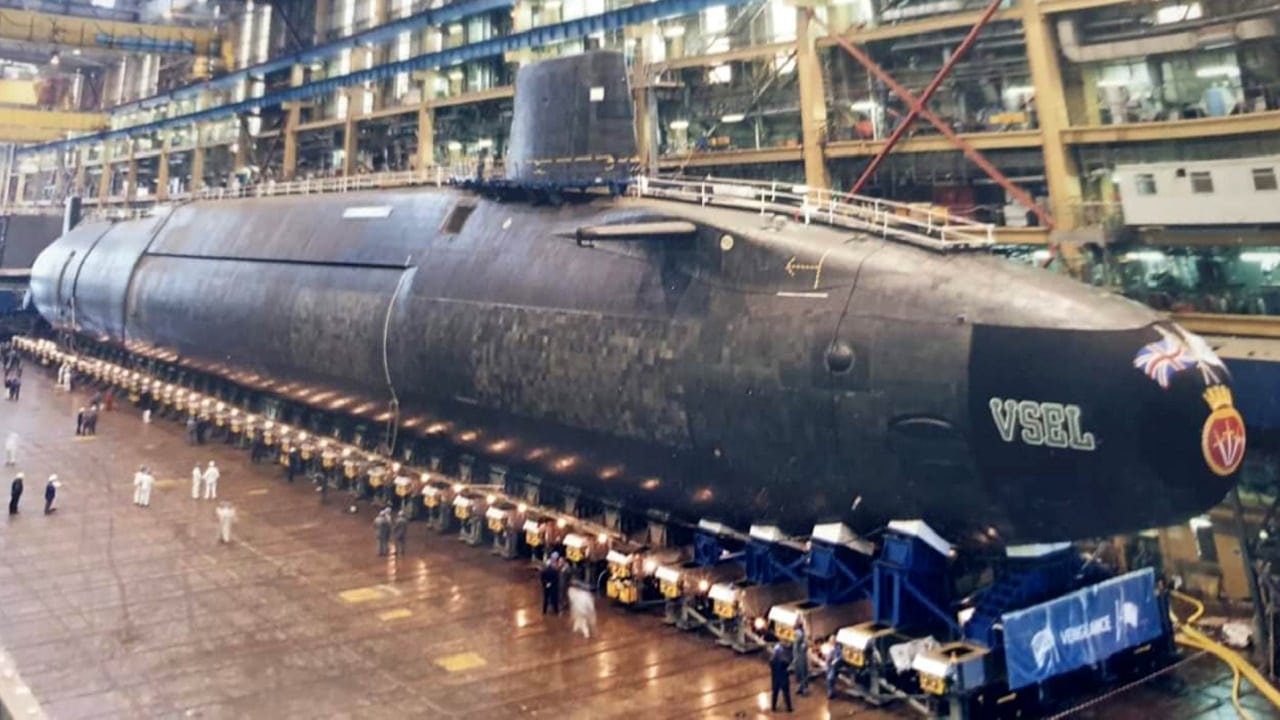
In 2015, the HMS Vanguard (S28), one of the UK’s four ballistic missile submarines, pulled into HMNB Devonport for what was apparently a routine Long Overhaul Period and Refuel (LOP(R)).
Unbeknownst to the public, however, was the fact that this maintenance cycle was anything but ordinary for Vanguard.
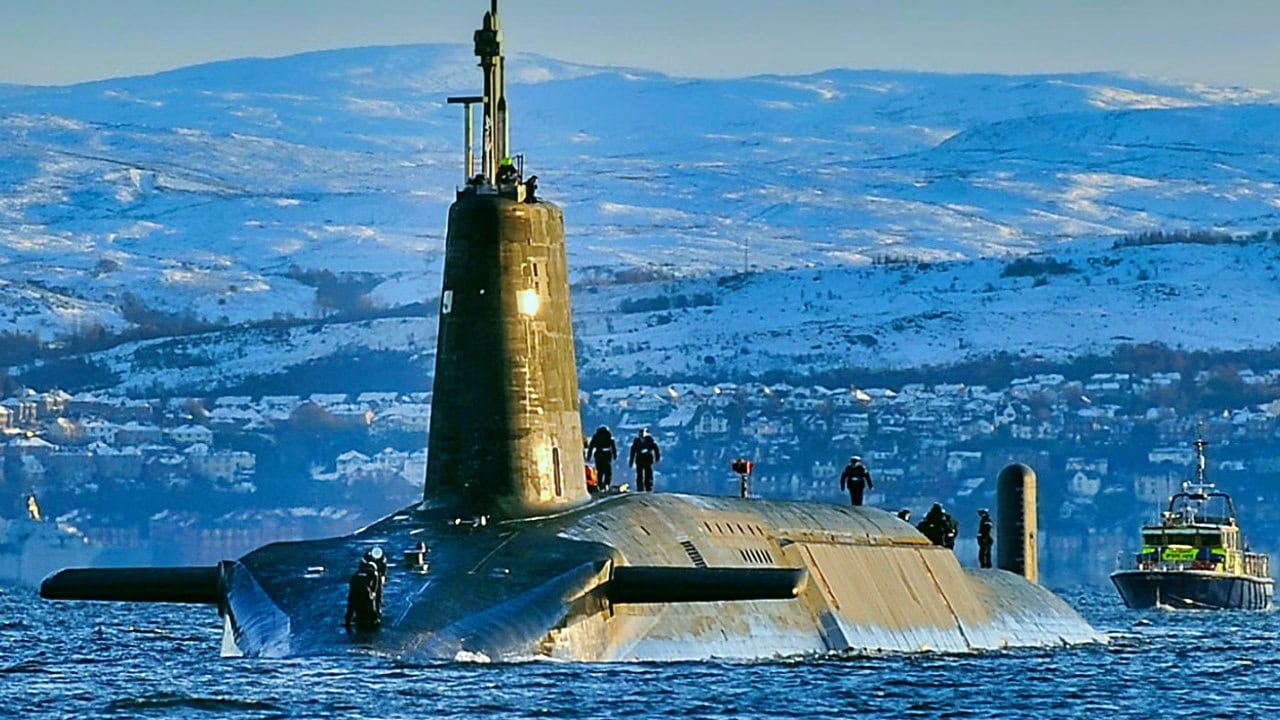
Vanguard-Class SSBN. Image Credit: Creative Commons.
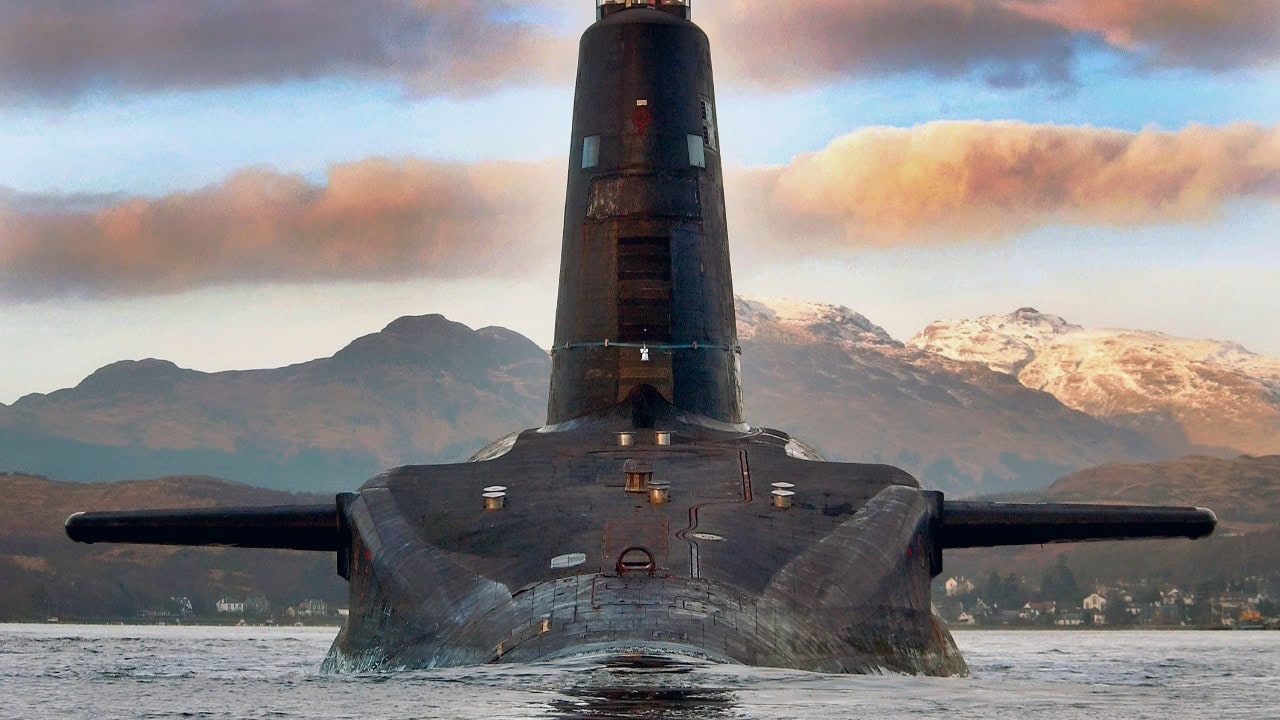
Vanguard-Class Submarine Royal Navy
The submarine was sent for a premature overhaul when a leak was discovered in her nuclear reactor, prompting an emergency maintenance and refueling cycle.
Due to several factors, including the pandemic outbreak, the ship’s maintenance took much longer than intended.
Originally slated to undergo maintenance for 3.5 years, Vanguard remained in port for an astonishing 7.5 years before finally returning to service with the Royal Navy.
In 2012, it was discovered that radiation from Vanguard’s PWR2 nuclear reactor had seeped into its coolant water due to a microscopic breach in the fuel cladding.
Following the discovery, the ship was scheduled to be refueled during its next deep maintenance period.
Evidently, she was deemed safe enough to continue operations until 2015, when she began her LOP(R). Shockingly, the Vanguard is not an isolated incident.
According to past investigations, the UK has a history of reactor leaks in its nuclear submarines.
In 2009, radioactive material was discovered in the reactor’s coolant water aboard the Trafalgar-class submarine HMS Turbulent (S87).
The HMS Trafalgar also sprang a reactor leak in 2006 while at sea, although the UK MoD insists there was no immediate hazard to the crew or the environment.
News of Vanguard’s reactor leak was not made public until 2014, two years after its initial discovery.
The RN claimed that it did not inform the public for national security reasons and to avoid causing needless public anxiety.
According to reports, it took the MoD nine months to inform the Scottish Environment Protection Agency (SEPA)of the leak—at the time, Vanguard was stationed in Scotland. “I think we all know how the SNP Scottish Government scaremongers on these issues,” then-Defense Secretary Philip Hammond said in Private.
The Scots have long advocated for the removal of nuclear weapons from their territory, and stationing nuclear submarines at Scottish ports has always been a controversial topic.
The discovery of Vanguard’s reactor leak was a major political scandal.
Vanguard’s LOP(R) was originally supposed to last only three and a half years and instead dragged on for more than seven.
The pandemic is often cited as an explanation for this extraordinary delay, but it is insufficient to fully account for why the sub’s maintenance took so long.
Seven Years of Repairs?
The ship first entered maintenance in 2015, five years before the pandemic took full effect.
While the pandemic can explain the last two years, it cannot explain why Vanguard’s overhaul was already two years behind schedule when the pandemic hit.
The first reason is that the scope of the work expanded after a proper inspection of the sub was completed.
While the reactor leaks had already expanded the project’s scale, various issues continued to mount and delay it.
This was further exacerbated by shoddy repair practices implemented in the past. According to some reports, civilian technicians working on the ship used super glue on some bolts that held insulation in place over essential cooling pipes.
Rather than boring out the broken shafts, the technicians simply glued the heads back on to cut corners and save time. “It’s a disgrace,” one Navy official said. “You can’t cut corners with nuclear. Standards are standards. Nuclear standards are never compromised.” Subpar safety standards also delayed the project after one of the workers shocked themselves during the repair, prompting an immediate investigation; thankfully, the worker was not seriously injured.
Why Was the Vanguard SSBN Delayed?
The main reason for Vanguard’s delay was gross mismanagement from the top. “Vanguard is a textbook example of how not to set up a major project. Among other things, we changed the scope of the project, did not invest in the workforce, and did not invest in the infrastructure,” one official said in the aftermath.
Because the contract for the ship’s overhaul was a non-fixed-price contract, the cost of the project gradually ballooned to over 500 million British pounds. “What we do in Plymouth is unique and world-class, but we must acknowledge the MoD’s mismanagement of this refit process,” said Luke Pollard, Plymouth Sutton and Devonport MP and shadow armed forces minister. “Ministers allowed this project to run over-budget and take twice as long as similar work on HMS Victorious, Vigilant and Vengeance.”
Many of the exact details regarding Vanguard’s overhaul are classified.
Regardless, the whole program reflects poorly on the UK MoD and the government as a whole.
The Vanguard-class submarines are currently the central pillar of London’s nuclear deterrence strategy. Vanguard is one of only four nuclear ballistic missile submarines the UK possesses, and, due to negligence and mismanagement, this strategically vital ship was out of action for seven years.
Quite frankly, this was unacceptable.
Since then, the UK’s Submarine issues have grown more acute.
Its maintenance facilities lack manpower and infrastructure and are grossly mismanaged.
This is, unfortunately, representative of the current state of the Royal Navy, which struggles to meet basic readiness standards.
MORE – The M10 Booker Light Tank Is Brand New and Already in a Museum
About the Author: Isaac Seitz
Isaac Seitz, a Defense Columnist, graduated from Patrick Henry College’s Strategic Intelligence and National Security program. He has also studied Russian at Middlebury Language Schools and has worked as an intelligence Analyst in the private sector.