
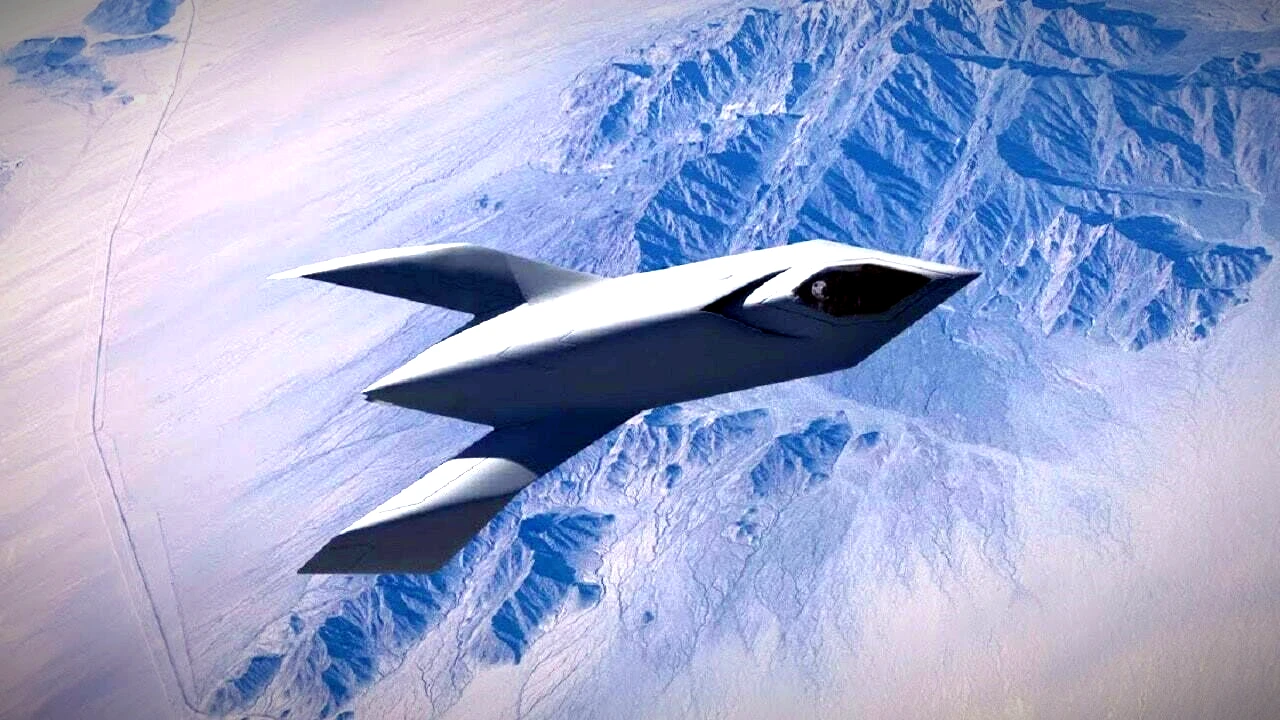
The Secret $67 Million Stealth Jet Above the F-22 Was Never a Fighter – One of the strangest aircraft at the National Museum of the U.S. Air Force hangs directly above an F-22A Raptor, and I have seen it with my own eyes, as you can see from the photos below. The Boeing Bird of Prey, often identified by the cover designation YF-118G, looks like a secret fighter prototype whose military career ended before production. It was built for a different purpose.
Boeing spent $67 million of its own money on the classified program between 1992 and 1999. One aircraft was constructed. It completed 38 test flights after first taking to the air in the fall of 1996.
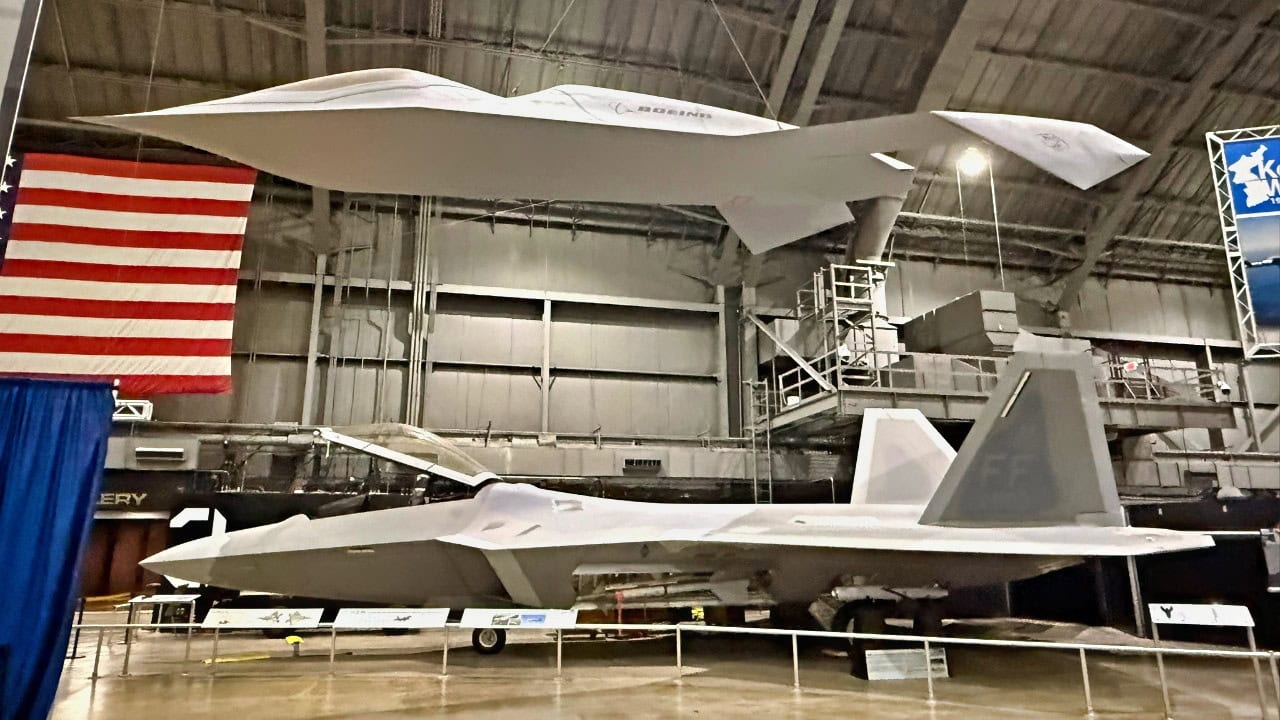
YF-118G. Image taken by Harry J. Kazianis for 19FortyFive.
The YF-118G Bird of Prey measured approximately 47 feet long, spanned 23 feet, and weighed close to 7,400 pounds. A single Pratt & Whitney JT15D-5C turbofan produced 3,190 pounds of thrust. Operational speed was about 260 knots, or roughly 300 mph, with a maximum operating altitude of 20,000 feet.
Those figures were modest because speed, payload, and altitude were never the primary goals. The aircraft carried no operational radar, weapons, targeting system or combat avionics. McDonnell Douglas and the U.S. Air Force wanted to test low-observable shaping while proving that a stealth aircraft could be designed and assembled faster, more cheaply, and with fewer specialized parts.
McDonnell Douglas Needed to Rebuild Its Stealth Position
The program emerged during a difficult period for McDonnell Douglas. The company had failed to secure a leading position in the Air Force’s Advanced Tactical Fighter competition, then joined Northrop on the YF-23 team that lost to Lockheed’s YF-22 in April 1991.
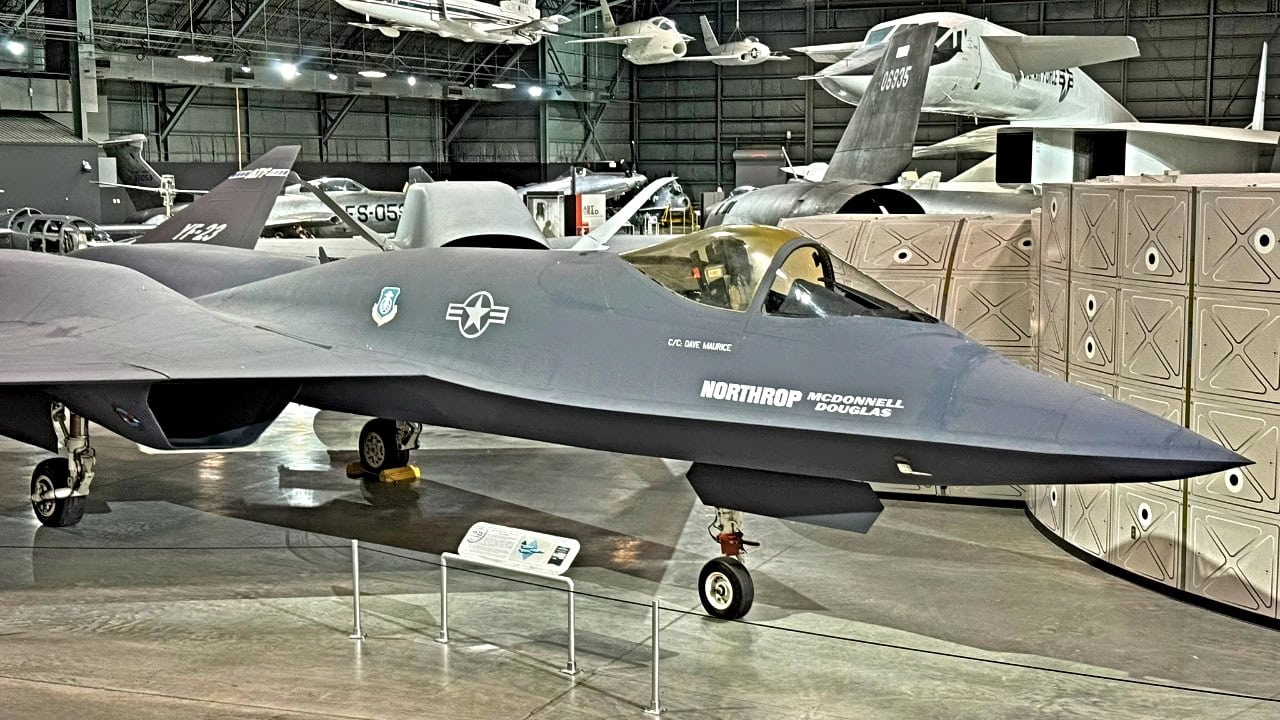
YF-23 Stealth Fighter. Image taken by Harry J. Kazianis for 19FortyFive.
Stealth was becoming central to future American combat-aircraft programs, yet McDonnell Douglas lacked a successful low-observable aircraft of its own.
Company leaders launched the Bird of Prey effort in 1992 through the Phantom Works advanced-development organization. Engineer Alan Wiechman led the work after earlier experience with Lockheed’s Have Blue demonstrator, F-117 Nighthawk, and Sea Shadow stealth ship.
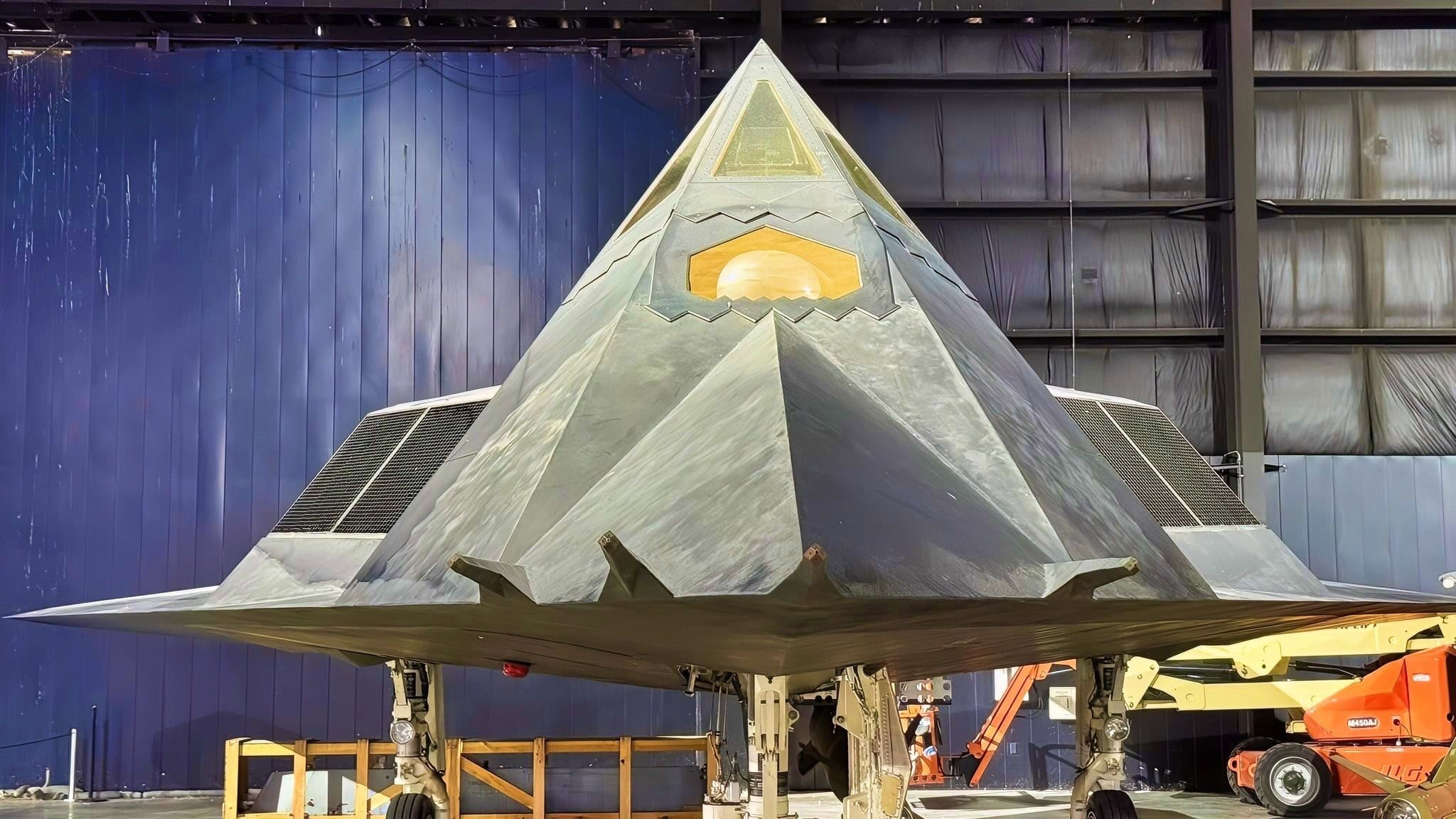
F-117 Nighthawk Stealth Fighter Harry Kazianis Photo from the U.S. Air Force Museum back in July of 2025.
The aircraft serve both corporate and military purposes. McDonnell Douglas needed to demonstrate that it understood signature reduction, composite construction, and rapid prototyping. It also needed to prove those skills without waiting for the Pentagon to finance another multibillion-dollar acquisition program.
The result was less an unfinished fighter than a privately financed research laboratory. That distinction explains why the Bird of Prey traded operational performance for learning.
The Shape Was Designed Around Radar and Visual Signature
The Bird of Prey used a broad, blended center section, sharply angled wings, and no conventional vertical tail. Its engine intake sat on top of the fuselage, completely shielded from a radar looking toward the aircraft’s nose.
That prevented the compressor face, normally a strong radar reflector, from being visible from the frontal aspect.
The control surfaces blended smoothly into the wings rather than creating large gaps or abrupt edges. The Air Force museum describes these as “gapless” control surfaces, intended to reduce reflections from joints, hinges, and exposed mechanisms.
The aircraft also tested ways to reduce visual detection. Its upper surfaces were darker, while areas around the inlet and fuselage sides used lighter tones intended to soften shadows. Boeing has never released a radar-cross-section figure, complete test results, or a detailed list of every signature-control experiment.
Claims that the Bird of Prey used active camouflage or a surface able to change color remain unconfirmed. Boeing revealed enough information to establish the project’s broad achievements while leaving some of the actual test work classified.
Digital Design and Large Composite Parts Cut Time and Cost
The manufacturing process was at least as important as the aircraft’s shape. Phantom Works relied heavily on three-dimensional computer design and virtual assembly at a time when full digital development was far less common across military aviation.
Engineers used the virtual model to check whether components fit together before workers reached final assembly. The process reduced the need for physical mockups, tooling changes, and expensive rework. Boeing also used disposable manufacturing tools rather than building permanent production equipment for a one-aircraft program.
Large single-piece composite structures reduced the number of joints, fasteners, and panel gaps. Fewer seams helped signature control while simplifying assembly. The aircraft demonstrated that stealth manufacturing did not always require the enormous production infrastructure associated with the B-2 Spirit.

B-2 Spirit Stealth Bomber 19FortyFive Image. Taken By Harry J. Kazianis at U.S. Air Force Museum in 2025.
The design remained deliberately stable enough to fly without computerized assistance. Its controls were manual rather than fly-by-wire. The landing gear was adapted from Beech King Air and Queen Air aircraft. An available commercial engine replaced the need to develop a specialized propulsion system.
This approach is central to the Bird of Prey’s low-cost legacy. Boeing was not trying to make every component advanced. It concentrated funding on the technologies the project was designed to test.
The $67 Million Price Did Not Include a Combat Aircraft
The program’s price is impressive only when its limits are understood. The $67 million was paid for design, construction, and flight testing of a single demonstrator. It did not buy a production line, operational software, weapons integration, radar development, electronic warfare, military communications, or a logistics system.
The Bird of Prey’s 3,190-pound-thrust engine was adequate for a slow research aircraft. It would have been unsuitable for a fighter expected to accelerate rapidly, climb above 50,000 feet, or sustain supersonic flight. Its 20,000-foot ceiling placed it below the normal operating altitude of many combat jets.
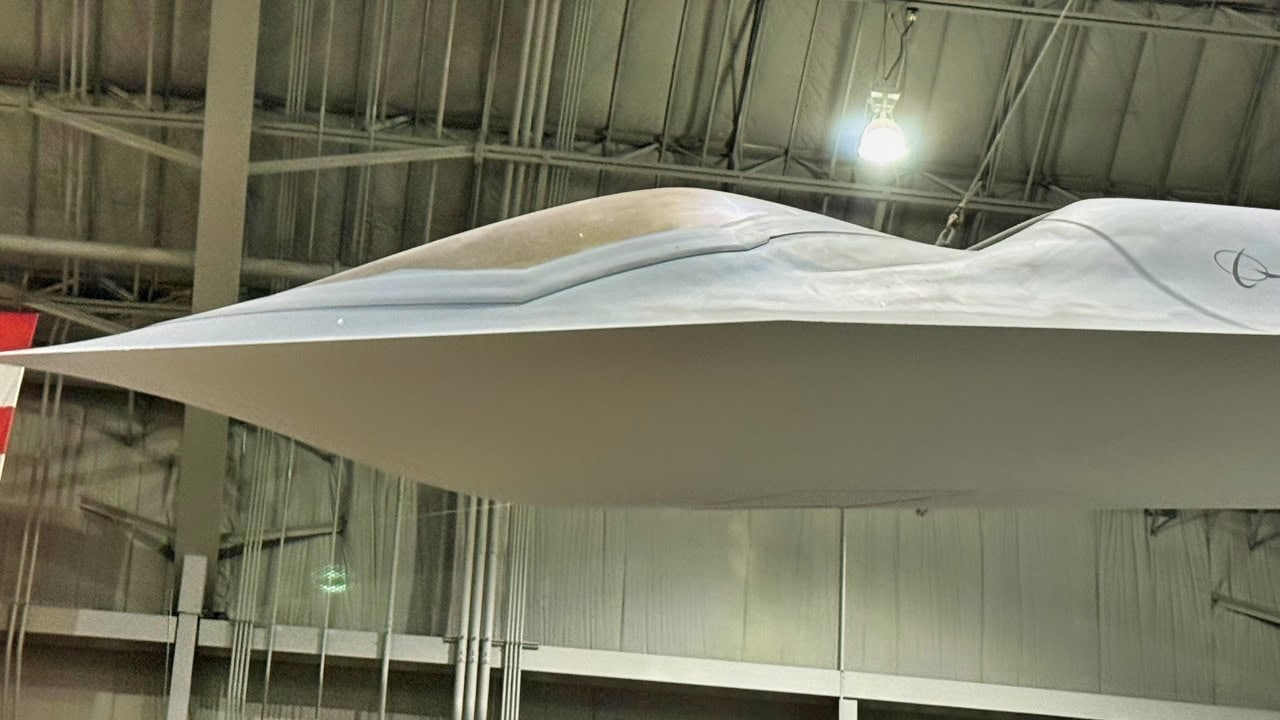
YF-118G. Image taken by Harry J. Kazianis for 19FortyFive.
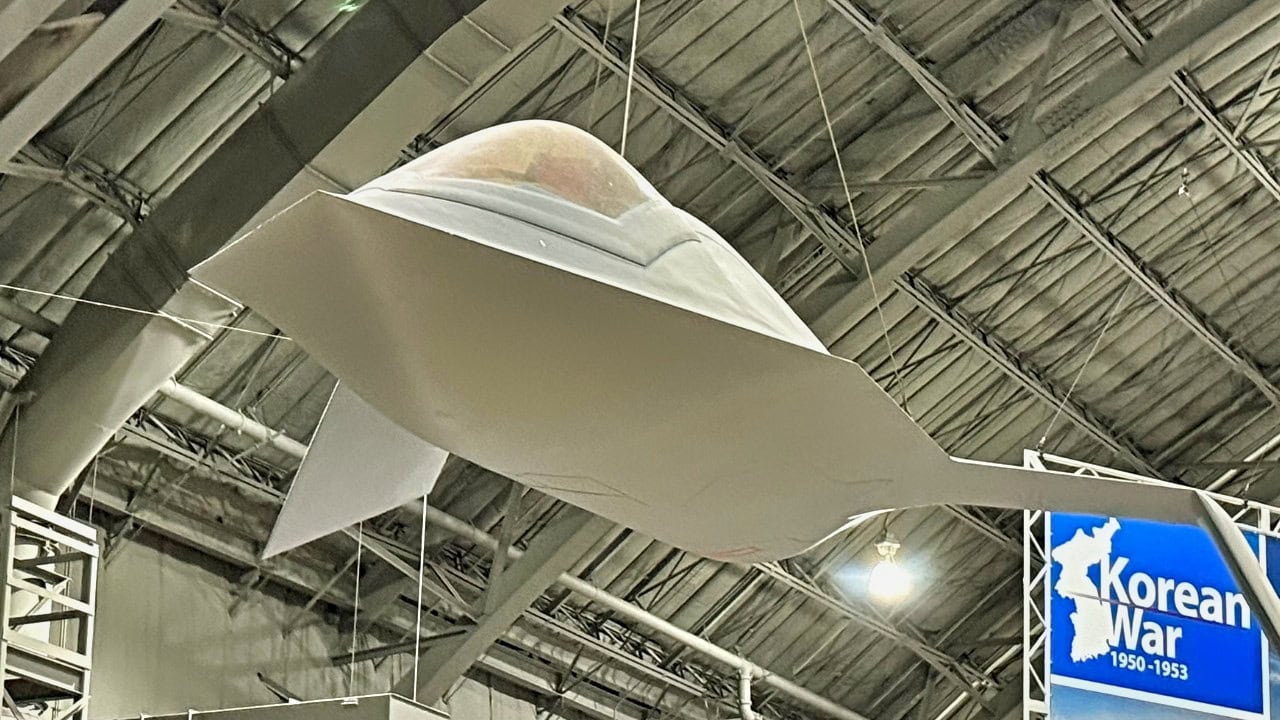
YF-118G. Image taken by Harry J. Kazianis for 19FortyFive.
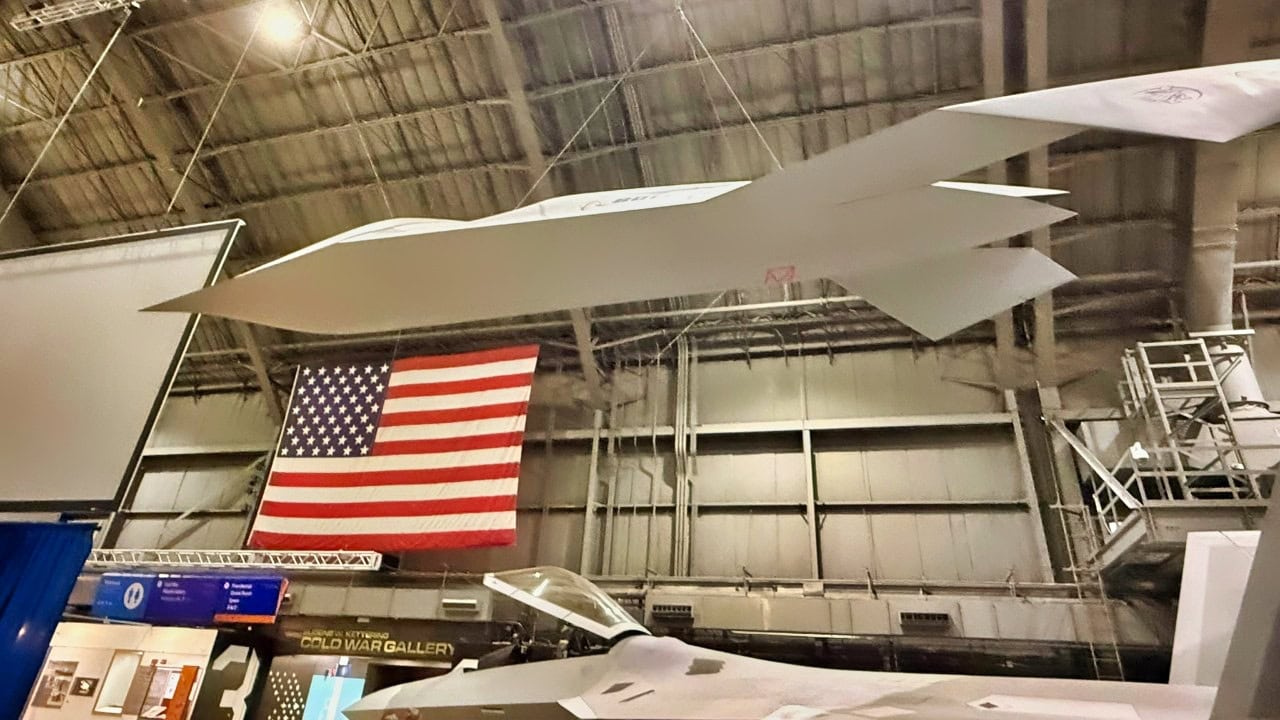
YF-118G. Image taken by Harry J. Kazianis for 19FortyFive.
The aircraft had no internal weapons bay, no cannon, and no provisions for air-to-air or air-to-ground stores. It lacked aerial refueling, a combat sensor suite, and the cooling or electrical power required by a modern radar. Turning it into a military aircraft would have required a different engine, a larger fuel system, stronger landing gear, mission computers, sensors, and weapons.
That work would have created a new aircraft rather than a production Bird of Prey. The program succeeded because none of those requirements distracted it from the experiments Phantom Works wanted to complete.
Thirty-Eight Flights Were Enough to Complete the Mission
The first flight occurred at the secure Groom Lake test site in Nevada on September 11, 1996, according to later accounts of the classified Area 51 test program. Flight operations continued until April 1999.
Thirty-eight flights seem limited compared to the thousands of sorties accumulated by an operational fighter test fleet. The YF-118G Bird of Prey did not need to certify missiles, radar modes, aerial refueling, extreme maneuvering, or carrier landings. Its test team needed to establish that the aircraft would fly safely, confirm the performance of its low-observable features, and compare the real airframe with the digital design.
The program ended once those questions had been answered. Boeing kept the aircraft secret for another three years before revealing it on October 18, 2002. The company said concealment was no longer necessary because many of the design and production techniques had become industry standards.
That outcome is why the $67 million aircraft is better understood as a successful stealth experiment, not a failed fighter program.
The Bird of Prey Was Never a Candidate for Military Service
No Air Force requirement called for a 300-mph, lightly equipped stealth aircraft with no weapons. The Bird of Prey did not compete for a production contract, pass through operational testing, or lose a selection decision to another aircraft.
Its popular YF-118G label encourages the impression that it was an experimental fighter like the YF-22 or YF-23. Boeing’s public release and the Air Force museum call it the Bird of Prey and describe it as a technology demonstrator. The aircraft’s mission was to validate techniques, not to become a squadron platform.
A production military aircraft would also have needed reliability testing, maintainability studies, an ejection system qualified across the complete flight envelope, and extensive work on crash safety. The Bird of Prey’s borrowed equipment was useful because it let the team move quickly. It was not a foundation for a deployable fleet.
The aircraft stopped flying because its work was complete. The end of the flight program was not a military retirement in the normal sense.
The Direct Legacy Reached the X-32 and X-45A
The strongest documented legacy does not begin with the F-22. The Air Force museum states that Boeing applied Bird of Prey design and manufacturing techniques to the X-32 Joint Strike Fighter demonstrators, which competed against Lockheed Martin’s X-35.
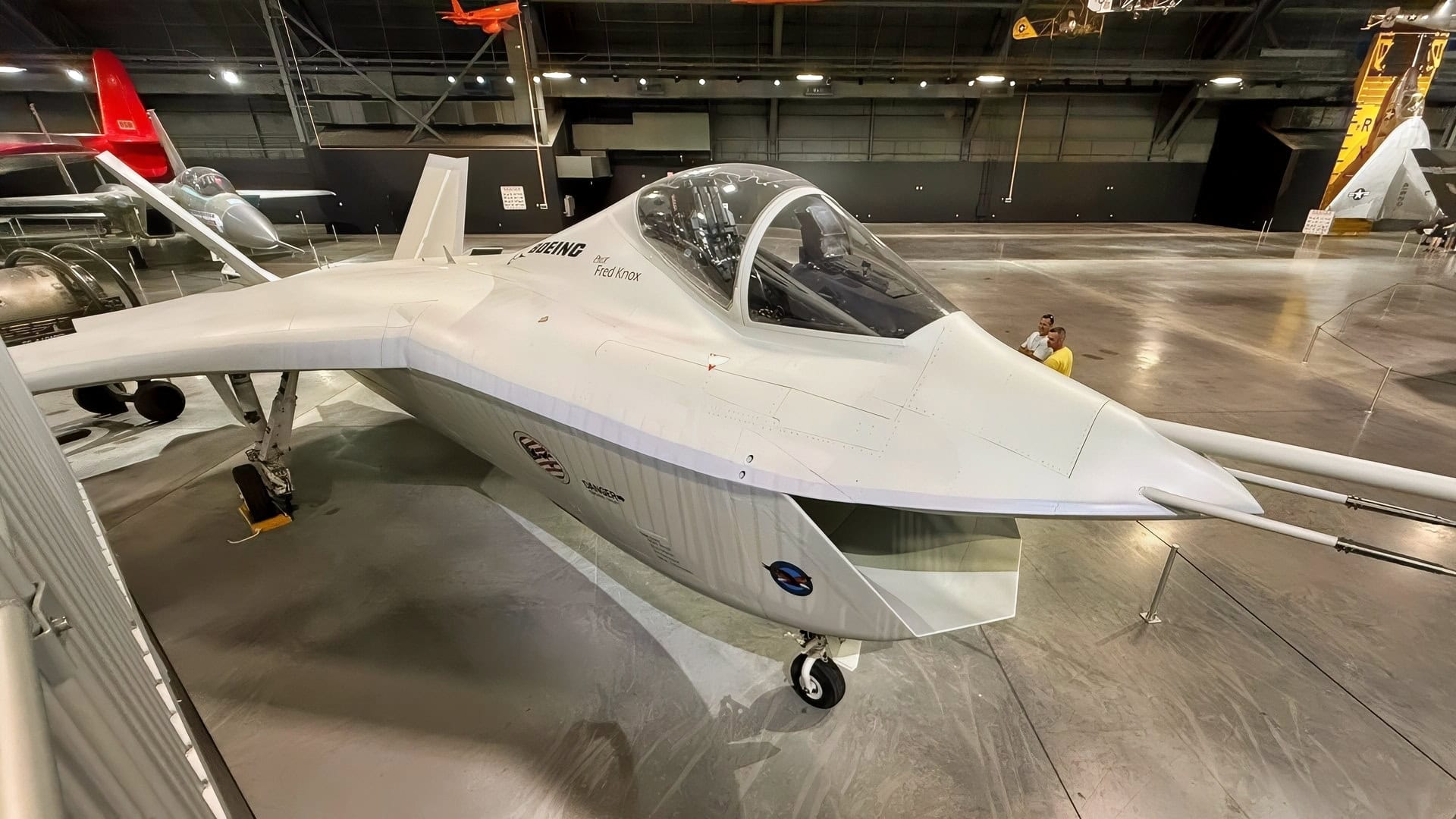
Boeing X-32 Fighter 19FortyFive Image
The connection to the X-45A unmanned combat air vehicle is even clearer. Boeing said the X-45A’s radar-evading shape and engine inlet drew directly from Bird of Prey experience. The first of two X-45As was completed in September 2000, little more than a year after the secret aircraft stopped flying.
The X-45A first flew in May 2002. In 2004, it released an inert precision-guided weapon from an internal bay. One operator later controlled two X-45As in flight simultaneously. The aircraft moved the Bird of Prey concept into an autonomous platform designed to suppress enemy air defenses.
This progression gives substance to the Bird of Prey’s place in later Boeing stealth work. The legacy involved digital design, composites, inlet treatment, shaping and affordable prototyping rather than production of the original airframe.
The F-22 Display Does Not Prove a Direct Design Lineage
The museum arrangement creates an appealing visual story: Bird of Prey above, F-22 below. The chronology is more complicated. The Air Force selected the YF-22 in April 1991. Bird of Prey development began the following year, while the production-representative F-22 made its first flight in 1997.
The Bird of Prey therefore did not create the basic F-22 design. Lockheed’s Raptor program already had its airframe, mission, and development contract before the McDonnell Douglas demonstrator began. Boeing did become a major F-22 partner, building the wings and aft fuselage, but official histories do not identify Bird of Prey as the Raptor’s direct parent.
The two aircraft still represent related changes in military aviation. Both relied on shaping, composite materials, and precise manufacturing to control radar signature. Bird of Prey showed that some of those methods could be tested through a small, focused program. The F-22 turned low observability into one element of a high-speed, heavily armed air-superiority system.
Modern accounts often describe the aircraft as part of the broader transition toward fifth-generation stealth. Its direct influence is clearest in Boeing programs whose designers used its documented manufacturing and signature-control experience.
The F-47 Renewed Interest in Boeing’s Earlier Demonstrators
The Air Force selected Boeing in March 2025 to develop the F-47 Next Generation Air Dominance fighter. The classified aircraft has prompted renewed attention to Phantom Works programs such as Bird of Prey and the tailless X-36.
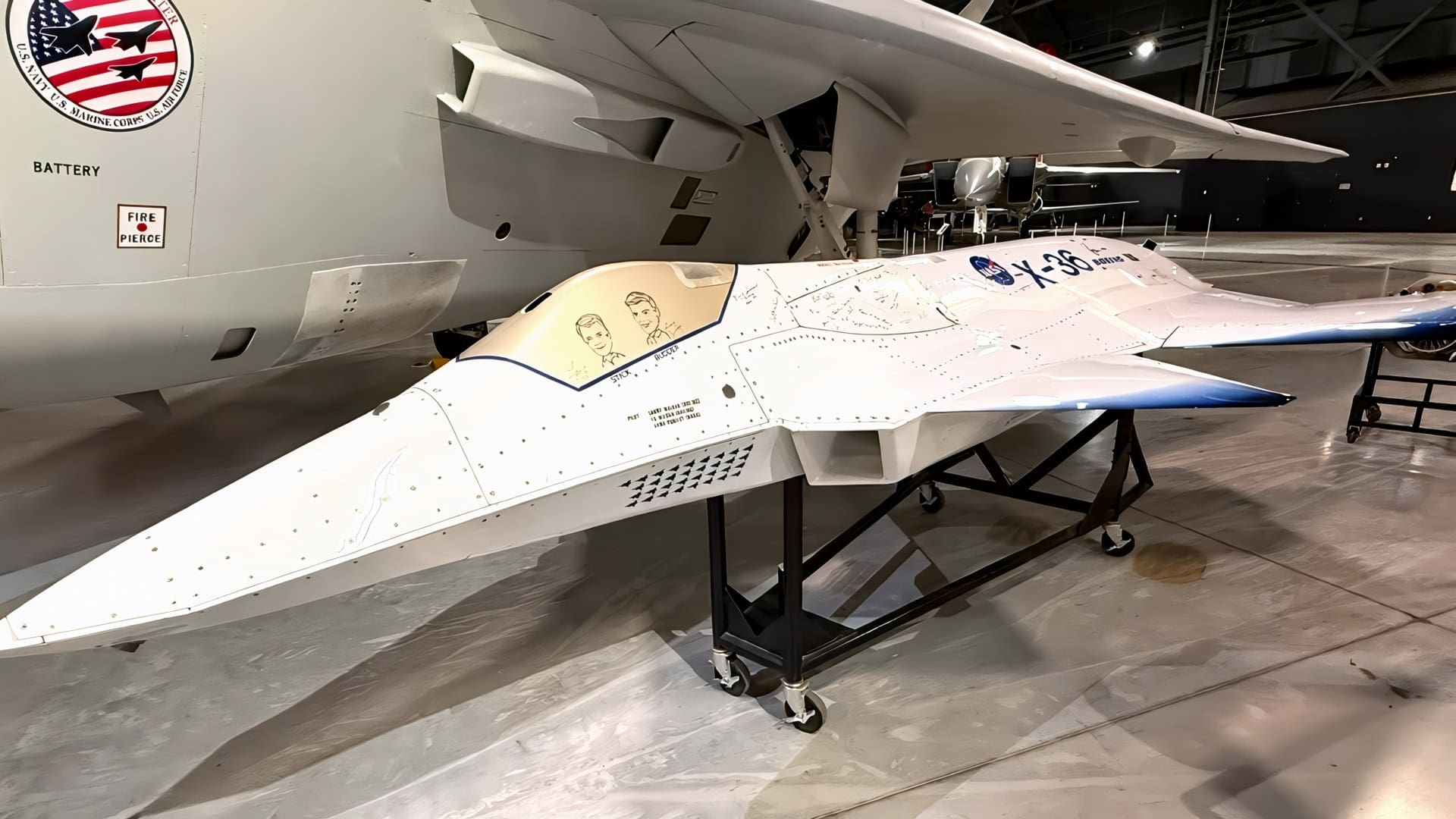
X-36 at the National Museum of the U.S. Air Force. Image Credit: Harry J. Kazianis.
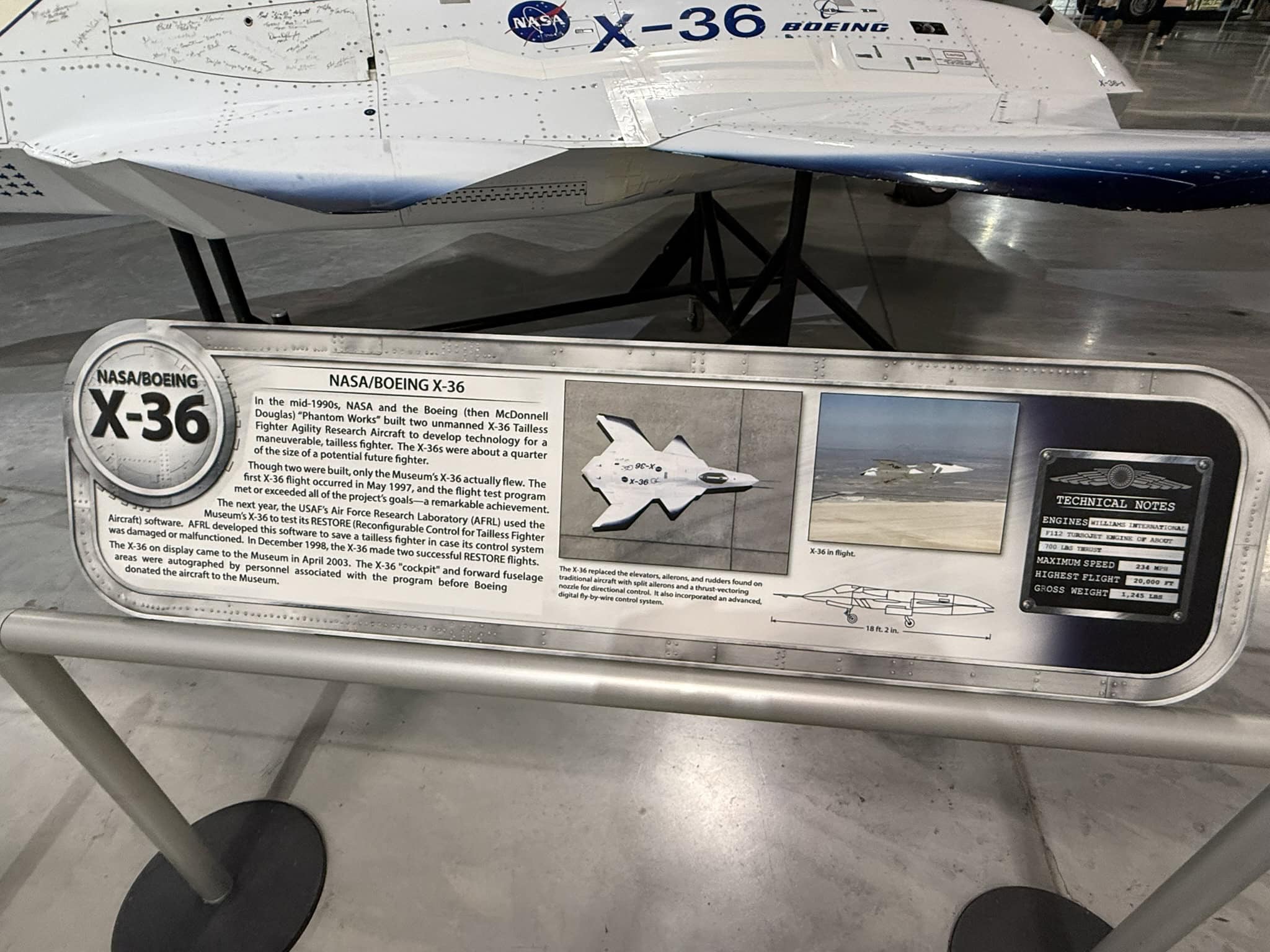
X-36 at the National Museum of the U.S. Air Force. Image Credit: Harry J. Kazianis.
Public renderings and recent sightings near Area 51 have encouraged visual comparisons. A closer look at possible F-47 design influences shows why observers see echoes of earlier Boeing experiments. Shape alone does not prove that the F-47 directly reuses Bird of Prey technology.
The documented connection is the development culture. Bird of Prey demonstrated that a small team could use digital design, rapid prototyping, and selective use of existing components to place a classified low-observable aircraft into flight for $67 million. The Air Force now describes the F-47 as a digitally designed, adaptable aircraft intended to cost less and require less support than the F-22.
The Only Bird of Prey Now Hangs Above an F-22
Boeing donated the sole Bird of Prey to the National Museum of the U.S. Air Force in 2002. Visitors can now see the one-off demonstrator in Dayton, suspended above an F-22A in the museum’s modern-aircraft display. When I want, last year I was literally jumping up and down when I saw it.
The Raptor below is serial number 91-4003, one of nine aircraft built for Engineering, Manufacturing, and Development testing. It rolled out on May 22, 1999, the same year the Bird of Prey’s secret flight program ended. Ironic, don’t ya think?
About the Author: Harry J. Kazianis
Harry J. Kazianis (@Grecianformula) was the former Senior Director of National Security Affairs at the Center for the National Interest (CFTNI), a foreign policy think tank founded by Richard Nixon based in Washington, DC. Harry has over a decade of experience in think tanks and national security publishing. His ideas have been published in the NY Times, The Washington Post, The Wall Street Journal, CNN, and many other outlets worldwide. He has held positions at CSIS, the Heritage Foundation, the University of Nottingham, and several other institutions related to national security research and studies. He is the former Executive Editor of the National Interest and the Diplomat. He holds a Master’s degree focusing on international affairs from Harvard University.

