
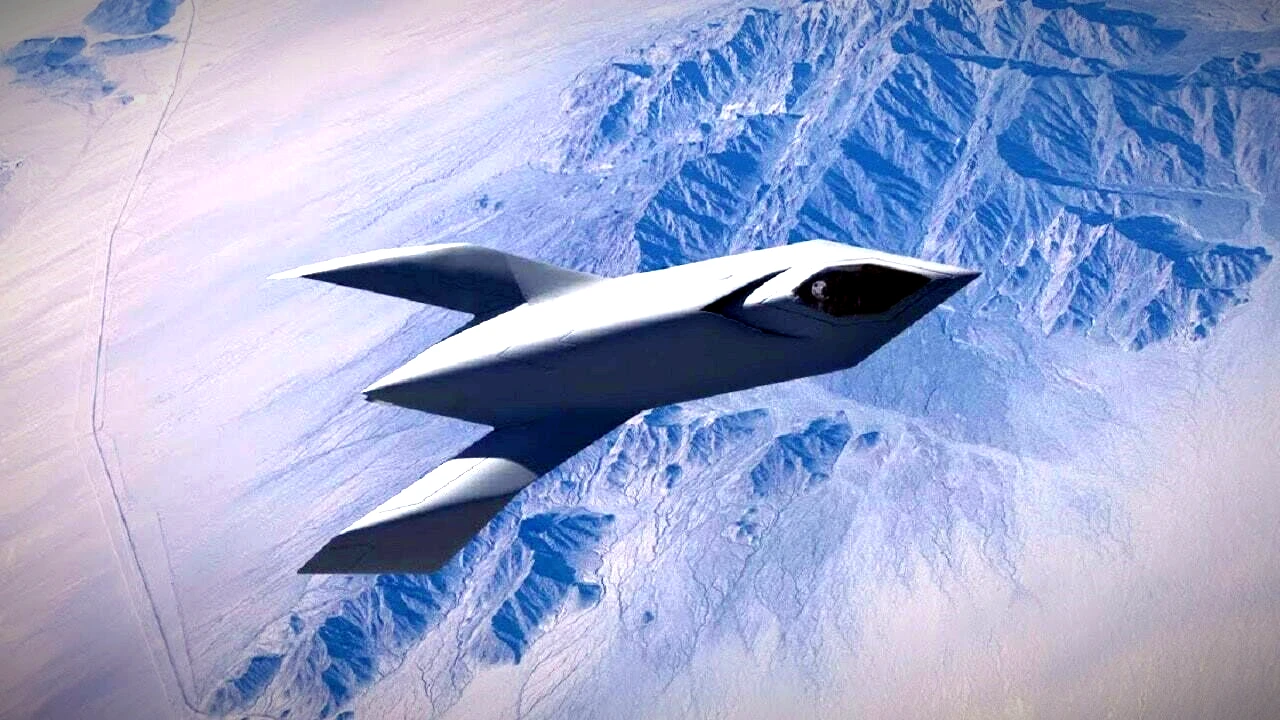
Key Points and Summary – The YF-118G “Bird of Prey” was Boeing’s secret 1990s stealth technology demonstrator that helped give birth to the F-22 Raptor and F-35 Lightning II.
-Built on a shoestring $67 million budget, it sacrificed speed and performance—topping out at just 300 mph and 20,000 feet—to prove radically low observability, innovative shaping, and cost-cutting composite construction.
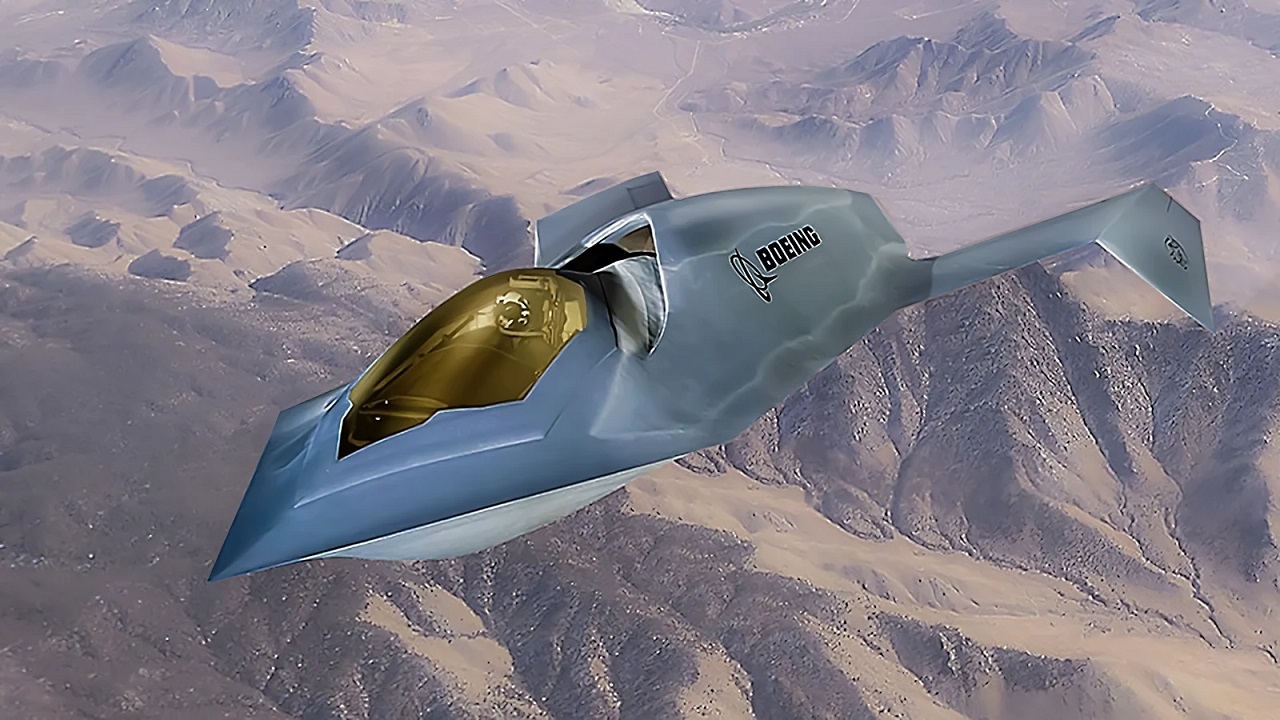
YF-118G. Image Credit: Creative Commons.
-Its radar cross section was said to be as small as a mosquito, with the engine buried deep in the fuselage and even paint shading tailored to hide its true form.
-Now hanging above an F-22 at the U.S. Air Force Museum, it’s a quiet icon of “cheap stealth” that changed modern airpower.
YF-118G ‘Bird of Prey’: The Weird Stealth Jet That Made the F-22 Possible
Star Trek fans might recognize some aspects of the YF-118G.
The warbird looked something like a Klingon spaceship, a similarity the Air Force pointed out in a profile.
Cinematographic references aside, this airplane, nicknamed the Bird of Prey, was a technology demonstrator that paved the way for the F-22 and F-35 stealth aircraft that dominate the skies today.
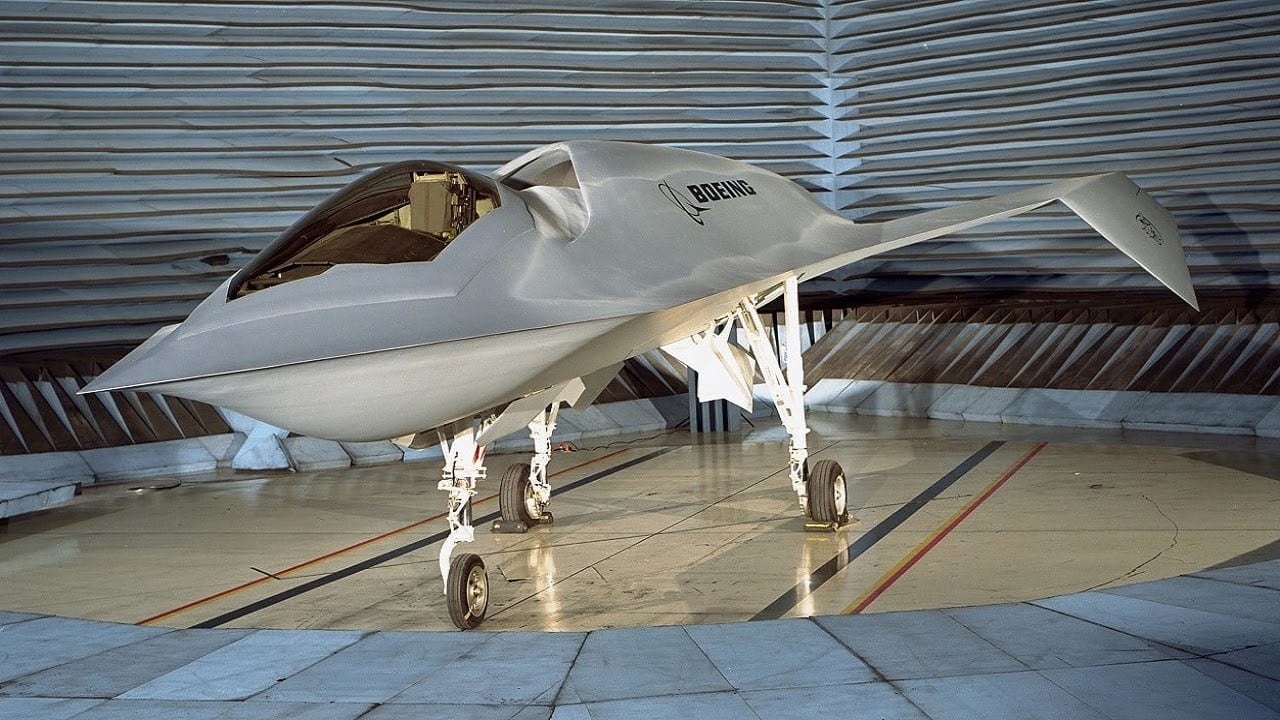
YF-118G. Image Credit: Creative Commons.
Child of the 1990s
The secret program was conceived and executed between 1992 and 1999. The Air Force had the F-117 Nighthawk, which debuted during the war in Kosovo and performed admirably during Operation Desert Storm. But that stealth airplane was subsonic and not very maneuverable. The Air Force was looking to develop a fast air-superiority or multi-role stealth warbird that could dominate in dogfights and engage in radar-evading ground strikes.
Genesis of the Joint Strike Fighter Program
The design parameters were definitely space-age. There were new composite materials on the fuselage and wings, and the computer-aided design process used virtual reality to develop the plane’s capabilities. Boeing integrated the lessons learned from the YF-118G during the competition for the Joint Strike Fighter, when it built the X-32 prototypes. The Bird of Prey also influenced the X-45A Unmanned Combat Air Vehicle demonstrator.
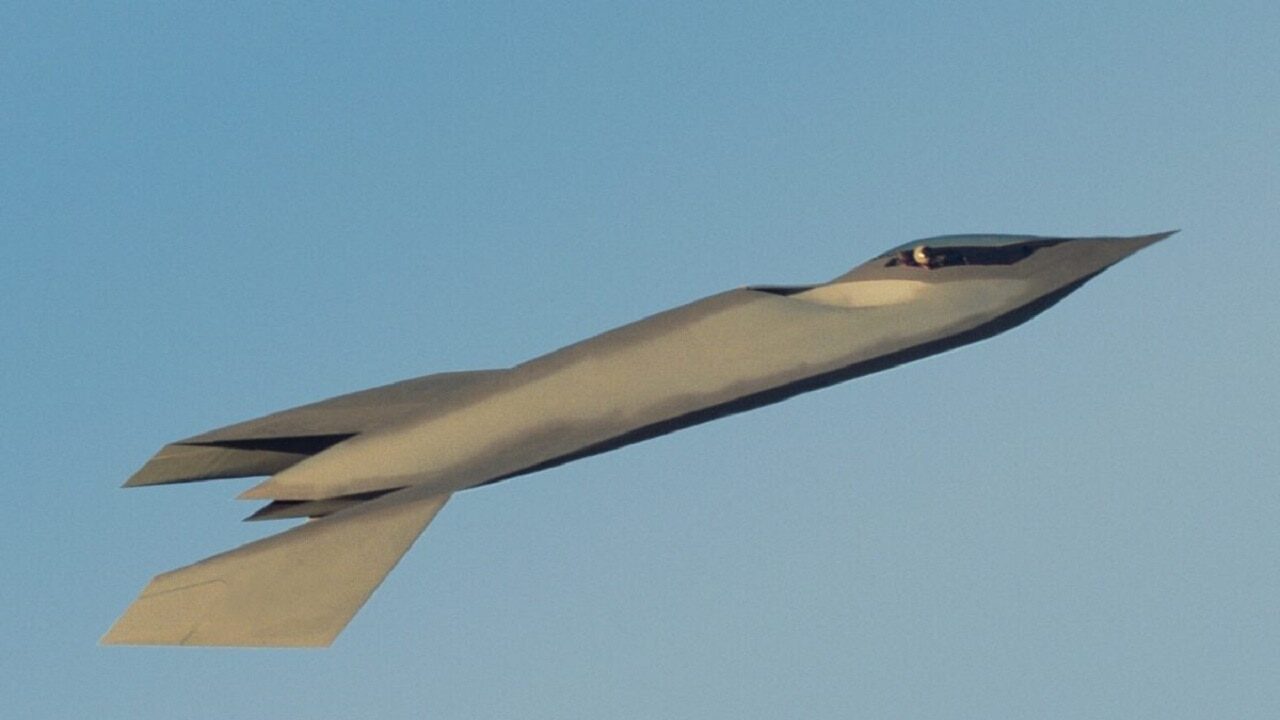
YF-118G. Image Credit: Creative Commons.
Cutting Costs Was the Name of the Game
The YF-118G needed to get into production fast, and cost was a factor. While the plane had breakthrough design and radar-evasion qualities, Boeing cut costs on other systems. The landing gear was similar to what was found on civilian aircraft. The controls were manual, not digital.
Test pilots found out quickly that the Bird of Prey was slow – it traveled at only 300 miles per hour. The ceiling was just 20,000 feet. One Pratt & Whitney JT15D-5C turbofan engine was on board, with a mere 3,190 pounds of thrust. This was the same engine used by the Cessna Citation V and Beechcraft Beechjet. Maximum takeoff weight was 7,400 pounds.
Minimal Radar Cross Section
Flyingmag.com had this to say about the YF-118G: “While the radar cross section is estimated to be as small as a mosquito, engineers also buried the engine deep within the fuselage to minimize the infrared signature and even carefully designed the paint shading to visually mask the actual fuselage shapes in daylight—a measure not utilized by other stealth aircraft such as the F-117 and B-2.”
The Boeing designers and engineers were on to something with the Bird of Prey. The F-117 and B-2 bomber programs were progressing mightily, and high stealth on a pure fighter jet would be needed to face a multi-threat environment in the 21st century.
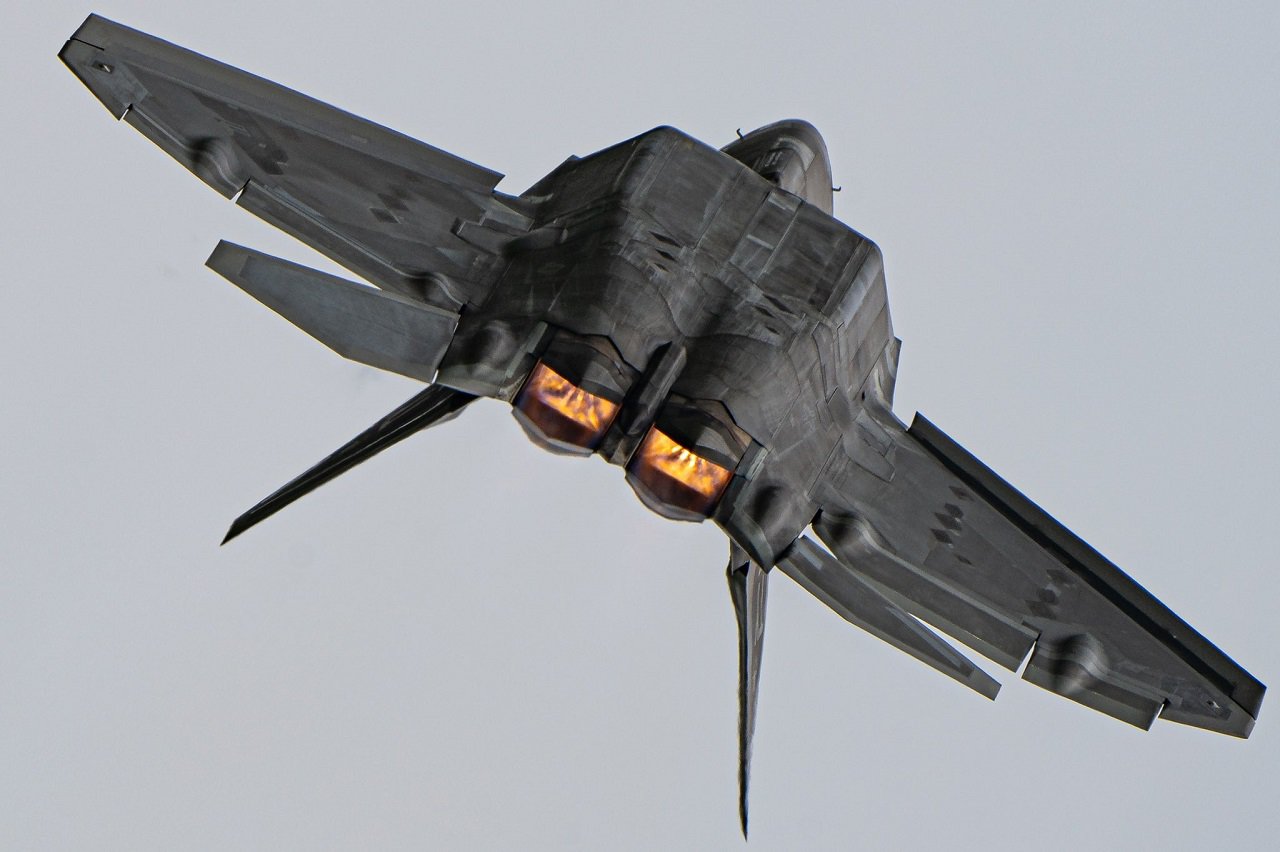
F-22 Raptor. Image Credit: Creative Commons.
Boeing also knew that computers could now help human designers, simulating the performance of parts and components before producing them. This saved time and money during production.
In 2 Words: Cheap Stealth
The entire YF-118G Bird of Prey program cost $67 million – a bargain to develop key systems for stealth airplanes. The F-22 and F-35 would have never been possible without the research and development that went into the Bird of Prey.
The first time it flew in 1996, pilots knew the airplane was clunky in the air. That was fine for a test plane – the point was to develop and prove a concept. The Air Force was going to have to do much better with the Raptor and Lightning II programs. It needed to lower these planes’ radar visibility as much as possible, and the Bird of Prey delivered the means.
The Bird of Prey had a decent run of test flights, logging 38 evaluation runs from 1996 to 1999.
We Visited the YF-118G At the U.S. Air Force Museum
Interestingly, while the Bird of Prey is on display at the National Museum of the U.S. Air Force in Dayton, Ohio, it hangs from the ceiling, so the public cannot see inside the cockpit. We discovered this when we visited the museum last weekend to see the plane as closely as possible. It does seem to float right above the F-22 Raptor on display, some great planning and theming on the museum’s part for sure. And it inspired the photo we took above.
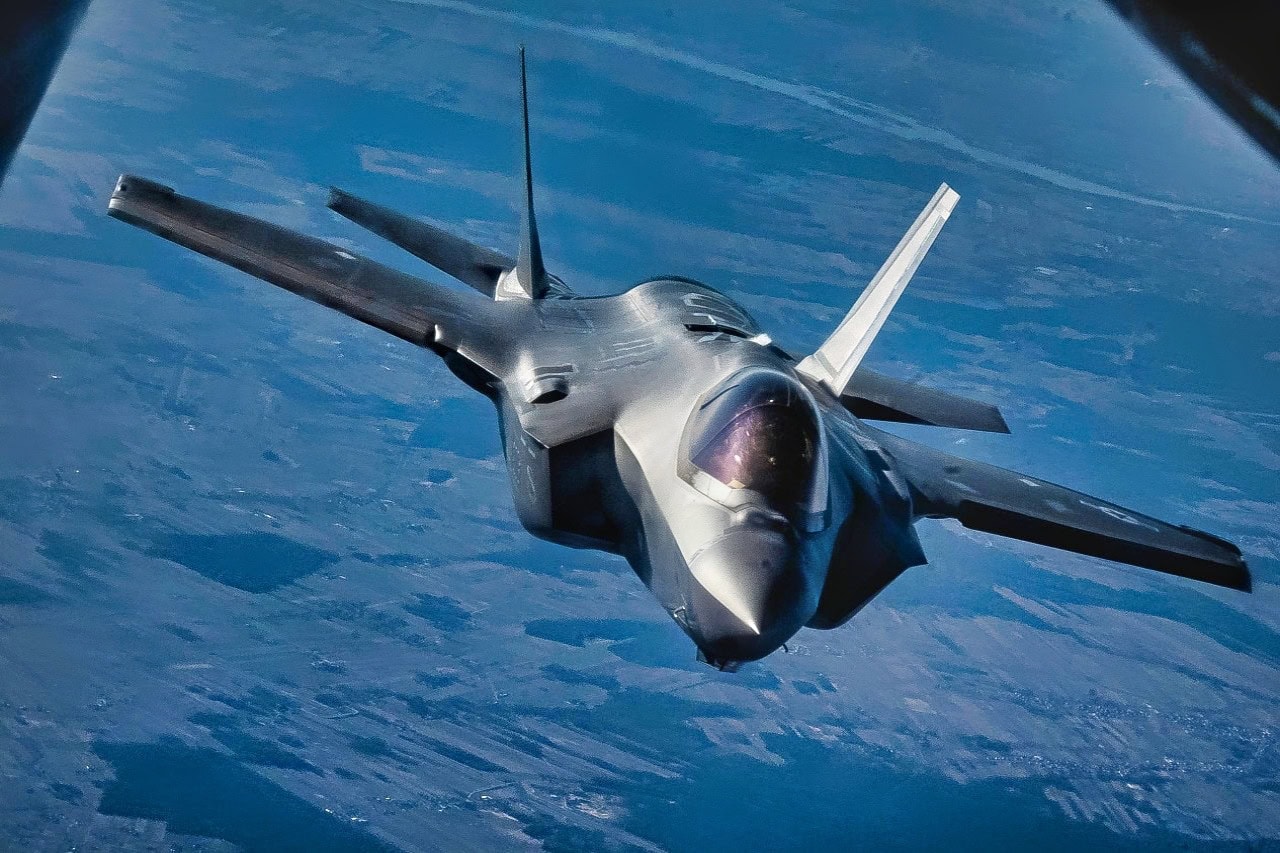
The 388th Fighter Wing’s F-35 Lightning II fifth-generation fighter cruises in Eastern European airspace, Feb. 28, 2022, in support of NATO’s collective defense. U.S. Air Forces in Europe – Air Forces Africa’s ability to support and integrate with NATO’s air policing missions continually hardens the alliance’s solidarity, collective resolve, and ability to adapt to a dynamic warfighting environment. (U.S. Air Force photo by Airman 1st Class Edgar Grimaldo)
This is probably simply because the Air Force wanted to give tourists a glimpse of the Bird of Prey in flight, rather than on the ground. Some, however, wonder if the service wanted to keep the cockpit away from prying eyes.
The Bird of Prey is an interesting airplane. The design is superb, and the program was an inexpensive platform to demonstrate concepts crucial to stealth flight. It was not going to win any records for performance. But without the Bird of Prey, the F-22 and F-35 would never have been as stealthy as they are today.
About the Author: Dr. Brent M. Eastwood
Brent M. Eastwood, PhD is the author of Don’t Turn Your Back On the World: a Conservative Foreign Policy and Humans, Machines, and Data: Future Trends in Warfare plus two other books. Brent was the founder and CEO of a tech firm that predicted world events using artificial intelligence. He served as a legislative fellow for U.S. Senator Tim Scott and advised the senator on defense and foreign policy issues. He has taught at American University, George Washington University, and George Mason University. Brent is a former U.S. Army Infantry officer. He can be followed on X @BMEastwood.