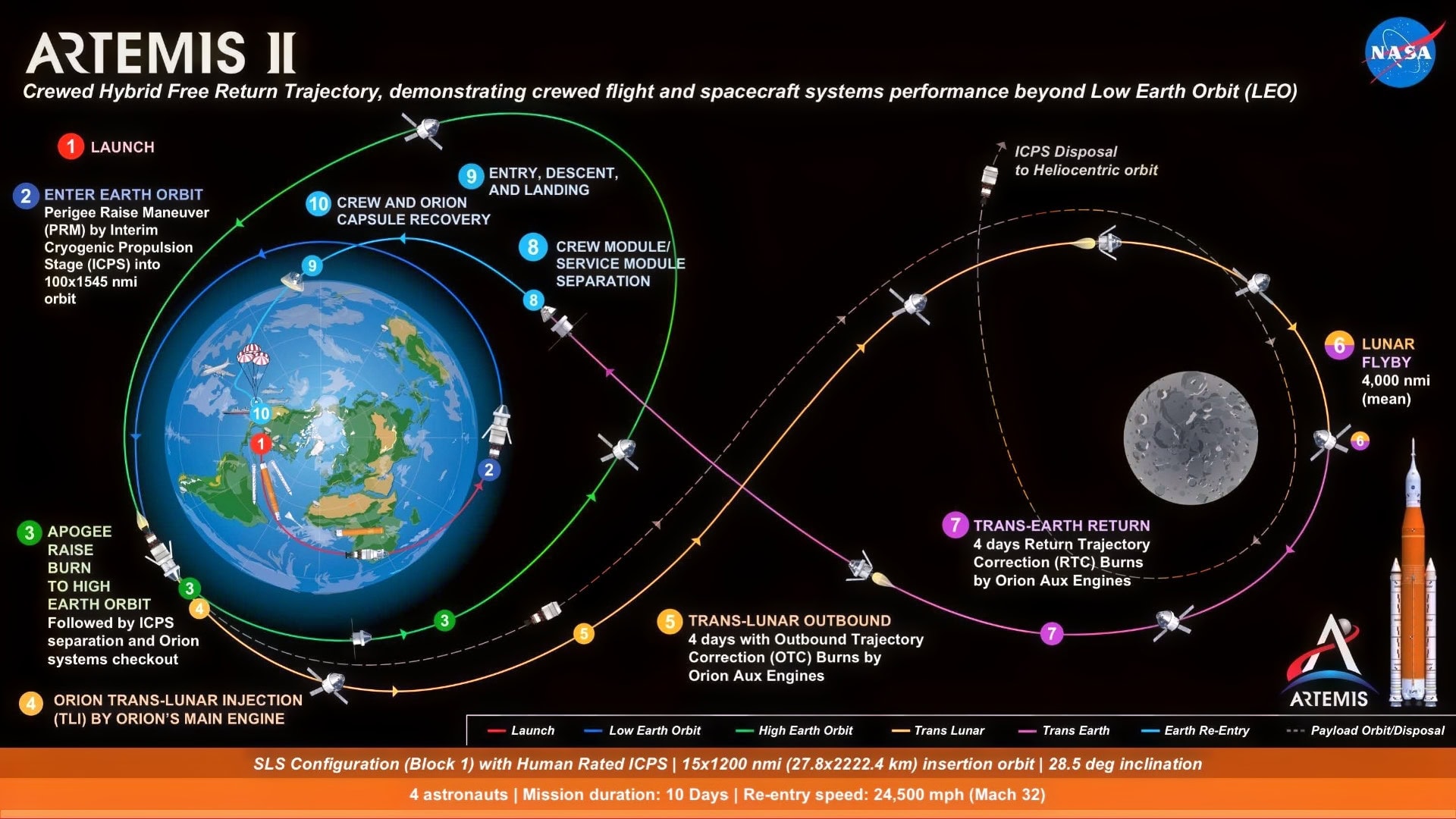
America’s Lunar Base Must Be Commercial From Day One: With NASA’s recent declaration laying out national space policy, America has now committed itself to establishing a permanent presence on the Moon. That decision is correct – and long overdue. The Moon is not simply a scientific waypoint. It represents critical high ground in the emerging cislunar economy. As such, it lies at the very center of U.S.-China strategic competition in the 21st century.
This is so for good reason. With more land area than Africa, the Moon is an economic frontier with vast resources and potential. And with barely one-sixth of the Earth’s gravity, it requires far less energy to get off the Moon – making it a stepping-stone to greater economic development further out in the solar system. That makes a Moon base the logical centerpiece of a long-term strategy for national economic prosperity: an investment in energy, artificial intelligence infrastructure, and technological dominance for the decades to come.
To seize the opportunity, however, we cannot treat the Moon as yet another science project. We need to approach it as a project for long-term prosperity. In other words, a successful Moon base will need to be commercial from day one.
Here, success depends on a clarity of objectives, a disciplined understanding of government’s proper role, and effective organization.
First, we need to decide what we actually want. This is not merely a practical step; it is a strategic and political one. America requires an off-Earth supply chain and in-space manufacturing system that can contribute significantly to economic vitality. That will require millions of metric tons of construction material, terawatts of energy, and kilometer-scale projects.
Leading industrialists already see this future. Jeff Bezos has laid out the need to move major industry to space, making use of continuous solar power. Elon Musk likewise recognizes the benefits of in-space solar power and the use of Lunar resources to enable vast data center capacity.
China is similarly motivated, with a long-term plan to use the resources of the solar system, starting with the Moon. China sees the Moon as a vast source of energy and compares it to strategically important islands in the Indo-Pacific that it has long sought to dominate. Its goal is to industrialize the Moon via mines, factories, and power stations, and thereby build a multi-trillion-dollar Moon–Earth economic zone.
To that end, the PRC is now developing the rockets, landers, and infrastructure it needs to access the Moon. It has assembled an international coalition, linked space to its Belt & Road Initiative, and is building the navigation, communications, and power systems to support a sustained presence there.
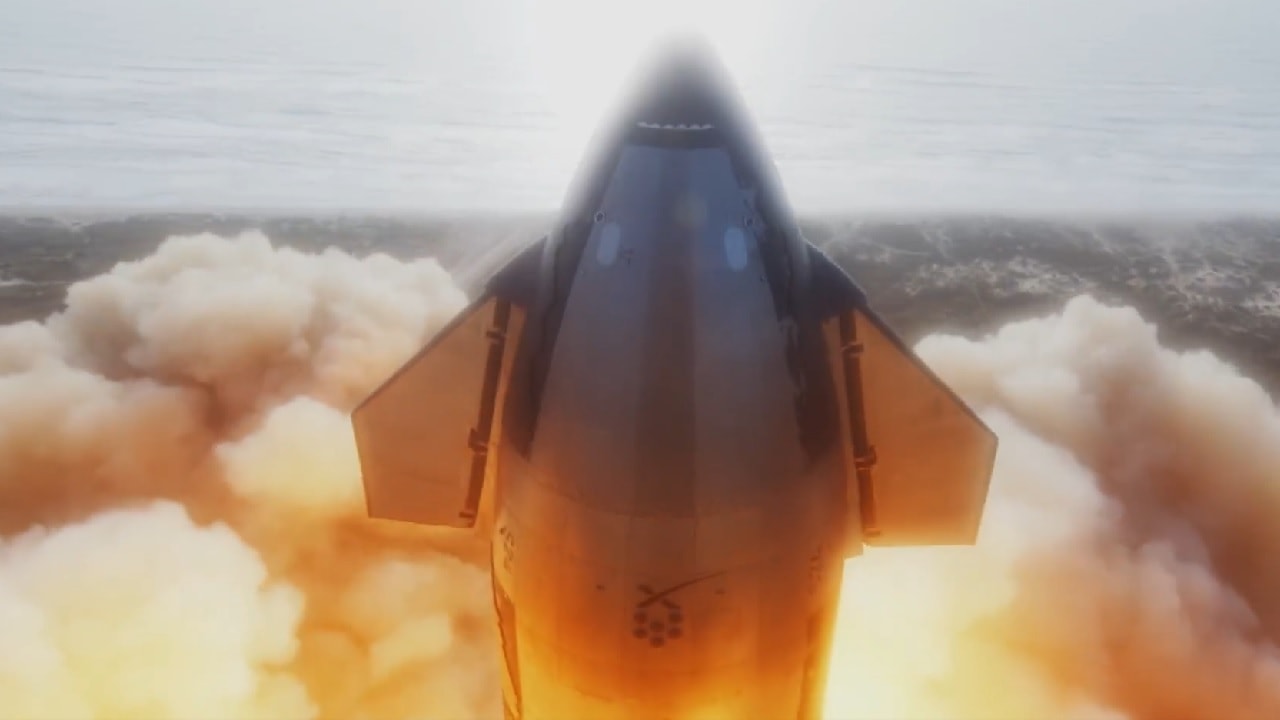
SpaceX Rocket Takeoff. Image Credit: Creative Commons.
America needs to match this ambition with equal clarity, and urgency.
Second, we need to get the proper role of government right. Building another International Space Station on the Moon might seem like a technological triumph, but it would constitute a policy failure. U.S. policy already directs us to extend economic activity into deep space and “lay the foundations for lunar economic development.” The proper function of government should not be as owner, but as catalyst. This means supporting the creation of new industries and markets there, as well as buying the rockets, landers, communications, power and propellant services that will serve as critical inputs for Lunar mega-projects.
Third, organization and governance will determine whether we surge ahead or fall behind. Governance needs to be settled early, and decisively. A successful national strategy simply can’t have a slow-moving government customer at the center. Commercial actors need to have an equal seat at the table.
NASA already has the authority to make such a vision a reality. Congress gave the agency the mandate to lead the civilian development of space while maximizing commercial use. The framework, in other words, already exists. What is needed is a clear vision for Lunar development.
The Bottomline:
The race is on to make the Moon an engine of economic growth. Whoever organizes the Lunar economy will shape the rules, capture the supply chains, and dominate the next era of energy and industry.
About the Author: Peter Garreston
Peter Garretson is Senior Fellow in Defense Studies at the American Foreign Policy Council in Washington, DC.