
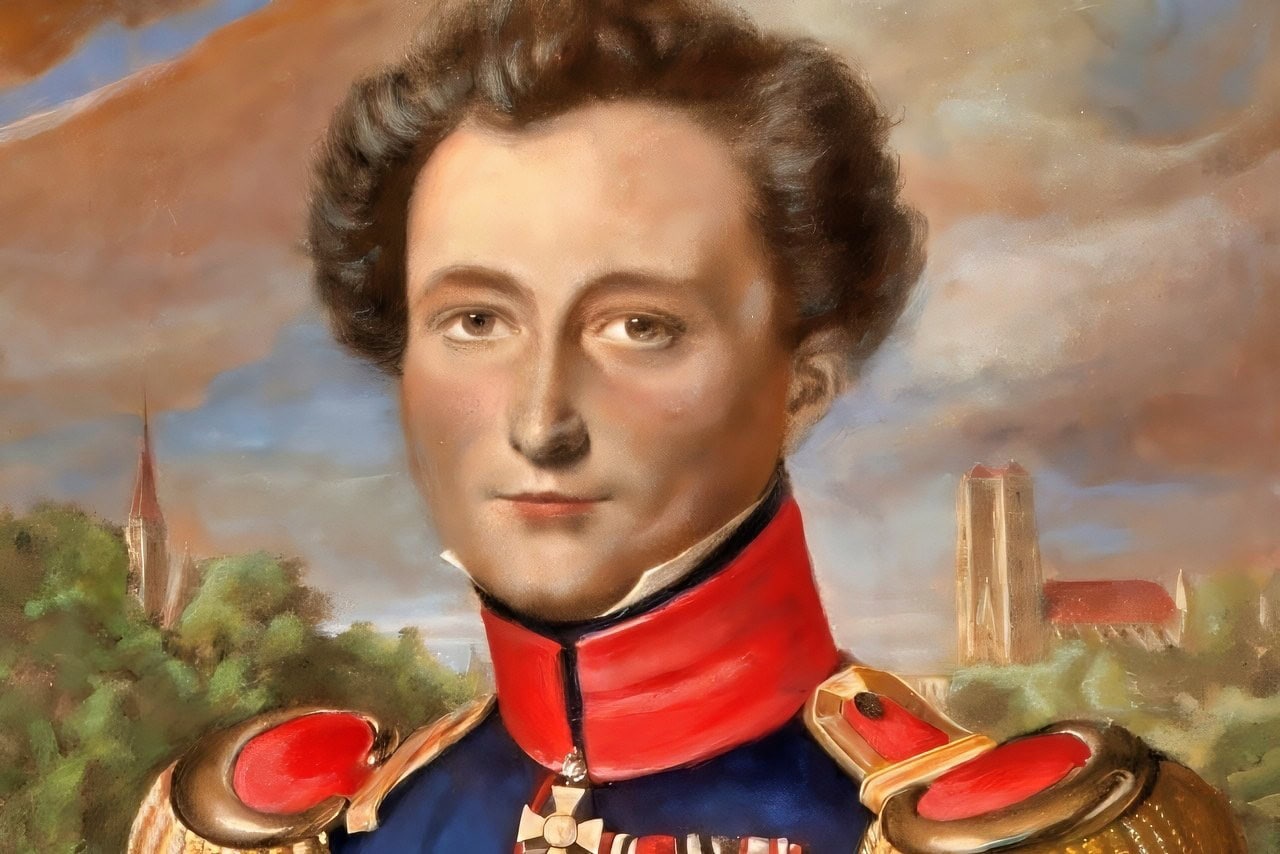
Summary and Key Points: Carl von Clausewitz, the Prussian general whose posthumously published Vom Kriege — published in English as On War — defined modern military strategic thought, conducted a delaying action at the Battle of Ligny on June 16, 1815, that allowed Wellington’s forces time to prepare defensive positions at Waterloo two days later, directly contributing to Napoleon’s final defeat.
Clausewitz was serving as chief of staff to the I Prussian Corps under General Johann von Thielmann during the Waterloo Campaign, having returned to Prussian service in 1815 after two years in the Imperial Russian Army.
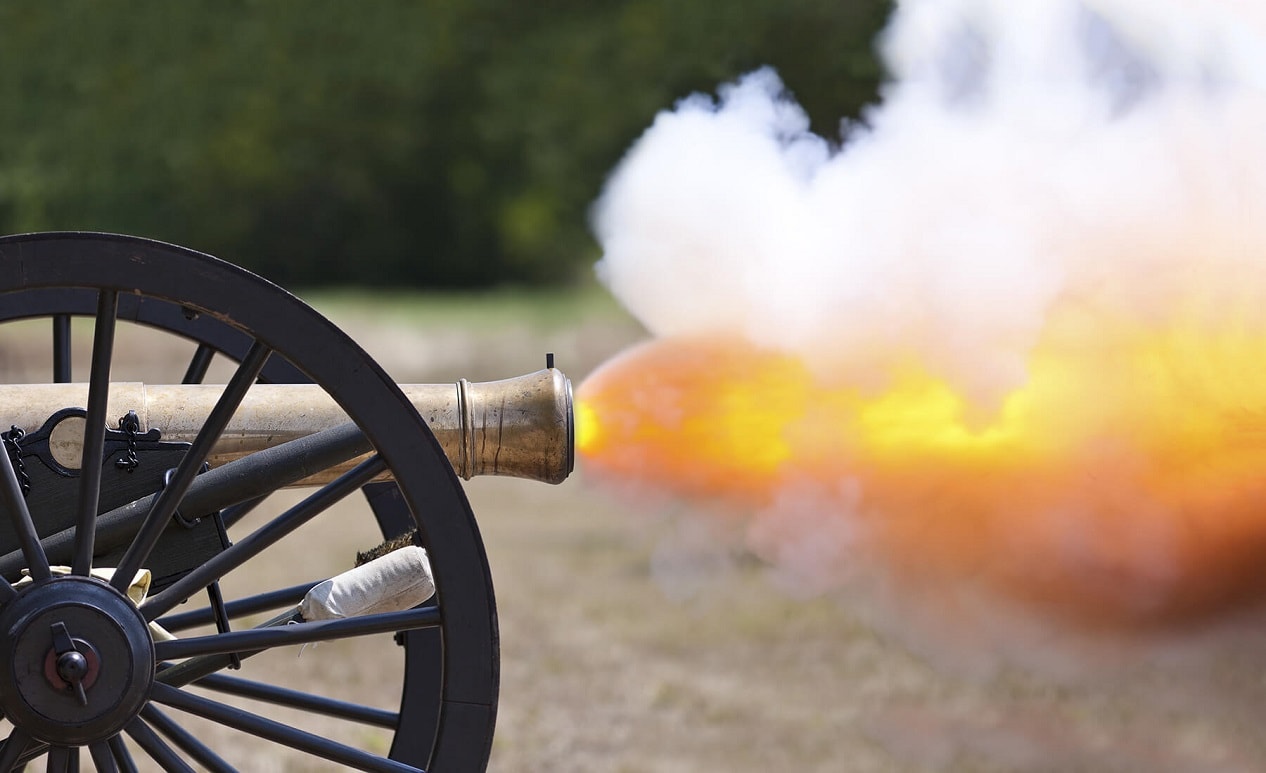
Cannon Firing. Image Credit: Creative Commons.
Quote of the Day: Carl von Clausewitz
“The Best Strategy Is Always To Be Very Strong” – Von Clausewitz
Carl von Clausewitz (1780-1831) was a Prussian general and military strategist whose work Vom Kriege (1832; On War) has become one of the most respected classics on military strategy.
Von Clausewitz’s writings are still considered a major influence on military thinkers and strategists. The most frequently cited, the most controversial, and in many respects the most modern of strategic theorists.
Von Clausewitz understood that diverse factors in war, unfolding under the “fog of war” (with incomplete, dubious, and often erroneous information and great fear, doubt, and excitement) call for rapid decisions by alert commanders.
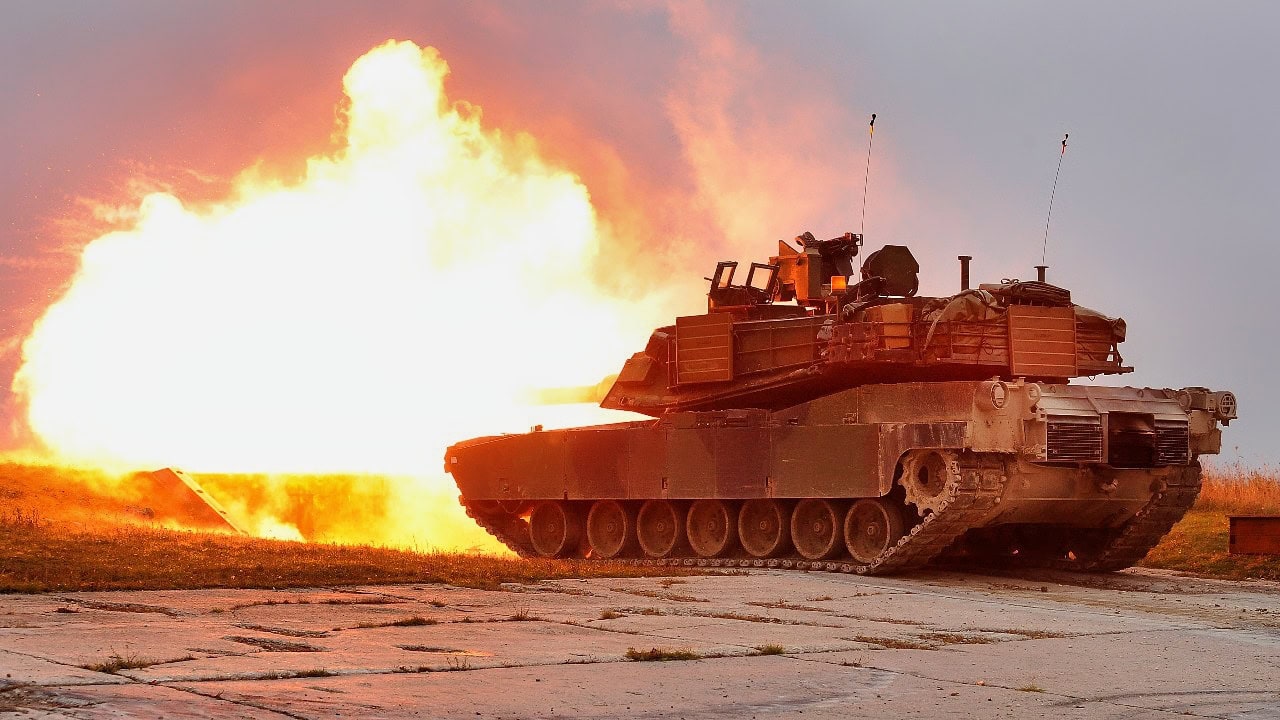
U.S. Soldiers, assigned to the 1st Battalion, 64th Armor Regiment, 1st Armored Brigade Combat Team, 3rd Infantry Division, conduct gunnery with M1A2 Abrams tanks during exercise Combined Resolve V at 7th Army Joint Multinational Training Command in Grafenwoehr, Germany, Oct. 8, 2015. Combined Resolve is designed to exercise the U.S. Army’s regionally aligned force to the U.S. European Command area of responsibility with multinational training at all echelons. Approximately 4,600 participants from 13 NATO and European partner nations will participate. The exercise involves around 2,000 U.S. troops and 2,600 NATO and Partner for Peace nations. Combined Resolve is a preplanned exercise that does not fall under Operation Atlantic Resolve. This exercise will train participants to function together in a joint, multinational and integrated environment and train U.S. rotational forces to be more flexible, agile and to better operate alongside our NATO Allies. (U.S. Army photo by Visual Information Specialist Gertrud Zach/released)
The quote above is a core principle from Carl von Clausewitz’s On War. He emphasizes achieving superiority first in general, then at the decisive point through maximum concentration of force, speed, and energy, rather than scattering forces.
Early Life And Military Experience:
Von Clausewitz was born on July 1, 1780, in the city of Burg bei Magdeburg, Prussia, which is now part of Poland. His father served as a lieutenant in the army of Frederick The Great, and he joined the army at the age of 12 as a lance corporal.
Von Clausewitz served in the Rhine campaigns (1793–1794), including the siege of Mainz, when the Prussian Army invaded France during the French Revolution, which was a failed attempt to restore Louis XVI to the throne.
He entered the Kriegsakademie (also cited as “The German War School”, the “Military Academy in Berlin”, and the “Prussian Military Academy,” later the “War College”) in Berlin in 1801.
This was a turning point in his life as it was there that Von Clausewitz became the closest protégé of Gerhard Johann David von Scharnhorst, the institute’s head.
The academy’s broad curriculum, coupled with Clausewitz’s extensive reading, expanded his horizons dramatically. His understanding of war and its theory was shaped at that time. He graduated first in his class, and he was thrust into the center of military and political events during the French Revolutionary and Napoleonic wars.
He was also at the center of the reform of the Prussian army that followed Prussia’s defeat, and of the restoration of European monarchies following Napoleon’s defeat.
Russian Military Service And Return To Prussia:
Clausewitz resigned from the Prussian military in 1812 and served in the Russian Army for two years due to his opposition to Prussia’s forced alliance with Napoleon.
While serving in the Imperial Russian Army, he helped negotiate the Convention of Tauroggen in 1812, which helped form the coalition of Prussia, Russia, and the United Kingdom that ultimately defeated Napoleon and his allies.
In I815, he rejoined the Prussian Army as a colonel, and his unit’s delaying action at Ligny directly led to Napoleon’s defeat at Waterloo a few days later.
After the war, von Clausewitz returned to the Kriegsakademie, now as the director. He served there until 1830, when he returned to the Army as the Chief of Staff. He led the military’s efforts to stem a cholera outbreak in 1831. It was during this period that he, too, would catch cholera and die from the disease a short time later.
His widow, the Countess Marie von Brühl, published his unfinished papers on his theories of war and wrote the preface for it, publishing it in 1832.
Von Clausewitz’s Influence On Modern Military Theory:
In his voracious appetite for reading and learning, he came to believe that there were two types of war, absolute and limited, and that it was, above all, political aims and requirements that imposed themselves on war and dictated its intensity: “War is a continuation of state policy with the admixture of other means.”
The US Army War College has been heavily influenced by the writings of von Clausewitz, especially in the post-Vietnam era. His belief in the “trinity” of government/army/people, and in the “fog of war,” is foundational to professional military education.
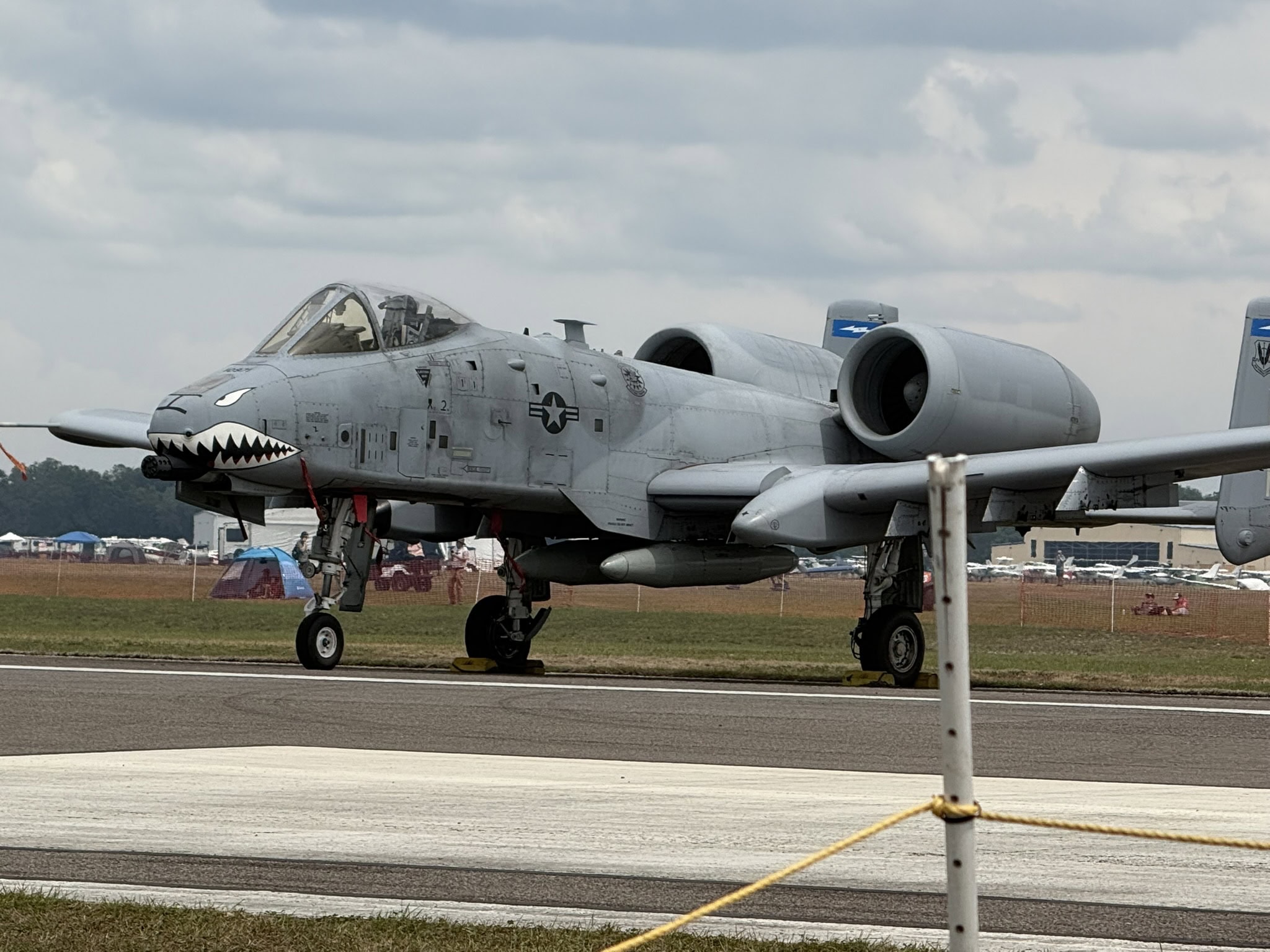
A-10 Warthog. 19FortyFive.com image taken in Lakeland, Florida, on 4/19/2026.
The US Army defines operational art as “the pursuit of strategic objectives, in whole or in part, through the arrangement of tactical actions in time, space, and purpose.” This concept is derived from von Clausewitz’s theory.
At its core, he understood the factors that a nation would face. His grand strategy emphasized the importance of understanding the complex interplay between politics and war. His insights remain crucial for modern US strategic thinking, which blends military tactics with broad political objectives.
About the Author: Steve Balestrieri
Steve Balestrieri is a National Security Columnist. He served as a US Army Special Forces NCO and Warrant Officer. In addition to writing on defense, he covers the NFL for PatsFans.com and is a member of the Pro Football Writers of America (PFWA). His work was regularly featured in many military publications.