
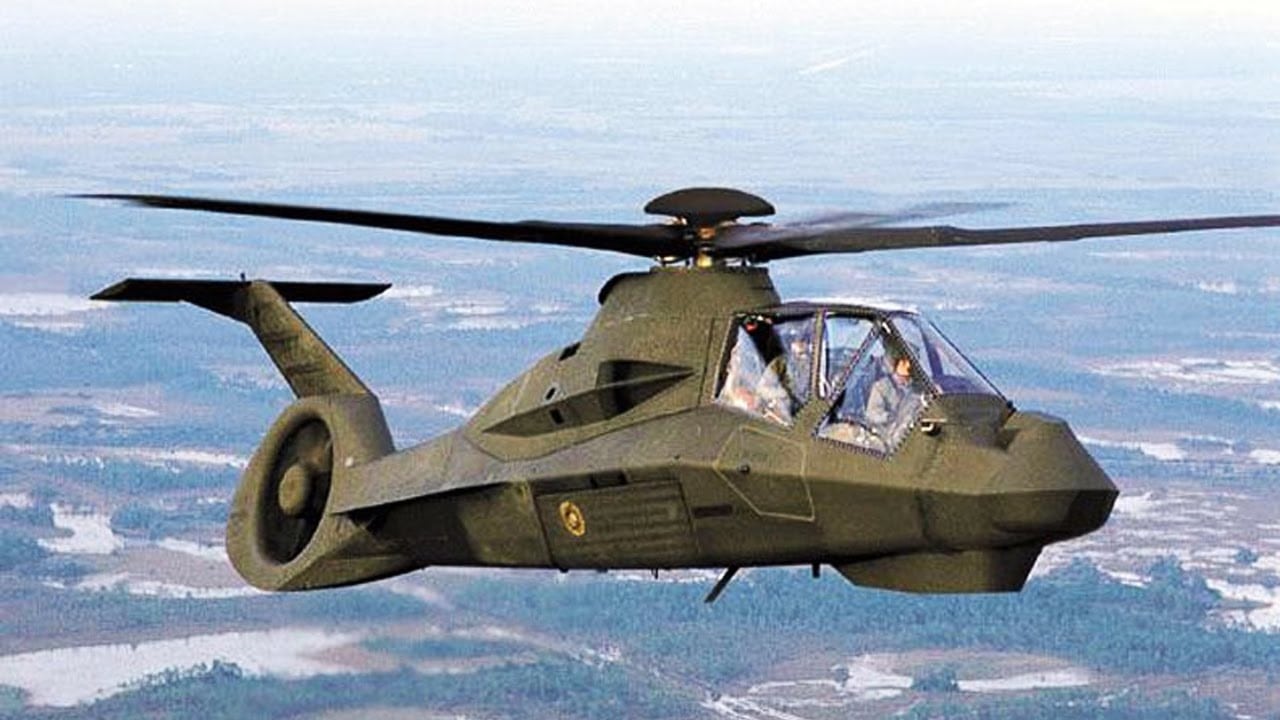
In the 1980s, with the introduction of new stealth technology, the United States sought to develop a new low-observable attack and reconnaissance helicopter.
Combining the talents of Boeing and Sikorsky, the result was the RAH-66 Comanche.
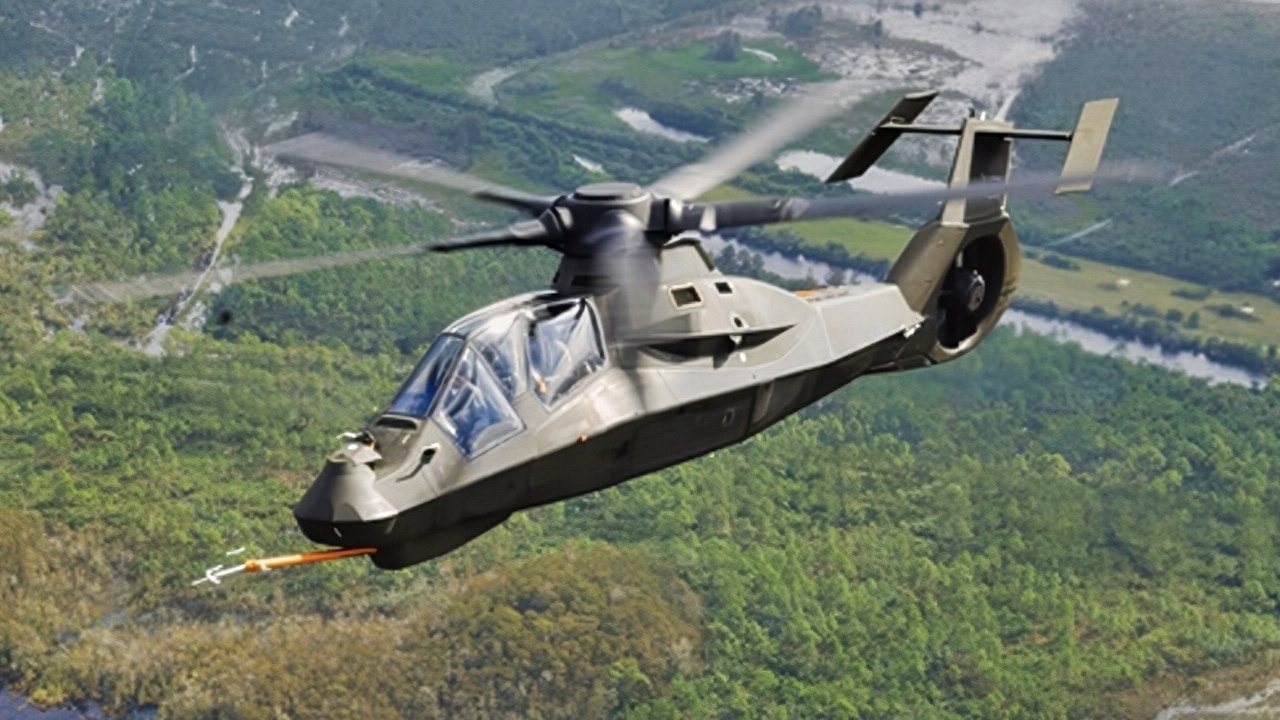
RAH-66 Comanche Prototype Creative Commons Image
The Comanche is unique in that it is the first, and so far the only, vehicle in the world to use stealth technology, complete with an internal weapons bay and low-observable shaping techniques.
The program built only two prototypes of the experimental helicopter during its 20-year tenure. Unfortunately, the project was ultimately canceled for a number of issues, from budget concerns to program mismanagement.
The cost: Nearly $7 billion on what amounts to just two stealth helicopters that are now in a museum.
Development and Testing
In 1982, the U.S. Army launched the Light Helicopter Experiment, which sought to replace several existing recon helicopters.
In 1988, the Army sent a formal request for proposal to various manufacturers, selecting two teams for final consideration. Those teams were Boeing-Sikorsky and Bell-McDonnell Douglas.
During this time, the program requirements shifted from a purely reconnaissance helicopter to a battlefield reconnaissance helicopter that could evade enemy air defenses.
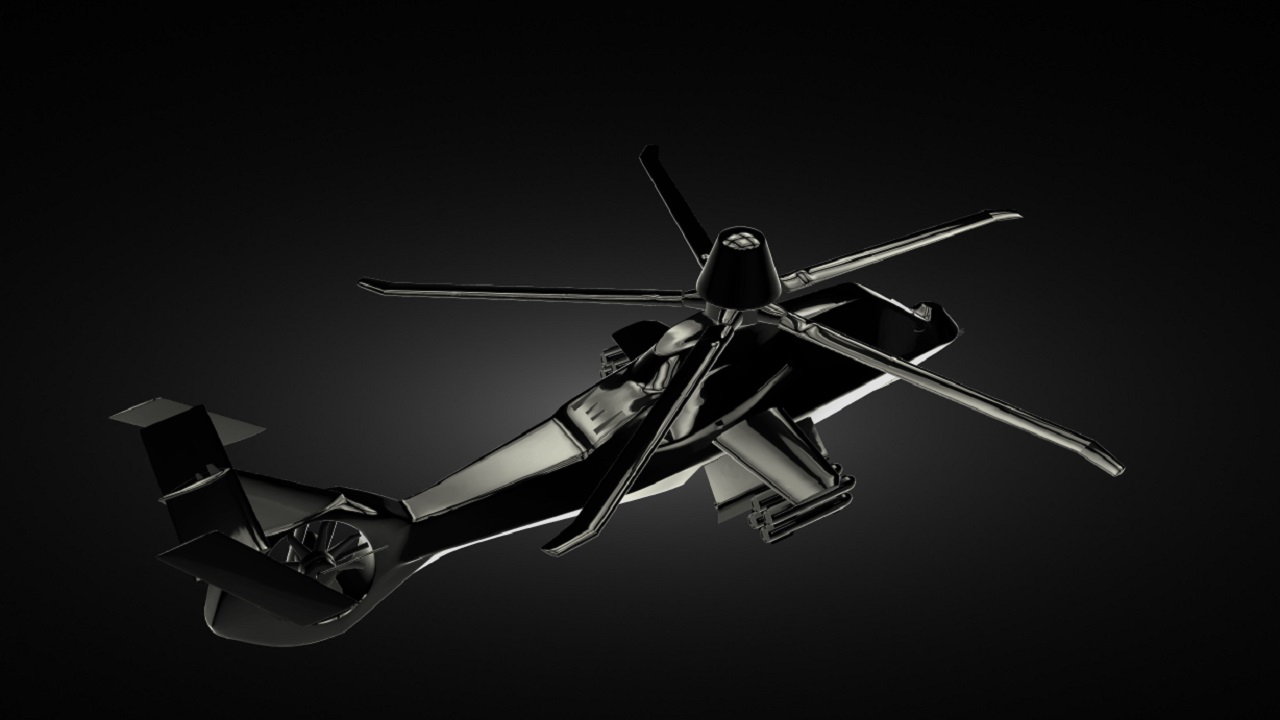
RAH-66 Comanche model. Image Credit: Creative Commons.
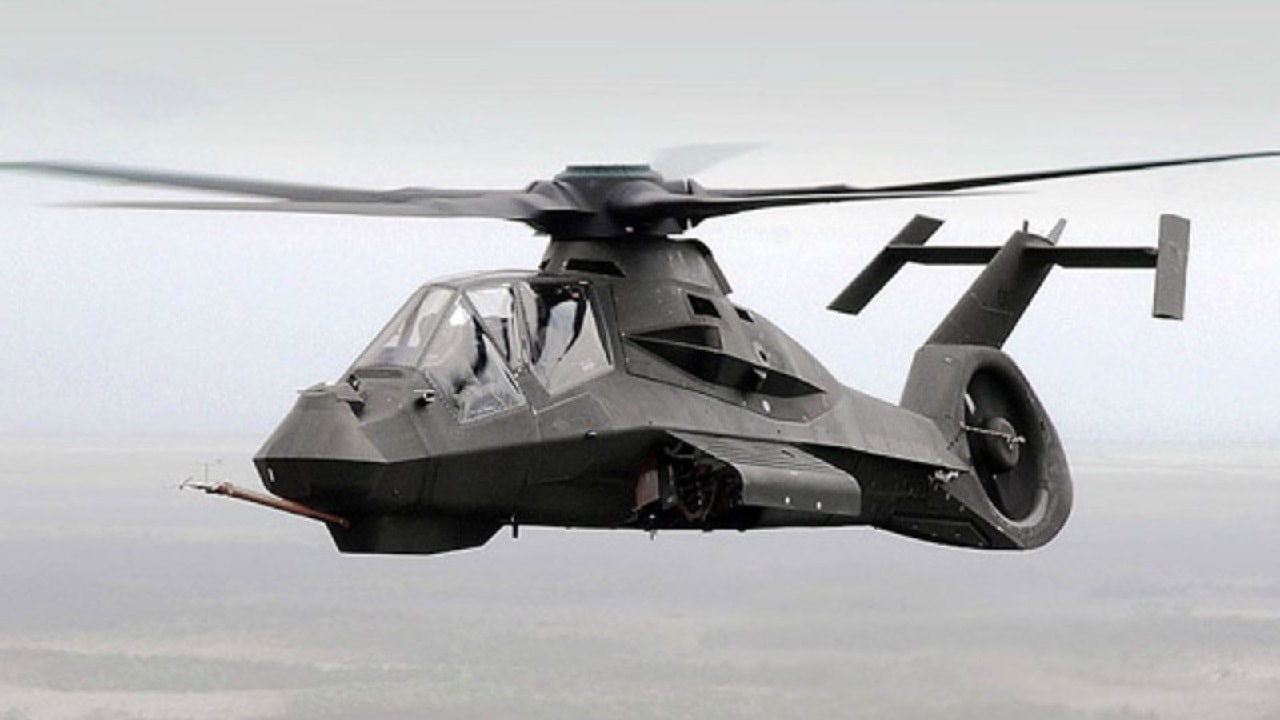
RAH-66 Comanche. Image Credit: Creative Commons.
Initially, the plan was to produce and test six different prototypes, but it was later scaled down to two to cut costs.
The first prototype rolled off the production line in 1995 and took its maiden flight a year later. The second prototype followed suit in 1999.
Throughout the early 2000s, both prototypes underwent severe testing, each racking up hundreds of flight hours.
The second prototype (serial 95-0001) was heavily modified to cut down on dead weight and received a new set of powerful engines and mission equipment.
Initially, the Army had planned to acquire 1,200 Comanches, but this was later reduced to 650 aircraft.
Testing continued until 2004, when the DoD announced that it had canceled the program entirely for reasons that we will delve into later.
The Comanche’s Unique Design
The RAH-66 had a unique design to accommodate its bizarre requirements.
The Comanche’s exterior surfaces were faceted and covered with radar-absorbent materials to reduce its radar cross-section (RCS), and it featured an internal weapons bay in which to store most of its weaponry.
According to some estimates, the helicopter had an RCS 360 times lower than an AH-64 Apache. Steps were also taken to reduce the Comanche’s acoustic signature.
The rotor blades were constructed with a special composite, and the tail rotor was uniquely canted. According to some claims, the RAH-66 was indeed noticeably quieter than other attack helicopters.
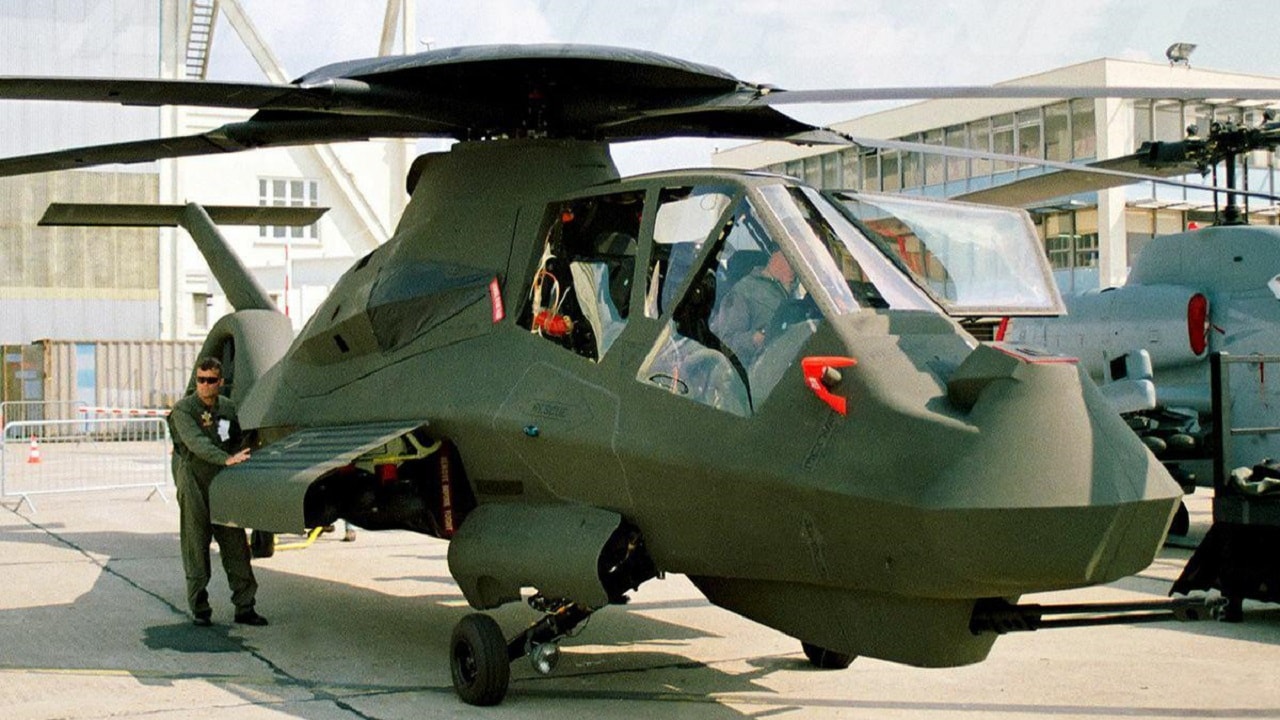
RAH-66. Image Credit – Creative Commons.
As a reconnaissance helicopter, the Comanche was fitted with sophisticated avionics to enable day/night, all-weather operations.
It featured advanced sensors that would designate targets and transmit data to dedicated attack helicopters. The RAH-66 used digital fly-by-wire systems and helmet-integrated display and sight systems (HIDSS) for both of the pilots.
Although its primary role was reconnaissance, the Comanche was equipped with several armaments for light attack missions.
The aircraft carried an XM301 rotary cannon, which could be retracted under a fairing when not in use to reduce its RCS.
The internal pylons could store up to six AGM-114 Hellfire missiles, or up to 12 Stinger anti-air missiles.
When stealth was not required, the RAH-66 could be fitted with wings to accommodate two additional pylons.
Program Management
Despite the Comanche’s unique and innovative design, the program was ultimately canceled. Many factors contributed to this decision.
For one, the Army determined that to ensure the aircraft’s survivability against contemporary anti-air threats, it would need several upgrades, which would have taken more time and money.
Moreover, the Army decided that RAH-66 was too niche to justify its steep costs.
The Army instead decided those funds would be better spent developing unmanned aerial vehicles (UAVs) and other, less risky helicopter programs like the Bell ARH-70 (canceled in 2008).
Behind the scenes, the Comanche program faced immense scrutiny and pressure from multiple directions.
In 1999, the Government Accountability Office slammed the project and reported that it would consume almost two-thirds of the entire aviation budget by 2008.
Other critics pointed out that the project was terribly mismanaged and gave unrealistic requirements that the designers could never hope to satisfy.
For instance, the helicopter had to ferry itself across the entire Atlantic Ocean, and its weight requirements, given all the systems the Army wanted to include, were nearly impossible to meet.
Designers from Sikorsky and Boeing also noted that requirements creep and budget cuts truncated the program and resulted in stagnation.
The First and Last True Stealth Helicopter
Despite the novel ideas behind the RAH-66, the project ultimately never got past the prototype stage. The program simply did not offer enough bang for its buck and was plagued by mismanagement and constantly shifting requirements.
Thus, the Comanche was the first and last stealth helicopter in existence.
As far as the public knows, no other stealth helicopter has flown since the RAH-66.
While most attack helicopters today incorporate measures to reduce their radar signatures, none have implemented the advanced stealth techniques the Comanche used.
About the Author: Isaac Seitz
Isaac Seitz, a Defense Columnist, graduated from Patrick Henry College’s Strategic Intelligence and National Security program. He has also studied Russian at Middlebury Language Schools and has worked as an intelligence Analyst in the private sector.

