
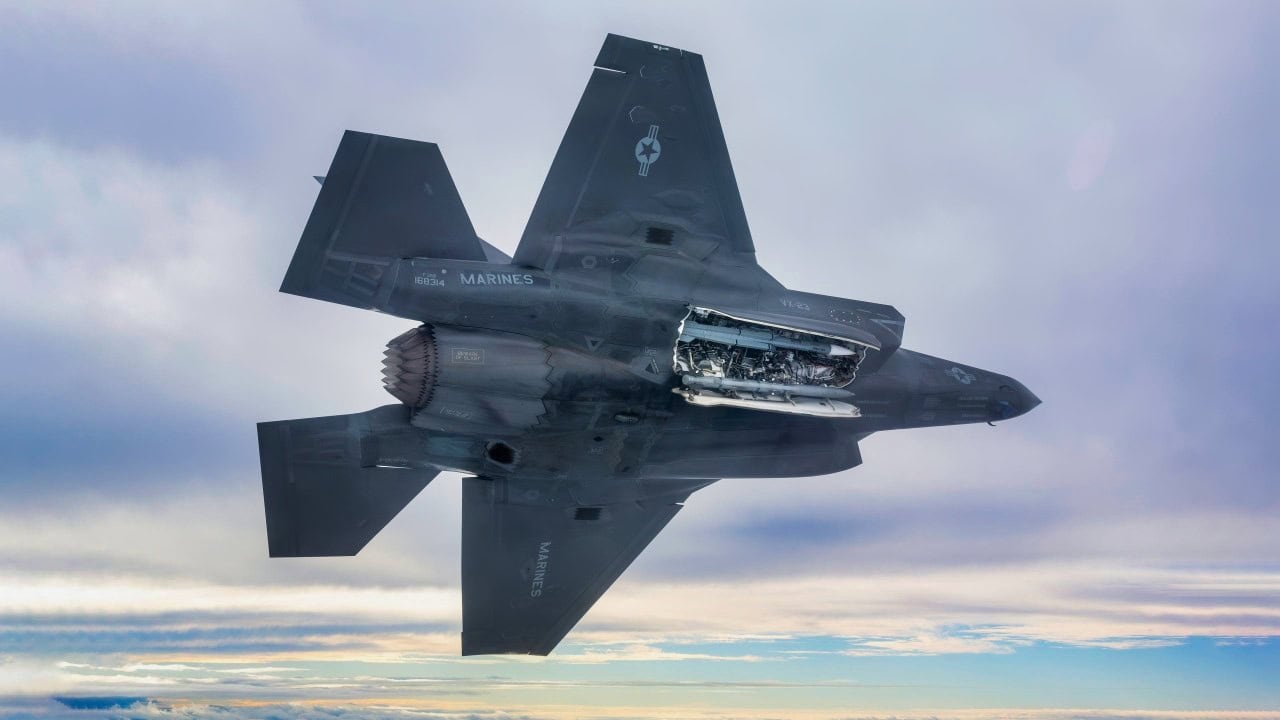
Summary and Key Points: Europe built the benchmark long-range air-to-air missile of the past decade in the MBDA Meteor, carried by the Eurofighter Typhoon, the Dassault Rafale, and the Saab Gripen. That lead is narrowing. China fielded the PL-15, which saw its first operational use in 2025, and the longer-reaching PL-17, credited with a range past 350 kilometers, while the Meteor’s integration on the F-35 has slipped into the 2030s. On July 3, 2026, the United Kingdom cancelled the missile’s planned mid-life upgrade, and Britain and France have opened a formal 12-month study to define its successor.
Introduction: The Meteor Is Still the Deadliest Air-to-Air Missile in Western Service. The Range Race Is Already Passing It By.
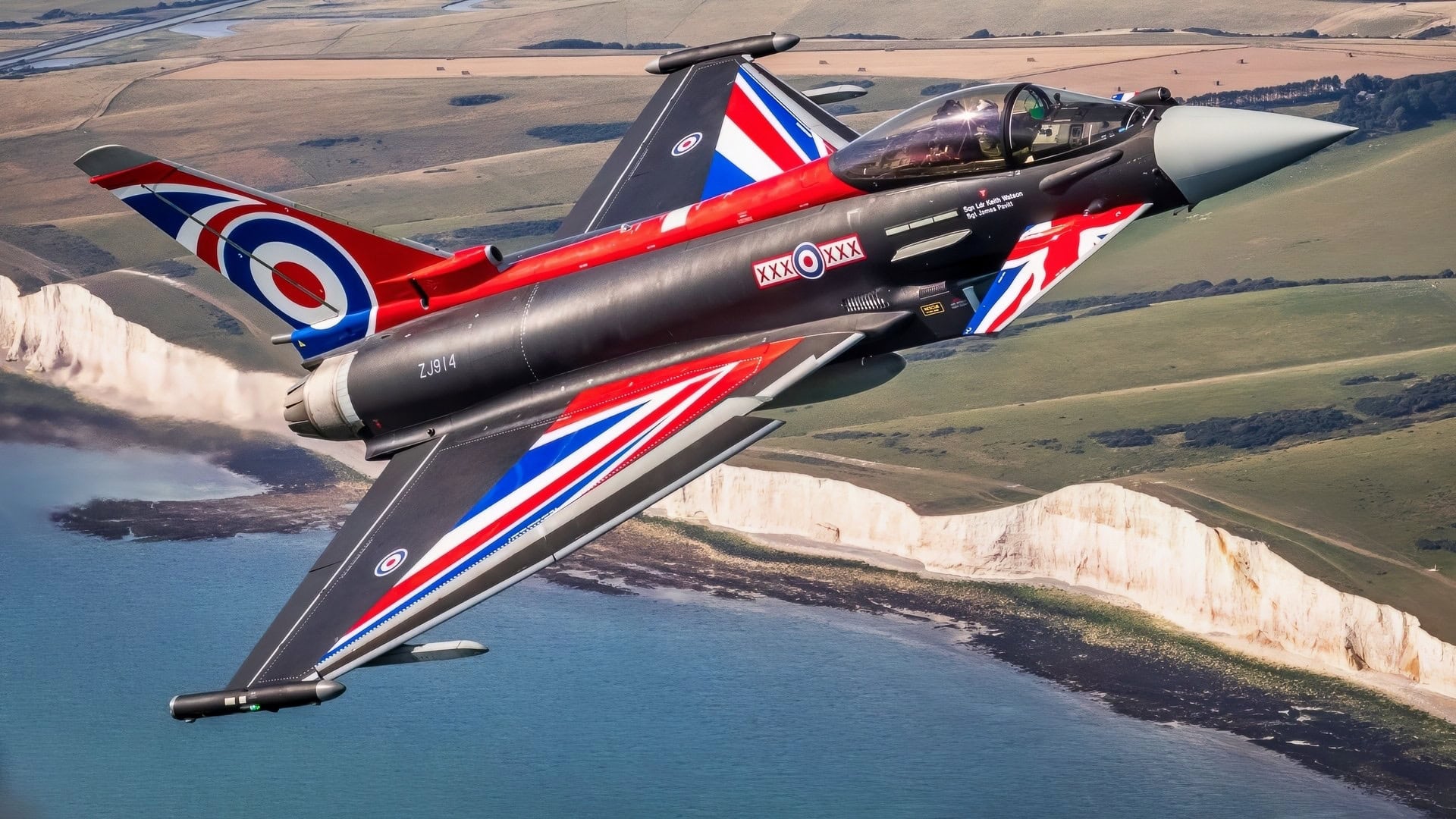
Eurofighter Typhoon Fighter NATO. Image Credit: British Government.
Europe’s ramjet-powered Meteor gives Western fighters the largest no-escape zone of any air-to-air missile in service, and for a decade, it has been the benchmark against which every rival is measured.
But it has never been fired in anger, while its Chinese counterpart just made its combat debut over Kashmir; its long-awaited arrival on the F-35 has slipped into the 2030s; and this month Britain quietly canceled the missile’s planned upgrade to start work on a replacement. The best beyond-visual-range missile in the Western arsenal is being overtaken, and its own makers know it.
For a decade, the MBDA Meteor has been the missile against which every other air-to-air weapon is measured. Built by six European nations and carried by the Eurofighter Typhoon, the Dassault Rafale, and the Saab Gripen, it is widely regarded as the finest beyond-visual-range missile in Western service, the weapon that finally gave NATO fighters a reliable way to kill at extreme distance.
That reputation is deserved. It is also, increasingly, a snapshot of a lead that is slipping away. The Meteor has never been fired in combat; its most dangerous rival just was; its long-promised place on the F-35 has receded into the next decade, and in early July, the country that led its development decided it was time to start building something better.
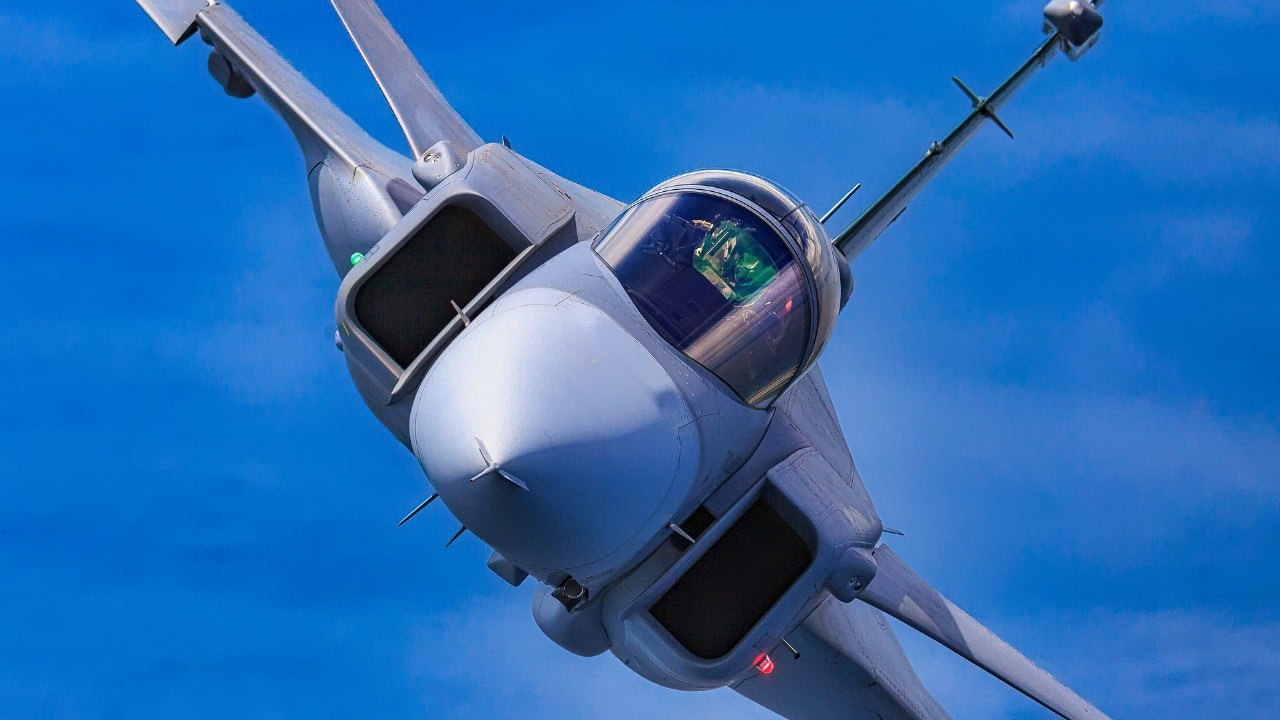
JAS 39 Gripen. Image Credit: Creative Commons.
What Makes the Meteor a Powerhouse
The Meteor’s advantage comes down to how it burns.
Almost every air-to-air missile in service, including the American AIM-120 AMRAAM, is a boost-and-coast weapon: a rocket motor fires hard for a few seconds, then burns out, and the missile spends the rest of its flight gliding on momentum, bleeding energy the whole way. The Meteor instead uses a throttleable solid-fuel ramjet, a “variable-flow ducted rocket” that keeps producing thrust and can modulate it all the way to the target. The missile arrives at the intercept still powered and still fast, rather than coasting and slow.
That single design choice is why the Meteor is so feared. Because it keeps its energy, it retains the speed to chase down a jet that turns and runs at the last moment, which dramatically enlarges what engineers call the “no-escape zone,” the envelope inside which a target cannot outrun or out-turn the missile no matter what it does.
MBDA and independent analysts credit the Meteor with a no-escape zone several times larger than that of the AMRAAM. Its top speed exceeds Mach 4, and while its exact range is classified, credible estimates put it between 100 and 200 kilometers. Paired with a modern fighter’s radar and datalink, it does exactly what a beyond-visual-range missile is supposed to do: kill first, from farther away than the other side can shoot back. On that count, nothing else in Western service matches it. The problem is that “Western service” is no longer the only measuring stick that matters.
The Missile That Has Never Fought
For all its reputation, the Meteor has never been fired in combat. Its entire record is testing, most recently a Brazilian Gripen live-firing against target drones in November 2025 and an inert carriage flight from an F-35B in early 2025. It is a superb weapon on the range. It is also, in a strict sense, unproven.
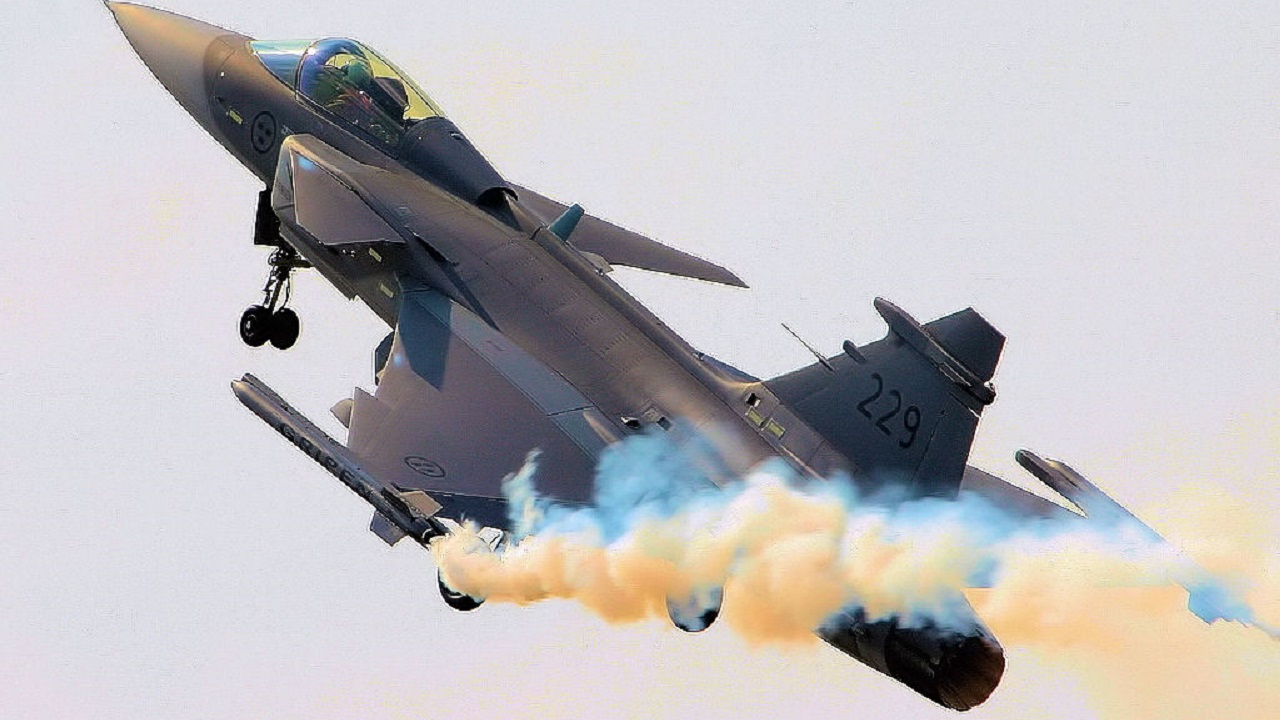
JAS 39 Gripen. Image Credit: Creative Commons.
Its closest rival cannot say the same anymore. In May 2025, during the short, sharp air war between India and Pakistan known as Operation Sindoor, Pakistani J-10C fighters used the Chinese PL-15 to shoot at Indian aircraft, the missile’s first known combat use.
Pakistan claimed several kills, including at least one Indian Rafale reportedly downed from around 200 kilometers, which, if confirmed, would be the first combat loss of a Rafale anywhere. India disputes the scale of its losses, and the full picture remains contested and clouded by both sides’ information operations, so the claims deserve caution.
It is tempting to read the clash as the PL-15 out-dueling the Meteor, and some commentary has. The evidence does not support that. Michael Dahm of the Mitchell Institute, among the most careful analysts of the engagement, argues the outcome was decided by the kill chain rather than the missile, by Pakistan’s ability to cue radar-silent launches from J-10Cs using data passed from airborne early-warning aircraft, and he notes there is no indication the downed Rafale was even carrying or firing a Meteor, which may not yet have been operational on Indian jets. Dahm, who calls the Meteor “a beast,” is blunt that the episode says far more about networking and tactics than about one missile versus another.
The honest lesson is narrower and still uncomfortable for the Meteor’s admirers: the PL-15 is now combat-blooded, the Meteor is not, and the West can no longer assume its long-range reach is a decisive edge simply because it always has been.
The Range Lead That Vanished
A decade ago, the Meteor’s reach was in a class of its own.
That gap has closed. The domestic Chinese version of the PL-15 is credited with a range beyond 200 kilometers, comparable to the Meteor at the top end, though the export PL-15E sold to Pakistan is reportedly cut to around 145 kilometers.
Behind it, China has fielded the even longer PL-17, a weapon believed to reach past 350 kilometers, built to kill the tankers and radar aircraft that make Western air power work.
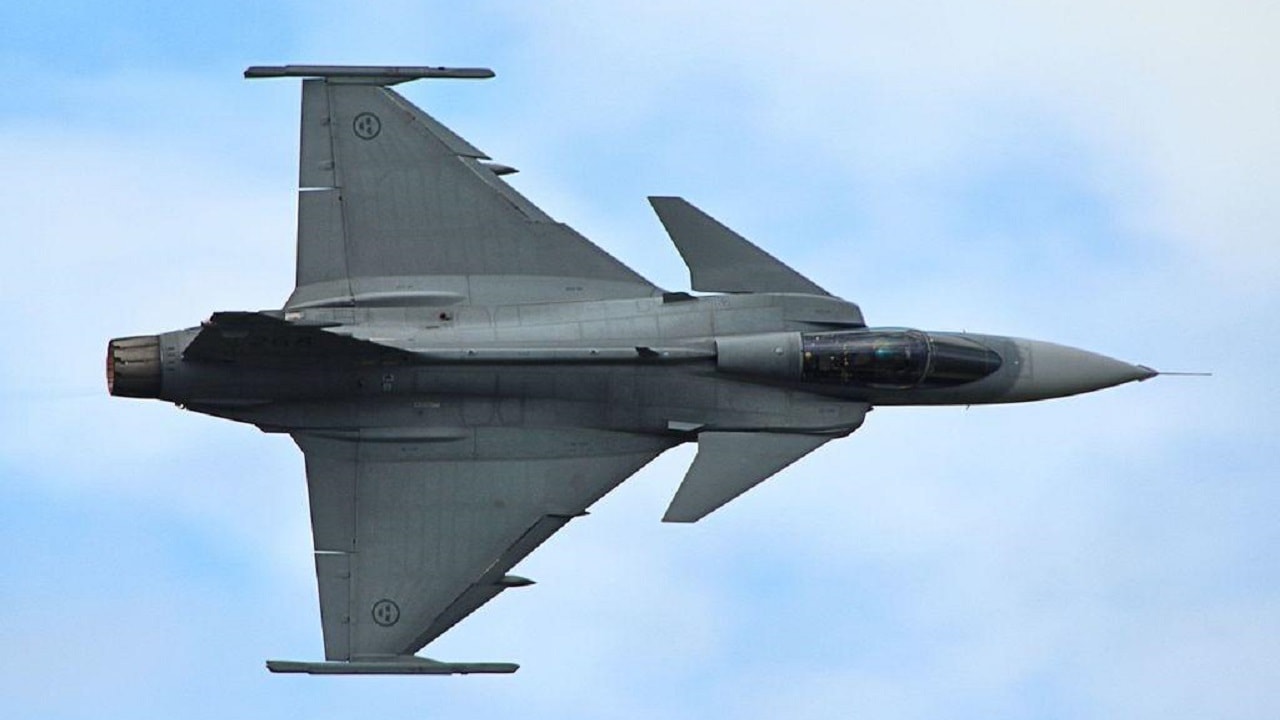
JAS 39 Gripen. Image Credit: Creative Commons.
The Royal United Services Institute’s Justin Bronk has assessed that the PL-15 roughly matches the Meteor’s maximum range, while the Meteor likely keeps a larger no-escape zone thanks to its ramjet, which is real but thin comfort: parity of reach is exactly the advantage the Meteor was built to deny an adversary.
The United States, meanwhile, is racing to field the AIM-260, a next-generation missile sized to fit stealth bays and built to out-range both the PL-15 and the Meteor, though it has slipped years past its original schedule.
Add Russia’s long-range R-37M, and the picture is clear: the Meteor is now one of several long-reaching missiles rather than the singular one. The category it defined has filled up around it.
The F-35 Debut That Keeps Slipping
The Meteor’s other problem is that the aircraft that would make it most dangerous still cannot carry it. Integrating the missile onto the F-35, the fighter that the West and its allies field in the by far largest numbers, has been in the works since 2019, and it keeps receding.
Tied to the perpetually delayed Block 4 upgrade, the timeline has slipped from the middle of the decade to 2027 and now to the early 2030s, a delay the UK government formally confirmed in mid-2025. Ground tests at Edwards Air Force Base and a first inert flight on a US Marine F-35B have shown the missile fits and the jet can fly with it, but a loaded combat patrol is still years away on both sides of the Atlantic.
Until then, British and Italian F-35s carry the shorter-range AMRAAM, the very gap the Meteor was meant to fill. The marquee pairing everyone celebrates, a fifth-generation stealth fighter carrying the West’s best long-range missile, remains roughly a decade off.
Even Its Makers Are Moving On
The most telling sign of all is what Europe itself has decided. On July 3, 2026, the UK Ministry of Defense confirmed it would abandon the planned Meteor mid-life upgrade, shifting the money instead toward a next-generation program called Future Air Superiority Effectors.
The defense procurement minister, Luke Pollard, framed it as a choice to invest in the next generation of capability faster than the last, rather than incrementally improving a weapon already in service.
That decision did not come out of nowhere. In April 2026, the UK and France signed a memorandum of understanding to launch a 12-month joint study into a Meteor successor, a formal effort to define the next European long-range air-to-air missile.
Announced as a deliverable of the Lancaster House 2.0 treaty signed in 2025, the work is overseen by a new joint Complex Weapons Portfolio Office embedded in the European procurement agency OCCAR, and it sits alongside a parallel Franco-British effort, the Stratus program, to replace the Storm Shadow cruise missile.
France is separately pursuing a longer-range companion weapon, sometimes referred to as Comet, intended to fly alongside the Meteor by around 2030. A missile that entered British service only in 2018 is already being lined up for replacement, an unusually short horizon that tells you how fast the threat is thought to be moving.
The Verdict
None of this means the Meteor is obsolete, and it would be a mistake to swing from hype to dismissal. In Western operational service today, it remains the best beyond-visual-range missile there is, and the ramjet advantage that gives it the largest no-escape zone in its class is genuine engineering, not marketing. Any adversary facing a Typhoon, Rafale, or Gripen armed with Meteor has a real problem, and Ukraine’s coming Gripens will make Russian aircraft respect it too.
But “the best in Western service” is a narrower claim than it once was, and the trend lines all run the wrong way. The missile is combat-untested while its Chinese rival is now blooded. Its range lead, once decisive, has evaporated into parity. Its integration onto the West’s most important fighter is a decade away. And its own developers have concluded that improving it is no longer worth the money, choosing instead to design its replacement. The Meteor is a powerhouse, and every bit of that reputation was earned. The uncomfortable reality is that the window in which it sits unchallenged at the top has already begun to close, and whether the West can field its successor before an adversary fields something better is now an open question rather than a safe assumption.
About the Author: Harry J. Kazianis
Harry J. Kazianis (@Grecianformula) was the former Senior Director of National Security Affairs at the Center for the National Interest (CFTNI), a foreign policy think tank founded by Richard Nixon based in Washington, DC. Harry has over a decade of experience in think tanks and national security publishing. His ideas have been published in the NY Times, The Washington Post, The Wall Street Journal, CNN, and many other outlets worldwide. He has held positions at CSIS, the Heritage Foundation, the University of Nottingham, and several other institutions related to national security research and studies. He is the former Executive Editor of the National Interest and the Diplomat. He holds a Master’s degree focusing on international affairs from Harvard University.

