

Key Points and Summary – MBDA, Lockheed Martin and the F-35 Joint Program Office say they’ve completed key ground integration tests to bring the Meteor beyond-visual-range air-to-air missile closer to operational use on the F-35A.
-Testing at Edwards AFB included ground vibration work and fit checks to validate hardware responses and confirm the missile can be safely carried and released from the jet’s internal weapons bay, preserving stealth.
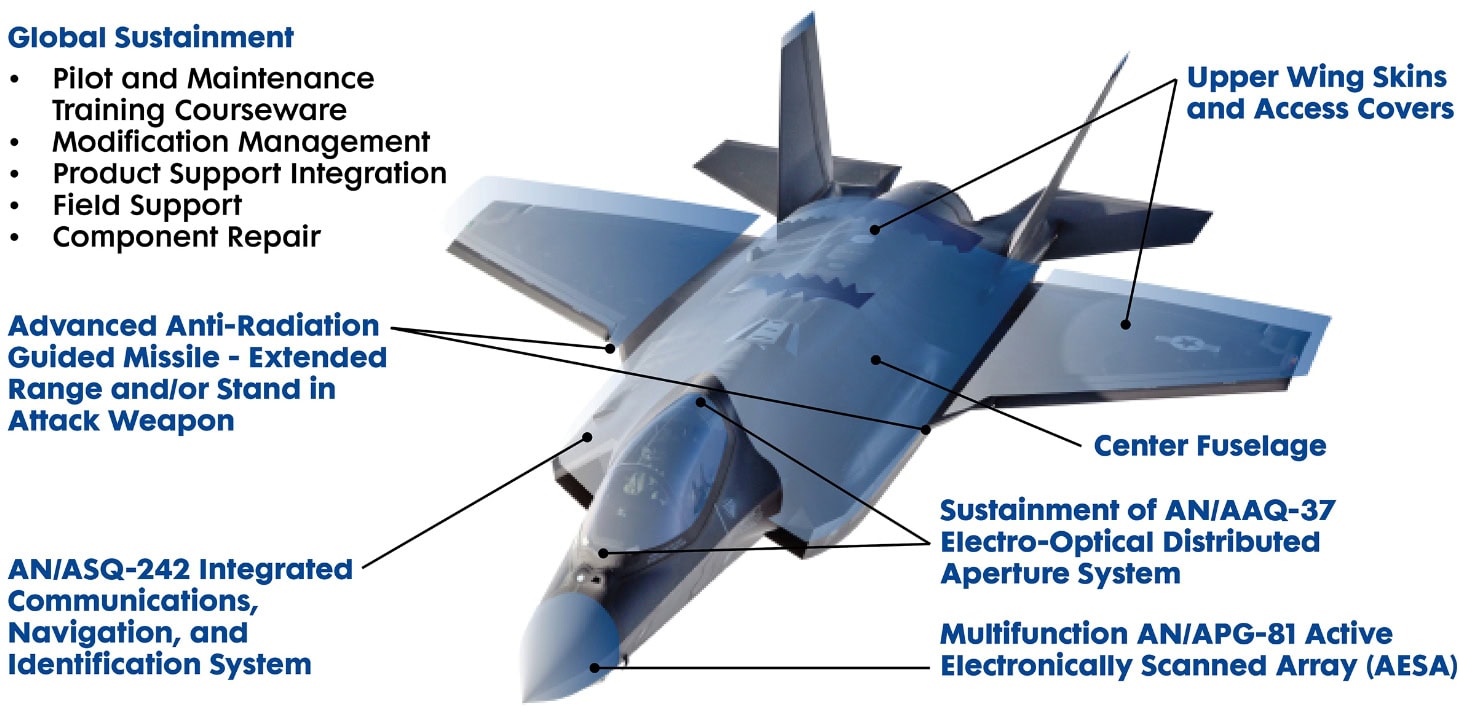
F-35 Fighter. Image Credit: Industry Handout.
Meteor’s solid-fuel ramjet provides sustained thrust to the intercept, expanding its “no-escape” zone versus traditional boost-and-coast missiles.
-Engineers will conduct additional ground work before flight testing begins, with early-2030s fielding expected in some partner fleets for allies.
F-35A Gets Closer to Carrying Europe’s Meteor Missile After Key U.S. Tests
MBDA, Lockheed Martin and the F-35 Joint Program Office say they’ve completed key ground integration tests to bring the Meteor beyond-visual-range air-to-air missile closer to operational use on the F-35A.
Testing at Edwards AFB included ground vibration work and fit checks to validate hardware responses and confirm the missile can be safely carried and released from the jet’s internal weapons bay, preserving stealth.
Meteor’s solid-fuel ramjet provides sustained thrust to the intercept, expanding its “no-escape” zone versus traditional boost-and-coast missiles. Engineers will conduct additional ground work before flight testing begins, with early-2030s fielding expected in some partner fleets for allies.
The Missile Defense Association (MBDA) and Lockheed Martin, along with the F-35 Joint Program Office, recently announced that they have “completed a series of critical ground-based integration tests” for the F-35A and the Meteor, the Beyond Visual Range Air-to-Air Missile (BVRAAM). This brings the combination “closer to operational readiness.”
The Meteor, as announced, is “the result of a six-nation cooperation program involving the UK, Italy, France, Germany, Spain, and Sweden.” MBDA is a France-based multinational that specializes in missiles.
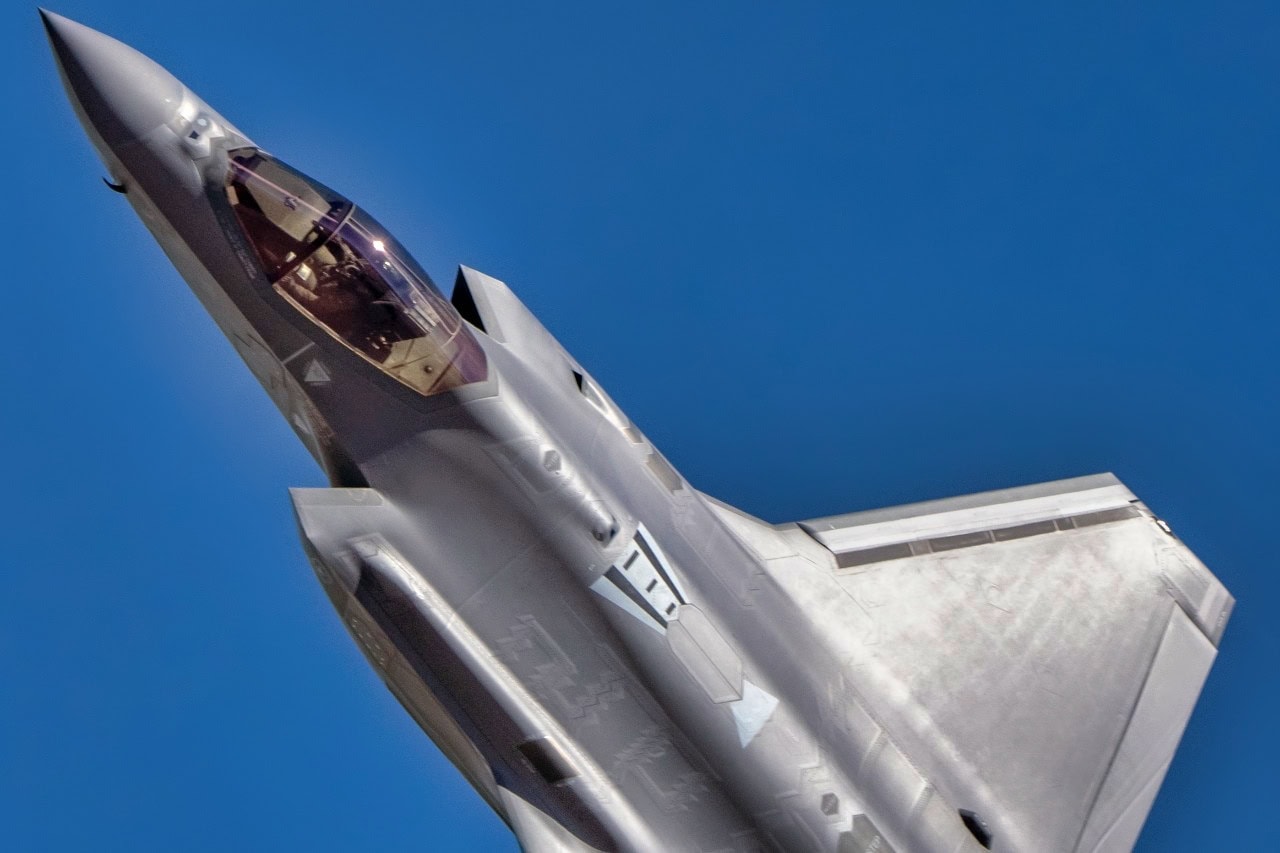
U.S. Air Force Maj. Kristin “BEO” Wolfe, F-35A Lightning II Demonstration Team pilot and commander, flies during the 2021 Reno Air Races, Reno, Nev., Sept. 18, 2021. The 2021 Reno Air Races featured performances from the U.S. Air Force F-35A Demo Team and the U.S. Air Force Thunderbirds. (U.S. Air Force photo by Capt. Kip Sumner)
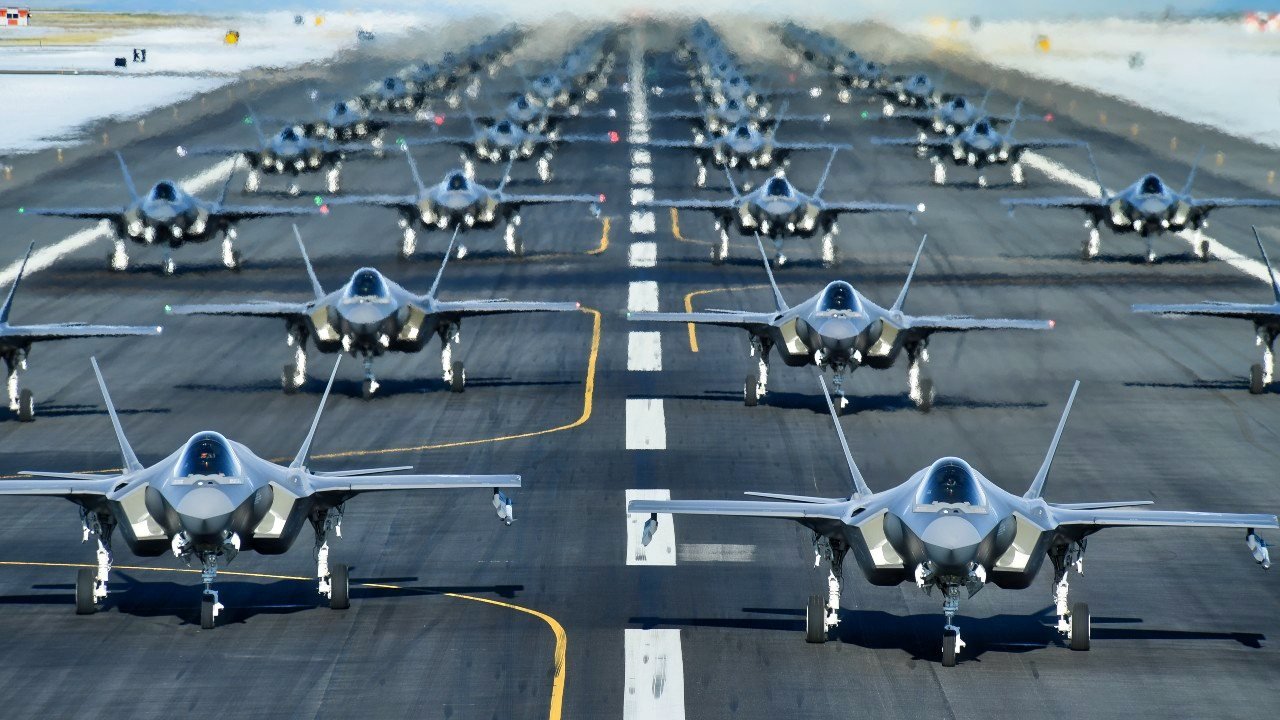
F-35 Elephant Walk. Image Credit: Creative Commons.
About the Missile
Per MBDA’s website, other “platforms” for the Meteor include the Eurofighter Typhoon, Gripen, and Rafale. South Korea has also been testing Meteor for “deployment on the KF-21 Boramae,” the company says.
“METEOR is the next generation Beyond Visual Range Air-to-Air Missile (BVRAAM) system designed to revolutionise air-to-air combat in the 21st century,” the website says. The six countries that developed it share “a common need to defeat the threats of today and in the future.”
That site also explains how it works.
“This ‘ramjet’ motor provides the missile with thrust all the way to target intercept, providing the largest No Escape Zone of any air-to-air missile system, several times greater than current MRAAMs. The fragmentation warhead ensures maximum lethality,” the site says.
The Meteor first flew in 2016, on Sweden’s Gripens.
Passing the Test
The announcement says that the U.K. is “leading the integration campaign for F-35B,” while Italy is “sponsoring integration onto the F-35A model.” Back in March, the Royal Air Force announced that it had undertaken the first flight tests of a Meteor Missile. In that case, the U.S. and U.K. collaborated on the test.
In May, the British Ministry of Defense answered some questions about the planned integration. When asked about the program, Labour MP Maria Eagle, then the Minister of State for Defence Procurement and Industry, answered that “Integration of the MBDA Meteor ramjet-powered air-to-air missile with F-35B is driven by the US-led Lightning II Joint Programme Office; the estimated current timeline for in-service capability is expected to be early 2030s.”
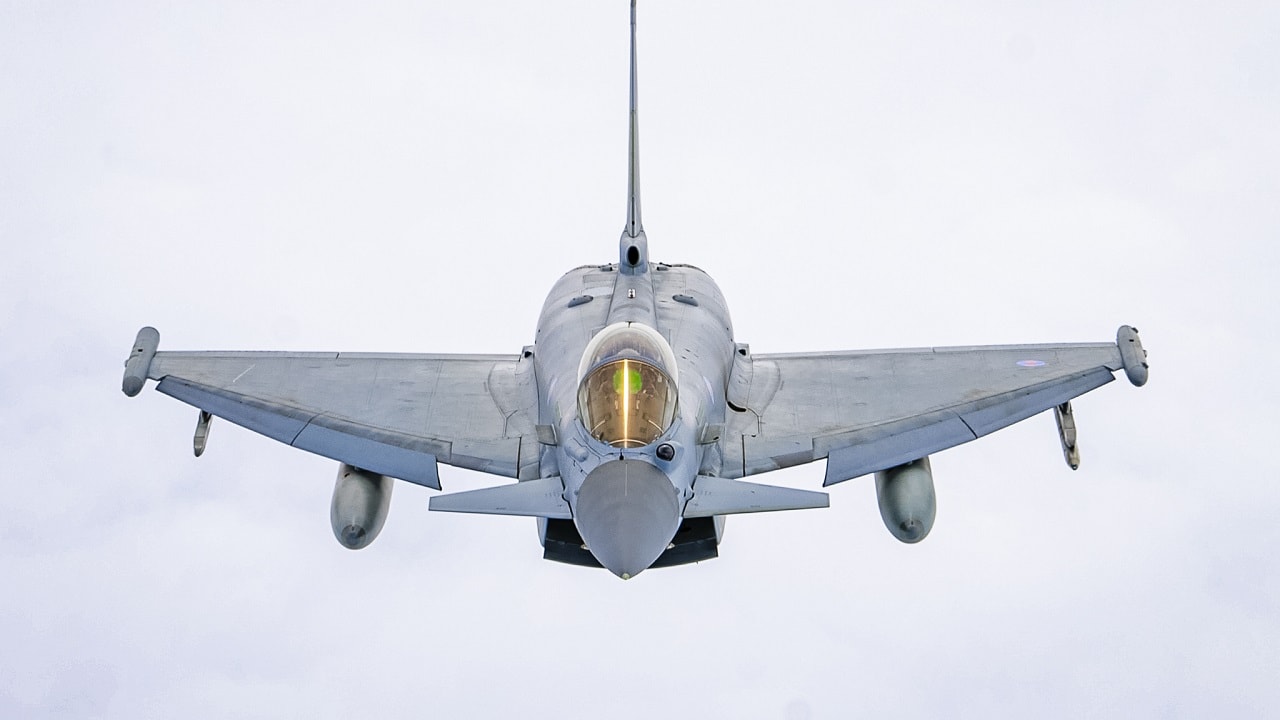
A UK Eurofighter Typhoon flies above the Baltics on 25 May 2022. UK and Czech fighter jets have been taking part in air defence training over the Baltic region. UK Eurofighter Typhoons, F-35s and Czech Gripens were involved in an exercise as part of Neptune Shield 22 (NESH22), a multinational maritime vigilance activity. NESH22 has seen a range of multi-domain activities between air, land and maritime assets across Europe and in the Baltic and Mediterranean Seas. It runs from 17 to 31 May 2022.
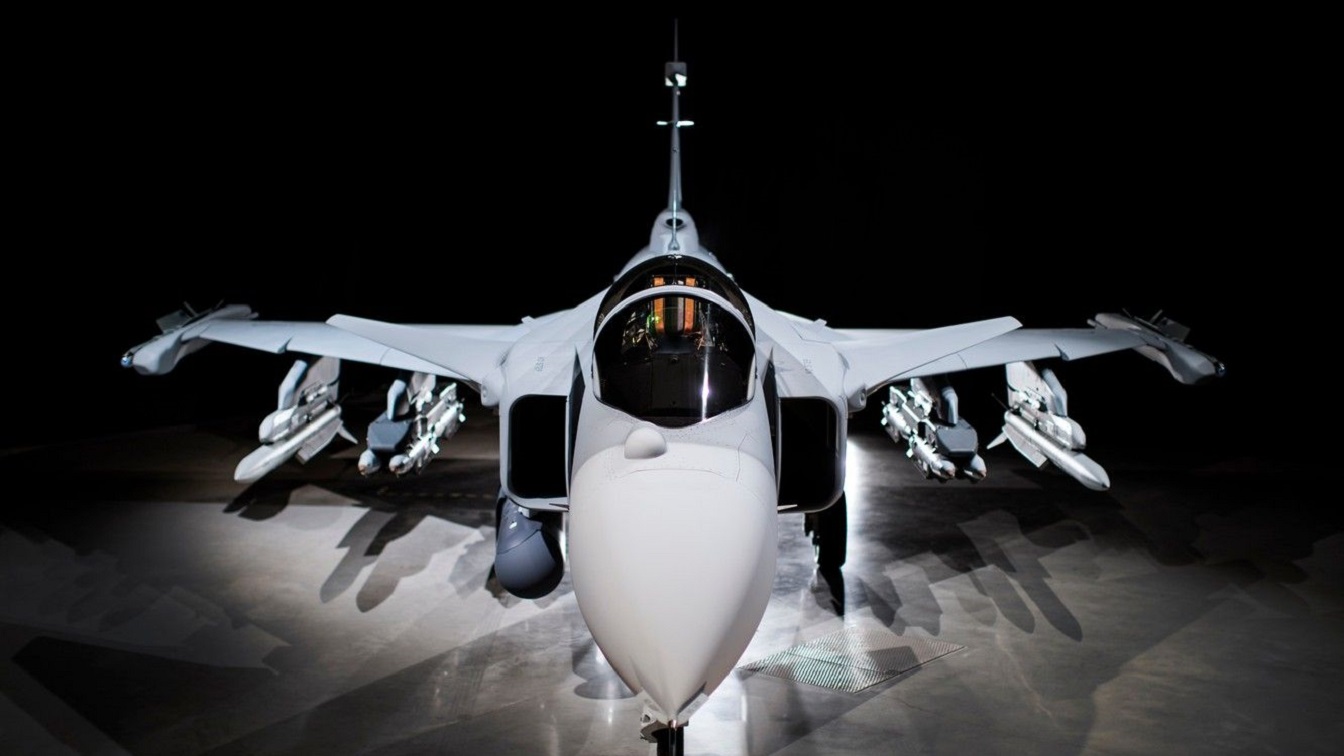
JAS 39. Image Credit: Creative Commons.
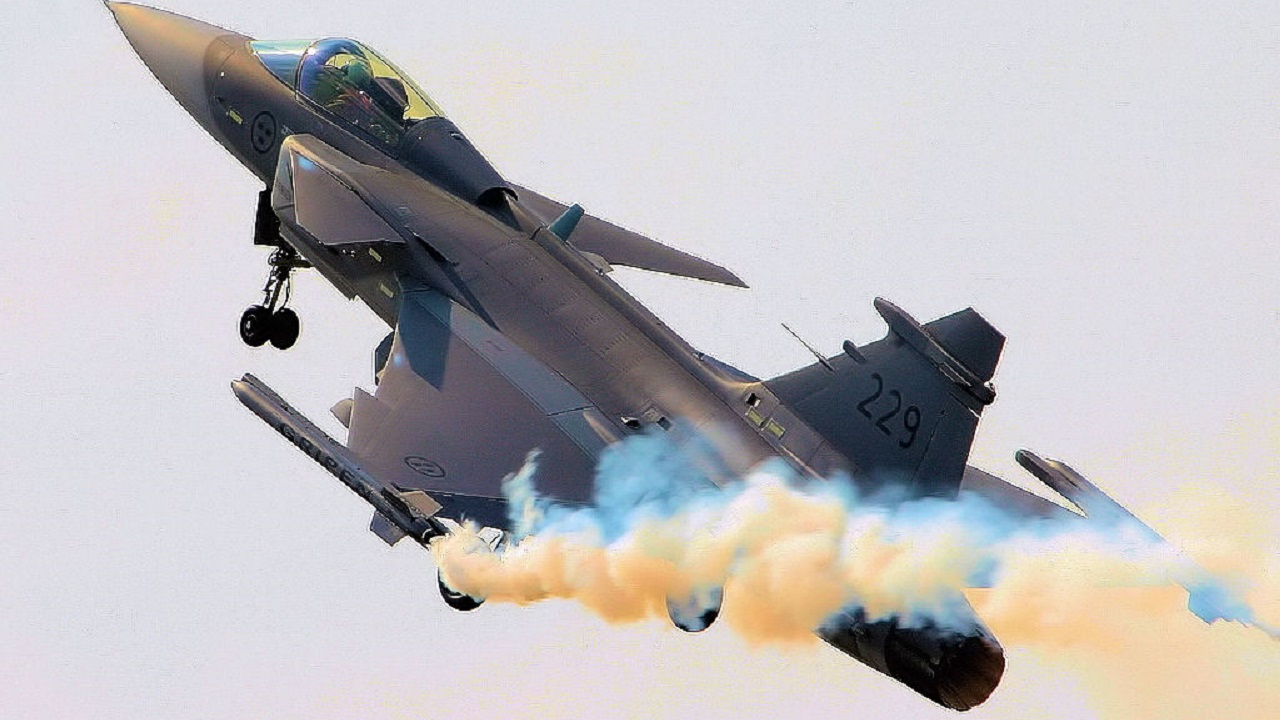
JAS 39 Gripen. Image Credit: Creative Commons.
And while the U.S. is not among the countries that collaborated on the missile’s development, the more recent test was held at Edwards Air Force Base.
“Conducted at Edwards Air Force Base, California, the ground vibration testing and fit checks validated key hardware responses between the 5th Generation fighter aircraft and missile — a pivotal step before airborne tests begin,” the announcement said. “Engineers meticulously evaluated the data collected from the trials to confirm the safe stowage and deployment of the missile from the F-35A’s internal weapons bay, preserving the aircraft’s valuable stealth profile.”
One more ground test is necessary before it’s cleared for flight testing.
“At the heart of this advanced capability is METEOR’s ramjet propulsion, which uses a solid-fuel, variable-flow ducted rocket design. Unlike traditional missiles that rely on an initial boost and then coast unpowered, METEOR’s ramjet delivers sustained thrust right up until intercepting a threat,” the announcement of the test says.
“Interception is aided by an active radar seeker for terminal guidance, and supported by inertial mid-course navigation augmented by a two-way data link. This datalink enables target updates or mid-flight retargeting. When a threat inevitably fails to escape, METEOR’s blast-fragmentation warhead neutralizes it. Dual fusing – impact and proximity – maximizes the warhead’s effectiveness.”
Interesting Engineering describes the Meteor as “Europe’s most feared missile.”
The China Side?
A Eurasian Times report, meanwhile, examined the news of the integration tests through the lens of events in Asia, including the development of China’s PL-15 missile and the recent clash between India and Pakistan.
“The Meteor — Europe’s most advanced air-to-air missile (AAMs) — sat silent during the May 2025 India-Pakistan clash while Chinese PL-15 and Russian S-400 & BrahMos missiles dominated headlines. Now the Pentagon has quietly begun loading the Meteor AAMs onto F-35A stealth fighters,” the Eurasian Times analysis said.
“Interestingly, the F-35 JPO’s statement about integrating the Meteor missile with the F-35A fighter jets comes just days after a Gripen-E combat aircraft belonging to the Brazilian Air Force (Força Aérea Brasileira or FAB) fired the Meteor air-to-air missile for the first time, validating the integration of the missile on the most advanced variant of the Gripen aircraft,” Eurasian Times added.
Saab had touted the test in a December 2 announcement, just days before the test was disclosed at Edwards.
Those tests, the report added, “demonstrate the continued global appeal of the BVR AAM developed by MBDA.”
Eurasian Times also said that it’s unclear whether India used the Meteor in its recent exchange of fire with Pakistan.
“While both sides have made claims about shooting down multiple fighter jets of the other country, Pakistan claimed to score air-to-air kills from the Chinese-origin PL-15 missiles. In contrast, India claimed scoring long-range surface-to-air kills from the Russian-origin S-400 missile, besides multiple air-to-surface kills from BrahMos missiles fired from the Su-30MKI fighter jets,” Eurasian Times reported.
“This raises the question of why India did not use the Meteor, arguably one of the best air-to-air missiles, during the high-stakes conflict. Alternatively, if India did use the Meteor, why did it fail to score an air-to-air kill?”
In a separate piece on December 2, in reference to the Brazil Meteor test, Eurasian Times noted that Brazil is a neighbor and nominally an ally of Venezuela, a country currently amid heavy tensions with the United States.
Brazil’s President Lula da Silva has been critical of the U.S. for serving as a “source of tension” that could “inflame South America,” while encouraging diplomacy between Washington and Caracas.
Meanwhile, Defence Express reported in November that the Netherlands had chosen Raytheon’s AIM-120 AMRAAM missile over the Meteor, with localized production inside that country.
Why did they do this?
“The AIM-120 is a multi-role missile that also arms NASAMS air defense systems. The Netherlands currently operates two NASAMS batteries and plans to acquire 13 more, intending to equip them not only with standard AIM-120s but also with the extended-range AMRAAM-ER (50 km). Meanwhile, MBDA has shown no public interest in adapting the Meteor for surface-to-air use,” the report said.
About the Author: Stephen Silver
Stephen Silver is an award-winning journalist, essayist, and film critic, and contributor to the Philadelphia Inquirer, the Jewish Telegraphic Agency, Broad Street Review, and Splice Today. The co-founder of the Philadelphia Film Critics Circle, Stephen lives in suburban Philadelphia with his wife and two sons. For over a decade, Stephen has authored thousands of articles that focus on politics, national security, technology, and the economy. Follow him on X (formerly Twitter) at @StephenSilver, and subscribe to his Substack newsletter.