
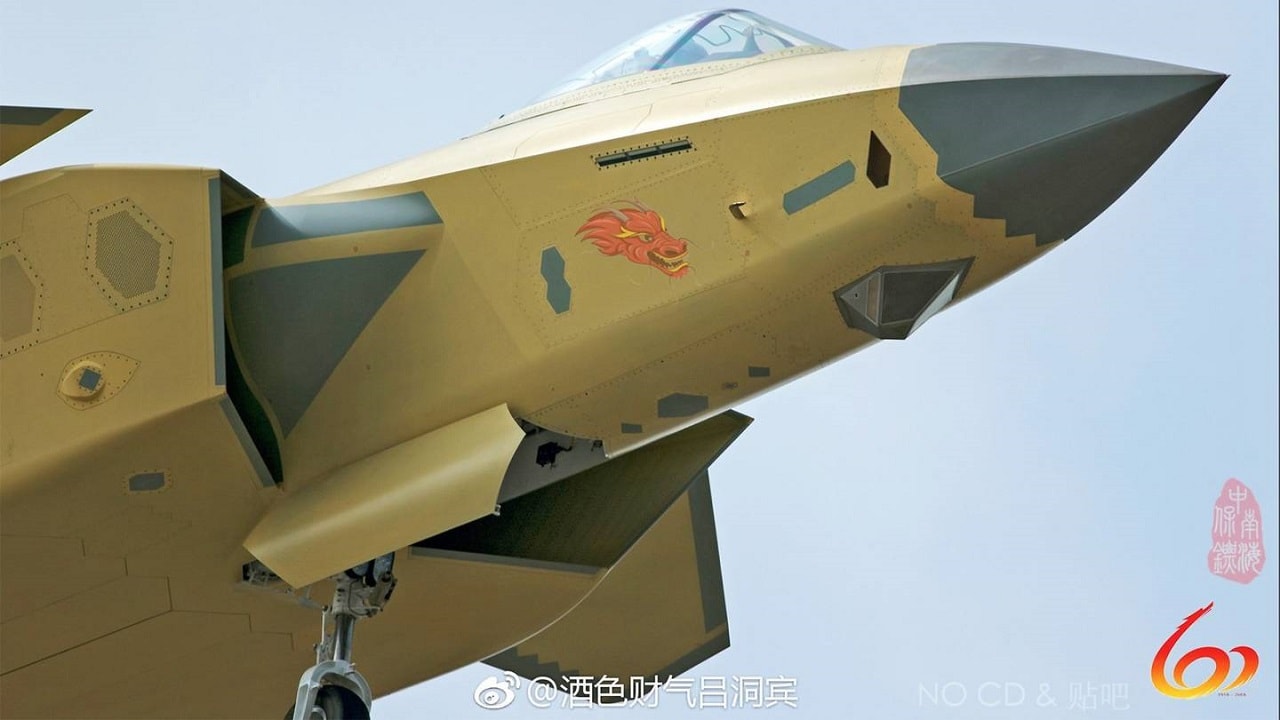
Article Summary – China’s J-20A is the first major evolution of the J-20 “Mighty Dragon,” built around new WS-15 engines that finally give Beijing a true supercruising stealth fighter.
-A reworked spine and nose add space for fuel and avionics, pairing an AESA radar, EOTS/IRST, and helmet-mounted cueing with heavier sensor fusion and automation.
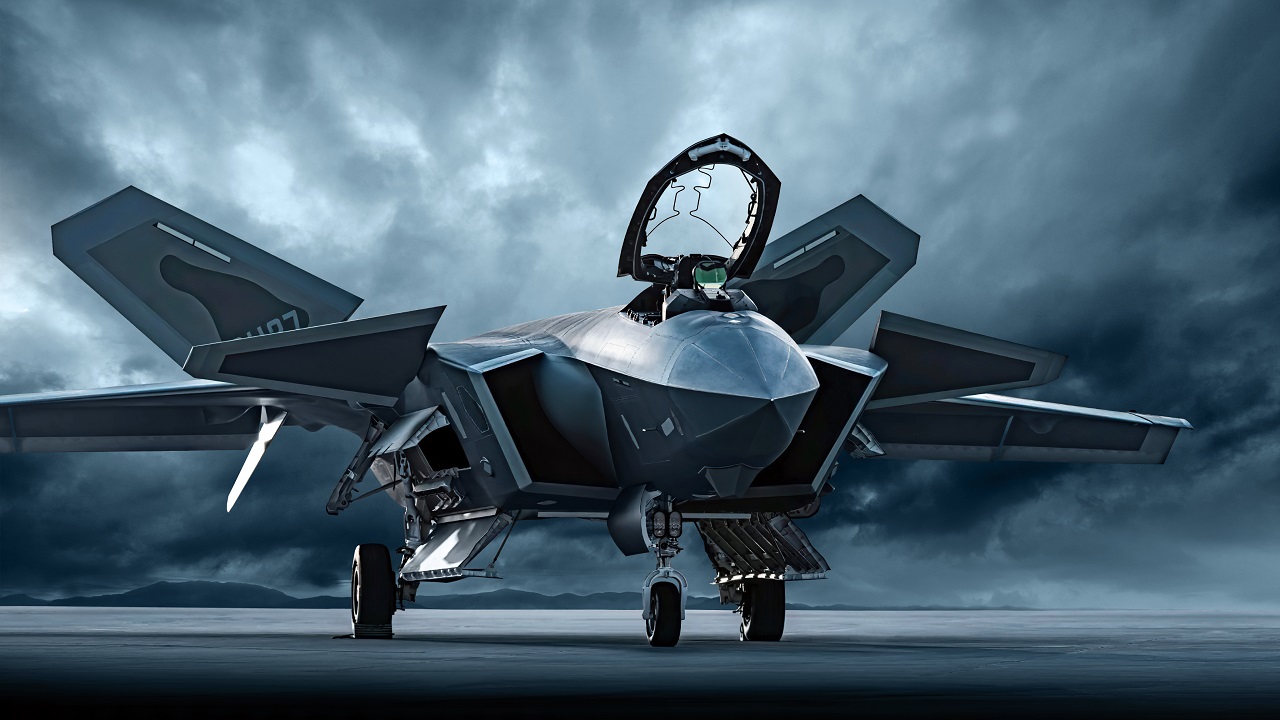
J-20 Stealth Fighter. Image Credit: Artist Rendering/Creative Commons.
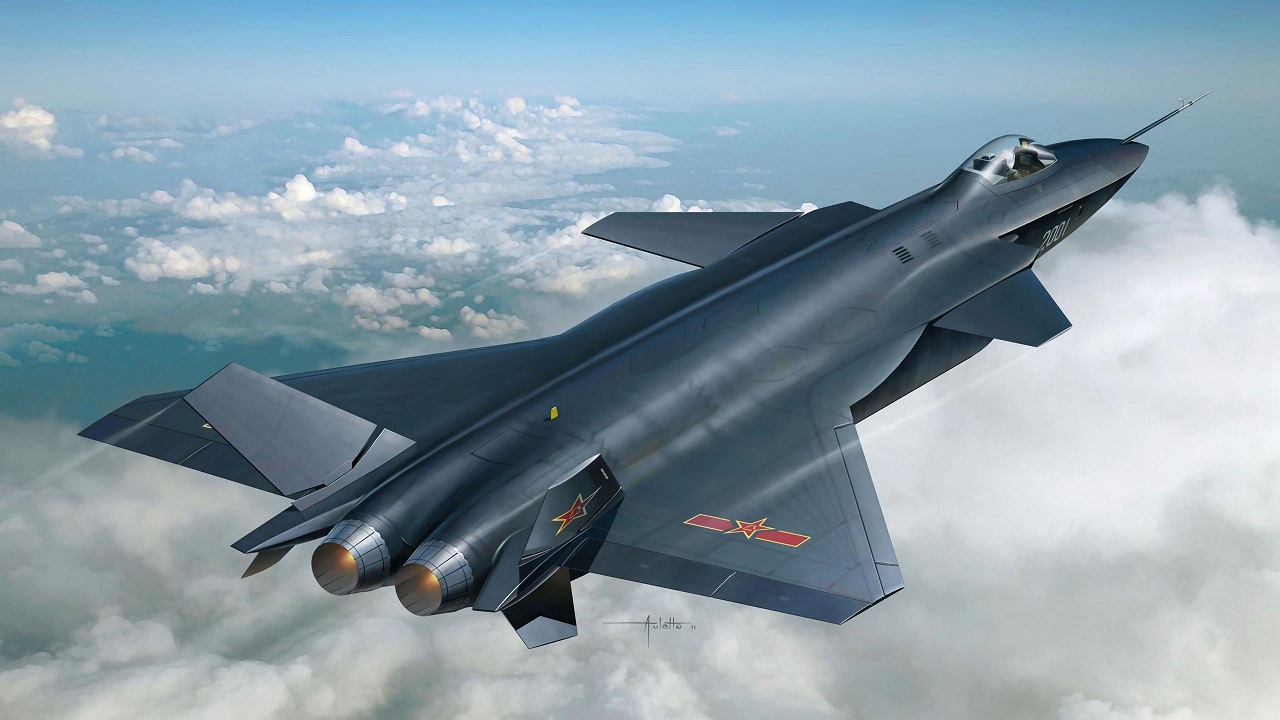
J-20 Fighter via computer generated artist rendering. Image Credit: Creative Commons.
-Subtle shaping tweaks and refined coatings improve all-aspect stealth, while internal bays carry PL-15 and PL-10 missiles, with room for external weapons when stealth is less critical.
-With growing numbers and deep integration into China’s A2/AD network, the J-20A is now the PLAAF’s premier air-dominance tool.
The J-20A Is Born
The J-20A is a newer variant of the Chengdu J-20, also known as the Mighty Dragon.
Originally dubbed J-20B, this newer version was first debuted in December 2022 and made its first flight in 2023.
While it appears almost identical to the initial production version of the J-20, the J-20A features several enhancements that significantly enhance its capabilities.
Here are what we believe to be the J-20A’s top five most excellent qualities.
#1 Enhanced Engines
One of the most noticeable differences between the J-20A and the initial production variants is the integration of the new WS-15 engines.
These have been in development for some time now and were intended to be integrated into the base variants, but had to be postponed due to their extended development timeline.
With each engine producing over 18 tons of thrust, the J-20A achieves a significantly improved thrust-to-weight ratio, which translates into better acceleration, climb rate, and overall maneuverability.
The new engines allow the J-20A to supercruise, although its cruise speed is not publicly available. This not only improves fuel efficiency but also reduces the aircraft’s infrared signature, making it harder to detect.
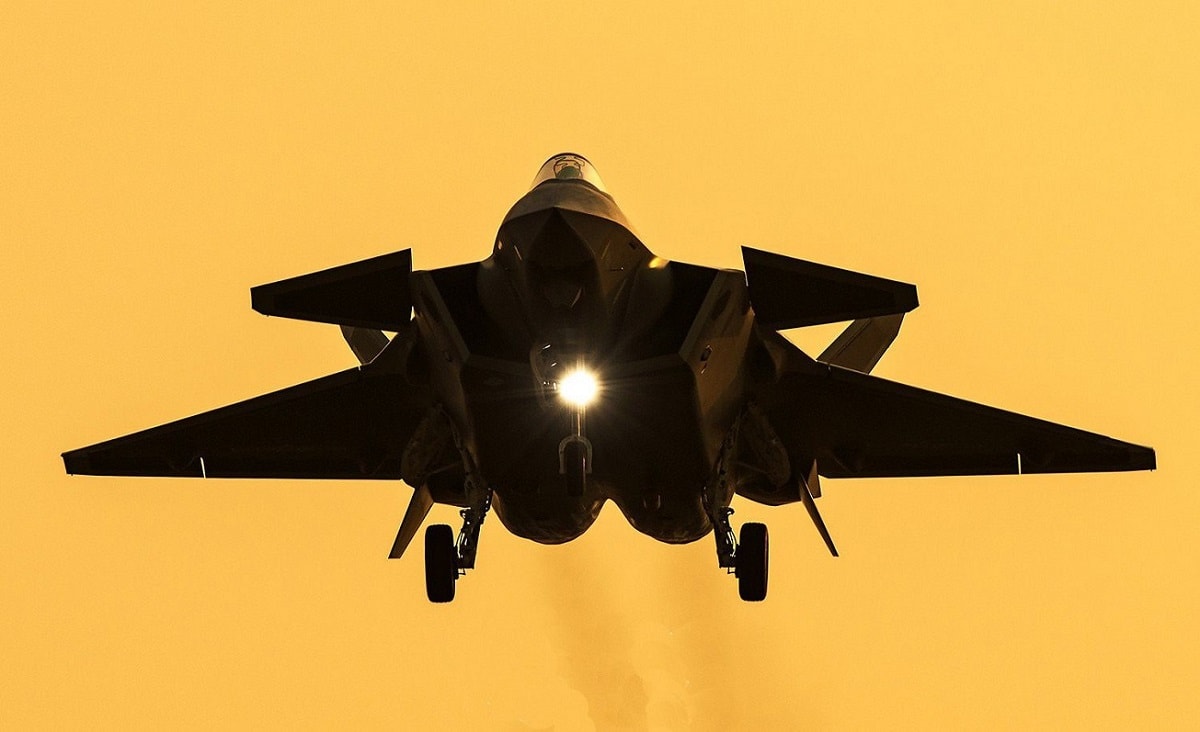
Image: Chinese Internet.
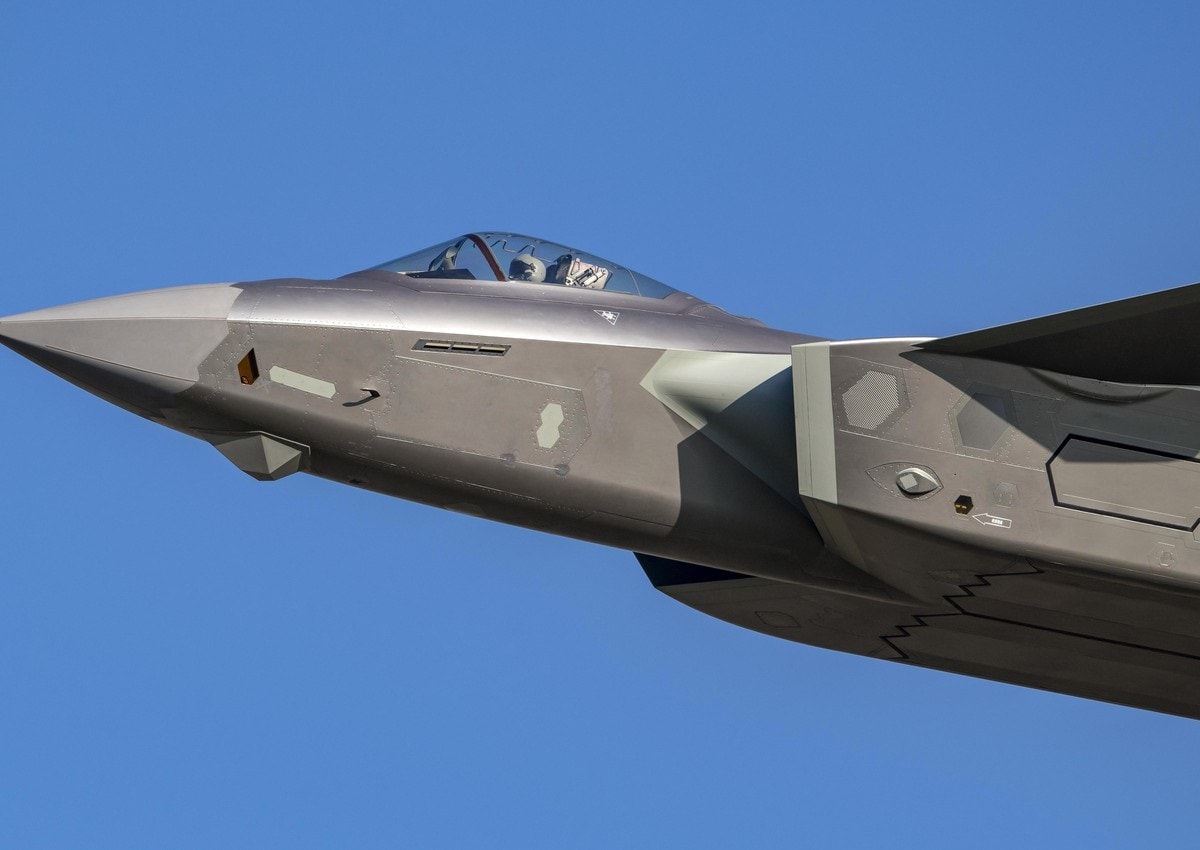
Image: Chinese Internet.
The J-20A’s airframe has been modified to accommodate these engines, with a deeper spine and reprofiled nosecone that also allow for additional avionics and fuel storage. These changes enhance the aircraft’s operational range and endurance, enabling it to conduct long-range missions without refueling.
#2 Improved Avionics
The J-20A also excels in avionics and sensor integration, which are critical for modern air combat. It is equipped with an Active Electronically Scanned Array (AESA) radar that can detect and track multiple targets at long range.
Beneath the nose of the aircraft is an Electro-Optical Targeting System (EOTS), which provides infrared search and track (IRST) capabilities and allows for precision targeting. The pilot benefits from a helmet-mounted display system (HMDS), which enables them to cue weapons and sensors simply by looking at a target.
These systems are integrated through advanced sensor fusion, which combines data from radar, IRST, and electronic warfare systems to create a comprehensive picture of the battlespace.
The J-20A also reportedly relies on heavily automated systems to assist in decision-making, further enhancing its effectiveness in complex combat scenarios. These capabilities allow the J-20A to function not only as a fighter but also as a command-and-control platform, coordinating other aircraft and unmanned systems in network-centric operations.
#3 Stealth Improvements
The J-20A retains the same overall frame of the original J-20 but makes several small improvements to decrease visibility.
The airframe has been refined to eliminate any uneven surfaces and panels, ensuring lower visibility. Its airframe features a canard-delta wing configuration, which is unusual for stealth aircraft but has been carefully optimized using radar-absorbing materials and shaping techniques.
The engine intakes are S-shaped, helping to obscure the engine face from radar, which is a major source of radar reflection.
The aircraft also uses internal weapons bays to maintain a clean profile and reduce radar signature, and its surface is coated with radar-absorbing materials that significantly lower its detectability. The edges of its panels are designed with sawtooth patterns to scatter radar waves, and the overall finish of the aircraft is smooth, further enhancing its stealth characteristics.
While the J-20A may not match the frontal stealth of the F-22 Raptor, it is believed to have superior stealth from side and rear angles, and its stealth coatings are reportedly easier to maintain.
#4 Highly Lethal Armament
In terms of armament, the J-20A is designed to carry a versatile array of weapons for both air-to-air and air-to-ground missions. Its internal weapons bays typically house six to eight long-range air-to-air missiles, such as the PL-15 or PL-12.
These missiles are believed to have ranges that exceed those of their Western counterparts, such as the AIM-120 AMRAAM, giving the J-20A a potential first-shot advantage in beyond-visual-range engagements.
The aircraft also has side bays for short-range PL-10 missiles, which are used in close combat situations. In high-intensity scenarios, the J-20A can be configured to carry up to eight additional missiles externally, bringing the total payload to as many as 14 weapons. While this configuration compromises stealth, it offers overwhelming firepower when stealth is not necessary. The aircraft is also capable of carrying precision-guided munitions for ground attack missions, making it a flexible platform for a variety of combat roles.
#5 Biggest Competitors to Western Aircraft
The J-20A is the biggest contender to American stealth fighters (the Su-57 would be on the list if the Russians could produce more than five aircraft a year).
It is designed to achieve air superiority and intercept high-value targets such as airborne early warning and control systems (AWACS) and aerial refueling aircraft.
With a combat radius estimated at over 1,200 miles, the J-20A can operate far from Chinese territory, projecting power into regions like the South China Sea and the Western Pacific.
The J-20A is well integrated into China’s broader anti-access/area denial (A2/AD) strategy, which aims to prevent adversaries from operating freely in contested regions.
Its ability to serve as a networked node in a larger combat system makes it a key asset in China’s efforts to modernize its military and challenge U.S. air dominance.
With dozens of units reportedly built and more in production, the J-20A is rapidly becoming the backbone of the PLAAF.
About the Author: Isaac Seitz
Isaac Seitz, a Defense Columnist, graduated from Patrick Henry College’s Strategic Intelligence and National Security program. He has also studied Russian at Middlebury Language Schools and has worked as an intelligence Analyst in the private sector.

