
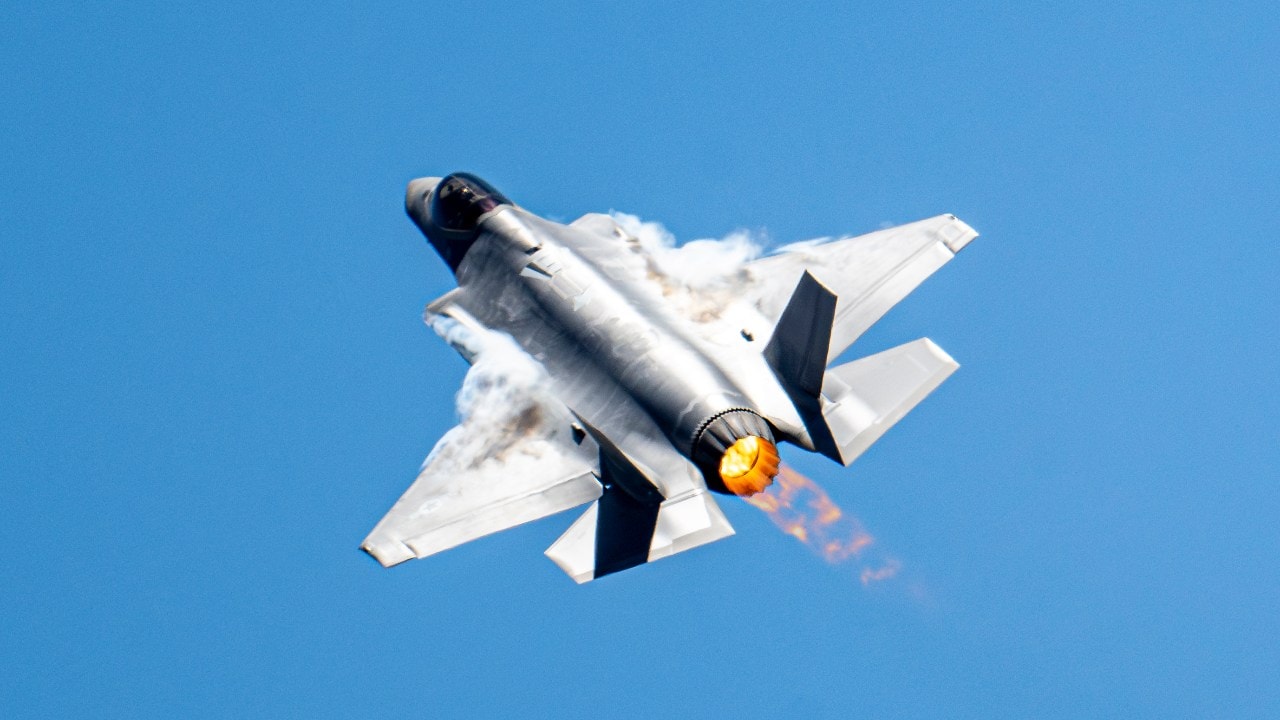
Could the F-35’s New Radar Double as a Directed-Energy Weapon? The AN/APG-85 is the U.S. military’s next-generation radar for the F-35 Lightning II. It is set to replace the older AN/APG-81 on new American aircraft – and although few technical details have been released, it is expected to be a major leap forward in capability. But now, some defense analysts speculate that the radar may be able to do far more than just detect and track targets. In fact, some think it could have a directed-energy attack mode capable of damaging or disabling enemy electronics.
Bill Sweetman’s F-35 Theory
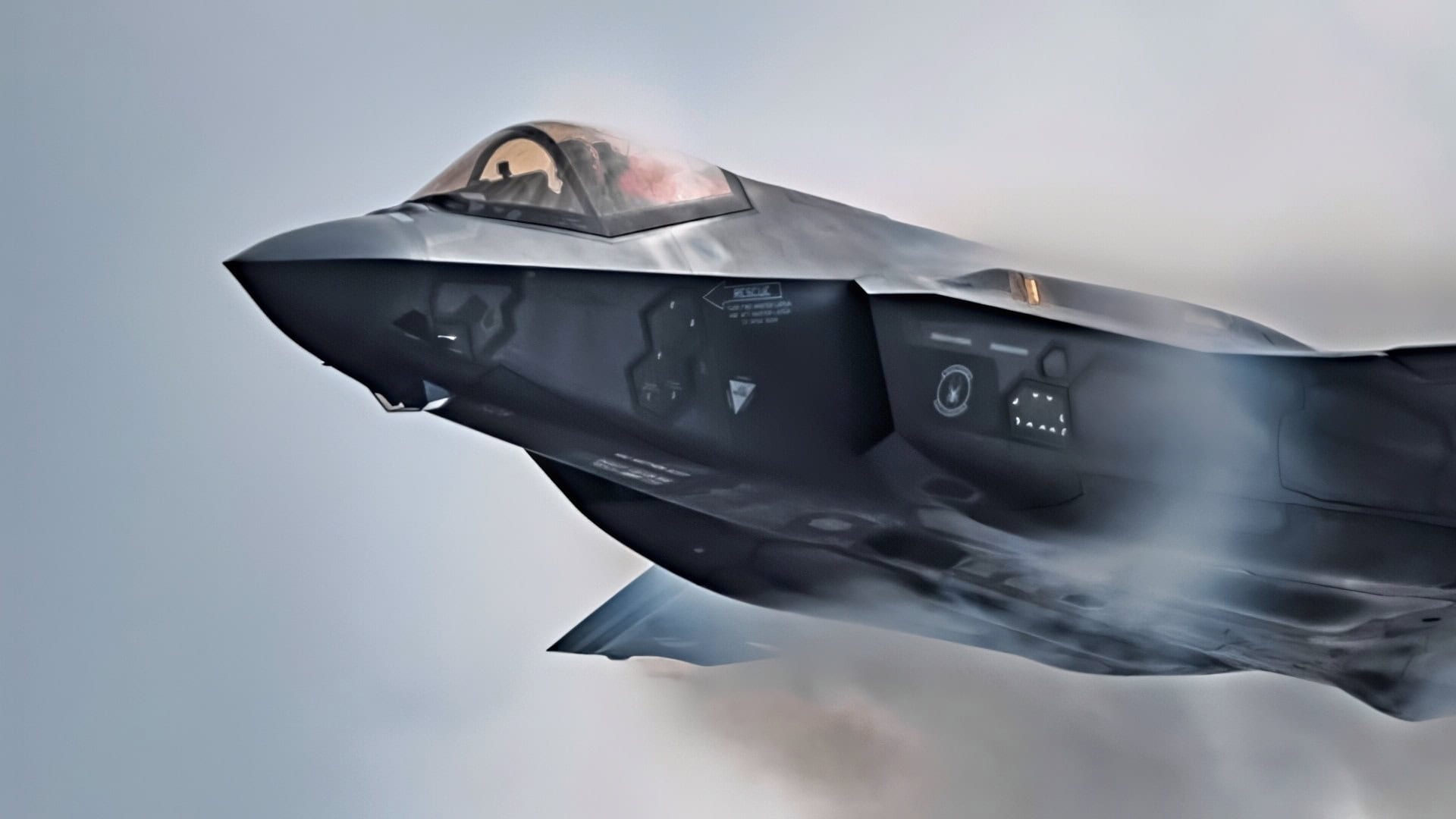
U.S. Air Force Maj. Kristin “BEO” Wolfe, F-35A Lightning II Demonstration Team commander and pilot, flies during a demonstration rehearsal at Hill Air Force Utah, Jan 20, 2021. The F-35A Lightning II Demonstration Team is part of the 388th Fighter Wing, and routinely flies over the Hill Air Force Base to practice and prepare for upcoming air shows around the world. (U.S. Air Force photo by Staff Sgt. Thomas Barley)
One of the most detailed public arguments suggesting that the F-35 could soon be equipped with a directed-energy weapon comes from Bill Sweetman, a former editor at Jane’s and a longtime editor and analyst with the Aviation Week group.
Sweetman has spent decades covering military aviation and has written more than 50 books on combat aircraft.
He is perhaps best known for his investigations into highly classified U.S. aircraft programs, including his research into the rumored “Aurora” reconnaissance aircraft. So when Sweetman argues that the F-35 could be equipped with next-generation directed-energy technology, it’s worth taking seriously.
Writing for the Australian Strategic Policy Institute’s The Strategist, Sweetman stops short of claiming the capability has been confirmed, but reveals telltale signs it could be in the works.
In the piece, he explains what he sees as a series of technical indicators suggesting that the AN/APG-85 may be capable of performing more than traditional radar functions: it could also act as a high-power microwave (HPM) weapon.
Throughout the piece, Sweetman argues that the functionality is highly probable, based on publicly available information and recent testimony before Congress.
His central argument is this: the radar’s extraordinary power and cooling requirements are hard to explain if the system is intended only to detect and track targets. Instead, he argues that those requirements make far more sense if the radar is also designed to transmit extremely high-powered radio-frequency energy capable of attacking enemy electronic systems.
Why the Cooling Requirements Matter
Sweetman’s piece begins by referencing testimony from Lieutenant General Greg Masiello, the head of the F-35 Joint Program Office, before the Senate Armed Services Committee.
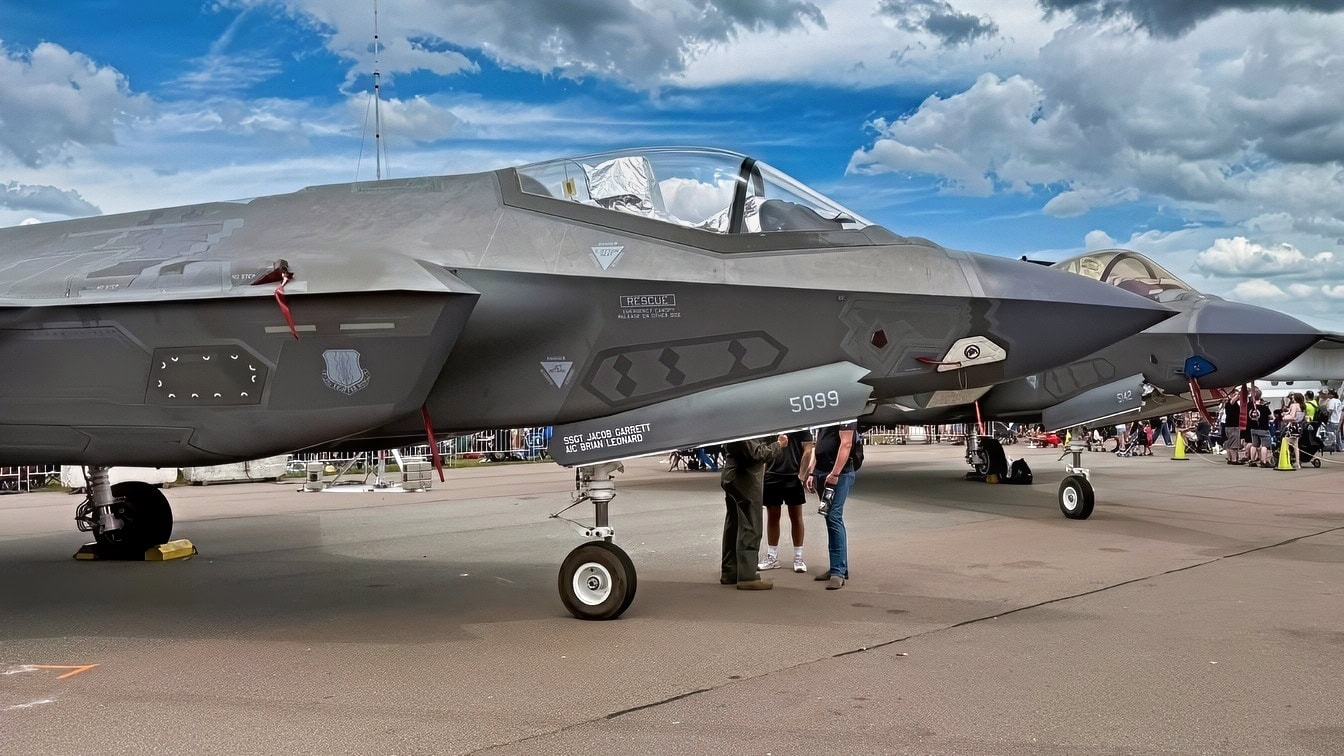
F-35C Lakeland Airshow 19FortyFive.com Image
During the hearing, Masiello explained that the AN/APG-85’s full capability cannot be fully realized until the F-35 receives major engine and cooling upgrades later in the decade.
“So, right now, you’re cooling. You got about 30kW. Block 4 requires 32, is what I have here. But to get to the cooling needed to — for the full capability of the APG-85, needs to be somewhat higher, it seems like 62kW of cooling?”
To which Masiello responds:
“Yes, sir. The requirement that we have for the program going forward is 62 to 80. We can talk specifics about the radar downstairs that is incorporated into the Block 4 requirements. The challenge I see is if the totality of Block 4, when it’s installed, and on the aircraft, it takes the complete power available, which is 32. It’s a cooling really is what we’re looking at, the ability, and there’s no margin, which, as you know, is not a smart way to go. So, we have an incremental approach to increase that. And we have an ongoing program to look at a more systemic and affordable upgrade to the power thermal management across the program.”
Masiello explained that the aircraft’s cooling capacity must increase substantially, and Sweetman argues that the news is significant because advanced radar systems convert electrical power into radio-frequency energy, with the excess energy being released as heat. If cooling requirements more than double, he suggests, then the radar itself is likely producing dramatically greater power than the previous systems.
Sweetman proposes that the additional power could support high-power microwave attacks against enemy electronics. Unlike conventional electronic warfare, which attempts to jam or deceive sensors, HPM weapons are designed to deliver concentrated radio-frequency energy to overload or physically damage electronic systems.
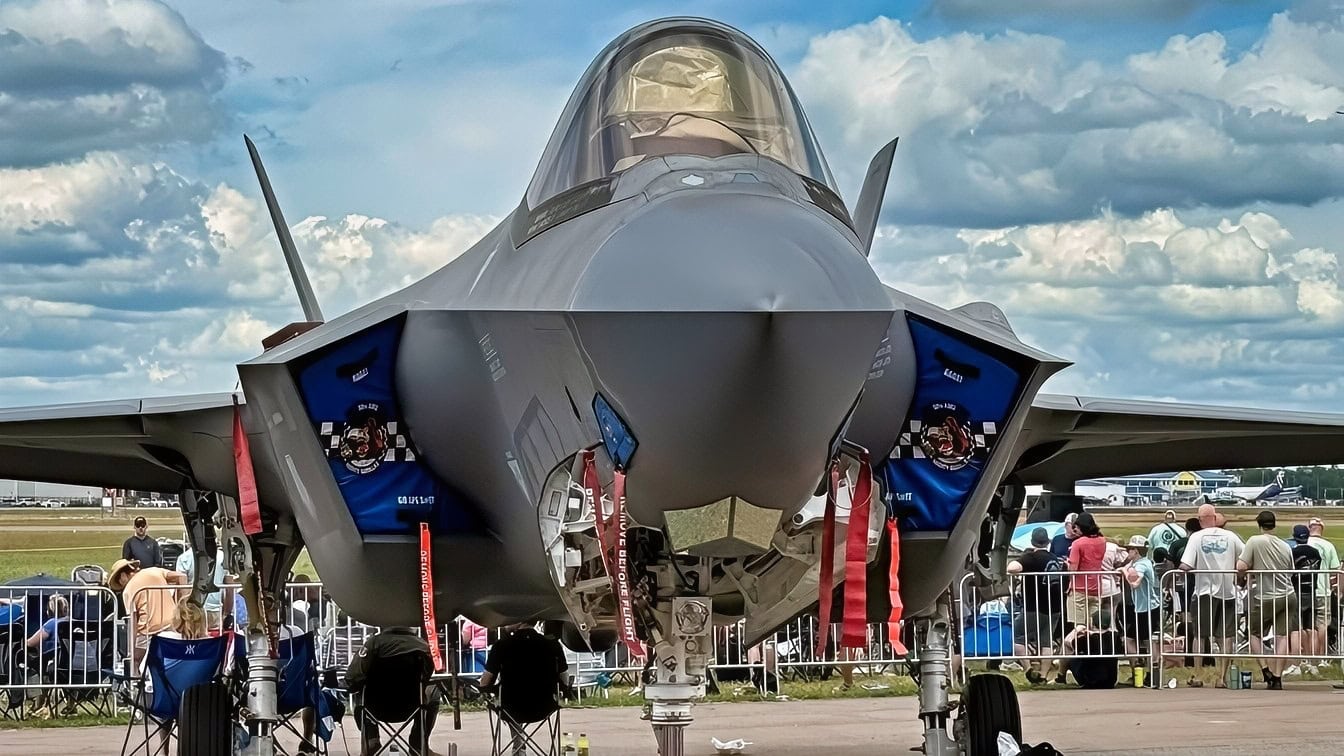
F-35C Lakeland Airshow Photo 19FortyFive Image Taken on 4/19/2026.
From Radar to Directed-Energy Weapon?
Sweetman argues that several technological developments have made it possible to install a weapon like this on an F-35.
Modern active electronically scanned array (AESA) radars already use thousands of transmit-receive modules that steer radio beams electronically rather than mechanically moving the antenna. So, if sufficient electrical power is available, he theorizes, those same antennas could theoretically focus intense microwave energy onto hostile radars or communications systems.
And he also introduces some historical context, noting that the U.S. Air Force has pursued microwave weapon research for decades through programs such as the Counter-Electronic High Power Microwave Advanced Missile Project (CHAMP), while Britain has also invested in similar technologies for aircraft including the Royal Air Force’s Eurofighter Typhoon and the future Global Combat Air Program (GCAP).
So, could the F-35 – the world’s most advanced fifth-generation fighter – soon be sporting directed-energy weapons? Only time will tell, but so far, the evidence suggests it’s perfectly plausible.
About the Author: Jack Buckby
Jack Buckby is a British researcher and analyst specializing in defense and national security, based in New York. His work focuses on military capability, procurement, and strategic competition, producing and editing analysis for policy and defense audiences. He brings extensive editorial experience, with a career output spanning over 1,000 articles at 19FortyFive and National Security Journal, and has previously authored books and papers on extremism and deradicalization.