
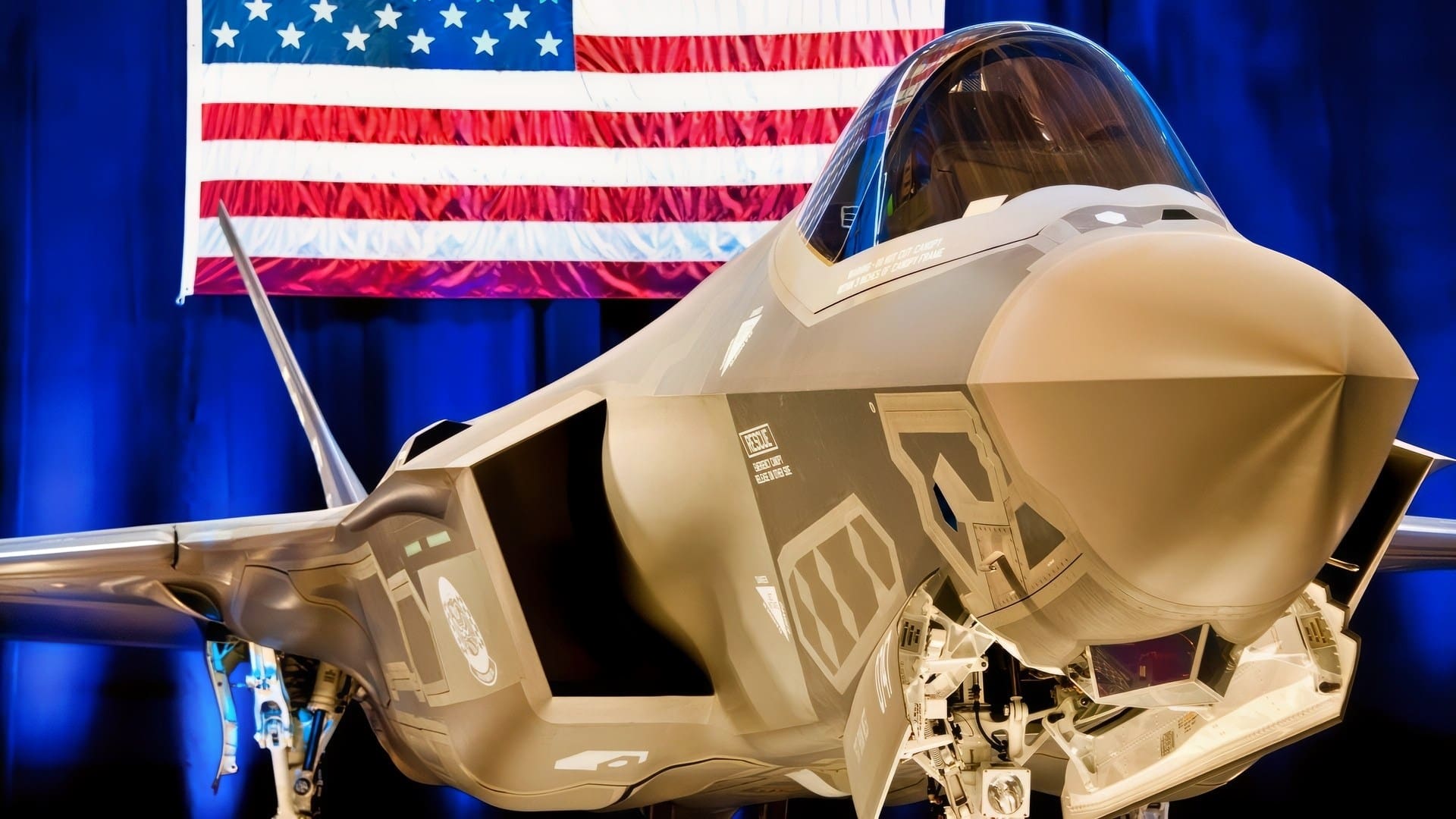
To be blunt, I was a big believer in the F-35 stealth fighter, but my fanboy status is now in doubt. The reasons are clear: the Government Accountability Office published its annual review of F-35 sustainment on June 11, and the headline finding is blunt. Across the fleet, the full mission capable rate, the share of time an aircraft can perform every mission assigned to it, fell from 38 percent in fiscal 2021 to 25 percent in fiscal 2025. The broader mission capable rate, meaning the jet can fly at least one of its tasked missions, dropped from 67 percent to 44 percent over the same period.
Twelve days later, the general who runs the program sat before the Senate Armed Services Committee and confirmed a second fact that turns the readiness numbers from an abstraction into a picture. The United States Marine Corps has accepted six brand-new F-35s with no radar installed.
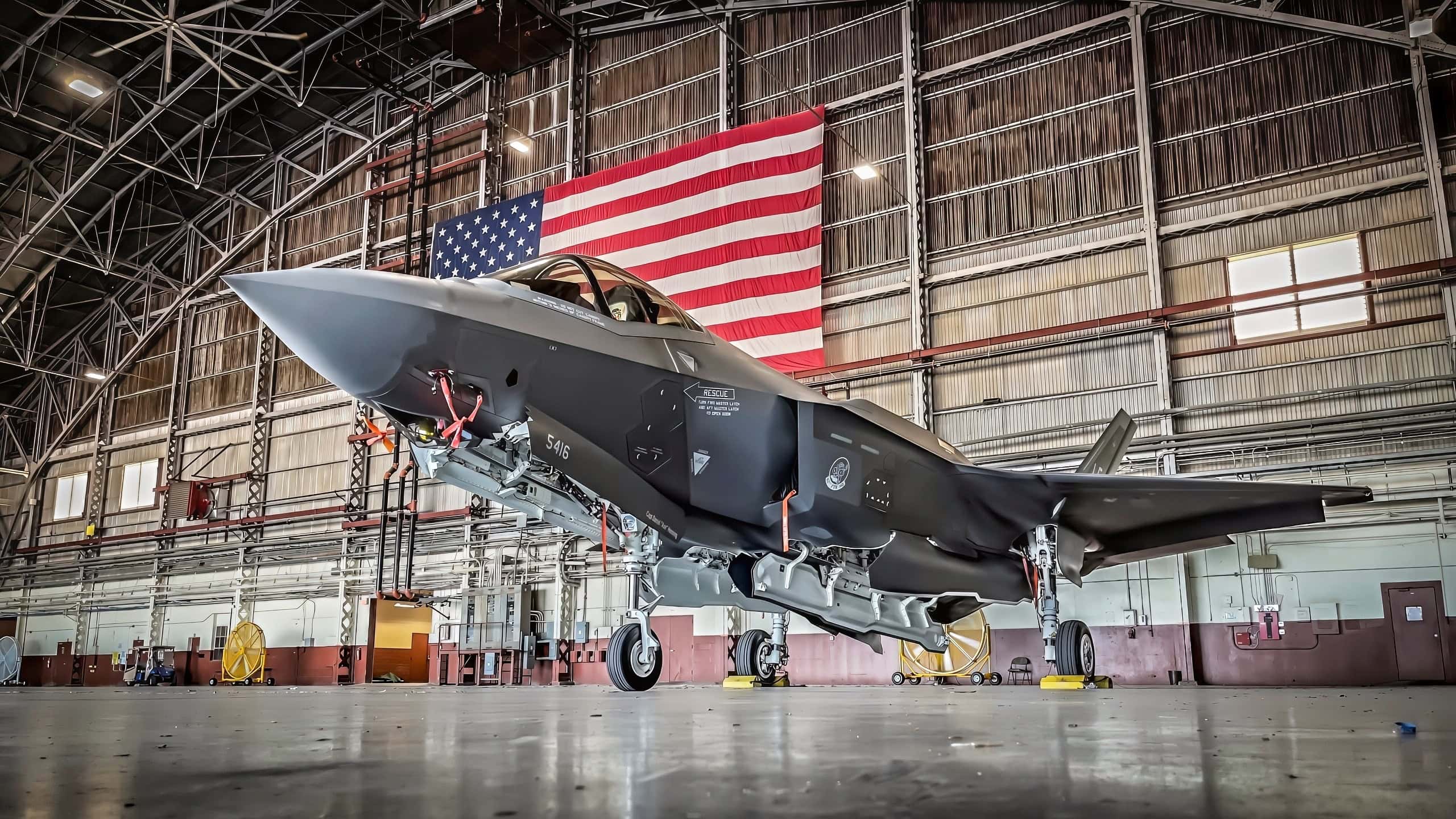
An F-35 Lightning II assigned to the 62nd Fighter Squadron, Luke Air Force Base, Ariz., sits in a hangar ahead of operations for the F-35 Lightning II TDY, Oct. 28, 2021, at Joint Base San Antonio-Kelly Field, Texas. The 62nd FS will be training with F-16s from the 149th Fighter Wing and the 301st Fighter Wing, along with T-38s from the 301st Fighter Wing. The multi-role capabilities of the F-35 allows them to perform missions which traditionally required numerous specialized aircraft. The complimentary air superiority capabilities of the F-35 will augment our air superiority fleet and ensure we continue to “own the skies” over future battlefields. (U.S. Air Force photo by Brian G. Rhodes)
The two disclosures read as separate procurement stories. They trace to the same decision, made years ago and defended by the Pentagon to this day: build and buy the jets first, and let the support system, the spare parts, the upgrades, and even some of the sensors catch up later.
The bill for that sequencing is now arriving from several directions at once, and the government’s own documents put numbers on every piece of it.
What the GAO Found About F-35 Readiness in 2026
The June report, the watchdog’s congressionally mandated annual look at F-35 sustainment, describes a fleet that costs more each year and performs worse. GAO calls the F-35 the Defense Department’s most costly weapon system, with lifetime US sustainment costs alone estimated at $1.6 trillion as of 2024. The department operates more than 800 of the jets and plans to buy roughly 1,700 more by the mid-2040s.
The variant-level numbers are worse than the fleet averages suggest. The Air Force’s F-35A posted the best full mission capable rate of the three versions in fiscal 2025, at 28.5 percent, against a service goal of 65 percent. The Navy’s carrier-based F-35C sat at the bottom at 15.3 percent. Software shortfalls, spare parts shortages, corrosion, and limited depot capacity all contribute to the decline, and Air Force officials told the auditors that part of the 2025 drop stemmed from accepting new jets that could not yet perform their missions due to software limitations.
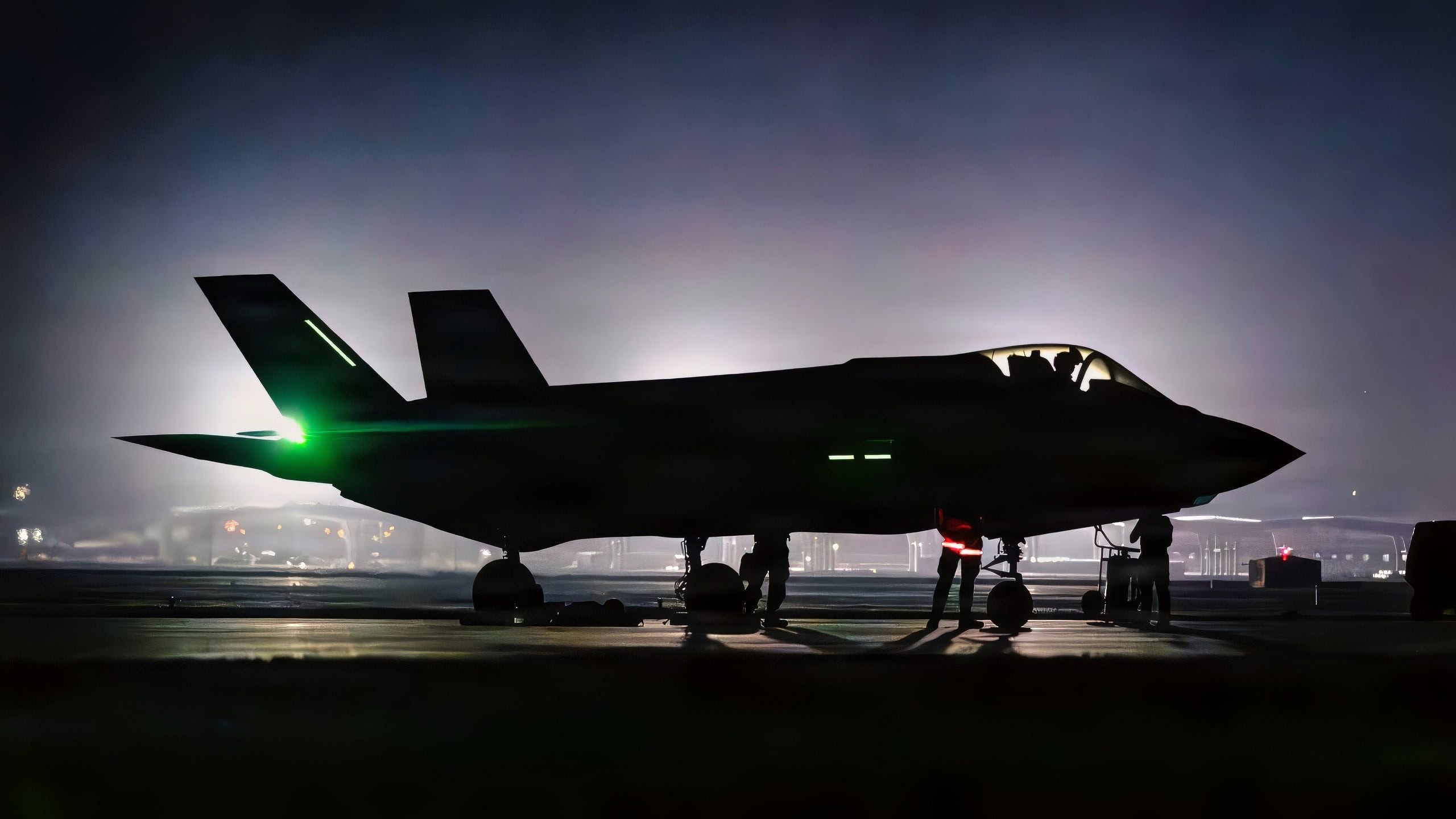
A U.S. Air Force F-35A Lightning II assigned to the 95th Fighter Squadron is parked on the flightline during exercise Noble Panther 26-4 at Tyndall Air Force Base, Florida, March 9, 2026. Airmen participated in night sorties, requiring them to perform their tasks in low-light conditions while staying watch for potential simulated attacks. These high-intensity, realistic scenarios were designed to build the confidence and muscle memory required for combat operations. (U.S. Air Force photo by Senior Airman Zeeshan Naeem)
The program office’s answer is a rebuilt sustainment strategy it calls the Global Support Solution Reset, and the price of that answer is itself a finding. The reset requires an estimated $13.7 billion beyond what was already planned through fiscal 2031, with about $7.3 billion for depot-level spare parts and materials, $3.1 billion to expand depot capacity, and $3.3 billion for maintenance and fuel. Even then, GAO warns the plan depends on private industry delivering more than $7 billion in additional parts through a supplier base that already cannot keep up.
A 2025 Lockheed Martin study found 48 parts that suppliers cannot produce in sufficient quantities, including canopies, which auditors have previously identified as a top driver of grounded jets. And the report adds a longer-range figure that has drawn less attention than the readiness rates: by the mid-2030s, the military services face a gap of more than $1 billion annually between what it will cost to sustain their F-35s and what they say they can afford.
The root cause, according to the account program officials themselves gave the auditors, is that the department prioritized buying aircraft early in the program’s life rather than building the repair and parts infrastructure to keep them flying, historically underinvesting in sustainment. GAO has now made 46 recommendations on F-35 sustainment since 2014. As of March, the Pentagon had implemented 14.
Industrial Drama: Six Marine Corps F-35s Have No Radar Installed
At a Senate Armed Services Committee hearing on June 23, Senator Mark Kelly, an Arizona Democrat and retired naval aviator, put the question directly to Marine Corps Lt. Gen. Gregory Masiello, who heads the F-35 Joint Program Office. Masiello confirmed that the Marine Corps has accepted six F-35s without radar installed, and explained the reason: the new AN/APG-85 radar, the jets were built to carry, is not yet in production. The aircraft are reportedly the short-takeoff F-35B variant, though Masiello did not specify at the hearing. The program office later told The War Zone that the six Marine jets are the only radar-less deliveries so far, that no Air Force or Navy aircraft have been formally accepted in that condition, and that information on how many will follow is restricted for program security.
More are coming. Breaking Defense, which first reported the issue in March, cited sources saying that essentially all new F-35s delivered to the American military from this fall will arrive without radars, with the Air Force and Navy following the Marines later this year. The first production APG-85s are not expected before April 2028, at an estimated unit cost near $8.8 million, and that date already reflects a nine-month improvement on the prior schedule.
The trap is as mechanical as it is industrial. Starting with production Lot 17, the jets are built with a redesigned nose bulkhead sized for the bigger APG-85. The older APG-81 radar, which has equipped every F-35 to date and still goes into foreign customers’ aircraft, does not fit the new mounting, and a common bulkhead that could take either radar is not expected before Lot 20 aircraft arrive in the 2027 to 2028 window.
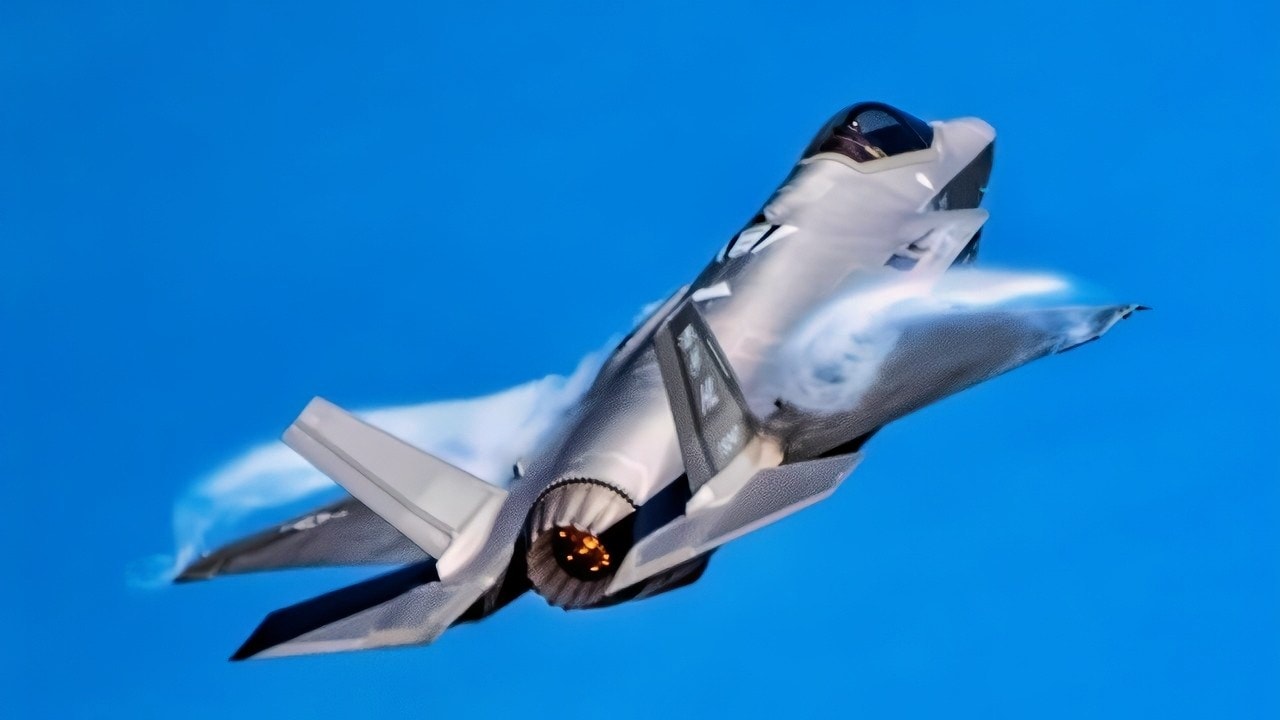
U.S. Air Force Maj. Kristin Wolfe performs a demonstration in the F-35A Lightning II during at the Reno Air Races in Reno, Nevada, September 19, 2021. The F-35 Lightning II Demonstration Team is based out of Hill Air Force Base, Utah. (U.S. Air Force photo by Tech. Sgt. Nicolas Myers)
So, finished jets roll out of Fort Worth with dead weight bolted into the nose to preserve the center of gravity, able to fly basic-training sorties but not to fight. A radar-less F-35 can still receive radar data from other F-35s over its datalinks, and its passive sensors still function, but its electronic warfare capability is curbed and its survivability degraded.
Kelly led the program chief to the obvious conclusion, noting that he could not imagine a scenario in which an F-35 with no radar would count as a fully mission-capable airplane. Masiello did not dispute it, telling the senator he would not count them as fully mission capable either.
The Marine Corps’ defense of the situation is a plain statement of the original bet. The Department of War, a spokesperson said, deliberately ran development and production concurrently, “with full understanding of the risk” that finished aircraft would be ready before the capabilities meant to go inside them. Building jets configured for the future radar, the service argues, beats building old-configuration aircraft that would need years of retrofits. That is true as far as it goes. It is also a description of how a $100 million-plus stealth fighter is delivered without the sensor that makes it a weapon.
Aerospace Shock: The $100 Million Brake Contract Nobody Noticed
A quieter announcement in late May shows the same sustainment strain at the nuts-and-bolts level. On May 26, Naval Air Systems Command awarded Lockheed Martin Aeronautics a $100.4 million order for 1,459 brake assembly heat sinks, 1,075 for the F-35A and 384 for the F-35B, in support of depot-level brake repairs. The contract’s stated purpose is the resolution of “existing thermal management constraints” and the ensuring the reliability of critical avionics, with the work running in South Bend, Indiana, through March 2030.
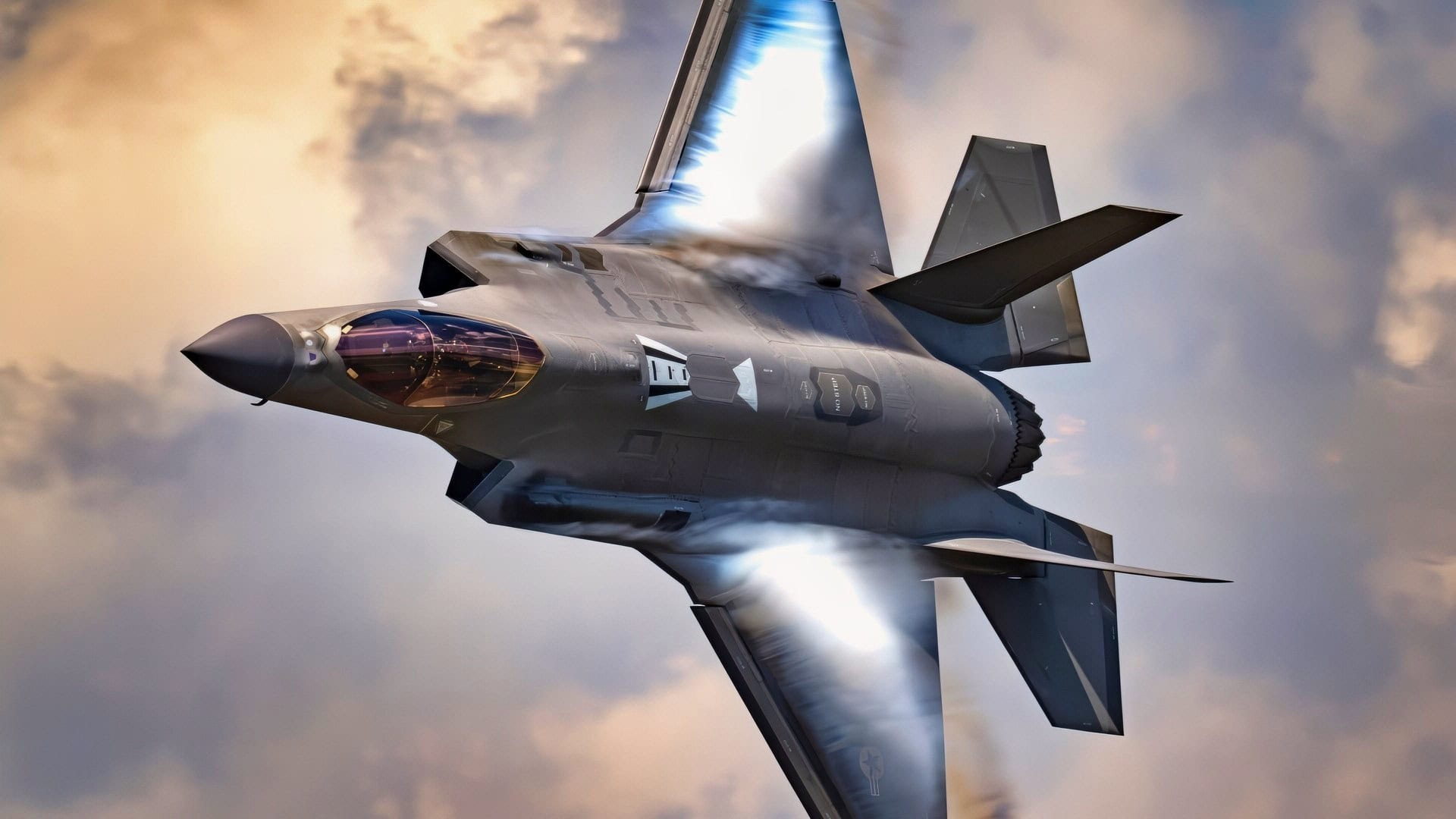
A U.S. Air Force F-35A Lightning II, assigned to the F-35A Lightning II Demonstration Team, piloted by Maj. Melanie ‘MACH’ Kluesner, performs during the 2025 Battle Creek Field of Flight Air Show over Battle Creek, Michigan, July 5, 2025. The F-35A Demonstration Team showcases the jet’s unique maneuverability and advanced capabilities at air shows across the nation. (U.S. Air Force photo by Staff Sgt Zachary Rufus)
The funding split tells its own story about how widely the problem is shared: $43.7 million from the Air Force, $28.5 million from the Navy, $10.9 million from foreign military sales customers, and $17.1 million from the program’s partner nations. Heat has been a running theme across the F-35’s troubles, from an engine that runs hotter than its original specification to an overtaxed cooling system, and here it reaches the landing gear. The Pentagon is spending nine figures so that the heat generated by stopping the airplane no longer threatens the electronics that fly it.
Business Issues: Lockheed Marin Collected Readiness Incentives While Readiness Fell
The GAO report’s sharpest section concerns money already spent. From 2020 through 2023, the program office paid Lockheed Martin more than $114 million of roughly $269 million in available incentive fees tied to improving full mission capable rates and parts supply, even as both measures stagnated or declined.
In 19 of 39 performance periods, the recorded readiness rate was adjusted upward due to factors outside the contractor’s control, thereby qualifying the company for larger payments. Had the fees been paid on the raw rates, GAO estimated Lockheed would have earned about half as much.
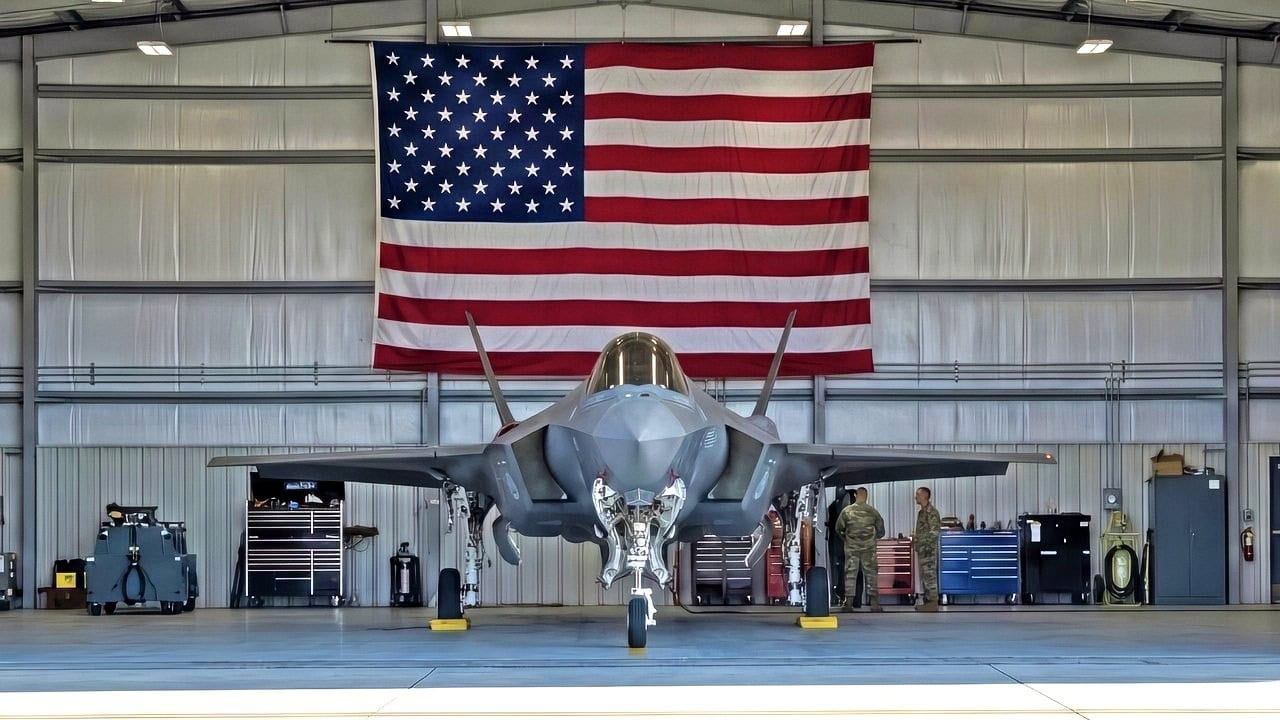
F-35 in the Hanger. Image Credit: Nano Banana Pro.
A Pentagon Inspector General audit published in December reached a similar conclusion, and one of GAO’s three new recommendations, all of which the department has accepted, is to rebuild the incentive structure, potentially including penalties for poor performance.
Dan Grazier, who directs the national security reform program at the Stimson Center, told Responsible Statecraft that the readiness slide should surprise no one, adding, “That has become a pattern with the F-35.” Lockheed, for its part, says it has invested more than $2 billion in advance funding to accelerate the delivery of spare parts across the global fleet, and it delivered a record 191 aircraft in 2025.
Operation Epic Fury and the Program Office’s Answer
The strongest case for the F-35 was made in the context of Iran. The jet flew extensively in Operation Epic Fury, beginning in February, and, according to retired airpower analysts and the services themselves, it performed superbly.
Douglas Birkey, executive director of the Mitchell Institute for Aerospace Studies, argues that the combat record proves the aircraft delivers when spare parts, seasoned maintainers, and command priority are concentrated on the jets doing the fighting. His caveat is the honest one: that concentration pulls parts and attention from the rest of the fleet, and overall readiness could slip further this year as a result.
Masiello, for his part, does not accept GAO’s arithmetic. Using the program office’s own methodology, he told senators, the mission capable rate is 56 percent, not 44. Kelly took the number at face value and rounded it, observing that even by the program’s preferred math, half the airplanes cannot do everything asked of them. The dispute over methodology is real, and readers should know it exists. What no methodology changes is the direction of every trend line in the report, or the six jets sitting at Marine air stations with weights where their radars belong.
The Cooling Problem Waiting at the End of the Radar Fix
The most consequential exchange at the June hearing looked past the missing radars to what happens when they finally arrive. The APG-85 and the rest of the Block 4 upgrade package will demand far more electrical power and cooling than the jet can currently provide. Masiello told the committee the program’s forward requirement is 62 to 80 kilowatts of cooling capacity.
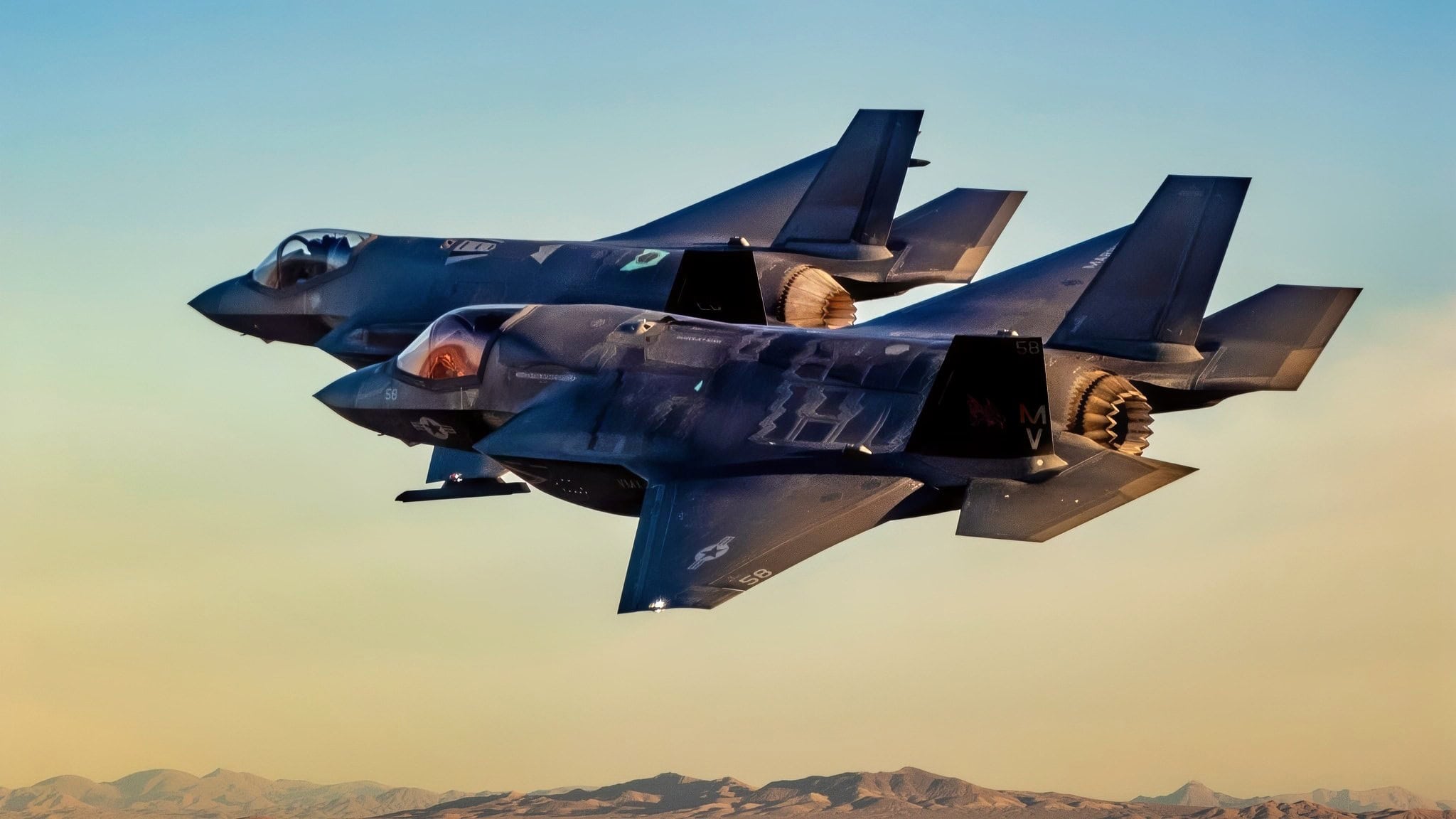
Test pilots with the 461st Flight Test Squadron, 412th Test Wing, return to Edwards Air Force Base, California, on January 21 after conducting a TR-3 AIM-120 live fire mission over the Pacific Test Range. The F-35 Integrated Test Force at Edwards is responsible for developmental testing of all three F-35 aircraft variants across the joint-services. (Courtesy Photo)
The aircraft has 32, and the full Block 4 suite, once installed, consumes all of it. “There’s no margin, which as you know, is not a smart way to go,” the general said. The engine core upgrade that begins to relieve the problem is not expected to be fielded until 2031, the deeper power-and-thermal overhaul comes years after that, and Masiello declined to say in open session what the shortfall means for fielding the new radar at full capability.
The most expensive weapons program ever undertaken, officially costed at $2.1 trillion across its lifetime, enters July with a fleet that can do its whole job one hour in four, new jets waiting until 2028 for their radars, and a cooling budget already spent before the radar ever switches on.
About the Author: Harry J. Kazianis
Harry J. Kazianis (@Grecianformula) was the former Senior Director of National Security Affairs at the Center for the National Interest (CFTNI), a foreign policy think tank founded by Richard Nixon based in Washington, DC. Harry has over a decade of experience in think tanks and national security publishing. His ideas have been published in the NY Times, The Washington Post, The Wall Street Journal, CNN, and many other outlets worldwide. He has held positions at CSIS, the Heritage Foundation, the University of Nottingham, and several other institutions related to national security research and studies. He is the former Executive Editor of the National Interest and the Diplomat. He holds a Master’s degree focusing on international affairs from Harvard University.

