
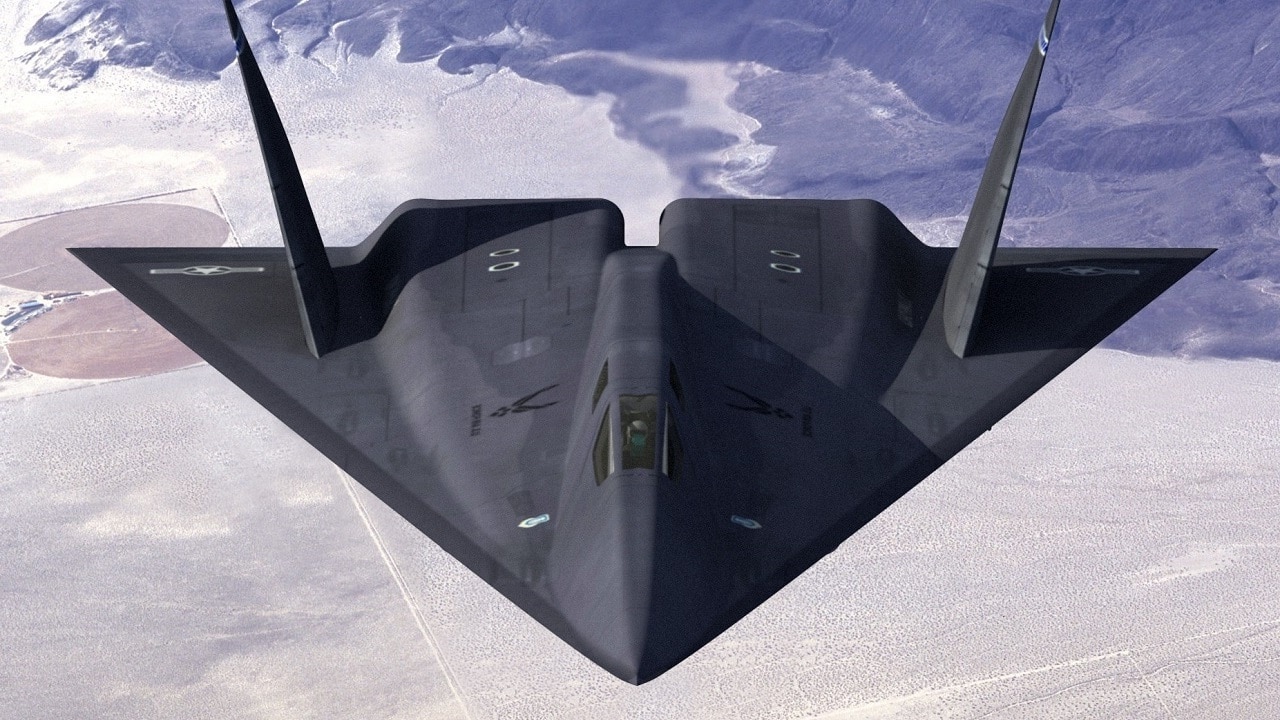
Key Points and Summary – For nearly forty years, the rumored SR-91 Aurora has loomed over aviation as the mystery successor to the SR-71 Blackbird.
-Sparked by a 1985 budget line and fuelled by “sky quakes” and strange contrails, the legend imagined a Mach 5–6 spy plane streaking above 100,000 feet on exotic engines.
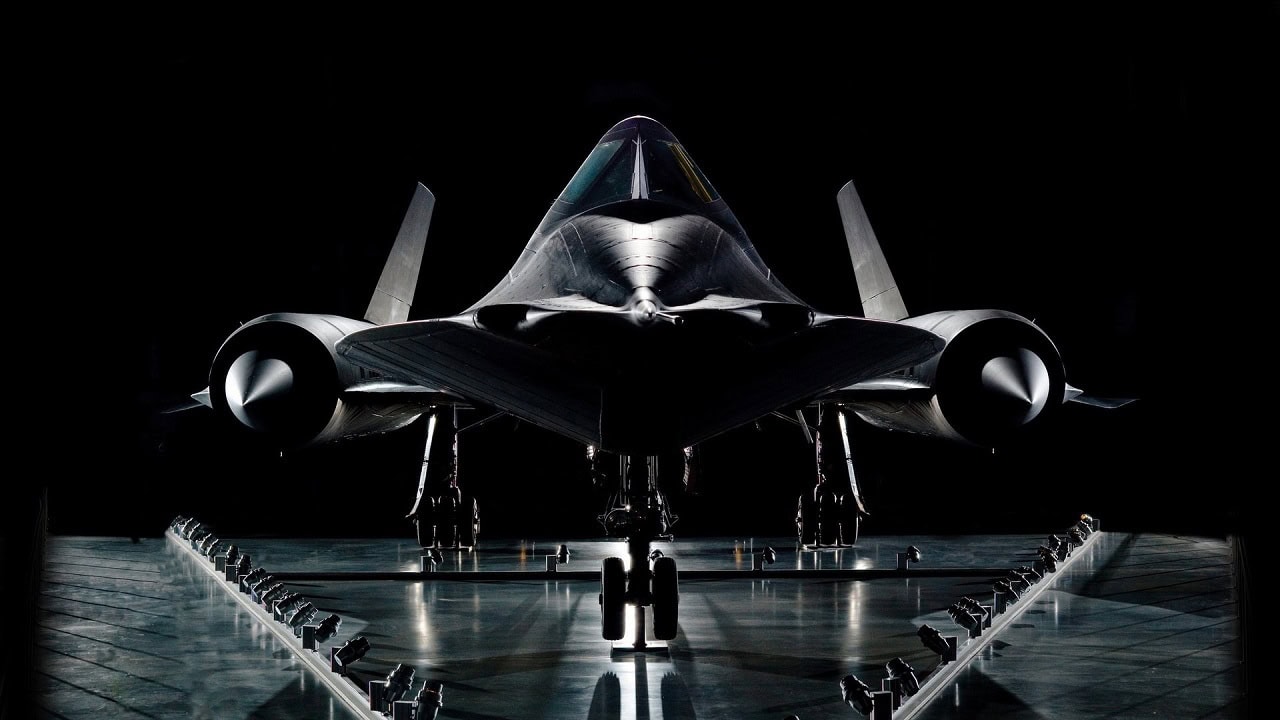
SR-71 Blackbird Artist Rendering. Image Credit: Creative Commons.
-But no hard evidence has ever surfaced, and most experts now see Aurora as either a misread black program or a concept that proved technically unrealistic.
-Yet the idea endures, foreshadowing today’s push for unmanned hypersonic drones that might finally deliver what Aurora only promised on paper and in rumor.
SR-91 Aurora: Secret Mach 5 Spy Plane or Just a Myth?
For almost four decades, aviation enthusiasts and defense analysts have speculated about a secret American aircraft known as the SR-91 Aurora.
Allegedly conceived to replace the SR-71 Blackbird, the SR-91 Aurora has become a legend – and nobody can tell whether it existed or not.
According to the rumor, the SR-91 was a hypersonic reconnaissance aircraft capable of flying at speeds above Mach 5, and potentially as high as Mach 6.
The aircraft could also reportedly fly at altitudes beyond 100,000 feet.
It was said to utilize advanced stealth features of the time and employ futuristic propulsion systems, such as scramjet and pulse-detonation engines, to achieve extraordinarily high speeds.
The rumour was so widespread at one time that a series of “sky quakes” over California and Nevada in the late 1980s was attributed to the aircraft’s test flights.
The name Aurora first emerged publicly in a 1985 U.S. budget document, reportedly as a line item for a classified program.
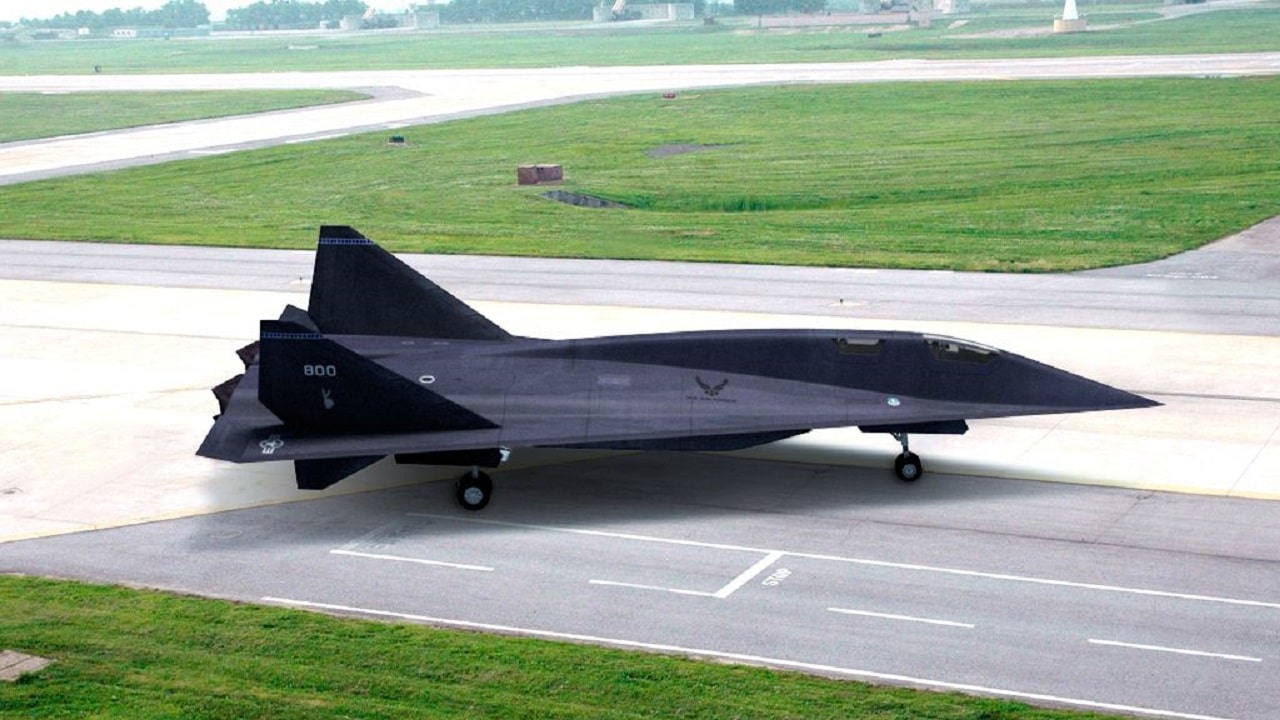
SR-91 Aurora. Image Credit: Rodrigo Avella.
Some interpreted this as a hint of a new high-speed reconnaissance aircraft designed to succeed the iconic SR-71 Blackbird.
Whether that line referred to a real aircraft or was merely a codename for another project, however, remains one of aviation’s great mysteries.
The SR-71 Blackbird: The Standard to Beat
Before judging the credibility of the SR-91 Aurora rumors, it helps to understand the aircraft it was supposedly meant to replace.
The SR-71 Blackbird was one of the most extraordinary feats of Cold War engineering. Developed by Lockheed’s Skunk Works, it emerged in the early 1960s from the CIA’s A-12 Oxcart program, which aimed to create a high-altitude, Mach 3+ reconnaissance aircraft for covert intelligence missions over hostile territories.
The SR-71 was the Air Force derivative of the A-12, developed a few years later as part of a separate but related program known as Senior Crown.
The SR-71 itself shared the same basic shape and propulsion system but was designed with two seats, improved sensors, radar, and longer range.
Designed for strategic reconnaissance over the Soviet Union and other airspace, the SR-71 relied on speed and altitude, rather than stealth technology, to evade detection. Cruising at Mach 3.2 and above 80,000 feet, it was capable of outrunning missiles rather than evading them entirely.
The aircraft’s innovations were remarkable, if genuine. Its titanium construction meant it could withstand temperatures of over 600°F, and its inlets were designed to properly regulate the airflow to the powerful Pratt & Whitney J58 engines.

SR-91 Aurora artist image. Image Credit: Rodrigo Avella
Additionally, a specialized JP-7 fuel doubled as a coolant and hydraulic fluid, regulating the aircraft’s temperature even as it burned fuel and traveled at unprecedented speeds. The Blackbird also incorporated early radar-reduction techniques that shrunk its radar signature.
But despite its enormous maintenance demands – each flight required hours of inspection and refueling by specialized tankers – the SR-71 set records that endured. It flew from Los Angeles to Washington, D.C. in 64 minutes and from London to New York in just 1 hour 54 minutes.
When the Blackbird was retired in 1998, it left a gap that no aircraft since has fully filled – in part because it was such a radical design, but also as a result of steady advancements in stealth technology.
The Aurora legend arose primarily because it was so difficult to believe that a nation with something as powerful as the SR-71 would not allow such a void in high-altitude reconnaissance. The reality, however, is that technology has changed – and so have the methods by which we gather intelligence.
Sightings and Speculation of the SR-91 Aurora
Stories of the SR-91 began circulating in the late 1980s. Amateur observers in Southern California reported hearing mysterious “pulsing” sonic booms or seeing contrails resembling “donuts on a rope” – patterns possibly consistent with experimental pulse-detonation engines. In 1989, a British engineer working on an oil rig claimed to have seen a triangular, fast-moving aircraft refueling over the North Sea, leading tabloid newspapers to suggest that the Aurora was real.
In later years, analysts and enthusiasts linked Aurora to the “skyquake” phenomenon over the U.S. Southwest and to satellite imagery that showed unconventional runway activity at Groom Lake, better known as Area 51.
Some even pointed to comments made by Ben Rich, the former head of Skunk Works, who hinted at work on technologies that went far beyond the capabilities of the SR-71.
But despite the speculation, there remains no credible photograph, satellite image or official statement to substantiate the many claims that have been made over the years.
A Modern Day Myth?
Most experts and observers now view the Aurora either as a misinterpretation or a myth.
The budget line item that started it all could have been a placeholder for another classified project, and some have suggested it could even refer to the B-2 Spirit.
Technically, a Mach 5-6 spy plane in the 1980s was unlikely. Sustained hypersonic flight requires the use of scramjet or turbine-based combined-cycle engines, as well as materials capable of surviving thousands of degrees of heat – not to mention fuel systems that can handle the same kinds of temperatures.
These are all problems that even modern programs have struggled to overcome. And, at such high speeds, human pilots would face physiological stress that makes manned operation completely unrealistic.
Given these constraints, the description of the Aurora – a stealthy, hypersonic, manned plane operational by the late Cold War – makes little sense and would have required technological advances decades ahead of time.
That being said, something like the Aurora could well emerge soon, thanks to the arrival of artificial intelligence and other technologies that support advanced unmanned systems.
About the Author:
Jack Buckby is a British author, counter-extremism researcher, and journalist based in New York who writes frequently for National Security Journal. Reporting on the U.K., Europe, and the U.S., he works to analyze and understand left-wing and right-wing radicalization, and reports on Western governments’ approaches to the pressing issues of today. His books and research papers explore these themes and propose pragmatic solutions to our increasingly polarized society. His latest book is The Truth Teller: RFK Jr. and the Case for a Post-Partisan Presidency.