
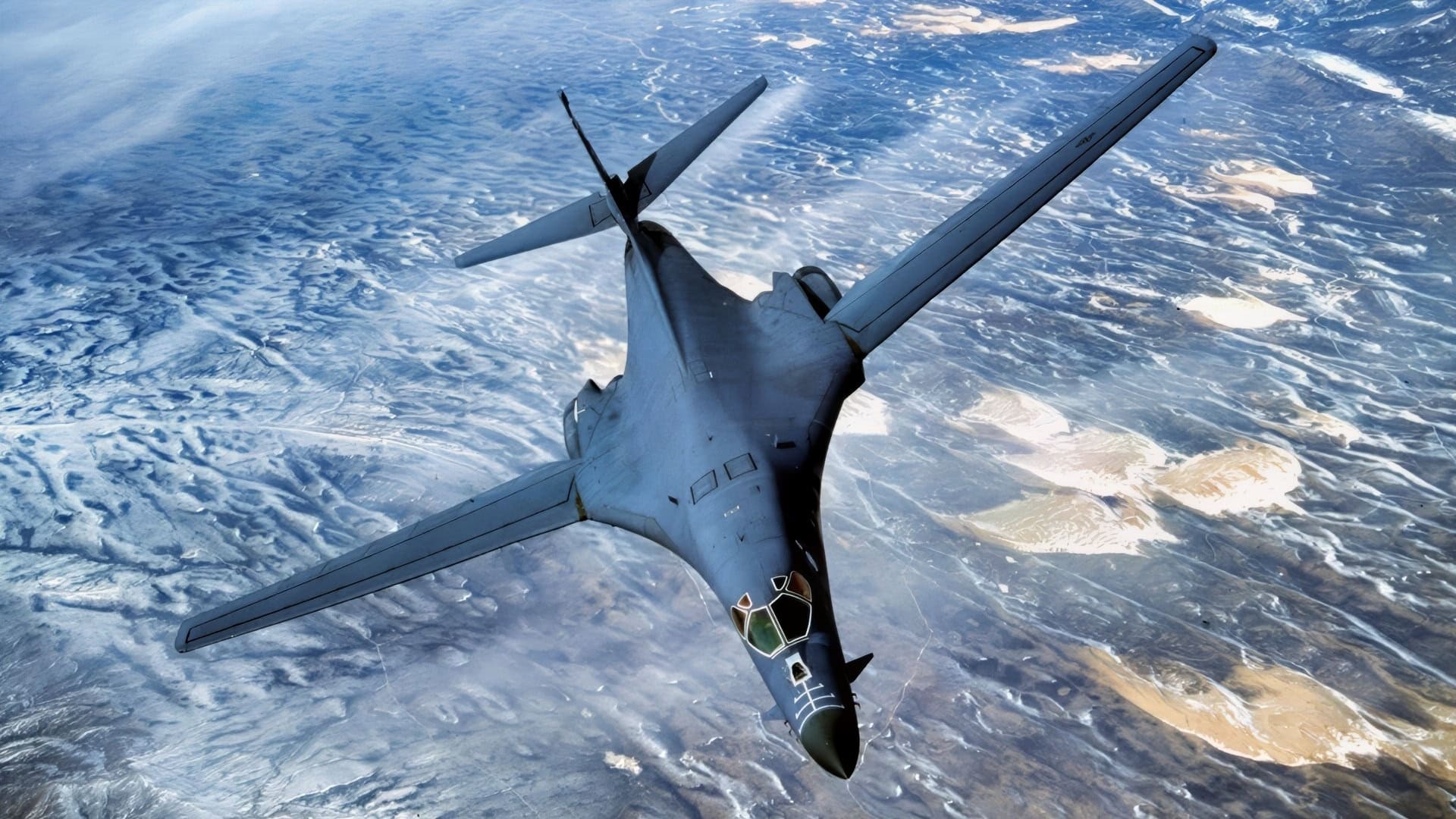
Since the end of the Cold War, the United States Air Force has been scratching its head over what to do with its fleet of B-1B Lancer bombers.
Originally designed as a nuclear-capable strategic bomber, the Lancer was redesigned to fulfill a purely conventional role.
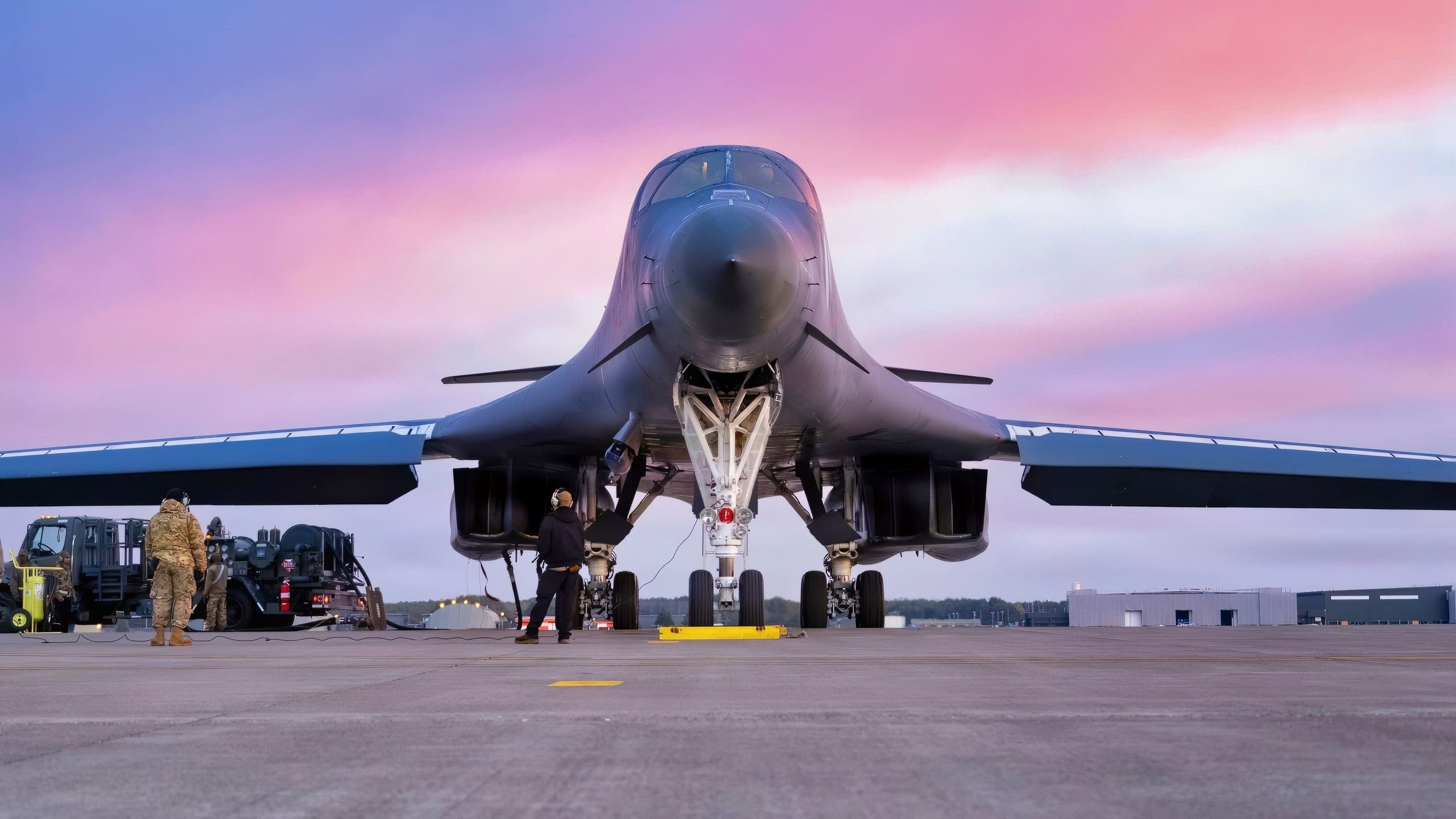
A U.S. Air Force B-1B Lancer gets hot pit refueled before its return to Dyess Air Force Base, Texas, at Misawa Air Base, Japan, Nov. 17, 2025, concluding a bomber task force deployment. BTF operations employ U.S. strategic bombers globally, deter adversaries, assure allies and partners, strengthen interoperability and maintain readiness and global strike capability. (U.S. Air Force photo by Senior Airman Emma Anderson)

A U.S. Air Force B-1B Lancer assigned to the 7th Bomb Wing takes off from Dyess Air Force Base, Texas, Dec. 25, 2025. U.S. military forces are deployed to the Caribbean in support of the U.S. Southern Command mission, Department of War-directed operations, and the president’s priorities to disrupt illicit drug trafficking and protect the homeland. (U.S. Air Force photo)
The B-1B’s original mission was to penetrate enemy air defenses at high speeds and deliver heavy strikes. Even at its introduction, many in Congress and the Air Force questioned whether the heavy bomber would remain relevant as Soviet air defenses rapidly advanced.
Today, the B-1B faces the same scrutiny, and yet the Air Force continues to make use of it in Iran.
While the bomber lacks the stealth capabilities of the B-2 Spirit or the B-21 Raider, the B-1B fills a niche role in the Air Force that makes it a valuable asset.
Developed at a Bad Time
Many of the B-1B’s problems trace back to its development history.
The bomber was developed during a tumultuous transitional period in aviation history.
The development of surface-to-air missiles made high-altitude bombing runs unfeasible, and the advent of ICBMs threatened to make strategic aviation irrelevant.
However, with the Vietnam War in full swing at the time, it was evident that conventional capabilities were still a necessity for the U.S. Armed Forces.
To avoid radar detection, the U.S. sought a new type of bomber that could penetrate enemy airspace while flying low to the ground. Rockwell won the contract to develop this new bomber, and the first B-1A prototype took flight in 1974.
During the B-1 Lancer’s development, the strategic landscape shifted. The USSR introduced the MiG-31 Foxhound, which possessed look-down/shoot-down capabilities and threatened the prospects of any low-altitude penetrator missions.
At the same time, the U.S. was developing new AGM-86 air-launched cruise missiles (ALCM) that were cheaper to install on the B-52 Stratofortress.
The Carter administration therefore canceled the B-1A program in favor of ICBMs and modernized B-52s with ALCMs.
When Ronald Regan took office, he revived the B-1, but with a few adjustments.
Its top speed was reduced in exchange for a lower radar cross-section, and the aircraft’s maximum takeoff weight was increased to carry more internal fuel and munitions.
Made Obsolete by the B-2?
The decision to modify the B-1B from a nuclear-capable aircraft to a purely conventional bomber in the 1990s was a shot in the foot for the United States.
Not only did the bomber lose its original role, but it also lost several external and internal hardpoints to comply with the 1994 START I treaty.
These changes more or less neutered the B-1B, and with the introduction of the B-2 Spirit, many questioned the Lancer’s purpose.
The aircraft was less versatile than the B-52, and its lack of stealth made it more vulnerable to air defenses than the B-2 and other stealth aircraft.
The only thing it could do effectively was carry a large amount of conventional bombs, guided or otherwise, and even then critics argued it would be useful only against adversaries with little to no air defenses.
Fortunately for the Lancer, the next conflicts the United States entered were against adversaries with little to no air defenses.
During Operation Enduring Freedom, B-1Bs dropped almost 40% of all air-dropped ordnance and had some of the highest availability rates of the entire U.S. bomber fleet.
The aircraft was used in the Kosovo War and extensively during the Global War on Terror (GWOT).
While these conflicts provided a windfall for the Lancer, the underlying concerns about the bomber in a high-end conflict lingered.
In the mid-2000s, the USAF began retiring some of its fleet, with plans to replace the B-1B completely by the mid-2030s.
New Life for the B-1B
In recent years, however, the B-1B program has been given new life through air-launched hypersonic missiles.
Since the termination of the New START treaty, many of the external pylons removed from the aircraft have been added back, raising its weapon load from 24 to 40.
It has become a test bed for hypersonic weapons such as the AGM-183 Air-Launched Rapid Response Weapon (ARRW), with future plans to integrate the Hypersonic Air-breathing Weapon Concept (HAWC).
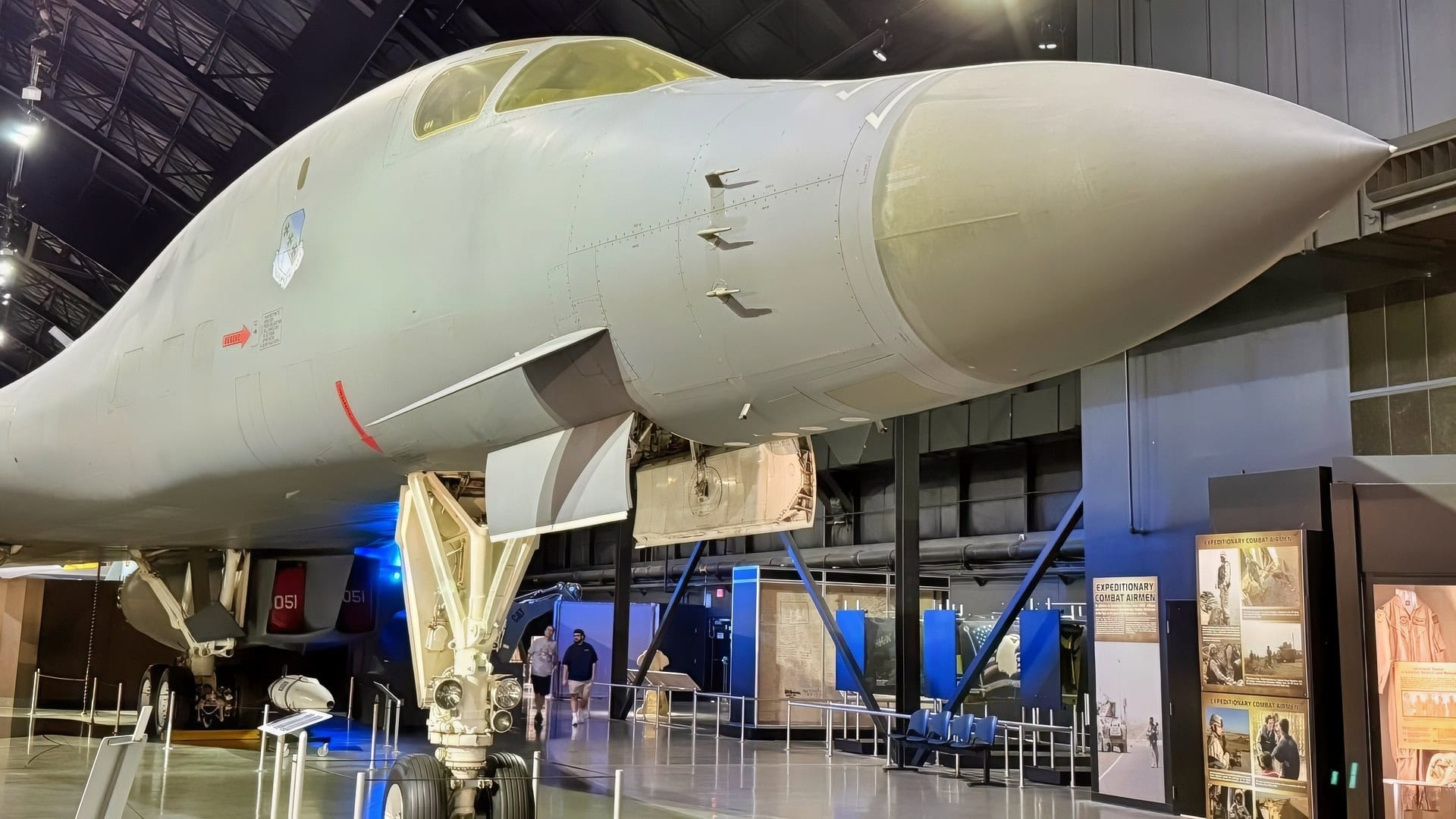
B-1B Lancer at National Museum of the U.S. Air Force. 19FortyFive.com Original Photo.
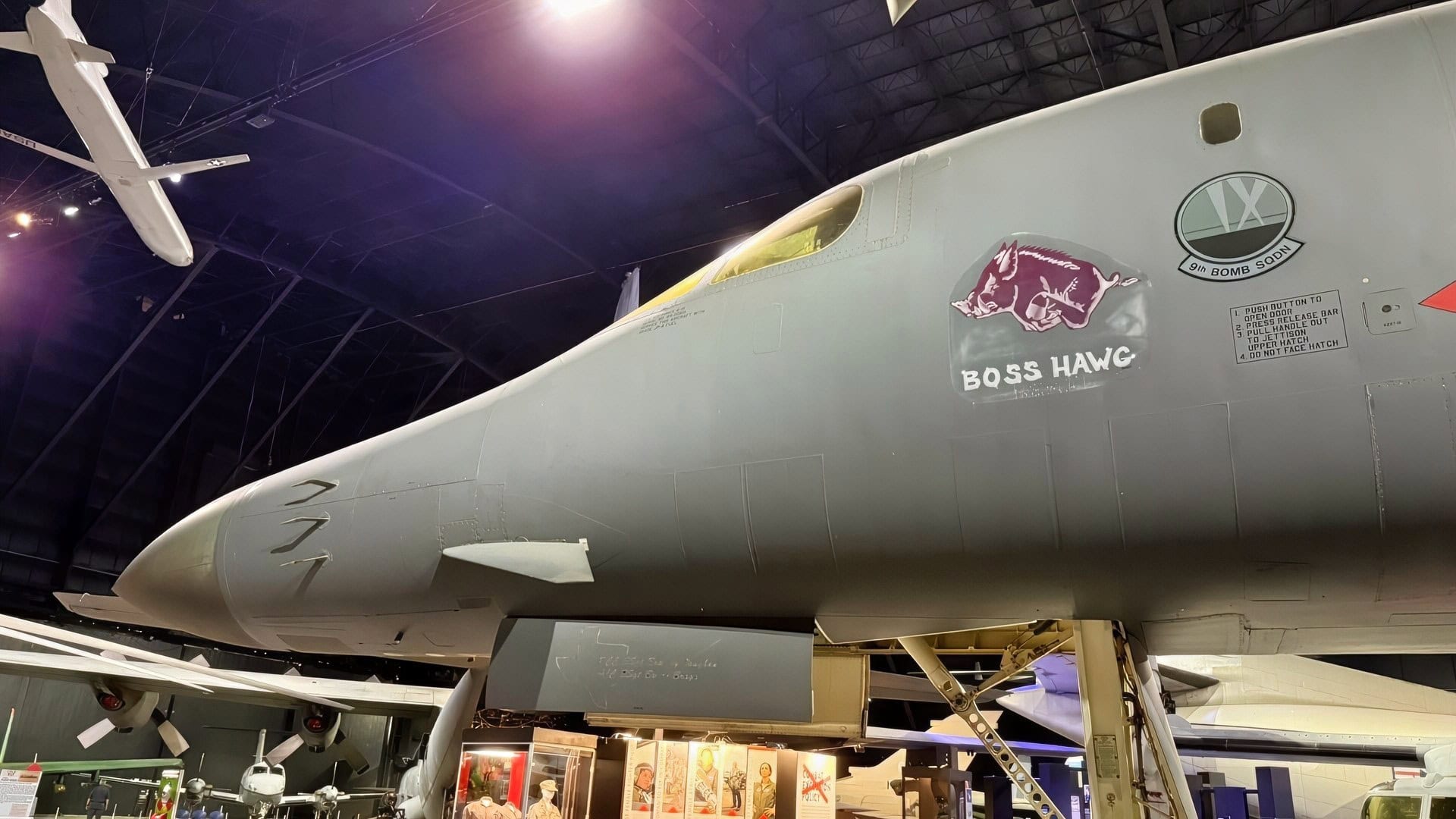
B-1B Lancer Bomber at National Museum of the Air Force. 19FortyFive.com Photo.
These additions add much-needed versatility to the B-1B, leveraging its large carrying capacity and allowing it to remain at stand-off distances.
The ongoing war with Iran has demonstrated the B-1B’s ability as a missile carrier. Since the outbreak of hostilities, the Lancer has been a central component of the USAF’s air campaign, delivering stand-off munitions like JRASMs and JASSMs against targets all across Iran.
While it still lacks the stealth capabilities of the B-2, the B-1B’s larger payload capacity and integration of stand-off munitions have made it a valuable asset.
Even before the war in Iran, the USAF had pushed back the aircraft’s retirement date, partially as a hedge in case the B-21 gets delayed, and partially because the bomber still has a role to play even in today’s stealth-centered environment.
MORE – The US Navy’s Iowa-Class Battleship Went to War in the 1980s
About the Author: Isaac Seitz
Isaac Seitz, a Defense Columnist, graduated from Patrick Henry College’s Strategic Intelligence and National Security program. He has also studied Russian at Middlebury Language Schools and has worked as an intelligence Analyst in the private sector.