
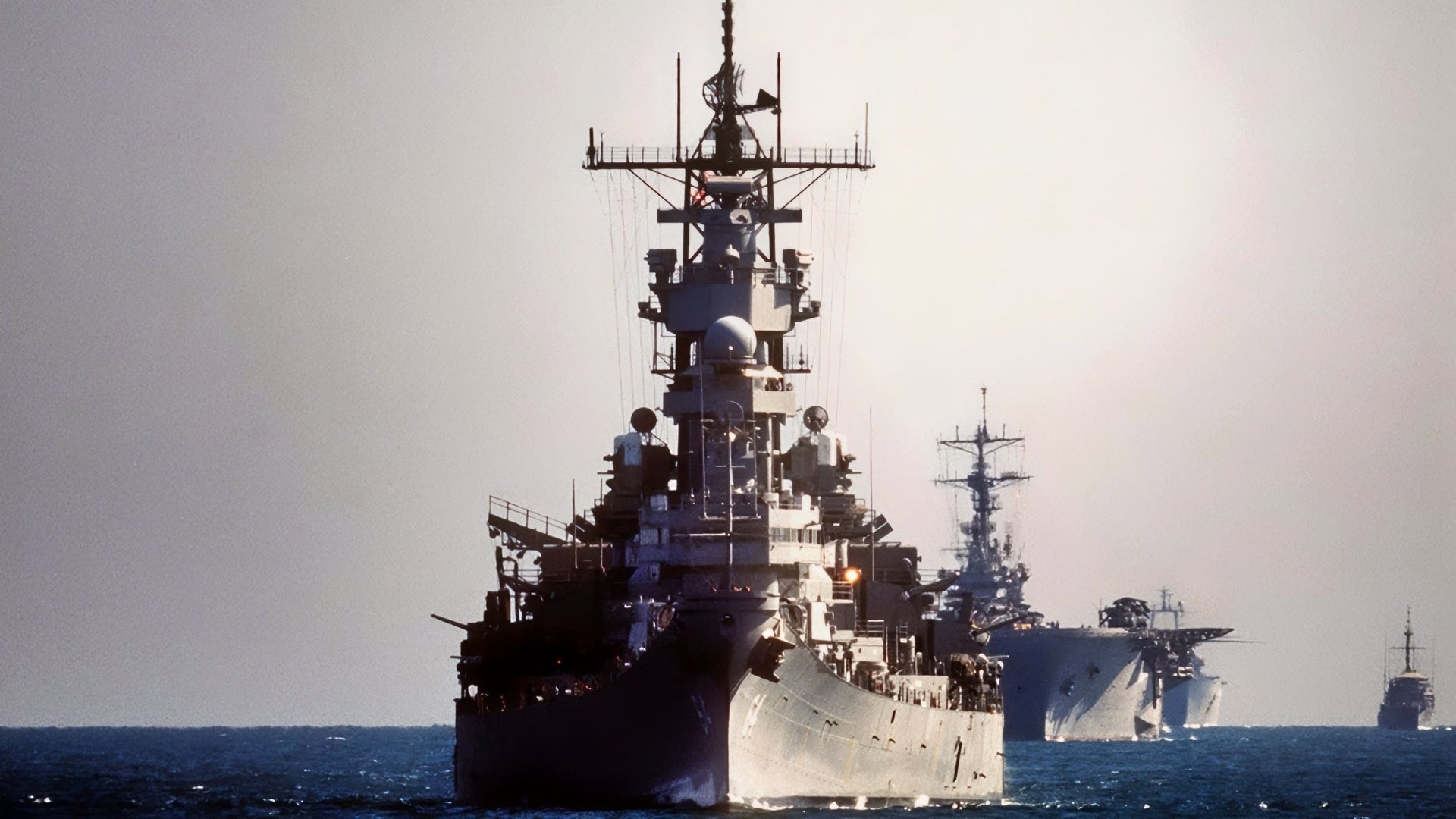
What It Cost to Bring the US Navy Iowa-Class Battleships Back in the 1980s: $326 Million Bought a Battleship for the Price of a Frigate – In 1982, the United States Navy put a 58,000-ton battleship back to sea, with nine 16-inch guns and a new battery of cruise missiles, for $326 million, roughly the price of a single new frigate. It did it three more times before the decade ended, and the whole four-ship program cost about as much as the Pentagon now spends on one and a half new frigates. The 1980s reactivation of the Iowa class remains the strangest bargain in modern naval history, and the story of what it cost, why it happened, and what the ships did with their second lives is worth telling in full.
Background: Four Giants in Storage
The four Iowas, Iowa, New Jersey, Missouri, and Wisconsin, were the last and finest American battleships, 887 feet long, capable of over 30 knots, built in the 1940s for about $100 million apiece. By the 1970s, they sat sealed in mothballs, dehumidified and quietly maintained by a Navy that faced periodic calls to scrap them and never did, in part because the Marine Corps kept insisting that nothing else in the fleet could put heavy fire on a hostile beach.
Only New Jersey had stirred, recalled in 1968 for a single tour in Vietnam. Meanwhile, the fleet around them withered: American naval strength fell steeply after Vietnam, from nearly a thousand ships to fewer than five hundred, while the Soviet Navy under Admiral Sergei Gorshkov grew from a coastal force into one exercising across every ocean.
The Need and the Fear: Enter the Kirov
The catalyst arrived in 1980, when the Soviet Union commissioned Kirov, a 28,000-ton nuclear-powered battlecruiser, the largest surface combatant built by any nation since the Second World War, carrying 20 giant Granit anti-ship missiles designed to destroy American aircraft carriers, with sister ships already under construction behind her.
Nothing in the U.S. surface fleet matched her in size, prestige, or magazine depth, and even the standard reference works record that the class’s appearance played a direct role in what came next.
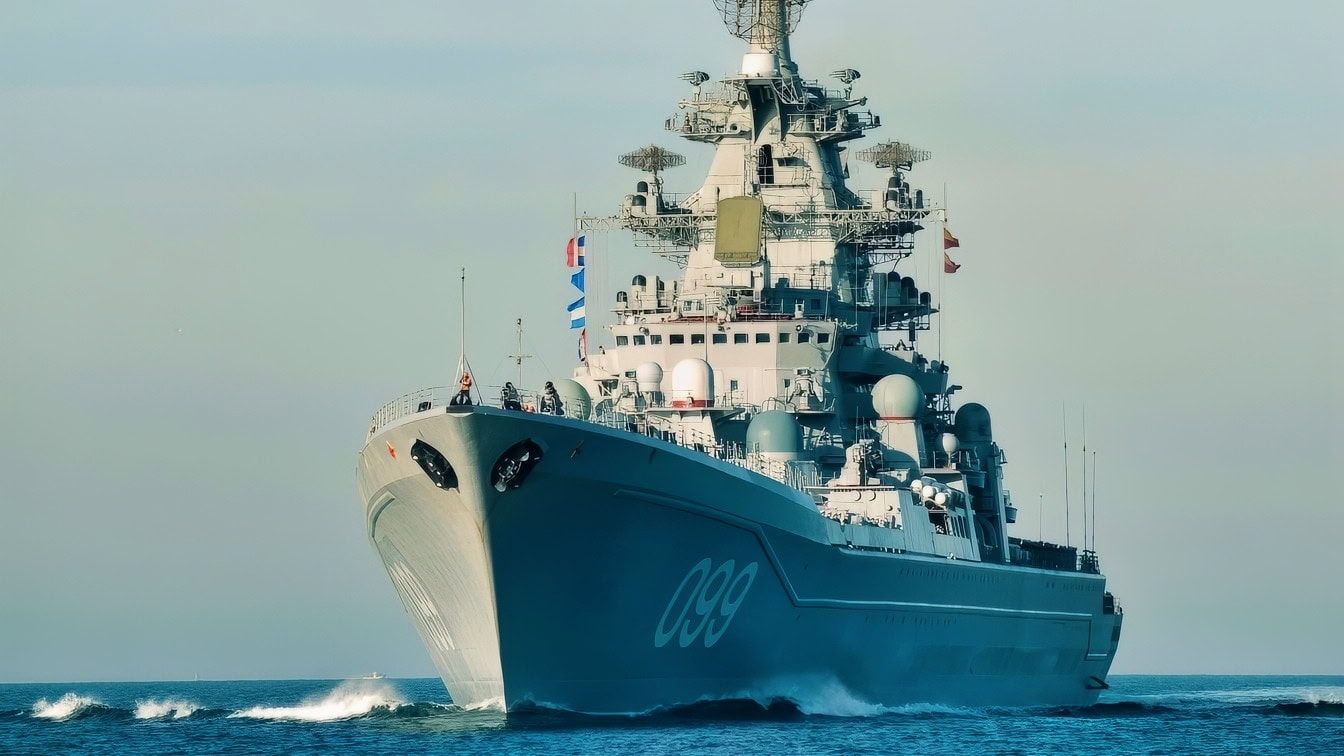
Kirov-Class Russian Navy Creative Commons Image
The incoming Reagan administration and its Navy Secretary, John Lehman, wrapped the answer inside the 600-ship Navy: rather than design a response from scratch, America would wake the four battleships, each bigger than a Kirov, each already paid for, and field them as visible instruments of naval power exactly where the Soviet giants would sail.
The Concept for a Rebooted Iowa-Class
The modernization plan was deliberately restrained, which is why the price worked. Each ship kept all nine 16-inch guns, whose 2,700-pound shells ranged past 23 miles and outweighed anything afloat.
Four of the ten twin 5-inch mounts came off, along with the long-useless 40mm gun tubs, clearing deck space and manpower. Into that space went the missile age: eight blast-hardened armored box launchers holding 32 Tomahawk cruise missiles for land attack, four quad canisters with 16 Harpoon anti-ship missiles, four Phalanx close-in guns for self-defense, and modern radars, communications, and electronic warfare gear.
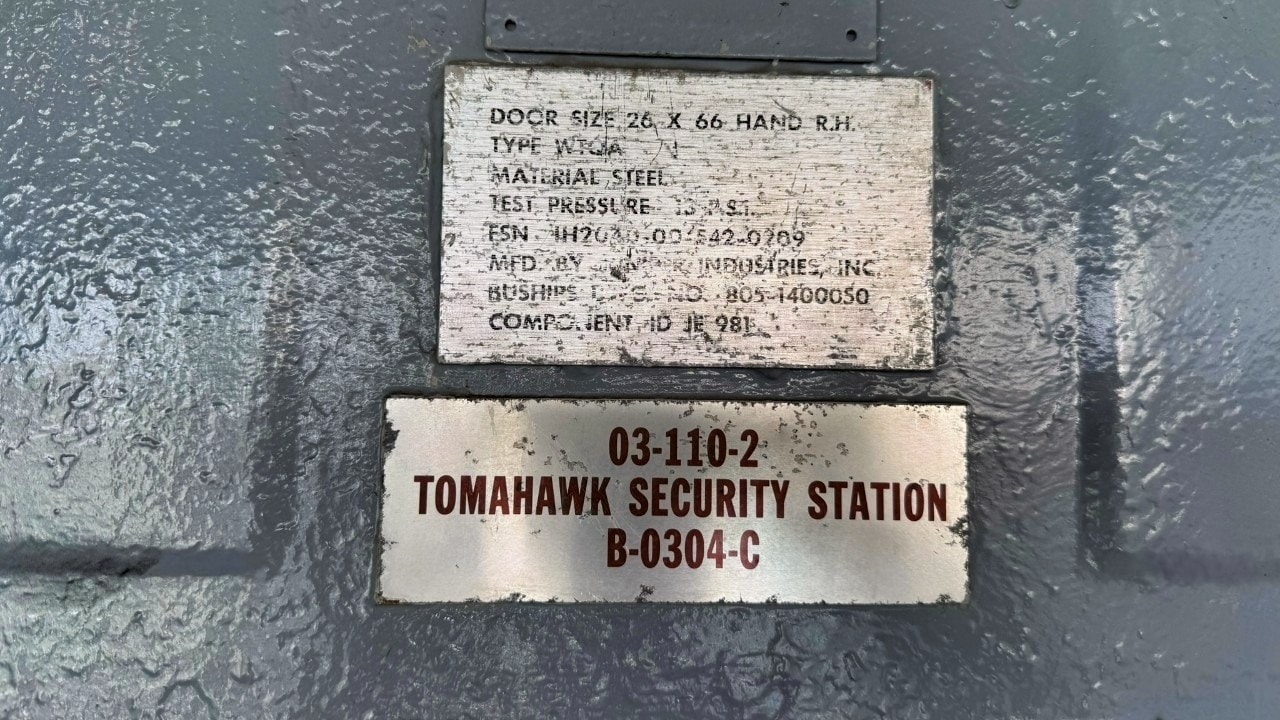
Battleship USS Iowa Tomahawk Missile Container. Taken by Harry J. Kazianis for 19FortyFive.com abord USS Iowa.
The tactical ladder against a Kirov was explicit: Tomahawks at long range, Harpoons at medium range, and the 16-inch battery if anyone survived to close range. Crewing fell from 2,700 in wartime to roughly 1,570, still enormous by 1980s standards. A grander Phase II, converting the aft deck for aviation, was studied and never funded. The battleships would lead their own surface action groups in waters where the air and submarine threat was survivable, freeing carriers for the worst neighborhoods, with work spread across yards on both coasts.
The Bill, Then and Now
The money is the heart of the story, and the record is unusually complete. In March 1981, Chief of Naval Operations Thomas Hayward told Congress New Jersey could return in 16 months for $255 million, with the other three estimated at $300 to $500 million each. The opposition was not trivial: the Navy was short some 20,000 petty officers, and its own surface warfare chief admitted battleship reactivation sat at the bottom of his priority list until manning improved. Senator Dale Bumpers went further, offering an amendment to strip every battleship dollar from the budget.
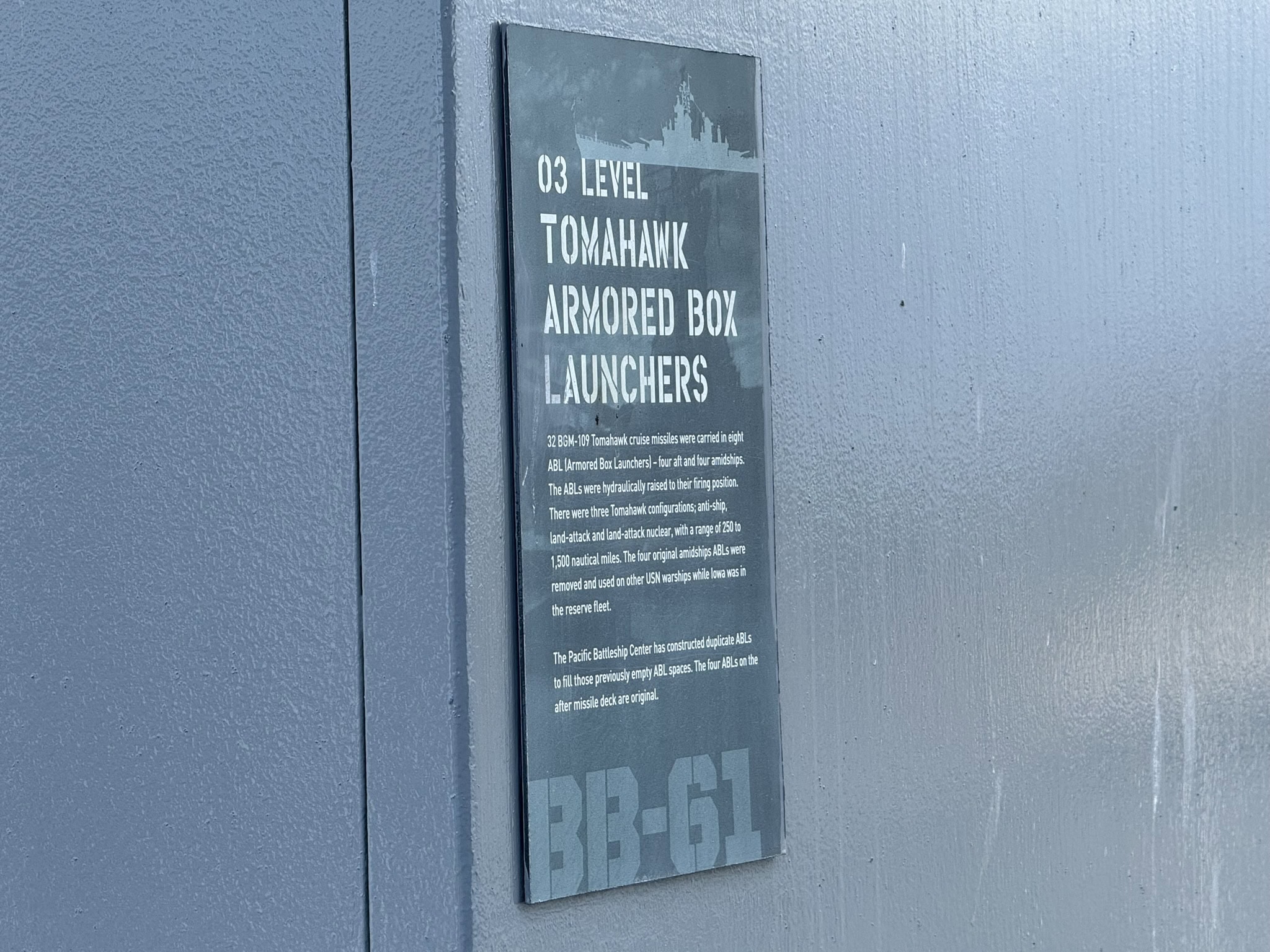
Tomahawk Box on USS Iowa. 19FortyFive.com Image.
Navy Secretary Lehman answered with something rare in Washington: a written, public price commitment, pledging to Senate Armed Services Chairman John Tower that New Jersey would be reactivated and modernized on the West Coast for a top price of $326 million, a figure he grounded in the ship’s known condition and the lessons of her Vietnam-era revival. The funding survived, 61 votes to 34, and Lehman’s number held: New Jersey recommissioned on December 28, 1982, on schedule and on the committed price, President Reagan presiding. The comparison the Navy rode through every hearing was simple and true, that the sum bought a capital ship unmatched in firepower for the cost of a Perry-class frigate, the fleet’s cheapest escort.
The later ships cost more, because they had been asleep longer, Wisconsin since 1958, and their electronics refits went deeper. Across all four hulls, Navy officials put the average at about $435 million per ship, and the accepted total for modernizing and reactivating the class stands at roughly $1.7 billion in the mixed dollars of 1982 through 1988.
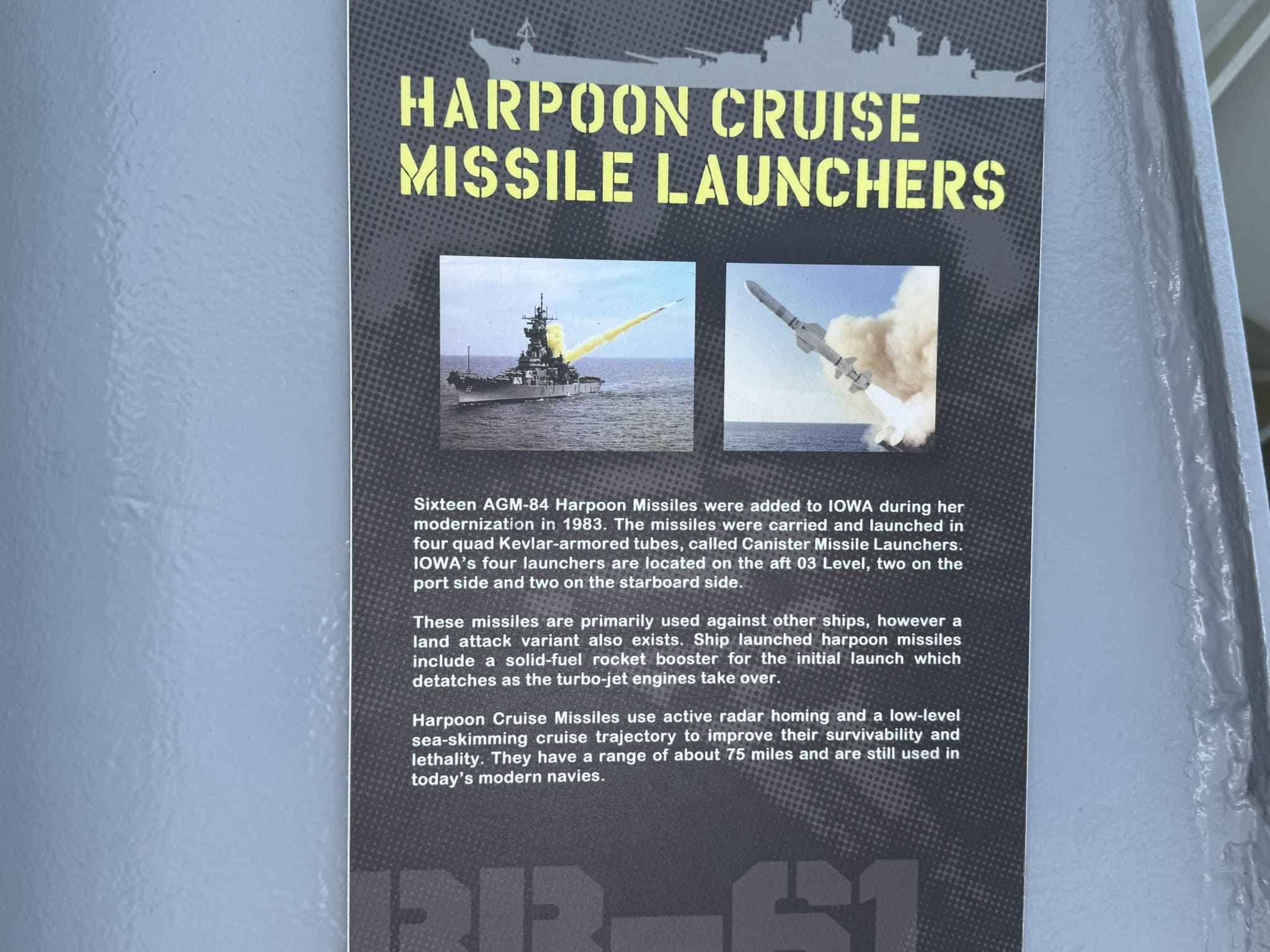
USS Iowa Battleship visit by Harry J. Kazianis for 19FortyFive.com. Taken back in August 15, 2025.
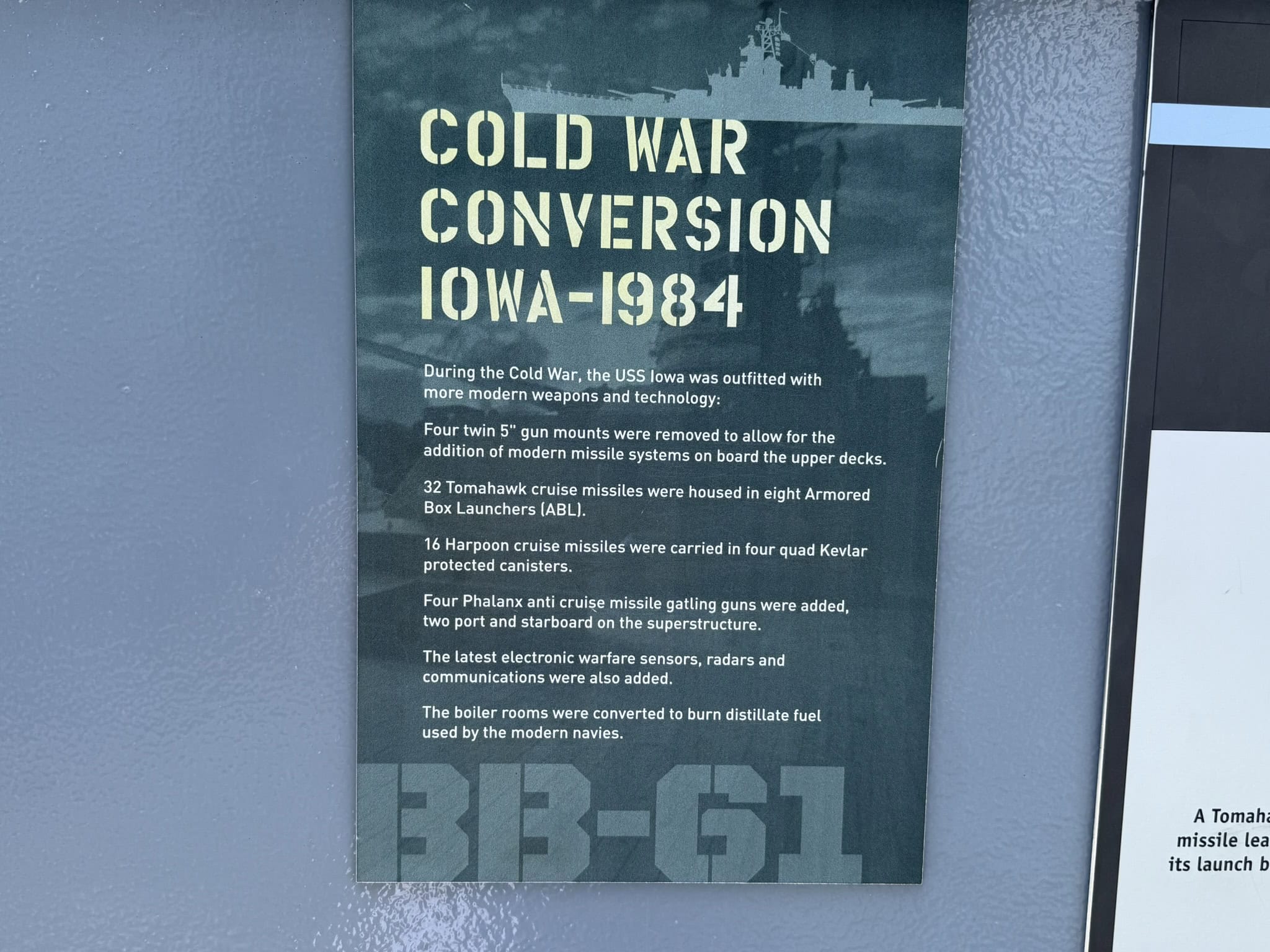
USS Iowa Battleship visit by Harry J. Kazianis for 19FortyFive.com. Taken back in August 15, 2025.
The lineage makes the number look even stranger: bringing New Jersey back for Vietnam, where she fired 5,688 16-inch shells in roughly 120 days on the gunline, had cost $21.5 million in 1968, and building each ship new in the 1940s had cost about $100 million.
Converted to 2026 dollars using consumer-price inflation, which roughly triples mid-1980s money, the ledger reads like this: New Jersey’s $326 million becomes about $1.1 billion; the $435 million per-ship average becomes about $1.3 billion; and the $1.7 billion program becomes roughly $5 billion for four modernized battleships, about $1.2 billion per hull. For scale, the Navy today pays more than that for a single new Constellation-class frigate, and roughly $2 billion for one Burke-class destroyer. Whatever else the reactivation was, it was cheap.
What They Did With Their Second Lives
The ships earned their keep quickly. New Jersey steamed to Lebanon, standing off Beirut through the crisis that followed the October 1983 Marine barracks bombing, opening fire that December and delivering her heaviest main-battery bombardment of Syrian-controlled positions in February 1984, the first American battleship gunfire since Vietnam.
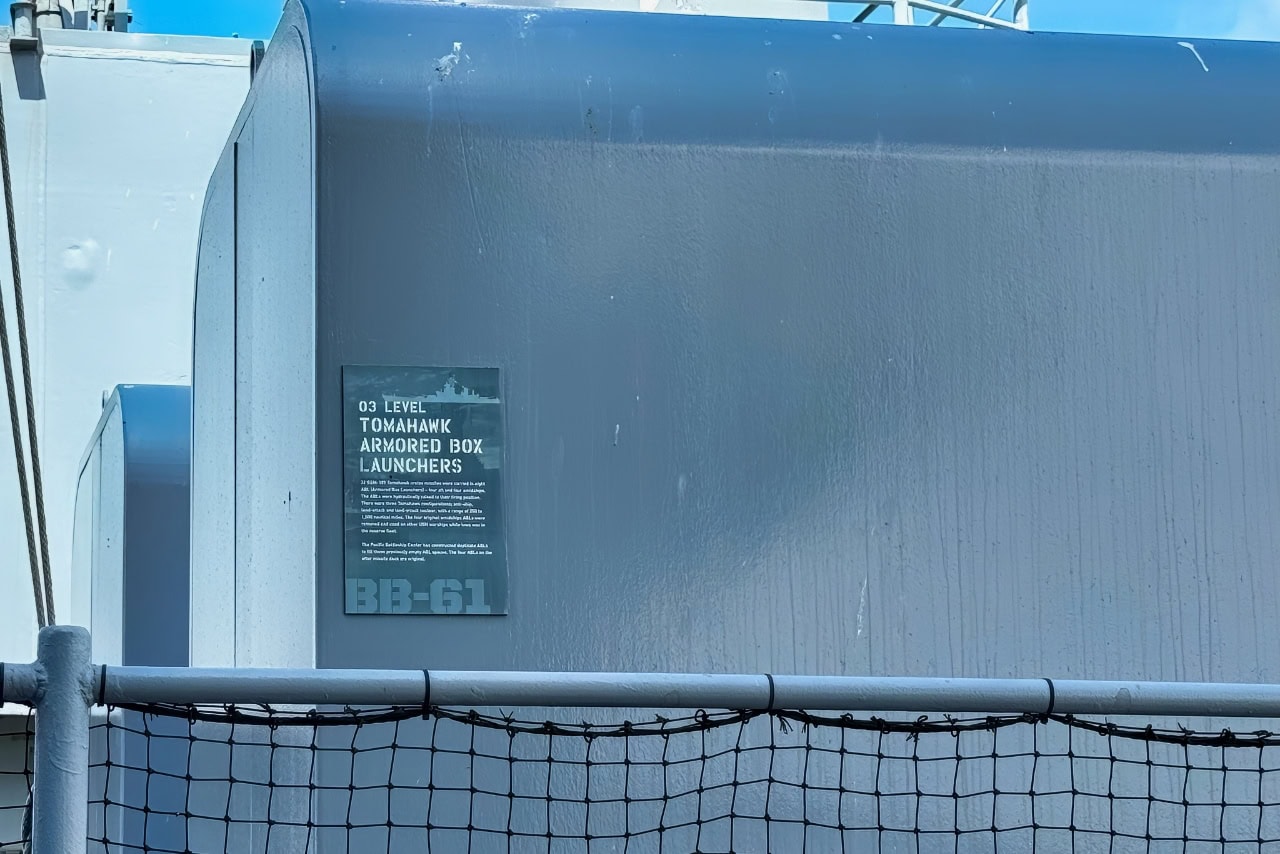
USS Iowa 19FortyFive image of Tomahawk Missiles on USS Iowa.
Missouri and Wisconsin arrived in time for the class’s finale: in January and February 1991, both fired Tomahawks in the opening phases of Operation Desert Storm and then closed the Kuwaiti coast to deliver 16-inch gunfire against Iraqi positions, the last battleship main-battery fire in history, spotting for the guns with Pioneer drones, to one of which a group of Iraqi soldiers famously surrendered, while the battleships’ mere presence pinned Iraqi attention on an amphibious landing that never came. Iowa’s second career ended differently, and it deserves plain, careful telling: on April 19, 1989, an explosion in her Number Two turret during exercises killed 47 of the turret crew, and she never fired in anger again.
Retirement and the Ledger, Closed
The enemy the ships were recalled to face dissolved beneath them. With the Soviet Union collapsing and the Cold War budget falling, the Navy let the class go almost as fast as it had woken it: Iowa decommissioned in October 1990, New Jersey in February 1991, Wisconsin in September 1991, and Missouri, last of all the world’s battleships, on March 31, 1992.
The deeper reason was written into the fleet itself, because the vertical launch cells spread across Burke-class destroyers and Ticonderoga-class cruisers carried the same Tomahawks with a tenth of the crew, making a 1,500-man missile platform impossible to justify once the prestige mission died with the Soviet flag. Even then, Congress could not quite let go, keeping two of the ships on the Naval Vessel Register for possible gunfire-support recall until 2006.
All four survive as museums, in Los Angeles, Camden, Pearl Harbor, and Norfolk, and the reactivation still shapes how they look: walk the deck of Iowa in San Pedro today and the armored Tomahawk boxes of 1984 sit exactly where the Cold War left them, the hardware of the strangest $1.7 billion the Navy ever spent, still less, in real dollars, than five years of one modern destroyer program.
Note: Many of the photos from this essay are from a tour I did of the USS Iowa a little over a year ago.
About the Author: Harry J. Kazianis
Harry J. Kazianis (@Grecianformula) was the former Senior Director of National Security Affairs at the Center for the National Interest (CFTNI), a foreign policy think tank founded by Richard Nixon based in Washington, DC. Harry has over a decade of experience in think tanks and national security publishing. His ideas have been published in the NY Times, The Washington Post, The Wall Street Journal, CNN, and many other outlets. He has held positions at CSIS, the Heritage Foundation, the University of Nottingham, and several other institutions related to national security research and studies. He is the former Executive Editor of the National Interest and the Diplomat. He holds a Master’s degree focusing on international affairs from Harvard University.

