
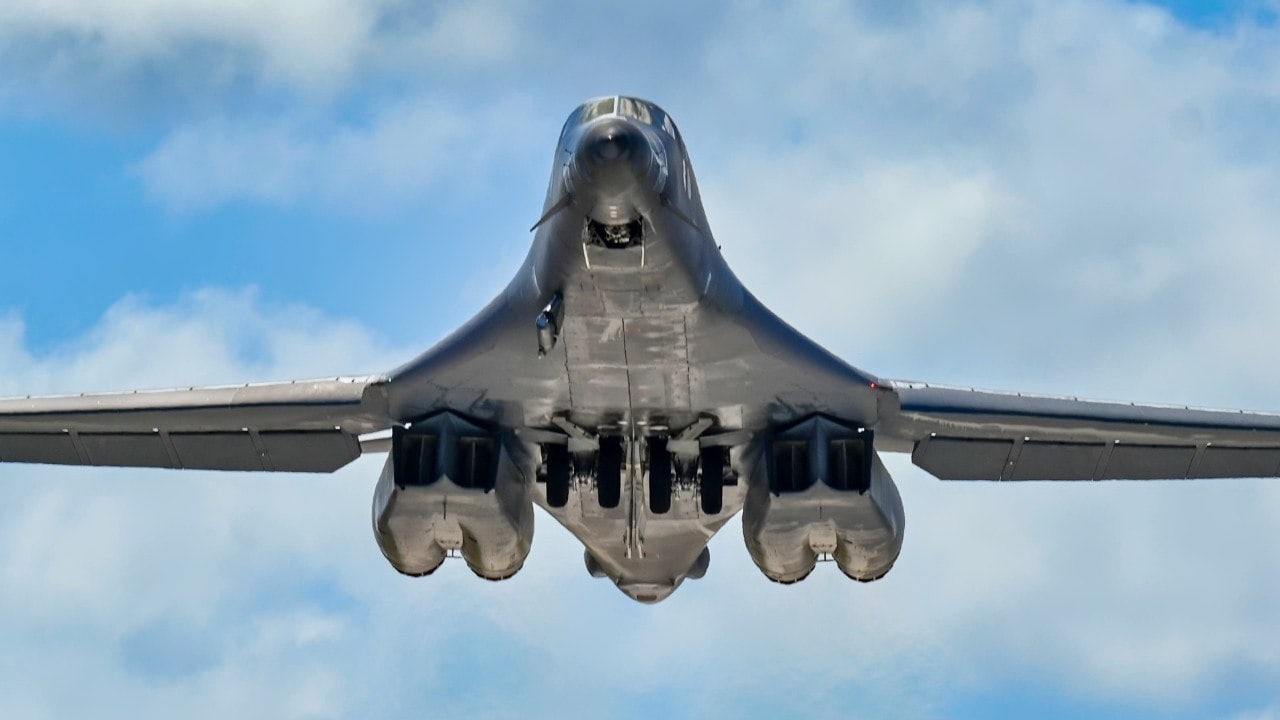
Summary and Key Points on the B-1R Project: In 2004, with 21 B-2s too precious to risk and no new bomber due for decades, Boeing proposed rebuilding the B-1B around the F-22’s engines: a Mach 2.2 arsenal ship with a fighter’s radar and AMRAAMs on its long-dormant hardpoints, trading 20 percent of its range for the ability to outrun and outshoot its pursuers. No cost was ever published, and no count was ever set beyond the 67 airframes that existed. The 2006 Quadrennial Defense Review chose range and stealth, killed it alongside the FB-22, and set the path to the B-21.
The B-1R Idea
In 2004, Boeing proposed taking the US Air Force’s B-1B bomber, its engines, and installing them on the F-22 Raptor, along with a fighter’s radar and a load of air-to-air missiles.
The result would have been a 146-foot bomber capable of Mach 2.2, faster than most fighters on Earth, able to sprint across a theater, empty its weapons bays, and shoot back at anything sent up to stop it. The concept was called the B-1R, the R standing for Regional, and it was one of three exotic bomber ideas, alongside the FB-22 Strike Raptor and a bomber derivative of the YF-23, that died together in the 2006 Quadrennial Defense Review. Of the three, the B-1R required no new airframe at all. It was a rebuild of a bomber America already owned, and its story explains a great deal about how the Air Force thinks about speed, range, and what a bomber is for.
The context was a bomber force stretched to its limits. By 2004, with operations running in Iraq and Afghanistan, the Air Force’s strike fleet consisted of aging B-52s, the B-1Bs, and exactly 21 B-2 stealth bombers, aircraft so scarce and so expensive that commanders hesitated to risk them.
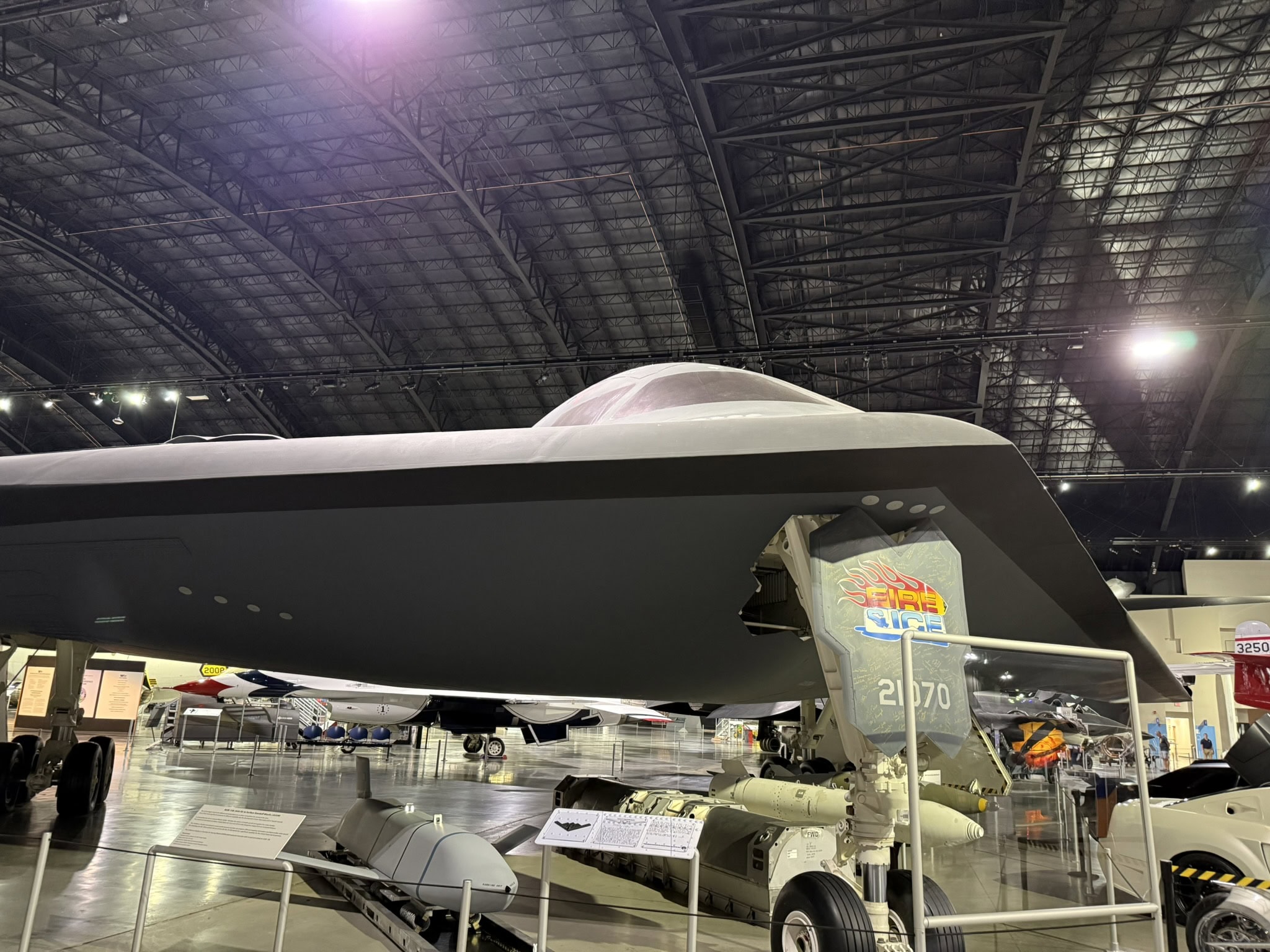
B-2 Spirit Stealth Bomber. 19FortyFive.com Photo from National Museum of the U.S. Air Force Visit in 2025.
The service’s own roadmap said no new bomber would arrive until the 2030s. So the Pentagon invited industry to propose interim answers, and the proposals poured in. Boeing alone submitted six concepts, presented publicly by Rich Parke, the company’s director of global strike integration: they included a conventional strike missile built from decommissioned ICBMs, an armed X-45 drone, a blended-wing-body arsenal aircraft carrying 96 cruise missiles, and the B-1R rebuild.
Lockheed Martin pitched the FB-22. Northrop dusted off the YF-23. Every major idea on the table was a shortcut, a way to field new striking power by the mid-2010s without waiting for a clean-sheet design.
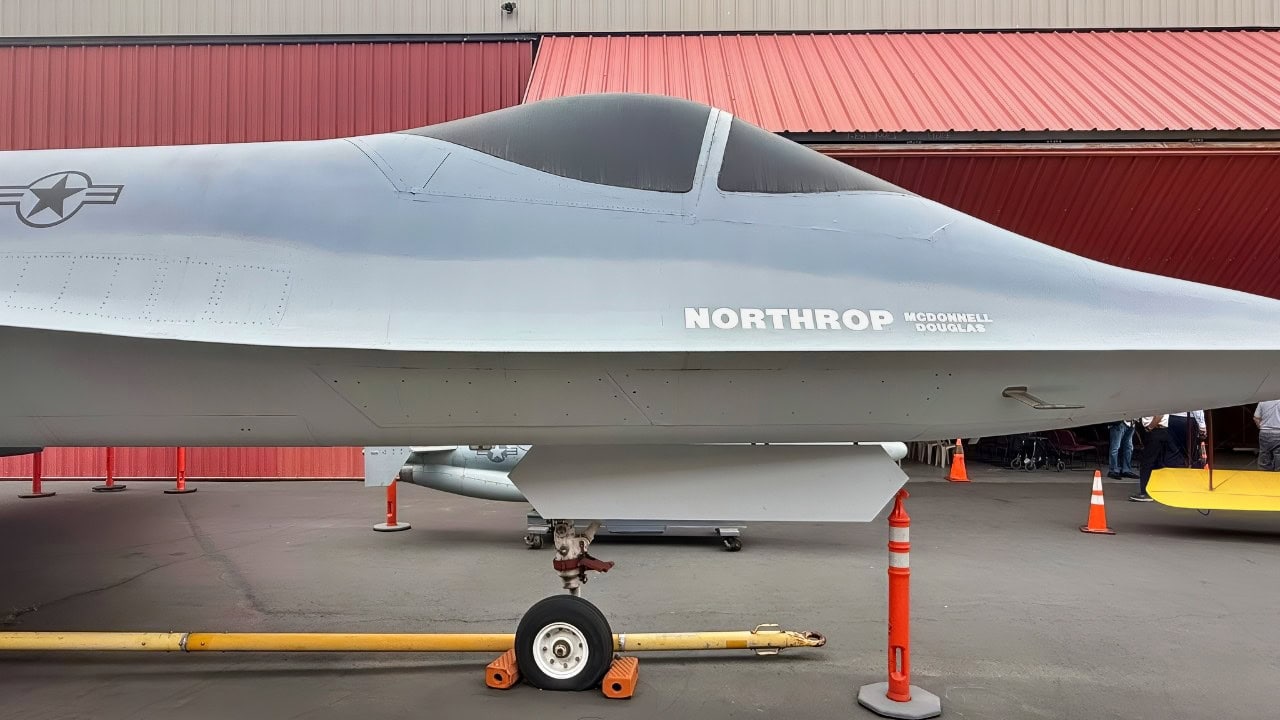
YF-23A Black Widow II 19FortyFive Image Taken by Harry J. Kazianis.
What the B-1R Was
The B-1R started from an irony buried in the B-1’s own history. The original B-1A of the 1970s was designed as a Mach 2.2 aircraft; when the program was resurrected as the B-1B in the 1980s, the Air Force traded that speed for a smaller radar signature, fitting fixed engine inlets with radar-scattering vanes that capped the aircraft at about Mach 1.2.
The B-1R would have bought the speed back with raw power. Out would come the four F101 engines; in would go four Pratt & Whitney F119s, the F-22’s engine. The numbers explain the transformation: the F119 is lighter than the F101 by about 500 pounds yet produces 35,000 pounds of thrust in afterburner against the F101’s 30,800, and the decisive figure is dry thrust, 26,000 pounds against 17,400.
With the restrictive inlet vanes removed and the intakes returned to something like the B-1A’s design, the bomber would reach Mach 2.2 again. The price was in the range, cut by roughly 20 percent from the B-1B’s intercontinental legs, which is exactly why Boeing named it Regional.
The rest of the package turned the bomber into something the Air Force had never fielded. A modern active electronically scanned array radar would give the B-1R genuine air-to-air capability, and the aircraft would carry AIM-120 AMRAAM missiles, both in its bays and on external hardpoints, six of them, built into every B-1B for cruise missiles and dormant since the type left the nuclear mission. Boeing’s pitch cast the aircraft as a missile truck and self-defending arsenal ship, a role the Air Force would later assign, in miniature, to the F-15EX: a platform that arrives fast, carries an enormous magazine, and does not need an escort because it is its own escort.
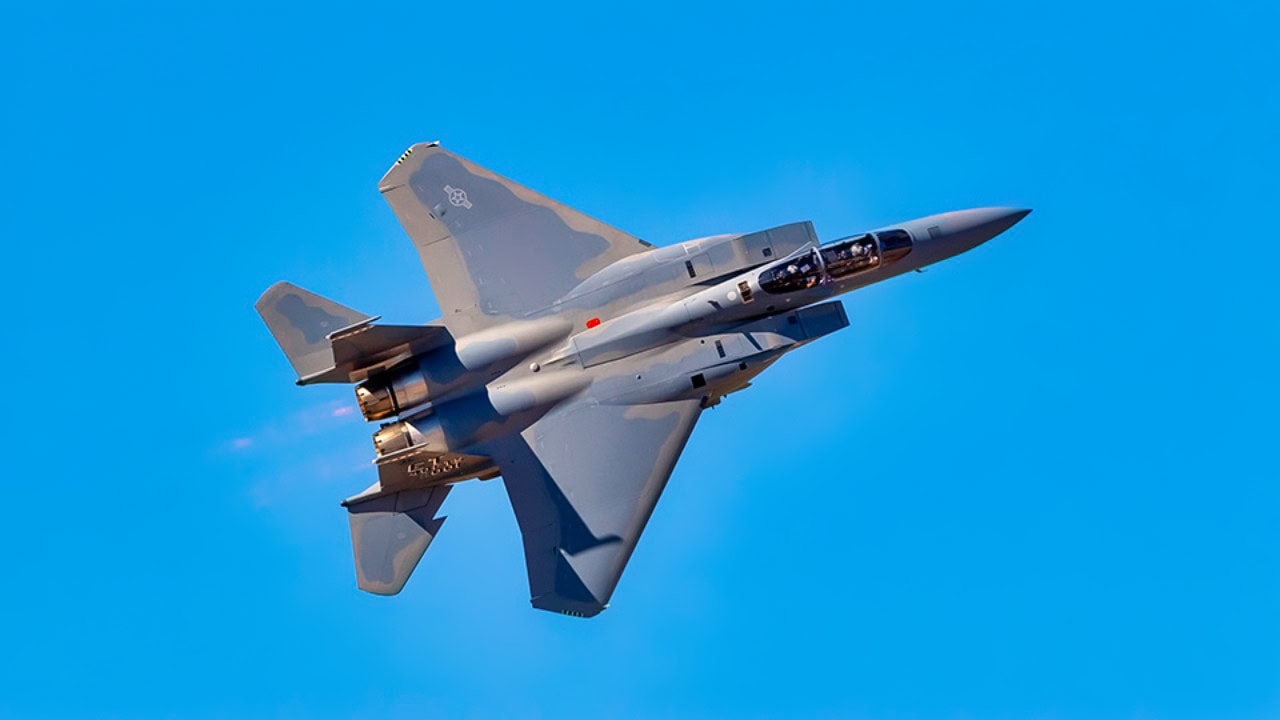
F-15EX Eagle II Fighter from Boeing.
Against a regional adversary, a handful of B-1Rs could dash from theater bases at twice the speed of sound, launch standoff weapons, and fight their way home.
The idea had admirers beyond the Pentagon; years after its death, defense commentators in Australia were still arguing that a revived B-1R was precisely the long-range strike and air-defense aircraft that allied air forces in the Pacific lacked.
The Cost and the Count That Were Never Announced
The honest answer on price is that there is no number. The B-1R never advanced past the concept stage, and no development or conversion cost was ever published; what Boeing sold was cost logic rather than a figure. The airframes existed: 67 B-1Bs in the fleet after the 2003 drawdown, which also set the ceiling on how many could ever be converted, since no new B-1s could be built.
The F119 was in production for the F-22, so the engines required no new program. The radar and avionics would come off the shelf.
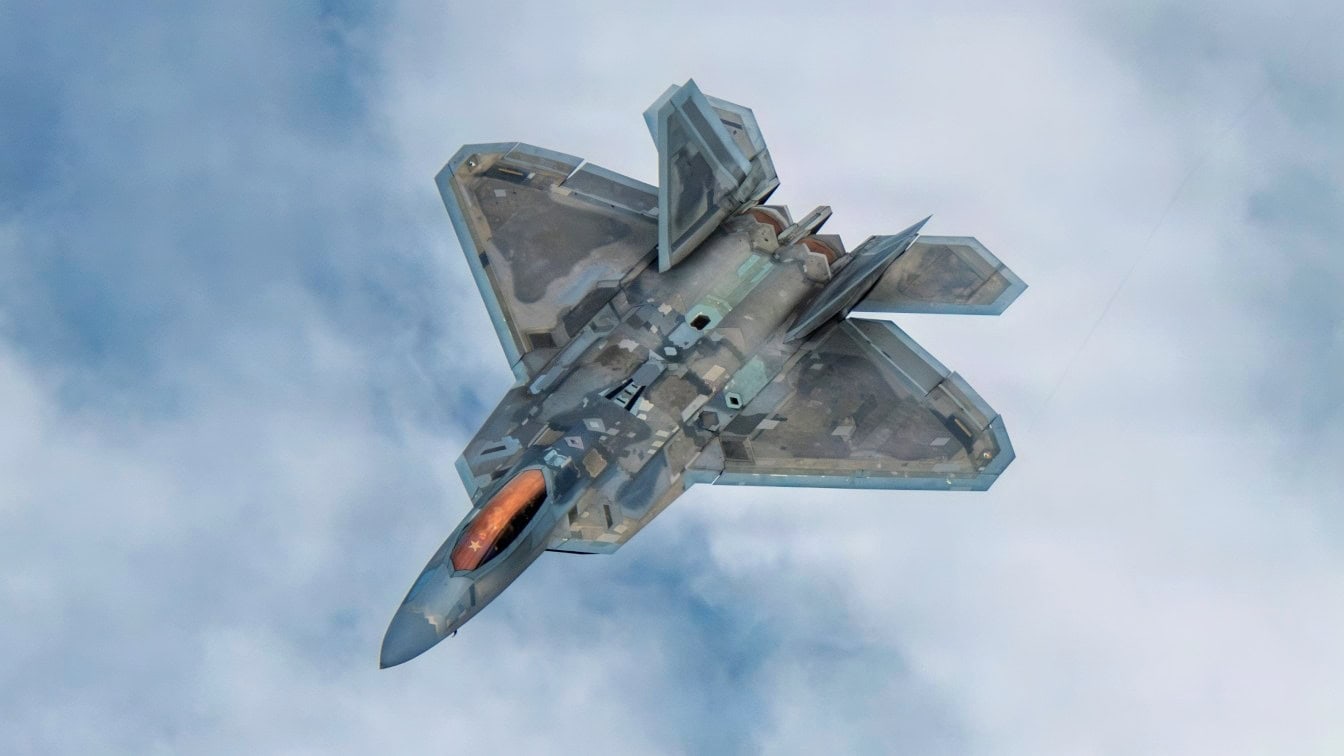
A U.S. Air Force F-22 Raptor assigned to the 154th Wing, Hawaii Air National Guard, takes part in a multi-ship formation off the coast of Hawaii, Jan. 5, 2026. The aircraft participated in a comprehensive training sortie designed to integrate the 154th Operations Group’s distinct mission sets, including air superiority and aerial refueling, to ensure peak mission readiness in the Indo-Pacific theater. (U.S. Air National Guard photo by Senior Master Sgt. Mysti Bicoy)
Against a clean-sheet bomber, or even the FB-22, which required a new wing and a stretched airframe, the B-1R was the cheap, low-risk option on the table, and that was the entire argument for it. The counterargument was operating cost: the B-1B was already among the most expensive aircraft in the inventory to fly and maintain, with an availability record that dogged the fleet through the 2000s, and a rebuilt, re-engined, Mach 2.2 version would not have been cheaper to run.
Why It Died
The 2006 Quadrennial Defense Review killed the entire interim-bomber field with one sentence of direction: the Air Force would develop a new long-range strike aircraft, stealthy and range-heavy, to enter service by 2018.
That decision, which became the Next-Generation Bomber program and eventually, after its own cancellation and rebirth, the B-21 Raider, embedded two judgments that doomed the B-1R specifically. The first was about geography.
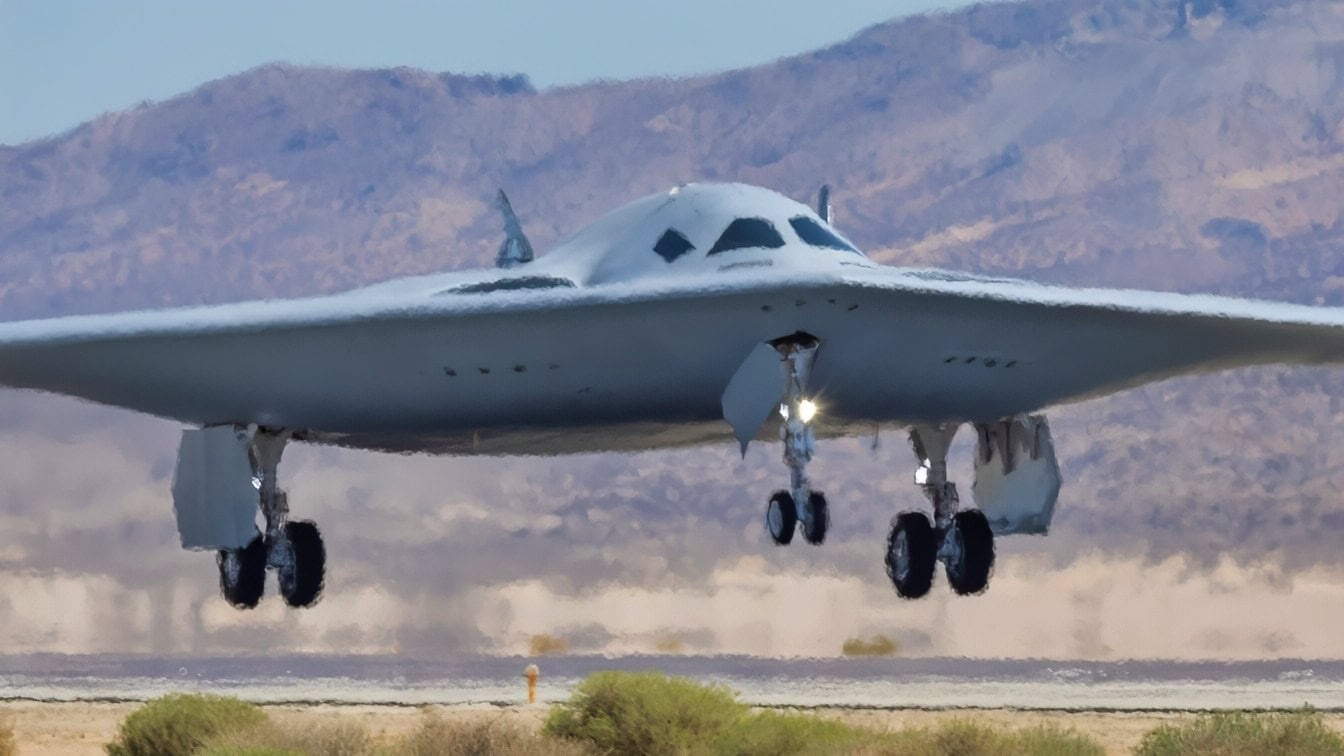
A B-21 Raider test aircraft lands at Edwards Air Force Base, Calif., during ongoing developmental flight testing, Sept. 11, 2025. The B-21 will be the backbone of the bomber fleet; it will incrementally replace the B-1 Lancer and B-2 Spirit bombers. (U.S Air Force photo by Todd Schannuth)
A regional bomber is a bomber that needs nearby bases, and in the Pacific, the theater the Pentagon was already turning toward, nearby bases mean a handful of vulnerable islands within the reach of Chinese missiles.
The Air Force wanted range measured in oceans, and the B-1R’s defining trade, 20 percent of its range spent to buy speed, ran in exactly the wrong direction. The second judgment was about survivability. The review bet that stealth, not speed, was the future of penetration; Mach 2.2 impresses, but it does not defeat a modern integrated air defense, and the B-1B’s radar signature, even reduced, was never going to hide.
The FB-22 died of the same two diseases in the same document. There were quieter problems too: every F119 bolted to a bomber was an engine diverted from F-22 production, then being fought over line by line, and the B-1B fleet’s chronic maintenance burden made it a shaky foundation for a supersonic rebuild. When the review was published in February 2006, the B-1R simply stopped appearing in anyone’s briefings.
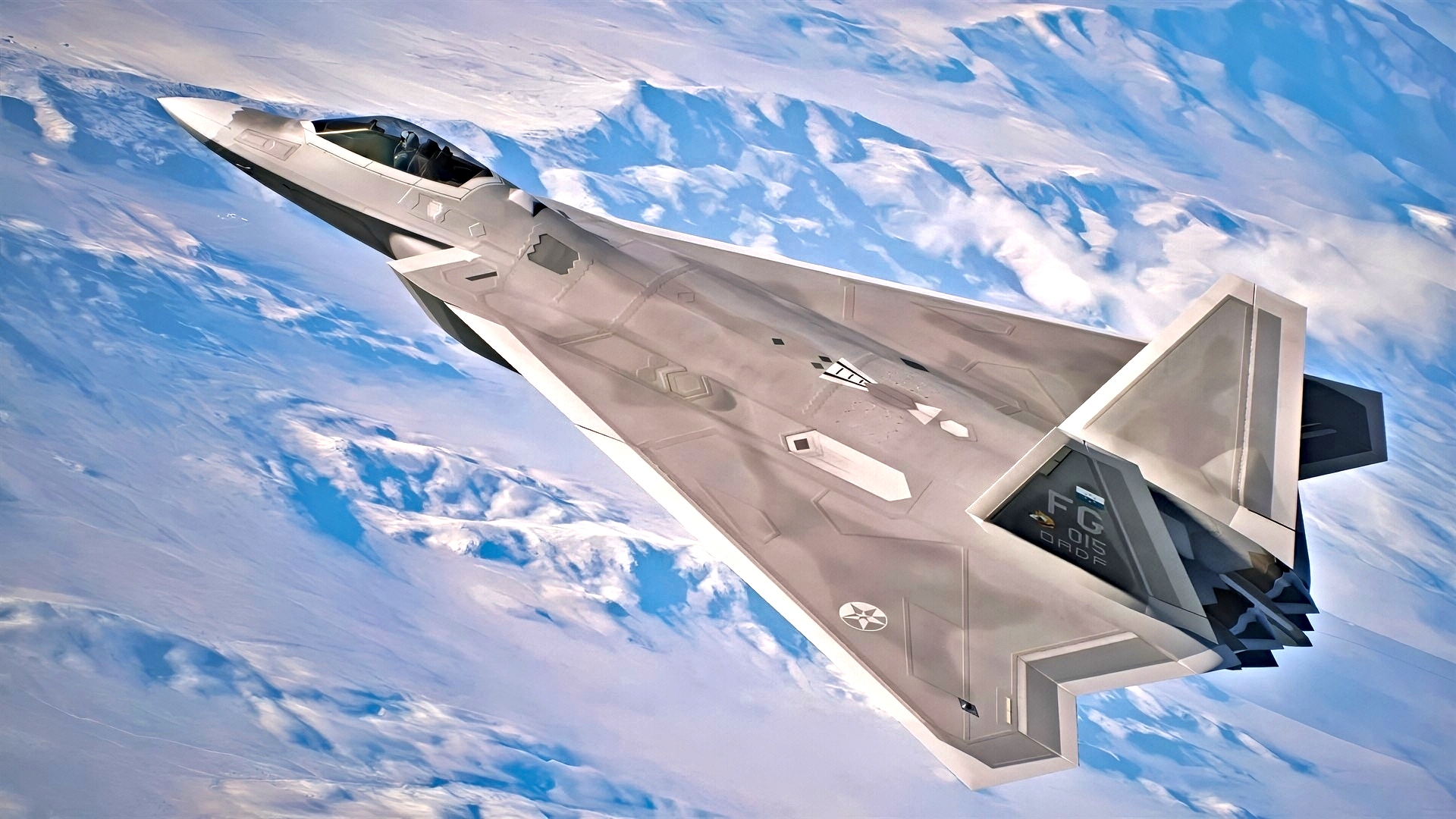
FB-22 Mock Up Creative Commons Image
The Half of the Idea That Came True
Twenty years on, the strangest part of the story is how much of the B-1R the Air Force is now building, minus the speed.
The external hardpoints that the concept would have activated are being activated. One station was reopened years ago to carry a targeting pod; then came a captive-carry flight of a JASSM cruise missile on an external station in November 2020, followed by a live release, and Boeing has since developed the Load Adaptable Modular pylon for those same six dormant stations. The fiscal 2026 budget funds a 50.26 million dollar External Heavy-Stores Pylon program to field it.
The stated goal is the B-1R’s goal restated: mixed internal and external carriage raising a Lancer’s standoff load from 24 missiles to as many as 36, including the anti-ship LRASM, the budget documents say, fills a gap against defended maritime targets, an arsenal ship to cover the transition until the B-21 emerges as a combat bomber.
The pylon’s headline cargo is hypersonic: each station is designed around a 5,000-pound-class store, and in April 2026 the Air Force released the first footage of a B-1B flying with an ARRW hypersonic missile carried externally. Boeing completed the pylon’s preliminary design review in May 2026, and the fleet those pylons will hang from now numbers in the low forties, 42 active aircraft by the latest budget count, planned to remain lethal into the 2030s while the B-21 arrives at the B-1’s own bases.
The B-1R: A Great Idea That Never Came True?
The bomber that was going to defend itself at Mach 2.2 never existed. The bomber that carries the most missiles in the fleet, off the same hardpoints the B-1R would have used, is flying this year’s bomber task force schedule, and its first hypersonic pylon is moving from design review toward the flight line.
About the Author: Harry J. Kazianis
Harry J. Kazianis (@Grecianformula) is the former Senior Director of National Security Affairs at the Center for the National Interest (CFTNI), a foreign policy think tank founded by Richard Nixon based in Washington, DC. Harry has over a decade of experience in think tanks and national security publishing. His ideas have been published in the NY Times, The Washington Post, The Wall Street Journal, CNN, and many other outlets. He has held positions at CSIS, the Heritage Foundation, the University of Nottingham, and several other institutions related to national security research and studies. He is the former Executive Editor of the National Interest and the Diplomat. He holds a Master’s degree focusing on international affairs from Harvard University.