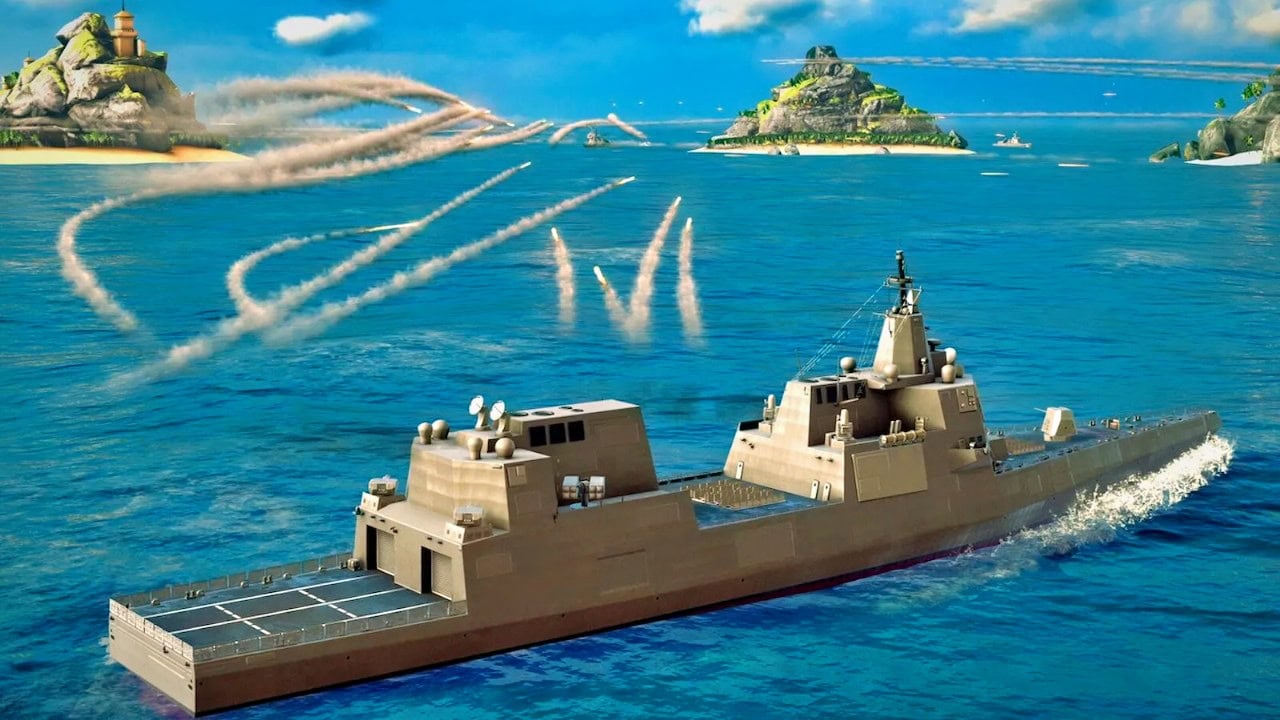
The United States Navy is keeping the Arleigh Burke-class destroyer production line alive because it currently lacks a successor. At the same time, Congress is signaling that it wants to continue work on the next-generation destroyer despite political interest in a new battleship program. The result is a Navy trying to bridge the gap between today’s fleet and tomorrow’s technology.
Construction Begins on USS John F. Lehman (DDG-137)
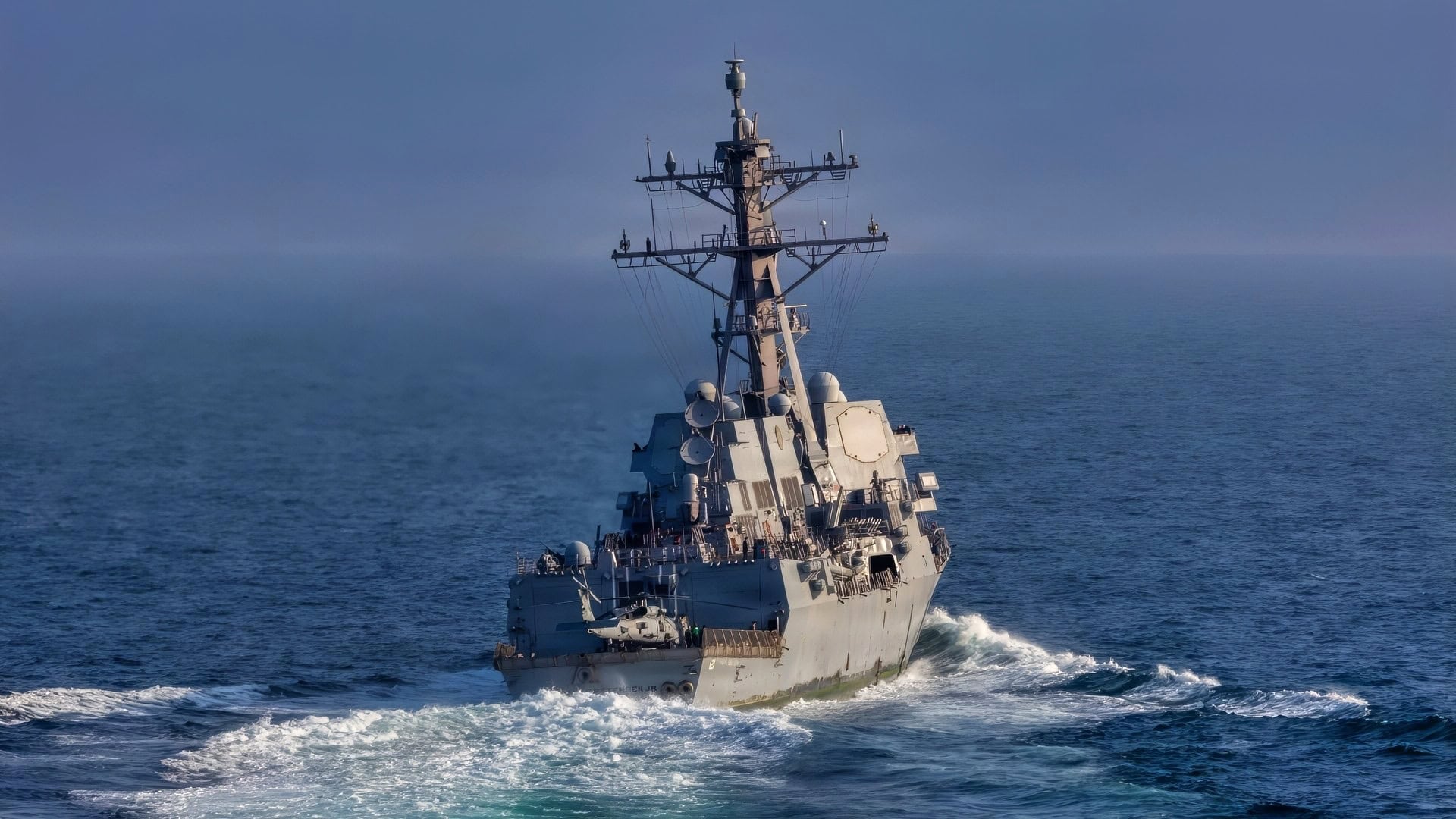
Arleigh Burke-class guided-missile destroyer USS Frank E. Petersen Jr. (DDG 121) sails in the Arabian Sea in support of Operation Epic Fury, March 18, 2026. (U.S. Navy photo)
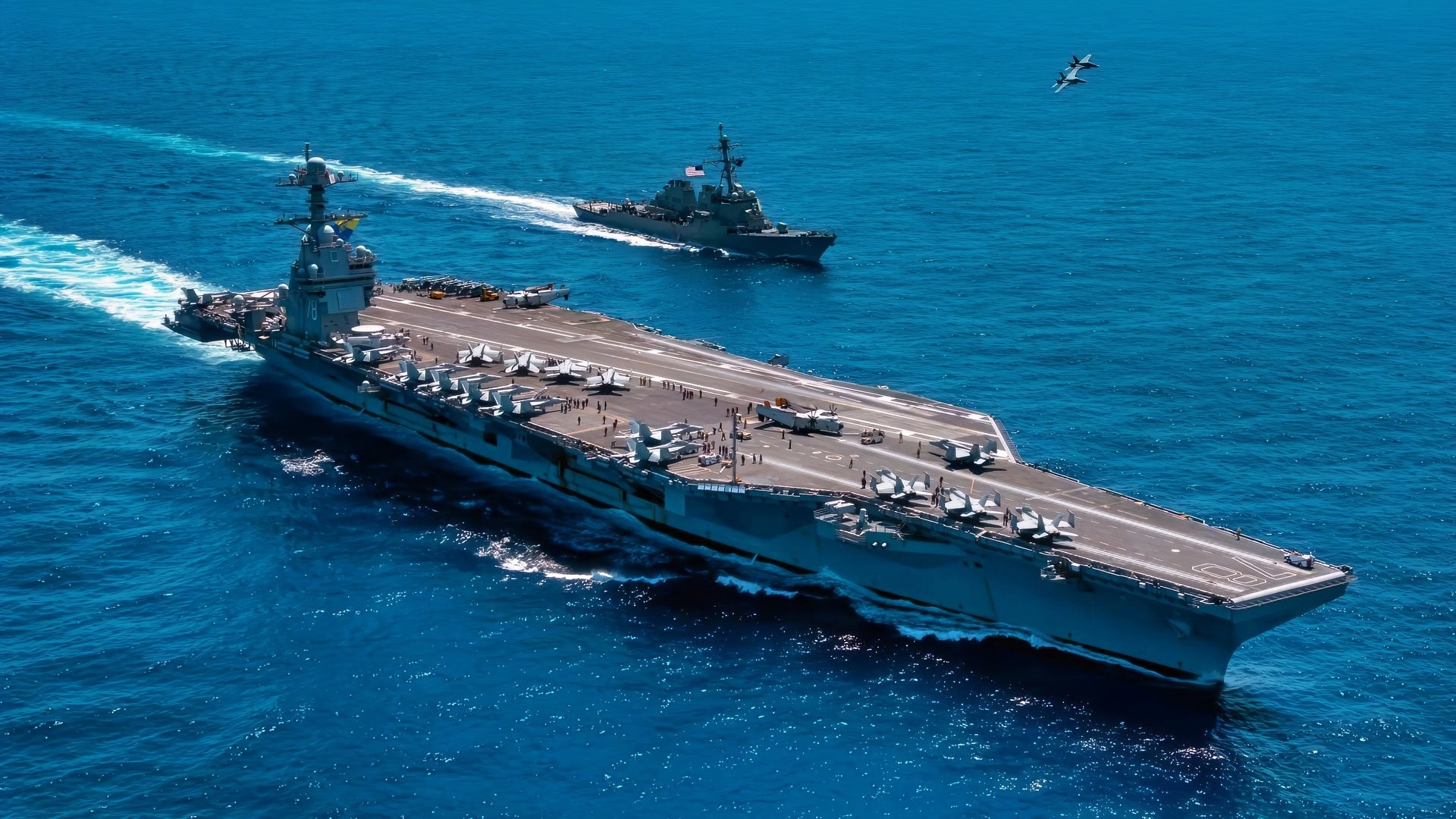
An F/A-18F Super Hornet, attached to the “Blacklions” of Strike Fighter Squadron (VFA) 213 and a F/A-18E Super Hornet, attached to the “Golden Warriors” of Strike Fighter Squadron (VFA) 87 fly over the world’s largest aircraft carrier, USS Gerald R. Ford (CVN 78), the Arleigh Burke-class guided-missile destroyer USS Mahan (DDG 72), April 11, 2025. The Gerald R. Ford Carrier Strike Group is underway in the Atlantic Ocean completing integrated naval warfighting training. Composite Training Unit Exercise (COMPTUEX) is the Joint Force’s most complex integrated training event and prepares naval task forces for sustained high-end Joint and combined combat. Integrated naval training provides America’s civilian leaders and commanders highly-capable forces that deter adversaries, underpin American security and economic prosperity, and reassure Allies and partners. (U.S. Navy photo by Mass Communication Specialist 2nd Class Maxwell Orlosky
The biggest announcement regarding the Arleigh Burke-class Block III is that the USS John F. Lehman (DDG-137) has officially entered fabrication at HII’s Ingalls Shipbuilding yard in Pascagoula. John F. Lehman is the thirteenth Flight III Arleigh Burke-class destroyer built. It is the seventh Flight III produced by Ingalls.
But the Arleigh Burke-class production line is slated to end soon. What’s more, the iconic destroyer is reaching the end of its usefulness. The face of modern war has changed so significantly that this warship’s relevance decreases with each passing year.
Why the Arleigh Burkes Keep Living
The Navy was counting on the DDG(X) program to be well underway by now.
Unfortunately, Burke’s replacement warship has struggled through what’s known as “slippage.” In effect, the DDG(X) has fallen behind schedule, thereby complicating the Navy’s best-laid plans to seamlessly replace the aging Arleigh Burkes.
Now, procurement for the DDG(X) is unlikely to occur until the 2030s. That leaves Flight III Arleigh Burke-class destroyers carrying almost the entire burden of America’s large surface combatant force for at least another decade.
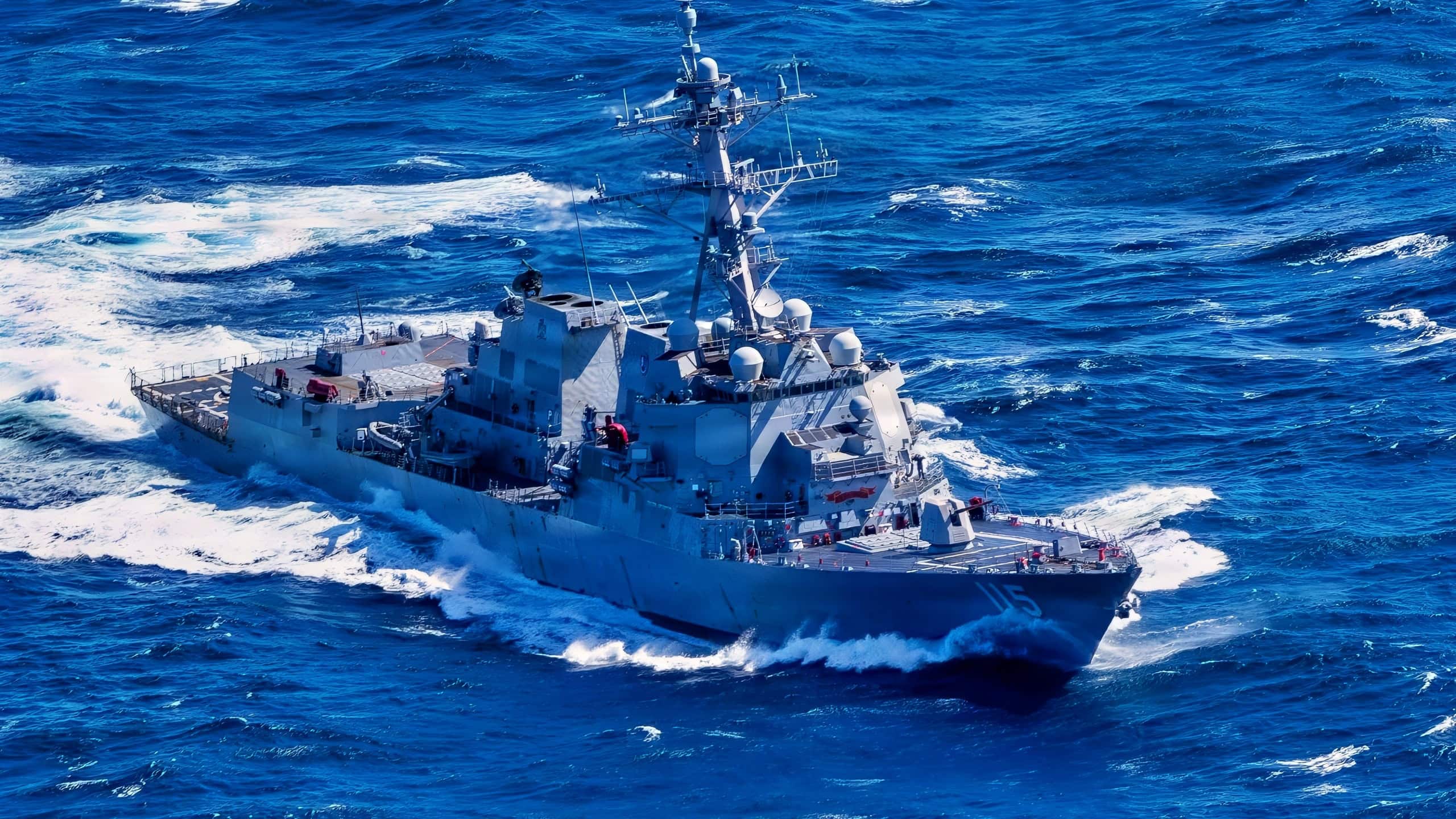
Navy Arleigh Burke-class guided-missile destroyer USS Rafael Peralta (DDG 115) transits the North Pacific Ocean, March 10, 2026. Rafael Peralta is forward-deployed and assigned to Destroyer Squadron (DESRON) 15, the Navy’s largest DESRON and the U.S. 7th Fleet’s principal surface force. (U.S. Navy photo by Mass Communication Specialist 1st Class Ryre Arciaga)
The Senate Armed Services Committee directed the Navy to continue developing the DDG(X).
That decision comes even as the Trump administration remains fixated on its new Trump-class battleship concept. Congress is clearly worried that replacing the destroyer program outright would create yet another capability gap (it would). And that the battleship concept, despite Congress ostensibly supporting it, might not work as advertised (it won’t).
Instead, the lawmakers want to continue production of the Arleigh Burke-class Flight III destroyers and continue DDG(X) development. And if that all works out, then Congress is open to seeing these systems coexist with Trump’s new battleship.
Anyway, the fact that Flight IIIs keep being built and leaving the yard relatively on time indicates that the production pipeline continues operating despite the significant delays affecting many other Navy shipbuilding programs. Congress is remiss for letting the Arleigh Burke-class go so quickly, given that it’s the only system of its kind in the Navy’s diminishing fleet right now.
The Strategic Problem
Flight III Burkes remain among the world’s most capable surface combatants. Their SPY-6 radar, Aegis combat system, ballistic missile defense capability, and 96-cell vertical launch system (VLS) make them exceptionally versatile warships.
Yet they also highlight America’s shipbuilding dilemma.
Arleigh Burke-class destroyers first entered service in the early 1990s. Every modernization has extracted more performance from the hull, but each upgrade consumes additional space, weight, electrical power, and cooling capacity. Navy leaders increasingly acknowledge that the design has little room left for future systems such as larger directed-energy weapons, more powerful sensors, or substantially expanded missile capacity.
At the same time, DDG(X) remains years away, while the proposed Trumpian battleship is politically toxic and technologically uncertain–especially given the fundamental changes that drones have imposed on surface warfare.
The consequence is that the United States continues investing in an outstanding destroyer design because it has no practical alternative for production.
From a strategic perspective, the developments with the Flight III highlight both a strength and a dire warning. The industrial base remains capable of producing advanced surface warships. Yet, that defense industrial base lacks the capacity–and the next-generation design–to accelerate fleet growth at the pace demanded by intensifying competition with China.
Until DDG(X) or another successor enters serial production, the Flight III Arleigh Burke-class will remain the backbone of US seapower. That’s impressive for an aging ship. It’s also worrying, considering the rapid changes underway in naval warfare.
About the Author: Brandon J. Weichert
Brandon J. Weichert is the Senior National Security Editor at 19FortyFive.com. He also manages The Weichert Brief on Substack. Weichert also hosts “National Security Talk” on Rumble. He is the author of four bestselling national security books, the most recent of which is A Disaster of Our Own Making: How the West Lost Ukraine (Encounter Books). Follow him via Twitter/X @WeTheBrandon.