

Just over four light-years away, the Alpha Centauri system holds the closest worlds beyond our own that could conceivably support life. One, Proxima Centauri b, is a confirmed Earth-mass planet orbiting in its star’s habitable zone. Another, glimpsed around the sun-like star Alpha Centauri A, is an unconfirmed candidate that keeps vanishing from the telescope that found it. But finding these worlds and reaching them are very different problems. At the speed of humanity’s fastest spacecraft, the journey would take roughly 75,000 years, and the one serious plan to go meaningfully faster has quietly fallen apart.
Alpha Centauri Has the Nearest Worlds That Might Host Life. That Star Is 75,000 Years Away with the Fastest Technology We Have Today: An Introduction
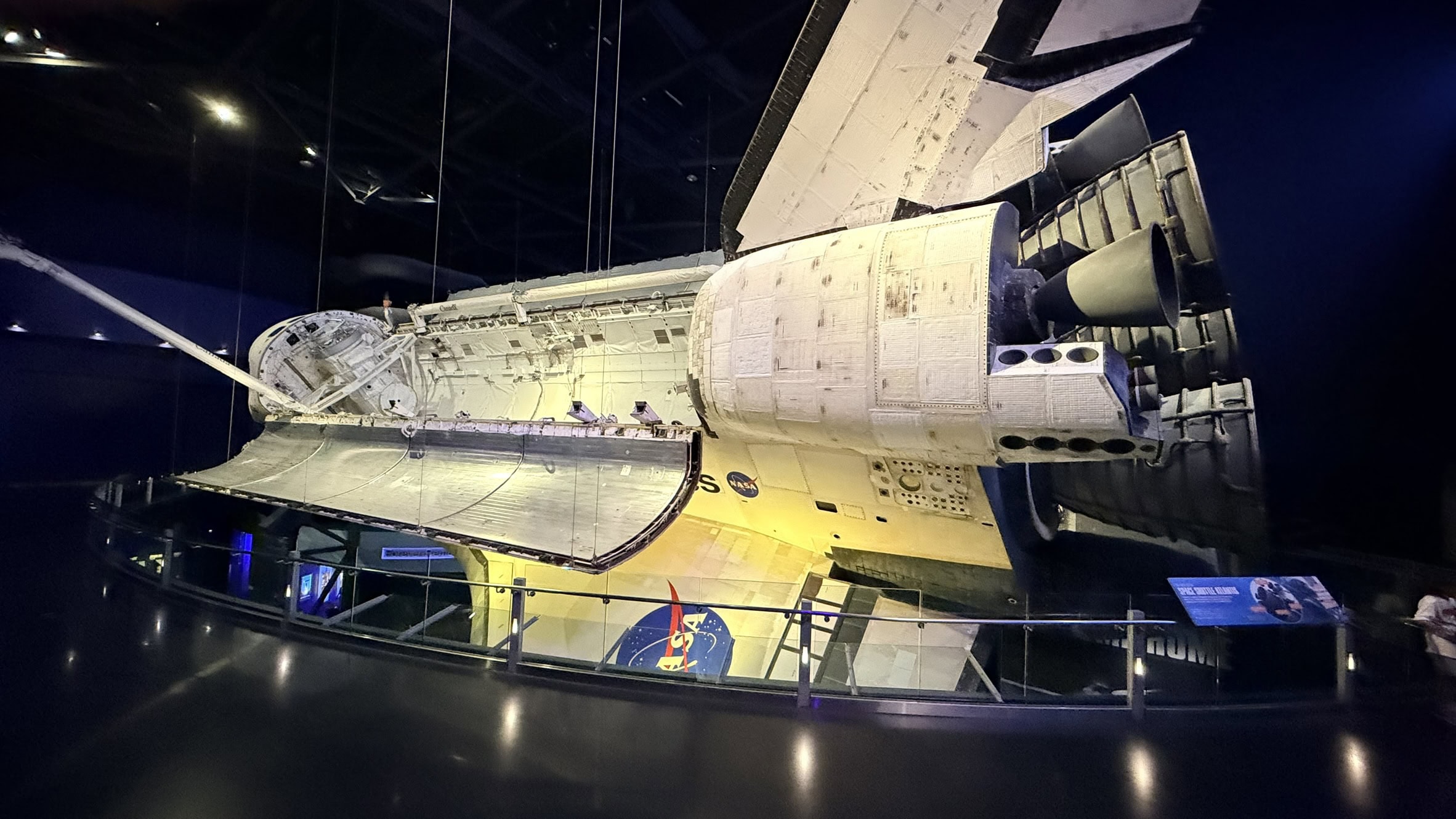
NASA Space Shuttle Atlantis at the Kennedy Space Center. 19ForytFive Image by Harry J. Kazianis.
Astronomy keeps delivering the same tantalizing, frustrating news: the nearest place we might one day find life beyond Earth is close enough to feel almost within reach, and far enough to be, for now, completely beyond it. That place is the Alpha Centauri system, a trio of stars just 4.2 to 4.3 light-years away, the closest stellar neighbors to our Sun. It contains at least one confirmed world that could, in principle, be habitable, and possibly a second. It also sits behind a wall of distance so vast that every plan to cross it runs into the hard limits of physics, money, or both. Here is what is actually next door, and why getting there is very nearly impossible.
The World’s Next Door
The confirmed one is Proxima Centauri b. Discovered in 2016 around Proxima Centauri, the small red dwarf that is technically the closest single star to the Sun at about 4.24 light-years, it is a rocky, roughly Earth-mass planet that orbits within its star’s habitable zone, the band where temperatures could allow liquid water. It even picked up encouraging news this year: a May 2026 study found evidence that Proxima b may possess a magnetic field, which on Earth helps shield the atmosphere from being stripped away by stellar radiation.
That is where the caution has to start, though, because Proxima b’s habitability is genuinely debated. Its star is a flare star, prone to violent outbursts that can briefly brighten it a hundredfold and bombard the close-orbiting planet with radiation, and the world is likely tidally locked, with one face in permanent day. It is the best nearby candidate for a life-bearing world, not a confirmed second Earth.
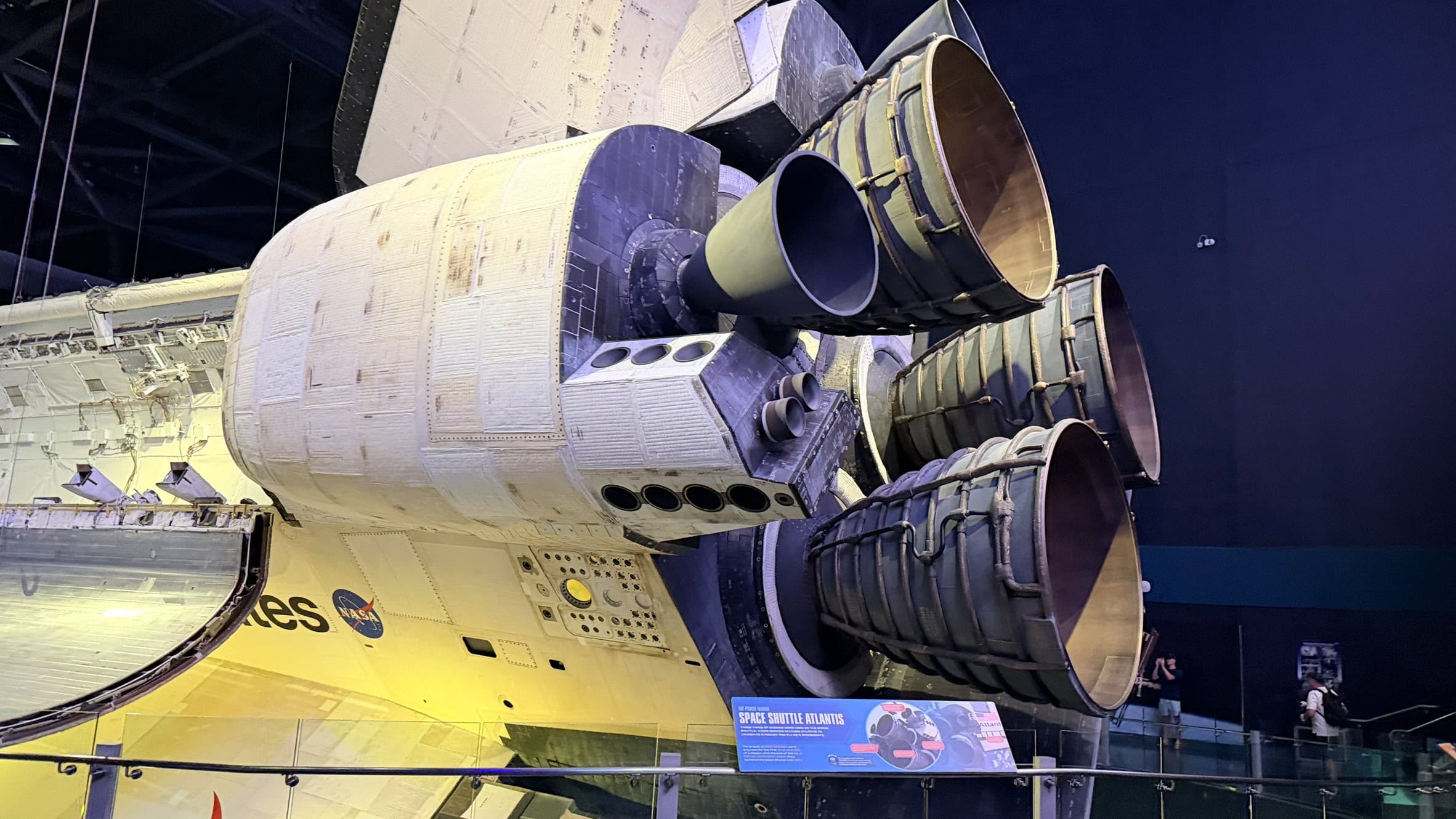
NASA Space Shuttle Atlantis at the Kennedy Space Center. 19FortyFive Image by Harry J. Kazianis.
The newer find is stranger and far less certain. In 2025, astronomers using NASA’s James Webb Space Telescope reported evidence of a planet orbiting Alpha Centauri A, the sun-like star that, with its companion Alpha Centauri B, forms the bright binary at the system’s heart. If real, it would be the closest planet ever imaged in the habitable zone of a star like our own. But two things temper the excitement.
First, it is a gas giant, about Saturn’s mass, and, as such, NASA says plainly, it would not support life as we know it. Second, it may not be there at all. Webb glimpsed the object once in 2024, then failed to find it in two follow-up looks in 2025, forcing the team to simulate millions of possible orbits to argue the planet had simply been hiding in the star’s glare. “I have seen planet candidates come and go,” one astronomer cautioned. The decisive test comes this August 2026, when, if the planet is real and on its predicted path, it should reappear beside Alpha Centauri A.
So the honest picture is two worlds of very different status: a confirmed, Earth-mass Proxima b that might be habitable, and an unconfirmed, lifeless gas giant next door that keeps disappearing. Neither is a place we can visit. At least, in 2026, that is.
The Wall
The reason is distance, and the numbers are humbling. Four light-years sounds almost neighborly against a galaxy 100,000 light-years across, but it is a gulf that dwarfs everything humans have ever crossed. NASA’s twin Voyager probes, launched in 1977 and now the most distant objects we have ever built, have spent nearly half a century traveling and are not remotely close to leaving the Sun’s neighborhood, let alone reaching another star.
NASA Space Shuttle Atlantis Exhibit at the Kennedy Space Center. 19FortyFive Image by Harry J. Kazianis.
Run the arithmetic, and the scale becomes clear. A spacecraft moving at Voyager’s speed of roughly 17 kilometers per second would, by one peer-reviewed estimate, take about 75,000 years to reach Proxima b. A top-of-the-line commercial rocket fired out of the solar system tomorrow would need on the order of 80,000 years to do so. Recorded human history runs back perhaps 5,000 years; the trip to the nearest possibly habitable world, at the best speed we can currently manage, would take more than ten times as long as civilization has existed. The distance is not a challenge to be engineered around with a bigger rocket. It is a wall.
The One Real Plan, and Its Quiet End
There has been exactly one serious, funded attempt to get over that wall in a human lifetime, and its story is cautionary. In 2016, the physicist Stephen Hawking, the investor Yuri Milner, and Mark Zuckerberg announced Breakthrough Starshot, a $100 million effort built on a genuinely clever idea. Instead of a heavy rocket, it would send a swarm of gram-scale microchips, each attached to an ultra-thin reflective “lightsail.”
A ground-based array of powerful lasers would fire at the sails for a few minutes, accelerating the tiny craft to around 20 percent of the speed of light, fast enough to reach Alpha Centauri in roughly 20 years and beam home a fleeting glimpse of Proxima b sometime in the 2060s.
It did not survive contact with reality. The cost estimates for the enormous laser array ballooned toward $10 billion and beyond, and the physics stayed brutal: no one could solve how to power a paperclip-sized probe across two decades in the cold and dark, or how to slow it down at the far end, meaning it would blaze past its target and capture only minutes of data.
Some scientists argued that a large space telescope would learn more about Proxima b than a flyby ever could. By 2025, the money and momentum had drained away, and Scientific American reported the initiative’s quiet demise. The one plan to physically visit the stars in our lifetimes had, for now, faded out, exactly as earlier estimates warned its price and difficulty might force.
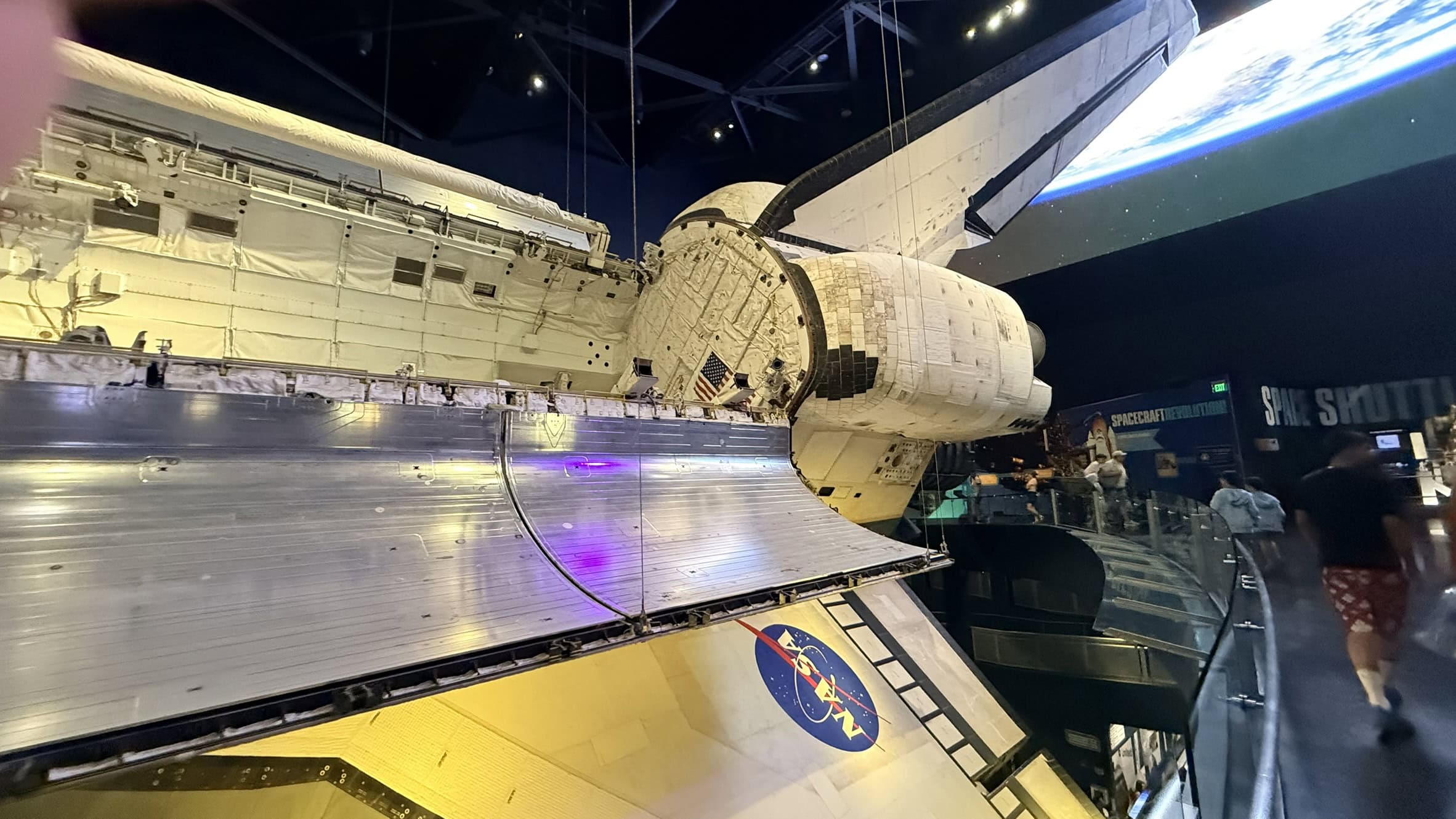
NASA Space Shuttle Atlantis at the Kennedy Space Center. 19FortyFive Image by Harry J. Kazianis.
The View From Here
This is the peculiar situation Alpha Centauri leaves us in. It hands astronomers the most studyable, potentially living worlds in the entire galaxy, close enough to photograph, to probe for atmospheres, to argue over, and simultaneously denies us any way to go and look. What we have instead is better and better eyes. Webb is already straining to resolve these planets, and NASA’s Nancy Grace Roman Space Telescope, due to launch soon, carries a coronagraph purpose-built to image exactly this kind of world and may finally confirm whether the Alpha Centauri A candidate is real.
For the foreseeable future, that is how the nearest worlds that might host life will be explored, not by spacecraft, but by telescopes staring across more than four light-years of empty space, gathering them one faint photon at a time.
They are right next door, and they have never been farther away.
About the Author: Harry J. Kazianis
Harry J. Kazianis (@Grecianformula) was the former Senior Director of National Security Affairs at the Center for the National Interest (CFTNI), a foreign policy think tank founded by Richard Nixon based in Washington, DC. Harry has over a decade of experience in think tanks and national security publishing. His ideas have been published in the NY Times, The Washington Post, The Wall Street Journal, CNN, and many other outlets worldwide. He has held positions at CSIS, the Heritage Foundation, the University of Nottingham, and several other institutions related to national security research and studies. He is the former Executive Editor of the National Interest and the Diplomat. He holds a Master’s degree focusing on international affairs from Harvard University.

