
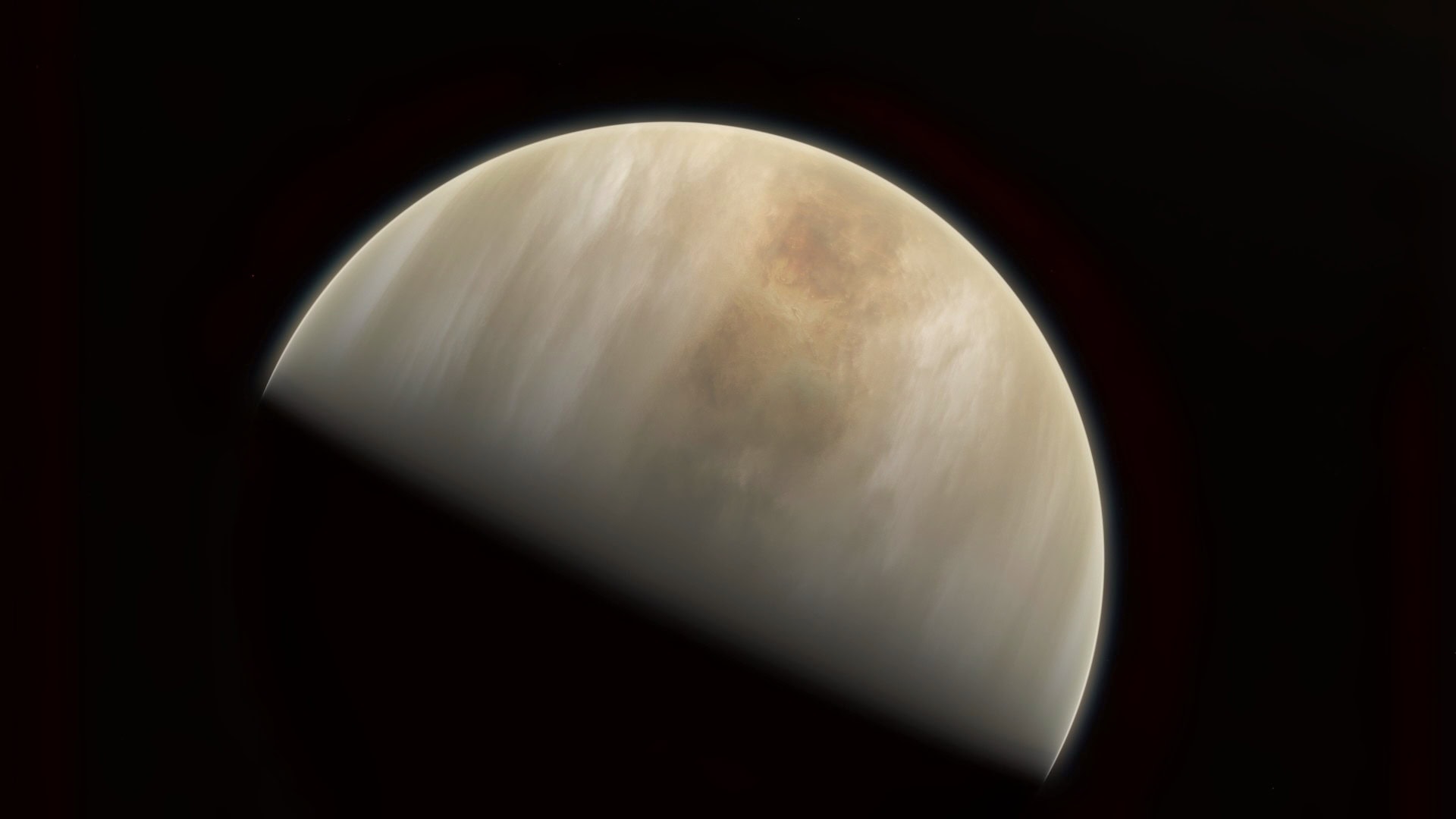
Summary and Key Points: Terraforming Venus has challenged scientists since Carl Sagan proposed seeding its clouds with algae in a 1961 paper in Science, an idea he later retracted after spacecraft revealed a surface pressure about ninety times Earth’s and temperatures near 465 degrees Celsius. Proposals since have included Paul Birch’s 1991 plan combining a sunshade at the L1 point, frozen carbon dioxide, and imported water, and NASA scientist Geoffrey Landis’s floating habitats in the temperate cloud layer fifty kilometers up. The newest concept, a 2022 paper by NASA researcher Alex Howe, proposes a continent-sized artificial surface built from atmospheric carbon. NASA’s DAVINCI and VERITAS missions, now in development under tight budgets, would supply the data any such plan requires.
Terraforming Venus: An Introduction In What Looks Near Impossible
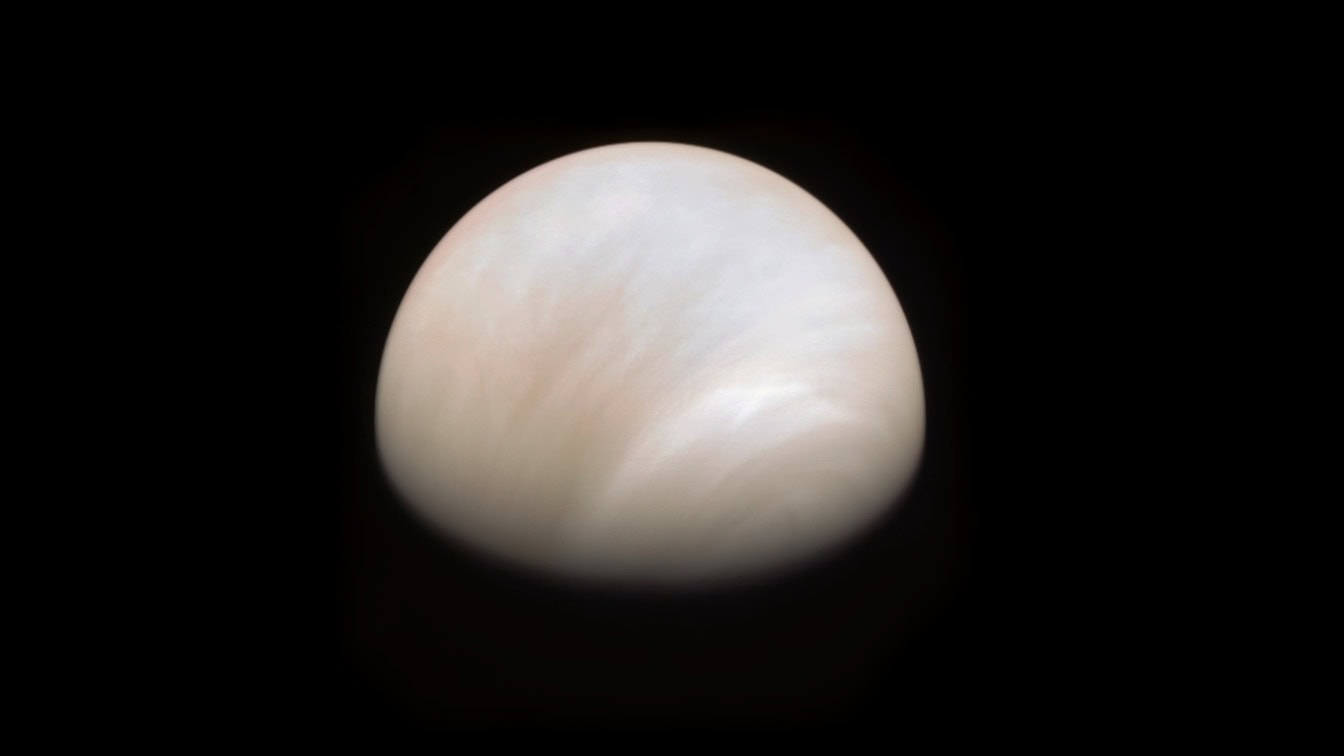
Venus. Creative Commons Image.
Venus is almost exactly Earth’s size, sits next door, and orbits inside the Sun’s habitable zone. It is also the most hostile large world in the solar system, with a surface that would crush, roast, and corrode a visitor in seconds.
Scientists have spent sixty years asking what it would take to make it livable, and the answers have moved from seeding the clouds with algae to freezing the entire atmosphere out of the sky. The most efficient proposal on the table now argues for never touching the surface at all.
In 1961, the astronomer Carl Sagan published a paper in the journal Science that ended with one of the first serious scientific proposals to terraform another planet. Sagan suggested seeding Venus’s atmosphere with algae that would consume its carbon dioxide, convert it to oxygen and organic material, and cool the planet toward habitable temperatures.
Three decades later, in his book Pale Blue Dot, Sagan retracted it himself, calling the idea’s central error a fatal flaw. When he wrote the paper, he explained, he believed the surface pressure on Venus was a few times Earth’s.
NASA Logo photo taken at the Kennedy Space Center by Harry J. Kazianis.
Later spacecraft revealed it to be about ninety times higher, and the sheer quantity of carbon involved meant his scheme, even if it had worked, would have buried the planet. Sagan’s reversal is the honest starting point for any discussion of terraforming Venus, because it captures the scale of what the planet actually demands. Every proposal since has had to reckon with numbers that dwarf anything humans have ever attempted.
What Makes Venus the Hardest Target in the Solar System
Venus punishes visitors in four different ways at once, and any one of them would be enough to rule out human life. The surface temperature holds steady at roughly 465 degrees Celsius, hot enough to melt lead, across the entire planet and through its long night, because the thick atmosphere distributes heat so evenly that day and night barely differ.
The atmospheric pressure at the surface is about 93 times Earth’s, equivalent to the pressure a diver would feel at roughly a kilometer beneath the ocean, and the lowest layer of that atmosphere is so dense it behaves as a supercritical fluid, neither quite gas nor quite liquid. The air is 96.5 percent carbon dioxide, wrapped in permanent decks of sulfuric acid cloud.
And the planet turns backward on its axis so slowly that a single Venusian solar day lasts about 117 Earth days. Mars, by comparison, is a gentle target. Terraforming Venus means solving a set of problems that make the red planet look like a weekend project, and the proposals fall into a clear order of difficulty.
The Atmosphere Problem: Ninety Bars of Carbon Dioxide
The first and largest obstacle is the atmosphere itself, and it is difficult to overstate its mass. Venus carries roughly ninety bars of carbon dioxide, an atmosphere about ninety times heavier than Earth’s entire air envelope, and making the surface habitable means removing or locking away nearly all of it. Directly blasting it into space is impractical because Venus has enough gravity that hurling the atmosphere off the planet with asteroid impacts would take an implausible amount of energy.
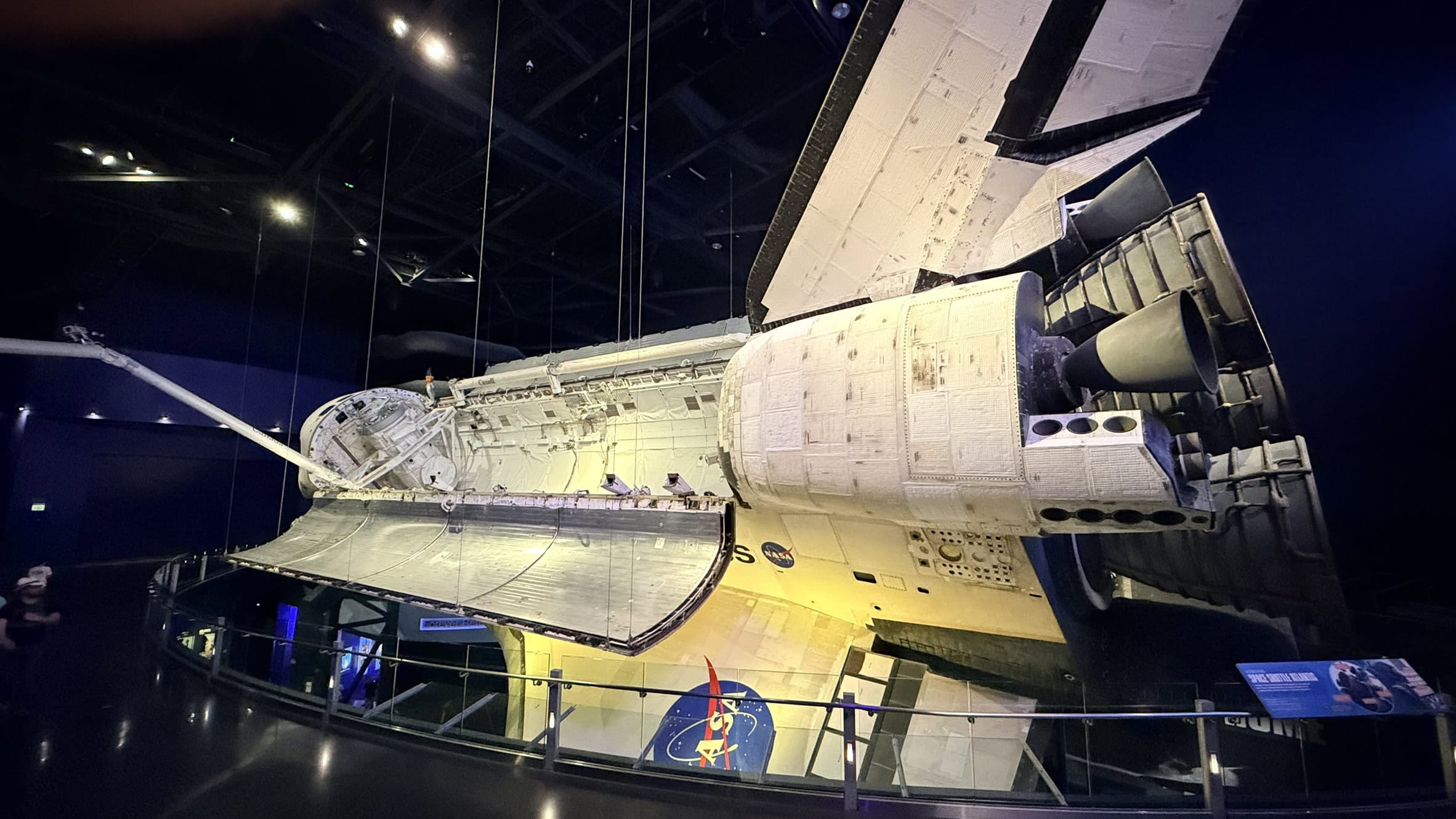
NASA Space Shuttle. Image Credit: Harry J. Kazianis.
Converting it biologically, Sagan’s original idea, founders on the arithmetic he later identified: turning that much carbon dioxide into oxygen would leave an oxygen atmosphere at dozens of bars of pressure, itself unbreathable and dangerous, alongside mountains of sequestered carbon. Freezing it out is the more modern answer, but that requires first solving the second problem, because carbon dioxide will not condense while the planet is as hot as it is.
The Heat Problem: Cooling a World That Melts Lead
Venus is hot not because it is close to the Sun, but because its atmosphere traps heat with brutal efficiency. It receives only about a quarter of the sunlight per unit area that Mercury does, yet it is hotter than Mercury, due to the strongest greenhouse effect in the solar system. Cooling it means cutting off the sunlight driving that greenhouse, and the leading method is a sunshade, an enormous reflective structure positioned at the L1 point between Venus and the Sun to block the light before it arrives.
Estimates for how long the planet would then take to radiate its heat away and allow the atmosphere to condense run to roughly two centuries. The engineering challenge is the size of the shade, which would have to span a structure many times larger than any object humans have ever built or moved in space. Only once the planet has cooled enough for carbon dioxide to freeze does the atmospheric problem become solvable through condensation rather than chemistry.
The Water Problem: A Bone-Dry World
The obstacle that quietly defeats most schemes is water, because Venus has almost none. The planet likely had an ocean’s worth of water billions of years ago and lost it as the runaway greenhouse effect boiled it into space, and what remains is a trace. This matters beyond the obvious need for oceans and rain. Converting carbon dioxide into a breathable material via most chemical or biological pathways requires hydrogen, which is vanishingly rare on Venus. A terraformed Venus would therefore need an imported sea.
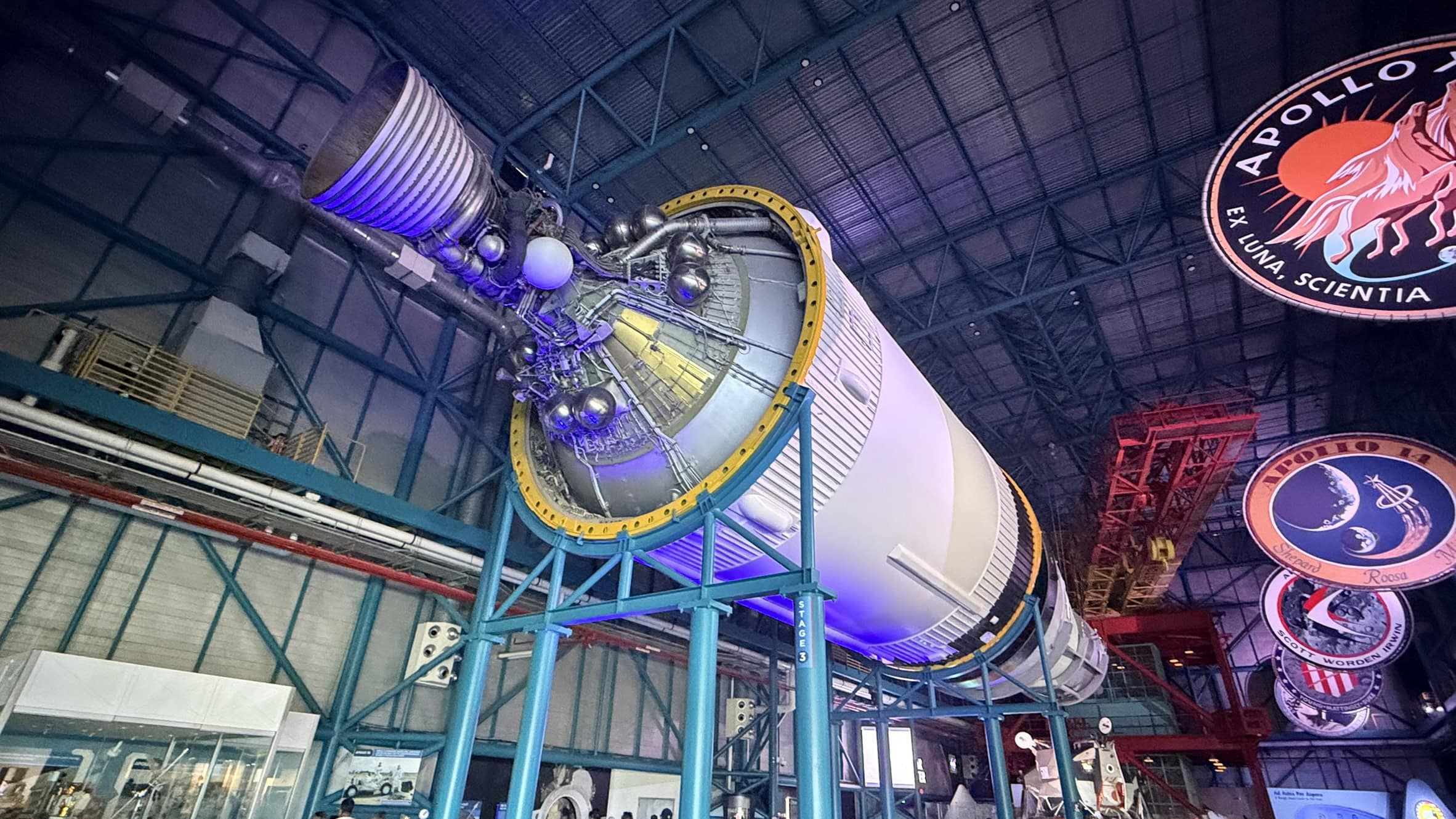
Saturn 5 Rocket from Kennedy Space Center. Image Credit: Harry J. Kazianis.
The British scientist Paul Birch, in a 1991 paper, proposed bombarding Venus with hydrogen harvested from the outer solar system, reacting it with the carbon dioxide to produce graphite and water, an approach that would demand hauling staggering quantities of material inward from the gas giants or their icy moons. Other proposals suggest disrupting an ice-rich moon of Saturn and throwing its fragments at Venus. Every water solution shares the same problem: the almost unimaginable mass that would have to be moved across the solar system.
The Rotation Problem: A Day That Lasts Four Months
The fourth problem is the one scientists take least seriously as a dealbreaker, though it is the most exotic. Venus rotates so slowly that its surface bakes for roughly two Earth months of continuous daylight, then sits in darkness for two more. Spinning up a planet to a twenty-four-hour day is far beyond any proposed technology, requiring energy on a scale that makes even the atmosphere and water problems look modest. The saving detail is that the slow rotation may not actually prevent habitability.
If the incoming sunlight can be managed artificially, through orbiting mirrors or a shade that provides an artificial day-night cycle, the planet’s natural spin becomes far less important. Birch’s proposal included a device to reflect light onto the dark side and create a workable cycle without touching the rotation at all. This is why the rotation problem, unlike the other three, tends to get set aside rather than solved.
Paul Birch and the Brute-Force Sunshade
The first full philosophy of terraforming Venus is to fight the planet directly, and Paul Birch’s 1991 work remains its most complete expression. His sequence stacks the solutions to all four problems into one enormous, centuries-long campaign. A sunshade at L1 cools the planet. An insulating cover slows re-evaporation as the frozen carbon dioxide settles.
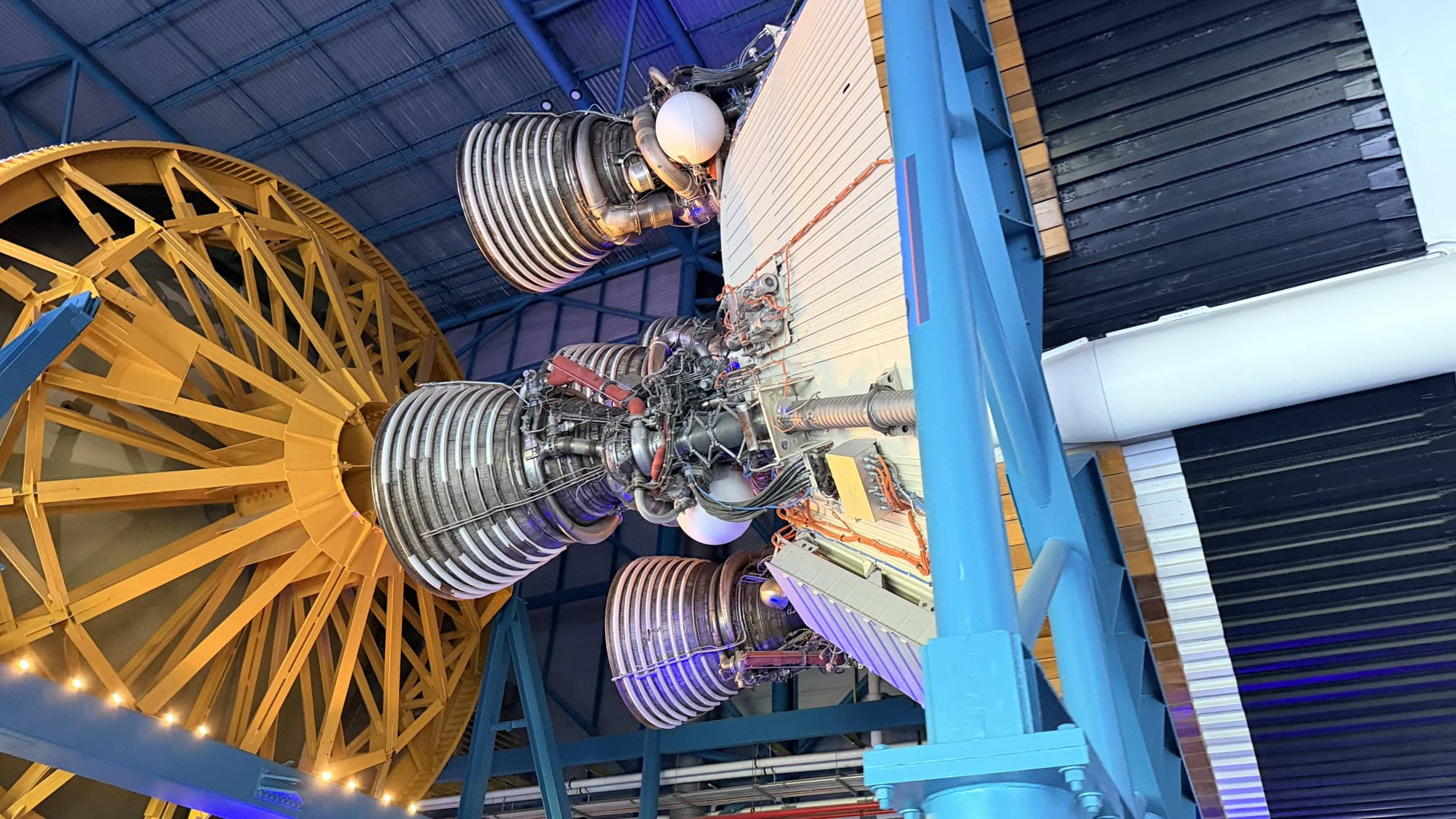
NASA Saturn V Rocket Exhibit at the Kennedy Space Center. Image Taken by the Author, Harry J. Kazianis.
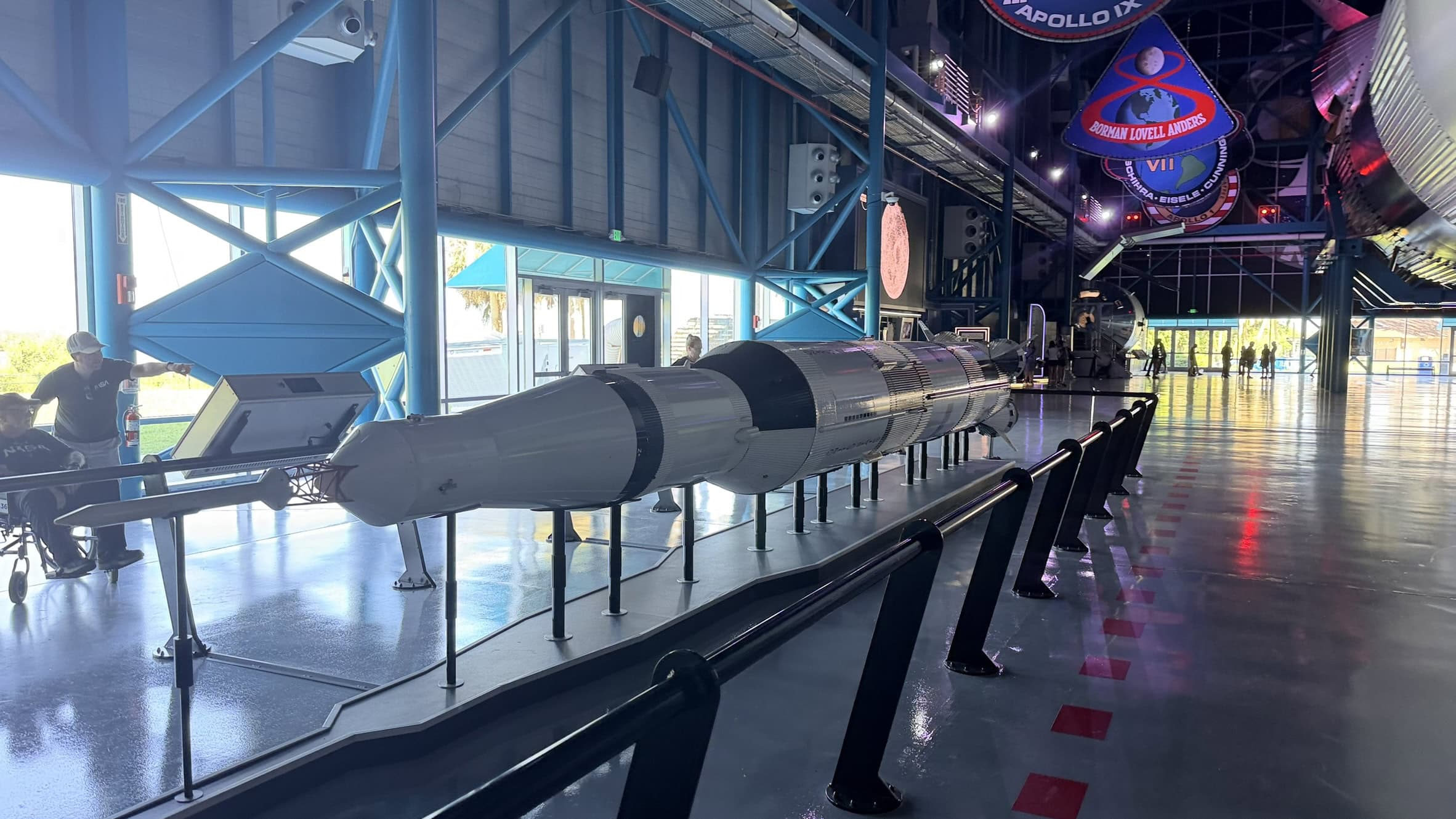
NASA Saturn V Rocket Exhibit at the Kennedy Space Center. Image Taken by the Author, Harry J. Kazianis.
Hydrogen bombardment or a shattered ice moon supplies water, filling oceans that Birch estimated could cover most of the surface. Orbiting mirrors and a soletta provide light and a day-night cycle. Birch suggested the whole process might take around two hundred years.
The appeal of this approach is that it produces a genuine second Earth, a planet with real oceans, breathable air, and an open sky. The obstacle is the resource cost, which entails building solar-system-spanning structures and relocating mass quantities far beyond current or foreseeable capabilities. This is terraforming in its most ambitious and literal form, treating Venus’s hostile conditions as problems to be defeated one by one.
Geoffrey Landis, Cloud Cities, and Building a New Surface
The second philosophy asks why anyone would fight the surface at all. Its foundation is an observation by NASA scientist Geoffrey Landis, who noted that about 50 kilometers above the surface, Venus is startlingly pleasant.
At that altitude, the pressure is roughly one bar, matching Earth’s surface, and the temperature sits between zero and fifty degrees Celsius. Landis has called it the most Earth-like environment in the solar system, aside from Earth itself. Better still, ordinary breathable air is a lifting gas in Venus’s dense carbon dioxide atmosphere, carrying more than half the lifting power that helium has on Earth, so a habitat filled with nothing more exotic than air would float. Landis proposed cities suspended in that layer and suggested that enough of them could double as a sunshade and as atmospheric processors.
The newest and most radical version of this thinking came in a 2022 paper by NASA researcher Alex Howe, published in the Journal of the British Interplanetary Society. Howe proposed building an entire artificial floating surface across Venus, a continent-sized platform suspended in the temperate cloud layer, constructed from carbon pulled directly out of the atmosphere and held aloft using nitrogen as the lifting gas. Because the structure sits above the crushing lower atmosphere, there is no need to remove the ninety bars of carbon dioxide at all.
The carbon dioxide simply stays where it is, sealed beneath a new surface on which a breathable atmosphere can be built. Water, still required, would be delivered as ice dropped in pieces small enough to burn up safely above the platform.
Howe’s analysis suggests this could be done on a timeline comparable to Birch’s two centuries but at a dramatically lower resource cost, because it eliminates the need to export an atmosphere or move planetary masses of material. The reframe is striking. The most credible path to a livable Venus may be to abandon the ground entirely and build a new world in the sky.
NASA’s Decade of Venus
All of these proposals depend on data that no one currently has because spacecraft have barely visited Venus in a generation.
That is beginning to change. NASA has two missions in development, the first American return to the planet since Magellan in the 1990s. DAVINCI will drop a probe through the atmosphere to measure its chemistry, temperature, pressure, and winds from the cloud tops to the surface, the first American atmospheric probe at Venus since 1978. VERITAS will map the surface from orbit with radar in far greater detail than Magellan managed.
Both have slipped, with VERITAS delayed to no earlier than 2031 over workforce problems at its lead center, and both now share the decade with the European Space Agency’s EnVision orbiter. The missions have pressed forward under tight budgets, with scientists describing their work as doing more with less as funding constraints squeeze NASA’s planetary science division.
None of this brings a terraformed Venus any closer in practical terms, and honesty requires saying so plainly.
Every proposal discussed here operates on theoretical timelines of centuries, assumes technology and resources far beyond anything humans possess, and remains an exercise in planetary engineering rather than a plan.
What the coming missions offer is the ground truth, the atmospheric composition, the surface geology, and the history of the planet’s lost water, on which any serious future consideration would have to be built.
The value of asking what it would take to terraform Venus lies in what the question reveals about the planet and about the limits of the idea.
The answer, after sixty years of work, is that transforming Venus into a second Earth would be the largest project the species has ever conceived, and the smartest version of it might not involve the planet’s surface at all.
About the Author: Harry J. Kazianis
Harry J. Kazianis (@Grecianformula) was the former Senior Director of National Security Affairs at the Center for the National Interest (CFTNI), a foreign policy think tank founded by Richard Nixon based in Washington, DC. Harry has over a decade of experience in think tanks and national security publishing. His ideas have been published in the NY Times, The Washington Post, The Wall Street Journal, CNN, and many other outlets worldwide. He has held positions at CSIS, the Heritage Foundation, the University of Nottingham, and several other institutions related to national security research and studies. He is the former Executive Editor of the National Interest and the Diplomat. He holds a Master’s degree focusing on international affairs from Harvard University.

