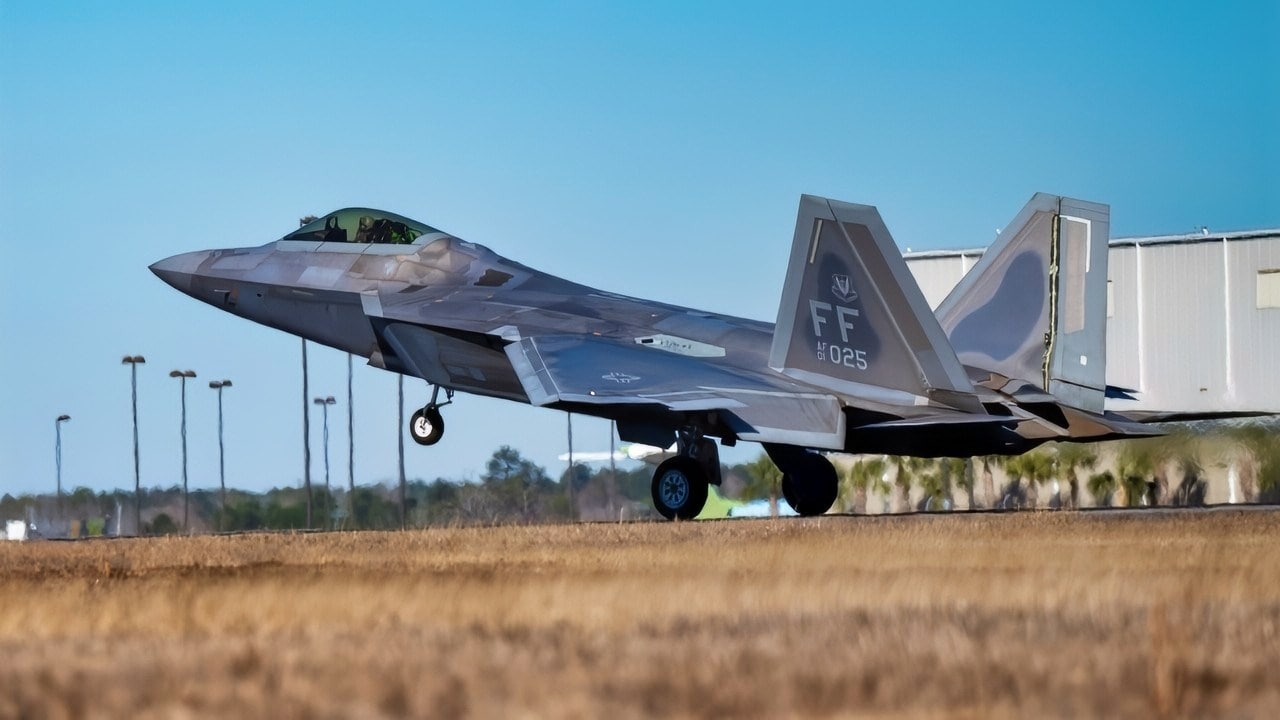
Summary and Key Points: The J-20 “Mighty Dragon” is no longer just a stealth fighter; it is the cornerstone of China’s strategy to achieve regional air superiority.
-With over 300 airframes active—dwarfing the 186-unit F-22 fleet—China is utilizing its massive production capacity to field upgraded variants featuring the WS-15 engine and two-seat “mothership” configurations for drone swarms.
-A 2023 undetected flight through Taiwanese air defenses proved the J-20’s stealth maturity.
-As Beijing targets 600 units by 2027, the J-20 represents a shift toward “quantity with quality,” capable of operating as a stealth assassin or a high-capacity “missile truck.”
The Numbers Game: How China’s J-20 Could Prevail over the F-22 Raptor
The Chengdu J-20 “Mighty Dragon” fifth-generation stealth air-superiority fighter is one of the best warplanes ever built outside of the United States. That it has been developed by America’s chief global rival, China, is a concern.
Many argue that China effectively stole the plans for the J-20 from the United States.
Of course they did, why reinvent the wheel when it already exists?
The key element here is the way in which the Chinese, with their advanced mass-production capabilities, have streamlined, expanded, and adapted their fifth-generation warplanes to make them truly distinct from the F-22 Raptor. These planes are very lethal.
The Taiwan Test That Should Have Set off Alarms on J-20
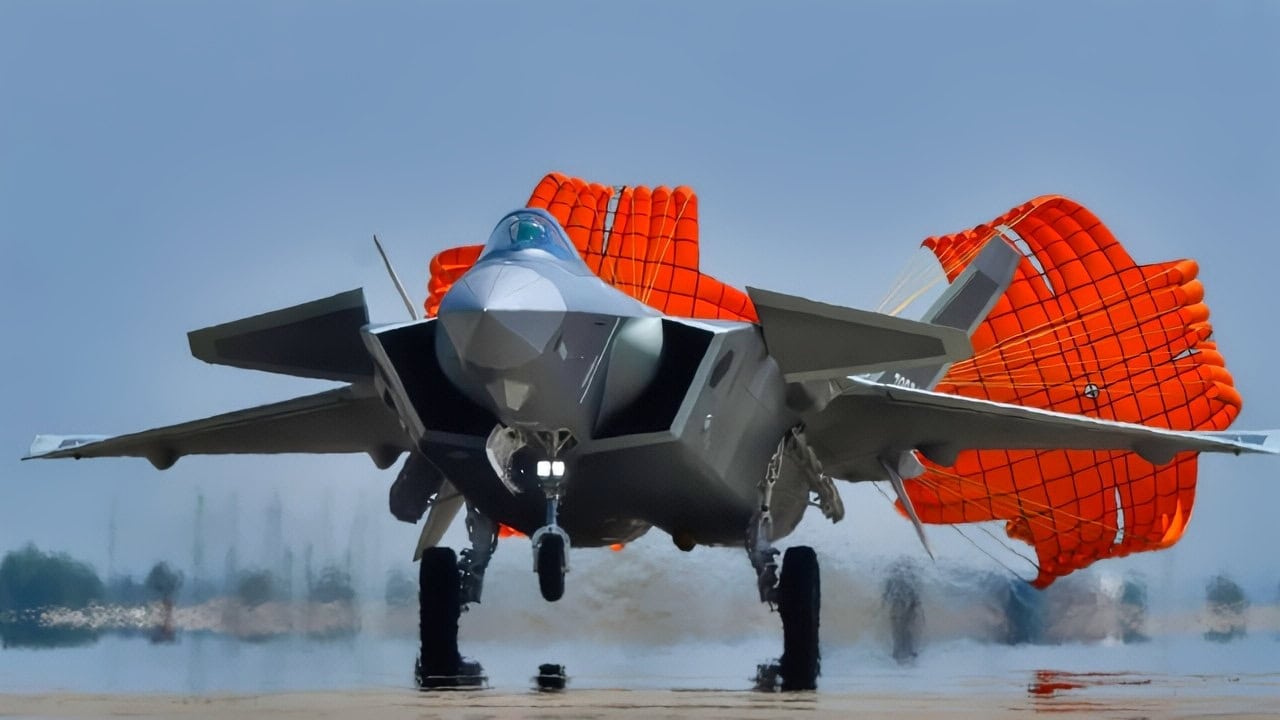
J-20 Stealth Fighter Landing. Image Credit: Creative Commons.
In 2023, a People’s Liberation Army Air Force (PLAAF) pilot likely decided to test the stealth features of his warplane against Taiwan’s U.S.-provided anti-air defenses and radar tracking systems. That pilot flew his J-20 right through Taiwanese air defenses without so much as alerting the watchful Taiwanese defenders.
The J-20 flew across the island undetected and safely returned to base a few hours later, at least, according to many reports.
America’s Self-Inflicted F-22 Problem
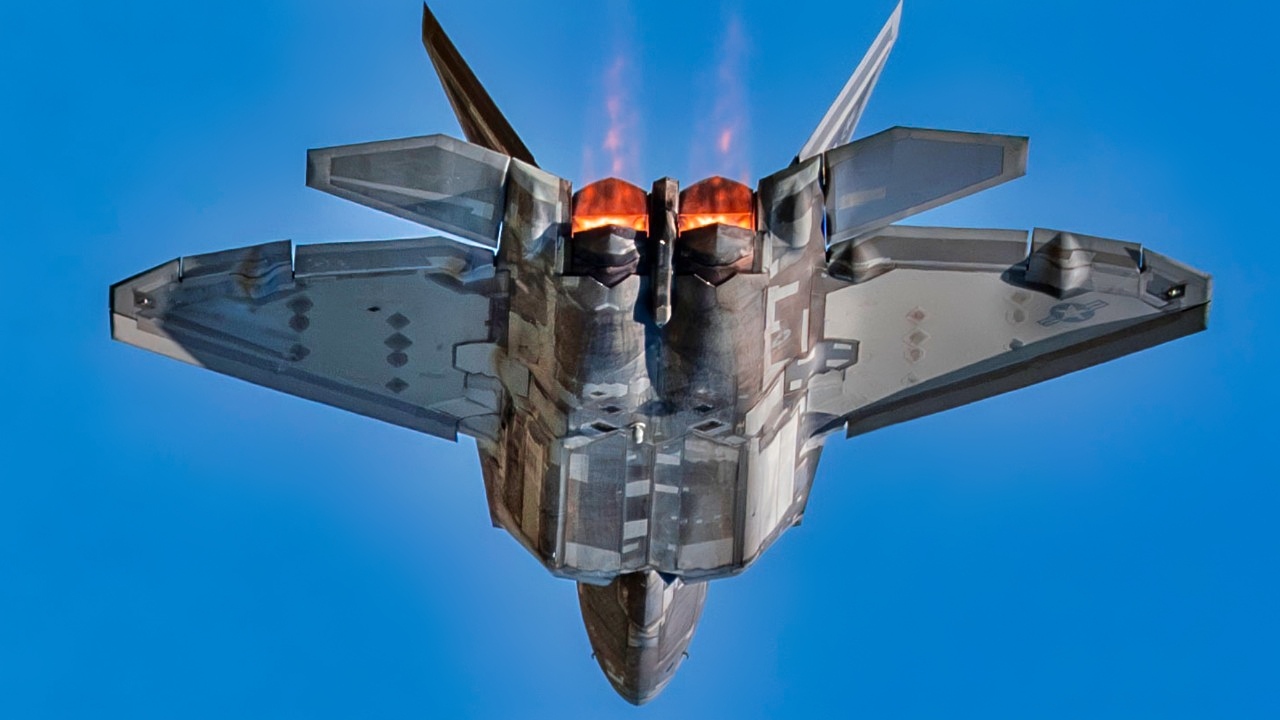
A U.S. Air Force F-22 Raptor performs an aerial demonstration during Altus airshow at Altus Air Force Base, Nevada, April 12, 2025. Aviation Nation is an airshow held at Nellis Air Force Base, showcasing the pride, precision and capabilities of the U.S. Air Force through aerial demonstrations and static displays. The F-22 Raptor performed there to highlight its unmatched agility and air dominance as part of the Air Force’s efforts to inspire, recruit and connect with the public. (U.S. Air Force photo by Staff Sgt. Lauren Cobin)
And the J-20 continues being upgraded. What’s more, its production line is humming along brilliantly, while the production line for its chief rival, the U.S. Air Force’s F-22 Raptor, was irresponsibly shuttered in 2009 due to political considerations related to fallout from the Great Recession of 2008.
As a result of that shortsighted Obama-era decision, the F-22’s numbers were capped at 186, with only around 143 being considered “combat-ready.” The Air Force originally intended a fleet of 750 units.
Today, China has more than 300 J-20s. In fact, most reports suggest that China has accelerated the production of the J-20 in the last two years to ensure that Beijing has overmatch if it squares off against the F-22.
The Stealth Fighter America Can’t Ignore
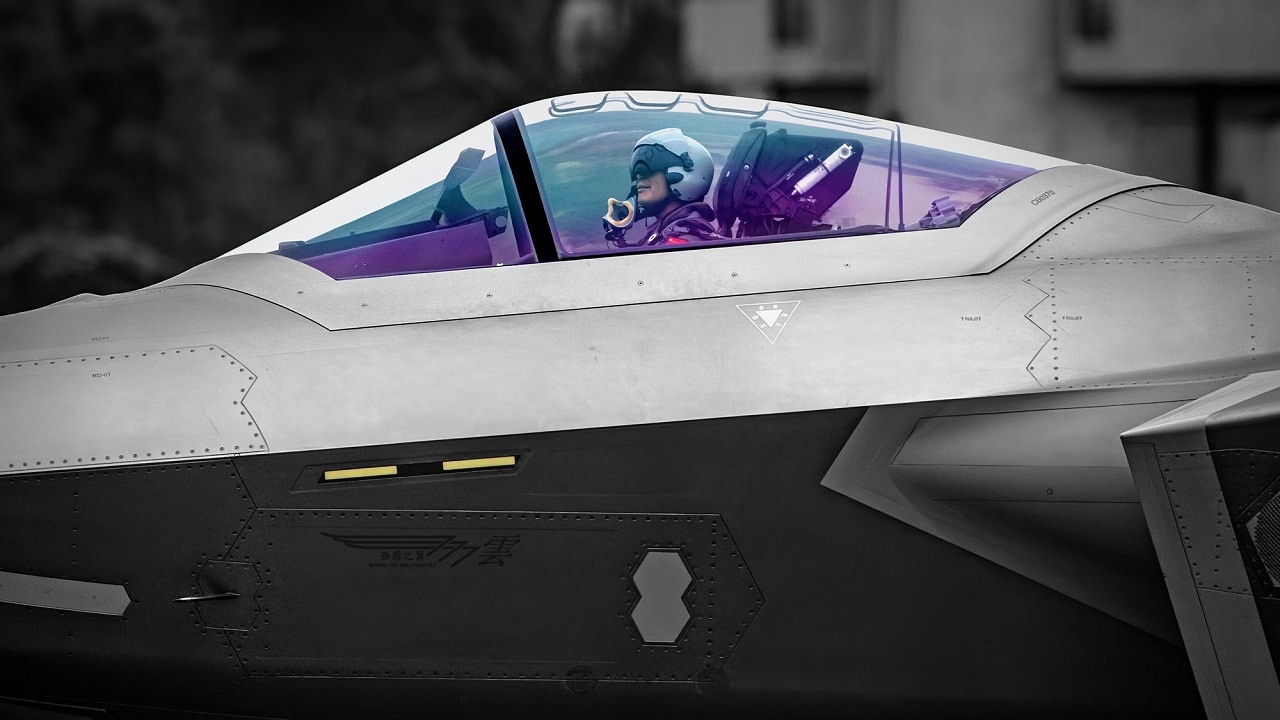
J-20 Fighter. Image Credit: Creative Commons.
So, not only is China outproducing America in terms of its vaunted fifth-generation stealth warplanes, but the quality of the J-20 is improving with each iteration. Since the F-22 production line was closed 17 years ago, the ability to upgrade and enhance the F-22 is far more limited than what the Chinese can do with their active production line for the J-20.
This alone gives the Chinese considerable advantages over the Americans when it comes to battling the F-22.
By next year, China could easily possess between 500-600 J-20s. Next year, of course, is 2027, the year we are all told is the most opportune time for China to strike Taiwan (and their Western allies).
Should China hold off and not strike Taiwan next year, if production trends in China persist, the PLAAF could easily have 1,000 J-20s in their fleet by 2030.
The Specs on the J-20 Mighty Dragon
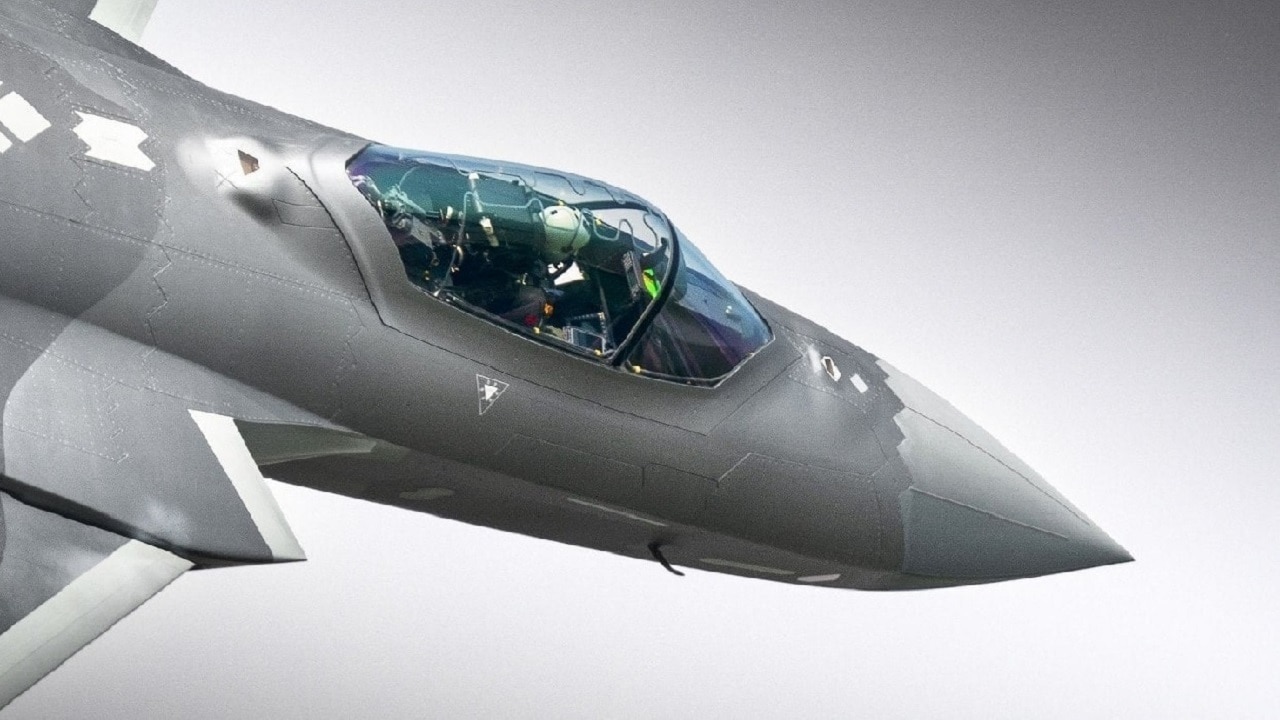
J-20 Stealth Fighter. Image Credit: Creative Commons.
There are now several models of the J-20. The J-20 A/B is piloted by a crew of one and measures 69 feet, 7 inches in length. A third, two-seat J-20 was unveiled at the Zhuhai Airshow in 2024. That bird is planned to be a mothership for drone swarms, among other things.
The wingspan on these birds is generally 42 feet, 8 inches. The carrying capacity makes for a maximum takeoff weight of 80–81,000 pounds. China is transitioning from two Shenyang WS-10C turbofan engines to the more powerful WS-15 engines (producing around 35,000 pounds of thrust each). J-20s have a maximum speed of more than Mach 2.
The J-20’s combat radius is somewhere between 700–1,250 miles, with a service ceiling of around 65,000 feet. The J-20’s airframe is a long, blended fuselage with a canard-delta configuration. It has low-observable diverterless supersonic inlets, S-duct air intakes, and radar-absorbent materials. The plane has an advanced sensor suite, featuring active electronically scanned array radar, a passive electro-optical targeting system, and a distributed aperture system for complete situational awareness.
J-20s feature a main ventral weapons bay and two smaller weapons bays. Internally, the J-20 carries the potent long-range PL-15 air-to-air missile that proved itself when employed by the Pakistani Air Force during last year’s Indo-Pakistani War.
J-20s can carry PL-21 missiles, along with PL-10 missiles in the side bays. LS-6, FT-7, and CM-506 precision-guided munitionscan be deployed from the J-20 as well. An external payload comprises four under-wing hardpoints for drop tanks or additional missiles.
Missile Truck or Stealth Assassin? China Can Choose
Employing the external hardpoints negates the stealth features of these planes. But the sheer quantity of China’s J-20 fleet might mean that stealth isn’t the priority. Mass plus massive weapons carrying capacity mean these planes could punch considerable holes in whatever defenses Taiwan erected to deter the Chinese from attacking.
These birds could be turned into missile trucks.
The 2027 Problem
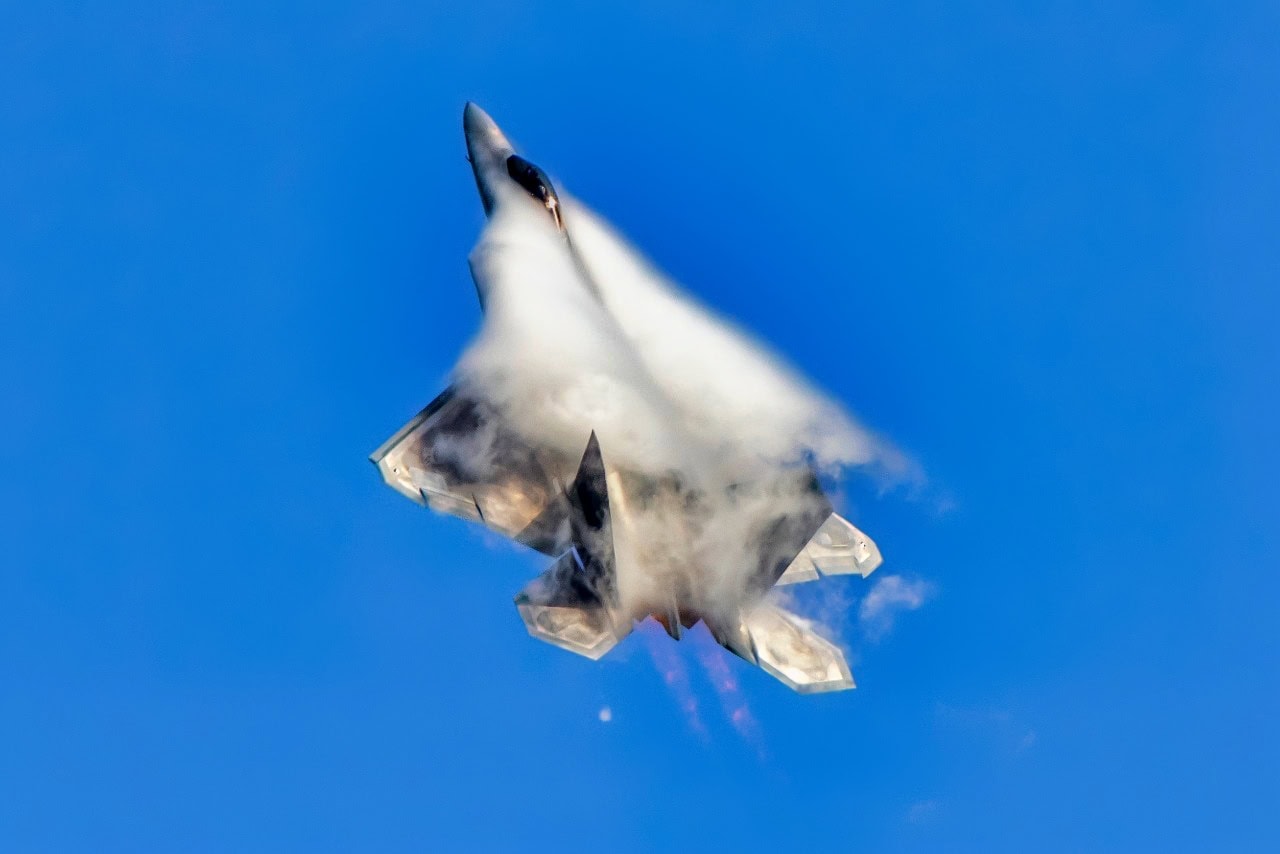
A U.S. Air Force F-22 Raptor performs a sharp aerial maneuver above the flight line during the 2024 Marine Corps Air Station Miramar Airshow in San Diego, Sept. 28, 2024. The F-22 Raptor Demonstration Team performs precision aerial maneuvers at airshows across the world to demonstrate the unique capabilities of the world’s premier 5th generation fighter aircraft. America’s Airshow 2024 is a unique and incredible opportunity to witness Marine and joint aviation capabilities, civilian performers, and the world-famous Blue Angels; to interact first-hand with Marines, other service members, and first responders; and to see first-hand the innovative spirit of the Marine Corps through emerging technologies and forward-thinking. (U.S. Marine Corps photo by Lance Cpl. Seferino Gamez)
After entering service in 2017 and joining combat units a year thereafter, the J-20 has evolved into a real killer through the iterative process.
Those in the West who shrug at this plane and point to a finite number of aging F-22s whenever the J-20 comes up in conversation should reconsider. This plane is a serious and growing threat to America’s once vaunted dominance in fifth-generation stealth warplane capabilities.
About the Author: Brandon J. Weichert
Brandon J. Weichert is the Senior National Security Editor at 19FortyFive.com. He was previously the senior national security editor at The National Interest. Weichert is the host of The National Security Hour on iHeartRadio, where he discusses national security policy every Wednesday at 8pm Eastern. He hosts a companion show on Rumble entitled “National Security Talk.” Weichert consults regularly with various government institutions and private organizations on geopolitical issues. His writings have appeared in numerous publications, among them Popular Mechanics, National Review, MSN, and The American Spectator. And his books include Winning Space: How America Remains a Superpower, Biohacked: China’s Race to Control Life, and The Shadow War: Iran’s Quest for Supremacy. Weichert’s newest book, A Disaster of Our Own Making: How the West Lost Ukraine, is available for purchase wherever books are sold. He can be followed via Twitter/X @WeTheBrandon.