
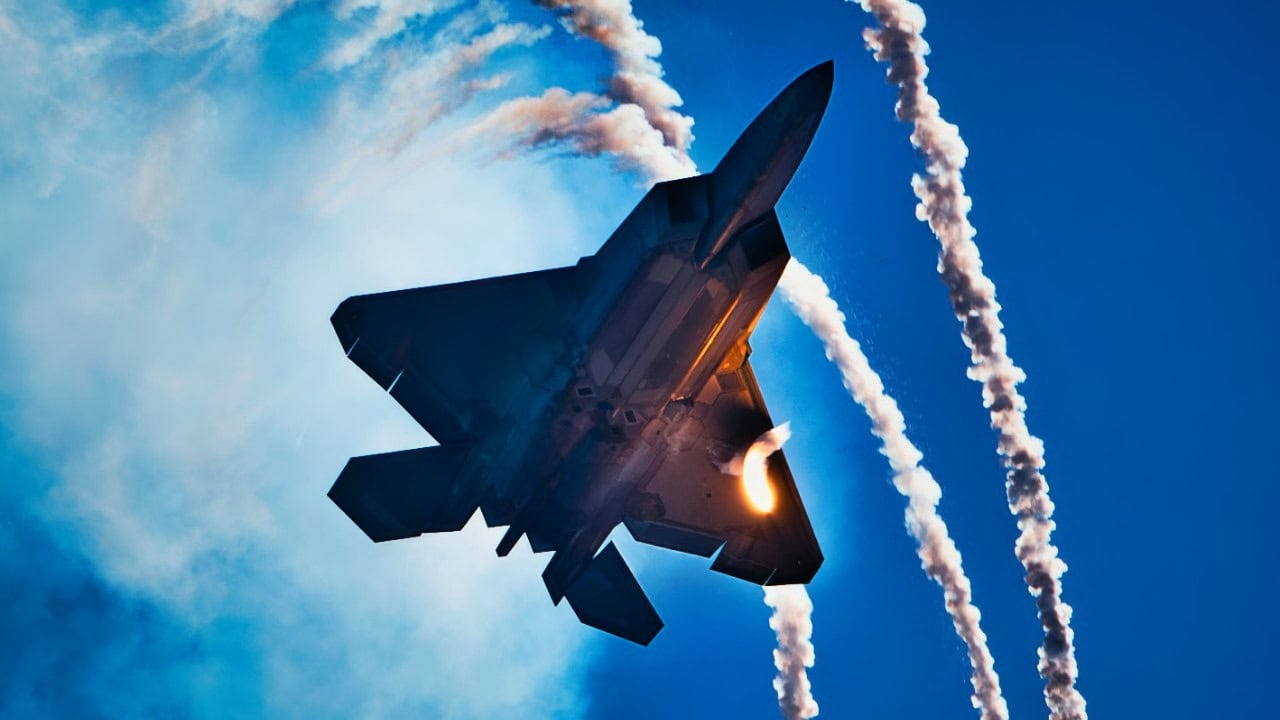
Summary and Key Points: Between 2008 and 2011, the F-22 Raptor fleet was hit with a “hypoxia-like” crisis, leading to high-profile groundings and public pilot dissent.
-While initial suspicions focused on the Onboard Oxygen Generation System (OBOGS) and “bleed air” contamination, investigators ultimately identified a faulty valve in the “Combat Edge” pressure vest as the primary culprit.
-This valve caused improper inflation, restricting pilot breathing during high-G maneuvers.
-Today, the Raptor has moved past these “teething issues,” with a 2025 contract for infrared defensive sensors and open-architecture computing, ensuring the F-22 remains a dominant, safe, and viable platform through the 2030s.
The “Hypoxia” Crisis: Why the F-22 Raptor’s Oxygen Failure Summed Up in 2 Words
The F-22 Raptor was designed to achieve air superiority against the most capable adversaries on Earth, and today it remains one of the most formidable aircraft in its class. But in the late 2000s and early 2010s, the Air Force’s premier stealth fighter faced an unusual threat: its pilots reported “hypoxia-like” symptoms, including dizziness and shortness of breath, while flying a jet that relied on a complex onboard oxygen generation system (OBOGS) rather than traditional bottled oxygen.
The issue wasn’t isolated: it gradually escalated into a fleet-wide crisis, resulting in groundings, flight restrictions, and even whistleblowing by some pilots. What followed was a years-long effort to pinpoint the root causes of the problem and implement fixes.
Reports at the time documented at least a dozen hypoxia-like incidents between 2008 and 2011, with investigators struggling to prove whether the culprit was oxygen supply, equipment failure, contamination, or problems with pilot gear.
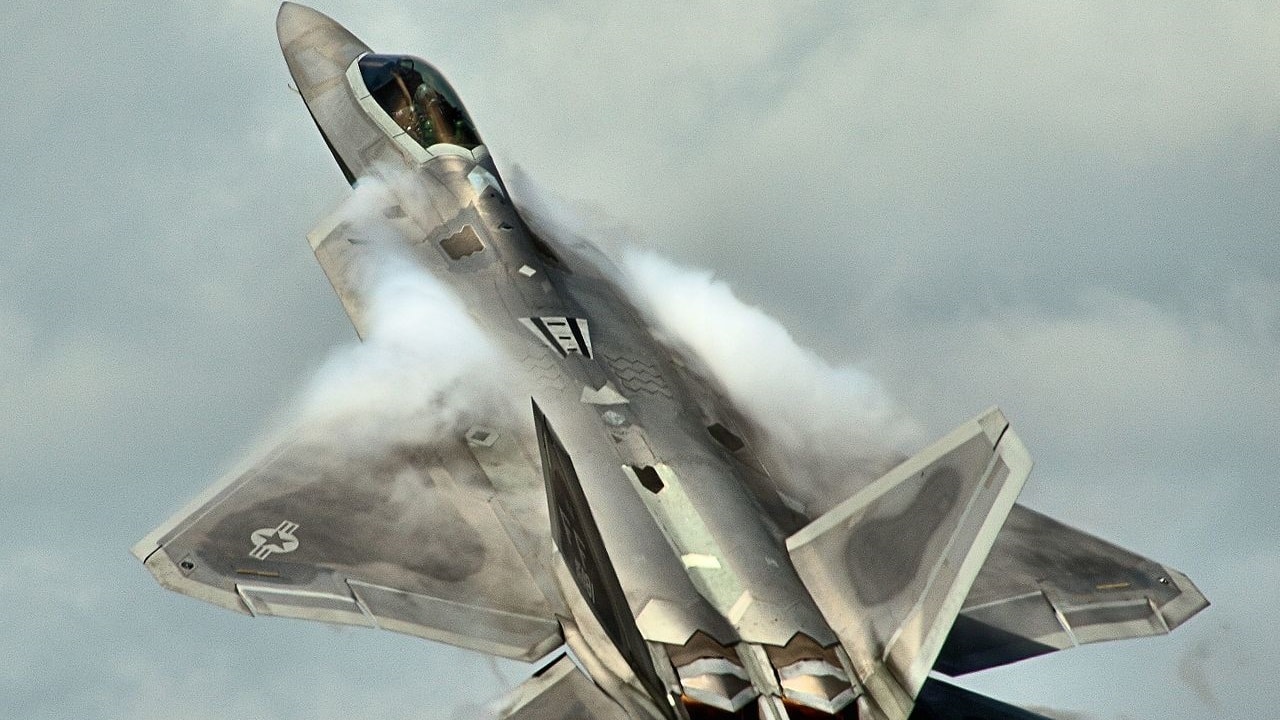
F-22 Raptor.
Today, the story is an interesting one to revisit because the U.S. Air Force is doubling down on F-22 sustainment and modernization, adding new sensors and open-architecture computer systems to keep Raptors viable into the 2030s and beyond.
The First Warning Signs
Between 2008 and 2011, F-22 pilots reported a growing number of physiological incidents consistent with oxygen deprivation, prompting internal investigations.
A 2012 House hearing similarly described a rise in “physiological issues” over that period and notes that the Air Force imposed operational limits – including altitude restrictions – as it searched for answers.
The crisis then further escalated after an F-22A crashed near Joint Base Elmendorf-Richardson, Alaska, on November 16, 2010, killing the pilot, Capt. Jeffrey Haney. The Department of Defense Inspector General later reviewed the Air Force accident investigation process for the incident, bringing into question the safety of the Raptor’s life-support systems.
How It Works
Modern fighters like the F-22 use OBOGS to concentrate oxygen from engine “bleed air” rather than carrying large oxygen bottles. “Bleed air” refers to the hot, high-pressure air extracted from the compressor stage of a jet engine that is used to generate breathable oxygen for aircrew.
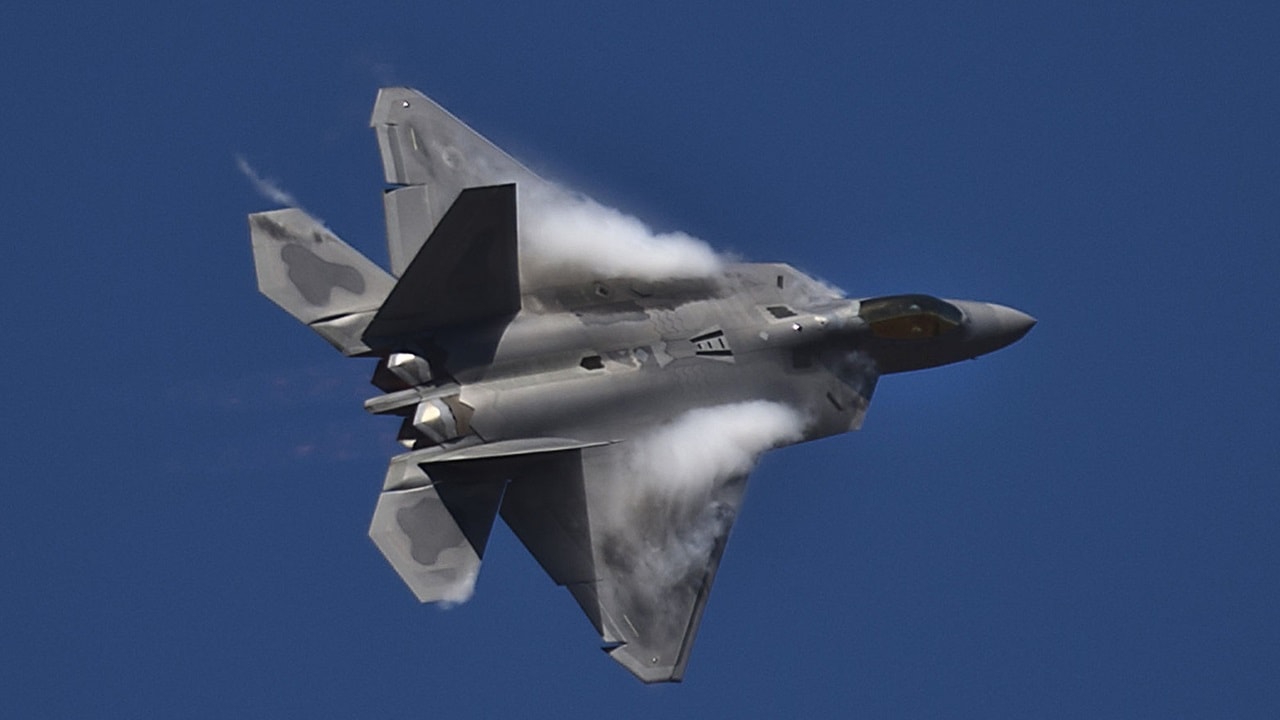
A U.S. Air Force F-22 Raptor from 94th Fighter Squadron Langley Air Force Base, Va., takes off to perform an aerial demonstration for an estimated 180,000 spectators at the Australian International Airshow, March 2, 2013 at Avalon Airport in Geelong, Australia. The F-22 demo team are currently deployed to the 18th Fighter Wing, Kadena Air Base, Japan to support pacific theater operations. This is the first official demonstration of the F-22 Raptors capabilities at an airshow outside the United States. The Australian International Airshow 2013 (AIA13), is held biennially, and is one of the largest international trade shows in the Pacific. The Airshow is expected to draw 350,000 visitors and has featured 500 defense exhibitors from 35 countries and is designed to bolster business opportunities in the international aviation sector. U.S. Pacific Command (USPACOM) participation in AIA13 directly supports theater engagement goals and objectives and further enhances relationships with other Pacific nations. (Department of Defense photo by U.S. Air Force Tech. Sgt. Michael R. Holzworth/Released)
Figuring out what was going wrong was difficult because diagnosing intermittent physiological symptoms in a high-performance jet involves so many variables – from pressure changes and how well equipment fits to contaminants and system behaviors.
Fleet Grounding and Pilot Objections on Stealth Fighter
In 2011, the Air Force grounded the entire F-22 fleet amid continuing reports of hypoxia-like episodes – an extraordinary step for its most advanced fighter. The stand-down lasted for months, with Air Force reporting from 2011 describing a four-month grounding and the adoption of “return-to-fly” safety measures, including monitoring devices to track pilot physiological indicators during flight.
By early 2012, the Air Force had still not offered a simple public explanation that satisfied pilots and observers. That uncertainty then gave rise to open dissent, and in May 2012, major media outlets reported that some F-22 pilots were refusing to fly the jet because they did not trust the oxygen and life-support systems.
The issue escalated further when two pilots spoke publicly about safety concerns and alleged intimidation, pushing the matter into prime-time national news and intensifying pressure on the service to identify a root cause.
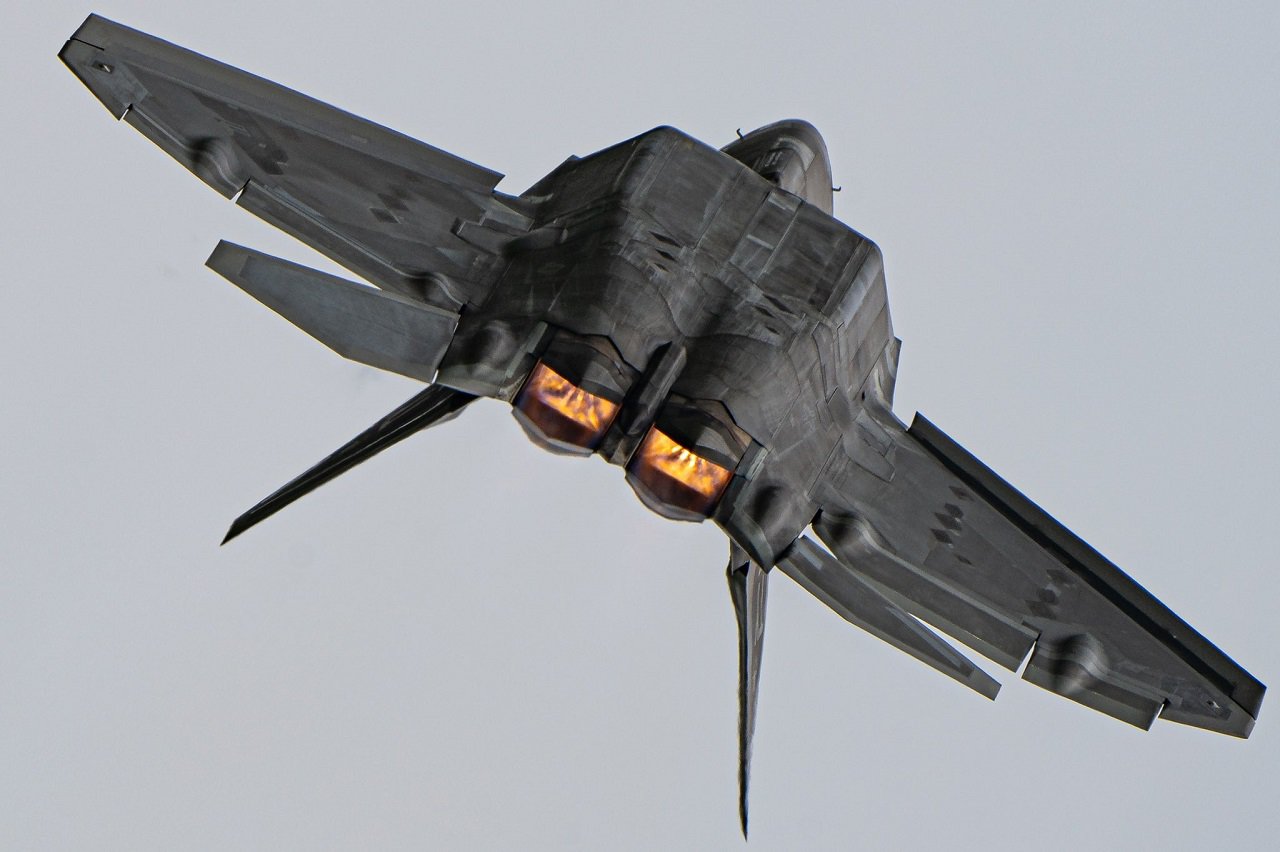
F-22 Raptor. Image Credit: Creative Commons.
What Investigations Concluded
A key turning point occurred in mid-2012, when Defense Department and Air Force officials publicly suggested that the problem was attributable to oxygen delivery and supply rather than oxygen quality. Officials began publicly pointing to a faulty valve in the pilots’ upper-pressure garment (the “Combat Edge” vest), arguing that it could inflate improperly and make breathing more difficult, especially under certain flight conditions.
Some accounts of the debacle also reference “Raptor cough” concerns linked to filtration issues.
That year, the Pentagon approved a plan to gradually lift restrictions while the Air Force implemented corrective actions and pursued additional safety measures, including expedited work on an automatic backup oxygen system. By April 2013, the Air Force announced a return to normal flight operations.
The F-22 Lives
Today, the Air Force continues to operate the F-22 alongside the F-35 Lightning II, investing heavily to sustain the platform’s relevance through the 2030s and beyond. Those upgrades include new sensors, electronic warfare systems, signature upgrades, and new defensive systems. Lockheed Martin announced a contract in 2025 to integrate next-generation infrared defensive sensors on the F-22, for example.
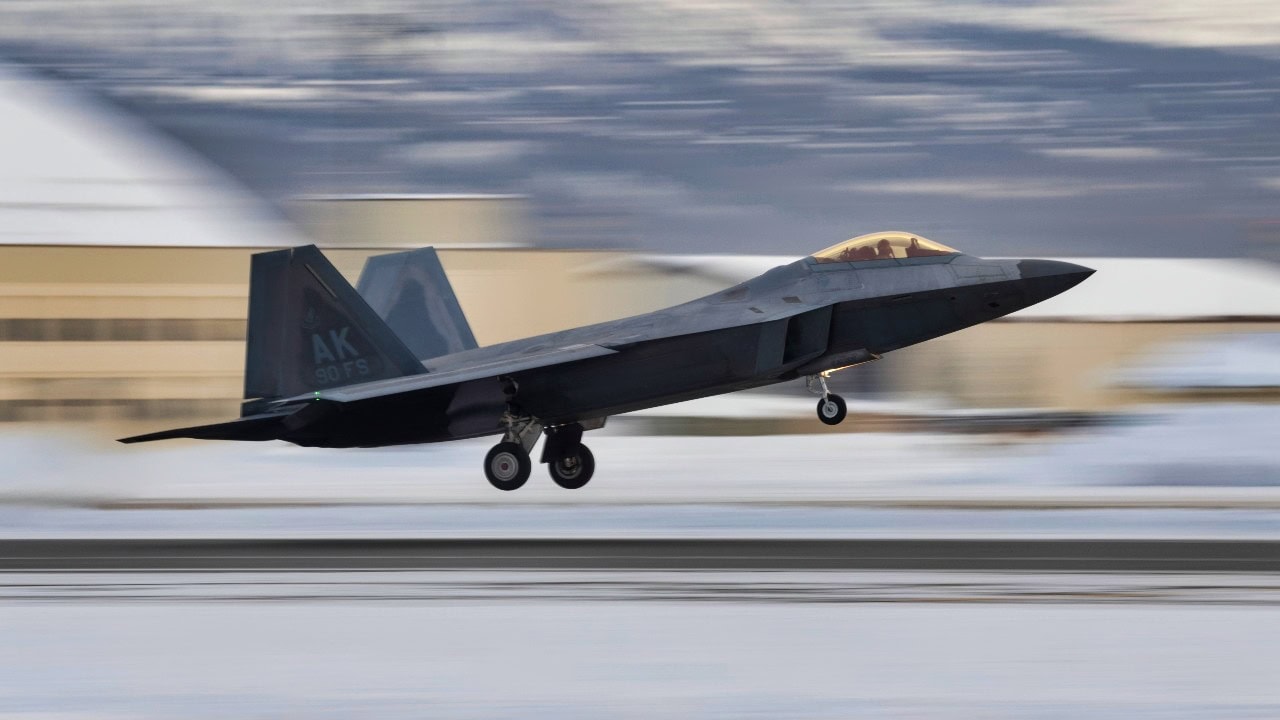
A U.S. Air Force F-22 Raptor assigned to the 3rd Wing takes off from Joint Base Elmendorf-Richardson, Alaska, Nov 21., 2023. The F-22 Raptor is a critical component of the Global Strike Task Force, and is designed to project dominance rapidly and at a great distance to defeat threats. (U.S. Air Force photo by Alejandro Peña)
The Air Force is also integrating open-architecture computing systems that allow the F-22 to control uncrewed aircraft and receive rapid capability upgrades without major redesigns.
At the same time, structural refurbishment and avionics modernization programs are extending the jet’s service life.
More than two decades after its first entry into service, and despite the problems experienced in the 2010s, the F-22 remains central to U.S. air superiority planning.
About the Author: Jack Buckby
Jack Buckby is a British researcher and analyst specialising in defence and national security, based in New York. His work focuses on military capability, procurement, and strategic competition, producing and editing analysis for policy and defence audiences. He brings extensive editorial experience, with a career output spanning over 1,000 articles at 19FortyFive and National Security Journal, and has previously authored books and papers on extremism and deradicalisation.