
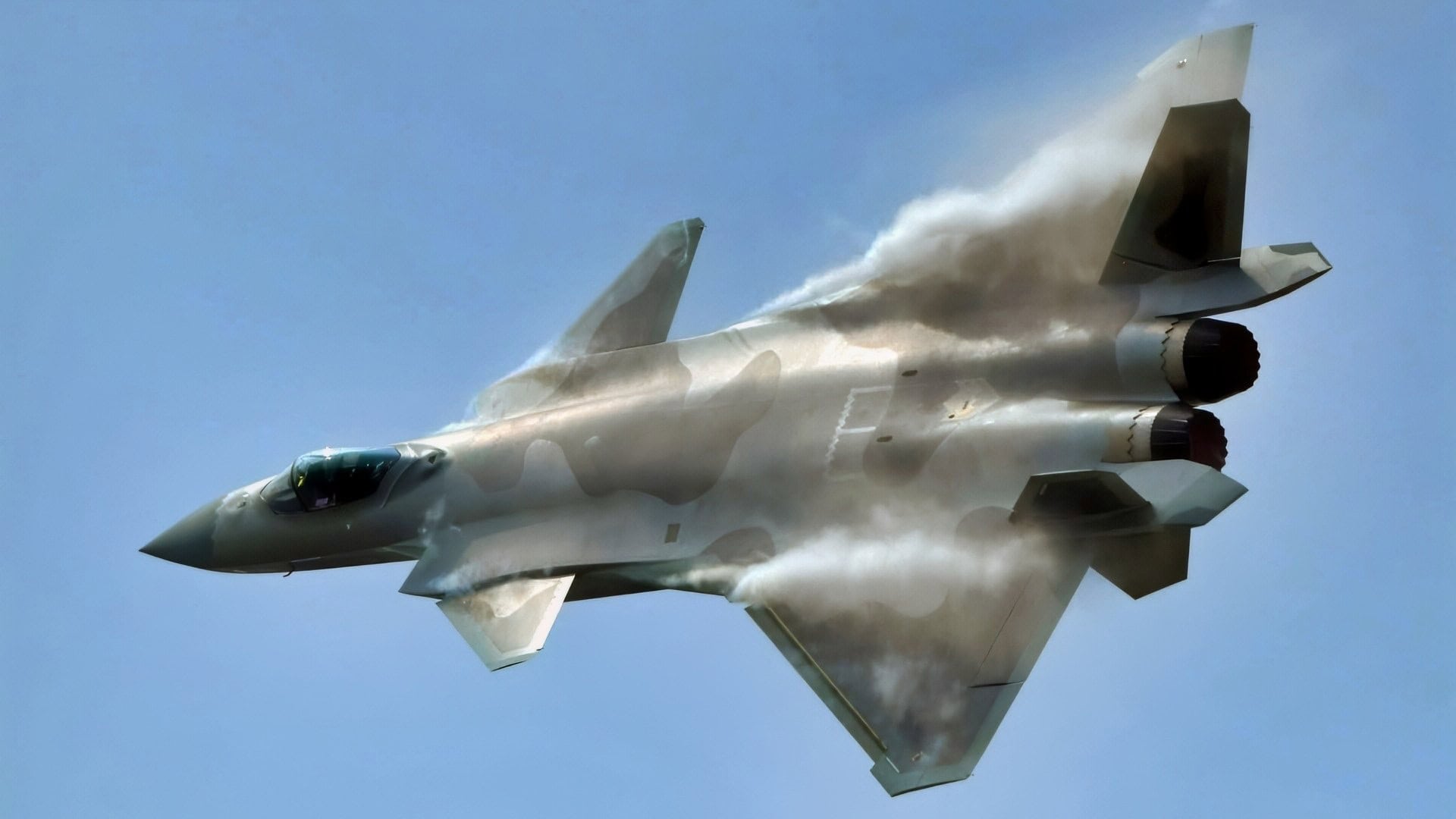
Synopsis: New flight-test footage suggests upgraded J-20A stealth fighters are nearing operational fielding, with visual cues pointing to WS-15 engines and expanded avionics.
-The modernization effort targets long-standing constraints—thrust, reliability, and the energy management needed for persistent, long-range operations.
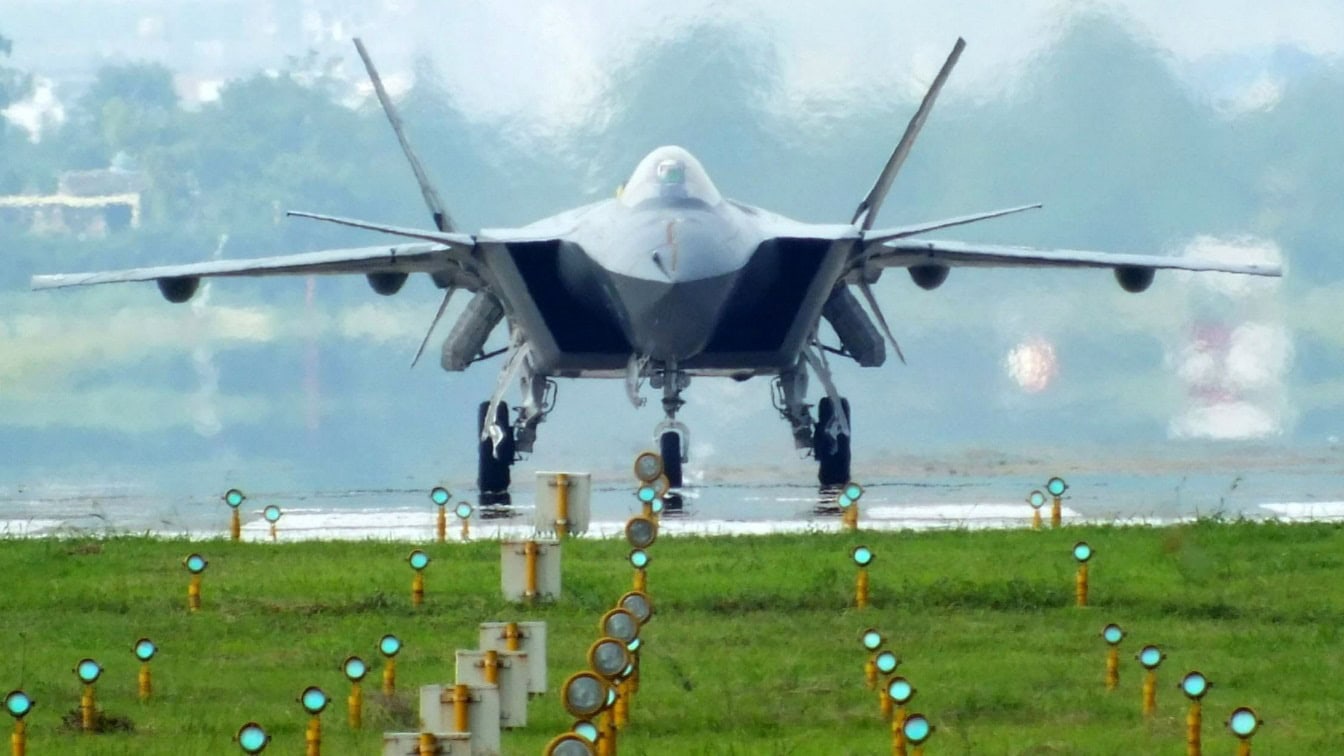
J-20 stealth fighter. Image Credit: Creative Commons.
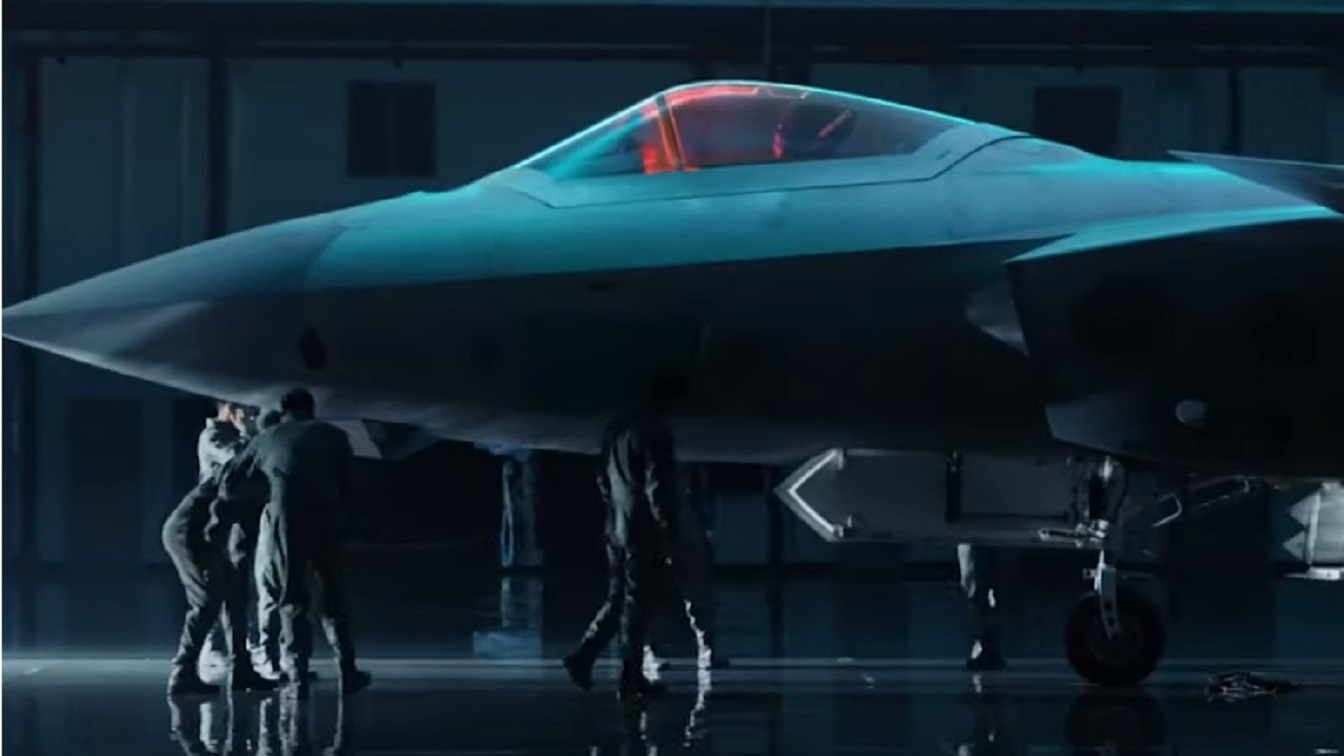
J-20 Stealth Fighter. YouTube Screenshot.
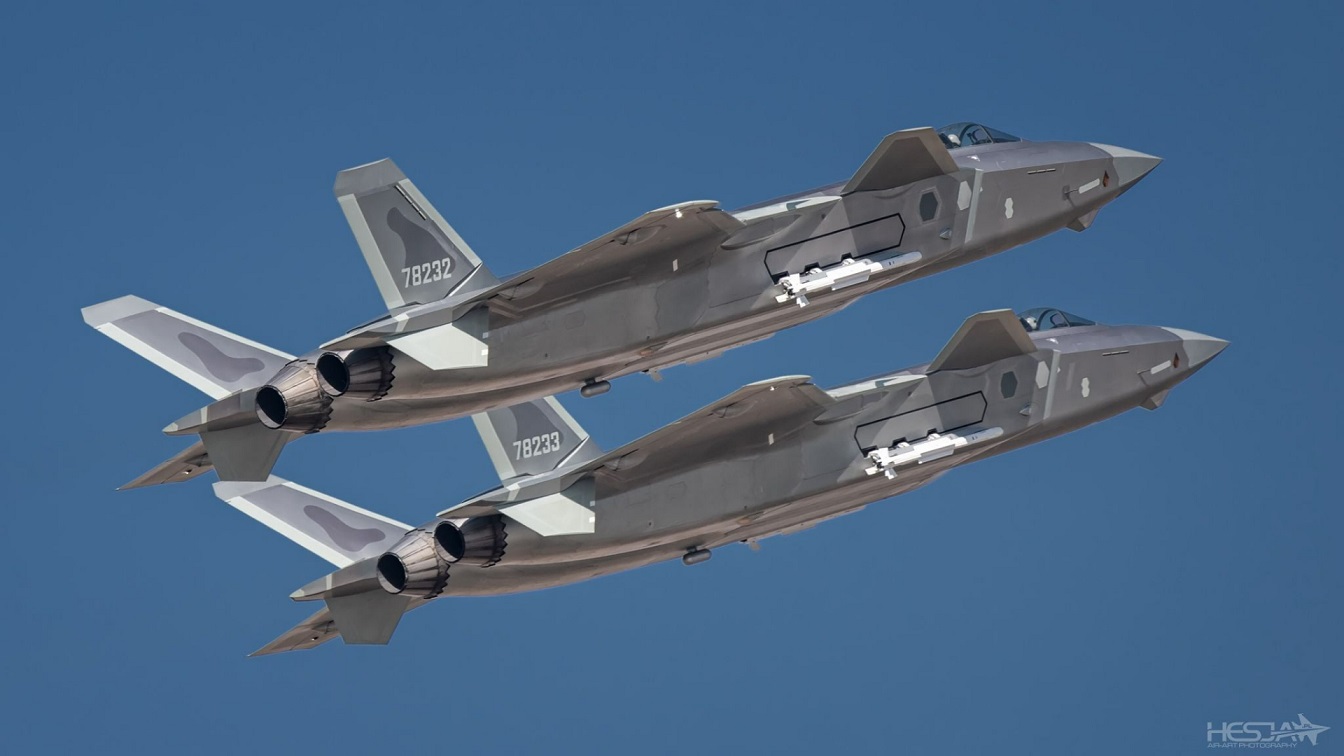
J-20 Stealth Fighter. Image Credit: Creative Commons.
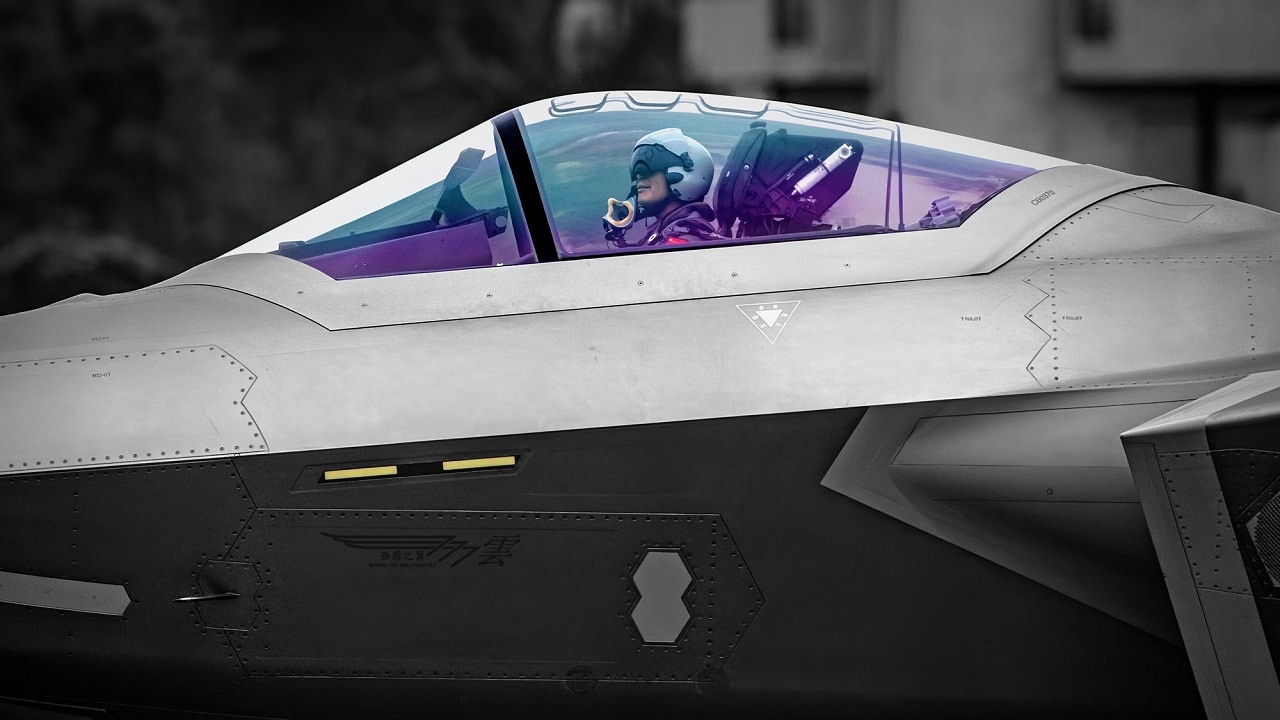
J-20 Fighter. Image Credit: Creative Commons.
-A raised dorsal spine hints at more processing, electronic warfare capacity, and sensor fusion, even at the cost of drag—an acceptable trade if WS-15 offsets it.
-The aircraft’s logic is missile-centric: a forward sensor node and battle manager paired with other assets, not a knife-fighter. The biggest shift is confidence in domestic aerospace maturity.
China’s Upgraded J-20A Is Back on Video—And the WS-15 May Be the Tell
Beijing has released new footage showing the flight-testing of upgraded J-20A stealth fighters. Visual cues suggest that long-anticipated WS-15 engines and expanded avionics have finally been integrated into the aircraft. The question remains, however, to what extent these upgrades change the J-20A’s operational and strategic value.
Long road to modernization
The J-20 entered service in 2017 as China’s first fifth-generation fighter. The aircraft was always envisioned as a heavy, long-range, interceptor-leaning stealth platform—not a dogfighter. Early on it was criticized for its engines, sensor maturity, and true supercruise capability; the J-20A is China’s attempt to close those capability gaps.
New visual evidence
The new footage shows multiple aircraft in yellow zinc-chromate primer, indicating they are in pre-delivery testing phase, not early prototypes. This suggests the program is moving toward operational fielding, which reinforces the assessment that the J-20A is transitioning from development to production.
The new WS-15
Early J-20s relied on lesser engines that reduced the aircraft’s overall capabilities—models such as the Russian AL-31, which was underpowered and maintenance-heavy, or the domestic WS-10C, which was an incremental improvement but offered limited supercruise. The WS-15 is designed to finally deliver high thrust, better reliability, and true fifth-generation performance.
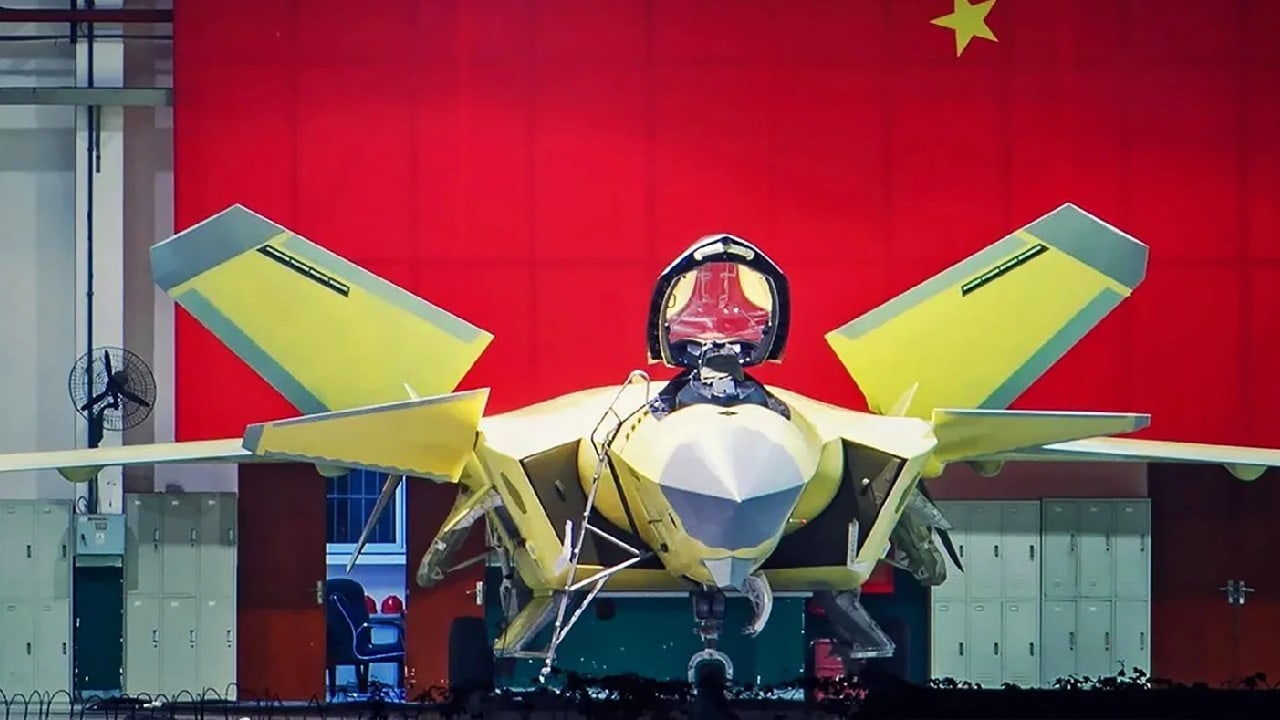
Chinese J-20 fighter. Image Credit: Creative Commons.
Reports suggest the WS-15 will offer thrust approaching 18+ tons—comparable to the F-35 Lightning II’s F135 engine. This would enable sustained supersonic cruise without afterburner, as well as better acceleration and climb rates. Still, claims of Mach 1.8 supercruise and Mach 2.5+ top speed should be treated with skepticism. Regardless, the real value of the engines is in persistence, range, and energy management—not headline Mach numbers.
The importance of supercruise
Supercruise allows an aircraft to transit faster without fuel penalty. It retains stealth by avoiding an afterburner plume, and allows aircraft to enter and leave contested airspace more efficiently. These capabilities are particularly important for interception missions and stand-off missile employment. U.S. fifth-generation fighters are supercruise-equipped, which is an asset for operations in the Indo-Pacific, where vast distances, limited basing options, and the presence of China’s A2/AD network beg for high speed, stealth, and range.
Avionics over aesthetics
The new J-20A shows a raised dorsal spine behind the cockpit. This installation is likely for greater avionics volume, enhanced electronic warfare (EW) systems, and improved sensor fusion and processing power. It also shows Chinese developers prioritizing systems and networking rather than pure aerodynamic performance. The larger dorsal area increases drag, so the designers appear to be accepting modest aerodynamic penalties in exchange for better EW, improved data fusion, and, possibly, more fuel capacity. Further, the WS-15 engine upgrades likely offset drag penalties.
If the J-20A prioritizes sensor reach, electronic attack, and battle-management over raw maneuverability, this would align with People’s Liberation Army Air Force doctrine emphasizing long-range engagements, cooperative targeting, and missile-centric combat.
Tactics and Strategy
The J-20A increasingly resembles a stealthy airborne quarterback rather than a knife-fighter. It is likely a forward sensor node, a long-range interceptor, and a missile truck paired with other assets. The J-20A is crafted as a tool to shape the battlespace.
Engine maturity was the last major bottleneck for the J-20 program. If the WS-15 proves to be reliable, China gains a fully indigenous stealth-fighter supply chain that depends far less on foreign inputs. This narrows the gap with U.S. fifth-generation aircraft. The J-20A will not suddenly match U.S. aircraft across all domains; software, pilot training, combat experience, and integration all still matter. But China is improving rapidly.
Future outlook
Expect gradual fleet-wide engine retrofits, continued avionics growth, and integration with drones and long-range missiles. The J-20A marks a step in the maturation of China’s air fleet and technology, but not a culmination. China apparently has crossed a key technological threshold with the integration of the WS-15. The biggest step forward is not speed, thrust, or range, but confidence in domestic aerospace maturity.
About the Author: Harrison Kass
Harrison Kass is an attorney and journalist covering national security, technology, and politics. Previously, he was a political staffer and candidate, and a US Air Force pilot selectee. He holds a JD from the University of Oregon and a master’s in global journalism and international relations from NYU.