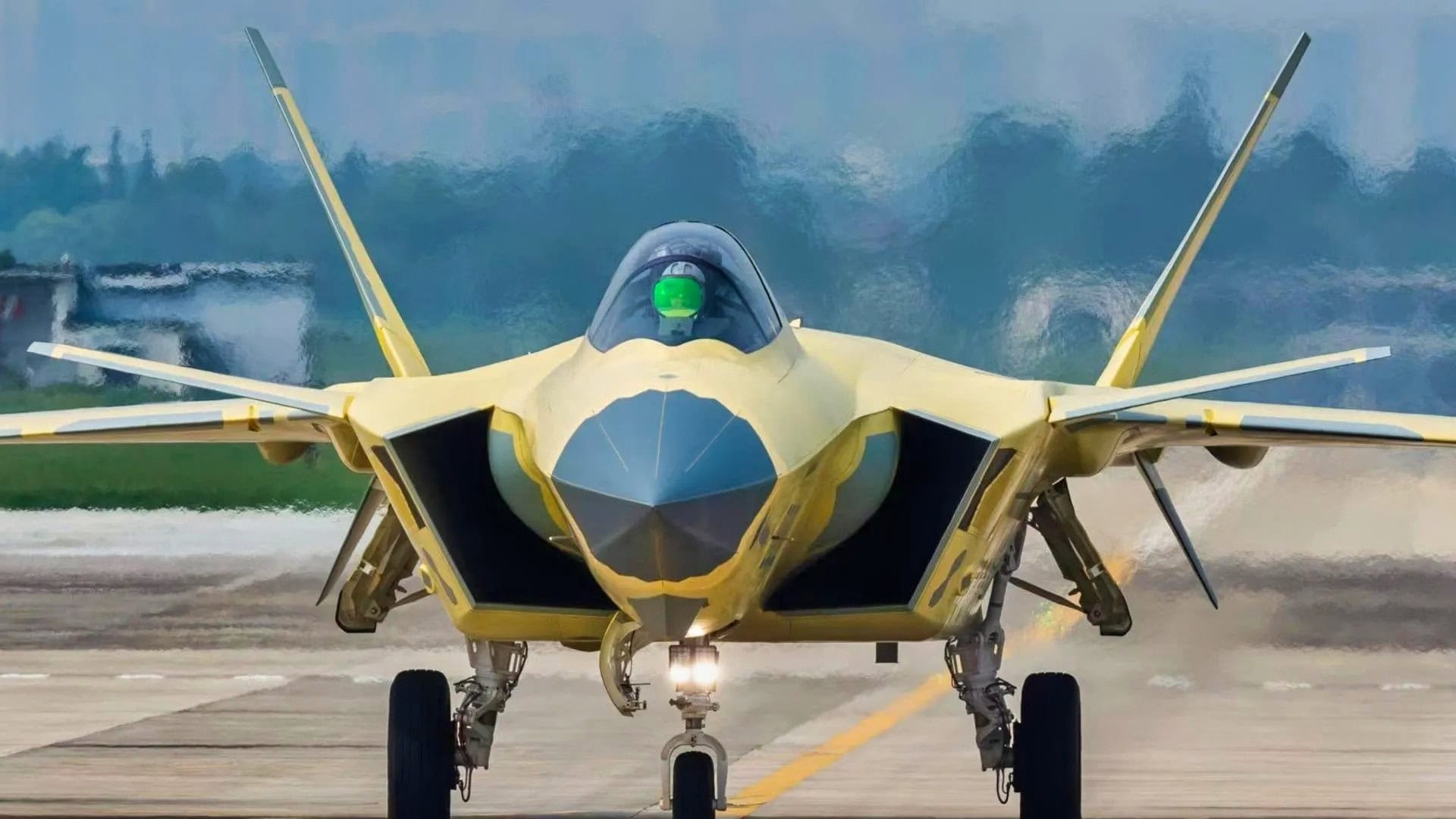
1,000 J-20s by 2030: The Production Surge That Has the Pentagon Watching
A UK assessment analyzing the development of Russian and People’s Republic of China (PRC) air power projects that China’s Air Force (PLAAF) will field at least 1,000 Chengdu J-20 stealth fighters by 2030.
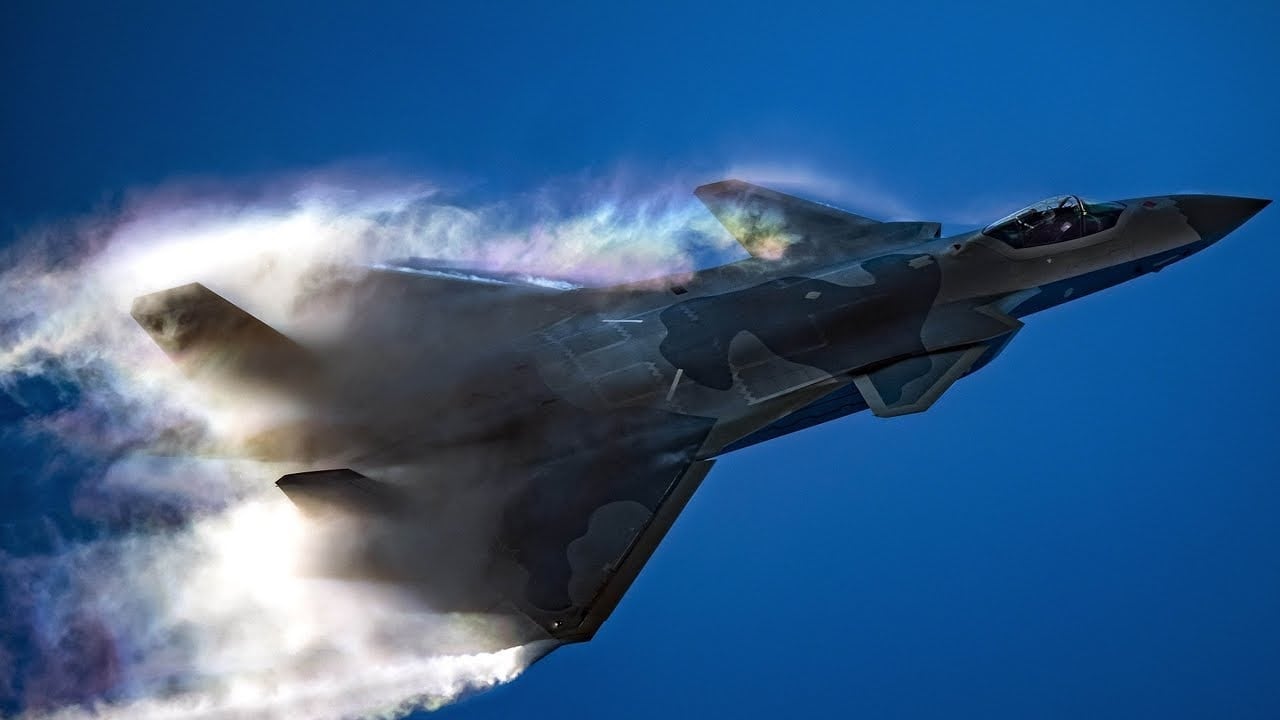
J-20 Fighter. Image: Screen Shot from YouTube.
The lengthy analytical report is published by the Royal United Services Institute (RUSI) in London and has estimated that Aircraft Plant No. 132, which is co-located with the Chengdu Aerospace Corporation (CAC), is already turning out 125 of the aircraft per year.
The RUSI report echoes the 2024 prediction of that made by Abraham Abrams, an expert on this fighter program.
In his book China’s Stealth Fighter: The J-20 ‘Mighty Dragon’ and the Growing Challenge to Western Air Dominance, he points out that the J-20’s production tempo surpasses even the US 5th-generation F-35 and the 4th-generation J-16.
The number of J-20s being produced is even more ominous when one considers that the F-35 is being produced for the air forces and navies of more than a dozen nations and is produced on multiple production lines.
In contrast, the J-20 is only manufactured in one plant and the PLAAF is the only operator and is likely to remain the sole customer for the foreseeable future.
Although it first flew in 2011, the J-20 has been officially in service only since 2017. For it to have more than 1000 aircraft in the PLAAF fleet in such a short period of time lends a new meaning to the concept of accelerated manufacturing processes.
Since the 2011 first flight, the J-20 has been equipped with three different types of engines and has also been manufactured in three variants: the original J-20 that flew with a Russian-made engine, the J-20A with a fourth-generation Chinese-design engine, and the current J-20A and J-20S that are using the Shenyang WS-15 Emei turbofan engine.
Again, this is a very rapid introduction for a new major subsystem, such as a propulsion unit.
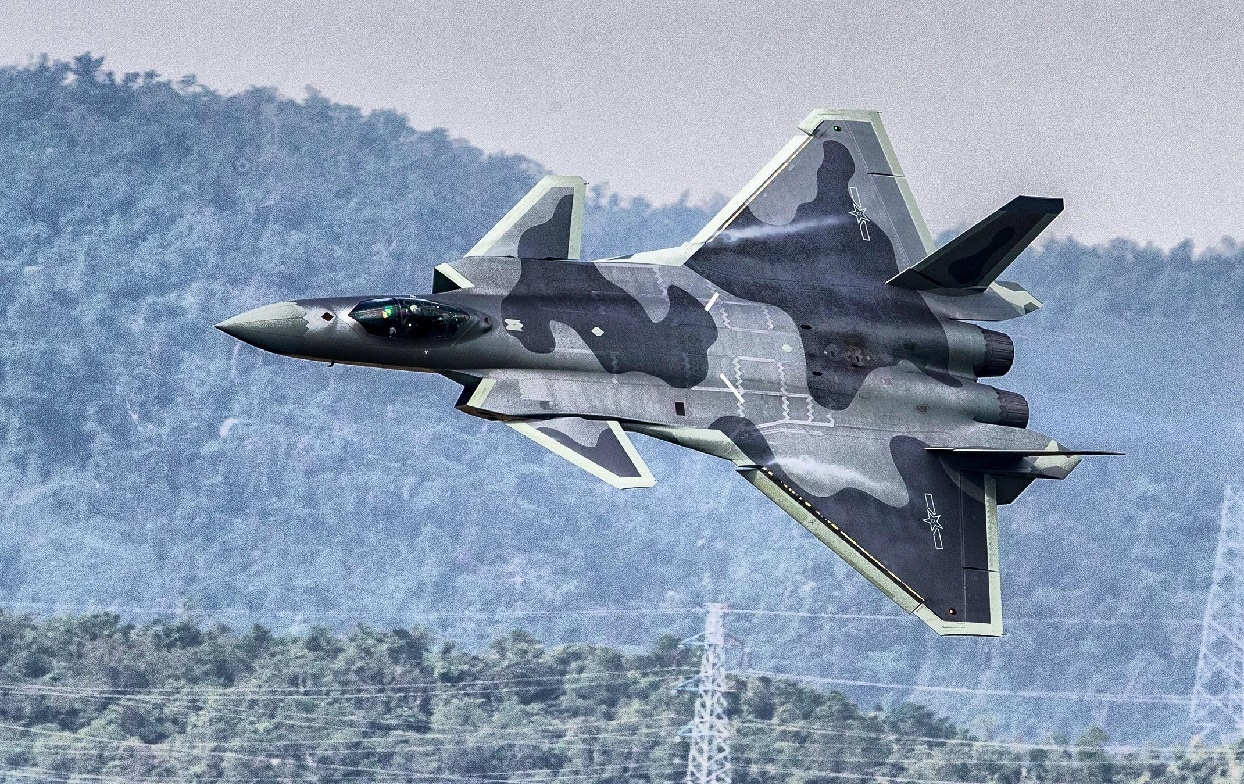
J-20 Image: Creative Commons.
Across the Board Modernization
The RUSI analysis, the author notes that what is described as the growing “sophistication and realism of PLAAF [People’s Liberation Army Air Force] and PLANAF [Naval Air Force] regular training has increased, especially in the J-16 and J-20 fleets.”
“Aircrew routinely fly complex training and demonstration of force sorties involving fighters, bombers, tankers and AEW&C aircraft, in coordination with each other and with PLAN surface action groups.”
This increase in the numbers and capabilities of the PLAAF’s current-day 5th and “4+ generation” fighters is also being supported by significant improvements in training.
The RUSI assessment also highlighted improvements in the PRC’s industry in the design and manufacture of air-to-air missiles (AAMs).
The latest PRC missiles, the most recent of which is the Leihua Electronic Research Institute (LETRI) PiLi-15, more commonly known as the PL-15 – a highly-sophisticated beyond visual range (BVR) air-to-air missile (AAM). The missile was first seen at Airshow China in Zhuhai, Guangdong Province, in 2021, and is regarded as having parity with the performance of the US AIM-129D AMRAAM.
China’s J-20 Fighter Rising
In 2021, then-US Air Force Frank Kendall underscored just how far and how fast PRC airpower was advancing when he remarked to an audience of senior USAF officers, that his top priorities, “in order … are China, China, and China.”
That the Chinese have achieved such levels of technological advancement in aircraft design, in stealth, in engine performance, radar systems and weapons is only one half of the worry, said one of the specialists on PRC that 19FortyFive spoke to.
What also keeps senior US defense planners awake at night in the present day is that the developmental process for PRC aerospace from design to prototype to production to introduction into service proceeds more rapidly and with far fewer hiccups than it does in the US.
The most modern US stealth aircraft, the F-35, does not fare well by comparison. That aircraft was supposed to have been optimized for deployment in the Indo-Pacific region. However, it has less than half the range of the J-20, its missile load capacity is also less, the radar has a shorter intercept range, and its flight performance envelope is more constrained.
The F-35 has also struggled to achieve an availability rate above 50 per cent.
Its own modernization efforts have been constrained by delays in ongoing improvements to bring the aircraft up to the Block 4 standard. That configuration is considered essential for the high intensity combat likely to be seen in any engagements with the PLAAF.
Should there be no reversal in the trends on either side of the ledger, superiority in airpower is likely to tip in favor of the PLAAF in the early 2030s. Beyond this point a good deal depends on whether the PRC also continues to have the advantage in being the first to field the newer 6th-generation fighter designs.
About the Author: Reuben F. Johnson
Reuben F. Johnson has thirty-six years of experience analyzing and reporting on foreign weapons systems, defense technologies, and international arms export policy. Johnson is the Director of Research at the Casimir Pulaski Foundation. He is also a survivor of the Russian invasion of Ukraine in February 2022. He worked for years in the American defense industry as a foreign technology analyst and later as a consultant for the U.S. Department of Defense, the Departments of the Navy and Air Force, and the governments of the United Kingdom and Australia. In 2022-2023, he won two awards in a row for his defense reporting. He holds a bachelor’s degree from DePauw University and a master’s degree from Miami University in Ohio, specializing in Soviet and Russian studies. He lives in Warsaw.