
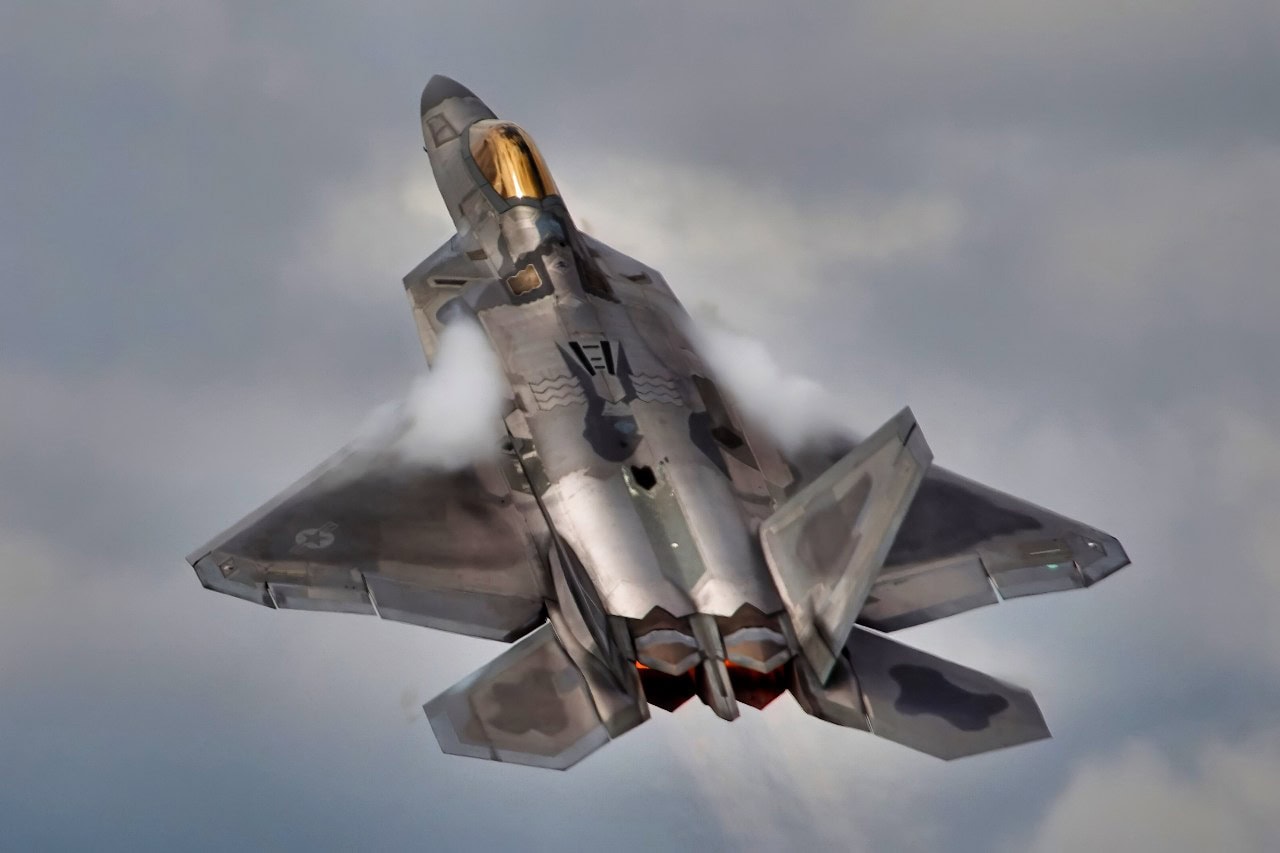
Faster Than the Raptor? Why China’s J-20 Wins on Speed but Fails on Experience
The Cold War was more than a battle of political ideologies and economic systems. It was also a battle for technological superiority and bragging rights.
Competition ranged from the space race to the effort to field the best submarines and main battle tanks.
In the skies, deadly clashes pitted the F86 Sabre against the MiG-15 during the Korean War; the F-4 Phantom II against the MiG-21 “Fishbed” during the Vietnam War; and the F-15 Eagle versus the MiG-29 “Fulcrum” during the 1991 Persian Gulf War.
Some foreign policy pundits argue that we are now in a New Cold War, and it has brought a third major player to the jet fighter game: the People’s Republic of China. During the original Cold War, Beijing imported Soviet-made fighters or produced license-built versions of the same. But now China builds plenty of homegrown warbirds.
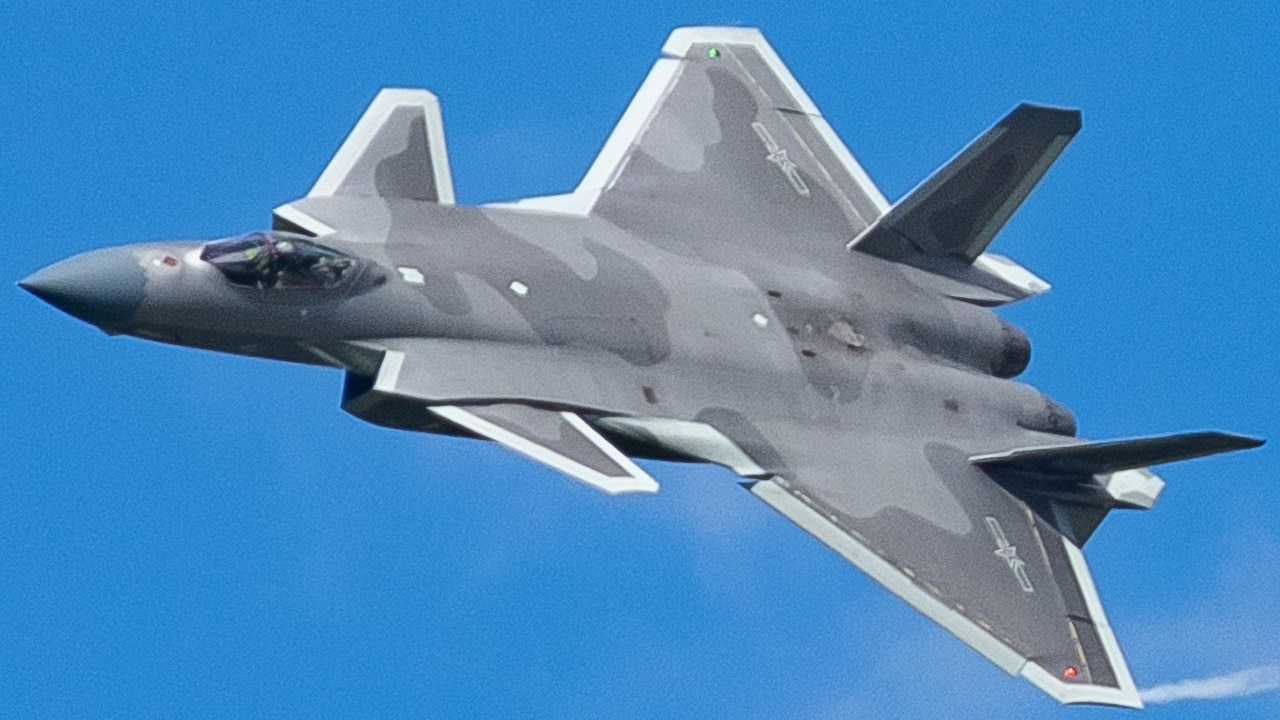
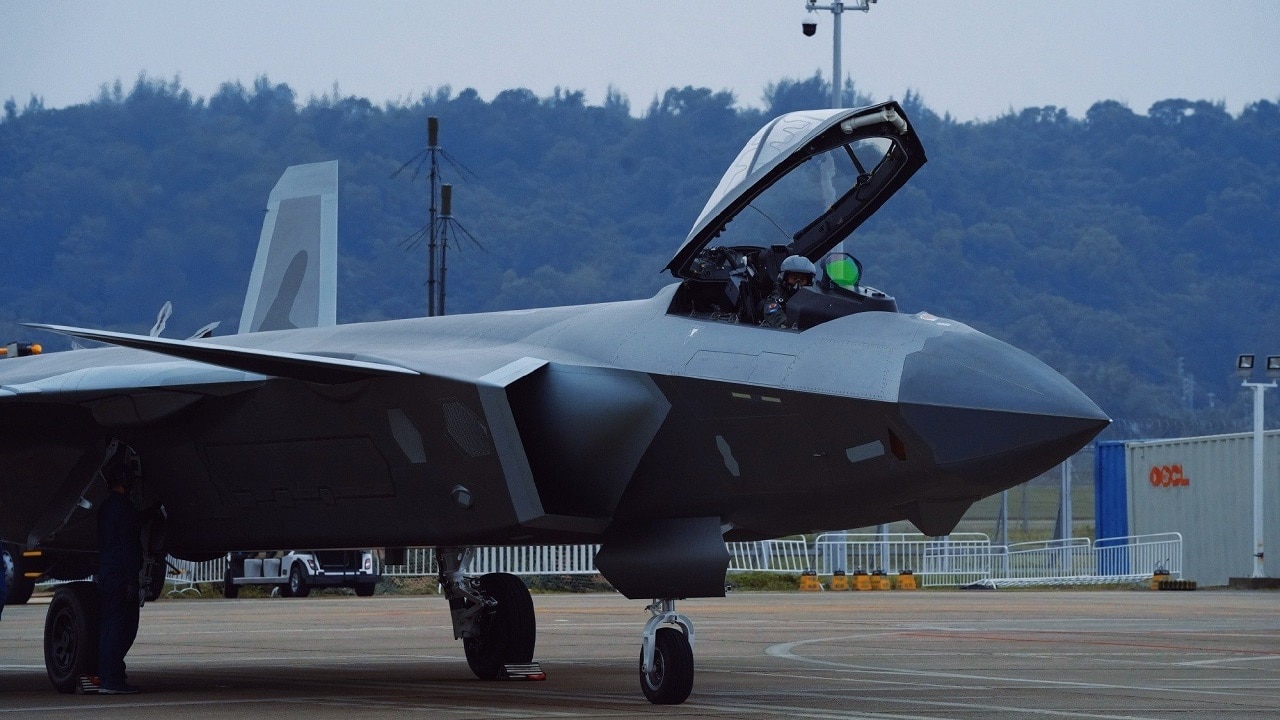
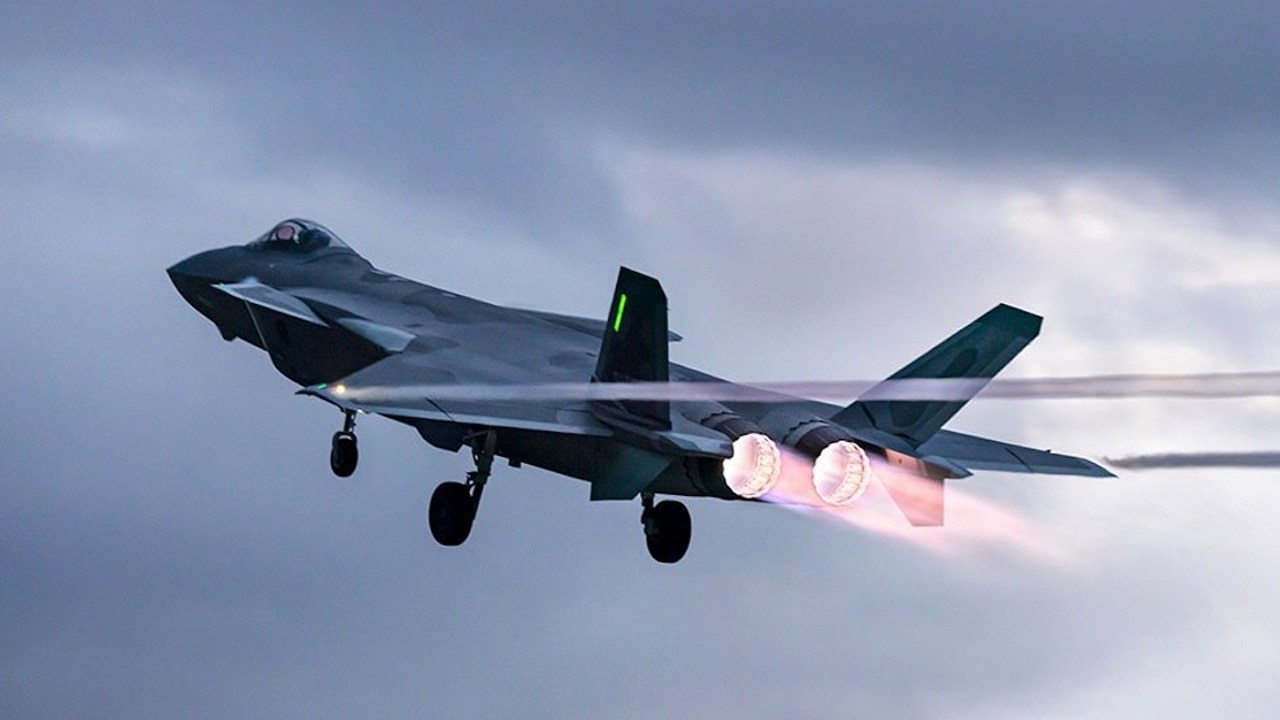
Their efforts are exemplified by the Chengdu J-20 Mighty Dragon, an aircraft that gave China, and not Russia, bragging rights as the second country to field an operational fifth-generation stealth fighter jet.
In any future U.S.-China conflict, the J-20 would go head-to-head with two U.S. stealth fighters, so National Security Journal will compare the J-20 to both.
We will start by comparing the J-20 with the world’s first fifth-generation fighter, the F-22 Raptor.
J-20 Advantages
According to Wiley Stickney, writing for Bolt Flight, the Chinese warplane has several advantages over the Raptor:
-It is less expensive and requires less maintenance.
-It has superior side and rear-angle stealth.
J-20 Fighter. Image Credit: Creative Commons.
J-20
J-20 Fighter. Image Credit: Chinese internet.
-Its max airspeed of Mach 2.8 is significantly faster than the Raptor’s Mach 2.25.
-It has slightly superior supercruise speed (Mach 1.8 vs. Mach 1.76).
-It has a larger payload
-Its superior data-link capabilities make it better suited for modern information-centric warfare
-The J-20 is still in production, while F-22 production was halted in 2009.
F-22 Raptor Advantages
The F-22 on the other hand:
-Is superior in frontal stealth.
-Has superior maneuverability for close-range dogfighting.
-Has thrust-vectoring nozzles that allow extreme post-stall maneuvers, such as the cobra maneuver.
-Boasts the APG-77 active electronically scanned array radar, which provides excellent detection and tracking range.
Armament-wise, the Mighty Dragon lacks a cannon. That makes it unique among the operational stealth fighters, as its U.S. counterparts and the Russian-made Sukhoi Su-57 “Felon” still have a cannon. The F-22’s blaster is a single 20-mm General Dynamics M61A2 Vulcan rotary cannon with 480 rounds of ammunition.
Although some pundits believe supersonic jet fighters do not need guns, aircraft-mounted guns have proved their usefulness against enemies’ unmanned aerial weapon systems. For example, on Dec. 13, 2024, a Ukrainian Air Force F-16 pilot became a national hero when he shot down six Russian cruise missiles in a single sortie. Well, two of those kills were in fact obtained with the plane’s Vulcan.
What’s more, a fighter plane could still use its gun in an air-to-ground role, such as strafing enemy troop formations during close air support duties. The J-20, by lacking a gun, inherently lacks this sort of multirole versatility.
In 4 Words: F-22 Has Seen Combat
Another thing that differentiates the J-20 from the F-22, F-35, and Su-57 is that the Chinese warbird has yet to see combat. This is not surprising, since China has not fought a major war since its 1979 invasion of Vietnam. The F-22 has indeed been used in combat. In September 2014, the Raptor conducted some of the opening strikes of Operation Inherent Resolve, dropping 1,000-pound GPS-guided bombs on ISIS militants near Syria’s Tishrin Dam. And on Feb. 4, 2023, the F-22 got its first air-to-air kill – appropriately enough, it was against a Chinese aerial asset, namely that infamous Chinese spy balloon.
That experience differential undoubtedly carries over to the quality of training. While the People’s Liberation Army Air Force puts its fighter pilots through an intensive training regime – as evidenced by their shows of force in the Taiwan Strait – their senior pilots lack any combat experience to pass on to new trainees.
By contrast, U.S. Air Force pilots have seen combat during every decade going back to the 1940s, which provides a huge database of after action reports used for constant improvement and refinement of tools, tactics, and training (as exemplified by the U.S. Air Force Weapons School). There is a talent pool of instructor pilots who have actually “seen the elephant” and can pass their battle-born wisdom to the next generation of fighter jocks, including F-22 pilots.
What’s more, the Raptor has history on its side. Its manufacturer, Lockheed Martin’s legendary Skunk Works division, has an 80-year track record of producing innovative warplanes, including the P-38 Lightning, the F-80 Shooting Star, the U-2, the SR-71 Blackbird, and the F-117 Nighthawk (the first so-called stealth fighter, although it wasn’t a fighter at all). By contrast, Chengdu Aircraft Corporation, while a venerable company that was founded in 1958, does not boast a similar litany of history-making military aircraft.
Those intangibles give the F-22 a huge advantage over the J-20.
About the Author: Christian D. Orr, Defense Expert
Christian D. Orr is a Senior Defense Editor. He is a former Air Force Security Forces officer, Federal law enforcement officer, and private military contractor (with assignments worked in Iraq, the United Arab Emirates, Kosovo, Japan, Germany, and the Pentagon). Chris holds a B.A. in International Relations from the University of Southern California (USC) and an M.A. in Intelligence Studies (concentration in Terrorism Studies) from American Military University (AMU).