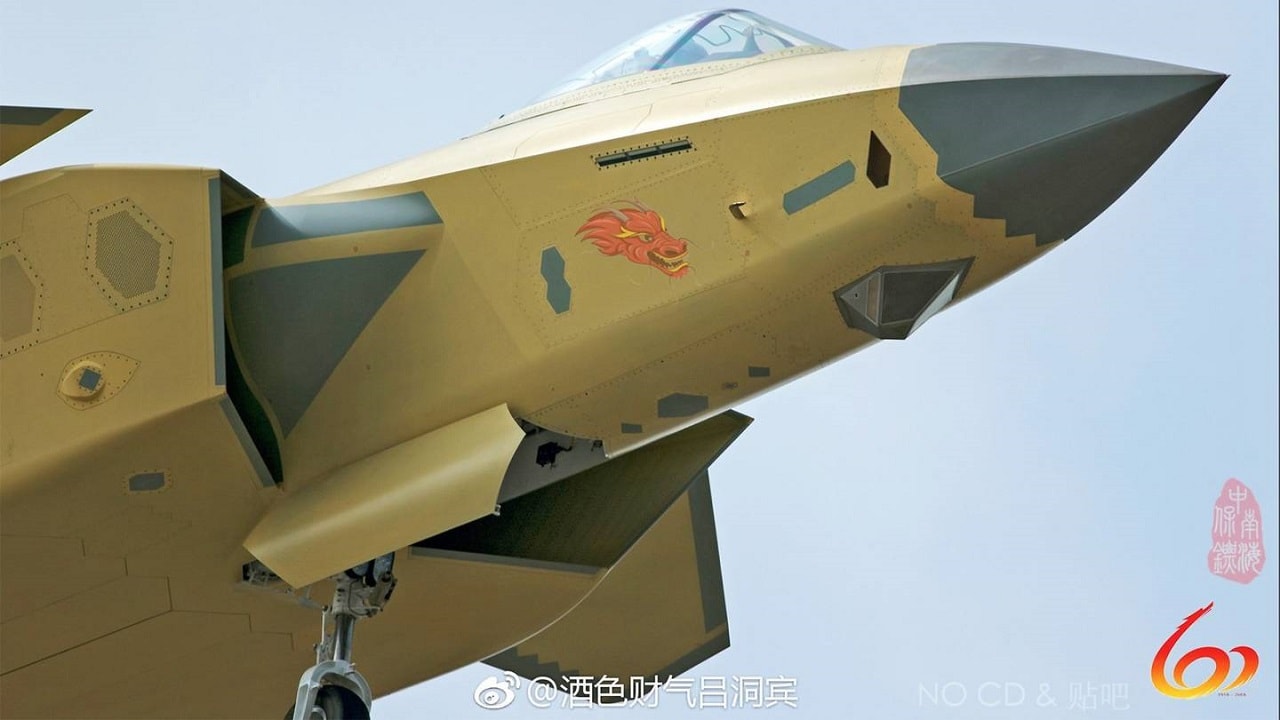
Summary and Key Points: China’s J-20 is positioned as a centerpiece of a rapidly modernizing PLAAF, with outside estimates projecting a sharp rise in fifth-generation inventory by 2030—alongside a heavy-fighter tilt driven by J-20 and J-16 unit conversions.
-The force-growth story is paired with a quality debate: engine performance and reliability remain a key limiter versus U.S. standards, with maintenance cycles cited as a persistent gap even as China improves.
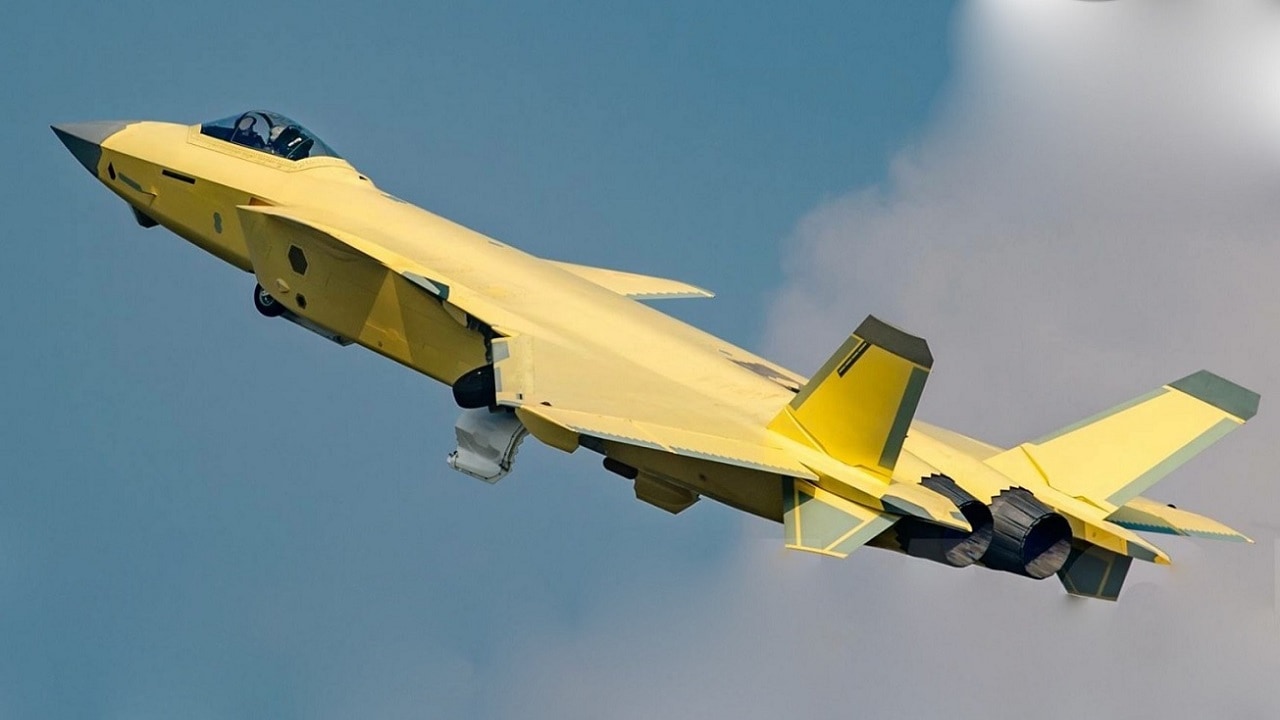
J-20 Mighty Dragon Stealth Fighter. Image Credit: Chinese Internet.
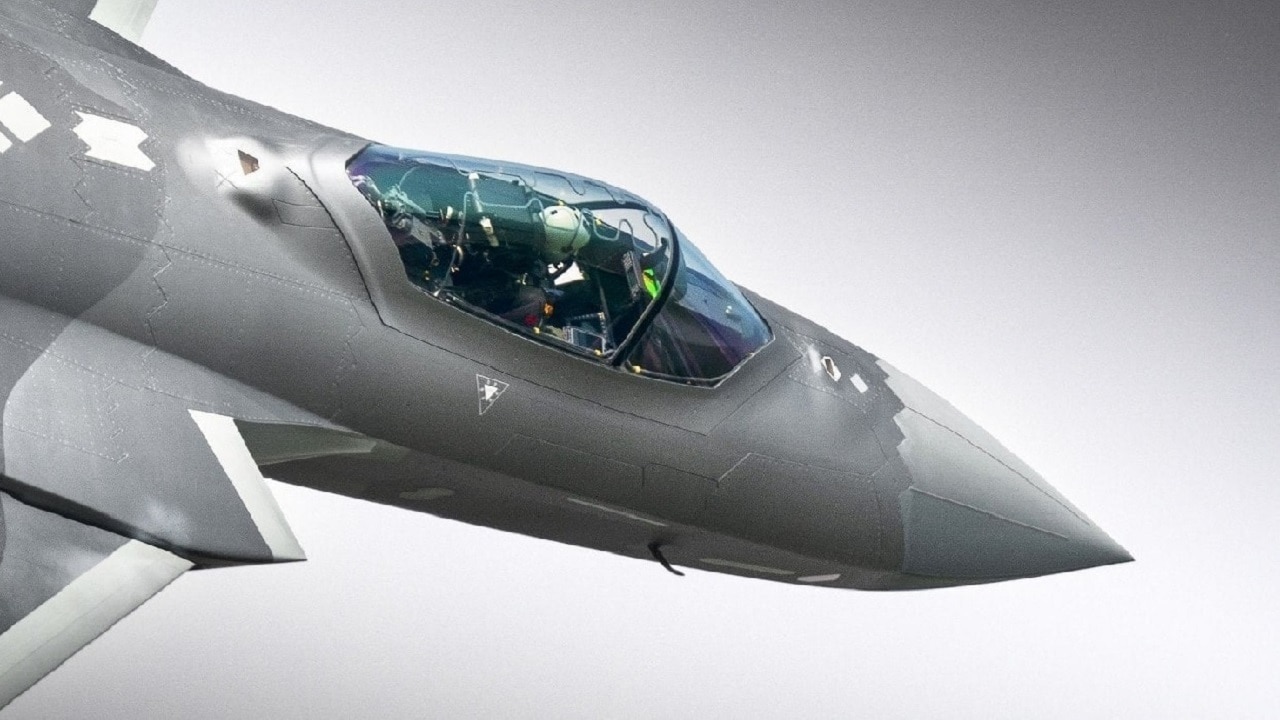
J-20 Stealth Fighter. Image Credit: Creative Commons.
-The bottom line is a familiar trade: the West may retain advantages in maturity and sustainment, but China’s production tempo could reshape the balance.
Engines vs. Output: Why China’s J-20 Stealth Fighter Bet Is Quantity Over Perfection
China’s J-20 family of aircraft holds several distinctions. Not only is the J-20 China’s first stealth aircraft, but it is also the world’s first two-seat fifth-generation fighter. Some technical aspects of the fighter can only be guessed at, but information can be gleaned by examining the jet’s subsystems and its production numbers.
Show Me the Numbers
The Royal United Services Institute (RUSI) took a close look at the future of Chinese and Russian airpower. The RUSI report rested on a thorough examination of production numbers. The British think tank concluded that while Chinese fifth-generation aircraft may be qualitatively inferior to their Western counterparts, quantitatively they play in a league of their own.
“What these figures indicate, in practice,” the RUSI analysis states, “is that the proportion of fifth-generation and advanced fourth-generation fighters operated by the PLAAF has greatly increased since 2020 and will continue to do so. The trend suggests that around 1000 J-20/A/Ss and 900 J-16s will be in service with the PLAAF by 2030.”
There is a shift in in the PLAAF’s force makeup and “a noticeable trend towards heavy fighters in general, with J-16s and J-20s being used to re-equip units that previously were operating not only J-11 and Su-27/30 Flanker heavy fighters, but also some J-7 light and J-8 medium fighters.”
PLAAF numbers deserve some attention, and the overall composition of the air fleet is key—fifth-generation fighters account for a large and growing percentage of the force.
Numbers presented by the Mitchell Institute for Aerospace Studies broadly agree with those put forward by RUSI. “China has an estimated 2,225 fighters in its inventory,” the Mitchell Institute wrote, “of which 1,311 are 4th-generation and 320 are 5th-generation aircraft. With a production rate reportedly increasing to 120 J-20s a year, the PLAAF’s acquisition of 5th-generation jets almost triples that of the USAF.”
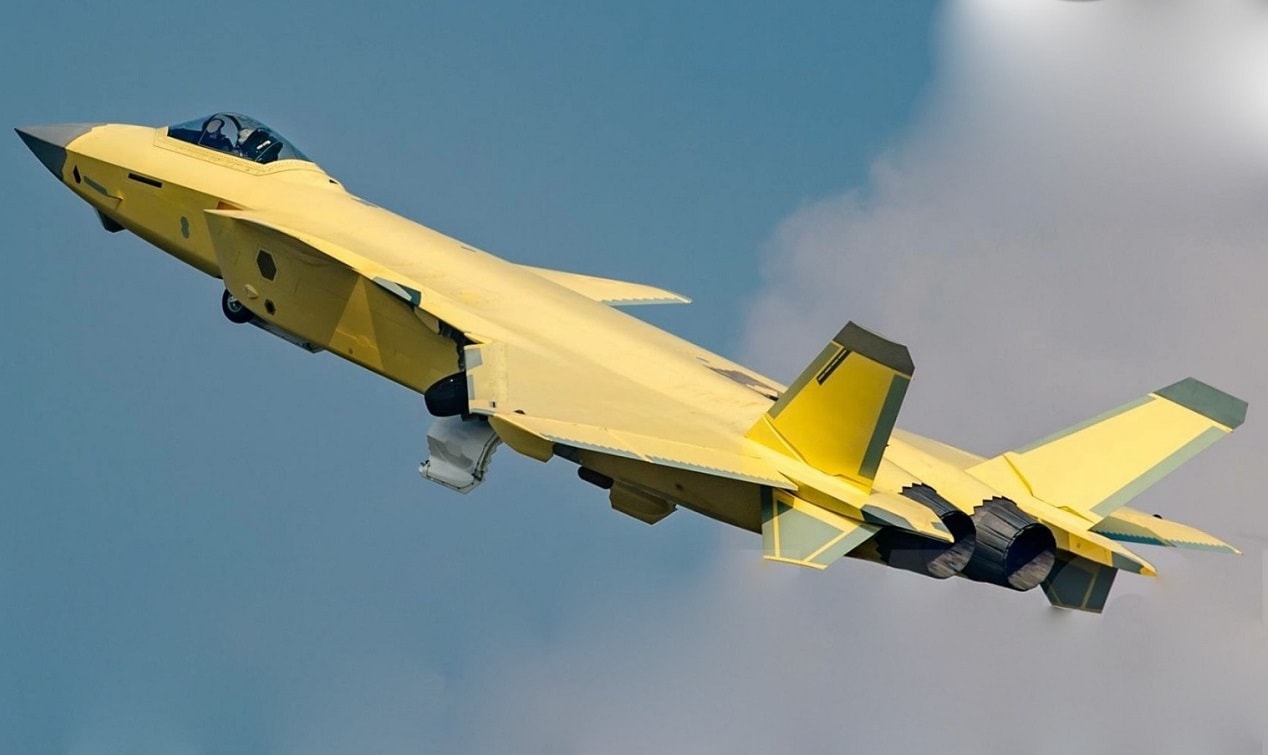
J-20 Stealth Fighter. Image Credit: Creative Commons.
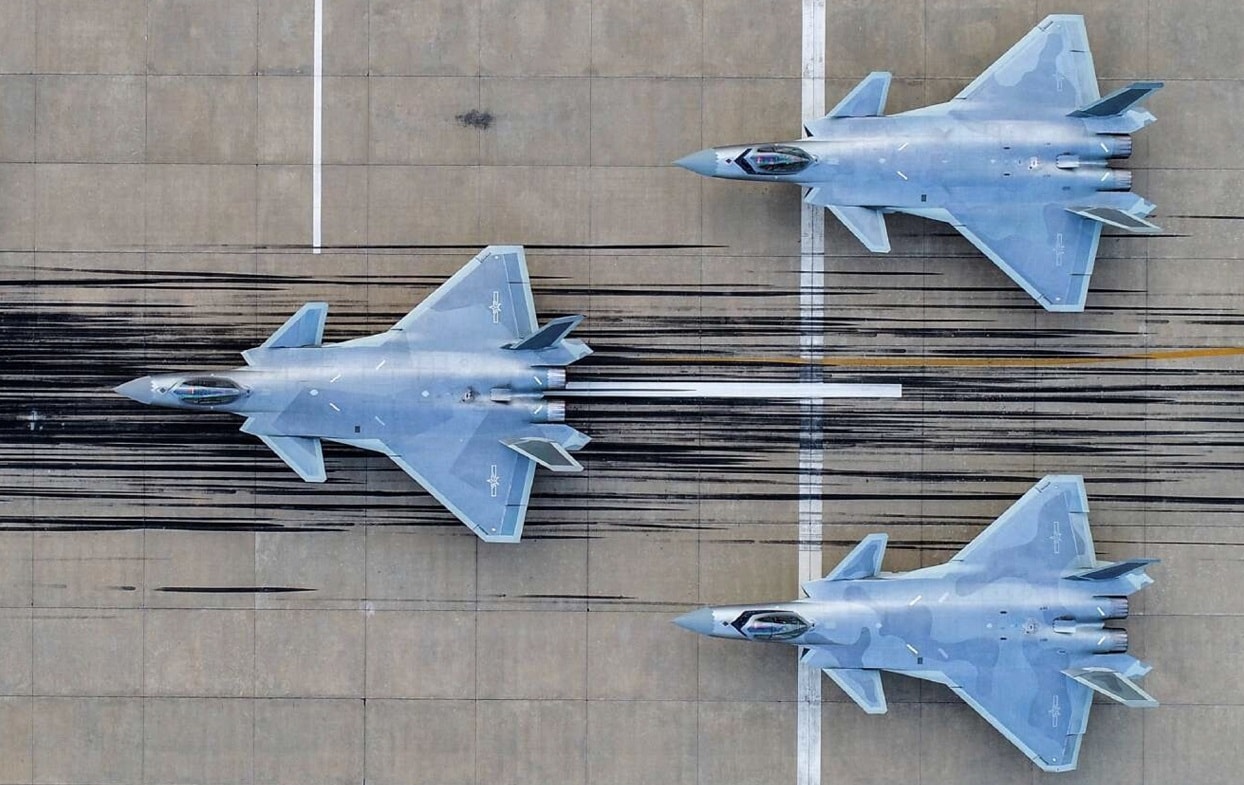
J-20. Image: Creative Commons.
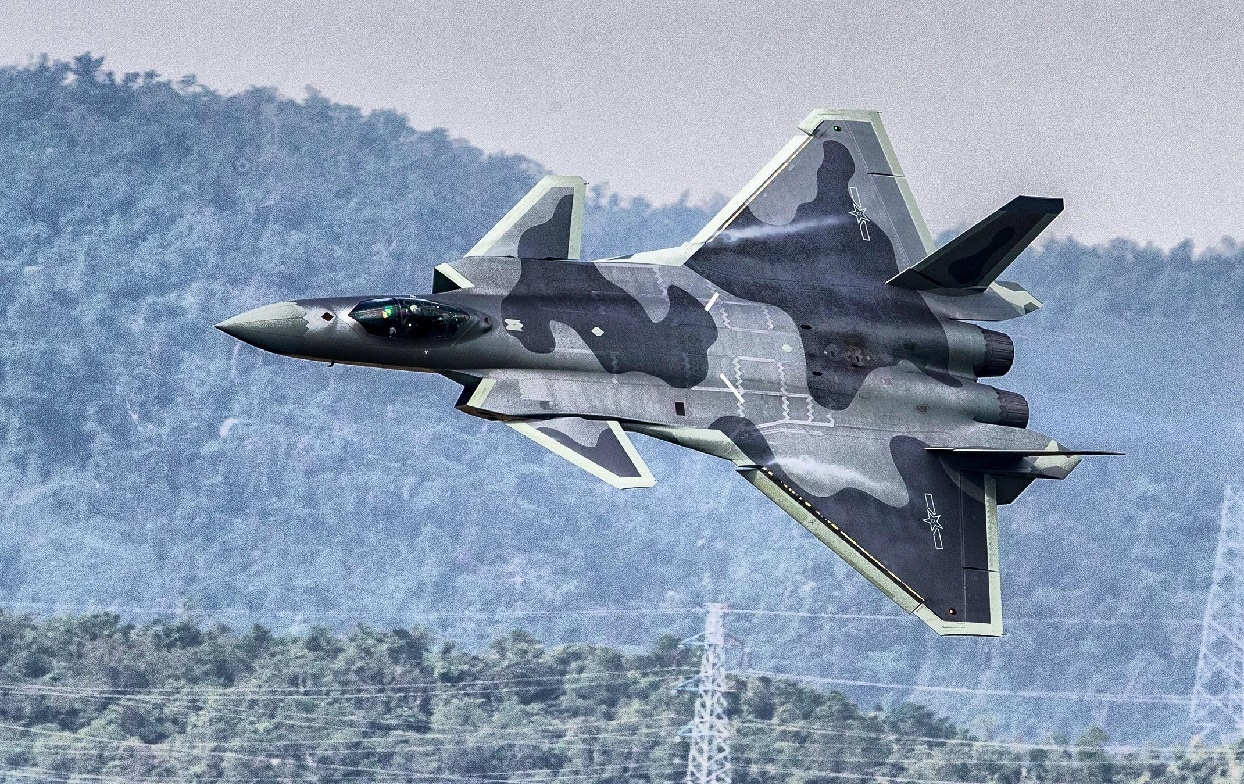
J-20 Image: Creative Commons.
The Mitchell Institute report did hedge somewhat: “There is little data available regarding readiness, but assuming 70 percent of their fleet is combat-coded and has the same 70 percent MC rate that was assumed for the allies is reasonable. That equates to the PLAAF having roughly 799 MC fighters available to employ at any given time.”
Now set the numbers aside, because the J-20—and the other aircraft in the PLAAF fleet—are becoming qualitatively better as well.
Full Speed Ahead
In 2022, the South China Morning Post reported on the planned upgrade to the WS-15 engine. At that time, the J-20 was in its infancy, dwarfed by the U.S. Air Force’s F-22 Raptor fleet. The numbers were even more lopsided when factoring in the F-35 stealth fighters in U.S. and allied air fleets. As one commentator explained, the F-22 Raptor fleet would “remain a threat to the PLA.”
“The aircraft is still the world’s most powerful fighter jet,” Andrei Chang, the editor-in-chief of Kanwa Asian Defence Monthly, explained to the South China Morning Post. “Besides its powerful engine, the [F-22] is equipped with so many advanced technologies that still remain mysterious to outsiders.”
Interestingly, the engine that powers the F-22 Raptor, the F-119—which is equipped with afterburners and two-dimensional thrust-vectoring nozzles—was, according to SCMP reporting, seen positively in China; but the engine that propels the F-35, the XA100, was seen as far superior to China’s jet engine technology—possibly as far as a decade ahead of the WS-15 power plant.
“China has so far just matched the American engines in some areas, but not in overall performance. It’s also not meaningful to emphasise one area because military confrontation is about a competition of systems and a contest of joint operational capabilities,” Zhou Chenming, a Beijing-based researcher from the Yuan Wang military science and technology think tank, stated.
An East-West Divide
While China’s aerospace industry has made vast improvements in the quality of its engine builds, the engines that propel U.S. planes are longer-lasting than their Chinese counterparts. Steve Russel, the general manager of General Electric’s Edison Works, explained why U.S. jet engines are superior to those that power Chinese warplanes:
“Our reliability tends to be still an order of magnitude better than theirs,” Russell said during an interview with Flight Global. He added that Chinese jet engines may rival their American counterparts in raw performance but fall behind when factoring in maintenance schedules.Chinese jet engines require an overhaul after just hundreds of hours of use, whereas U.S. jets require servicing after thousands of hours.
“But they’re getting better and we’re seeing them get better,” Russel noted. “That’s why it’s important that we take this next generational leap to make sure that we maintain that advantage that we have.”
A Game of Numbers
While China’s aerospace industry may lag behind its Western counterparts in terms of reliability and quality of build, there is one area in which the PLAAF can count on retaining a sizable edge: China’s capacity to build aircraft at a rate that outpaces production in the United States.
About the Author: Caleb Larson
Caleb Larson is an American multiformat journalist based in Berlin, Germany. His work covers the intersection of conflict and society, focusing on American foreign policy and European security. He has reported from Germany, Russia, and the United States. Most recently, he covered the war in Ukraine, reporting extensively on the war’s shifting battle lines from Donbas and writing on the war’s civilian and humanitarian toll. Previously, he worked as a Defense Reporter for POLITICO Europe. You can follow his latest work on X.