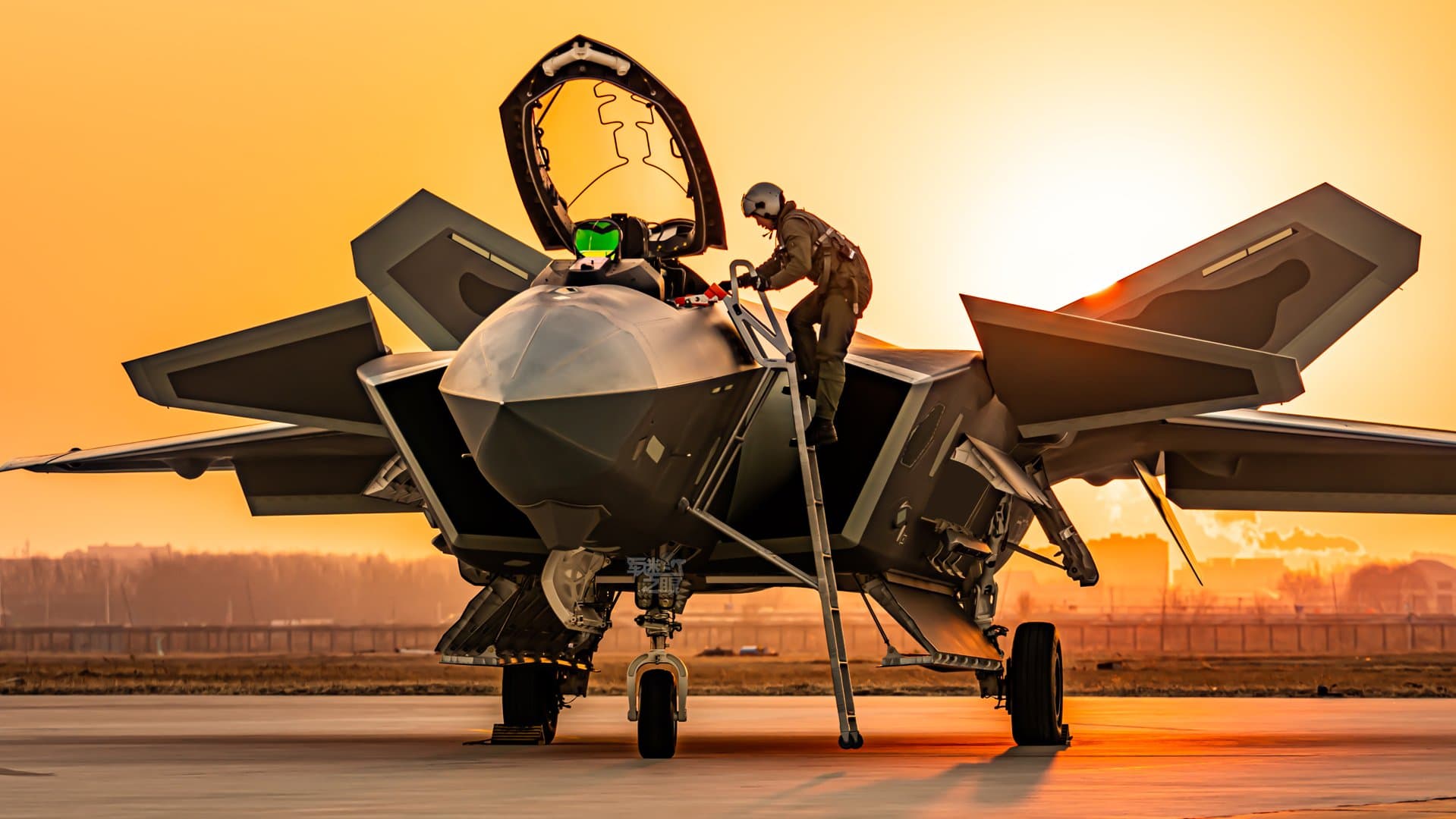
Summary and Key Points: With sixth-generation fighters still shrouded in secrecy, the more immediate comparison is fifth-generation: China’s J-20 versus America’s F-35 and F-22.
-Key unknowns—software, sensor fusion, fire-control quality, and networking—make clean judgments difficult.
-The piece also frames the “best” 4.5-generation matchup, contrasting the F-15EX’s speed, AESA radar, and computing with Russia’s Su-35 and its upgraded sensors and agility.
-For the J-20 debate, one variable stands out: the F-35’s scale and global adoption, which translates into expanding pilot experience, tactics, and operational learning that can compound over time.
J-20 vs. F-35: Why Stealth Isn’t the Whole Story in Fifth-Gen Airpower
The development of numerous sixth-generation aircraft in the U.S. and China inspires the imagination, but of course too few details are available to assess which future platforms will prove superior. Will the U.S. F-47 outperform China’s J-50? It’s too early to tell.
Perhaps a more pressing question right now is whether China’s fifth-generation J-20 fighter jet can rival the F-35 or F-22. There are limits to what is known about these planes, but plenty of room for informed speculation.
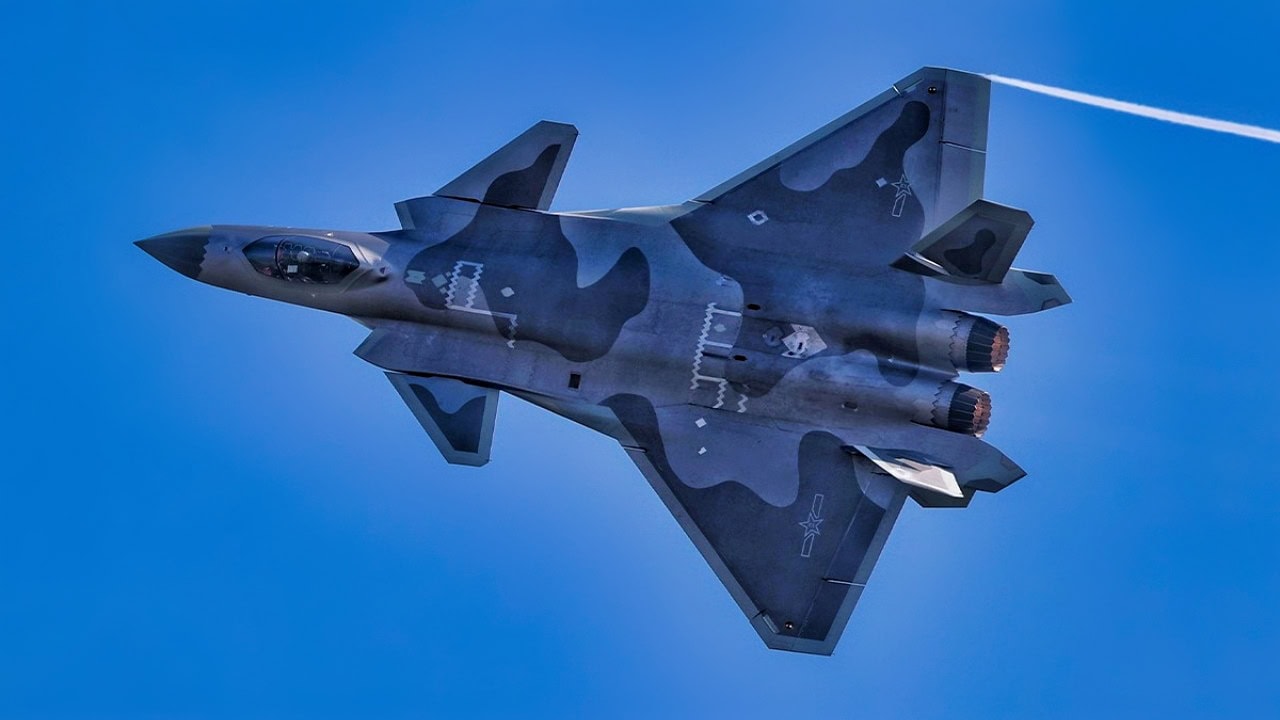
J-20 Fighter. Image Credit: Creative Commons.
F-15EX & Su-35
The U.S. F-15EX Eagle II and the Russian Su-35 are likely among the best fourth-generation or 4.5-generation aircraft. Much is known about the speed, computing, radar, and weapons of the F-15EX, and this aircraft at times outperforms fifth-Generation fighters in wargames.
With its advanced computing, Active Electronically Scanned Array (AESA) radar, and Mach 2.25 speed, the F-15EX seems comparable to Russia’s upgraded high-speed Su-27, known as the Su-35.
With speeds faster than Mach 2.2, AESA radar, and a suite of upgraded targeting and sensing technologies, the Su-35 is a top fourth-generation fighter.
The Su-35 is a quasi-stealthy hybrid of advanced fourth-generation fighter jet technology with elements of fifth-generation capabilities.
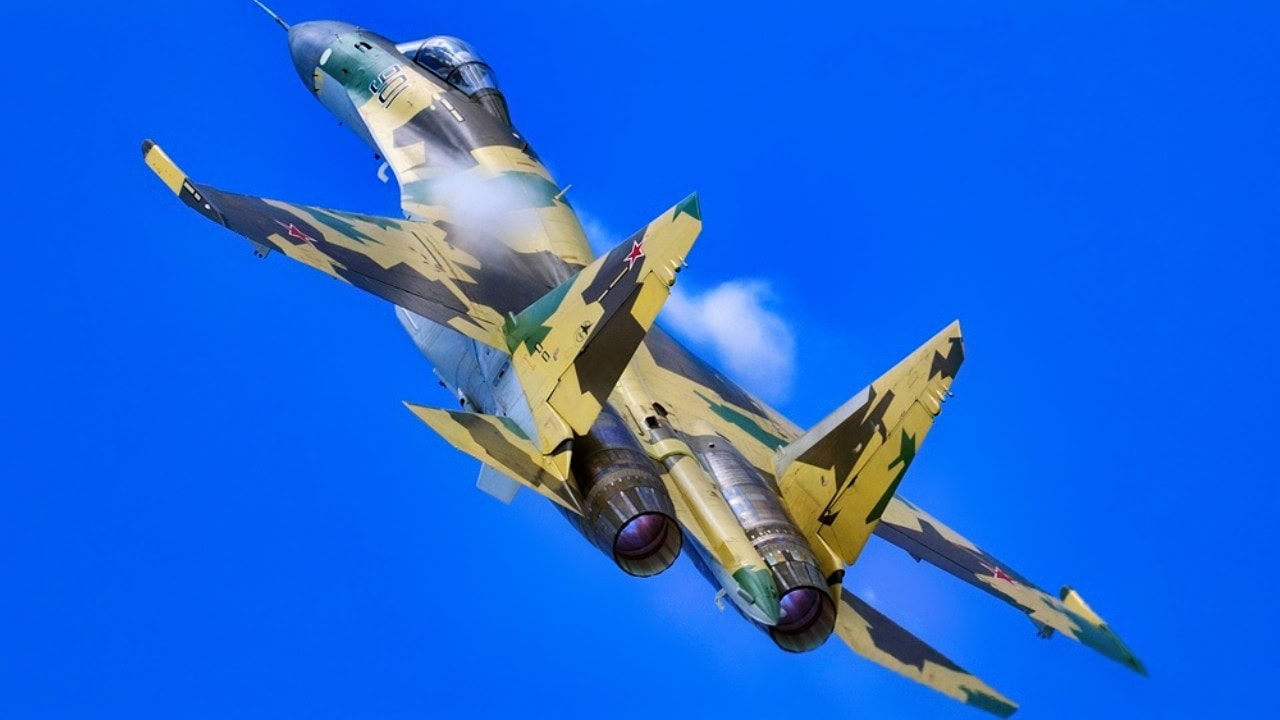
Su-35 Fighter from Russia. Image Credit: Creative Commons.
The Su-35’s blended wing-body configuration and horizontal fuselage make it look stealthier than an F/A-18 Super Hornet, with an almost F-22-like rounded wing-body and dual engine.
The configuration looks stealthy enough to have potentially inspired designs for the emerging Russian Su-57, a fifth-generation stealth aircraft.
The Su-35 resulted from years of upgrades to the Su-27 air-defense fighter.
With its speed, the Su-35 seems well-positioned to dogfight and vector in the air as an air-to-air supremacy fighter, yet it could not likely rival an F-22.
Nonetheless, a Russian-language newspaper claims the Su-35 has an F-22-like “supercruise” ability to maintain Mach speeds without an afterburner. So while the Su-35 may not rival an F-22, there is a chance it could take down an F-15EX.
J-20 vs F-35
The question of which fifth-generation aircraft is the best in the world is equally difficult to answer.
Some variables are difficult to gauge, such as computing, software, weapons configuration, and sensor range and fidelity.
What kinds of mission systems and sensing does the J-20 operate? Its AESA radar is long-range, which could help the plane identify threats from stand-off distances, but its effectiveness depends upon computing, interfaces, and fire-control technology.
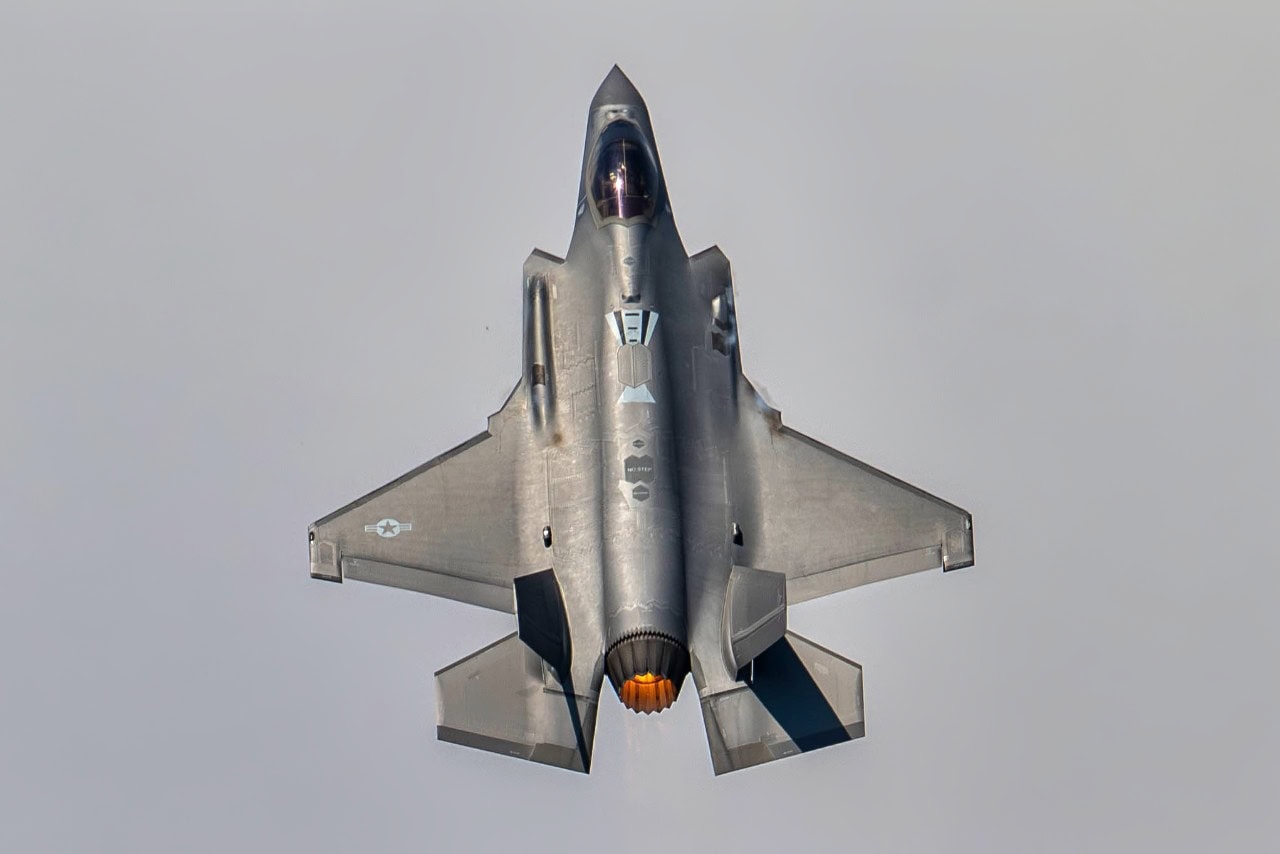
U.S. Air Force Maj. Kristin “BEO” Wolfe, F-35A Lightning II Demonstration Team commander, flies over Kennewick, Washington, during the Tri-Cities Water Follies Airshow Over the River, July 30, 2023. The F-35 Demonstration Team participated in the 2023 Tri-Cities Water Follies airshow and various other events in support of their mission to recruit, retain and inspire new and old generations of Airmen. (U.S. Air Force photo by Staff Sgt. Kaitlyn Ergish)
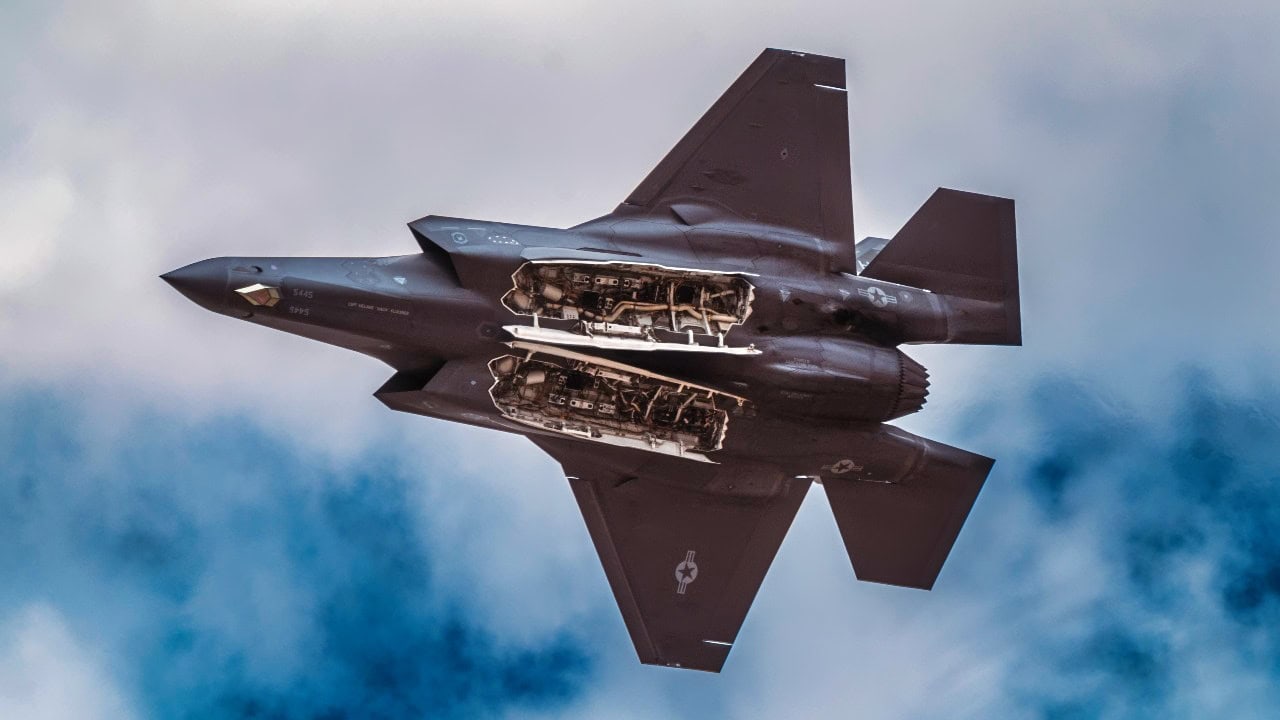
An F-35 Lightning II, assigned to the F-35 Demonstration Team, pays tribute to the past present, and future of Air Force aviation customs and capabilities during Luke Days airshow, March 23, 2024, at Luke Air Force Base, Arizona. Luke Days demonstrates the Air Force’s continuing progress in building the future of airpower with military and civilian air acts including the U.S Air Demonstration team the “Thunderbirds,” F-35A Lightning II, static displays, science, technology, engineering, and math exhibits, and military operations demonstrations. (U.S. Air Force photo by Airman 1st Class Mason Hargrove)
One clear variable seems decisive: the sheer popularity of the F-35. In recent years, the number of nations flying the Lightning II has reached 18. Pilot experience and combat performance are key factors in the global growth of F-35 nations.
Sensing and targeting enabled by the F-35s multi-role Intelligence, Surveillance, and Reconnaissance capabilities have distinguished the F-35 for many years.
Several years ago, during a U.S. Air Force wargame known as Red Flag, the F-35 was able to destroy groups of fourth-generation fighters at distances from which those fighters could not even detect their attacker.
This showed a clear measure of air superiority that is of great consequence for F-35 customers. Simply put, no other aircraft has generated such strong international demand as the F-35.
About the Author: Kris Osborn
Kris Osborn is the President of Warrior Maven – Center for Military Modernization. Osborn previously served at the Pentagon as a highly qualified expert in the Office of the Assistant Secretary of the Army—Acquisition, Logistics & Technology. Osborn has also worked as an anchor and on-air military specialist at national TV networks. He has appeared as a guest military expert on Fox News, MSNBC, The Military Channel, and The History Channel. He also has a Masters Degree in Comparative Literature from Columbia University.