
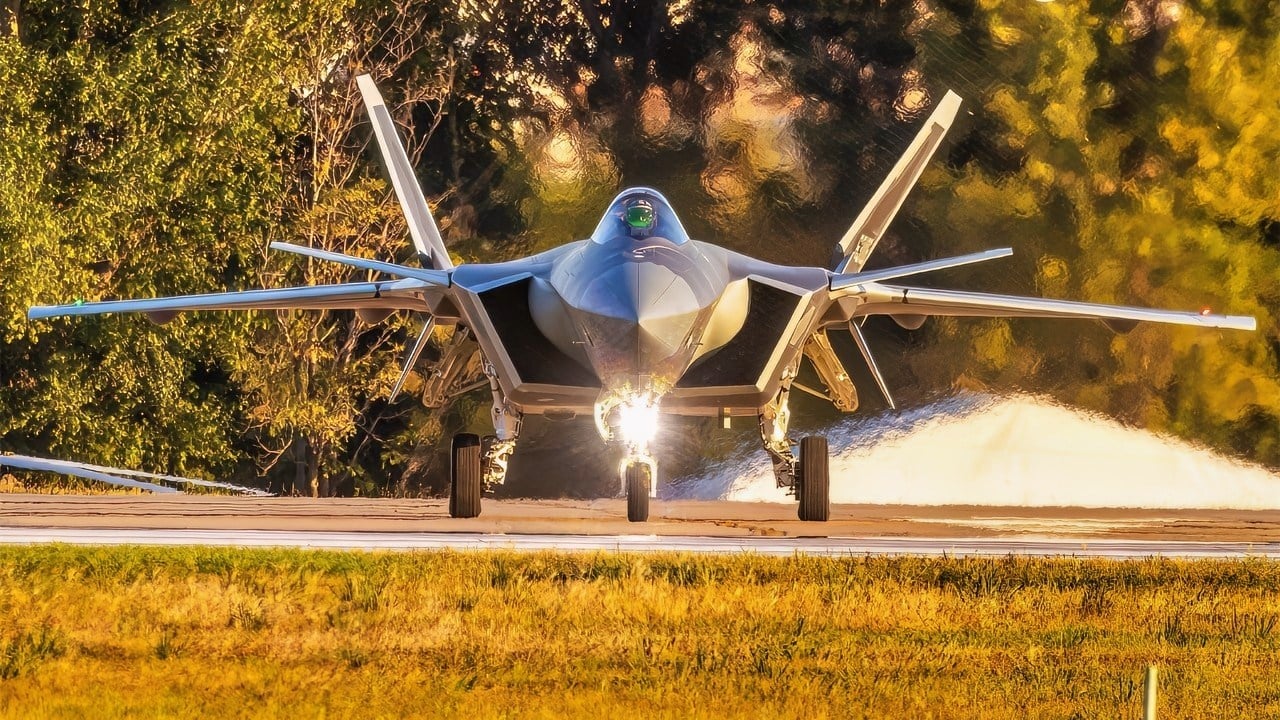
The J-20’s Next Leap: New Engines, AI “Assistant” Avionics, and Unmanned Teaming
China is producing its J-20 stealth aircraft in increasing numbers.
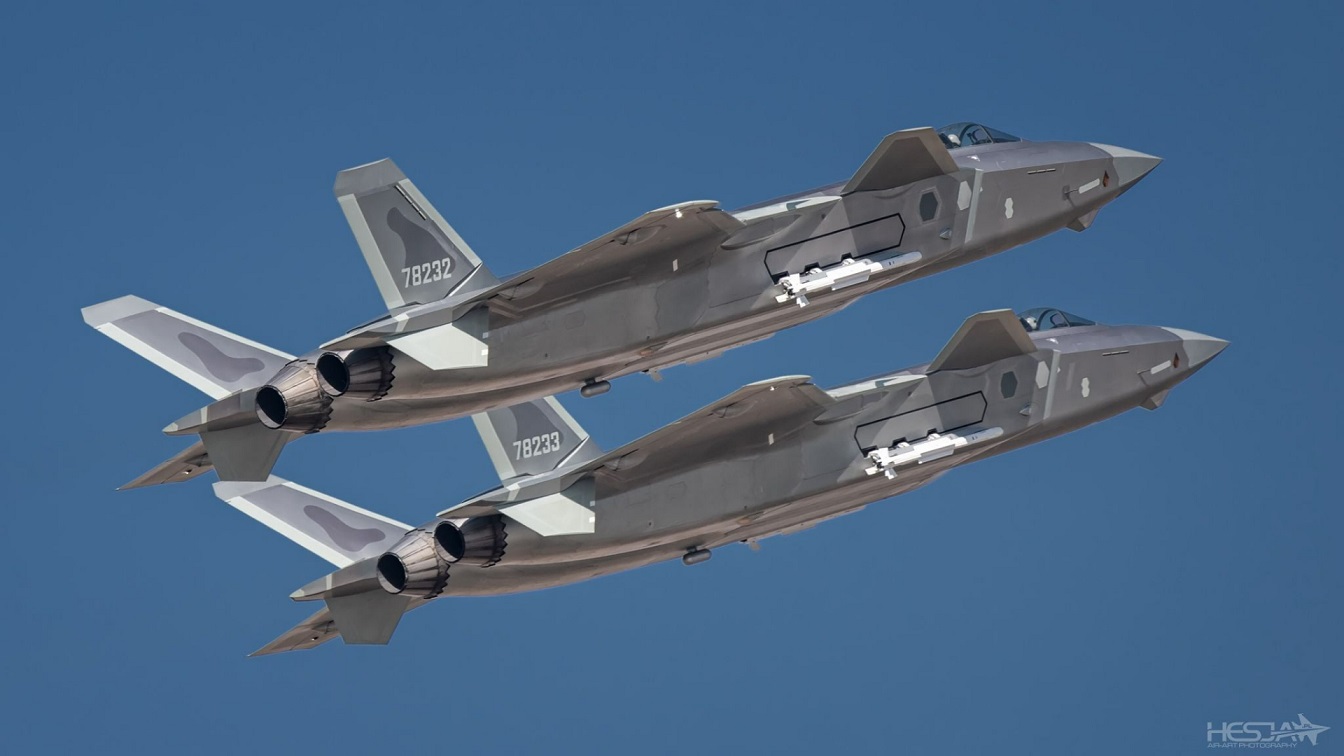
J-20 Stealth Fighter. Image Credit: Creative Commons.
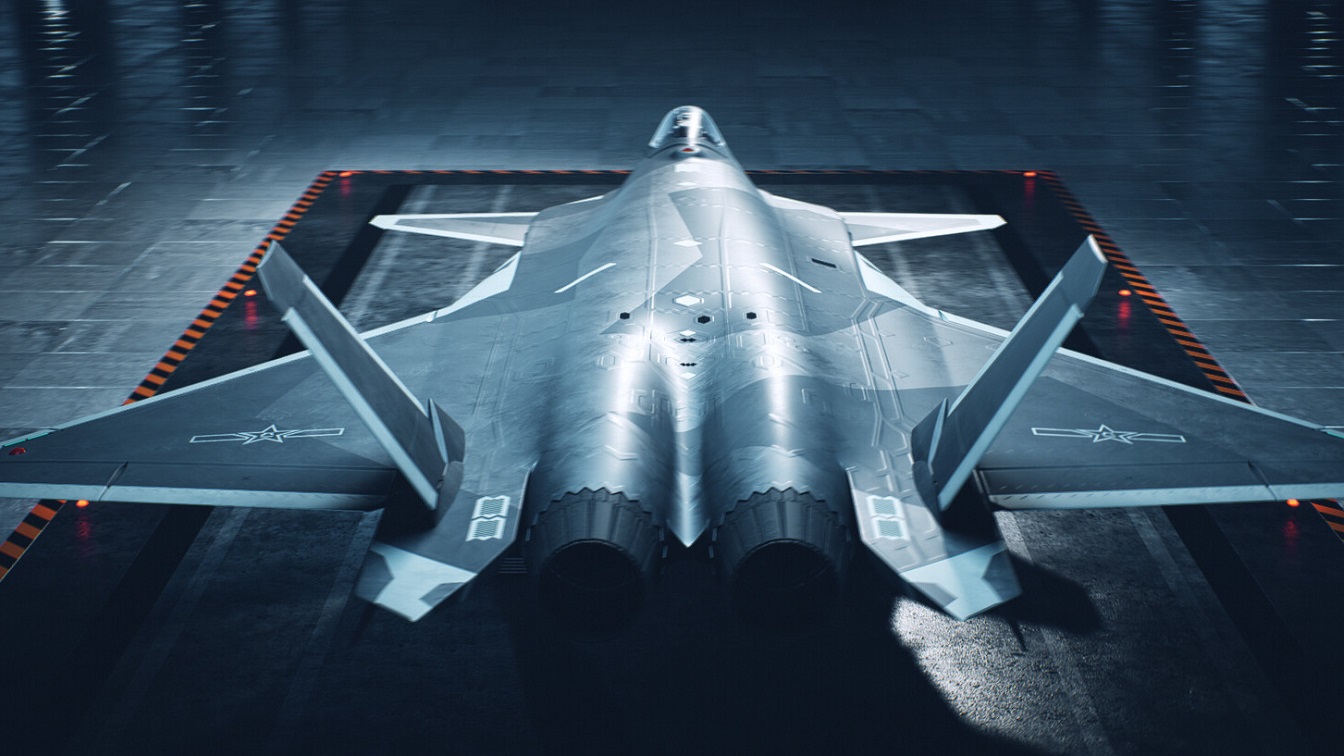
J-20. Image Credit: Chinese Internet.

J-20 Stealth Fighter. Image Credit: Creative Commons.
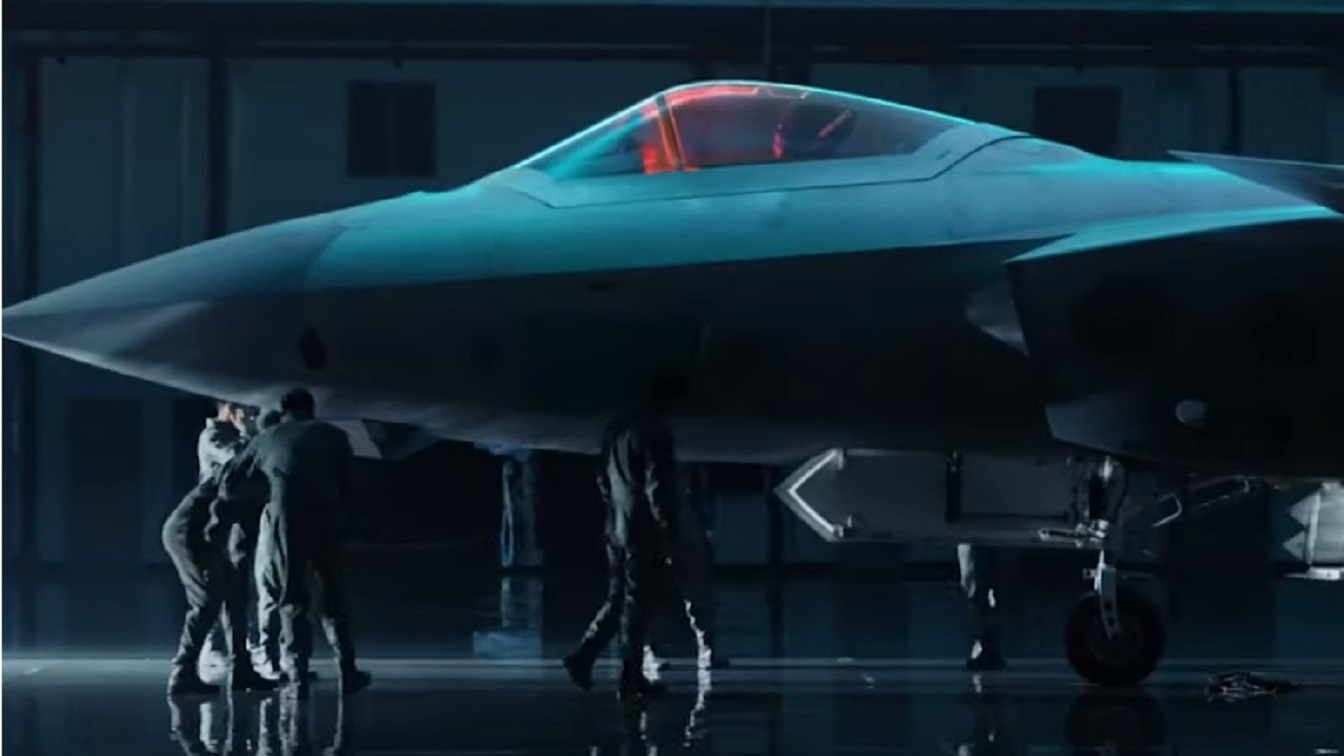
J-20 Stealth Fighter. YouTube Screenshot.
Meanwhile, J-20 upgrades focus on enhanced engines, new avionics, AI integration, and new variants such as the two-seat J-20S. Producers are also improving its supersonic cruise, stealth, situational awareness, and multirole capabilities for power projection, making it a more formidable threat to US air power.
Key improvements include a refined canopy for better aerodynamics, powerful WS-15 engines for thrust, advanced radars, and unmanned teaming, all with the goal of countering advanced Western fighters.
Military analyst Zhang Xuefeng appeared on the state-controlled China Central Television (CCTV) and spoke about the J-20 getting “avionics upgrades to its radar, engines, and AI integration to cement the fifth-generation jet’s pivotal position in aerial warfare.”
He added that the J-20 has already demonstrated the ability to datalink in joint operations with People’s Liberation Army Air Force (PLAAF) stealth attack drones, as well as airborne early warning and control (AEWC) aircraft.
“If we equip our J-20s with an AI system in the future, it will be like having an extra assistant, which will enable the aircraft to leverage AI in air combat, particularly in medium-to-long-range and beyond-visual-range (BVR) battles to maximise the aircraft’s performance,” Zhang said.
The question now is how long the J-20 Mighty Dragon will serve in the Chinese Air Force, given how many upgrades are being put in place. The U.S. F-22 Raptor, to provide one benchmark, is expected to serve until the 2060s.
China Now Has More Than 300 J-20s
The Chinese recently celebrated a historic milestone for the Chengdu J-20: there are now more than 300 the stealth fighters in PLAAF service, marking the largest fifth-generation fleet outside the United States and redefining the airpower balance across the Indo-Pacific.
Current estimates indicate annual output between 70 and 100 units. However other production estimates expect between 100 to 120 new J-20s to be produced each year. Beijing plans on having 1,000 J-20 by the 2030s.
The J-20 Mighty Dragon
Like other stealth fighters, the J-20 stores its weapons in a storage bay. It has four BVR and within-visual-range missiles. With internal fuel tanks, the J-20 can travel 1,100 nautical miles.
The J-20 has a high ceiling—it can reportedly reach 65,000 feet. China indigenously produced the Shenyang WS-10 afterburning engine, which provides 30,000 pounds of thrust.
The J-20’s speed tops out at Mach 2.55, according to the Chinese. It is capable of supercruise— flying supersonic without using fuel-intensive afterburners. The new WS-15 engine is reportedly in production and being incorporated into the newer J-20 fighters.
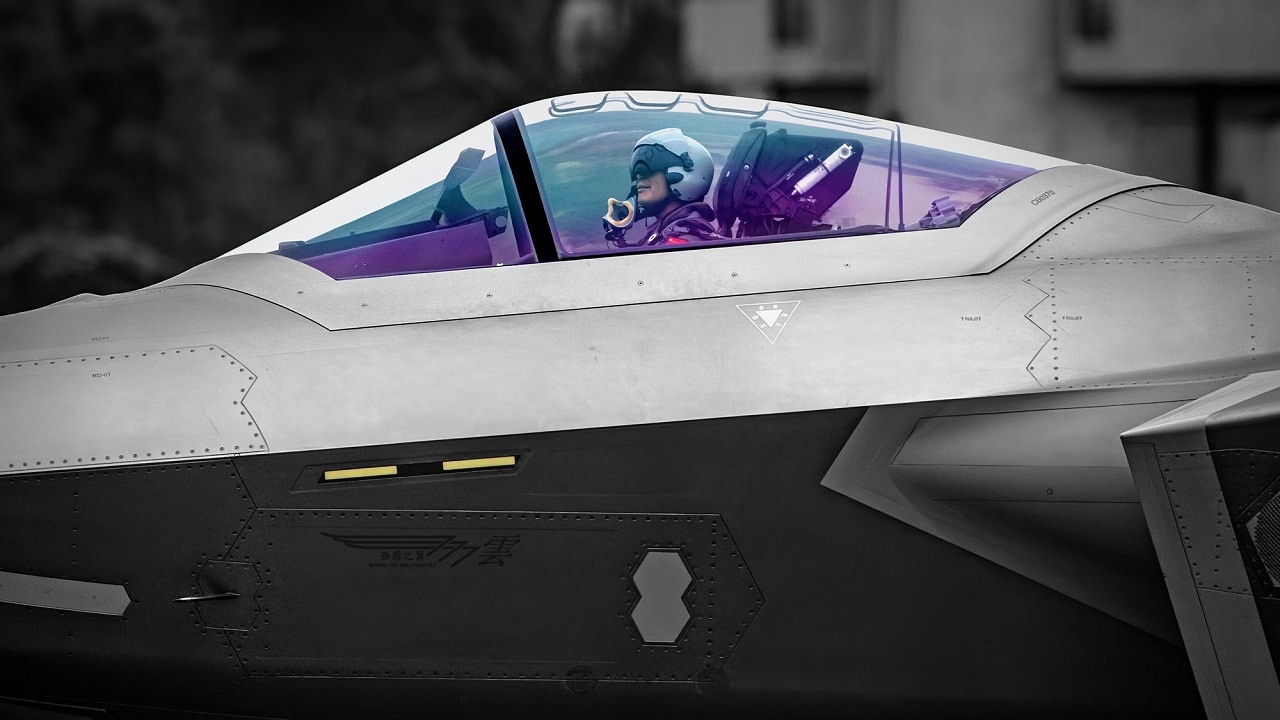
J-20 Fighter. Image Credit: Creative Commons.
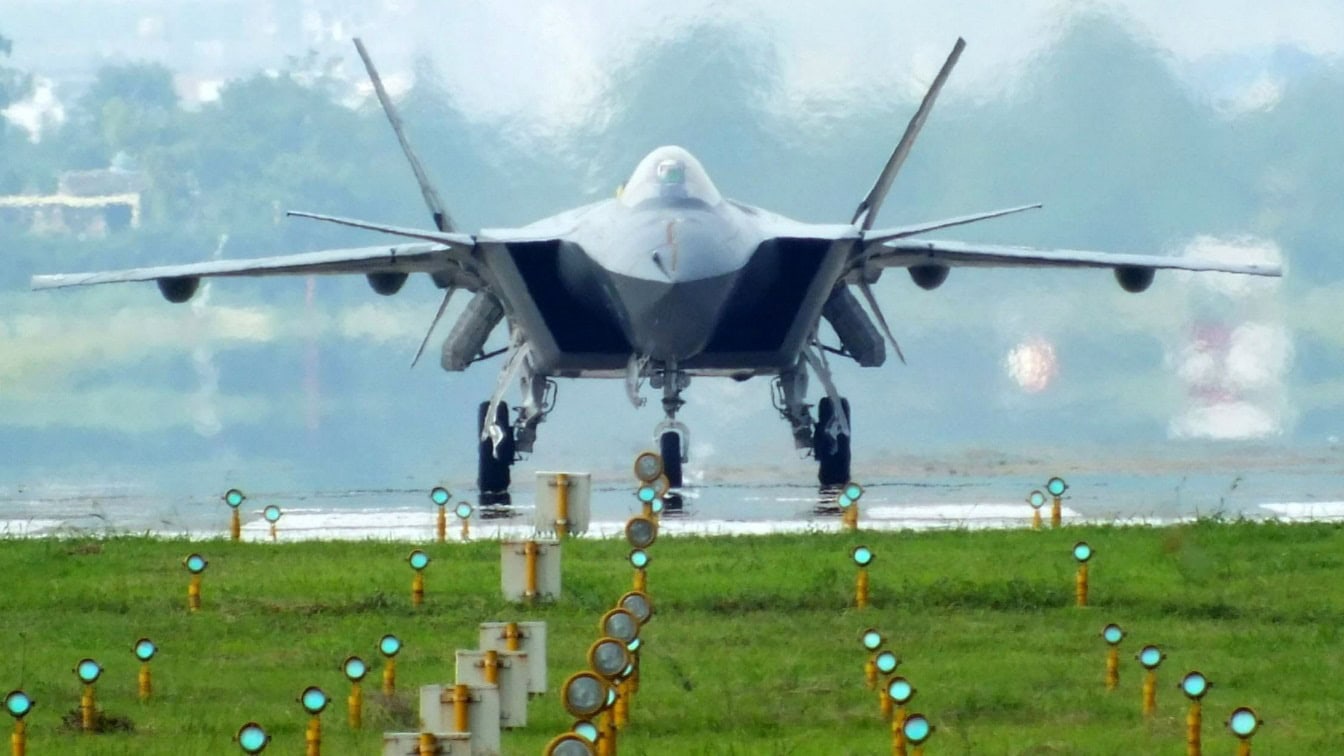
J-20 stealth fighter. Image Credit: Creative Commons.
Recently, a J-20 pilot, Captain Yang Jucheng of the “Wang Hai” Brigade, while touting the J-20’s stealth characteristics, claimed he overflew the whole island of Taiwan and was never once intercepted.
How Long Will the Chinese Operate The Mighty Dragon?
The J-20 is expected to serve for several decades, similar to other major fighter aircraft, with upgrades extending its lifespan well into the 2040s and beyond.
Given its massive production numbers and its cornerstone role in the PLAAF, it is designed for a long operational life.
According to an article in the South China Morning Post, China is also developing two sixth-generation stealth fighter jets—unofficially dubbed the J-36 and J-50. They drew global attention when they made maiden flights in 2024, and have since been spotted during additional test flights.
Is It Time To Hit The Panic Button Yet?
It is not time for China’s rivals to panic. While the 300 J-20 fighters are indeed a formidable force, and that number is growing fast, one has to remember that the US operates 187 F-22 Raptors, while more than 1,200 F-35s have been built.
While the F-22 is out of production, the new F-47 has already entered limited production. And the F-35 is not being outproduced. Lockheed Martin is producing a stable rate of 156+ F-35s per year and aims to deliver 170–190 F-35s in 2025, due to a backlog of aircraft requiring software upgrades. In 2024, 110 F-35s were delivered, but the stable production rate of 156+ is expected to continue.
U.S. and its Allies Operate The F-35:
Of course, not all F-35s are stationed in the Indo-Pacific region, but the numbers show that U.S. allies there are well-stocked with F-35s, which keeps deterrence strong.
Japan already operates the F-35A, in addition to the U.S. aircraft stationed there. The number of U.S. F-35s fluctuates because of aircraft carrier deployments. And Japan has 147 F-35s ordered.
Japan is developing the sixth-generation Global Combat Air Program fighter. South Korea operates about 40 F-35As, as well as its own stealthy KF-21 Boramae fighter.
Australia has a fleet of 72 F-35A Lightning II aircraft, with the last one delivered in December 2024. This acquisition completes the initial commitment to equip three operational squadrons and a training squadron at RAAF bases Williamtown and Tindal. There have been discussions about acquiring an additional 28 F-35A aircraft in the future, bringing their total to 100.
Singapore is slated to receive 20 F-35s in early 2026.
China’s numbers are rapidly growing and should not be discounted. However, the stealthy F-22 and F-35 are more advanced aircraft than the Chinese J-20 and J-35. The U.S. is also soon to receive the sixth-generation F-47 stealth fighter as well, and the naval F/A XX should arrive in the not-too-distant future.
Allied air forces continue to train hard in joint drills with the U.S. And the training and experience of U.S. pilots is second to none.
However, the J-20 should be a dominant force in the PLAAF for at least the next 20-30 years, with its service life extending into the 2050s or even later, thanks to ongoing upgrades.
About the Author: Steve Balestrieri
Steve Balestrieri is a National Security Columnist. He served as a US Army Special Forces NCO and Warrant Officer. In addition to writing on defense, he covers the NFL for PatsFans.com and is a member of the Pro Football Writers of America (PFWA). His work was regularly featured in many military publications.