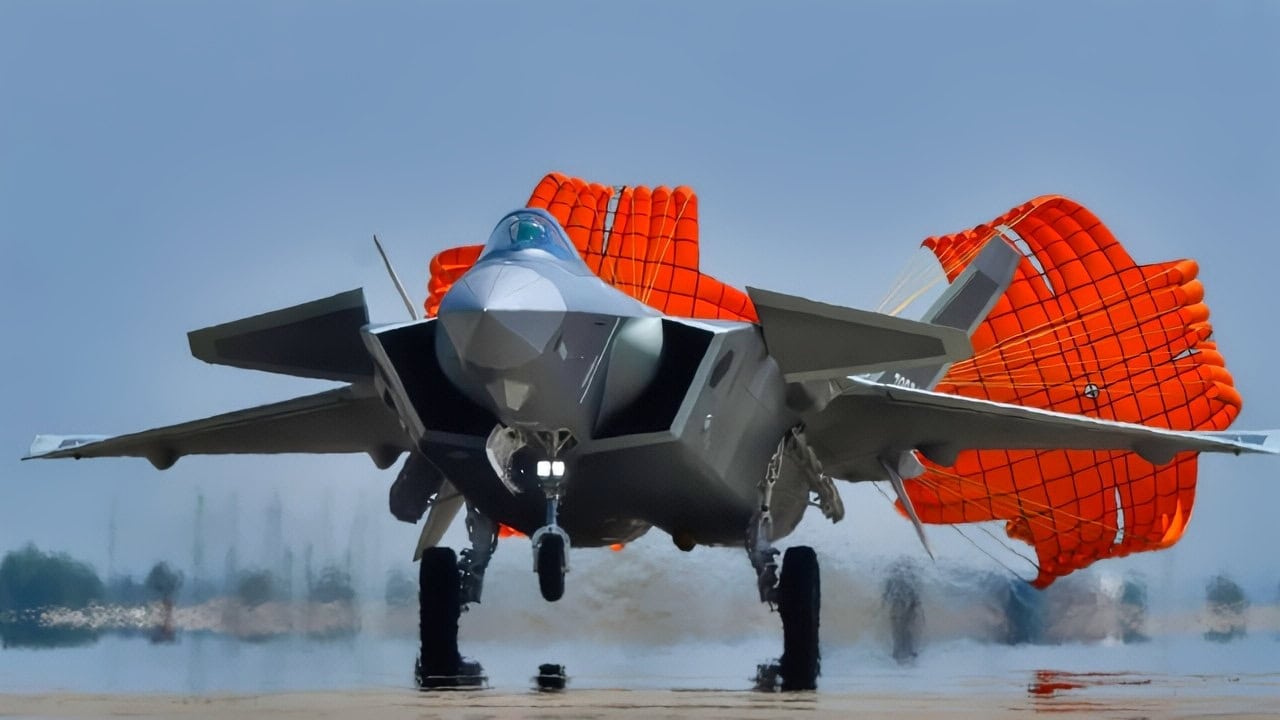
Key Points and Summary – A new analysis by the Royal United Services Institute (RUSI) estimates that China is now producing approximately 120 J-20 “Mighty Dragon” stealth fighters annually as of 2025, a rate that nearly triples the U.S. Air Force’s acquisition of fifth-generation jets.
-While the J-20 family—including the new two-seater J-20S—is expanding rapidly, experts note that China still struggles with jet engine longevity, which may be only a quarter of that of Western counterparts.
-Despite these technical flaws, the sheer volume of production signals an eroding U.S. qualitative edge in the Indo-Pacific.
Quantity Over Quality? China Builds 120 J-20s Annually But Engine Lifespan Remains a Major Flaw
China’s J-20 family of aircraft is not the newest aircraft in Chinese hangars, though the platform is increasingly among the most prolific. Now produced in three variants, the original J-20, an optimized J-20A, and the two-seater J-20S, which also holds the distinction of being the world’s first two-seater production aircraft.
Compared to other Western aircraft, the J-20 is a much larger airplane, both in length and width, a fact that has sparked much speculation among analysts and pundits alike. The aircraft’s larger size could indicate greater internal volume for weaponry and fuel, though the precise figures are difficult to ascertain. But perhaps more significant than analyzing the jet’s outward appearance for details is parsing the number of aircraft built each year.
Show Me the Numbers
One recently published analysis of both Chinese and Russian air power, by the Royal United Services Institute, a London-based security and defense think tank, does just that and sheds considerable light on the current state of both countries’ aircraft production and the strategic implications.
The analysis, written by Justin Bronk, a Senior Research Fellow at RUSI, is replete with detail on air power. Still, one of its most pressing aspects is the number of advanced aircraft that China has built in recent years. Using a range of sources, Bronk’s numbers paint a picture of increased output. As of 2025, annual production is estimated at around 120 J-20s across its variants.
Though there has been some debate about the veracity of the 120 annual airframe production figure—one commentator quipped that it differed significantly from his own best estimates—the RUSI production statistic largely aligns with forecasts from other aerospace authorities, which have reached similar conclusions.
One report from the Mitchell Institute for Aerospace Studies, one of the leading American aerospace think tanks and research organizations, largely concurred. “China has an estimated 2,225 fighters in its inventory,” the report wrote, “of which 1,311 are 4th-generation, and 320 are 5th-generation aircraft.”
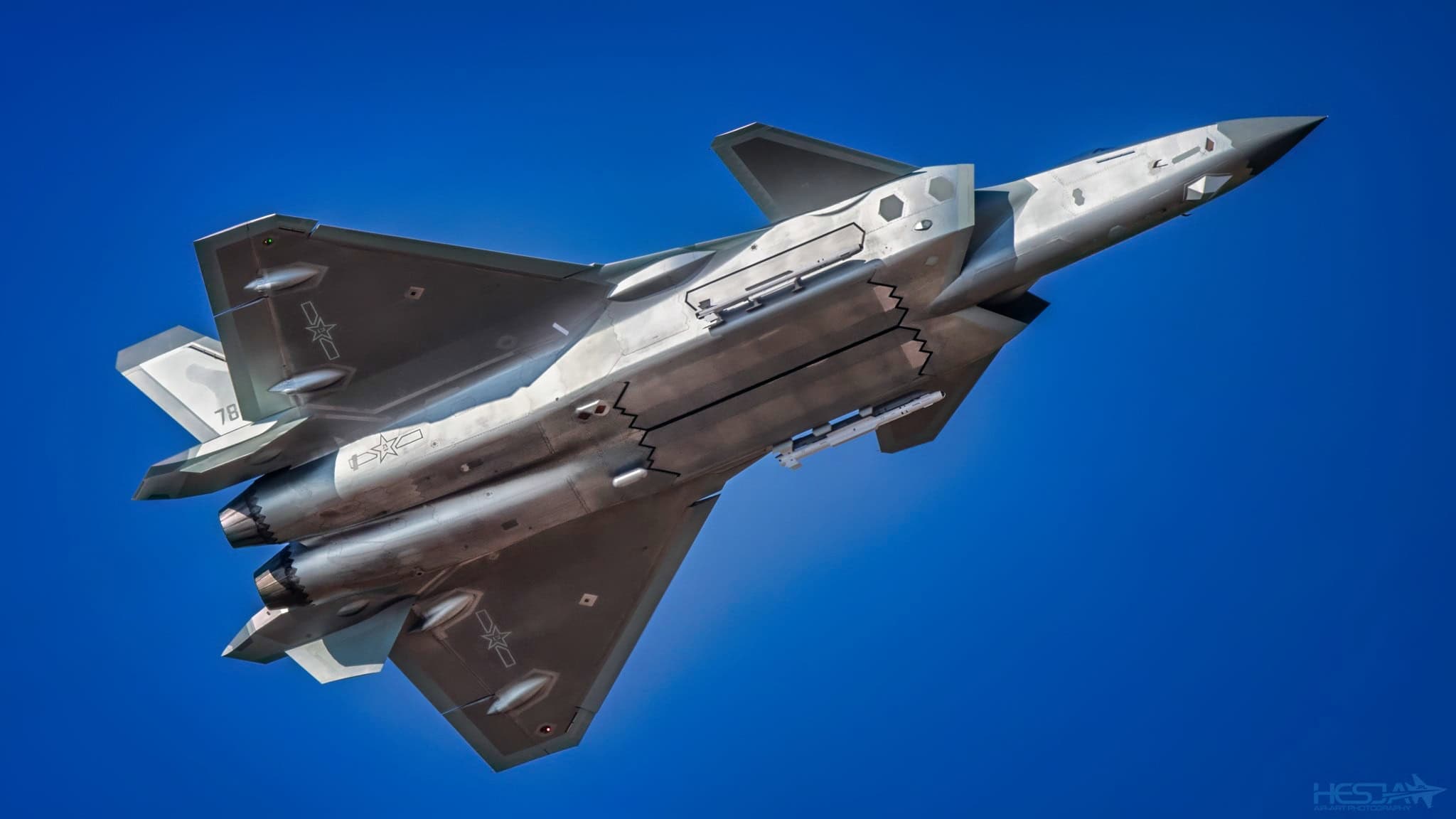
J-20 Fighter from China. Image Credit: Creative Commons.

J-20 Fighter. Image Credit: Chinese CCTV.
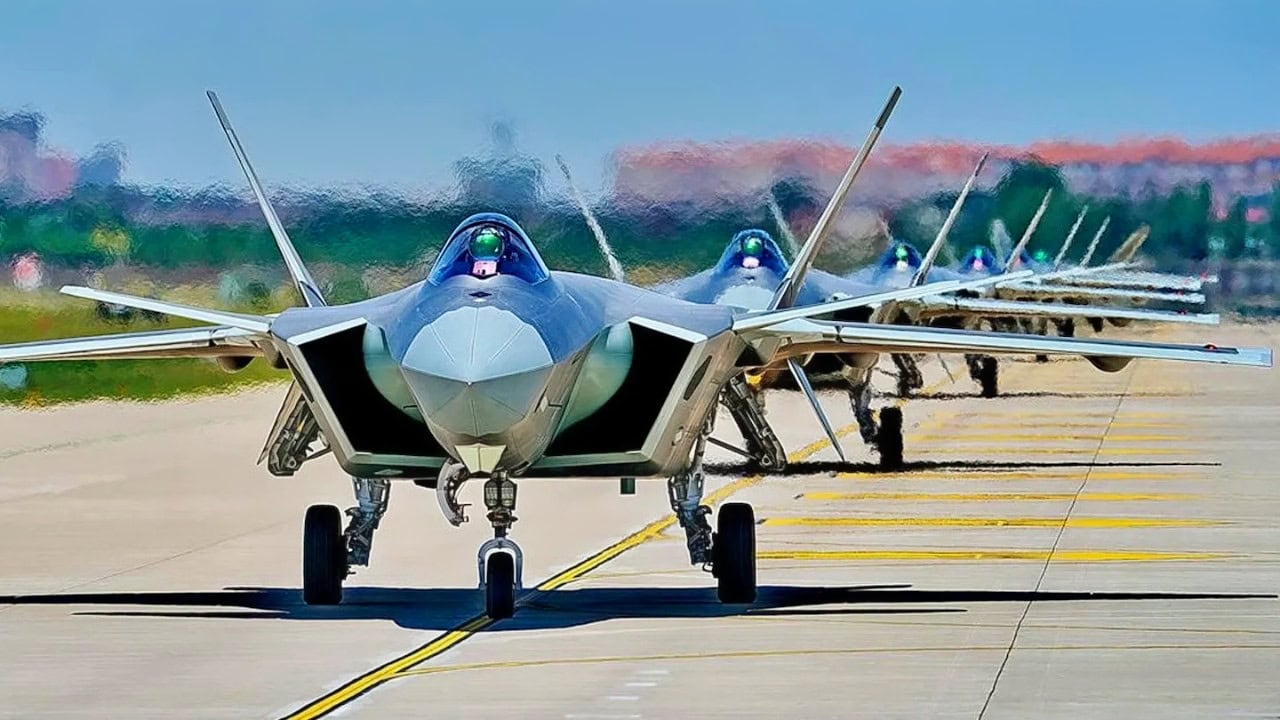
J-20 Fighter from PLAAF China. Image Credit: Creative Commons.
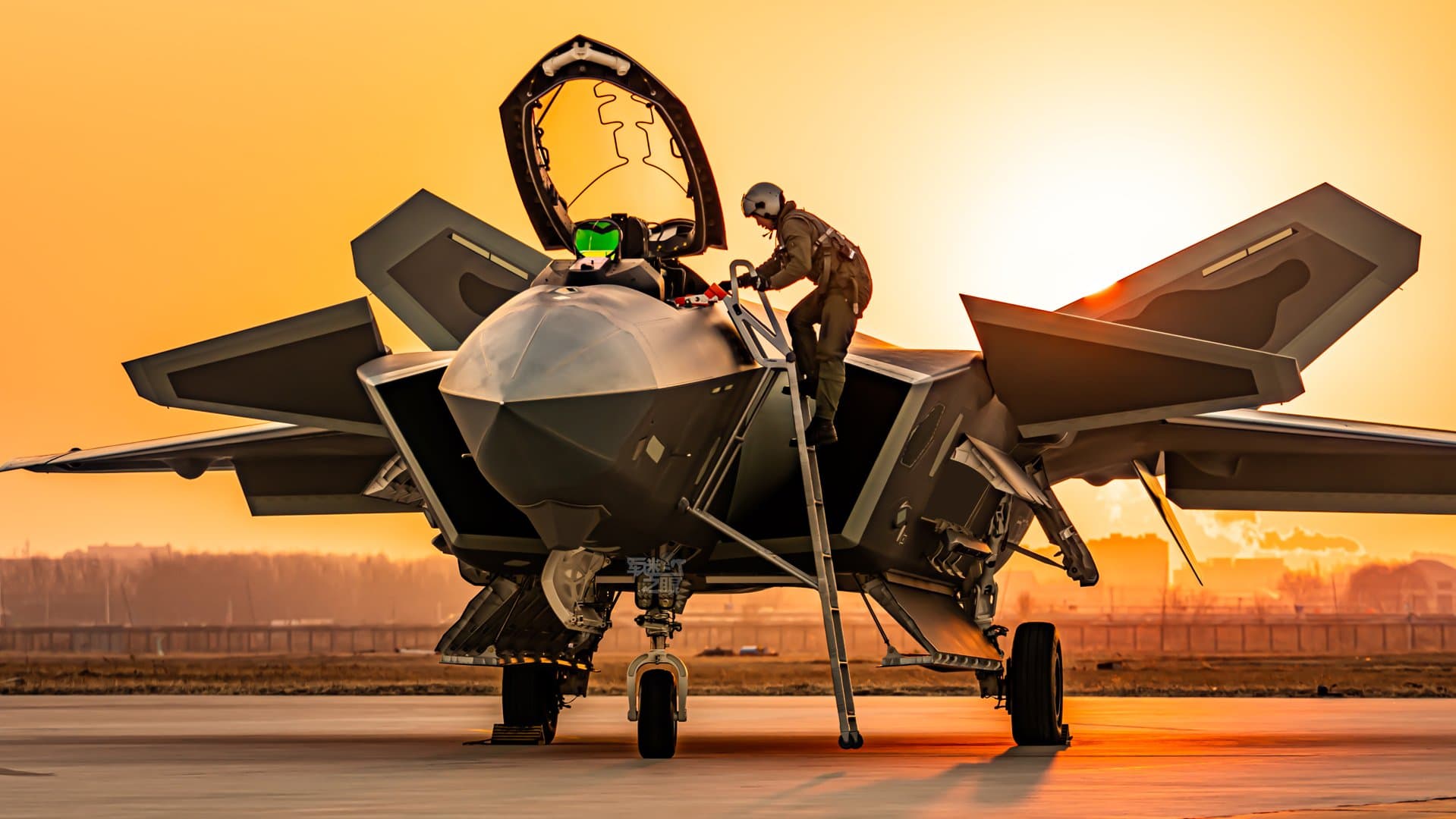
J-20 Fighter. Image Credit: Chinese Internet.
“With a production rate reportedly increasing to 120 J-20s a year, the PLAAF’s acquisition of 5th-generation jets almost triples that of the USAF. There is little data available regarding readiness, but assuming 70 percent of their fleet is combat-coded and has the same 70 percent MC rate that was assumed for the allies is reasonable. That equates to the PLAAF having roughly 799 MC fighters available to employ at any given time.”
Pinning down exact production numbers is a game of statistics and best estimates. But one more concrete figure came to light earlier last year, when the People’s Liberation Army Air Force’s 300th J-20 was spotted at an air show in China.
Not All Systems Go
Much ink has been spilled on the outward aspects of China’s fifth-generation stealth aircraft, given the broad similarities to counterparts in the United States.
And while fifth-generation Chinese aircraft have likely benefitted from data pilfered from American stealth aircraft projects, a perennial Chinese shortcoming has been jet engine technology.
Long dependent on Soviet power plants, Chinese aviation has been equipped with license-produced foreign builds, or reverse-engineered copies of those Cold War-era engines.
Some reporting indicates that jets like the J-20 family may be set to receive upgraded internal components, including engines.
But previous analyses have also pointed out that while some of China’s premier jet engines may approach the power output of advanced Western designs, their longevity is significantly less. One CSIS report claimed that Chinese engines’ lifespans may be just a fourth of those of their Western counterparts.
J-20 Stealth Fighter: No So Mighty?
American and allied forces in the Indo-Pacific still retain a qualitative edge over Beijing, albeit one that is eroding — a trend that, if current trajectories are maintained, is unlikely to reverse.
Indeed, the recently reported number of aircraft China is building is also a source of danger, given the sclerotic state of the American defense industrial base and the slow pace of manufacturing for some of the United States’ priority platforms, in particular warships and fighters.
For the time being, it is not inconceivable that American air power could exert air superiority over key tactical lanes.
However, complete and sustained control over vast swaths of airspace for extended periods seems unlikely.
But given the world-class training regimes of American and allied airmen, coupled with actual combat experience and leading platforms, Chinese airpower does not hold a qualitative edge.
However, given China’s rapid build of near-peer aircraft, that edge will not remain constant, and an American victory in the Indo-Pacific should not be taken for granted.
About the Author: Caleb Larson
Caleb Larson is an American multiformat journalist based in Berlin, Germany. His work covers the intersection of conflict and society, focusing on American foreign policy and European security. He has reported from Germany, Russia, and the United States. Most recently, he covered the war in Ukraine, reporting extensively on the war’s shifting battle lines from Donbas and writing on the war’s civilian and humanitarian toll. Previously, he worked as a Defense Reporter for POLITICO Europe. You can follow his latest work on X.