
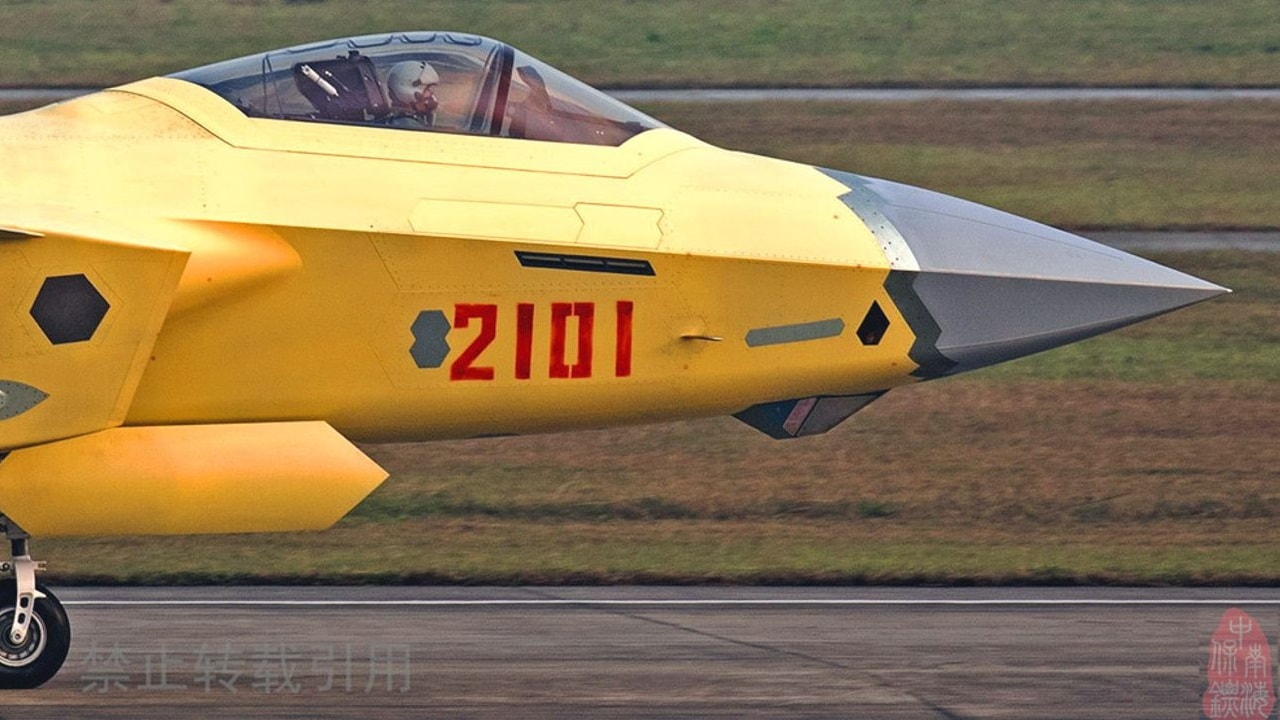
Key Points and Summary – Reports of a J-20 “Mighty Dragon” transiting contested airspace undetected have reignited debate over what makes China’s stealth fighter dangerous. The attention-grabbing detail is speed—Mach 2—but that’s not the decisive edge in modern air combat.
-Today’s fights are shaped by detection, tracking, and long-range engagement: who sees first, who stays unseen, and who can cue missiles at distance.
-That’s where stealth and sensors matter most, particularly when paired with AESA radar, passive tracking, and long-range weapons like the PL-15.
-In the Indo-Pacific, survivability and information dominance outweigh raw speed.
Why the J-20’s Stealth Matters More Than Its Speed
A recent claim circulated in Chinese state-linked media that a Chengdu J-20 “Mighty Dragon” stealth fighter transited key airspace undetected sparked new debates about China’s growing fifth-generation combat aircraft capabilities and what it could mean for regional defense planners.
The report, which referenced operations over the Tsushima Strait and near Taiwan, attracted Western commentary that focused primarily on the aircraft’s impressive speed – but that may not be the most important part of this story.
It might seem that the J-20’s impressive top speed of Mach 2 is the story – and it’s worth noting that this is quite clearly a formidable platform that is approaching the upper limits of conventional supersonic performance.
But when put into the context of air defense, integrated sensors, and modern aerial warfare, speed alone is not decisive.
It may well be in the future as satellite-based tracking becomes the norm, but for now, contemporary fighter engagements are defined by who sees and tracks whom first, using current tracking technologies.
Engagements are also defined by how effectively an aircraft can operate without detection until the final moment.
The J-20 is a big leap forward for China, but it’s the stealth that matters here.
Why Mach 2 Isn’t the Full Story
The Chengdu J-20 is unquestionably a sophisticated modern fighter that challenges Western dominance.
While China can’t compete with the U.S. and its allies in terms of combat experience, the J-20 already has the upper hand over America’s F-22s and F-35s in terms of combat radius.
Before we get to stealth, let’s start with the basics: the J-20 is a twin-engine, fifth-generation aircraft developed by the Chengdu Aerospace Corporation for the People’s Liberation Army Air Force (PLAAF) and designed as both an air-superiority asset and a precision-strike platform.
Its airframe features a canard-delta configuration with diverterless supersonic inlets (DSI) and blended fuselage shaping designed to reduce radar section and enable supersonic performance.
On paper, this is a Mach 2 machine: it can theoretically reach speeds of 1,480 miles per hour, while carrying heavy internal payloads.
That Mach 2 figure is the headline grabber, but it doesn’t necessarily translate into an immediate combat advantage in the way it once did during the Cold War, when designers specifically focused on achieving high speeds for intercept missions.
Modern air battles are now dominated by beyond-visual-range (BVR) engagements and by integrated air defense systems that track multiple targets simultaneously.
Once an aircraft is detected by advanced radars or space-based sensors, even at high speeds, it cannot evade missiles or coordinated fighter jet responses.
A low radar cross-section (RCS), however, will increase survivability.
Stealth, Sensors, And Gaining A Tactical Edge
Stealth alone is valuable, but stealth combined with an avionics and sensor system is even better.
That kind of setup, as seen on modern Western stealth fighters, defines how a fighter sees and is seen. The J-20 is equipped with a modern active electronically scanned array (AESA) radar and a suite of sensors, including electro-optical systems and infrared search-and-track (IRST) tools, designed to enhance situational awareness.
That means the J-20 is both capable of observing its surroundings and translating that information for pilots and ground crews, and of limiting adversaries’ ability to observe it during transit.
While little is officially known about the J-20, Western analysts believe it is competitive with its Western counterparts, featuring a large number of transmit and receive modules that extend its detection range, and passive sensors that provide additional tracking without active emissions that compromise its stealth.
Those systems allow the J-20 not only to avoid detection but to gain the advantage in identifying adversaries at long range and cueing its weapons accordingly.
BVR missiles like China’s PL-15 – and the coming PL-21 family – feature active radar seekers with ranges that potentially exceed 200-300 kilometers, giving the J-20 an even greater advantage in terms of situational awareness.
That’s not to say U.S. assets cannot compete, but when combined with its exceptionally good combat range, it’s not exactly good news for the West.
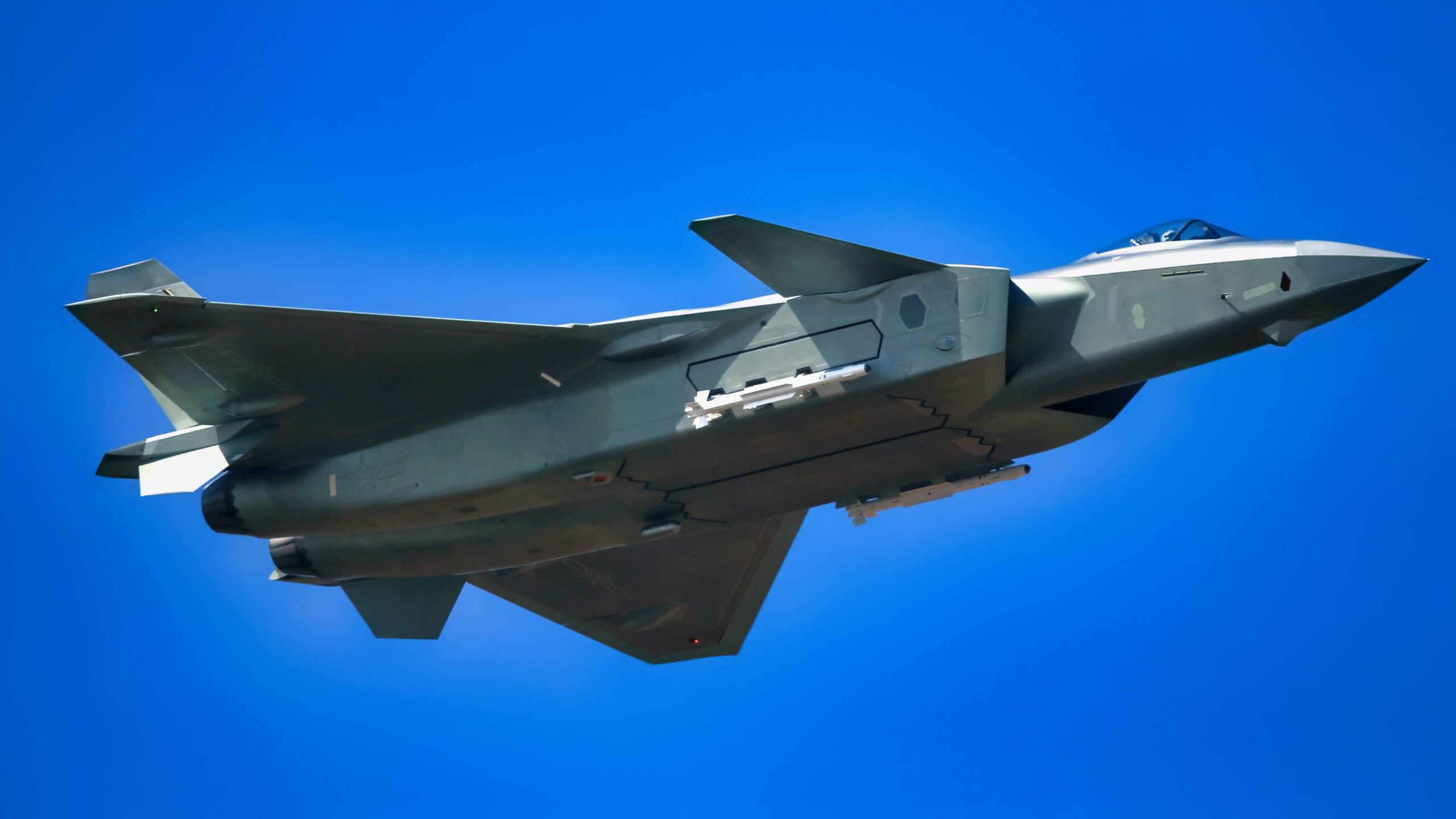
J-20 Fighter. Image Credit: Creative Commons.
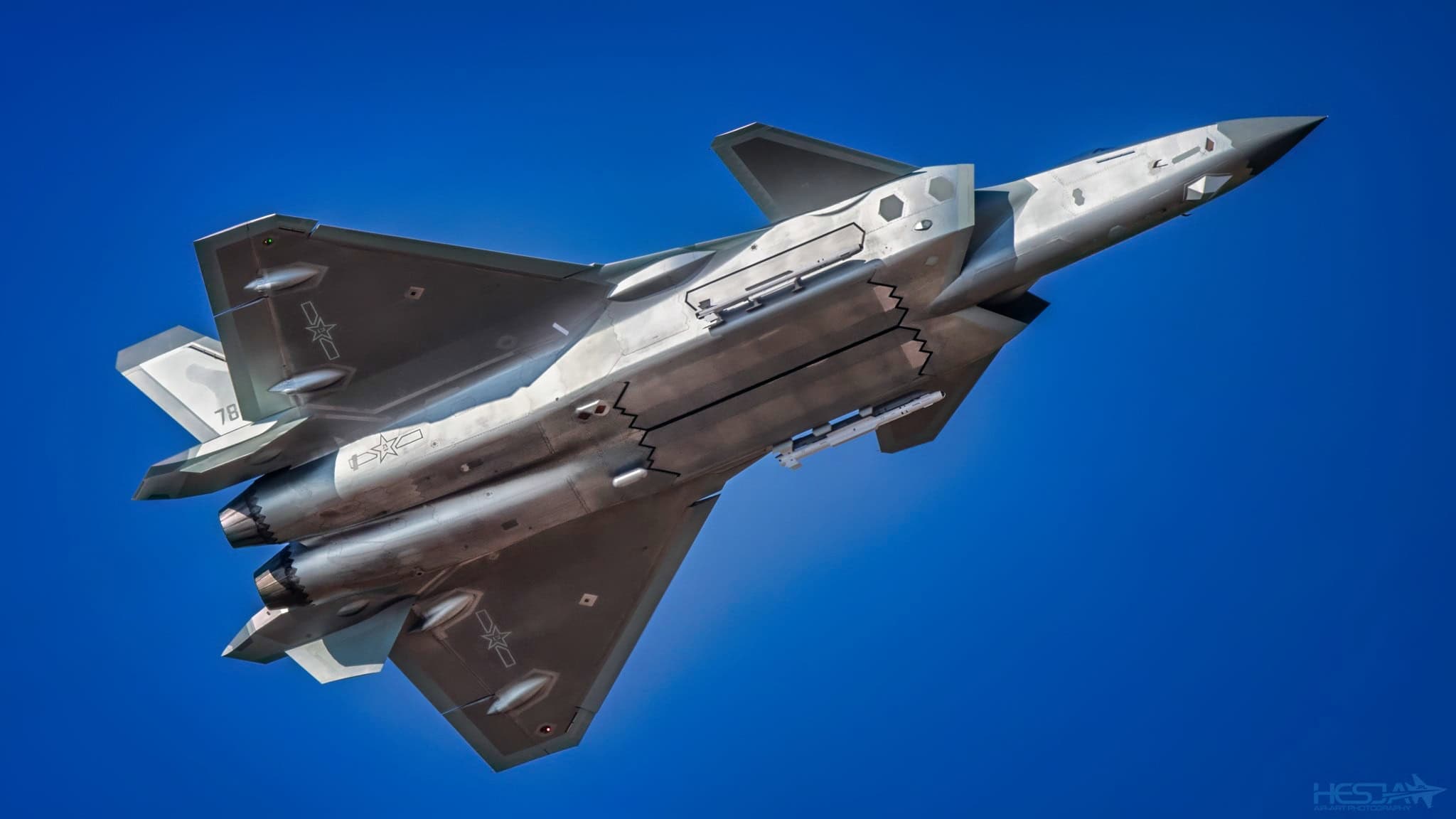
J-20 Fighter from China. Image Credit: Creative Commons.
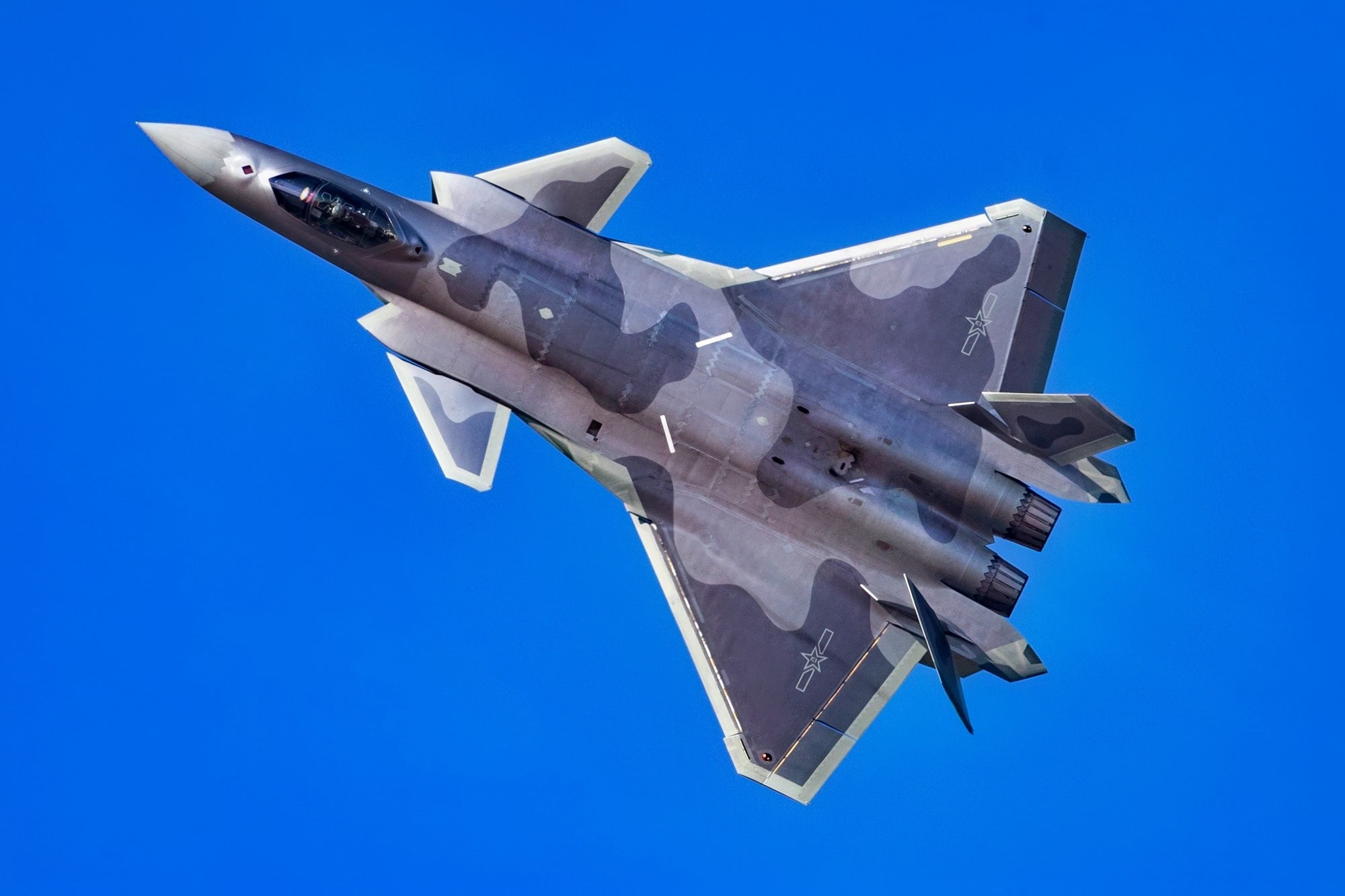
J-20 Fighter from China. Image Credit: Creative Commons.
And then there are the upgrades: the J-20 is receiving newer WS-15 engines designed to provide improved thrust and sustained supersonic cruise without afterburners. Those upgrades could further enhance performance and range but do not, in themselves, change the fundamentals: stealth and sensor fusion currently dominate air combat and will for some time.
In the context of the Indo-Pacific, where integrated air defense systems, networked sensors, and long-range strike assets are king, the value of a Mach 2 top speed is eclipsed by the ability to penetrate without detection, harvest information, and engage targets from a distance.
The J-20’s stealth design philosophy is key here, and China is proving it can do it.
About the Author:
Jack Buckby is a British researcher and analyst specialising in defence and national security, based in New York. His work focuses on military capability, procurement, and strategic competition, producing and editing analysis for policy and defence audiences. He brings extensive editorial experience, with a career output spanning several thousand published pieces at National Security Journal and 19FortyFive, and has previously authored books and papers on extremism and deradicalisation.