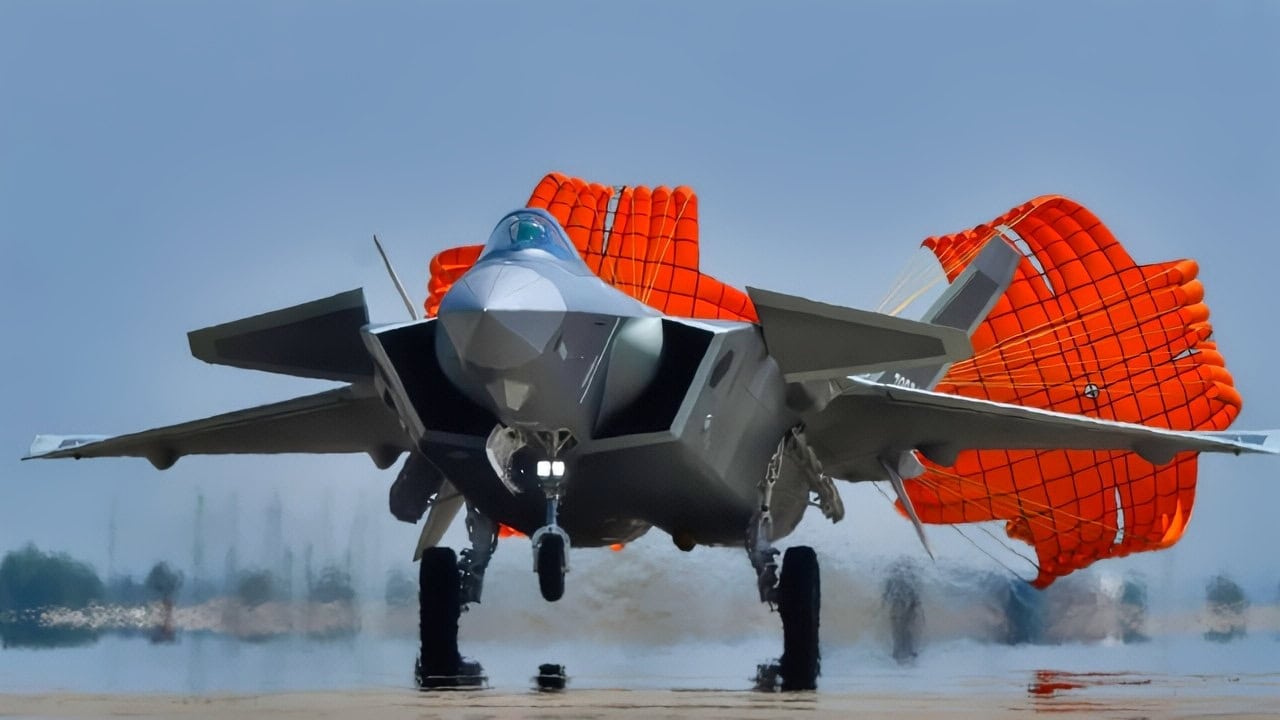
1,000 Jets by 2030: Inside China’s Plan to Mass Produce the J-20 Stealth Fighter
Numerous public reports are exploding into publication about China’s ability to quickly mass-produce its J-20 5th-Gen stealth fighter “at scale,” a circumstance some speculate could enable the People’s Liberation Army – Air Force to field a force of more than 1,000 J-20 Mighty Dragons by 2030.
This reality raises a seemingly endless series of questions about the PLA’s anticipated ability to “mass” 5th-generation firepower in defense of its perimeter or even in support of offensive operations.
Until recently, there have been very few instances wherein the J-20 has been “seen” flying missions, drills, or training.
Apart from one or two documented instances, the “airborne” J-20 has been largely absent from public view.
Perhaps the PLA wants to “hide” or preserve some of its unique attributes, such as flight vectoring or stealth properties.
A group of U.S. scholars catalogued a threefold increase in Chinese aircraft incursions into Taiwan’s Air Defense Identification Zone in recent years, as PLA activity around Taiwan has massively intensified, yet noted that the J-20 has indeed been largely “absent” from these incursions.
Certainly, the large-scale uptick in violation flights, which jumped from 972 in 2021 to 3,119 in 2022, can be interpreted along the lines of several axes of thought, including war drills and invasion preparation, potential testing of newer technologies, and related Concepts of Operation, and of course, conducting extensive surveillance of Taiwan and US surface and undersea assets. (published by the Routledge Taylor and Francis Group in the Journal of Strategic Studies in June 2023.)
China may be largely “hiding” its J-20 from public view or “observation” by the U.S. and allies, but this strategy might also preclude Chinese pilots from “training,” “wargaming,” or actually accumulating critical “flight hours” in the jet in preparation for a mission.
China “Hides” J-20
Keeping the J-20 largely out of surveillance certainly makes it difficult for rivals such as the U.S., Japan, or Taiwan to monitor it, making it harder for the Pentagon and its allies to “study” and “learn” about the aircraft’s performance parameters.
Information about the J-20 is largely available only from what the PLAAF says about itself in government-backed Chinese newspapers.
For instance, publications such as the Chinese government-backed Global Times regularly cite the existence of the J-20s upgraded, extremely powerful domestically built WS-15 engine.
Beyond this detail and the available “specs” citing the J-20’s speed, altitude, and range, very little technological detail about the J-20 is publicly available. Observers are largely restricted to analyzing its double-wing, elongated fuselage, and visible stealth configurations.
Research published by the Pentagon’s China Aerospace Studies Institute, a portion of National Defense University, suggests that perhaps the J-20 is defensively postured to a degree by virtue of being engineered with a larger, longer-range AESA radar designed to protect mainland China from potential attackers at superior detection and stand-off ranges.
Alongside these analyses, there are many remaining questions about its mission systems, computing, software configuration, sensing range, and weapons capacity, which would indicate whether the J-20 can compete with the U.S. F-35 or F-22. Answers or general technological elements related to these questions would also shed light on just how “long” the J-20 will stay airborne.
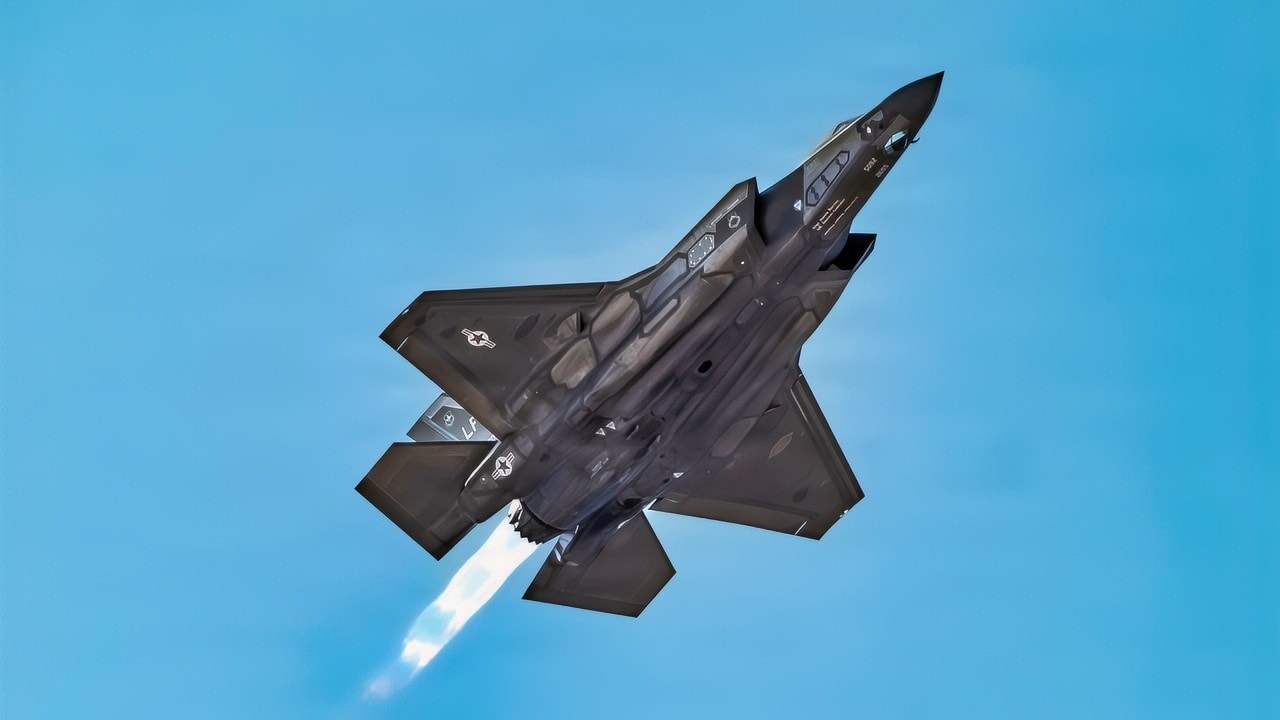
A U.S. Air Force F-35A Lightning II, assigned to the 56th Fighter Wing, takes flight, Nov. 26, 2025, at Luke Air Force Base, Arizona. The F-35A’s is designed for missions ranging from air superiority and electronic warfare. The 56th FW’s training programs emphasize interoperability, ensuring F-35A pilots can effectively collaborate with partner nations to achieve shared objectives. (U.S. Air Force photo by Airman 1st Class Belinda Guachun-Chichay)
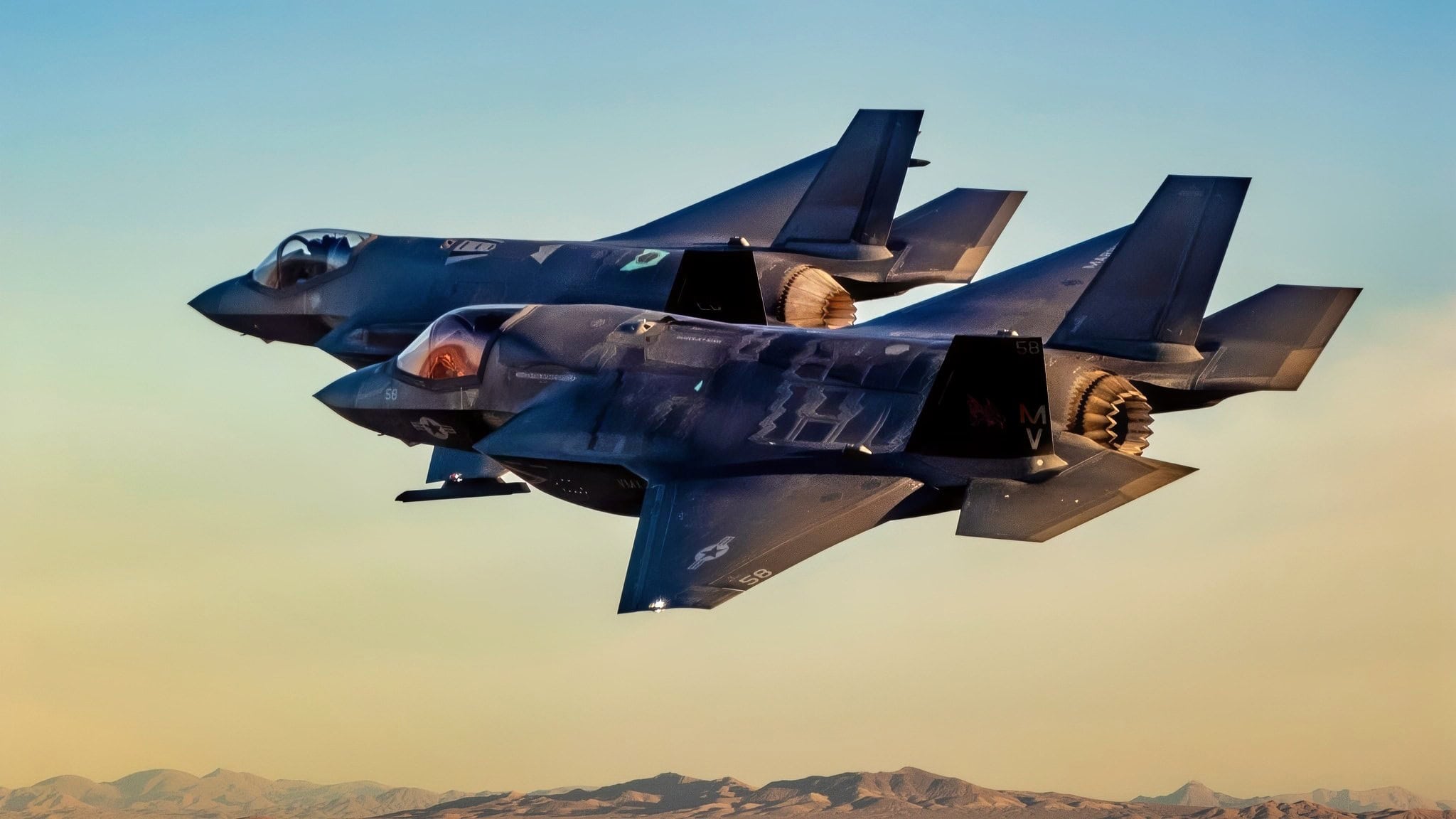
Test pilots with the 461st Flight Test Squadron, 412th Test Wing, return to Edwards Air Force Base, California, on January 21 after conducting a TR-3 AIM-120 live fire mission over the Pacific Test Range. The F-35 Integrated Test Force at Edwards is responsible for developmental testing of all three F-35 aircraft variants across the joint-services. (Courtesy Photo)
Like the F-35, could it remain relevant and deployable into the 2070s? This would depend almost entirely upon how “upgradeable” the platform is, meaning, is it engineered with IP Protocols and the technical infrastructure to integrate software updates, improved electronics, higher-fidelity sensing, and new generations of weapons?
If the answers to some of these questions, and the extent to which its potential to modernize parallels or matches the U.S. F-35, become clear, it seems possible that the J-20 could fly into the 2060s and 2070s as well.
J-20A “Raised Section” Upgrades
While the question of how “upgradeable” the J-20 will be may remain unanswered to a degree, a January 2026 essay in the Global Times newspaper cites specific upgrades built into the J-20A variant shown publicly in September, 2025. The essay says a new “raised section” in the J-20A variant will enable new technologies to integrate into the jet.
“This raised section at the rear of the canopy also allows for the installation of new equipment and systems – and theoretically, even additional fuel. Extra space translates directly to enhanced performance capabilities,” the Global Times writes.
The Chinese government-backed paper also cites aerodynamic advantages associated with the J-20A’s “raised section,” a development that might enhance the aircraft’s stealth properties.
“The J-20A features a raised section at the junction between the rear of its canopy and the fuselage. The initial version of the J-20 was designed with a taller canopy that afforded excellent all-directional visibility, but with the modifications, the canopy of the J-20A blends more smoothly with the fuselage. This design minimizes airflow separation at the rear of the canopy and reduces drag, which is highly conducive to supersonic flight and supersonic cruise,” the paper says.
Should these general claims about the J-20 be accurate, it seems feasible that the J-20 could be somewhat “upgradeable,” yet there seem to be too many remaining unanswered questions to make any kind of a decisive estimation of whether the J-20 will fly and remain effective into the 2060s and 2070s in a manner similar to the F-35.
About the Author: Kris Osborn
Kris Osborn is President of Warrior Maven – Center for Military Modernization. Osborn previously served at the Pentagon as a highly qualified expert in the Office of the Assistant Secretary of the Army—Acquisition, Logistics & Technology. Osborn has also worked as an anchor and on-air military specialist at national TV networks. He has appeared as a guest military expert on Fox News, MSNBC, The Military Channel, and The History Channel. He also has a Masters Degree in Comparative Literature from Columbia University.